Looking for a horse name that sounds Irish, feels authentic, and still works in a busy yard or on a show list? Many naming guides offer Irish-sounding names, but fewer address authenticity that still fits everyday use. A strong Irish horse name does more than sound pretty, it can carry heritage, hint at temperament, and give you a chance to practice Gaeilge in a way that lasts.
Irish naming has always been more than decoration. Horse Racing Ireland treats naming as a formal registration step, with an official naming form, passport, and fee, so the tradition still sits inside a regulated system rather than an informal nickname culture. The Irish naming rules are set out in the HRI naming requirements, and that context helps explain why names are chosen with care. Irish-language horse vocabulary also runs deep in place-names, and Logainm preserves forms such as Corr na Lárach, which shows how specific Irish can be about mares and horses in historical naming practice.
That matters if you want a name that feels genuine, not pasted together from a list. It also explains why some of the best irish names for horses are short, familiar, and easy to say out loud in a stable, a lesson ring, or a show office. If you like the heritage side of naming, you may also enjoy these insights on horse-themed Claddagh jewelry, because the same cultural symbolism often appears in both horse names and Irish keepsakes. For a wider set of options and pronunciation help, you can also compare these Irish names for girls, since many horse names draw from the same language patterns.
Table of Contents
- 1. Aoife
- 2. Cormac
- 3. Siobhan
- 4. Fionn
- 5. Aisling
- 6. Declan
- 7. Maeve
- 8. Liam
- 8 Irish Horse Names: Pronunciations & Meanings
- Bring Your Horse's Name to Life
1. Aoife
The Warrior Princess
Aoife is one of the best-known Irish girls' names, and it's easy to see why horse owners keep coming back to it. In Irish tradition, Aoife is linked with beauty and radiance, but the name also carries a warrior edge through mythic figures who were fierce, capable, and memorable. That combination makes it a natural fit for a mare with presence, quick reactions, and a little spark under saddle.
The pronunciation, EE-fa, is important. Many English speakers want to flatten it into something closer to “Ayo-fee,” but the correct sound is cleaner and softer, with two clear syllables. If you're naming a horse for the yard, the show ring, or a breeding record, that clarity helps everyone say it the same way.
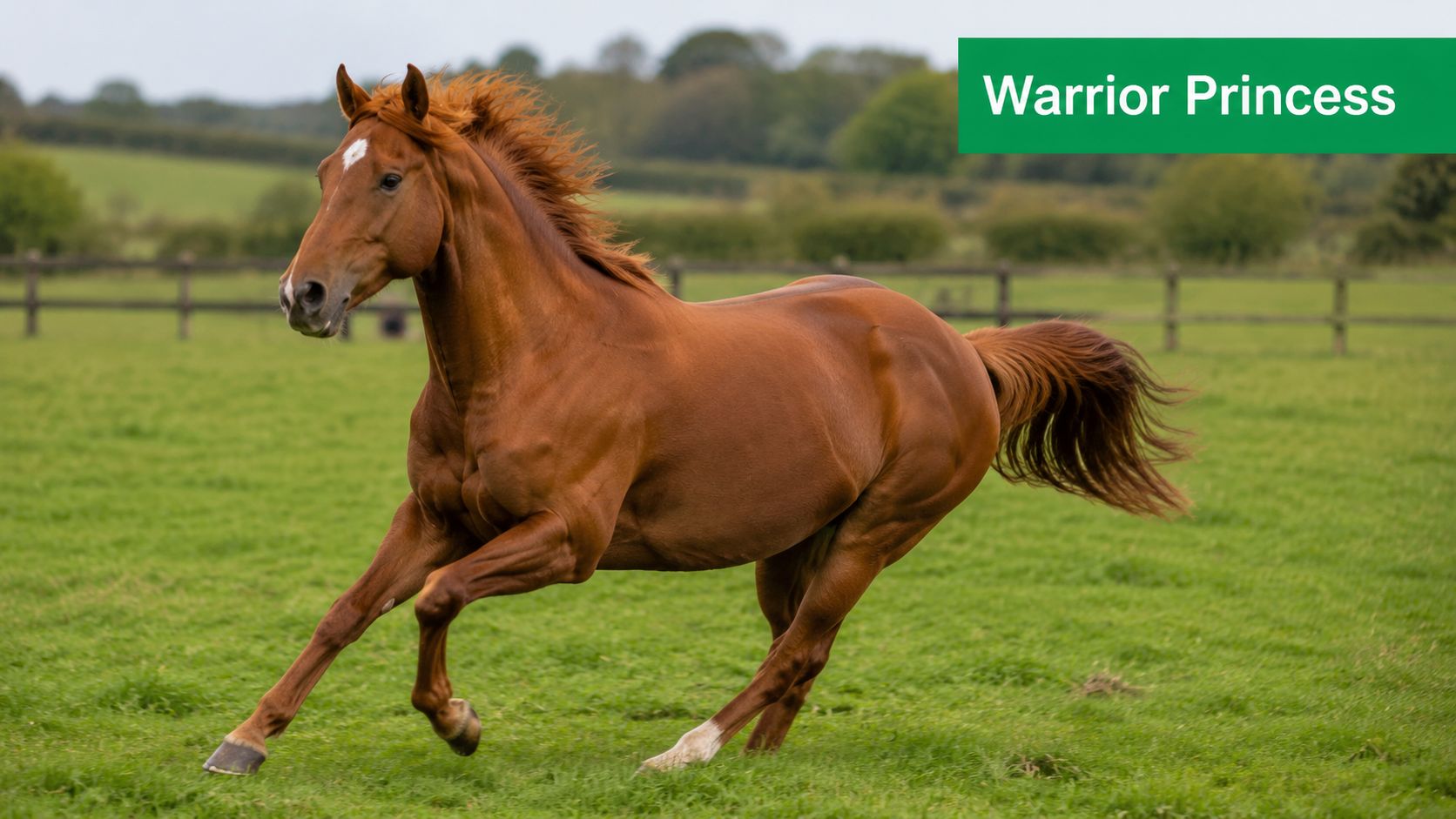
Aoife works especially well for horses that look elegant but don't move gently through life. A sharp-turning show jumper, a mare with scope, or a competition horse that comes alive when the fences go up all suit the name. It also pairs neatly with Irish surnames in full registration names, which gives you a polished formal option while still keeping the everyday call name simple.
Practical rule: if the mare is brave, athletic, and quick to learn, Aoife feels stronger than a purely decorative name.
For a language-learning touch, Aoife is a useful first pronunciation win because it shows how Irish spelling often preserves older sounds rather than matching English habits. If you want more Irish girls' names with that same linguistic feel, the internal guide at Irish names for girls gives you a broader naming context without losing the pronunciation focus.
2. Cormac
The Charioteer's Choice
Cormac has a more formal, grounded feel than many pet-style names, which is exactly why it suits a horse with authority. The name comes from an old Irish tradition tied to raven imagery and nobility, and it carries a sense of leadership that feels right for a stallion, a gelding with presence, or a horse that moves through the stable like it knows the routine better than anyone else.
The pronunciation, COR-mac, is straightforward for English speakers, which makes it practical in daily use. That matters in a yard where names need to be called quickly during turnout, loading, or warm-up. A name with ancient roots but easy delivery often travels better than a more ornate choice.
Cormac also brings a strong historical atmosphere. The legendary Cormac mac Airt is remembered as a wise high king in Irish tradition, so the name suggests judgment, steadiness, and composure. Those qualities fit a horse that stays level-headed in the ring or keeps its shape under pressure.
A few good real-world fits include:
- A dark bay or black horse that already has a serious, polished look.
- A breeding stallion whose pedigree and demeanor both matter.
- A calm gelding in sport work who leads the group without fuss.
For owners building a full registered name, Cormac feels especially strong paired with an Irish stable prefix or a family surname. It reads as heritage-first, not trend-first, which is useful if you want something that ages well as the horse grows into its job.
Cormac works best when the horse's manners are as good as the outline. The name sounds strongest when the animal's temperament matches its old-world weight.
For the people who are learning Irish as they name a horse, Cormac is also a good reminder that some Irish names stay close to their older roots in sound, even when English speakers assume they'll be more complicated than they are.
3. Siobhan
The Graceful Dancer
Siobhan, pronounced shiv-AWN, is one of those names that looks intimidating on paper and turns smooth once you hear it spoken. That makes it a great teaching name for stable staff, riders, and anyone who wants to get comfortable with Irish pronunciation. It also carries a soft elegance that suits a mare with expressive movement and a careful, balanced way of going.
The name's history is one reason it feels so rich. It comes through Irish adaptation from older French roots, but in Irish use it became its own distinct form with a strong identity of its own. In everyday horse naming, that gives you a name that sounds refined without feeling fragile.
Siobhan is especially good for dressage mares, show mares, and breeding mares with polished movement. A horse that reaches naturally, floats through transitions, or has a calm, attentive focus can wear the name beautifully. It also works well for horses in in-hand classes, where presentation and poise matter as much as athleticism.
The name suits owners who want a horse name with cultural depth and practical usability. You can say it in the yard without stumbling once the pronunciation is learned, and it still looks elegant on a program or passport. That balance is rare.
A few ways the name earns its place:
- It sounds graceful without being overly delicate.
- It has a clear pronunciation pattern, which helps non-Irish speakers.
- It feels at home in the show ring, especially where a polished impression matters.
If you're teaching Irish to yourself or to younger riders, Siobhan is a useful spelling-and-sound example. The letters don't behave the way English readers expect, and that's exactly why it makes such a memorable Irish name for horses.
4. Fionn
The Legendary Hunter
Fionn, pronounced FEE-un, is short, strong, and easy to remember. It's tied to the idea of fairness or whiteness in Irish, and it also carries the cultural weight of Fionn mac Cumhaill, one of the great heroic figures in Irish legend. That gives the name a mix of brightness and bravery that suits a horse with athletic drive.
The name works across sex and discipline, which makes it one of the most flexible choices on this list. A gelding who jumps cleanly, a mare that attacks cross-country with confidence, or a light-colored horse with a striking outline can all wear Fionn well. It doesn't over-explain itself, and that's part of the appeal.
If you want a name that feels energetic but not flashy, Fionn is a strong candidate. It has a clipped sound, so it comes off well in the ring and on the yard. It also avoids the pronunciation burden that sometimes comes with longer Irish names, which matters if you expect the horse's name to be called by judges, vets, grooms, and clients.
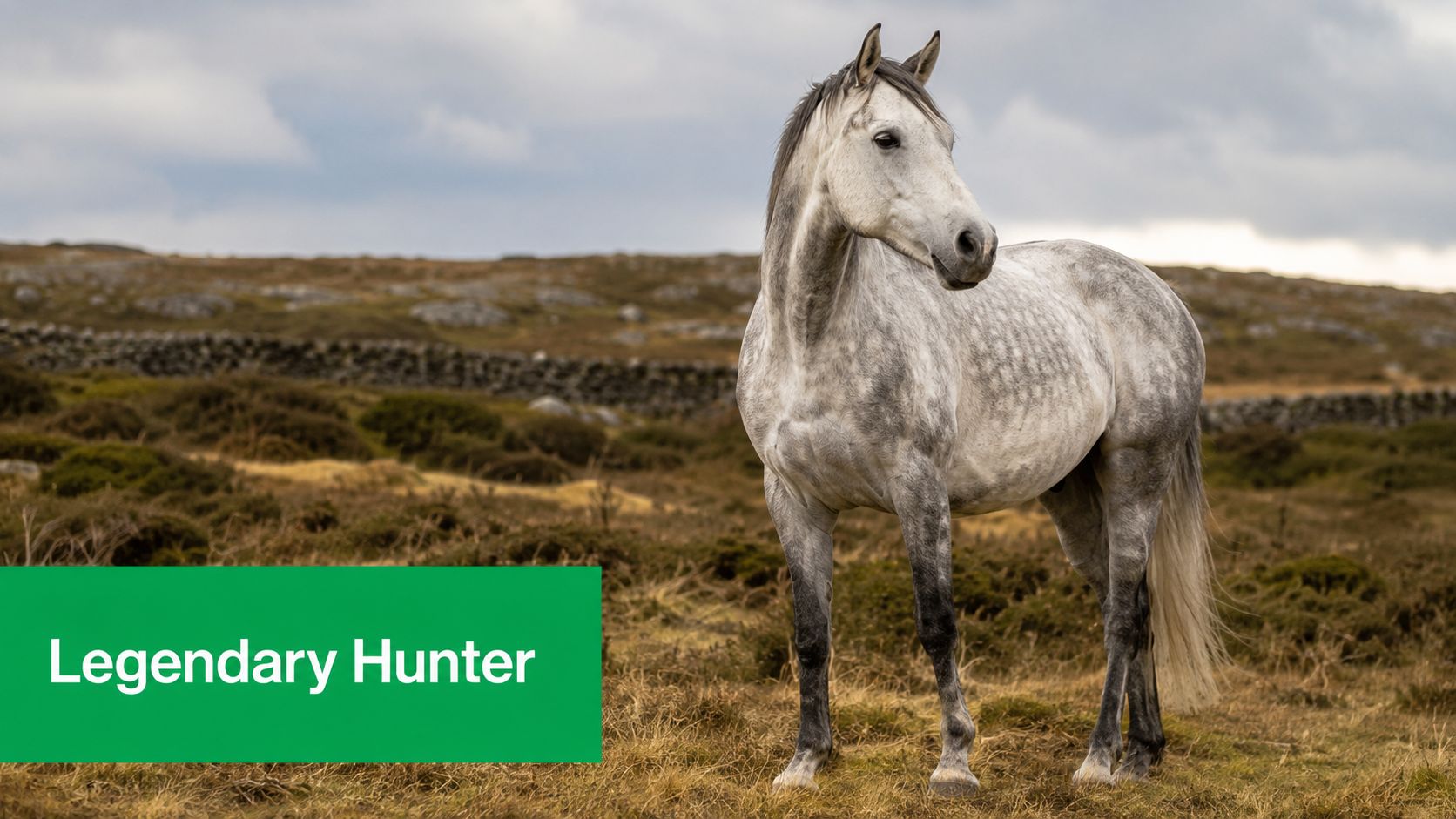
Fionn is often a better fit than more ornate mythology names when the horse's job involves speed of communication. A hunter, eventer, or jumping school horse needs a name that lands instantly. Fionn does that without losing its Irish character.
Good naming habit: choose Fionn when you want mythic energy, but you also want a name your whole barn can say correctly on the first try.
The wider naming trends back that practical instinct. Modern Irish horse-name lists repeatedly favor short, familiar names, and that tells you a lot about what owners value in daily use (Eventing Nation's Irish horse-name roundup).
5. Aisling
The Visionary's Dream
Aisling, pronounced ASH-ling, is one of the most literary Irish names you can choose for a horse. In Irish, it means vision or dream, and it also connects to a poetic tradition that gives the word a deeper cultural charge. That makes it especially apt for a horse that seems intuitive, sensitive, or unusually tuned in to the rider.
This is a lovely name for therapy horses, endurance mares, or dressage partners where connection matters as much as performance. It also suits a mare that seems to understand the work before the rider fully asks for it. Owners often reach for Aisling when they want elegance, but the name has more substance than elegance alone.
Aisling is also useful in Irish-learning spaces because it gives you a clean pronunciation lesson with a beautiful payoff. Once the sound is learned, the name is easy to say and easy to remember. That's a real advantage if you expect friends, trainers, or show staff to use it often.
The name appears often in horse-owner naming lists, but many of those lists mix accurate Irish forms with casual Irish-inspired choices. Aisling stands out because it is a true Irish word with strong cultural resonance, not just a sound-alike label. If you're aiming for respectful naming, that distinction matters.
Use the name most confidently when the horse feels emotionally perceptive. It can suit a mare that settles anxious riders, a partner in groundwork, or a horse that seems to notice subtle body language. Those qualities line up naturally with the meaning of vision and dream.
For pronunciation practice, this is a good moment to revisit a dedicated guide like how to pronounce Aislinn, since the sound pattern helps learners stay consistent across related forms.
6. Declan
The Strong Protector
Declan, pronounced DEK-lun, has a steady, dignified sound that works especially well for horses that inspire trust. It comes from Deaglán, and the name is traditionally associated with religious dignity and a sense of goodness. For horse owners, that translates into a horse that feels reliable, calm, and hard to rattle.
That makes Declan a strong fit for lead geldings, school horses, herd stallions, and breeding horses with composed temperaments. If the horse is the one others seem to follow, the name feels natural. It also works when you want a masculine name that isn't aggressive or flashy.
Declan is one of those names that sounds good in formal settings and everyday settings alike. A trainer can call it across the arena, a vet can write it down on paperwork, and a child can say it without trouble. That kind of usability matters more than many owners expect when the horse becomes part of a public-facing barn or lesson program.
A few practical scenarios suit the name especially well:
- A steady school horse that carries beginners with patience.
- A herd leader that keeps order without drama.
- A stud horse whose calm temperament is part of his value.
Declan also fits neatly into a broader Irish naming pattern. Some owners want obvious mythological references, but others want a name that feels Irish through sound and heritage rather than through legend alone. Declan gives you that middle ground.
A good horse name should match the job as much as the look. Declan is strongest when the horse's quiet confidence is the first thing people notice.
If you're comparing options for male names with stronger Celtic identity, the related resource on strong Irish male names can help you hear how Declan sits alongside other choices in tone and formality.
7. Maeve
The Legendary Queen
Maeve, pronounced MAYV, is one of the most commanding names in Irish tradition. It brings to mind Queen Medb of Connacht, a famously powerful figure in Irish mythology, and that historical presence gives the name a bold, regal feel. If your mare rules the field, the herd, or the arena, Maeve makes sense immediately.
The name's meaning, often given as intoxicating, adds a layer of intensity that suits a horse with charisma. This is not a shy, background name. It works best when the mare has presence, confidence, and a tendency to get noticed the moment she walks in.
Maeve is especially strong for mares in competition or breeding. A mare that wins on attitude, leads the others, or produces strong offspring fits the name's royal weight. It also carries well in show settings because it is short, direct, and memorable.
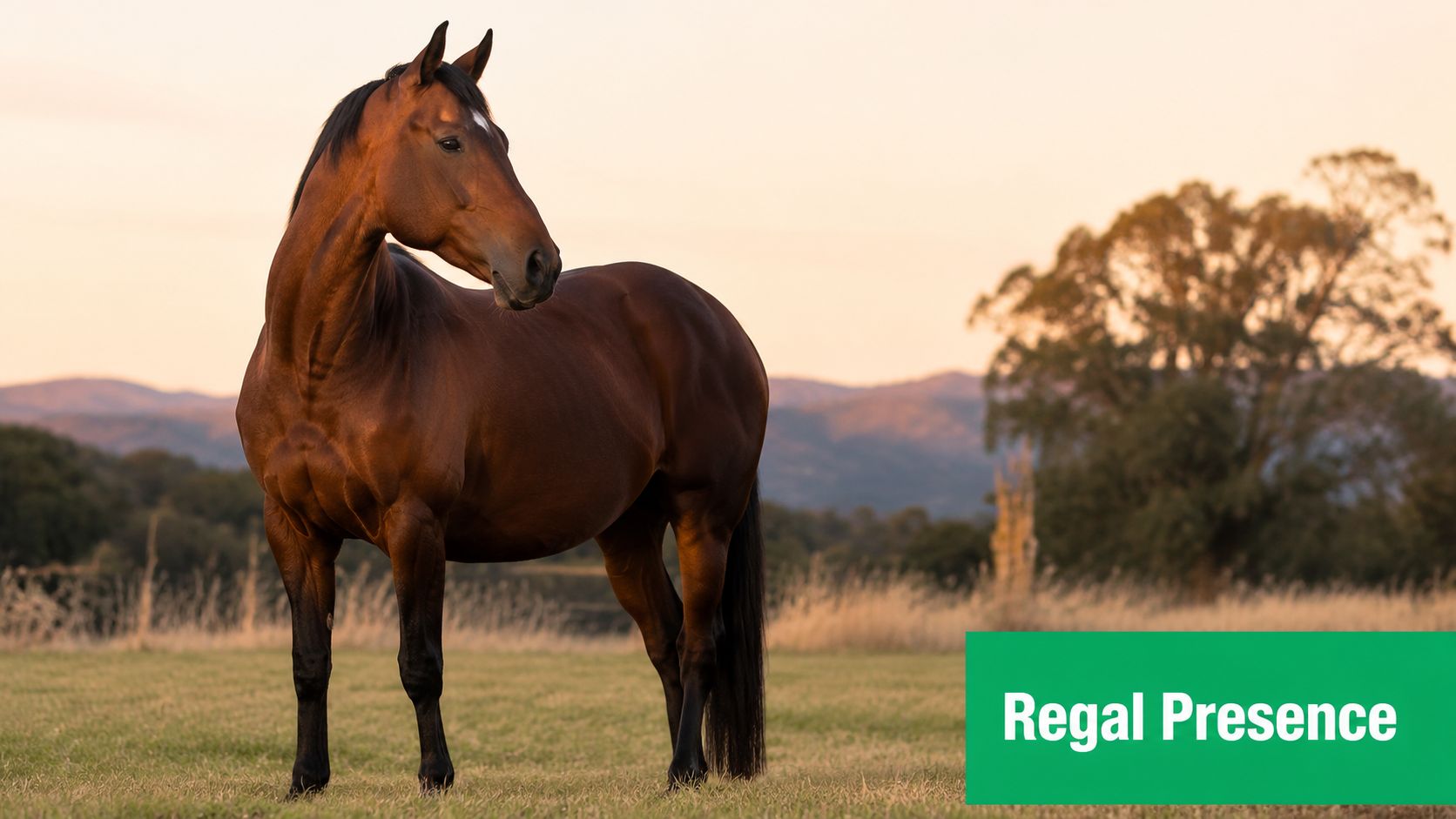
The best thing about Maeve is that it balances feminine identity with authority. It doesn't soften the horse's power, it frames it. That makes it a smart choice for owners who want a mare name that sounds graceful but still carries weight in the stable.
Here's how Maeve tends to fit in real use:
- A competitive mare that performs with attitude and composure.
- A herd leader that others defer to.
- A breeding queen whose offspring matter to the program.
Irish horse-name lists often cluster around mythology and recognisable names like Maeve, which shows how often owners prefer heritage-coded clarity over obscure spellings (Bayequest's Irish horse-name discussion).
8. Liam
The Resolute Protector
Liam, pronounced LEE-um, is one of the most usable Irish names on this list because it's widely recognisable and easy to say. It comes from the Irish form of William, and its meaning points toward a strong-willed protector or resolute defender. That makes it an excellent fit for a horse that is dependable, steady, and self-assured.
Liam works especially well for stallions and geldings, but it can also suit a mare if the horse's temperament leans toward calm leadership. In practical terms, it's a name that travels well across barns, shows, and everyday conversation. People remember it quickly, and that matters when the horse is part of teaching, competition, or breeding.
This is also one of the names that shows why simple Irish names often win. The modern market tends to prefer names that are easy to read and say, and Liam delivers that without losing Irish identity. It's heritage-friendly, but it doesn't ask the listener to work hard.
If the horse is reliable under pressure, Liam feels honest. A lesson horse that keeps beginners safe, a competition gelding that stays composed in busy warm-ups, or a stud horse with a calm but strong presence all suit the name. It also feels appropriate for a horse that you want to present as trustworthy first and flashy second.
For language learners, Liam is a reminder that Irish names don't have to be difficult to be authentic. Some of the strongest choices are the ones that move naturally between tradition and daily use. That's a big reason the name remains such a popular benchmark in the wider world of Irish names for horses.
If the horse's value lies in steadiness, Liam gives you a name that sounds exactly like that value.
8 Irish Horse Names: Pronunciations & Meanings
| Name (Pronunciation) | 🔄 Complexity | ⚡ Resource Needs | 📊 Expected Outcomes | Ideal Use Cases | ⭐ Advantages & 💡 Tips |
|---|---|---|---|---|---|
| Aoife (EE-fa) | Moderate, Irish spelling vs pronunciation; feminine tone | Low, brief pronunciation note for non-Irish speakers | High recognition for spirited, competitive mares | Dressage, show jumping, competition mares | ⭐ Distinctly Irish, strong mythic connotations. 💡 Use for courageous, agile mares. |
| Cormac (COR-mac) | Low, clear stress pattern; masculine | Low, minimal explanation; useful for stud registration | Conveys nobility and breeding value | Stallions, geldings, breeding and sport horses (dark coats) | ⭐ Noble, historic resonance. 💡 Best for dark-colored or stud-bound males. |
| Siobhan (shiv-AWN) | Higher, frequently mispronounced internationally | Moderate, teach pronunciation to handlers and competitors | Signals elegance and refined movement | Dressage mares, show ring, breeding mares with finesse | ⭐ Evokes grace and sophistication. 💡 Correct pronunciation early in the yard. |
| Fionn (FEE-un) | Low, short and easy; versatile gender use | Very low, minimal guidance needed | Memorable, conveys strength and athleticism | Hunters, jumpers, eventers, light-colored competition horses | ⭐ Short, strong and versatile. 💡 Ideal for bold jumpers and hunters. |
| Aisling (ASH-ling) | Moderate, literary/cultural nuance; feminine | Moderate, may need cultural explanation for meaning | Evokes sensitivity, strong rider-horse connection | Therapy horses, dressage partnerships, endurance mares | ⭐ Poetic and evocative. 💡 Share the literary meaning to enhance the name. |
| Declan (DEK-lun) | Low, straightforward pronunciation; masculine | Low, minimal explanation; widely familiar | Conveys reliability, protection and steadiness | Stallions, herd leaders, school/therapy horses | ⭐ Trustworthy, calm connotations. 💡 Use for dependable, steady-tempered horses. |
| Maeve (MAYV) | Low, clear pronunciation; commanding feminine energy | Low, little training needed | Strong regal presence and leadership impression | Champion mares, breeding queens, herd alphas | ⭐ Powerful, memorable leadership name. 💡 Reserve for naturally dominant mares. |
| Liam (LEE-um) | Very low, simple and widely recognized; masculine | Very low, internationally familiar | Conveys resolute protection and approachability | Stallions, geldings, reliable competition or teaching mounts | ⭐ Modern yet traditional; easy to pronounce. 💡 Consider uniqueness, may be common. |
Bring Your Horse's Name to Life
Can you say the name with confidence every time you use it? That is what makes an Irish horse name feel real in daily life. If you choose one, you are also choosing a small language lesson each time you call your horse, fill in a show entry, or talk about them with other riders. Gaeilgeoir AI helps make the name feel less like a label and more like part of your routine.
The best Irish horse names are the ones that fit the animal and still work in ordinary conversation. Aoife suits a bold mare, Cormac suits a horse with authority, Siobhan carries elegance, Fionn gives you speed and clarity, Aisling brings literary depth, Declan feels steady, Maeve sounds regal, and Liam stays strong and practical. Each name also gives you a chance to learn pronunciation, see how Irish spelling works, and pick up a little cultural context along the way.
Irish horse naming has long been tied to heritage, and Horse Racing Ireland still treats naming as a formal process, which shows how much weight a name can carry in the racing world (HRI naming requirements). Modern naming lists also keep returning to short, familiar, heritage-coded names, which shows that readability still matters just as much as meaning (Eventing Nation's Irish horse-name roundup). For language learners, that combination is helpful, because a name can be simple enough to use every day while still carrying a strong Irish identity.
Say your shortlisted name out loud several times, then write it in full and listen to the sound pattern. That helps when a name looks beautiful on paper but still needs to feel natural at the yard, in the ring, or on the phone. Irish names often work like a short lesson in themselves, because the spelling can teach you how sounds travel through the language. If you are learning Irish alongside the naming process, the horse's name can become one of the easiest places to practise.
Start practising at Gaeilgeoir AI and build the confidence to say your horse's name naturally every time. Use the guided practice to connect the name with real Irish speech, and make the choice feel as meaningful as the horse behind it. Protecting that horse matters too, as this New York farmer's horse insurance guide explains.