ireland official languages irish

Ireland has two official languages in the Republic: Irish and English. Irish is the first official language under the Constitution, but English is the language commonly used in everyday life.

That distinction is the part many readers miss. In reviewing the official sources for this article, what stood out to me was how often discussions of the language of Ireland blur three separate questions: constitutional status, daily speech, and regional legal protections. This guide keeps those separate so the answer is clear from the start.

Today, Irish remains central to Ireland’s identity, education system, public signage, and state institutions, while English is the ireland main language for routine day-to-day communication. If you want to explore or practice the irish language itself, tools like Gaeilgeoir AI make that much easier than it was even a few years ago.


How We Framed This Explanation of Ireland’s Official Languages

The editorial method is simple: first, identify the legal status of each language in Ireland; second, distinguish that from how people speak in daily life; third, separate the Republic of Ireland from Northern Ireland so readers do not mix constitutional law with regional protections.

The core sources used here are official and public-interest references, including Article 8 of Bunreacht na hÉireann, Central Statistics Office language data, and Foras na Gaeilge. I think that matters because the phrase ireland official language is often answered too loosely; a good explanation has to show both the legal answer and the practical one.

Historical Journey of the Irish Language

Irish is historically one of Europe’s oldest living languages. Conradh na Gaeilge’s facts and figures notes that the earliest evidence of Irish appears on Ogham stones from the 5th century, that Irish was being written in the Roman alphabet before the beginning of the 7th century, and that it is the oldest written vernacular language north of the Alps. That long record matters because the language of Ireland did not begin as a minority tradition; for much of the island’s history, Irish was the normal spoken language.

Over time, that changed dramatically. Political control, legal pressure, social mobility, and the growing dominance of English under British rule pushed Irish out of many public and economic settings. By the early 20th century, Irish had shifted from the majority tongue to a more regionally concentrated and socially vulnerable language.

The revival movement was a turning point. Conradh na Gaeilge, founded in 1893, helped recast Irish as both a living community language and a national cultural priority. I think this is the key historical bridge readers need: the revival was not only about heritage, but about restoring public legitimacy to a language that had been pushed to the margins. For a modern example of how older languages are now made accessible across media, even through translated video learning, see this CoffeeTrans.

That revival helped shape later state policy. The 1937 Constitution gave Irish formal primacy by stating in Article 8 that Irish is the first official language and English is a second official language. Modern support has continued through schooling, broadcasting, public services, and language-planning policy. Census context also shows why the story is more nuanced than simple decline: the CSO’s comparison of 1926 and 2022 reports that 18% of the population in 1926 were recorded as Irish speakers, while in 2022, 40% of people aged three and over said they could speak Irish at some level. That does not mean Irish replaced English again; it shows that ability, identity, and everyday use are different measurements.

Official Recognition of Irish in Ireland and Northern Ireland

The plain-English answer is this: the Republic of Ireland has two official languages, Irish and English. Irish is the first official language in the Constitution, while English is the most widely spoken everyday language. So if someone asks for the official language of Ireland, the legally complete answer is both Irish and English; if they ask what people mostly speak, the answer is English.

In the Republic of Ireland, Article 8 of the Constitution gives Irish first official status and recognizes English as a second official language. In practice, that first-place wording matters symbolically and institutionally: it supports the use of Irish in state identity, public signage, education, official documents, and certain public services. But it does not mean that all daily life is conducted through Irish. The CSO’s 2022 data shows broad self-reported ability in the irish language, while also breaking usage down by frequency, including daily, weekly, less often, or never outside education. That is why ireland official languages english is also an important part of a fuller answer: English remains the default language in ireland for most homes, workplaces, and media use.

Northern Ireland needs to be treated separately. It is not governed by the Constitution of the Republic, so the phrase first official language does not apply there in the same way. Instead, Irish has legal recognition and protections through more recent legislation, including the Identity and Language (Northern Ireland) Act 2022. Many summaries merge the Republic’s constitutional status with Northern Ireland’s language-rights framework, even though they are different legal systems.

So what does first official language mean? It means Irish has a constitutionally privileged symbolic and legal position in the Republic of Ireland. It does not mean Irish is Ireland's main language in daily conversation, nor that English lacks official standing. Irish is constitutionally first; English is socially dominant.

Linguistic Features and Dialects of Irish

Irish is a Celtic language, part of the Goidelic branch, closely related to Scottish Gaelic and Manx. While it shares some characteristics with these languages, Irish has distinct grammar, syntax, and pronunciation that make it uniquely beautiful and expressive.

There are three main dialects of Irish:

  1. Munster Irish (spoken in the south)
  2. Connacht Irish (west and central Ireland)
  3. Ulster Irish (north, especially Donegal)

These dialectal differences in Irish affect vocabulary, pronunciation, and even grammar. Yet, all dialects are mutually intelligible, and learners often find one that resonates with them personally or geographically.

To explore more about how Irish compares with other Celtic tongues, visit Irish vs. Scottish Gaelic: Key Differences.


Learning and Practicing the Irish Language Today

Irish today is not confined to history books or classrooms for specialists. It appears across primary and secondary education, in Gaeltacht communities where it remains a community language, on bilingual road signs and public notices, in broadcasting, and in parts of government service delivery. Foras na Gaeilge and other public bodies continue to support the visibility and development of the language, which helps explain why Irish can be both a minority spoken language and a highly visible public language at the same time.

What struck me in updating this section is that speaking Irish today often looks different from what outsiders imagine. For some residents, it is a home or community language. For many students, it is a school-based language with varying levels of confidence in actual conversation. For heritage learners and adult returners, it may be a language of identity, travel, media, and part-time use rather than an all-day default language. That still counts as real use, even if it does not resemble majority-language dominance.

With today’s technology, learning Irish is more achievable than ever. Online courses, mobile apps, podcasts, and interactive platforms offer learners of all levels a personalized path to fluency.

Some of the most effective Irish language learning resources include:

Self-study can be flexible, but guided learning with tutors or structured programs offers accountability and quicker progress. For a deeper look into tech-driven learning, check out our article on Learning Gaeilge with Technology.

Revival efforts now combine traditional and digital approaches: school instruction, summer courses in Gaeltacht areas, Irish-language radio and TV, online communities, and learner tools that make daily repetition easier. The result is not a simple return to the past, but a modern bilingual context in which the Irish language question has multiple valid dimensions: legal status, cultural significance, and actual frequency of use.


Practical Aspects: Speaking, Vocabulary Expansion & Pronunciation Skills

Starting your journey into speaking Irish begins with mastering everyday phrases and basic grammar. Key resources to help include:

Here are a few useful phrases to get started:

  • Dia dhuit! – Hello
  • Conas atá tú? – How are you?
  • Go raibh maith agat – Thank you
  • Slán! – Goodbye

Expanding your vocabulary gradually and practicing pronunciation regularly will greatly improve your fluency.


Cultural Expressions and Tools for Enhanced Learning

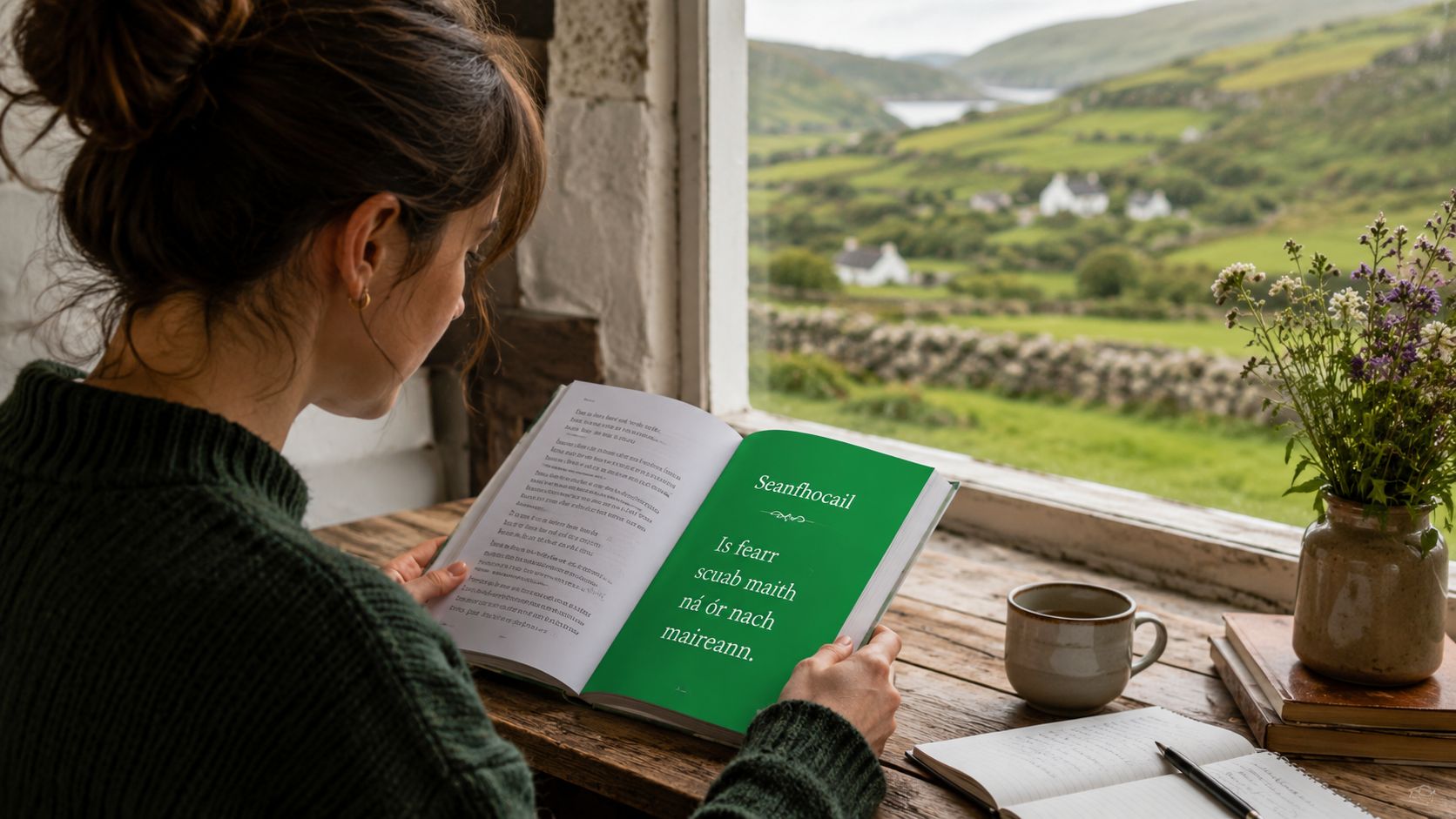
Irish isn’t just a means of communication—it’s a cultural treasure chest. Idiomatic expressions, proverbs, and ancient writing systems like the Ogham script offer learners insights into the Irish worldview.

Explore:

These tools not only enrich vocabulary but also connect learners with Irish history, folklore, and humor—essential ingredients for cultural fluency.

For further external insights, check out Foras na Gaeilge, an organization promoting Irish across the island.


Frequently Asked Questions

What language is mostly spoken in Ireland?

English is the main everyday language in Ireland. The Republic has two official languages, Irish and English, but English is used commonly at home, at work, and in routine public life.

Is Irish an official language of Ireland?

Yes. In the Republic of Ireland, Irish is the first official language under Article 8 of the Constitution, and English is also an official language. That means the official language of Ireland is not just one language in legal terms.

Do Irish people speak Gaelic?

Many people use Gaelic as a loose English label, but in Ireland the more accurate term is Irish, or Gaeilge. Some people in Ireland speak Irish daily, especially in Gaeltacht areas and certain schools or homes, while many more have learned some Irish without using it as their main spoken language.

Why is Irish called the first official language if English is more common?

Because constitutional status and everyday dominance are different things. Irish has the higher symbolic and legal place in the Republic’s Constitution, but English remains the language most commonly spoken day to day.

How do you say “hi” in Irish language?

A common greeting is Dia dhuit, usually understood as “hello.” Learners also meet conversational variants depending on context and dialect, but Dia dhuit is the standard starting point.

How do Irish people say “sorry”?

A common Irish equivalent is Tá brón orm, meaning “I am sorry.” In everyday English-speaking life in Ireland, of course, people often say “sorry” in English.

The Future of the Irish Language: A Summary With a Personal Touch

The clearest takeaway is straightforward: English is the main daily language in Ireland, while Irish remains a constitutionally central and culturally significant official language. If you only look at raw daily-use numbers, you miss part of the picture. Irish has a stronger presence in education, public signage, broadcasting, government identity, and national symbolism than a simple home-use snapshot suggests.

I think that is why the ireland official languages irish question keeps resurfacing. People are really asking two things at once: what the law says, and what daily life looks like. The law says Irish and English are both official in the Republic, with Irish listed first. Daily life says English dominates most routine speech.

That does not make Irish marginal. It makes it a living national language with uneven but meaningful use: stronger in some regions and institutions, weaker in others, yet still highly visible across the country in 2026.

Initiatives like Gaeilgeoir AI are shaping the future of Irish learning. Whether you’re reconnecting with your roots or starting from scratch, there’s a place for you in the global Irish-speaking community.

Ready to begin your journey?
Join thousands of learners embracing Gaeilge today. Sign up for a free trial at Gaeilgeoir AI and start speaking your first Irish words with confidence.
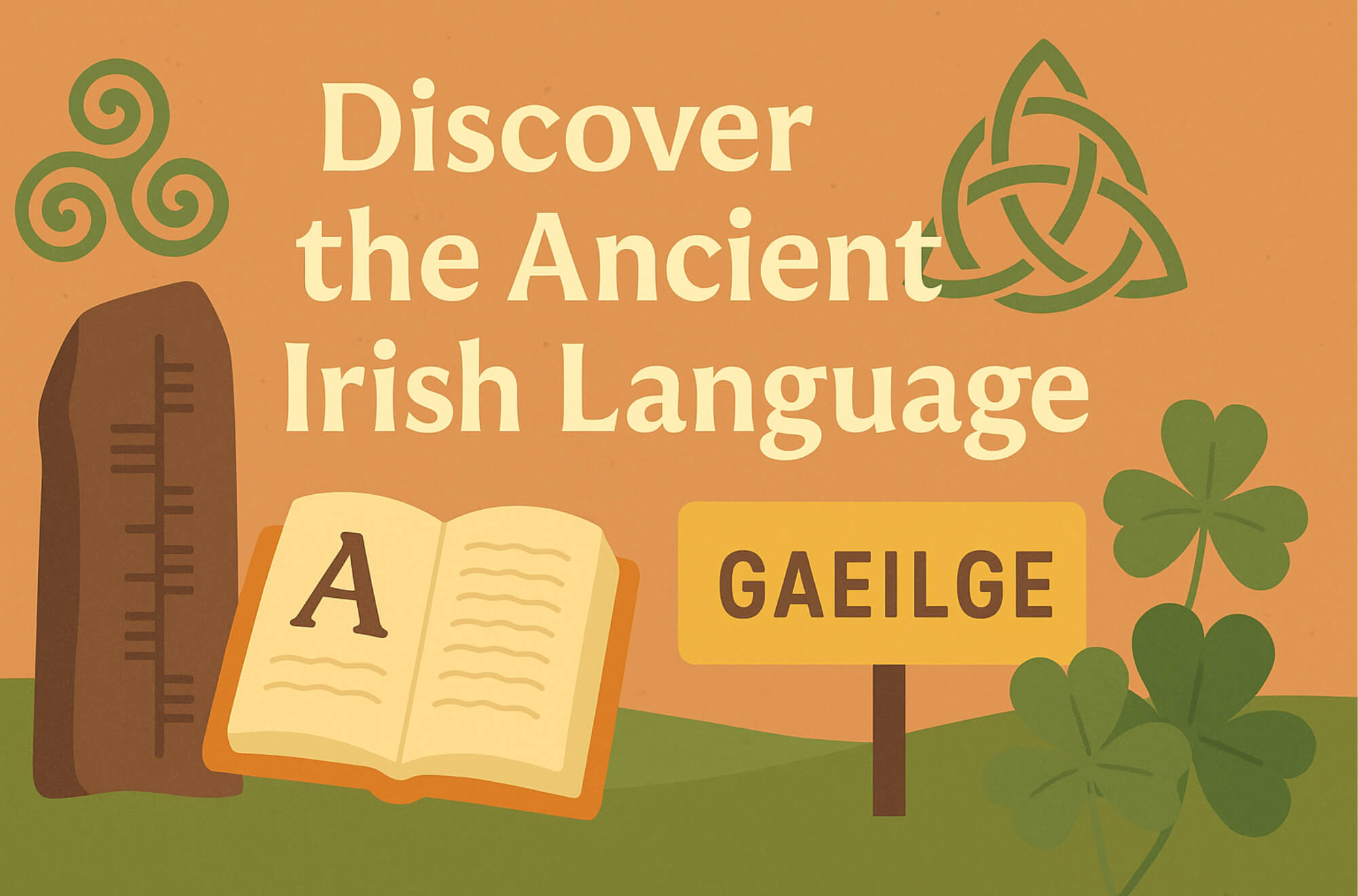
Ancient Irish Language: From Ogham to Old Irish and Modern Gaeilge

The Irish language spoken today has a history stretching back well over a thousand years.

But when people talk about the “ancient Irish language”, they can mean several different things: the earliest Irish preserved in Ogham inscriptions, the Old Irish found in medieval manuscripts, or simply the older forms of Gaeilge from which modern Irish developed.

These aren’t all the same language stage.

Irish changed substantially over the centuries, moving through forms linguists generally describe as Primitive Irish, Old Irish, Middle Irish and Early Modern Irish before developing into the modern Gaeilge spoken today.

Understanding that history gives you a fascinating view of how one of Europe’s oldest literary language traditions developed — and why modern Irish sometimes looks and behaves the way it does.

If your main interest is the language as it exists today, our Irish Language Guide covers modern Gaeilge, its grammar, pronunciation, vocabulary, dialects and history.

What Was the Ancient Irish Language?

There isn’t technically one language called Ancient Irish.

It’s better understood as an informal label for the earlier historical stages of Irish.

A simplified timeline looks like this:

PeriodApproximate datesLanguage stage
Primitive Irishc. 4th–6th centuriesEarliest written Irish, especially Ogham inscriptions
Old Irishc. 600–900Language of early medieval manuscripts and glosses
Middle Irishc. 900–1200Later medieval stage with significant linguistic change
Early Modern Irishc. 1200–1600sLiterary language used across Gaelic Ireland and Scotland
Modern Irishc. 1600s onwardDevelopment toward the dialects and standard forms used today

These boundaries aren’t sudden.

People didn’t wake up one morning speaking Old Irish instead of Primitive Irish. Languages change gradually, and the names are modern linguistic categories used to describe different stages of that development.

Primitive Irish: The Earliest Written Evidence

The earliest substantial written evidence for Irish comes from Ogham inscriptions.

Ogham is an early writing system most strongly associated with inscriptions carved into standing stones, particularly around Ireland and western Britain.

The surviving inscriptions are generally short.

Many record personal names and genealogical relationships rather than long stories or conversations.

That matters because Primitive Irish is not preserved in the same way as Old Irish.

We don’t possess books written in Primitive Irish giving us long passages of everyday speech. Much of what linguists know about the language has to be reconstructed from inscriptions and from later Irish forms.

What Is Ogham?

Ogham is an alphabet traditionally written using groups of strokes or notches arranged along a central line or the edge of a stone.

Many surviving Ogham stones contain names.

You might therefore encounter inscriptions interpreted roughly along the lines of:

[name] son of [name]

or references to family groups and individuals.

Ogham is important because these inscriptions provide some of the earliest direct evidence for the Irish language.

But it’s important not to confuse Ogham with the Irish language itself.

Ogham is a writing system.

Primitive Irish is a historical stage of the language that was written using it.

Just as English can be written in the Roman alphabet without being identical to that alphabet, Primitive Irish and Ogham aren’t interchangeable terms.

Old Irish: The Language of Early Medieval Ireland

By roughly the seventh century, the evidence for Irish becomes much richer.

The stage known as Old Irish is preserved in manuscript material, including glosses written by Irish scholars around Latin texts as well as religious, legal and literary material.

This gives linguists far more information about Old Irish grammar and vocabulary than is available for Primitive Irish.

Old Irish was highly inflected.

Words could change significantly depending on grammatical context, and the language used systems of initial mutation, complex verb forms and grammatical distinctions that would continue to shape later Irish.

For someone who speaks or studies modern Gaeilge, Old Irish can contain recognisable elements while still looking remarkably unfamiliar.

It isn’t simply modern Irish written with unusual spelling.

Can Modern Irish Speakers Understand Old Irish?

Not automatically.

Modern Irish developed from Old Irish, but more than a millennium of linguistic change separates them.

A modern Irish speaker may recognise individual words, roots and grammatical relationships, but reading Old Irish texts generally requires specialist study.

The difference is somewhat comparable to what English speakers experience when approaching much older forms of English — except the exact degree of similarity differs depending on the text and the reader’s training.

Knowing modern Gaeilge is certainly useful if you want to study Old Irish.

But it doesn’t mean an Old Irish manuscript will immediately be understandable.

Old Irish vs Modern Irish

A great deal changed between Old Irish and modern Gaeilge.

Pronunciation shifted.

Word forms changed.

Parts of the grammatical system simplified or reorganised.

Vocabulary developed.

Spelling conventions changed dramatically.

Yet many features familiar to modern learners have deep historical roots.

These include aspects of:

  • initial mutations
  • verb-first sentence structure
  • grammatical gender
  • prepositional pronouns
  • inflected prepositions
  • distinctions connected with broad and slender consonants

Modern Gaeilge is therefore not a separate language that suddenly replaced ancient Irish.

It is the result of centuries of continuous development.

For a broader explanation of the modern language, continue with our Irish Language Guide.

Middle Irish: A Language in Transition

The period traditionally described as Middle Irish, roughly from the tenth through twelfth centuries, saw major changes in the language.

Earlier grammatical distinctions began to change or disappear, and spelling became less consistent in some manuscript traditions.

This period is especially important because many famous Irish narratives survive in manuscripts written during or after it.

Stories associated with figures such as Cú Chulainn, Fionn mac Cumhaill, Medb and the Tuatha Dé Danann were preserved by medieval scribes.

Some stories probably contain material much older than the manuscripts that survive.

But we have to distinguish carefully between:

when a story may have originated

and

when the surviving version was written down.

That distinction is essential when studying Irish mythology and medieval literature.

Early Modern Irish and the Gaelic Literary Tradition

From around the thirteenth century, we enter the period generally called Early Modern Irish or Classical Gaelic in literary contexts.

A highly standardised literary language was used by professional poets and learned families across Gaelic Ireland and Scotland.

This shared literary tradition existed alongside spoken regional varieties.

Professional poets underwent extensive training and produced sophisticated verse for Gaelic patrons.

The language of this literary tradition was deliberately conservative and shouldn’t simply be treated as a transcript of everyday speech.

This distinction between formal literary language and spoken varieties becomes increasingly important as Irish approaches the modern period.

When Did Modern Irish Develop?

The modern dialects of Irish developed gradually from earlier spoken forms.

By the early modern period, regional differences were increasingly important, eventually contributing to the dialects now broadly associated with areas such as:

  • Munster
  • Connacht
  • Ulster

These modern dialect categories should not simply be projected backwards unchanged onto Old Irish.

Regional variation almost certainly existed in earlier periods, as it does in virtually all widely spoken languages, but the modern dialect divisions developed through later linguistic history.

Today, modern Irish includes living dialect traditions as well as An Caighdeán Oifigiúil, the official written standard.

Was Ancient Irish a Celtic Language?

Yes.

Irish belongs to the Celtic language family.

More specifically, it belongs to the Goidelic branch alongside:

  • Scottish Gaelic
  • Manx

The other surviving branch of Celtic languages is generally described as Brittonic or Brythonic, containing:

  • Welsh
  • Breton
  • Cornish

Irish therefore shares deeper historical ancestry with all of these languages, while being particularly closely related to Scottish Gaelic and Manx.

This doesn’t mean Irish, Welsh and Scottish Gaelic are simply dialects of one language.

They are distinct languages with long histories of independent development.

How Are Irish and Scottish Gaelic Related?

Irish and Scottish Gaelic share particularly close historical connections.

The Gaelic varieties spoken in Ireland and Scotland emerged from a shared linguistic tradition, and the literary Gaelic world historically crossed the modern political boundary between the two countries.

Over time, the spoken languages developed separately.

Modern Irish and modern Scottish Gaelic now have different spelling conventions, pronunciation patterns, vocabulary and grammatical features, although their relationship remains clearly visible.

Manx belongs to the same Goidelic branch and developed on the Isle of Man.

What Did Old Irish Sound Like?

We obviously don’t have recordings from early medieval Ireland.

Historical linguists reconstruct aspects of Old Irish pronunciation by studying spelling, linguistic change, related languages, manuscript evidence and other clues.

That reconstruction is scholarly work rather than direct preservation.

As a result, when you hear someone pronounce Old Irish today, you’re hearing a modern reconstruction of historical pronunciation.

That doesn’t make it arbitrary.

But it is different from listening to a recording of an actual eighth-century speaker.

Why Does Irish Have Initial Mutations?

One of the features modern Irish learners notice quickly is that the beginning of a word can change.

For example, consonants may undergo lenition or eclipsis depending on grammatical context.

These systems have deep roots in the historical development of the language.

Some mutations developed partly because sounds changed depending on the sounds that originally surrounded them.

Over centuries, words that caused those changes could become reduced or disappear while the consonant changes remained grammatically meaningful.

What once arose from pronunciation could therefore become part of the grammar.

This is one of the places where studying historical Irish can actually make features of modern Gaeilge seem less mysterious.

Ancient Irish Literature

Ireland possesses an exceptionally rich medieval manuscript tradition.

Texts survive across numerous genres, including:

  • heroic narrative
  • mythology
  • law
  • genealogy
  • poetry
  • religious writing
  • saints’ lives
  • linguistic scholarship
  • history and pseudo-history
  • wisdom literature

Many of the stories now grouped under Irish mythology survive because medieval scribes preserved them in manuscripts.

The manuscripts themselves are Christian-era documents, often produced in learned ecclesiastical environments.

That makes interpretation fascinating but complicated.

A medieval text can preserve older traditional material while also reflecting the worldview and literary conventions of the period in which it was written.

The Irish Mythological Cycles

Irish medieval narrative is often organised by modern scholars and readers into several broad cycles.

These include:

The Mythological Cycle — stories involving the Tuatha Dé Danann and legendary invasions of Ireland.

The Ulster Cycle — centred on figures such as Cú Chulainn, Conchobar and Medb.

The Fenian Cycle — associated with Fionn mac Cumhaill, Oisín and the Fianna.

The Cycles of the Kings — narratives centred on legendary and semi-historical kings.

These categories are useful, although the medieval storytellers themselves didn’t necessarily organise the material in precisely the same way modern websites and books do.

The language of surviving versions also varies depending on when texts were copied and transmitted.

Did Ancient Irish Preserve Pre-Christian Religion?

To some extent, but the answer requires caution.

Medieval Irish literature contains figures, places and narrative traditions that almost certainly have roots in pre-Christian Ireland.

But most of the substantial texts survive because Christian scribes wrote them down.

We therefore don’t have a pristine written archive of pre-Christian Irish religion created before Christianity arrived.

What we have is a medieval literary tradition in which older material and later interpretation interact.

That makes the sources extraordinarily valuable, but it also means modern claims such as “the ancient Celts definitely believed X” should be treated carefully.

Ancient Irish Names

Old and medieval Irish sources preserve an enormous number of personal names.

Some remain familiar today in modernised or anglicised forms.

Others are encountered primarily through mythology, genealogy and historical writing.

Names such as:

Medb

Cú Chulainn

Fionn

Oisín

Niamh

Gráinne

Conchobar

have remained culturally recognisable through stories that survived for centuries.

But the spelling of names can vary between historical periods and manuscripts.

Modern Irish forms shouldn’t always be assumed to be identical to their earliest recorded forms.

Irish Placenames and the Older Language

One of the most visible legacies of historical Irish is Ireland’s landscape.

Thousands of placenames preserve Irish words describing geographical features, people, settlements, religious sites and historical associations.

Elements such as:

baile — townland / settlement

cill — church

dún — fort

lios — ringfort/enclosure

gleann — valley

loch — lake

appear repeatedly across Ireland.

Anglicisation often altered the visible spelling of these names, but the Irish origin can still be recovered in many cases.

That means traces of Gaeilge’s history remain embedded in maps people use every day.

Did the Vikings Change Irish?

Norse settlement introduced new cultural and linguistic contact.

Old Norse contributed vocabulary to Irish, particularly in areas connected with trade, seafaring and urban life.

Contact also worked in the opposite direction.

The Norse communities of Ireland interacted with Irish speakers for generations, producing a complex cultural environment rather than a simple story of one language replacing another.

Later contact with Norman French and English would likewise contribute vocabulary and influence Ireland’s linguistic landscape.

Irish continued changing throughout all these periods.

Did English Replace Irish?

Not suddenly.

The decline of Irish as the majority language took place over centuries and was connected with major political, economic and social changes.

English expansion, conquest, colonisation, changes in land ownership, the collapse of the Gaelic learned order, schooling, economic pressures, famine and emigration all played roles at different times.

By the nineteenth century, Irish had undergone a devastating contraction.

But it never disappeared.

Communities continued speaking Gaeilge, particularly in western regions, and language revival movements later worked to support its teaching and public use.

Today, Irish remains a living language rather than simply an object of historical study.

Ancient Irish and Gaeilge Today

Modern Gaeilge is not Old Irish preserved unchanged.

But neither is the historical language irrelevant to modern speakers.

The connection is continuous.

Modern words descend from older forms.

Grammatical patterns preserve historical developments.

Placenames carry older vocabulary.

Songs and stories transmit language across generations.

Medieval manuscripts preserve narratives that still influence Irish culture.

Studying ancient Irish therefore offers a deeper view of Gaeilge today.

And studying modern Irish gives you access to the living language that developed from that history.

For modern grammar, pronunciation, vocabulary, dialects and everyday usage, explore the full Irish Language Guide.

Can You Learn Old Irish Today?

Yes, but Old Irish is normally studied differently from modern spoken Gaeilge.

People often approach it through historical linguistics, medieval studies, Celtic studies or specialist textbooks and university courses.

You’ll need to learn historical grammar and spelling conventions that differ significantly from modern Irish.

If your goal is to speak Irish today, begin with modern Gaeilge.

If your goal is to read early medieval texts in their historical language, Old Irish is a specialist but fascinating area of study.

The two goals can complement each other, but they aren’t identical.

Should Beginners Learn Old Irish?

Usually not as their first route into modern Gaeilge.

If you want to converse, listen to contemporary Irish media or communicate with Irish speakers, modern Irish should be your starting point.

Old Irish makes more sense once you have a particular interest in medieval literature, historical linguistics or the development of Celtic languages.

Someone can absolutely study both.

But learning Old Irish is not a shortcut to conversational modern Gaeilge.

Ancient Irish vs Old Irish: What’s the Difference?

Ancient Irish is an informal general expression.

Old Irish is a specific linguistic term referring to a particular historical stage of Irish, generally associated with roughly the seventh through ninth centuries.

So if you’re talking about the language of medieval glosses and early manuscript material, Old Irish is the more precise term.

If you’re speaking broadly about Ireland’s earliest language history, “ancient Irish” can be understandable as a general description.

Irish Language History at a Glance

The easiest way to remember the development is:

Primitive Irish
Earliest inscriptional evidence, particularly Ogham.

↓

Old Irish
Early medieval literary language.

↓

Middle Irish
A period of major linguistic development and extensive manuscript transmission.

↓

Early Modern Irish / Classical Gaelic
A highly developed literary tradition across Gaelic Ireland and Scotland.

↓

Modern Irish / Gaeilge
The living language spoken and learned today.

Each stage grew from the one before it.

Irish didn’t disappear and restart.

It evolved.

Frequently Asked Questions

What is ancient Irish called?

There isn’t one formal historical stage called “Ancient Irish”. The earliest documented stages are generally called Primitive Irish and Old Irish.

Is Old Irish the same as Gaeilge?

Old Irish is an earlier historical stage of the language that eventually developed into modern Gaeilge. They are closely related historically but significantly different in grammar, pronunciation and spelling.

How old is the Irish language?

Irish has written evidence going back to the early centuries AD through Ogham inscriptions, while its linguistic ancestors are older still. Precisely dating when a distinct form of Irish emerged is more complicated than assigning the language a single birthday.

Was Ogham written in Old Irish?

The earliest Ogham inscriptions largely represent the language stage usually called Primitive Irish, which predates Old Irish.

Can Irish speakers understand Old Irish?

Not automatically. Some material may look recognisable, but Old Irish generally requires specialist study even for speakers of modern Gaeilge.

Is Irish one of the oldest languages in Europe?

Irish has one of Europe’s important long-standing written and literary traditions, but claims that it is simply “the oldest language in Europe” are misleading. Languages evolve continuously, and many European languages have ancient linguistic histories.

Is Scottish Gaelic descended from Irish?

Irish and Scottish Gaelic developed from a closely connected Goidelic linguistic tradition. Their history involves migration, political relationships and centuries of shared literary culture before the modern languages diverged further.

Is ancient Irish still spoken?

Primitive Irish and Old Irish are no longer everyday spoken languages. Modern Gaeilge is the living descendant of those historical stages.

Explore the Irish Language Today

The history of Irish is remarkable precisely because it isn’t only history.

The language that appears on Ogham stones, medieval manuscript pages and early poetry belongs to the long linguistic ancestry of a language still being spoken today.

Modern Gaeilge has changed enormously from Old Irish, but the connection between them has never been broken.

If the historical journey has made you curious about the language itself, continue with our Irish Language Guide to explore modern Irish grammar, pronunciation, vocabulary, phrases, dialects and more.

Final Thoughts

The ancient Irish language isn’t one frozen language from Ireland’s distant past.

It’s a story of continuous change.

Primitive Irish survives in Ogham inscriptions.

Old Irish gives us the extraordinary linguistic world of early medieval Ireland.

Middle Irish preserves and develops a vast literary tradition.

Early Modern Irish connects the learned cultures of Ireland and Gaelic Scotland.

And modern Gaeilge carries that history forward as a living language.

Understanding those stages gives you something more valuable than a collection of ancient words.

It shows you that Gaeilge has always been changing, adapting and surviving.

The language has a past measured in centuries.

But it also has a present.

Unlock Fluency with Top Irish Immersion Courses

If you’re serious about learning the Irish language, Irish immersion courses are one of the most powerful tools available. Immersion is more than just studying vocabulary or memorizing grammar rules—it’s about living the language, engaging with it naturally in real-world situations. Whether you’re a beginner or an intermediate learner, immersing yourself in Irish (Gaeilge) accelerates fluency by surrounding you with authentic language use, culture, and context.

At Gaeilgeoir AI, we believe that immersion isn’t limited to physical classrooms in the Gaeltacht. With today’s technology, language immersion can happen anywhere, anytime. In this article, we’ll explore the top Irish immersion courses—both physical and digital—and how AI-powered tools can elevate your learning journey.


Understanding Irish Language Learning Resources

There’s never been a better time to learn Gaeilge, thanks to a growing collection of Irish language resources. From mobile apps and podcasts to AI chat tools and flashcards, learners now have a variety of methods tailored to different learning styles.

Types of Resources That Support Irish Immersion:

  • Digital Flashcards for vocabulary building
  • AI-driven dialogue simulations to mimic real conversation
  • Interactive quizzes and pronunciation guides
  • Podcasts and videos in Irish
  • Daily Irish language practice plans

These tools help recreate the immersive experience you’d get from living in a Gaeltacht region. To see some of these in action, check out our guide to learning Gaeilge with technology.


Exploring Online Irish Language Courses

While in-person immersion in Ireland is ideal, online Irish language courses are making immersion accessible to learners around the world. These virtual platforms combine video lessons, live classes, and self-paced modules that replicate classroom interactions in a flexible format.

Benefits of Online Immersion Courses:

  1. Learn from anywhere — no travel required
  2. Structured curriculums with measurable goals
  3. Live interaction with native speakers and tutors
  4. Supplemental media like recordings, forums, and reading exercises

Platforms like Gaeilgeoir AI take this a step further by integrating AI-driven tools that provide real-time feedback on pronunciation, grammar, and conversation flow. Unlike passive courses, learners interact directly with intelligent systems that guide and adapt based on their progress.

For more options, visit our online Irish language courses page.


Mastering the Irish Language Through Pronunciation and Vocabulary Expansion

A core part of Irish immersion courses is mastering pronunciation and vocabulary—key building blocks of any language. In Irish, pronunciation can be particularly tricky due to its distinct sound system and use of lenition.

Tips to Improve Pronunciation:

  • Use a reliable Irish pronunciation guide
  • Practice with AI speech tools that mimic native speakers
  • Listen and repeat phrases from authentic Irish recordings

As for expanding your Irish vocabulary, immersion allows words and phrases to appear in natural contexts, making them easier to remember and use. Combine immersion with structured tools like flashcards and contextual quizzes to reinforce learning.

Need help expanding your vocabulary? Dive into our guide on how to expand your Irish vocabulary.


Diving Into Irish Grammar and Conversation Skills

Another pillar of immersion is understanding grammar and practicing real conversations. Irish grammar differs significantly from English and even its Celtic cousin, Scottish Gaelic.

Key Grammar Insights:

  • Verb-subject-object (VSO) structure
  • Initial mutations (lenition and eclipsis)
  • Gendered nouns and agreement

Check out our comparison of Irish and Scottish Gaelic grammar to explore more.

For conversational skills, begin with essential expressions from our basic Irish conversation guide. Practicing these regularly—even virtually with AI tutors—helps solidify the rhythm and structure of real dialogue.


Enhancing Your Learning Journey with Tutors and Additional Resources

A strong immersion course often includes access to qualified tutors, who personalize the experience and offer corrections that automated tools might miss. One-on-one sessions ensure steady progress and boost confidence in speaking.

Why Consider a Tutor?

  • Personalized feedback and tailored lessons
  • Deeper cultural insights
  • Accountability and structure

To complement this, we recommend incorporating tools like Irish language flashcards to enhance memory retention. Flashcards are a tried-and-true method, especially effective when reviewing high-frequency terms.

Need help finding expert support? Here’s how to find an Irish tutor for enhanced learning.


Immersing Yourself in the Culture and History Behind the Irish Language

True immersion goes beyond just grammar and vocabulary—it’s about experiencing the culture, history, and soul of the language. When learners connect emotionally with a language, retention and enthusiasm skyrocket.

Ways to Culturally Immerse Yourself:

  • Read traditional Irish literature and poetry
  • Listen to sean-nós music and Irish folk songs
  • Study historical events that influenced language use
  • Watch Irish-language TV and films

Understanding the language’s past helps contextualize its structure and expressions. Our article on the history of learning Gaeilge offers a compelling look into this fascinating journey.

By enrolling in Irish immersion courses, you don’t just learn a language—you step into a legacy.


Real-World Success Stories from Irish Immersion Students

Learners around the globe have experienced powerful transformations thanks to immersive learning environments. Some join Gaeltacht-based courses, while others use online tools daily for a few minutes at a time.

Common Outcomes:

  • Improved speaking confidence
  • Ability to hold full conversations in Irish
  • Deeper appreciation for Irish identity and culture

One learner from Canada shared, “I never thought I could speak Irish until I started combining AI-powered tools with daily immersion practices. Gaeilgeoir AI made it possible.”

Want to join a community of learners like this? You’re just one step away.


Whether you’re just beginning or looking to level up your Gaeilge, Irish immersion courses offer the most effective, enriching path to fluency. With options ranging from in-person programs to AI-powered virtual experiences, learners have more flexibility and support than ever before.

Gaeilgeoir AI is here to help you immerse yourself fully—with dynamic tools, expert guidance, and a passionate community of learners by your side.

👉 Ready to experience Irish immersion the smart way?
Sign up for a free trial and begin your journey toward fluency with Gaeilgeoir AI.

How to Say Happy Birthday in Irish

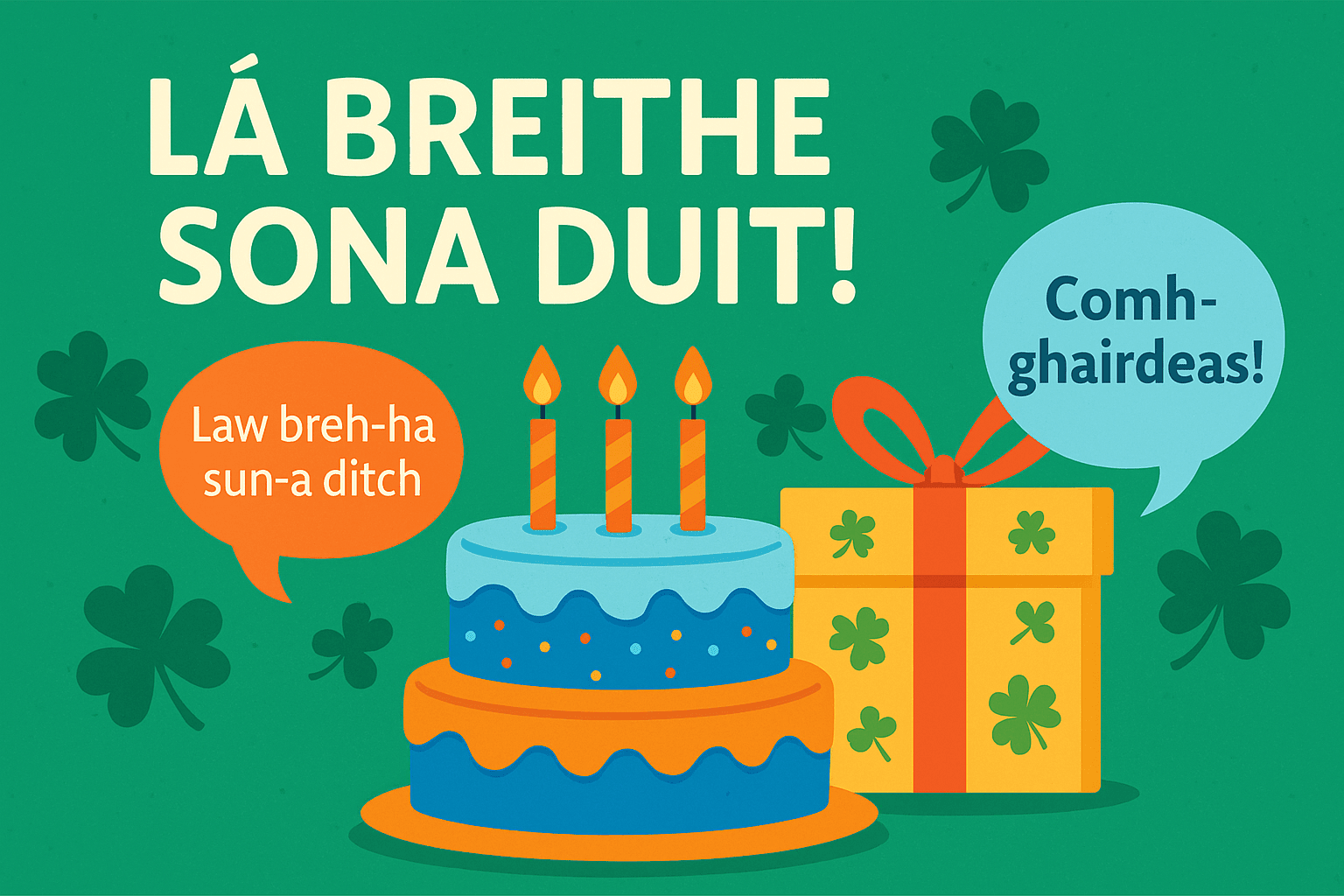
Festive digital illustration with the Irish birthday greeting 'Lá Breithe Sona Duit!' in bold white letters, a two-tier birthday cake with candles, a gift box decorated with shamrocks, and speech bubbles showing the pronunciation 'Law breh-ha sun-a ditch' and the word 'Comhghairdeas!' on a green background.

The natural everyday way to say happy birthday in Irish is Lá breithe sona duit! If you only need one phrase to put in a card, text to a friend, or say out loud in person, that is the one to learn first. In this guide, we focus on what people usually want most: the exact phrase, what it means word by word, how to pronounce it, when to use the formal alternatives, and a few birthday wishes that sound warm rather than copied from a phrase list.

How We Chose the Irish Birthday Phrases in This Guide

We selected these phrases using four editorial filters: standard modern Irish usage, beginner friendliness, suitability for real situations like speech/cards/texts, and likelihood that a learner can pronounce them without mangling the message. We also checked forms against Irish-learning and dictionary-style sources rather than relying on decorative “Gaelic quote” lists.

In practice, that meant excluding lines that are overly formal, regionally narrow, or so context-specific that a beginner could use them awkwardly. The most useful phrases are usually the shortest ones people can remember and say with confidence.

How to Say Happy Birthday in Irish

The most common way to say happy birthday in Irish is:

“Lá breithe sona duit!”

Pronunciation: Law BREH-heh SUN-uh ditch

This is the standard everyday phrase for saying “happy birthday” to one person. It is also the form most learners mean when they look for happy birthday in Irish Gaelic, happy birthday as Gaeilge, or birthday in Irish. A beginner-friendly explanation from Bitesize Irish notes that the singular form is duit, while daoibh is used when addressing more than one person.

Word by word, the phrase is useful because it shows how ordinary Irish works. Lá means “day,” breithe relates to “birth,” sona means “happy,” and duit means “to you” when speaking to one person. I find this breakdown helps learners remember the phrase much faster than memorizing it as one sound blob.

That final word matters. If you are talking to one birthday person, use duit. If you are wishing more than one person a happy birthday together, the plural form is Lá breithe sona daoibh! Most readers will only need the singular, but knowing the switch explains why Irish greetings often change depending on who is being addressed.

In everyday speech, Lá breithe sona duit! sounds completely natural. It works face to face, in a WhatsApp message, in a birthday card, or as the spoken line before singing. We checked this section against standard learner references and kept the version that is both common and usable, not just technically correct.

A Slightly More Formal Version:

“Go maire tú do lá breithe!”

Pronounced: Guh MAIR-eh too duh law BREH-heh

Meaning: “May you enjoy your birthday!”

This version is warmer and more literary than the standard phrase. It fits nicely in a card, a caption, or a longer birthday message, but it is less likely to be the first thing said casually at a party. If you want something natural in speech, stick with Lá breithe sona duit; if you want something that reads a little more special on paper, this is a good choice.

Simple real-life examples

  • Text message: Lá breithe sona duit, a chara! Bain sult as do lá. (“Happy birthday, friend! Enjoy your day.”)
  • Birthday card line: Go maire tú do lá breithe agus go n-éirí an t-ádh leat i gcónaí. (“May you enjoy your birthday and may luck always go with you.”)
  • Saying it in person: Lá breithe sona duit! Short, direct, and the most practical version for everyday use.

Irish Birthday Traditions: A Cultural Snapshot

Irish birthday celebrations combine traditional customs with modern fun. Here are some cultural insights that make Irish birthdays unique:

  • The Birthday Bump (or Bumps): One widely repeated custom is lifting the birthday person and gently bumping them on the ground once for each year of age, plus one extra bump for good luck.
  • Nose Buttering: Another tradition sometimes mentioned is butter being smeared on a child’s nose, possibly as a sign of good fortune or abundance.
  • Music and Toasts: Songs, lively gatherings, and simple toasts such as Sláinte! often fit naturally into birthday celebrations.

These customs are not universal across all of Ireland, but they show how birthdays in Irish culture are often described as playful as well as family-centred.

Other Useful Irish Birthday Phrases

A good Irish birthday message is not always just one sentence. These are the extra phrases most worth knowing if you want your greeting to sound casual, warm, or slightly traditional instead of copied from a generic list.

Comhghairdeas!

Meaning: “Congratulations!”
Use it when: you want a short celebratory add-on, especially in speech or a cheerful message.
Tone: casual and upbeat.

This can work around birthdays, but it is broader than birthdays alone. Irish speakers also use it for achievements, weddings, exam results, and other congratulations, so it should not replace Lá breithe sona duit by itself.

Bain sult as do lá!

Meaning: “Enjoy your day!”
Use it when: you want a natural follow-up in a text, card, or spoken greeting.
Tone: warm and friendly.

This is one of the easiest birthday add-ons for beginners because it feels natural in modern messages. In our experience, learners remember it quickly and it pairs well with the main birthday phrase without sounding stiff.

Go maire tú do lá breithe!

Meaning: “May you enjoy your birthday!”
Use it when: writing in a card, adding a more thoughtful line to a social post, or speaking a little more formally.
Tone: warm, slightly traditional.

This is a good option when plain irish happy birthday wording feels too brief for the occasion. It is more elegant on the page than in quick speech, which is why I usually recommend it for messages rather than for the first thing you say out loud.

Go n-éirí an t-ádh leat.

Meaning: “May luck go with you.”
Use it when: you want to add a blessing-style line after the main greeting.
Tone: warm and traditional.

This is not a birthday-exclusive phrase, but it fits beautifully in birthday cards because it expresses goodwill beyond the day itself. It works especially well for a friend, family member, or anyone who would appreciate a more Irish-flavoured message.

Go mbeire muid beo ag an am seo arís.

Meaning: “May we all be alive at this time again.”
Use it when: offering a traditional-style toast or ending a gathering with a blessing.
Tone: traditional, reflective.

This line is broader than birthdays and can sound old-fashioned if dropped into a casual text. It is best used when you want a blessing or toast feel, not as your main birthday greeting.

A simple card-friendly birthday blessing

If you want one fuller line that feels affectionate without becoming too ornate, use this structure:

Lá breithe sona duit, agus go n-éirí an t-ádh leat i gcónaí.
“Happy birthday, and may luck always go with you.”

It reads naturally in a card and gives you more than a bare translation of gaelic happy birthday. For most readers, this is the most useful “traditional-feeling” option because it still sounds understandable and warm.

Why Learn Birthday Phrases in Irish?

Birthday greetings are one of the easiest ways to make Irish feel usable rather than abstract. You learn a phrase you can say, you hear how Irish changes for singular and plural, and you get a low-pressure way to use the language with family or friends.

They also connect well with other everyday expressions. If you want to build outward from birthday greetings into common social Irish, check out our Irish Language Greetings & Phrases Guide.

Pronunciation Tips with Gaeilgeoir AI

If the spelling looks intimidating, the biggest pronunciation win is to stop trying to read every letter as if it were English. In Lá breithe sona duit, the stress usually falls early in each word group: LÁ, BREI-the, SO-na, duit. English speakers often flatten the phrase into something like “laa bree-thay sona doo-it,” which sounds much less natural.

A simple approximation is Law BREH-heh SUN-uh ditch. A more careful version softens the middle sounds and keeps breithe lighter than many learners expect. The pronunciation guidance in teanglann.ie is helpful here because it lets you hear Irish sounds instead of guessing from spelling alone.

The two places people most often go wrong are breithe and duit. Learners tend to overpronounce breithe as three heavy syllables, and they often say duit like English “doo-eet.” When we coach beginners, I usually hear the phrase improve fastest once they shorten the middle and keep the ending crisp.

We also test pronunciation by having learners record the full phrase, then compare it to a slower model before speeding up. That is why I recommend practicing the whole line in one breath rather than word by word first. For a fuller sound-by-sound breakdown, see our Irish Pronunciation Guide.

If you want feedback while practicing, Gaeilgeoir AI can help after you have the basic sound in your ear. It is most useful for repetition and confidence-building, not as a replacement for hearing good Irish pronunciation first.

Celebrating Birthdays in Irish: Tech Meets Tradition

People often use Irish birthday greetings in very ordinary ways: saying the phrase in person, writing it in a card, sending it by text, or adding it to a social post. That is where happy birthday in gaelic irish or happy birthday in irish language matters most in real life, not in staged language exercises, but in small social moments where one authentic phrase goes a long way.

For spoken use, keep it short: Lá breithe sona duit! For cards, you can add one extra line such as Bain sult as do lá! or Go n-éirí an t-ádh leat. For social captions, the plain phrase is often enough, especially if the recipient has only a little Irish. Simpler usually sounds better than trying to stack several phrases you cannot pronounce confidently.

There is also room for small traditional touches. A toast like Sláinte! works naturally at a meal or gathering, and birthday blessings fit well in cards for relatives. Some Irish birthday customs described by Irish Jewelry Craft include playful “birthday bumps” and other family traditions, though these are not universal across every home or region.

If you are sending a voice note, record the phrase once slowly and once at normal speed. That tends to sound more personal than a copied text line. Near milestone birthdays, you can also pair the Irish greeting with a themed celebration idea, like the ones shared over at That Blanket Co, then keep the greeting itself simple and genuine.

The choice between a simple phrase and a more traditional one depends on your audience. If the person knows little or no Irish, Lá breithe sona duit is ideal because it is clear, short, and recognisable. If they enjoy Irish culture or you are writing a keepsake card, adding a blessing-style line gives the message more warmth without making it hard to understand.

Learn Beyond Birthdays

Once you’ve mastered birthday greetings, it’s easy to branch into other everyday phrases and affectionate expressions.

Why Gaeilgeoir AI Makes Language Learning Easy and Fun

Gaeilgeoir AI is most helpful when you already know what you want to say and need support saying it clearly and confidently. For birthday language, that means practicing one useful phrase, hearing it repeatedly, and getting comfortable enough to use it in a real message instead of leaving it in your notes app.

That is also why we keep pointing learners back to practical phrases first. A small set of usable expressions beats a long list you never say out loud. If you want to continue from greetings into more structured learning, explore our Online Irish Language Courses.

Trusted Resources in Irish Education

For deeper reference on Irish words and pronunciation, good starting points include Teanglann and Foclóir.ie, both of which are useful for checking meanings, audio, and standard forms. We reviewed birthday phrasing against sources like these because decorative “Celtic quote” pages often mix Irish with vague pseudo-traditional wording.

For a non-language resource linked to celebrations more broadly, you might also enjoy this birthday gift article if you are pairing a greeting with a present.

Frequently Asked Questions

How do the Irish say happy birthday?

The usual way is Lá breithe sona duit when speaking to one person. If you are addressing more than one person, the plural form is Lá breithe sona daoibh. For everyday use, the singular version is the one most learners need.

What does Lá breithe sona duit mean?

It means “Happy birthday to you.” More specifically, the phrase is built from words meaning “day,” “birth,” “happy,” and “to you.” That final part, duit, changes depending on who is being addressed, which is why Irish greetings often shift form slightly.

What is a traditional Irish birthday blessing?

A practical traditional-style option is Lá breithe sona duit, agus go n-éirí an t-ádh leat i gcónaí, meaning “Happy birthday, and may luck always go with you.” It sounds warm and card-friendly without becoming too formal. If you want something very short, Go n-éirí an t-ádh leat also works well as an added blessing line.

How do you wish an Irish friend a happy birthday?

For a friend, keep it simple and natural: Lá breithe sona duit, a chara! Bain sult as do lá. That means “Happy birthday, friend! Enjoy your day.” In our experience, this sounds more genuine than trying to force a long formal blessing into a casual message.

Is happy birthday in Irish the same as happy birthday in Gaelic?

Many people use “Irish” and “Gaelic” loosely when they mean the Irish language. If you are looking for happy birthday in gaelic in the Irish sense, the phrase you want is Lá breithe sona duit. It is better to say “Irish” or “Irish Gaelic” when you want to be specific, because “Gaelic” can also refer to Scottish Gaelic.

Start Saying “Happy Birthday” in Irish Today!

If you remember one line from this guide, make it Lá breithe sona duit. It is the standard, natural, and most useful way to say happy birthday in Irish, whether you are speaking, texting, or writing in a card.

Ready to practice it out loud? Sign up for Gaeilgeoir AI and start your free trial today. Join a growing community of passionate Irish learners around the world!

Master Irregular Irish Verbs with Ease

Learning to master irregular Irish verbs is a key step on your journey to fluency in the Irish language. While regular verbs follow predictable patterns, irregular verbs often require a deeper understanding and consistent practice. Mastering these unique verbs enhances your speaking and writing abilities, allowing you to express yourself more naturally and accurately in Irish. Whether you’re just beginning or advancing your studies, focusing on irregular Irish verbs will take your language skills to the next level.


Understanding Irish Verbs

In Irish, verbs play a central role in sentence structure and meaning. Just like in English, Irish verbs can be either regular or irregular.

  • Regular verbs follow a consistent conjugation pattern across tenses.
  • Irregular Irish verbs, however, deviate from standard patterns and require memorization and context-based learning.

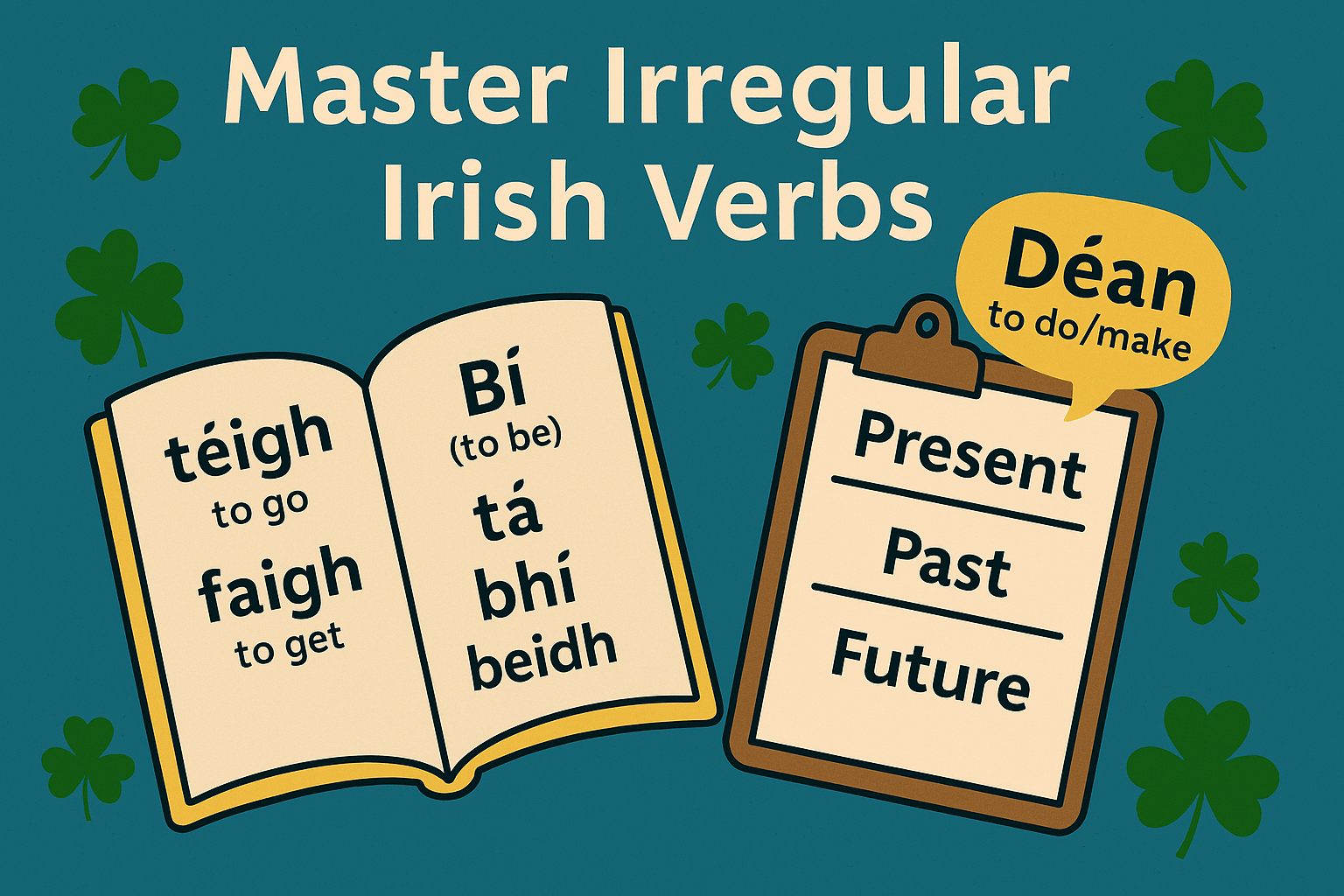
There are 11 commonly recognized irregular verbs in Irish. Some of the most frequently used include:

  1. Bí – to be
  2. Déan – to do/make
  3. Faigh – to get
  4. Feic – to see
  5. Téigh – to go

Understanding the traits of irregular Irish verbs is essential for proper conjugation and usage in real-life conversations.

For those just beginning their journey, our Irish Language Lessons for Beginners provide a helpful foundation.


Strategies for Mastering Irregular Verbs

Conquering irregular Irish verbs takes commitment, but with the right techniques, it becomes a manageable and rewarding task.

1. Break Down Each Verb

Start with one verb at a time. Learn its meaning and conjugation in different tenses:

  • Past tense (Aimsir Chaite)
  • Present tense (Aimsir Láithreach)
  • Future tense (Aimsir Fháistineach)

For instance, the verb Téigh (to go) conjugates irregularly as:

  • Present: Téann sé
  • Past: Chuaigh sé
  • Future: Rachaidh sé

2. Leverage Online Tools

Use interactive online Irish language courses like those offered by Gaeilgeoir AI. Our AI-powered platform helps learners drill down into verb conjugation with tailored quizzes and context-based learning exercises. Sign up here to get started.

3. Compare Grammar Across Celtic Languages

Understanding differences between Irish and its sister language, Scottish Gaelic, can also illuminate grammar rules. Explore this comparison in our article on Irish vs. Scottish Gaelic Grammar.

4. Use Repetition & Spaced Learning

Repeat conjugation patterns regularly over several days. Use flashcards or digital apps with spaced repetition algorithms to keep verb forms fresh in your memory.


Incorporating Irregular Verbs into Everyday Conversations

It’s not enough to simply memorize conjugations. To truly master irregular Irish verbs, learners must actively use them in conversation.

Tips for Natural Usage:

  • Construct Short Sentences: Practice using one verb at a time in basic sentences. E.g., “Chonaic mé an grian” (I saw the sun).
  • Narrate Daily Activities: Use verbs like “Bí” and “Téigh” to describe your routine. E.g., “Bhí mé ag dul ar scoil” (I was going to school).
  • Speak With Others: Join Irish-speaking groups or online communities.

Check out our Basic Irish Conversation Guide for practical phrases that incorporate common irregular verbs.


Overcoming Challenges in Learning Irregular Irish Verbs

Common Hurdles:

  1. Memorizing Irregular Forms: Unlike regular verbs, each irregular verb may have unique rules.
  2. Inconsistent Practice: Lack of routine can cause you to forget forms quickly.
  3. Pronunciation Barriers: Some verb forms can be difficult to pronounce correctly.

Solutions:

  • Self-Study Techniques: Dedicate time daily to review one verb and create sentences.
  • Use AI Tools: Our AI-based learning tools adapt to your pace and progress.
  • Hire a Tutor: Personalized instruction helps solidify your understanding. Read our article on how to Find an Irish Tutor for Enhanced Learning.
  • Learn Irish Independently: Explore how you can succeed even on your own in Can You Learn Irish by Yourself?

Conclusion

Mastering irregular Irish verbs is one of the most important steps in becoming fluent in the Irish language. With consistent practice, interactive tools, and a deep appreciation for how these verbs function within conversation and storytelling, you’ll find yourself growing more confident and expressive in Irish.

Verbs like “Téigh” (to go) and “Bí” (to be) don’t just power your sentences—they help you connect with the rich culture and heritage behind the language. And by learning to conjugate them correctly, you open the door to mastering more advanced concepts such as the Irish Future Tense or understanding the wisdom of Irish Proverbs (Seanfhocail).

If you’re ready to level up your Irish skills, join a global community of learners and take advantage of our free trial at Gaeilgeoir AI. Click here to sign up and make irregular verbs your new strength!


External Resource:

  • Teanglann.ie – A trusted online Irish-English dictionary with comprehensive verb conjugation tables.

Slán go fóill – and happy verb learning!

 How to Conjugate Irish Verbs Easily

Learning to conjugate Irish verbs is a key milestone for anyone committed to mastering the Irish language. Verb conjugation is what gives your sentences structure and meaning, allowing you to express actions, feelings, and events in the past, present, and future. In this ultimate 2025 guide, we’ll walk you through the basics and beyond, helping you gain confidence as you unlock the beauty of Gaeilge.

Whether you’re a complete beginner or brushing up on skills, understanding how to conjugate Irish verbs is essential. With the help of modern tools like Gaeilgeoir AI and smart learning strategies, you can conquer even the trickiest verb forms.


Understanding Irish Verb Conjugation

Irish verbs are conjugated based on tense (past, present, future), mood (indicative, conditional, imperative, subjunctive), and person (first, second, third). Unlike English, which uses helping verbs, Irish changes the actual form of the verb.

Key Features of Irish Verb Conjugation:

  • Verbs come first in the sentence (VSO: Verb-Subject-Object)
  • Tense is built into the verb, not via auxiliary verbs
  • Initial mutations (e.g., lenition, eclipsis) may occur based on grammatical context

Two Main Classes of Verbs:

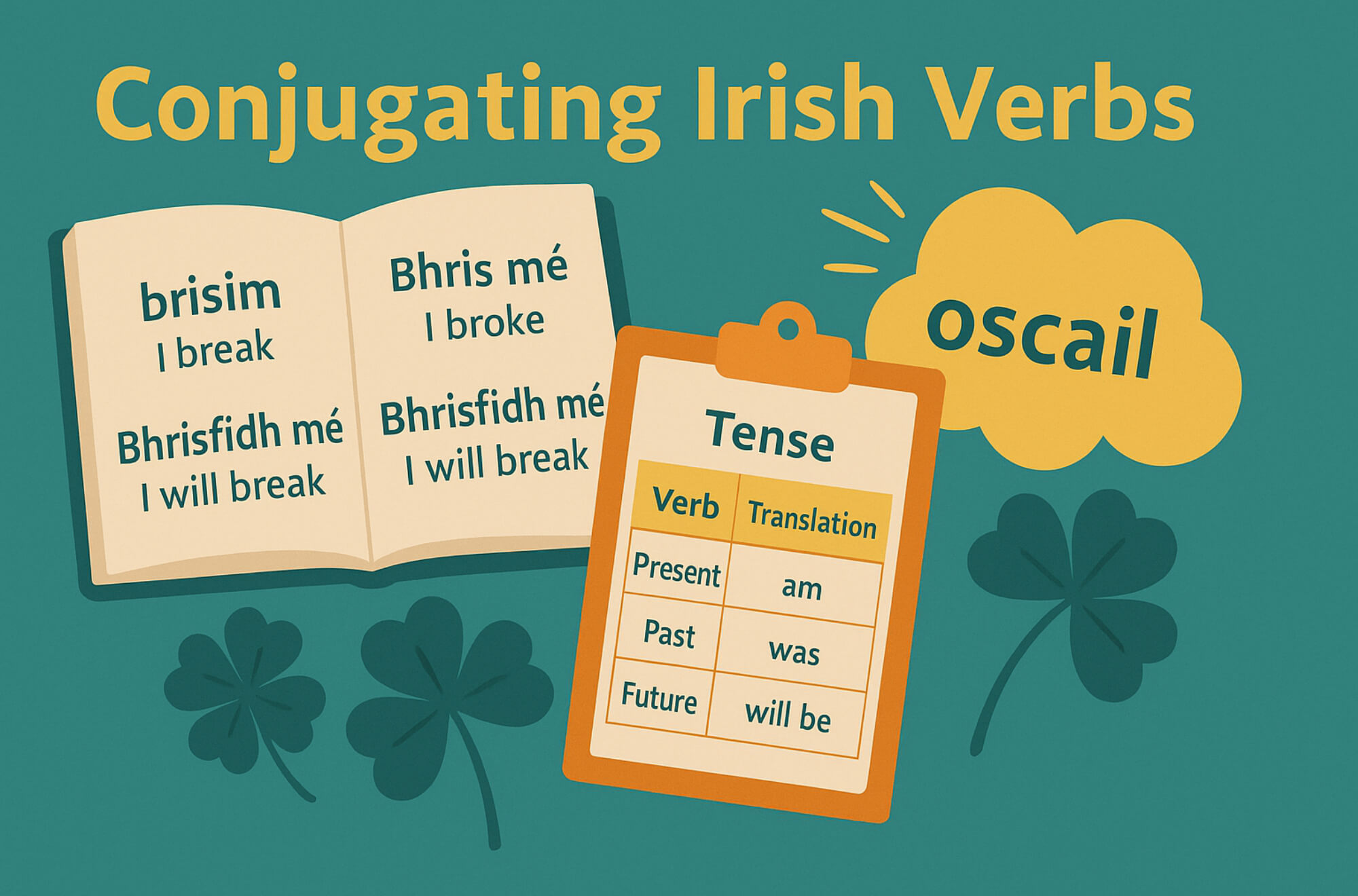
  1. First Conjugation Verbs: One-syllable verbs (e.g., bris – break)
  2. Second Conjugation Verbs: Two or more syllables (e.g., oscail – open)

Learn more about the sentence structure in our Irish sentence structure guide.


Common Irregular Verbs in Irish

Some verbs don’t follow standard patterns and must be memorized. Here are a few essential irregular verbs every learner should know:

VerbEnglishPresentPastFuture
BíTo beTáBhíBeidh
DéanTo do/makeDéanannRinneDéanfaidh
FeicTo seeFeiceannChonaicFeicfidh
FaighTo getFaigheannFuairGheobhaidh
TeighTo goTeannChuaighRachaidh

These irregular verbs are widely used in everyday speech. Memorizing their forms will significantly boost your fluency.


Tips for Mastering Irish Verb Conjugation

When learning to conjugate Irish verbs, consistency and smart strategies make a world of difference.

Here are our top tips:

  1. Use Flashcards – Practice verb forms regularly with visual aids.
  2. Practice One Tense at a Time – Avoid overwhelm by focusing on one tense before moving on.
  3. Listen to Native Speakers – Watch Irish-language shows, listen to top Irish podcasts, or tune into TG4.
  4. Repeat and Reinforce – Spaced repetition systems (SRS) help with long-term memory.
  5. Use AI Tools Like Gaeilgeoir AI – Get immediate feedback and guidance tailored to your level.

Online Resources for Practicing Irish Verb Conjugation

Digital learning has made it easier than ever to practice and master verb conjugations.

Top Tools to Help You Learn:

  • Gaeilgeoir AI – Offers AI-powered grammar correction, smart quizzes, and progress tracking.
  • Teanglann.ie – A trusted online dictionary with verb conjugation tables.
  • Duolingo – Good for casual practice but lacks depth in grammar.
  • BBC Gaeilge – Offers vocabulary and basic grammar resources.

For more options, check out our guide to online Irish language courses.


Incorporating Verbs into Everyday Conversations

Knowing how to conjugate Irish verbs is only useful if you put it into practice.

Try These Examples:

  • Tá mé ag foghlaim. – I am learning.
  • Chonaic mé an scannán. – I saw the movie.
  • Beidh sí anseo amárach. – She will be here tomorrow.

Start by forming basic sentences:

  1. Identify your verb and conjugate it appropriately.
  2. Add your subject (mé, tú, sé, sí, sinn, sibh, siad).
  3. Add object or complement (if needed).

Need help with pronunciation? Visit our Irish pronunciation guide.


Challenges and Solutions in Mastering Irish Verb Conjugation

It’s completely normal to hit roadblocks while learning to conjugate Irish verbs. Here are some typical challenges:

Common Hurdles:

  • Confusing irregularities
  • Mixing up tenses
  • Lack of practice with native materials

Solutions:

  • Use visual grammar charts
  • Review consistently with Gaeilgeoir AI’s quizzes and grammar tips
  • Immerse yourself in Irish content (radio, books, subtitles)

Summary: Mastering Irish Verb Conjugation

To truly master the Irish language, you must learn how to conjugate Irish verbs with confidence. From understanding tense changes to memorizing irregulars and applying them in real-life conversations, the journey is rewarding.

Remember:

  • Start simple, then build complexity.
  • Don’t fear mistakes—they’re essential for learning.
  • Make Gaeilge part of your daily routine.

Ready to take your learning to the next level?

Join a vibrant community of learners today with Gaeilgeoir AI. Sign up for a free trial and start mastering Irish verbs one lesson at a time!


External Reference:

  • Foras na Gaeilge – Promotes the Irish language and offers excellent grammar resources.

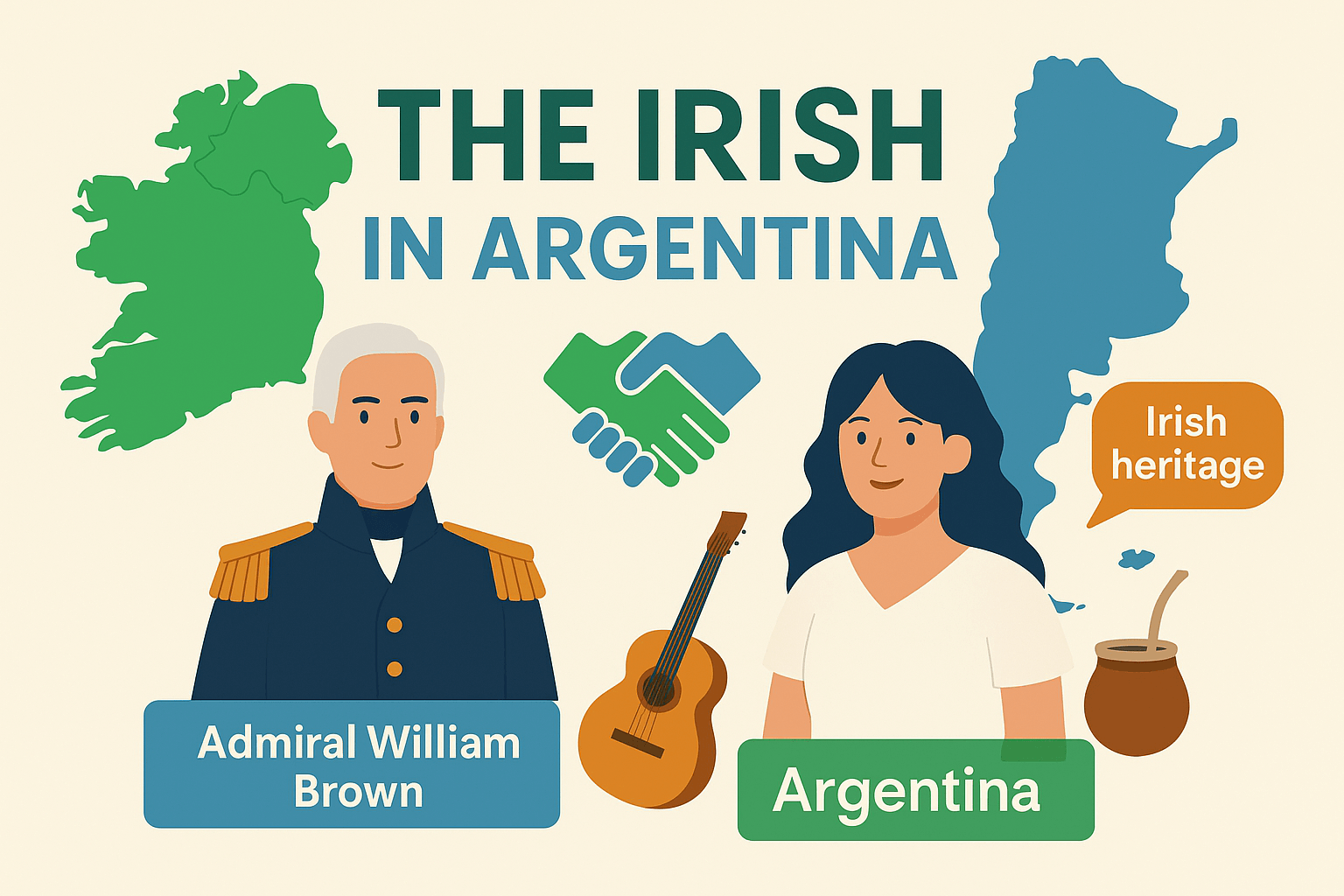
Irish in Argentina: A Legacy of Language and Heritage

The story of the Irish in Argentina is a fascinating chapter in the global Irish diaspora, one that is often overlooked but deeply rich in cultural and historical significance. From the 19th century onward, thousands of Irish immigrants settled in Argentina, shaping rural communities, contributing to national development, and preserving elements of Irish identity far from home. Today, rediscovering this legacy offers not just a look into the past but also an inspiring path forward for Irish language learners and cultural enthusiasts.


Historical Waves of Irish Migration to Argentina

Early Arrivals and Reasons for Emigration

The first Irish in Argentina began arriving in notable numbers in the early 1800s, with migration waves peaking during and after the Great Famine (1845-1852). Many came from counties like Westmeath, Longford, and Wexford, seeking escape from poverty and hardship.

So, why is there Irish people in Argentina? Unlike traditional destinations like the United States, Argentina presented a unique appeal: generous land policies, the promise of agricultural opportunity, and an open immigration policy during its nation-building era. The growing need for skilled laborers and farmers attracted Irish migrants, many of whom were already experienced in rural life.

Notable Historical Figures

Among the most prominent Irish Argentines was Admiral William Brown, hailed as the founder of the Argentine navy. Born in County Mayo, Brown is a national hero in Argentina and a symbol of the powerful ties between Ireland and its South American counterpart.


The Irish Diaspora in Argentina: Communities, Culture, and Contributions

Irish immigrants tended to cluster in areas like Buenos Aires, Entre Ríos, and Santa Fe, where they established vibrant farming communities. These enclaves maintained close-knit networks, celebrated Irish holidays, and built Catholic churches and schools to sustain cultural identity.

Contributions to Argentine Society

The Irish diaspora in Argentina played a pivotal role in agricultural development, especially in cattle ranching and sheep farming. Irish teachers, doctors, and clergy also contributed to the intellectual and spiritual fabric of Argentine life.

Notable Irish Argentines include Eamon Bulfin, born in Buenos Aires, who later participated in the 1916 Easter Rising in Dublin. Figures like him demonstrate the enduring link between both nations.


Preserving Heritage: Language, Culture, and Identity Among Irish Argentines

Though the original settlers spoke Irish or Hiberno-English, the passage of time and assimilation led to a decline in Irish language use. Today, Irish speakers in Argentina are rare, but interest in heritage revival is growing.

Revitalizing the Language Abroad

Modern technology and community efforts are helping keep the spirit of the Irish language alive. Irish descendants in Argentina now turn to online Irish language courses and pronunciation guides to learn Gaeilge.

At Gaeilgeoir AI, we offer Irish language lessons for beginners, empowering learners with AI-powered pronunciation tools, flashcards, and cultural insights to support diaspora communities like those in Argentina.


Exploring the Legacy of the Irish Community Within Modern Argentine Society

Today, the legacy of the Irish community is celebrated through festivals, bilingual signage, and cultural connections between Ireland and Argentina. Annual St. Patrick’s Day parades in Buenos Aires are among the largest in Latin America, showcasing the enduring pride of Irish descendants.

There are also partnerships and sister city relationships between Irish and Argentine towns, fostering educational and artistic exchanges that strengthen cultural bridges.


Engaging with Dual Heritage Today: Language Learning, Cultural Exchange, and Personal Journeys

For those tracing their ancestry or simply intrigued by Celtic culture, learning Irish can be a deeply fulfilling experience. Platforms like Gaeilgeoir AI offer:

  • Step-by-step speaking Irish guides
  • Vocabulary builders to expand your Irish lexicon
  • Tools to explore Gaelic grammar and Irish history

Check out our Creative Ways to Learn Gaeilge to make your language journey engaging and effective.


Conclusion

The story of the Irish in Argentina is more than a historical migration tale—it is a living legacy. From Admiral Brown to modern-day learners seeking to reconnect with Gaelic roots, the Irish-Argentine experience continues to inspire.

Whether you’re a descendant of Irish immigrants in Argentina or simply fascinated by global Celtic culture, embracing the Irish language can be a powerful way to honor that connection. Begin your journey today with Gaeilgeoir AI and rediscover the voices, stories, and identity that continue to echo across continents.

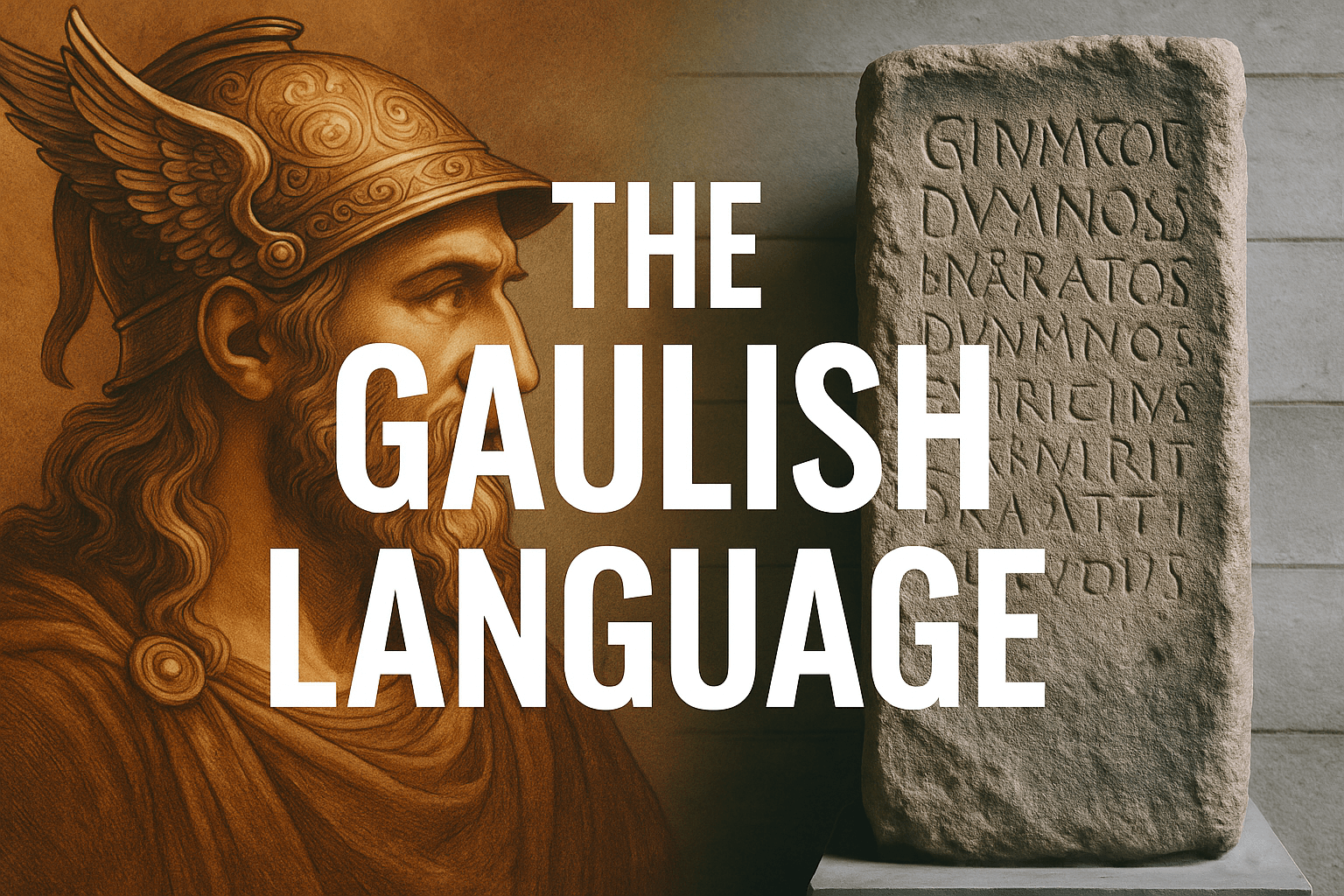
Understanding the Gaulish Language and Its Celtic Roots

The Gaulish language was once a thriving Celtic tongue spoken across large parts of Europe, particularly in what is now France and surrounding regions. As a key branch of the Celtic language family, Gaulish provides rich insights into the linguistic, cultural, and spiritual life of the ancient Gauls. Today, there is growing interest in understanding this long-extinct language, not only for academic study but for reconnecting with Celtic roots. In this article, we explore the history of the Gaulish language, its structure, legacy, and how it connects with modern efforts to preserve other Celtic languages like Irish.


Origins and Evolution of the Gaulish Language

The Gaulish language developed among the Celtic tribes of ancient Gaul, a region that included modern-day France, parts of Belgium, Switzerland, Northern Italy, and Western Germany. Gaulish belongs to the Continental Celtic branch, distinct from the Insular Celtic branch that includes Irish, Scottish Gaelic, and Welsh.

Key Historical Points:

  • Geographic Spread: Gaulish was spoken widely across Western Europe before Roman conquest.
  • Linguistic Roots: It shares a common Proto-Celtic ancestor with Irish and Welsh.
  • Roman Influence: After the Roman conquest of Gaul (58–50 BC), Latin gradually replaced Gaulish as the dominant language.
  • Decline and Extinction: By the 5th century AD, Gaulish had largely disappeared, leaving only traces in place names and Latin borrowings.

Was Gaulish a Romance Language?

Despite being spoken in areas now associated with Romance languages, Gaulish itself was not a Romance language. However, it significantly influenced the vocabulary and phonetics of local Latin, contributing to the development of Old French.


Characteristics and Dialects of the Gaulish Language

Studying Gaulish is challenging due to the limited number of inscriptions and texts that have survived. However, researchers have identified distinctive features of the language.

Vocabulary and Grammar Structure

  • Vocabulary: Words like rix (king), dumnos (world), and bratos (judgement) offer a glimpse into Gaulish society and beliefs.
  • Grammar: Gaulish had a complex system of inflection, with different endings for case, number, and gender.

Dialectal Variation

Just like modern Irish has distinct dialects in Ulster, Munster, and Connacht, Gaulish likely had regional dialects too. Variations existed between Cisalpine Gaul (Northern Italy) and Transalpine Gaul (modern France), affecting pronunciation and vocabulary.


The Modern Revival Efforts and Challenges in Studying the Gaulish Language

Reviving a dead language is no easy task, but interest in Gaulish language revival has gained momentum, especially among Celtic heritage communities.

Current Initiatives

  • Online Courses and Resources: Websites and YouTube channels dedicated to teaching reconstructed Gaulish grammar and vocabulary.
  • Reconstructed Texts: Attempts to translate modern concepts and phrases into Gaulish, using reconstructed lexicons.
  • Community Support: Forums and social media groups for language learners and enthusiasts.

Challenges

  • Limited Source Material: With only a few hundred inscriptions, much of the grammar and vocabulary must be reconstructed.
  • Pronunciation Ambiguity: Since Gaulish died before the age of audio recording, pronunciation is based on scholarly inference.

Comparative Study: The Relationship Between Gaelic and Other Celtic Languages

Although separated by geography and history, Gaulish and Irish Gaelic share deep structural and lexical roots.

Similarities

  • Common Ancestry: Both descend from Proto-Celtic.
  • Shared Vocabulary: Words related to kingship, the supernatural, and nature often bear resemblance.
  • Cultural Parallels: Both cultures revered oral tradition, poetry, and spiritual leaders like druids.

Differences

  • Insular vs. Continental: Irish evolved on the periphery of Roman influence, preserving more archaic Celtic features.
  • Script: Gaulish used Greek and Latin alphabets, while Irish developed the unique Ogham script, which you can learn more about in our Ogham Script Alphabet Guide.

Why the Gaulish Language Still Matters

Studying the Gaulish language deepens our understanding of Europe’s pre-Roman cultures and enhances our appreciation for modern Celtic languages. It reveals:

  • The diversity and reach of the Celtic world.
  • Historical connections between ancient tribes.
  • The importance of language in shaping identity.

Preserving and learning Celtic languages like Irish is not only about communication; it’s about connecting to a deeper cultural and historical legacy.


Conclusion

The Gaulish language may be classified as extinct, but its echoes live on in place names, cultural memory, and linguistic study. Its close relationship to Irish Gaelic and other Celtic tongues underscores the importance of language preservation as a form of heritage conservation. If you’re fascinated by ancient languages and want to reconnect with your Celtic roots, learning Irish is a great place to start.

At Gaeilgeoir AI, we combine tradition with technology to help you learn the Irish language meaningfully. From AI-powered flashcards to pronunciation tools and mythological vocabulary, our platform offers everything you need to start your journey. Join us today and explore how living Celtic languages can help you unlock the mysteries of those that came before.

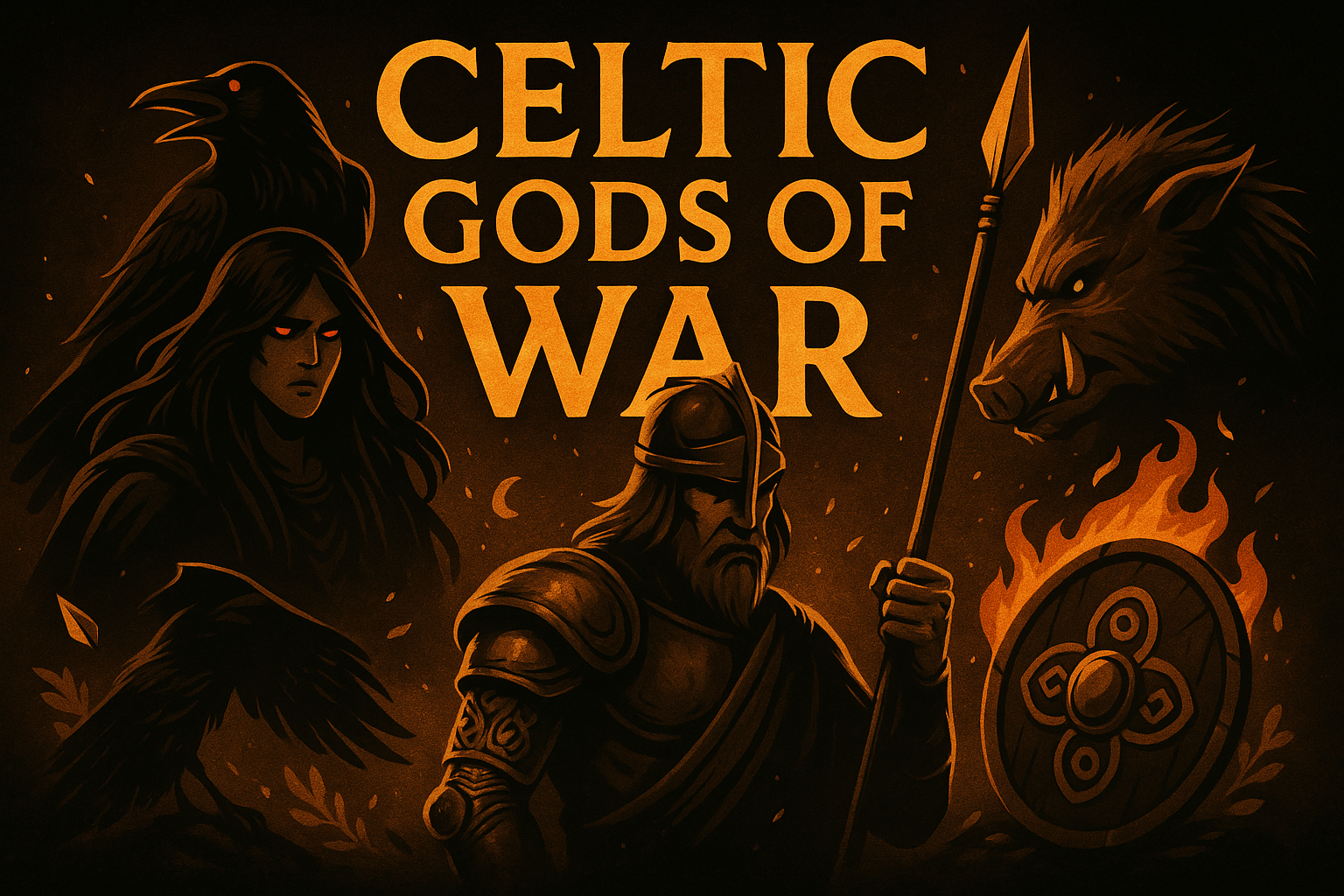
Exploring the Celtic God of War in Irish Mythology

In Celtic mythology, the gods were deeply intertwined with every facet of life—from fertility and agriculture to poetry and battle. Among the most revered were the gods of war, powerful figures who embodied strength, strategy, and supernatural might. Understanding the Celtic god of war offers unique insights into ancient Irish culture, language, and identity. This article explores legendary war deities, symbols, and sacred practices associated with warfare in Celtic belief systems.


Key Figures: The Celtic and Irish Gods of War

The Morrígan

One of the most iconic war deities in Irish mythology, the Morrígan is a triple goddess associated with fate, battle, and death. She often appears in the form of a crow or raven on the battlefield, foretelling doom or inspiring fear.

Nuada

Known as Nuada Airgetlám (“Silver Hand”), he was a king of the Tuatha Dé Danann and a fierce warrior god. Though he lost an arm in battle, it was replaced with a silver prosthetic, symbolizing resilience and regeneration.

Camulus

More prominent in Gaulish and British Celtic traditions but still worth noting, Camulus was a Roman-era war god later syncretized with Mars. His name is connected to battle and victory.


Symbols and Iconography of the Celtic God of War

Ancient Celtic war deities were often linked to powerful visual symbols:

  • Spear: Associated with Lugh and the Lúin of Celtchar.
  • Crow or Raven: Symbol of the Morrígan, representing death and battle.
  • Boar: A symbol of courage and ferocity, often linked to warrior rituals.
  • Shield and Armor: Emblems of protection, common in both artwork and myth.

These Celtic god of war symbols were used on battle standards, jewelry, and even carved into stones.


Herbs and Rituals Associated with the Celtic God of War

In Celtic spiritual practice, certain herbs were believed to hold divine power:

  • Yarrow: Used to stop bleeding and invoke protection in battle.
  • Mugwort: Burned in rituals for visions and guidance.
  • Oak leaves: Sacred to many deities, symbolizing strength and endurance.

Rituals to honor war gods included:

  1. Saining (blessing) with herbs.
  2. Battle chants invoking divine protection.
  3. Offerings left at cairns or sacred wells before war.

The Role of Language in Preserving War Deity Legends

Irish mythology has survived thanks to oral storytelling and early manuscripts written in Irish. Learning the Irish language provides richer access to the original tales, names, and meanings of these deities.

Explore the Irish Pronunciation Guide to better understand names like Morrígan (pronounced MOR-ree-gan) and Lugh (pronounced Loo).


Exploring Irish War God Myths Through Language Resources

At Gaeilgeoir AI, language and mythology come together through smart tools and accessible content. With AI-powered features, you can:

  • Decode original Irish war chants.
  • Learn grammatical structures used in ancient storytelling.
  • Access bilingual versions of epic tales like the Táin Bó Cúailnge.

Start with our Irish Language Lessons for Beginners to begin reading these stories in Irish.


Comparative Insights: Irish vs. Scottish Gaelic Perspectives on War Deities

While Irish mythology highlights figures like the Morrígan and Nuada, Scottish Gaelic traditions also feature warrior spirits and deities, such as Cailleach, a hag goddess tied to winter and strife.

Linguistic nuances:

  • Irish: Morrígan (great queen)
  • Scottish Gaelic: Cailleach (old woman)

Understanding both helps appreciate how different regions interpreted the role of war and the supernatural.


Modern Cultural Impact and Legacy

The Celtic god of war continues to influence art, literature, and modern pagan spirituality. From fantasy novels to tattoos, these symbols remain powerful expressions of cultural pride.

Examples include:

  • Reenactments of Lughnasadh festivals.
  • Use of crow imagery in Celtic-inspired art.
  • Revival of Irish myths in games and pop culture.

Conclusion

The Celtic gods are more than mythological figures; they are a gateway to understanding celtic history, language, and resilience. By learning Irish and exploring its myths, you can deepen your cultural connection.

Discover how Gaeilgeoir AI can support your journey. Sign up here to explore Irish mythology and language through AI-powered tools rooted in Celtic heritage.

Celtic God Lugh: Master of Skill, Light, and Heritage

In the vast and rich tapestry of Irish mythology, the Celtic god Lugh stands out as one of the most revered and multifaceted figures. Known as Lugh Lámhfhada, or “Lugh of the Long Arm,” he is celebrated as the god of light, skill, and craftsmanship. Lugh’s role in Irish mythology is not only crucial to understanding Celtic spirituality but also to appreciating the linguistic and cultural depth of ancient Ireland. This article explores the life, myths, symbolism, and enduring influence of Lugh, guiding you through a journey of mythological insight and cultural preservation.


Historical and Mythological Background of Lugh

Lugh’s prominence begins with the Tuatha Dé Danann, a mythical race of deities in Irish folklore. According to ancient texts, Lugh was born of mixed divine lineage, with his maternal side tracing back to the Tuatha Dé Danann and his paternal side to the Fomorians, powerful beings often depicted as adversaries. This dual heritage positioned Lugh as a mediator between opposing forces, bringing harmony through strength and intellect.

One of Lugh’s most famous myths is his arrival at Tara, where he impresses the king by claiming mastery in every skill: warrior, smith, poet, sorcerer, historian, and more. His crowning moment comes in the Second Battle of Mag Tuired, where he leads the Tuatha Dé Danann to victory against the Fomorians, using the spear Lúin, a weapon said never to miss its mark.

These stories underscore Lugh’s role as a champion of balance, innovation, and wisdom in Irish culture.


Exploring the Attributes and Symbolism of Lugh

The attributes of Lugh make him one of the most dynamic figures in Celtic mythology. He embodies:

  • Light and the Sun: As a solar deity, Lugh is associated with illumination, clarity, and vision.
  • Craftsmanship: He is the patron of blacksmiths, builders, and artists.
  • Warrior Spirit: Lugh is revered for his martial prowess and strategic thinking.
  • Leadership: His wisdom and charisma made him a natural leader among the gods.

The symbolism of Lugh is equally significant. The spear Lúin represents directness, power, and divine justice. Lugh’s association with ravens and oaths speaks to his role in upholding truth and sacred law.


Worship and Festivals Dedicated to Lugh: A Closer Look at Lughnasadh

The most enduring celebration of Lugh is Lughnasadh, a harvest festival held on August 1st. Rooted in pre-Christian Ireland, Lughnasadh marked the beginning of the harvest season and was a time to honor Lugh’s foster mother, Tailtiu, who died clearing the land for agriculture.

Lughnasadh involved:

  • Ritual Games: Athletic contests symbolized strength and honor.
  • Feasting: Communities gathered to share the bounty of the land.
  • Handfasting: Trial marriages that lasted a year and a day.

Even today, modern pagans and cultural enthusiasts celebrate Lughnasadh through music, dance, storytelling, and seasonal crafts—all echoing Lugh’s versatile spirit.


The Ogham Script: A Window into Celtic Language Heritage During Lugh’s Era

Language played a key role in Lugh’s mythos. In ancient times, Irish druids and poets used the Ogham script, a system of lines and notches inscribed on stone or wood, to record names, messages, and lore. Ogham is often linked to sacred trees, many of which held symbolic significance in Celtic spirituality.

Learning about Ogham gives insight into how language, identity, and mythology were intertwined. Lugh, often portrayed as a poet and wordsmith, embodies the oral tradition central to Irish cultural continuity.

If you’re interested in connecting language and legend, check out Gaeilgeoir AI’s Ogham Script Alphabet Guide for a deeper exploration of this ancient writing form.


Modern Influence of Lugh in Irish Culture and Language Revival Efforts

Today, the legacy of Lugh lives on not only in folklore but also in Ireland’s renewed efforts to reclaim its cultural roots. Many Irish language learners encounter Lugh through literature, seasonal festivals, and modern adaptations in film, fiction, and fantasy.

If you’re inspired by Celtic heritage and want to strengthen your own language journey, visit our Irish Language Lessons for Beginners and take your first steps toward mastering Gaeilge.


Conclusion

The Celtic god Lugh continues to inspire as a symbol of intellect, creativity, and cultural strength. Whether in ancient tales of victory and sacrifice or in modern celebrations of identity and language, Lugh embodies the light that guides both warriors and learners.

By exploring myths, mastering phrases, and honoring traditions, we don’t just remember the past—we breathe new life into it. Join the movement to reconnect with Ireland’s roots by signing up with Gaeilgeoir AI and discover how language learning can be your path to Celtic cultural revival.

Start Speaking Irish Today — 25% Off
Use code START25

Learn real Irish for real life with guided practice, pronunciation support, and everyday conversations.

Get 25% off any plan with code START25

Start Speaking Irish Today — 25% Off