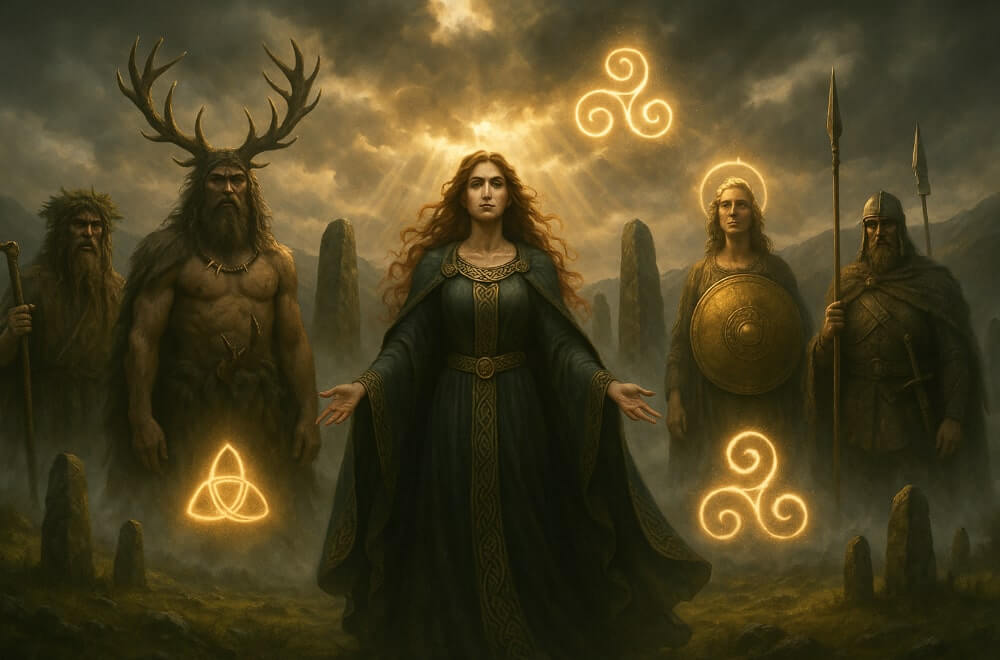
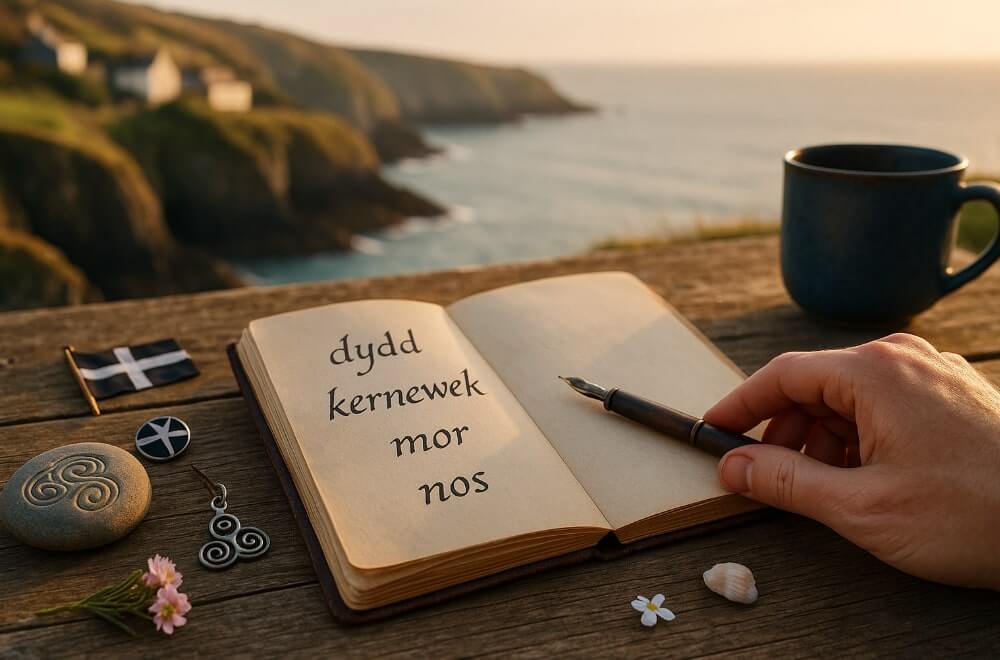
The world of Celtic deities is filled with magic, mystery, and deep connections to nature and human emotion. These gods and goddesses were revered by ancient Celtic peoples across Ireland, Scotland, Wales, and parts of Europe. Today, their legends continue to inspire culture, literature, and even language learning. In this beginner’s guide, we explore some of the most powerful Celtic deities and how understanding them can enrich your journey into the Irish language.
What Are Celtic Deities?
Celtic deities are the gods and goddesses worshipped by the Celtic people from around 500 BCE until the Christianization of the region. Unlike the centralized pantheons of Greek and Roman mythology, Celtic beliefs varied regionally. However, common themes included:
Deep reverence for nature (rivers, forests, animals)
Celebration of warrior skills and courage
Spiritual importance of sovereignty and the land
Association with poetry, wisdom, and magic
Learning about these deities offers a glimpse into the values and everyday life of ancient Celtic societies.
Famous Celtic Deities and Their Roles
1. Dagda — The Good God
Role: Father figure, god of fertility, agriculture, strength, and magic.
Fun Fact: The Dagda carried a magical club that could kill or revive the dead.
2. Brigid — Goddess of Healing and Inspiration
Role: Associated with healing, poetry, smithcraft, and fertility.
Fun Fact: Brigid’s name lives on through Saint Brigid, showing her seamless transition from goddess to Christian saint.
3. Lugh — Master of All Skills
Role: God of the sun, arts, and war.
Fun Fact: Lugh was skilled in every craft, making him a symbol of excellence and ingenuity.
4. Morrígan — Phantom Queen
Role: Goddess of battle, sovereignty, and prophecy.
Fun Fact: She often appeared as a crow foretelling death in battle.
5. Arawn — King of the Otherworld
Role: Ruler of Annwn, the Welsh Otherworld.
Fun Fact: Arawn is featured prominently in the “Mabinogion,” a classic collection of Welsh tales.
6. Epona — Protector of Horses
Role: Goddess of horses, fertility, and travel.
Fun Fact: Epona was widely venerated, even making her way into Roman religion.
7. Danu — Mother of the Gods
Role: Ancestral goddess of the Tuatha Dé Danann.
Fun Fact: Danu is linked to rivers and flowing waters, symbolizing life and abundance.
The Tuatha Dé Danann: Ireland’s Divine Tribe
In Irish mythology, the Tuatha Dé Danann (“People of the Goddess Danu”) are a race of supernatural beings with immense power and wisdom. They represent the zenith of Celtic deities in Irish storytelling. Key figures include:
Nuada: King with a silver hand after losing his arm in battle
Boann: Creator of the River Boyne
Manannán mac Lir: God of the sea and protector of sailors
These myths are crucial for anyone learning about Irish heritage and language.
While Irish myths feature the Tuatha Dé Danann, Welsh mythology celebrates deities like Arawn and Rhiannon. In Gaul (modern-day France), deities such as Cernunnos, the horned god of nature and fertility, were popular.
Irish Deities: Emphasis on sovereignty, battle, and craftsmanship.
Welsh Deities: Focus on the Otherworld and transformation.
Gaulish Deities: Tied closely to natural forces and tribal identity.
Recognizing these regional differences helps learners appreciate the diversity within the Celtic world.
How Celtic Deities Influence Language and Culture
Many Irish words and phrases are rooted in mythology. Place names like “Tara” (Teamhair na Rí), the ancient seat of kings, echo tales of sovereignty linked to deities like the Morrígan.
Additionally, words tied to nature—rivers (“abhainn”), forests (“foraoise”), and stones (“cloch”)—reflect the natural reverence seen in Celtic worship.
Studying these connections can deepen your understanding of Irish vocabulary and cultural expressions. (Check out our Expand Irish Vocabulary resource.)
Pronunciation Tips for Celtic Deity Names
Pronouncing Celtic deity names correctly adds an authentic touch to your learning journey. Here are a few tips:
Deity Name
Pronunciation
Dagda
DAHG-dah
Brigid
BREEJ-id or BREEG-id
Lugh
Loo
Morrígan
MOR-ree-gan
Arawn
AH-rawn
Epona
EP-oh-nah
Danu
DAH-noo
Learning Irish with a Mythological Twist
Learning about Celtic deities doesn’t just enhance your cultural knowledge; it enriches your language learning. Many myths use poetic structures, vivid imagery, and traditional forms of storytelling that are perfect for language practice.
At Gaeilgeoir AI, our AI-powered tools bring myths, legends, and everyday Irish conversation to life. Whether you’re exploring goddess tales or mastering essential grammar, our resources make the journey exciting and rewarding.
Get started today with Gaeilgeoir AI’s online Irish courses and become part of a community passionate about keeping the spirit of Celtic languages alive.
Final Thoughts
The world of Celtic deities is a vibrant tapestry of nature, magic, and human emotion. By exploring their stories, you gain a richer understanding of Irish culture and a deeper appreciation for the Irish language.
Whether you’re just beginning your Irish learning journey or looking to enhance it with mythology, Gaeilgeoir AI offers the perfect resources to help you connect with Ireland’s ancient spirit.
Irish mythology includes far more than a handful of famous names. One modern summary counts over 400 named gods and goddesses in Irish tradition, which helps explain why female divine figures appear across sovereignty tales, river lore, battle stories, and seasonal folklore rather than as a small side-note to male heroes. In our review, the most useful names to start with were the ones that are both culturally familiar and still meaningful in language, place, and story: figures like Brigid, the Morrígan, Macha, Boann, and Ériu.
It also helps to separate three overlapping categories. Irish goddesses belong specifically to Irish tradition; broader Celtic goddess names may include Welsh or continental figures that are not native to Irish sources; and some Irish mythology names now circulate as modern personal names even when the original figure was not a “goddess” in the neat modern sense. The Irish word for goddess is bandia, a standard modern usage reflected in Irish-language dictionary guidance. Securely attested figures in medieval literature should be separated from fragmentary or folklore-heavy names, because not every famous female character from Irish tradition occupies the same category.
Names suitable for use tend to be figures strongly tied to Irish sources, while later folklore or fairy tradition can complicate the label. That distinction matters with names like Áine and Clíodhna, whose reputations live as much in local tradition as in mythic catalogues.
Why Learn Irish Goddess Names?
Irish goddess names are one of the quickest ways to understand how language, place, and story fit together in Ireland. A name like Ériu points toward the Irish name for Ireland itself, Boann survives in the River Boyne, and Brigid reaches from pre-Christian myth into saintly devotion and seasonal custom. For language learners, these are not isolated vocabulary items; they are cultural shorthand that keeps appearing in place-names, literature, school learning, and modern naming trends.
There is also a practical reason to learn them carefully. Some names belong to clearly mythic female deities, some are sovereignty figures tied to land and kingship, and some are remembered more strongly as fairy queens or Otherworld women in later folklore. This is where many lists become misleading: they flatten every powerful female figure into the same category. A more honest guide tells you not just what the name means, but what kind of figure you are looking at.
For readers who enjoy cultural research more broadly, I find it useful to treat myth names the way you would treat any historical tradition: look at source depth, later folklore, and modern survival. The same habit makes other topics easier to assess too, whether you are reading mythology or a practical guide like SleekPost's site on building a startup marketing strategy.
Quick decision aid
Want the best-known Irish goddess names? Start with Brigid, Morrígan, and Macha.
Want names tied to land, rivers, and sovereignty? Go first to Ériu and Boann.
Want names that cross into folklore and fairy tradition? Look at Áine and Clíodhna.
Want rarer mythological names with debated or fragmentary evidence? Try Nemain and Bé Chuille.
Want names people may encounter as modern personal names? Brigid/Bríde and Áine are the most practical starting points.
How We Picked These Irish Goddess Names
This list uses four simple criteria. First, each figure had to be strongly connected to Irish tradition rather than to a generic pan-Celtic label. Second, I favored names that still matter culturally through place-names, festivals, literature, language learning, or continued personal-name use. Third, where a figure’s status is debated, that ambiguity is stated instead of smoothed over. Fourth, I excluded names that are mainly modern inventions, internet-era conflations, or imports from non-Irish traditions presented as if they were native Irish deities.
I would divide the final names into three working groups: clearly mythic goddesses with recurring textual presence, land or sovereignty figures whose significance is political and territorial as much as devotional, and folklore-rich female beings who are sometimes called goddesses in popular writing but are better handled with caution. That approach keeps the list useful for beginners without pretending the evidence is tidier than it is.
A final editorial choice: I favored names with surviving linguistic relevance. If a figure helps explain modern Irish vocabulary, place memory, or naming practice, that makes the entry more useful for readers of Gaeilgeoir AI than a name that survives only as a bare mention in a catalogue.
1. Brigid (Bríde in Irish)
Meaning: Exalted One or Bright One
Domain: Healing, poetry, fertility, and forge
Story: Brigid is one of the most beloved figures in Irish mythology. She is associated with a wide range of skills including healing, poetry, smithing, and creative inspiration, which helps explain why she remained so influential in both myth and later devotion. Over time, her divine persona blended with that of Saint Brigid, making her a symbol of continuity from pre-Christian and Christian Ireland.
Fun Fact: Her feast day, Imbolc (February 1), marks the beginning of spring and is still celebrated in modern Ireland.
2. Morrígan
Meaning: Great Queen or Phantom Queen
Domain: War, fate, and prophecy
Story: A fearsome deity of battle and fate, Morrígan often appeared before conflicts to foretell victory or doom. She is known from major mythological material such as the Táin Bó Cúailnge and is often linked with sovereignty as well as battlefield power.
Fun Fact: She frequently takes the form of a crow or raven, symbols of both prophecy and death.
3. Macha
Meaning: Possibly “Plain” or “Pasture”
Domain: Fertility, war, and land
Story: Macha was forced by a cruel king to race horses while heavily pregnant. After she won the race, she collapsed and gave birth to twins. In her rage and pain, she cursed the men of Ulster, causing their weakness in times of battle. Her story is a powerful tale of endurance and female strength.
Fun Fact: She is linked to the ancient site of Emain Macha (Navan Fort) in Armagh.
4. Boann
Meaning: White Cow or Cow Goddess
Domain: Fertility and the River Boyne
Story: Boann defied the taboo of a magical well associated with Nechtan. As she approached, the waters surged out and created the River Boyne, changing the surrounding terrain forever. Her myth reflects themes of curiosity, transformation, and feminine power.
Fun Fact: The River Boyne, a sacred waterway in Ireland, is named after her.
5. Ériu
Meaning: Possibly derived from “earth” or “abundant land”
Domain: Sovereignty of Ireland
Story: One of three goddess sisters—Ériu, Banba, and Fódla—who met the Milesians and asked that the island be remembered by her name. As a result, Ireland is called Éire in Irish. Ériu represents the spirit of the land and its enduring sovereignty.
Fun Fact: Ireland’s name, Éire, is derived from this goddess.
6. Aine
Meaning: Radiance or brightness
Irish spelling:Áine
Domain: Summer, fertility, love, and prosperity
Áine is one of the strongest examples of an Irish female figure who sits between mythology, local cult memory, and later folklore. Her name is usually given in Irish as Áine, and she is closely associated with brightness, abundance, and the height of summer. In many retellings she appears as a sovereignty or fertility figure, and in local tradition she is especially linked with Cnoc Áine (Knockainey) in County Limerick, a hill long associated with midsummer customs and the persistence of her name in local place-names, as noted in the Placenames Database of Ireland entry for Cnoc Áine.
That place connection is a big reason Áine remains more vivid than some other names on this list. Rather than surviving only in a manuscript reference, she is tied to a real site, seasonal bonfire tradition, and Munster folklore. I think that gives her entry more weight than the thin “summer goddess” label she often gets online.
Áine is also a good example of how Irish tradition does not always separate goddess and fairy material cleanly. In later stories she can appear as a powerful supernatural woman or fairy queen who protects, blesses, or punishes, depending on the tale. That folklore afterlife makes her especially relevant for readers interested in the overlap between divine women and the fairy world, including people searching for irish fairy names as well as goddesses of Ireland.
Her modern appeal is easy to understand: Áine is short, recognizably Irish, and carries a bright meaning without feeling obscure. That helps explain why it appears in contemporary baby-name interest even among people who know only a little of the mythology behind it.
7. Cliodhna
Meaning: Often interpreted as linked to beauty or shapeliness
Irish spelling:Clíodhna
Domain: Otherworld beauty, desire, and sea-linked folklore
Clíodhna is best known in Munster tradition, especially in stories centered on County Cork, where her name survives in local memory and in the famous motif of Tonn Chlíodhna, “Clíodhna’s Wave.” She is associated with the Otherworld and with a realm of beauty, music, and supernatural allure rather than with a clearly defined sphere like smithcraft or sovereignty. A useful overview of her place in Irish narrative appears in the Oxford Reference entry on Clíodhna.
What makes Clíodhna interesting is that she often appears as a queenly supernatural woman rather than as a straightforward goddess in the same way readers might classify Brigid or Ériu. In some traditions she rules or dwells in an Otherworld paradise and is linked with love and enchantment; in others, she feels closer to the Irish fairy courts than to a major cultic deity.
That ambiguity is worth stating plainly. I would not put Clíodhna in the same category as the strongest attested Irish goddesses without qualification. She belongs on this list because she is a major female mythic name in Irish tradition and because many readers looking for lesser-known mythological or fairy-linked names will run into her quickly. But her reputation is part of what makes her valuable: she shows how Irish tradition often blurs the line between goddess, Otherworld woman, and fairy queen.
8. Danu
Meaning: Origins debated
Domain: Traditionally treated as an ancestral or mother figure connected with the Tuatha Dé Danann
Fun Fact: Danu is widely mentioned in modern lists of celtic goddesses names, but the surviving Irish evidence is much thinner than for figures like Brigid or Ériu, so she is best handled cautiously.
9. Nemain
Meaning: Panic or Frenzy
Domain: War and confusion
Fun Fact: Nemain is sometimes linked with the Morrígan complex and represents the chaos of battle rather than a broad all-purpose mother or sovereignty figure.
10. Bé Chuille
Meaning: Meaning uncertain
Domain: Magic and enchantment
Fun Fact: Bé Chuille is one of the more obscure names on this list, included because some readers looking for rarer irish mythology names or celtic goddess names will encounter her in Tuatha Dé Danann material.
How These Names Shape Irish Culture
These Irish goddess names are not just relics from the past. They remain woven into language, place-memory, and cultural identity. Figures such as Brigid and Ériu help explain why certain names recur in literature, seasonal custom, and discussions of national symbolism, while names like Áine and Clíodhna show how myth and folklore continue to overlap in local tradition.
For learners, that makes these names more than a list. They are a practical gateway into Irish language and cultural context, especially when you want to understand how goddess in Irish, place-names, and mythic identity connect.
Pronouncing Irish Goddess Names
Irish spelling looks difficult at first, but a few patterns help. A fada marks a long vowel, so Á in Áine is longer than a plain A; consonants also change quality depending on whether they are broad or slender, which affects how names like Clíodhna or Bríde sound. Anglicized spellings often flatten these details, so readers may meet Aine for Áine or Brigid beside the Irish form Bríde. Pronunciation can also shift by dialect, so a learner may hear small differences between Munster, Connacht, and Ulster Irish; Teanglann’s pronunciation resources are useful for hearing modern Irish forms spoken aloud.
Goddess
Irish Spelling
Pronunciation
Brigid
Bríde
Breed
Morrígan
Morrígan
More-ree-gan
Macha
Macha
Mah-ha
Boann
Boann
Boh-ahn
Ériu
Ériu
Air-yoo
Aine
Áine
AWN-ye
Cliodhna
Clíodhna
CLEE-uh-nuh
Danu
Danu
DAH-noo
Nemain
Nemain
NEV-in
Bé Chuille
Bé Chuille
Bay KILL-yuh
Learning Irish Through Mythology
One of the most inspiring ways to begin learning Irish is by connecting with its mythology. Ancient stories give language real-world context and meaning. Whether you are memorizing irish goddess names or comparing them with broader celtic goddess names, you are immersing yourself in a tradition that still shapes Irish cultural memory.
Gaeilgeoir AI supports this learning journey with AI-powered tools that bring Irish to life for mythology lovers, language learners, and culture enthusiasts alike.
If you mean the female figure who personifies Ireland itself, Ériu is the clearest answer. She is the sovereignty figure whose name is reflected in Éire, the Irish name for Ireland, although her sisters Banba and Fódla also belong to the same tradition.
Who are the powerful female Celtic goddesses?
Within Irish tradition, the most consistently prominent names are Brigid, the Morrígan, Macha, Boann, and Ériu. If you widen the scope to Celtic traditions more generally, you move beyond Ireland into Welsh and continental material, so it is worth keeping those traditions separate instead of treating all celtic goddesses names as interchangeable.
Who is the Irish version of Athena?
There is no perfect one-to-one Irish equivalent of Athena. If a reader wants a rough comparison based on intelligence, craft, and cultural prestige, Brigid is usually the closest fit, especially because she combines poetry, healing, and skilled work in a way few other Irish figures do. Her unusually broad portfolio is one reason she remained so influential in later tradition, as summarized in this discussion of pre-Christian Irish deities.
Who is the Celtic version of Hecate?
There is no exact Irish match for Hecate either. Popular comparisons often point to the Morrígan because of war, prophecy, and liminal presence, but that is a modern analogy, not a direct equivalence from the sources. I would treat those comparisons as helpful shortcuts at best, not as historical identities.
Are these good baby names or better left as myth references?
Some work very naturally as modern names, especially Brigid/Bríde and Áine. Others, like Morrígan or Nemain, carry heavier mythic or martial associations and may feel more symbolic than everyday. For learners, the best approach is to understand the story first and the modern naming vibe second.
What is the Irish word for goddess?
The standard Irish word is bandia. For beginners, it is a useful vocabulary item because it helps distinguish between the general category “goddess” and the specific names of figures like Brigid or Ériu.
Final Thoughts
The Irish language is more than just words. These irish goddess names offer a glimpse into a world shaped by land, power, memory, and creativity. They are especially useful if you want a clearer sense of which names are firmly mythic, which belong more to folklore, and which overlap with broader searches for irish goddesses, celtic goddess names, or irish fairy names.
Whether you are discovering Bríde or Morrígan for the first time or deepening your cultural roots, Gaeilgeoir AI offers a practical way to explore Ireland through its ancient stories and modern language tools. Try Gaeilgeoir AI for free today and start learning the language of legends.
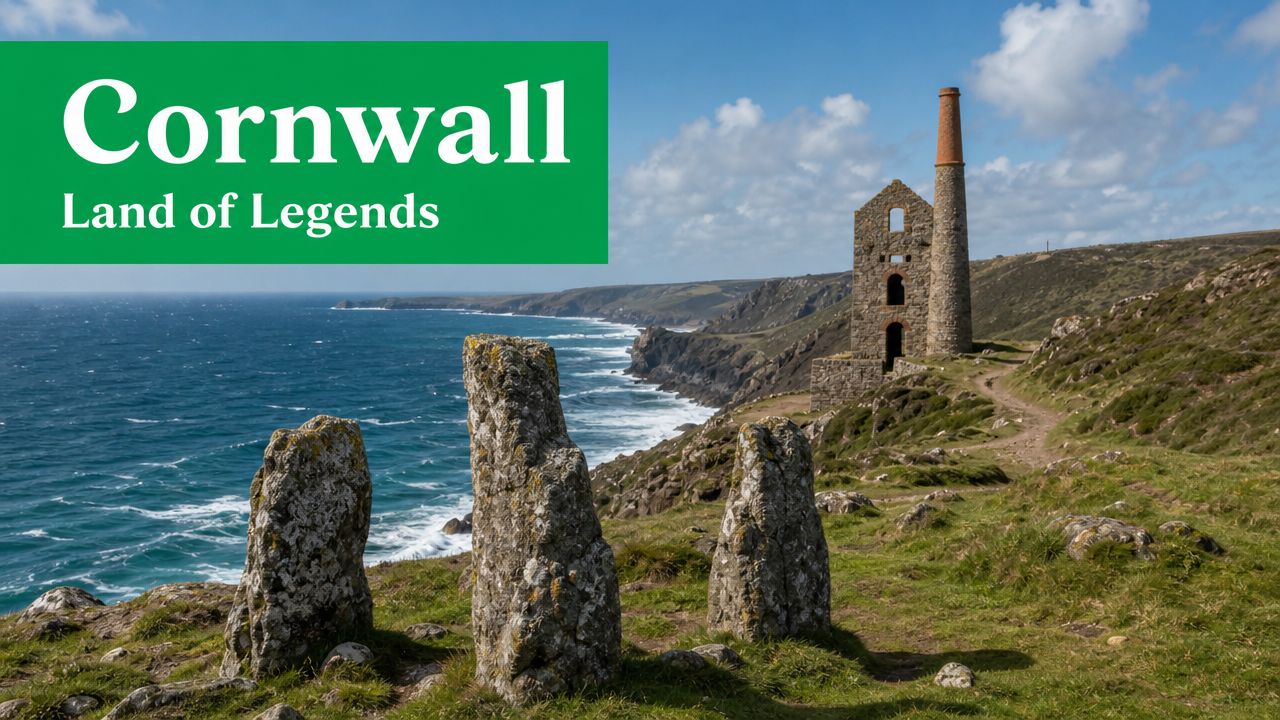
If you’ve ever wandered the windswept coasts of Cornwall or explored its rich Celtic heritage, you may have come across intriguing Cornish words that feel both ancient and musical. The Cornish language, or Kernewek, is a revived Celtic language native to Cornwall. It offers a unique lens into the region’s history, identity, and cultural pride. In this article, we’ll explore key Cornish words, their origins, meanings, and how the Cornish language is being revitalized today. If you’re passionate about language learning and Celtic culture, you may also find inspiration to learn Irish or other related tongues.
A Brief History of the Cornish Language
Cornish belongs to the Brittonic branch of the Celtic language family, alongside Welsh and Breton. It was widely spoken throughout Cornwall until the late 18th century, when English gradually took over. However, through the efforts of dedicated speakers, Cornish began its modern revival in the 20th century. Today, it is recognized as a minority language under the European Charter for Regional or Minority Languages.
Like Irish, Cornish reflects the values, environment, and spirit of its people, and each word carries centuries of meaning.
Why Cornish Words Matter
Learning even a few Cornish words can:
Deepen your understanding of Cornwall’s history and culture
Offer insight into broader Celtic linguistic traditions
Connect you with a community passionate about heritage
Much like learning Irish, mastering Cornish offers more than language skills — it opens doors to cultural appreciation and personal enrichment.
Common Cornish Words and Their Meanings
Let’s look at some everyday Cornish words that illustrate the beauty and logic of the language:
1. Kernow
Meaning: Cornwall
Usage: Seen on bumper stickers, T-shirts, and signage
2. Dydh da
Meaning: Good day / Hello
Pronunciation: [dee-the dah]
3. Gool
Meaning: Festival or holiday
Related words: Gool Peran (St Piran’s Day)
4. Hir
Meaning: Long
Example: An nos hir (The long night)
5. Porth
Meaning: Port or cove
Found in place names like Porthcurno and Porthleven
6. Tre
Meaning: Settlement or homestead
Common in place names like Trevone and Trelawney
7. An gwrys
Meaning: The deed / That which is done
Example: Often used in poetic or ceremonial contexts
Pronunciation Guide for Popular Cornish Words
Cornish Word
Meaning
Pronunciation
Kernow
Cornwall
KEHR-noh
An Mor
The Sea
An more
Lowena
Joy
Low-EN-uh
Dydh da
Good day / Hello
Deeth dah
Nos dha
Good night
Noss dah
Gorthugher da
Good evening
GOR-thu-guh dah
Mar pleg
Please
Mar pleg
Meur ras
Thank you
Moyr rass
Keslowena
Congratulations
Kess-low-EN-uh
Towan
Sand dune
TOH-wan
Bys vyken
Forever
Bis VEE-ken
Porth
Harbour / Port
Porth
Chons da
Good luck
Khons dah
Ertach
Heritage
AIR-takh
Gool
Festival
Gool
Place Names as Living Words
Many Cornish place names are rooted in the original Celtic language. These names offer insight into the geography, history, and cultural memory of the region:
Penryn: Pen (head) + ryn (hill) = Hilltop
Bodmin: Bosvenegh in Cornish, meaning “dwelling of monks”
Trelissick: Tre (homestead) + personal name
Just like Irish place names, these combinations give us clues to the ancient landscape.
Modern Uses and Revitalization of Cornish Words
Cornish is enjoying a cultural resurgence thanks to:
Community classes
Bilingual signage
Social media groups promoting daily Cornish words
Use in local festivals and ceremonies
A growing number of families are raising children as bilingual Cornish-English speakers. There are even Cornish-language music albums and podcasts!
For learners of Irish through Gaeilgeoir AI, exploring another Celtic language like Cornish can strengthen your understanding of linguistic patterns shared across the Celtic family.
Comparing Irish and Cornish Words
Many Cornish words resemble their Irish counterparts due to shared roots:
English
Irish
Cornish
Water
Uisce
Dowr
Stone
Cloch
Men
Sun
Grian
Howl
Night
Oíche
Nos
House
Teach
Chi
If you’re already learning Irish, you may find Cornish easier to grasp. This cross-linguistic connection is one reason many Gaeilgeoir AI learners explore both languages.
Tips for Learning Cornish (or Any Celtic Language)
Whether you’re curious about Cornish or committed to learning Irish, these tips apply:
Start with simple words and phrases
Use flashcards to build vocabulary
Listen to native speakers or music
Practice pronunciation regularly
Immerse yourself in cultural content (books, shows, festivals)
Conclusion
Cornish may be a small language in terms of speaker numbers, but it holds a vast cultural and historical legacy. Learning Cornish words allows you to step into a world of myth, meaning, and memory.
If you’re looking to deepen your connection with Celtic culture, learning Irish can be a great introduction. As a living, thriving Celtic language with a growing global community, Irish provides not only a strong linguistic foundation but also a gateway to understanding the broader Celtic world — including Cornish.
Whether you’re starting with “Dydh da” or broadening your skills with Gaeilgeoir AI, every word learned is a step toward preserving and celebrating Celtic identity. Sign up for a free trial of Gaeilgeoir AI today and begin your journey into the rich world of Irish (and Celtic) language and culture.
Picture this: It’s 1497, and thousands of Cornishmen are marching eastward across England, armed with whatever weapons they could cobble together – pitchforks, fishing spears, mining tools, and the occasional proper weapon. Their destination? London. Their mission? To give the king a piece of their mind about unfair taxes.
This wasn’t some minor local skirmish – this was the Cornish Rebellion, one of the most remarkable episodes of regional defiance in English history.
The Cornish Rebellion stands as a testament to the fierce independence and distinct identity of Cornwall, England’s southwestern peninsula with its own language, traditions, and sense of self.
So lace up your medieval walking boots – we’re about to embark on an epic journey through a rebellion that shook a kingdom.
Connect With Your Celtic Heritage: Fascinated by Celtic history? Deepen your connection by learning Irish (Gaeilge), which shares roots with the Cornish language. Start with our beginner lessons here!
The Roots of the Rebellion: “We’re Not Paying for Your Scottish Problem!”
Henry VII’s Royal Headache
Late 1490s: King Henry VII faces threats to his new Tudor dynasty
1497: Henry imposes heavy taxes to fund a war against Scottish forces supporting pretender Perkin Warbeck
The tax hits all regions of England equally – including distant Cornwall
Cornwall Says “No Thanks”
The Cornish perspective was clear:
The Scottish conflict was hundreds of miles away
Cornwall had its own Celtic language and culture, distinct from England proper
They had traditionally enjoyed special privileges and exemptions
Why should Cornish miners and farmers pay for a northern war?
The tax wasn’t just financially burdensome – it was perceived as an assault on Cornish autonomy and special status within the realm.
The Unlikely Revolutionary Duo
Michael Joseph: The Blacksmith with an Iron Will
Michael An Gof
Blacksmith from St. Keverne in the Lizard Peninsula
“An Gof” means “The Smith” in Cornish
Embodied the working man’s fury at the royal tax collectors
Strong, charismatic, and unafraid to challenge authority
Thomas Flamank: The Lawyer with Legal Arguments
Thomas Flamank
Lawyer from Bodmin
Son of a prominent landowner
Provided intellectual and legal justification for the rebellion
Cleverly framed resistance as loyal subjects petitioning against bad advice given to the king
Together, these men from completely different social classes united to lead what would become a historic march on London.
Did You Know? The Cornish language shares many features with Irish and Scottish Gaelic. Learn about the differences between Celtic languages to understand this fascinating linguistic family!
The Great March: 300 Miles of Determination
From Village Gathering to Army on the Move
The Facts:
By early June 1497: An estimated 15,000 followers assembled
Route: Cornwall → Devon → Somerset → London
Distance: Approximately 300 miles
Duration: About two weeks of marching
Making Their Way Through England
Notable Achievements:
Maintaining organization and discipline among thousands of people
Securing food and shelter along the route
Avoiding widespread pillaging that would damage their cause
Keeping morale high despite the daunting challenge ahead
As they approached London, many rebels had never ventured so far from their homes before, yet they pressed on with remarkable determination.
The Battle of Deptford Bridge: David Meets Goliath
Royal Preparations
The King’s Response:
Assembled professional force of around 8,000 men
Included royal guards and experienced soldiers
Commanded by Lord Daubeney, a skilled military leader
Royal family sent to Tower of London for safety
The Final Confrontation: June 17, 1497
Battle Details:
Location: Blackheath, near Deptford Bridge
Cornish positioning: High ground for tactical advantage
Royal tactics: Disciplined formations and superior weaponry
Notable moment: Rebels temporarily captured Lord Daubeney
Outcome: Around 200 rebels killed, thousands captured
Celtic Warrior Spirit: The bravery of the Cornish rebels mirrors the warrior traditions celebrated in Celtic mythology. Explore more through our Guide to Learning Gaelic and discover the rich connections between Celtic cultures.
Aftermath: Harsh Justice and Enduring Legacy
The Price of Rebellion
Consequences:
An Gof and Flamank: Tried for treason and sentenced to be hanged, drawn, and quartered
An Gof’s famous declaration: “I shall have a name perpetual and a fame permanent and immortal”
Common rebels: Pardoned after public displays of submission
Towns and villages: Heavy fines imposed on communities that supported the uprising
Cornwall After the Rebellion
The rebellion marked a turning point:
Tighter integration of Cornwall into the English state
Traditional Cornish administrative systems gradually replaced
Beginning of the slow decline of the Cornish language
The Legacy: Why the Cornish Rebellion Still Matters
1997: 500th anniversary marked with major celebrations
Lessons in Regional Identity and Centralization
The Cornish Rebellion highlights timeless themes:
Tension between central authority and regional autonomy
Questions of fair taxation and representation
The struggle to preserve cultural identity
In 2014, the UK government officially recognized the Cornish people as a national minority, acknowledging their unique cultural identity – a belated recognition of what the rebels fought for over 500 years earlier.
Language Revival: The story of Cornish language revival parallels efforts to preserve Irish Gaelic. Learn about the History of Learning Gaeilge to understand how language preservation became crucial for Celtic peoples.
Rebellion Through Language: The Modern Fight for Cultural Identity
From Battlefield to Classroom
Just as the Cornish rebels marched to preserve their way of life, modern language enthusiasts work to ensure unique voices aren’t lost to history:
Celtic Language Revival Efforts:
Cornish: Nearly disappeared but now taught and used by thousands
Irish: Survived centuries of suppression to remain a living language
The Cornish Rebellion of 1497 may have ended in military defeat, but it succeeded in creating a lasting symbol of determination and identity:
Military failure → Cultural victory
15,000 ordinary people marched 300 miles to stand up for their rights
An Gof’s wish for immortal fame came true – we remember his name 500+ years later
Perhaps most importantly, the rebellion reminds us that history isn’t just about kings and queens – it’s about ordinary people standing up for what they believe is right.
That’s a legacy worth remembering, whether you’re Cornish or not.
Connect With Celtic Culture Today: Ready to forge your own connection with Celtic heritage? Start learning Irish with Gaeilgeoir AI and discover how language can open doors to understanding history, culture, and identity. Our beginner-friendly resources make it easier than ever to begin your journey. With just 15 minutes a day, you can start understanding the language that carries centuries of Celtic wisdom and tradition. Sign up for a free trial today!
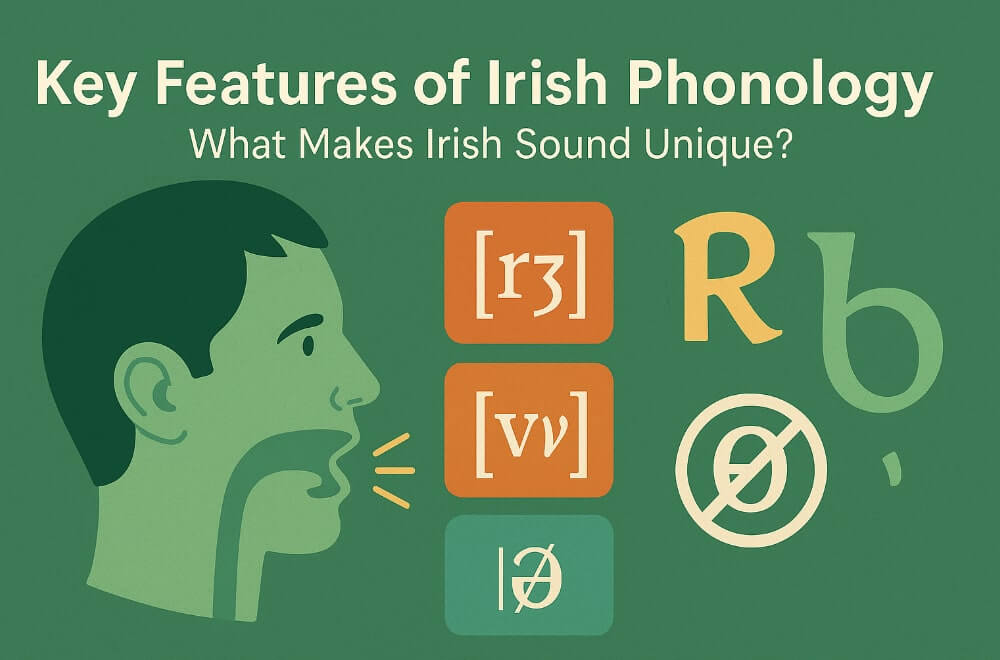
The Irish language (Éireannacha or Gaeilge) captivates listeners with its melodic rhythm and distinct sounds. Much of this charm stems from Irish phonology, the system of sounds that makes Irish so unique compared to English and other European languages. Understanding Irish phonology not only helps learners pronounce words correctly but also deepens appreciation for Ireland’s rich linguistic heritage. In this guide, we explore the fascinating features of Irish phonology, from broad and slender consonants to vowel harmony, and share how Gaeilgeoir AI can help you master these sounds.
What Is Phonology?
Before diving into specifics, it’s important to define phonology: it is the study of how sounds function within a particular language. In the context of Irish phonology, this includes how consonants, vowels, stress, and intonation work together to create the musicality of spoken Irish.
1. Broad and Slender Consonants
The Foundation of Irish Pronunciation
One of the most distinctive aspects of Irish phonology is the distinction between “broad” and “slender” consonants:
Broad consonants are velarized, meaning the back of the tongue is raised toward the soft palate. They occur next to the vowels a, o, u.
Slender consonants are palatalized, meaning the tongue moves closer to the hard palate. They occur next to the vowels e, i.
For example:
Bóthar (road) — broad “b”
Beir (to catch) — slender “b”
Learning to distinguish between broad and slender sounds is essential to proper Irish pronunciation.
2. Vowel Harmony
A Rule for Euphony
Irish words often exhibit vowel harmony, meaning that within a word, the vowels are generally either broad (a, o, u) or slender (e, i). This rule ensures that pronunciation flows smoothly.
For instance:
Scoil (school) features slender vowels and consonants.
Amhrán (song) maintains broad vowels and consonants.
When adding suffixes, maintaining vowel harmony is crucial for natural-sounding Irish.
3. Unique Vowel Sounds
Irish vowels are rich and complex, often more so than in English. There are:
Short vowels (e.g., /a/, /e/)
Long vowels (e.g., /aː/, /oː/)
The long vowels are held for a longer duration and often distinguished by an accent mark (á, é, í, ó, ú), known as a fada.
For example:
fear (man) vs. féar (grass)
The fada dramatically changes both the pronunciation and meaning of a word.
4. Consonant Clusters
Irish frequently combines multiple consonants together, forming clusters that can be challenging for new learners. Some clusters include:
mb, gc, nd (in nasalization)
bh, mh (pronounced like “v” or “w”)
Example:
Mo mháthair (my mother) — “mh” is pronounced like a “w” or “v” depending on the dialect.
Understanding consonant clusters is key for both speaking fluently and recognizing Irish words.
5. Initial Mutations
Adding Complexity and Color
Irish is known for its initial mutations, where the first consonant of a word changes depending on grammatical context:
Lenition: softening of the initial consonant (e.g., b → bh)
Eclipsis: adding a letter to “cover” the original (e.g., b → mb)
For example:
an bóthar (the road) → mo bhóthar (my road)
While initially tricky, mutations add an elegant musicality to the language.
6. Stress and Intonation
In Irish, stress typically falls on the first syllable of a word, unlike English, where it can vary.
For example:
Cathair (city) — stress on the first syllable.
Irish also features a distinctive intonation pattern, contributing to the language’s “lilting” quality.
Dialectal Differences in Irish Phonology
Three major dialects — Connacht, Munster, and Ulster — each bring unique phonological traits:
Connacht: Clear enunciation and moderate pace.
Munster: Lengthened vowels and musical intonation.
Gaeilgeoir AI offers resources to help learners recognize and practice these dialectal differences.
How Gaeilgeoir AI Helps You Master Irish Phonology
At Gaeilgeoir AI, we understand that mastering Irish phonology is one of the biggest challenges — and rewards — for language learners. That’s why our AI-powered tools are designed to:
Provide pronunciation practice with instant feedback.
Offer dialect-specific pronunciation tips.
Teach you the rules of broad and slender consonants.
Train your ear with interactive listening exercises.
Record Yourself: Compare your speech to native speakers.
Consistency and exposure are key to mastering Irish phonology.
Conclusion
Understanding the key features of Irish phonology opens the door to speaking with authenticity and confidence. From the lyrical sounds of broad and slender consonants to the rhythmic beauty of vowel harmony and mutations, Irish offers a rich auditory experience unlike any other.Ready to make your Irish sound truly authentic? Sign up for a free trial at Gaeilgeoir AI and start mastering pronunciation, vocabulary, and grammar with ease.
Celtic surnames are more than just family names; they are living links to the histories, languages, and identities of Ireland, Scotland, Wales, Cornwall, and Brittany. Rooted in Gaelic and Brythonic traditions, these surnames carry stories of ancient clans, warriors, and settlers. In this article, we’ll dive deep into the origins, meanings, and regional differences of Celtic surnames, uncovering what they reveal about your ancestry and offering tips to explore your heritage more deeply.
The Origins of Celtic Surnames
Early Naming Traditions
Celtic societies were among the first in Europe to adopt hereditary surnames. Ireland, in particular, pioneered the use of surnames as early as the 10th century. These early names often reflected:
Parentage: “Mac” (son of) or “O’” (descendant of)
Occupation: Smiths, poets, soldiers
Physical traits: Red hair, height, complexion
Places of origin: Rivers, mountains, towns
For example, “MacCarthy” translates to “son of Carthach,” while “O’Sullivan” means “descendant of Suileabhán,” or “hawk-eyed.”
Influence of Language
The linguistic roots of Celtic surnames are varied:
Clans were central; surnames tied to specific territories
Example: MacGregor (son of Gregor)
Welsh Surnames
Use of “Ap” (meaning “son of”) leading to names like Pritchard (Ap Richard)
Many surnames derived from personal names
Less emphasis on clan structures
Cornish Surnames
Influenced by Brythonic Cornish language
Often derived from place names (e.g., Tre-, Pen-, Pol- prefixes)
Example: Trelawney (village with elm trees)
Breton Surnames
Shares similarities with Welsh and Cornish
Names often reflect saints or Christian elements
Example: Le Gall (the Breton)
The Meanings Behind Popular Celtic Surnames
Surname
Meaning
Region
O’Malley
Descendant of the prince
Ireland
MacDonald
Son of Donald
Scotland
Evans
Son of Evan
Wales
Penrose
Headland of the moor
Cornwall
Le Roux
The red-haired one
Brittany
Each surname not only offers a linguistic glimpse into the past but also hints at the geography, occupations, and legends associated with your ancestors.
Exploring Your Celtic Roots
If you’re inspired to dive deeper into your own surname and Celtic heritage, here are a few steps you can take:
Research the original Gaelic or Brythonic form of your surname.
Explore regional history to understand migration and settlement patterns.
Learn the Celtic language tied to your ancestry (Irish, Scottish Gaelic, Welsh, Cornish, Breton).
At Gaeilgeoir AI, we make it easy to learn the Irish language through AI-powered lessons tailored to your pace and goals.
Why Language Learning Deepens Ancestral Connections
Learning even a few words of Irish, Scottish Gaelic, or Welsh can deepen your emotional connection to your surname’s meaning and context. You might find that familiar surnames, place names, and everyday words come to life with new richness.
Prefix Matters: Pay attention to Mac, O’, Ap, etc.
Spelling Variations: Expect different spellings post-anglicization.
Regional Clues: Research the regions where your surname is most common.
Stories Behind Names: Many surnames have fascinating origin stories connected to battles, saints, or myths.
Conclusion
Celtic surnames are a treasure trove of history, culture, and personal identity. Whether your roots lie in Ireland, Scotland, Wales, Cornwall, or Brittany, uncovering the meaning behind your surname connects you to a proud and enduring legacy.Ready to explore your Celtic roots even further? Sign up for a free trial at Gaeilgeoir AI and start your journey through the beautiful Irish language and culture today.
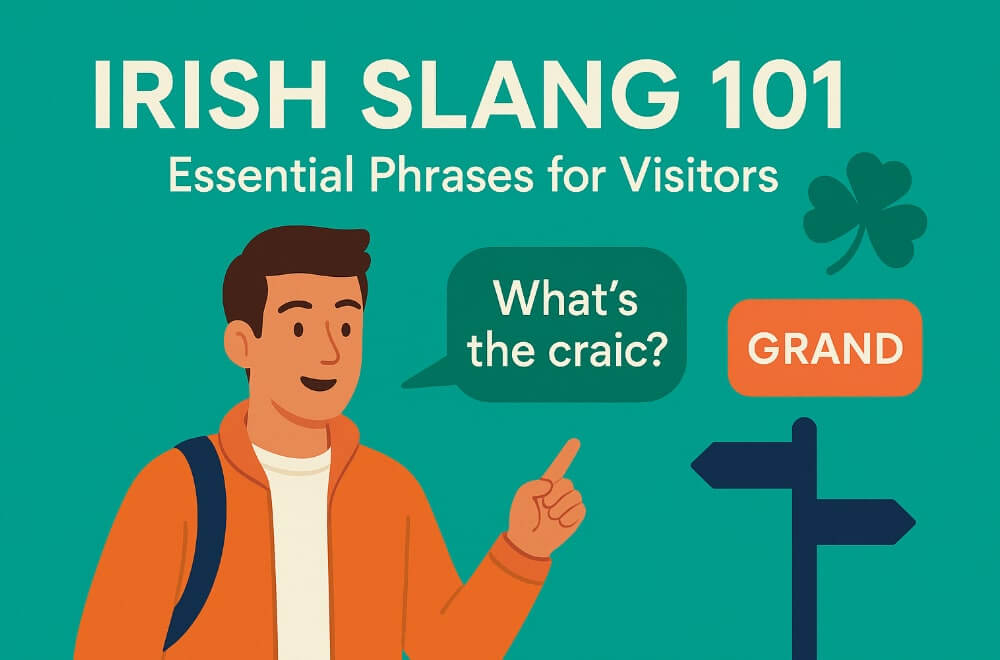
If you’re planning a trip to Ireland, understanding Irish slang can make your experience far more authentic and enjoyable. While the Irish people speak English, they often sprinkle their conversations with colorful expressions and unique slang that reflect their wit, warmth, and rich culture. In this guide, we’ll introduce you to essential Irish slang, helping you blend in and banter with the locals like a pro. Plus, we’ll show you how learning Irish with Gaeilgeoir AI can make your journey even more rewarding.
Why Irish Slang Matters
Irish slang adds flavor to everyday conversations. Whether you’re at the pub, exploring a small village, or enjoying a traditional music session, you’ll likely hear phrases that might leave you puzzled without a little preparation. Mastering a few common expressions can:
Help you understand locals better
Break the ice in social settings
Enhance your cultural appreciation
Make your trip memorable and fun
Essential Irish Slang Phrases You Need to Know
Here are some of the most common and beloved Irish slang phrases you’re bound to encounter:
1. “What’s the craic?”
Meaning: What’s up? How are things?
Usage: “Hiya, what’s the craic?”
2. “Grand”
Meaning: Fine, good, okay.
Usage: “The weather’s grand today, isn’t it?”
3. “Deadly”
Meaning: Brilliant, fantastic.
Usage: “That gig last night was deadly!”
4. “Eejit”
Meaning: Fool, silly person (affectionately).
Usage: “Don’t mind him, he’s a bit of an eejit.”
5. “Yer man” / “Yer woman”
Meaning: That man/woman over there.
Usage: “Yer man behind the bar is very friendly.”
6. “Gaff”
Meaning: House, home.
Usage: “We’re having a party at my gaff tonight.”
7. “Knackered”
Meaning: Exhausted.
Usage: “After hiking all day, I’m absolutely knackered.”
8. “Banter”
Meaning: Playful, witty conversation.
Usage: “The banter at the pub was mighty.”
9. “Giving out”
Meaning: Complaining.
Usage: “She was giving out about the rain again.”
10. “Jacks”
Meaning: Bathroom.
Usage: “Where’s the jacks in this place?”
Regional Variations in Irish Slang
Ireland’s slang isn’t uniform across the country. Different regions, from Dublin to Cork to Galway, boast their own twists on everyday language. For instance:
In Cork, you might hear “langer” (meaning fool or drunk person).
In Dublin, “bleedin'” is used for emphasis, as in “That’s bleedin’ deadly!”
In the West, “sound” is a high compliment, meaning reliable or good-natured.
Appreciating these regional variations gives you an even deeper connection to Irish culture.
Fun Facts About Irish Slang
Many Irish slang words trace back to the Irish language (Gaeilge).
Some words, like “craic,” have no perfect English equivalent.
Irish slang often reflects humor, resilience, and a strong sense of community.
Learning a few essential Irish slang phrases helps you tap into the spirit of Ireland, and makes your conversations much livelier!
How Learning Irish Enhances Your Trip
While mastering Irish slang is fantastic, learning a bit of the Irish language itself can elevate your experience. Even a few words in Gaeilge can:
Show respect for Irish culture
Open up richer conversations with locals
Deepen your understanding of place names, signs, and traditions
At Gaeilgeoir AI, we make learning Irish accessible and enjoyable with online Irish language courses designed for all levels.
Whether you’re a complete beginner or refreshing your skills, our AI-powered tools guide you through pronunciation, vocabulary, and real-world usage.
Quick Tips for Mastering Irish Slang
Listen Actively: Spend time listening to local conversations.
Practice Phrases: Try using a few slang expressions naturally.
Ask Questions: Most locals love explaining their favorite sayings.
Stay Relaxed: Even if you slip up, Irish people appreciate the effort.
Learning a few key Irish slang phrases before your trip will open doors, spark smiles, and make your Irish adventure truly unforgettable. And if you want to go even deeper into Irish culture, consider starting your journey with Gaeilgeoir AI.
Sign up for a free trial today and join a welcoming community passionate about Irish language and heritage!
Have you ever wondered about the story your last name tells? Irish surnames are steeped in history, tradition, and deep familial roots, connecting people across the world to Ireland’s rich past. From ancient Gaelic clans to medieval warriors and poets, these names offer a glimpse into your ancestors’ lives, occupations, and regions. In this article, we’ll explore the origins, meanings, and fascinating secrets hidden in Irish surnames, and how they can deepen your connection to your heritage.
A Brief History of Irish Surnames
Ireland is credited with some of the oldest hereditary surnames in Europe. The tradition began as early as the 10th century, making Irish surnames a window into an ancient world. Originally, surnames were descriptive, referring to an individual’s father (patronymic), characteristics, profession, or homeland.
Key Origins of Irish Surnames:
Mac (“son of”) and O’’ (“grandson or descendant of”) prefixes
Physical traits or virtues (e.g., “Ruadh” meaning “red-haired”)
Occupations or social roles (e.g., smiths, poets)
Places or territorial divisions
Over time, these evolved, anglicized under English rule, and adapted to different regions — yet the heart of Irish identity remained intact.
Understanding Common Irish Surnames and Their Meanings
Here are a few famous examples of Irish surnames and their meanings:
Surname
Meaning
Origin
O’Sullivan
“Descendant of Ó Suileabháin” (hawk-eyed)
Munster
Murphy (Ó Murchú)
“Descendant of Murchú” (sea warrior)
Wexford, Cork
Kelly (Ó Ceallaigh)
“Descendant of Ceallach” (bright-headed)
Connacht
Byrne (Ó Broin)
“Descendant of Bran” (raven)
Leinster
Walsh
“Welshman”
Cambro-Norman origin
These names often carry regional significance, meaning that your surname can hint at the part of Ireland your ancestors hailed from.
How Irish Surnames Were Formed
The traditional structure of Irish surnames often included:
Prefix: Mac (son of) or O’ (descendant of)
Ancestor’s Name: Based on a prominent ancestor
Descriptor: Sometimes added for clarity or pride
For example:
Mac Diarmada = Son of Diarmaid
O’Donoghue = Descendant of Donnchadh
During periods of English influence, many Gaelic surnames were anglicized, leading to spelling changes that persist today. Despite this, many surnames still retain obvious links to their Gaelic roots.
Regional Influences on Irish Surnames
Different regions of Ireland favored different naming traditions:
Ulster: Strong Scottish influence due to migrations; common surnames include Gallagher, McKenna.
Munster: Rich tradition of O’ surnames like O’Brien, O’Mahony.
Connacht: O’Malley, Joyce, and Kelly dominate.
Leinster: English-influenced surnames such as Walsh, Fitzpatrick.
Understanding your family’s surname can also help you trace back to these historical regions and connections.
What Irish Surnames Reveal About Your Ancestors
Irish surnames often carry clues about:
Profession: Smiths (Gabhann), Poets (File)
Personality or Traits: Strong, wise, fair, red-haired
Family Lineage: Direct ancestral lines through “Mac” or “O’”
Historical Events: Some surnames are tied to battles, kingdoms, or migrations
For example, descendants of the famous High King Brian Boru may carry the surname O’Brien today, showcasing their link to a major figure in Irish history.
The Revival of Irish Surnames and Language
Interest in authentic Irish surnames has grown alongside a broader cultural revival in Ireland and among the global Irish diaspora. Many families are now tracing their genealogies and seeking to understand the original Gaelic forms of their names.
To truly appreciate your Irish surname, learning the Irish language (Gaeilge) can offer profound insight. For example, knowing basic Irish vocabulary can reveal the hidden meanings behind common surnames.
If you’re passionate about reconnecting with your Irish roots, consider exploring the language too! Our online Irish language courses at Gaeilgeoir AI are a great place to start.
How Gaeilgeoir AI Supports Your Journey
At Gaeilgeoir AI, we believe learning Irish is more than memorizing phrases — it’s a way to honor your heritage and family history. Our AI-powered tools and resources help you:
Improve Irish pronunciation
Master Gaelic grammar and expressions
Build vocabulary rooted in Irish culture and history
With accessible online courses, flashcards, and practice sessions, you can deepen your connection to your Irish identity at your own pace.
Explore our history of learning Gaeilge article for even more background on the evolution of the Irish language!
Conclusion
Irish surnames are much more than labels; they are threads weaving you into the rich tapestry of Celtic history, language, and culture. From heroic ancestors to ancient regions, each name carries a legacy that deserves to be remembered.
Ready to dive deeper into your Irish story? Sign up for a free trial with Gaeilgeoir AI today and join a community dedicated to keeping Ireland’s beautiful language and traditions alive.
External Resource: For deeper research into Irish genealogy, check out the Irish Genealogy Toolkit, an excellent resource for family historians.
A practical introduction to Kernewek, the traditional Cornwall language, suits readers beginning their study of the language, often found in a cornish language beginners guide. Cornish is one of the Celtic languages of Britain, but it is not Irish or Scottish Gaelic. It belongs to the Brittonic branch alongside Welsh and Breton, while Irish belongs to the Goidelic branch.
For beginners, the key point is simple: Cornish is a revived local language with real modern use, but it is not the main everyday language of Cornwall. If you are curious about heritage, start with place names and a few Cornish phrases. If you are visiting Cornwall, pay attention to greetings, signs, and public displays. For a useful companion on learning through understandable input, see more from Lenguia.
How We Put This Cornish Language Beginners Guide Together
We prioritized sources that answer beginner questions clearly without overstating how widely Cornish is spoken. That meant relying on Cornwall Council, the ONS census summary, the Cornish language overview, and recent reporting from Language Magazine.
The guide focuses on four beginner needs: what Cornish is, where it fits among Celtic languages, whether the language still exists today, and what forms of modern use you are most likely to encounter.
1. Historical Background of the Cornish Language
The Cornish language developed from Common Brittonic, the Celtic speech once used across much of Britain. Over time, the language of southwestern Britain evolved into Old Cornish and then Middle Cornish. Because of Cornwall's historic links across the Channel, Cornish remained especially close to Breton while sharing deeper roots with Welsh.
For centuries, Cornish functioned as a community language in the peninsula. One widely cited estimate suggests that it was spoken by about 38,000 people out of a population of 50,000 before its long decline, as summarized in this Cornish language history. The later revival therefore draws on a genuine written and spoken tradition rather than a wholly invented system.
A major rupture came in 1549 with the Prayer Book Rebellion, after the English government introduced the Book of Common Prayer. Cornwall Council's overview of the Cornish language identifies this period as a key stage in the language's loss of public ground.
2. Decline and Near Extinction of Cornish
By the 17th century, Cornish had retreated largely to far west Cornwall as English expanded in religion, administration, and schooling. By the end of the 18th century, Cornish had effectively ceased to function as a living community language, though knowledge did not disappear entirely, as noted in the standard Cornish language overview.
Even during this decline, traces survived in place names, counting systems, manuscripts, and family memory. That is why modern Kernewek is best understood as a revival grounded in surviving evidence, not a fantasy reconstruction.
3. Revival Movement and Standardization Efforts
The revival of Cornish began in the early 20th century, often associated with Henry Jenner and renewed interest in historical texts. Later standardization efforts aimed to make teaching and publishing more practical, though spelling debates continued for decades.
A major milestone came in 2008 with agreement on a Standard Written Form, which helped create more consistency for education, media, and public use.
4. Current Status and Recognition of Cornish Language
If you are asking does the Cornish language still exist, the answer is yes. Cornish has official recognition, public visibility, and a real learner community, even though English remains overwhelmingly dominant in Cornwall. The UK recognizes Cornish under the European Charter for Regional or Minority Languages via Cornwall Council, and UNESCO's 2010 reclassification from extinct to critically endangered is reflected in this Cornish language summary.
The 2021 ONS census analysis recorded 563 Cornish speakers, up slightly from 557 in 2011, while 117,350 people identified as Cornish through national identity, main language, or ethnic group questions. That contrast shows broad cultural identification alongside much smaller active language use.
5. Contemporary Use and Educational Programs for Learning Kernewek
Modern Cornish appears in bilingual signage, cultural events, music, performance, and community classes. Education is a major part of the revival: reporting notes that more than 4,000 pupils are learning Kernewek in 23 schools, while local advocates estimate around 400 advanced speakers and roughly 2,000 more with some conversational ability, according to Language Magazine's report.
For beginners, that means you are more likely to meet Cornish in schools, festivals, place names, and heritage settings than in long everyday street conversations. For readers exploring related languages too, this beginner’s guide to Gaelic learning offers useful context.
6. Embracing Your Celtic Heritage Through Learning Irish Online
Cornish makes the most sense when viewed within the wider Celtic family, but it should not be confused with Gaelic. Cornish is a Brittonic language, while Irish is Goidelic. If your focus is Cornwall's local culture and identity, Cornish is the direct route. If you also want a larger modern learner ecosystem, it may help to learn Irish online alongside your interest in Kernewek.
Frequently Asked Questions
Does the Cornish language still exist?
Yes. Cornish survives as a revived language with recognized public status, active learners, and a small speaker community.
How do you say hello in Cornish?
A common greeting is "dydh da", often understood as “good day.”
How do you say “I love you” in Cornish?
A commonly cited phrase is "My a'th kar".
Is Cornish Celtic or gaelic?
Cornish is Celtic, but not Gaelic. More precisely, it is a Brittonic Celtic language.
External Resource: For a broader look at endangered languages, see UNESCO's Atlas of the World's Languages in Danger.
The Manx language, known locally as Gaelg or Gailck, is a testament to the rich cultural heritage of the Isle of Man. This distinctive Gaelic language belongs to the Celtic branch of Indo-European languages, sharing deep linguistic roots with Irish and Scottish Gaelic.
As the ancestral tongue of the Manx people, this language carries the stories, traditions, and identity of generations who have called the Isle of Man home. The language’s unique character reflects its island setting, with words and phrases that capture the essence of Manx life, culture, and natural surroundings.
Key Features of Manx:
Part of the Goidelic (Gaelic) branch of Celtic languages
Indigenous to the Isle of Man
Partially mutually intelligible with Irish and Scottish Gaelic
Distinctive pronunciation and orthography
Rich vocabulary reflecting island life and maritime culture
The Manx language represents more than just a means of communication—it embodies the spirit and identity of the Manx people, serving as a living link to their ancestral past.
Historical Evolution of the Manx Language
Manx has its roots in Middle Irish and began to take shape around the 10th century on the Isle of Man. It emerged during a time of significant cultural exchange, developing its own identity through a combination of isolation and outside influences.
Influence of the Norse Vikings
The Norse Vikings had a lasting impact on Manx during their settlement in the 9th century. Their presence introduced unique linguistic elements, including:
Modifications to traditional Gaelic pronunciation patterns
Mythological Significance of the Isle of Man
The name “Isle of Man” itself holds mythological meaning, derived from the legendary Celtic sea god Manannán mac Lir. This powerful deity was believed to:
Protect the island with his magical mist
Control the waters surrounding the Isle
Guide sailors through treacherous seas
Cultural Importance of the Manx Language
The Manx language became deeply intertwined with the island’s culture, influencing local traditions and everyday life. Religious texts, folk tales, and traditional songs preserved in Manx showcase its role as a means for passing down culture. The language carried the island’s oral history through generations, preserving connections to ancient Celtic traditions while also developing its own distinct features.
Local customs and celebrations often incorporated elements of the Manx language, such as harvest festivals and fishing ceremonies. These traditions played a vital role in safeguarding linguistic patterns and vocabulary that might have otherwise been forgotten over time.
The Decline and Near Extinction of Manx
The 19th century was a turning point for the Manx language. English became more dominant across the Isle of Man, pushing Manx to the sidelines of everyday life. The change was drastic – by 1874, only 30% of the island’s population spoke Manx, a sharp contrast to earlier centuries when it was the main way people communicated.
Reasons for the Decline
Several factors contributed to this decline:
The rise of English-medium education
Growing tourism from mainland Britain
Increased trade with English-speaking regions
Migration of English speakers to the island
The number of Manx speakers continued to drop through the early 20th century. By 1901, only 4.6% of the population claimed to be proficient in the language. This decline became even more noticeable in the following decades, with the remaining speakers getting older and fewer young people learning the language.
A Significant Event in Manx Language History
An important event in Manx language history occurred with the death of Ned Maddrell in 1974. He was the last native speaker who learned Manx as his first language in the traditional way. His passing marked the end of a continuous chain of natural transmission that had lasted over a thousand years.
In 2009, UNESCO officially declared Manx extinct, classifying it as a “dead language.” This declaration, while controversial among advocates for the Manx language, highlighted the critical state of its survival. It also sparked intense debate about what defines a “living” language and reignited interest in efforts to preserve it.
Reviving a Heritage: The Movement to Bring Back Manx
The revival of the Manx language is an inspiring example of how cultures can be preserved and revived. Since 1899, the Manx Language Society (Yn Çheshaght Ghailckagh) has been leading efforts to restore the language by publishing important learning resources and offering language classes throughout the Isle of Man.
Key Contributions of Dr. Brian Stowell
Dr. Brian Stowell played a crucial role in the revival movement. His passion for teaching and promoting Manx earned him the Reih Bleeaney Vanannan cultural award. Some of his significant contributions include:
Launching the first-ever Manx language radio broadcasts
Creating innovative teaching materials
Translating modern literature into Manx
Training a new generation of language instructors
Grassroots Initiatives Driving the Revival
The revival gained momentum through grassroots initiatives. Local communities established conversation groups, while dedicated volunteers recorded native speakers to preserve authentic pronunciations. The Manx Language Society expanded its influence by:
Organizing annual language festivals
Publishing children’s books in Manx
Creating digital learning resources
Supporting traditional music and dance events
Recognition from UNESCO
The success of the revival movement was recognized when UNESCO revised its classification of Manx from “extinct” to “critically endangered” in 2009. This change reflected the increasing number of second-language speakers and the growing presence of the language in everyday life on the Isle of Man.
Teaching and Using Manx in Modern Times
The Bunscoill Ghaelgagh primary school is leading the way in Manx language education, providing immersive learning experiences for children aged 4-11. Located in St. Johns, this innovative school teaches all subjects in Manx, nurturing a new generation of fluent speakers.
Teaching Methods
The school’s teaching methods combine:
Traditional storytelling and folk songs
Interactive digital resources
Hands-on cultural activities
Peer-to-peer learning opportunities
The Role of Technology in Promoting Manx
Modern technology plays a crucial role in making the Manx language more accessible. Radio broadcasts like Moghrey Jedoonee bring Manx into homes across the island, while dedicated YouTube channels offer free language lessons and cultural content.
Social Media’s Impact on Language Preservation
Social media platforms have become vital tools for preserving the Manx language:
Facebook groups connect learners worldwide
Twitter accounts share daily Manx phrases
Instagram features young speakers using Manx in everyday situations
TikTok videos showcase modern interpretations of traditional Manx songs
The Rise of Digital Learning Apps
Digital learning apps now supplement traditional classroom instruction. These platforms use gamification techniques to make language acquisition engaging and accessible to learners of all ages. The Isle of Man’s government website provides free online resources, including dictionaries, pronunciation guides, and interactive learning materials.
Local Businesses Embracing Manx
Local businesses are increasingly incorporating Manx into their operations, from bilingual signage to customer greetings, creating practical opportunities for language use in daily life.
The Current Status and Cultural Role of the Living Language
Manx is a vibrant living language with over 1,800 people now claiming some level of proficiency. This number represents a significant achievement for a language once declared extinct by UNESCO.
The language can be seen everywhere on the Isle of Man through:
Public buildings displaying both English and Manx names
Tourist information presented in dual languages
Business names incorporating Manx words and phrases
The Manx language holds an official position in government functions, where it’s used in:
Opening ceremonies of Tynwald (the Manx parliament)
Official government documents
Parliamentary proceedings
Formal addresses by government officials
Local businesses have embraced Manx as part of their brand identity, incorporating it into:
Company names
Product labels
Marketing materials
Customer greetings
This integration of Manx into daily life shows its transformation from a heritage language to an active part of modern Manx society. The language’s growing presence in official capacities strengthens its position as a symbol of national identity and cultural pride.
Linguistic Characteristics: What Makes Manx Unique?
Manx shares some common features with both Irish and Scottish Gaelic, forming a triangular connection between these Celtic languages. Here are some areas where you can find these similarities:
Vocabulary Base: Many root words remain consistent across all three languages
Sound System: Similar pronunciation patterns, particularly in consonant mutations
Understanding Manx
The level of understanding between Manx and its sister languages varies:
Native Irish speakers can understand about 70% of basic Manx conversations
Scottish Gaelic speakers recognize approximately 60% of Manx words
Unique Traits of Manx
Due to its isolation on the Isle of Man, Manx has developed some distinct qualities:
Spelling Conventions: The language has its own unique spelling rules that reflect how words are pronounced. Unlike Irish and Scottish Gaelic, which follow traditional Gaelic spelling rules, Manx uses a modified English orthography.
Pronunciation Patterns: There are specific ways in which consonants are pronounced in Manx that are similar to those in Irish and Scottish Gaelic.
These linguistic features create a rich tapestry of sounds and structures that make Manx a unique treasure in the Celtic language family.
Balancing Tradition and Innovation for a Thriving Future
The revival of the Manx language combines ancient traditions with modern technology. Digital platforms now host interactive Manx language learning apps, making the language accessible to learners worldwide. You’ll find:
Online Learning ResourcesVirtual classrooms for remote instruction
Interactive vocabulary games
Mobile apps with pronunciation guides
Social media channels dedicated to Manx learning
The preservation efforts target younger generations through:
Digital IntegrationYouTube channels featuring Manx storytelling
Traditional teaching methods remain vital, now enhanced by technology. Children at Bunscoill Ghaelgagh use tablets alongside traditional books, creating digital stories in Manx. Local community groups organize virtual language cafés where learners practice conversation skills through video calls.
This combination of old and new approaches creates an engaging learning environment that resonates with modern learners while preserving the language’s authentic character. The integration of technology, such as using enhanced language lessons, has proven to be a game-changer in making the learning process more effective and enjoyable.
Conclusion
The Manx language is a great example of cultural strength and community commitment. Its journey from almost disappearing to being actively revived shows the impact of dedicated preservation efforts.
You can become part of this living linguistic heritage:
Learn basic Manx phrases through online resources
Connect with Manx language groups on social media
Visit the Isle of Man to experience the language in its natural setting
Support Manx language initiatives and educational programs
If you’re inspired to connect more deeply with Celtic culture, consider learning Irish—another rich and enduring Celtic language. With Gaeilgeoir AI, you can start your journey with a free trial and bring the language to life, one phrase at a time.
FAQs (Frequently Asked Questions)
What is the Manx language and where does it originate from?
The Manx language, also known as Manx Gaelic, is a Celtic language native to the Isle of Man. It belongs to the insular Celtic branch of the Indo-European family and shares similarities with Irish and Scottish Gaelic.
How did historical influences shape the development of the Manx language?
Manx evolved from Middle Irish around the 10th century and was influenced by Norse Vikings in the 9th century. Its rich connection to Celtic mythology, especially through the sea god Manannán mac Lir, highlights its cultural significance on the Isle of Man.
Why did the Manx language decline and what led to its near extinction?
The decline of Manx began in the 19th century due to the dominance of English on the Isle of Man. By the late 1800s, native speakers had drastically decreased, culminating in the death of Ned Maddrell, the last native speaker, in 1974. UNESCO declared Manx extinct in 2009.
What efforts have been made to revive and preserve the Manx language?
Post-extinction declaration, revival efforts intensified led by figures like Brian Stowell and organizations such as the Manx Language Society (Yn Çheshaght Ghailckagh). These initiatives focus on teaching, promoting usage, and integrating Manx into cultural activities.
How is Manx being taught and used in modern times?
Manx is taught primarily at Bunscoill Ghaelgagh, a primary school offering bilingual education. The language also features in modern media including radio broadcasts and social media platforms, enhancing its visibility and daily use.
What is the current status and cultural role of the Manx language today?
Today, over 1,800 people possess some proficiency in Manx. The language enjoys visibility through bilingual signage across the Isle of Man and is used ceremonially in government functions, reflecting its ongoing cultural importance.
Start Speaking Irish Today — 25% Off Use code START25
Learn real Irish for real life with guided practice, pronunciation support, and everyday conversations.