
You're staring at a half-finished Irish lesson, a pronunciation tab, a vocabulary list, and a deadline for something specific, maybe a trip, maybe a class, maybe the Leaving Cert oral. The problem usually isn't effort, it's that the tools don't match the job. Strong language learning resources serve different stages of learning, and the best setup is usually a mix, not one app that tries to do everything.
For Irish learners, that mix can be especially important because the market is broad and the need is real. More than 1.5 billion people worldwide are actively studying a foreign language, and one industry summary puts the global language learning market at about $40 billion in 2023, projected to reach $85 billion by 2030 with a 12.3% CAGR (industry summary). That scale explains why there are so many tools, and why it pays to compare them by purpose, not hype. I'm using a simple framework here, learning purpose, best-fit learner, practical routine, limitations, and value for Irish learners, with Gaeilgeoir AI as the Irish-focused option worth examining closely.
For test-specific practice, a focused routine matters more than random browsing, especially when the goal is speaking under pressure, not just recognizing words. That's consistent with backed test preparation tips, but the main point is simpler, the right tool should reduce friction and get you into the kind of practice you need.
Table of Contents
- 1. Gaeilgeoir AI
- 2. Duolingo
- 3. Babbel
- 4. Rosetta Stone
- 5. Pimsleur
- 6. italki
- 7. Busuu
- 8. Mango Languages
- 9. LingQ
- 10. Clozemaster
- Top 10 Language Learning Resources Comparison
- Build a Routine, Not Just a Resource List
1. Gaeilgeoir AI
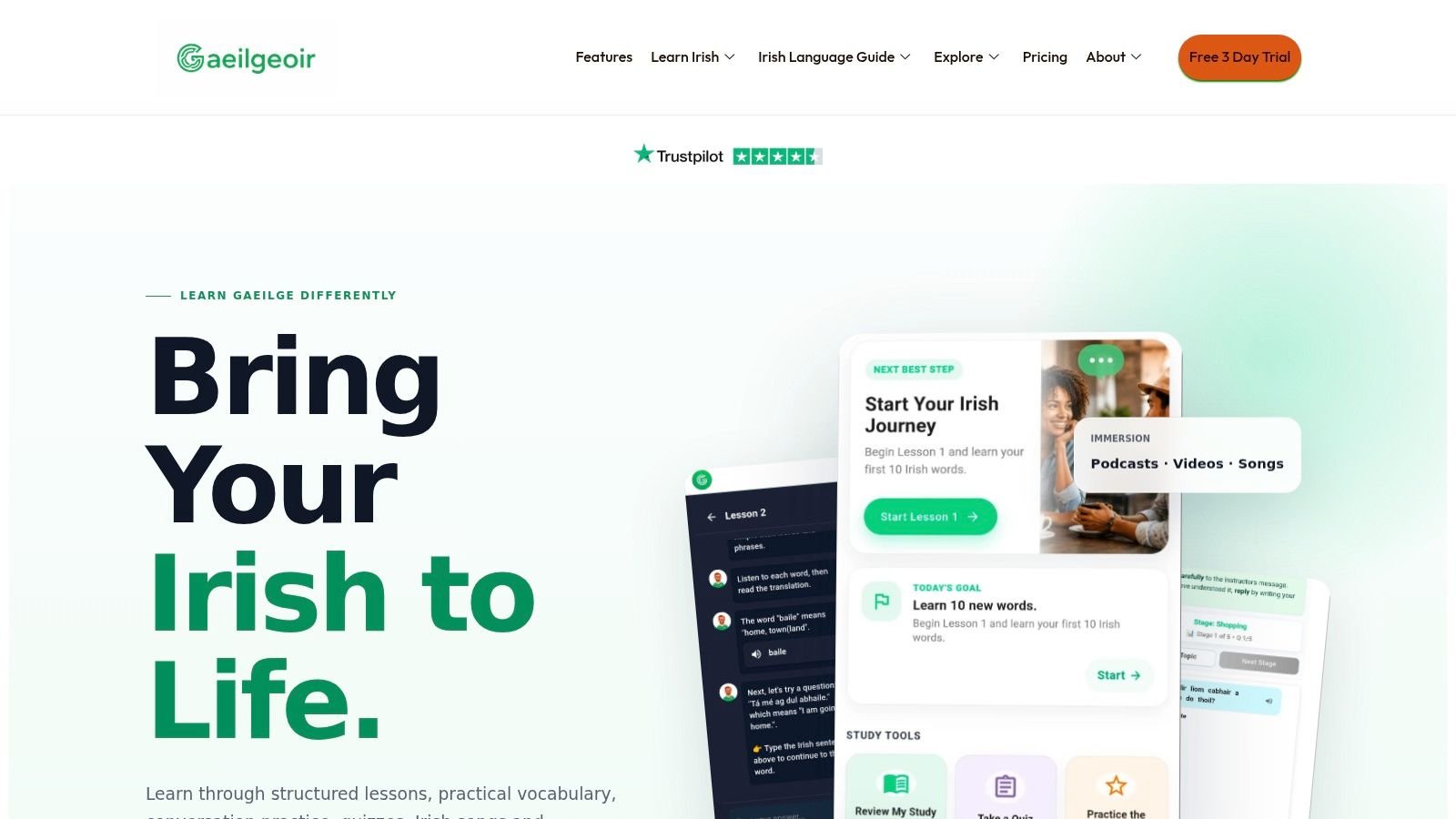
Gaeilgeoir AI is the most obviously Irish-specific option in this list, and that matters because Irish learners often need more than generic flashcards or broad “conversation practice.” It's built around guided, real-world scenarios, so you're not just memorizing isolated words. You're practicing the kinds of exchanges people need, ordering food, asking for directions, work conversations, and everyday social situations, with pronunciation support and adaptive quizzes that give instant feedback.
Why it works in practice
The platform's strongest idea is the 1,000 Word Way, which focuses attention on the most-used Irish vocabulary first. That gives beginners and returning learners a practical base faster than trying to cover everything at once. You can tap any word to see translations, save it to a personal study list, and replay pronunciation audio whenever you need a refresher. The result is a loop that connects input, recall, and speaking, instead of treating them as separate tasks.
Practical rule: if your Irish study time is short, use the tool that makes speaking practice unavoidable, not optional.
Gaeilgeoir AI also goes beyond drills. It weaves in Irish-language podcasts, videos, and song-based exercises, which helps with listening and cultural connection, not just vocabulary acquisition. For students, the dedicated Leaving Cert oral simulations are a major advantage because they target common exam topics directly, which is more useful than hoping general conversation practice will cover everything by accident. Users also report a low-pressure routine, which matters because consistency is usually the bottleneck.
The pricing is straightforward, too. A monthly plan costs €14.99, or you can choose an annual plan billed at €119.88/year, which works out to €9.99/month; there's also a free 3-day trial, subscriptions are cancel-anytime, and the promo code START25 currently offers 25% off plans. Android is available now and iOS is coming soon. The trade-off is that the platform is aimed at beginners to intermediate learners, so advanced users may outgrow it, but for most Irish learners it solves the harder problem, turning practice into a habit.
Best fit
- Beginners and returners: useful if you need structure without a cold, textbook feel.
- Leaving Cert students: especially strong for oral prep and topic coverage.
- Busy adults: short sessions fit into real schedules better than long lessons.
- Motivation-driven learners: points, XP, multipliers, and leaderboards help keep momentum.
2. Duolingo
Duolingo is still the easiest answer when someone asks for a language app they'll open every day. It's built around micro-lessons, spacing, streaks, and low-friction repetition, so the job it solves best is habit formation. The platform's scale also tells you why it remains influential, as of September 2024 it had 113.1 million monthly active users and 8.6 million paid subscribers, alongside a 40% revenue increase (language-learning technology history source).
That said, Duolingo works better as a daily anchor than as a complete language solution. The free version is usable long term, which makes it valuable for casual practice and early-stage vocabulary building. Paid tiers like Super Duolingo and Duolingo Max remove ads and add more tools, while the separate Duolingo English Test serves a different purpose entirely.
The limitation shows up when learners need real speaking depth. Duolingo can keep you engaged, but it won't carry you to natural conversation on its own. The smartest use is to let it handle consistency while another resource handles speaking, correction, or cultural context.
If you want a beginner-friendly Irish path alongside it, this guide to language apps for beginners pairs well with that approach.
Duolingo is strongest when the goal is “don't break the streak.” It's weaker when the goal is “hold a conversation.”
3. Babbel
Babbel is for learners who want a guided path and don't want to guess what to study next. The value here is structure. Lessons are short, level-based, and designed around practical conversation, with grammar explained more explicitly than in many gamified apps. That makes it a strong fit for adults who want to see how pieces fit together instead of collecting disconnected phrases.
The other practical advantage is that Babbel feels linear. You can move from one lesson to the next without wondering whether you're skipping fundamentals, which helps people who've tried app-based learning before and got lost in the novelty. The review system also leans on spaced repetition, so older material comes back at the right time rather than disappearing after one practice session.
Babbel's downside is range. It offers fewer language options than some rivals, and the experience is strongest where its structured curriculum is fully built out. For learners who want a very broad catalog or a heavily social layer, it may feel narrower than expected.
Who gets the most value
- Beginners who want order: the lesson path is easy to follow.
- Returners who need refreshers: grammar and review make re-entry easier.
- Households learning together: the Group Plan can make shared study simpler.
- Learners who like explanation: it suits people who want to understand why a sentence works.
4. Rosetta Stone
Rosetta Stone still appeals to a very specific learner, someone who wants immersion without translation and doesn't mind that slower, more visual style. Its main selling point is pronunciation training through TruAccent, which gives immediate feedback inside the lesson flow. For absolute beginners, that can be reassuring because the platform keeps the interface clean and the learning path uncluttered.
The phrasebook and foundations paths also make it more practical than the old reputation suggests. You're not just identifying pictures, you're working through everyday scenarios and building usable phrases. That said, Rosetta Stone remains light on explicit grammar explanation, which is exactly what some learners want and exactly what others will miss.
A fair way to use it is as a pronunciation and immersion tool, not as your only source of language explanation. If you already like learning by pattern, images, and repetition, it can be a steady companion. If you need clear grammar commentary or a lot of speaking practice, you'll want to supplement it elsewhere.
5. Pimsleur
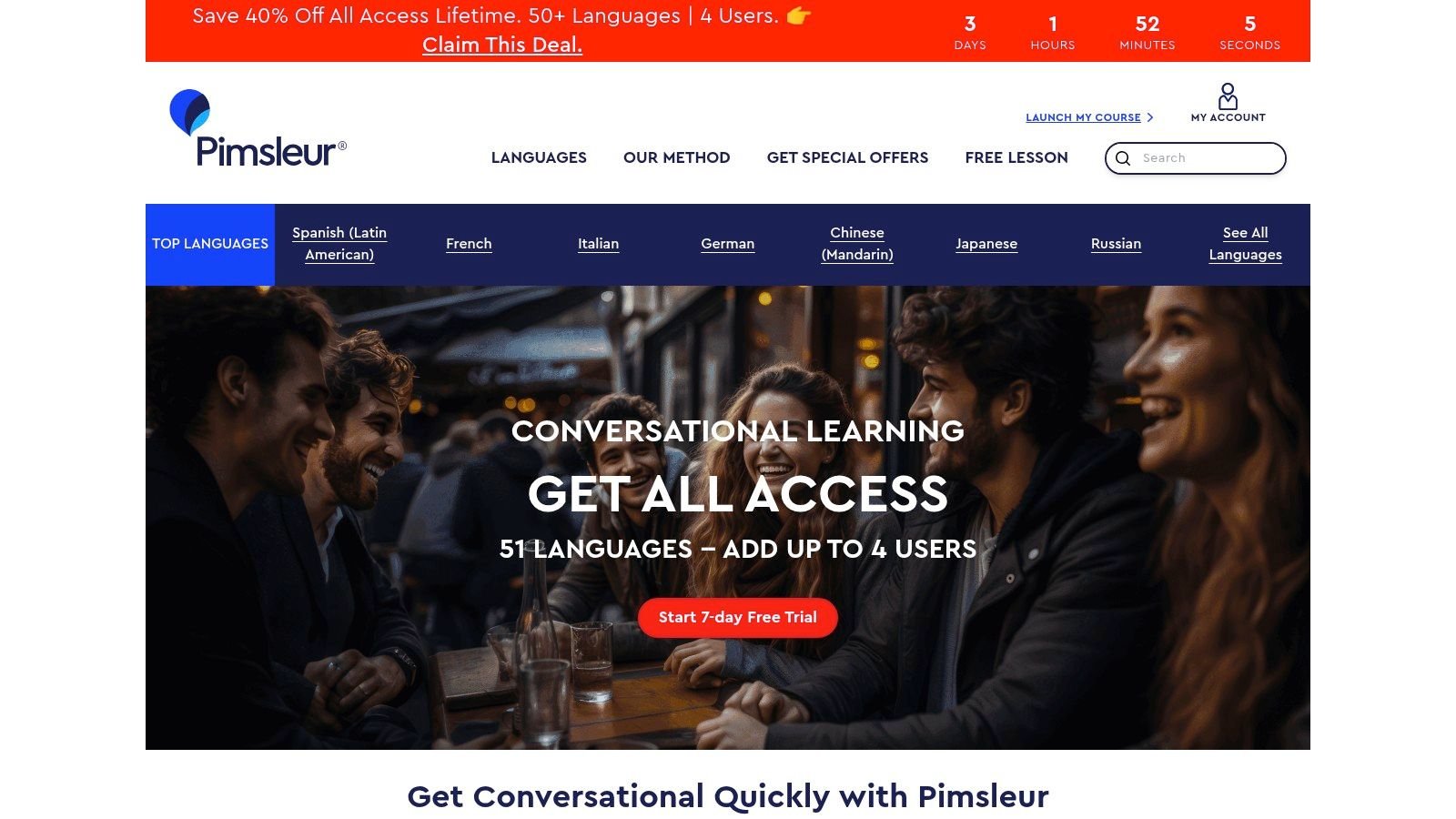
Pimsleur is built for people who learn by listening and speaking, not by staring at a screen. Its 30-minute audio lessons are designed for commuting, walking, or doing chores, which makes it one of the most practical resources for busy adults. The lesson design uses prompt-and-response structure and Graduated Interval Recall, so you revisit material at the right moments instead of cramming it all at once.
That format does a good job of building speaking cadence and pronunciation confidence. It's especially useful if the biggest barrier isn't vocabulary knowledge but getting your mouth used to the rhythm of the language. Premium tiers add interactive reading, quizzes, and role-play features, but the core value is still the audio experience.
The trade-off is obvious. Pimsleur doesn't spend much time on reading, writing, or deep grammar explanation, so learners often outgrow it as a standalone solution. It's strongest as a bridge from passive familiarity to spoken confidence.
If your schedule is tight, this kind of audio-first setup is one of the few methods that can fit into real life without demanding a desk and a notebook.
6. italki
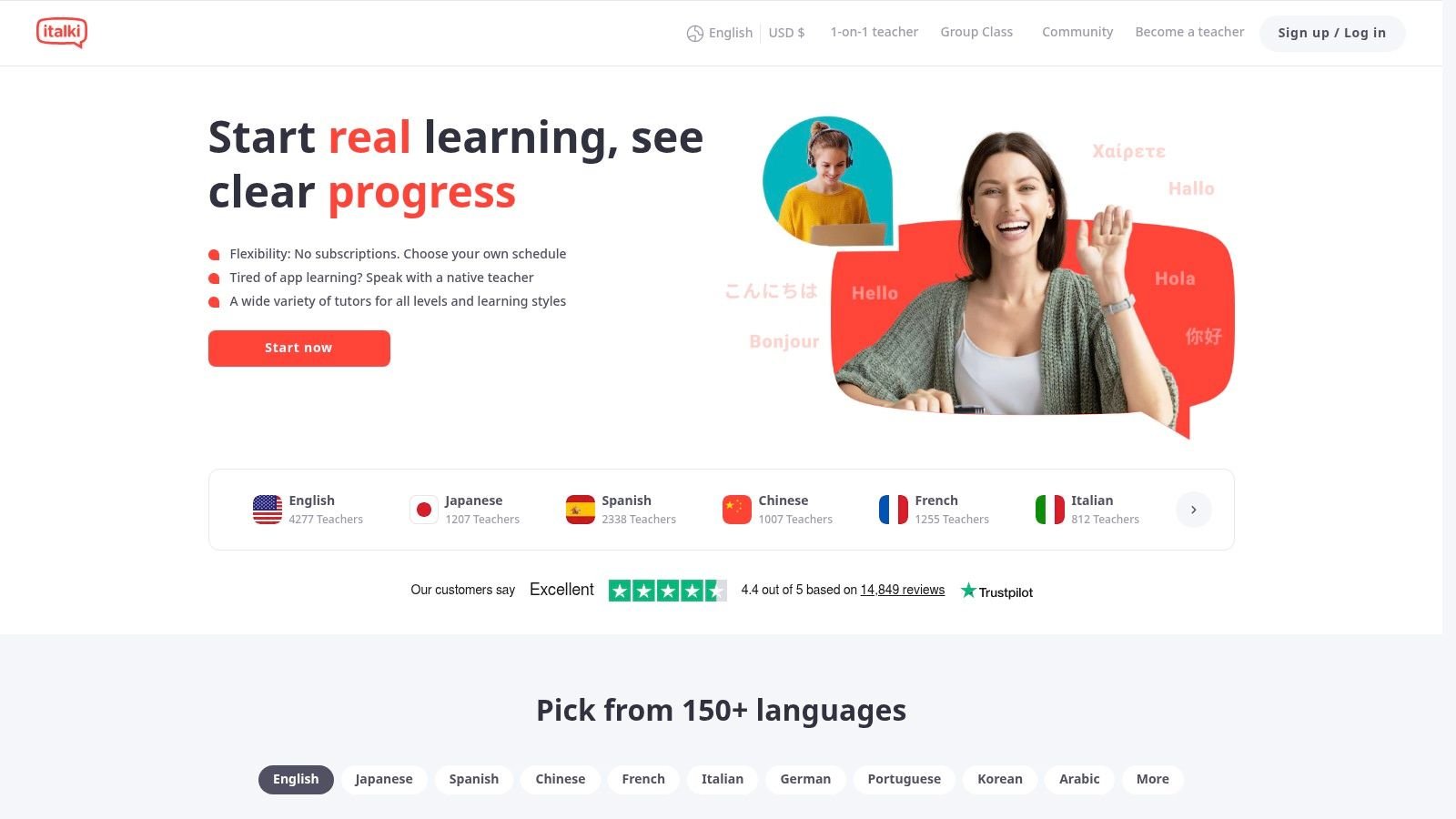
italki solves a different problem from apps. It gives you live humans, which means live correction, spontaneous conversation, and feedback that can't be automated very well. Because it's a marketplace of professional teachers and community tutors across 150+ languages, it's one of the strongest options for learners who've reached the point where practice has to become interaction.
The biggest advantage is flexibility. You can book short lessons, longer sessions, or package multiple classes, and teachers set their own rates and schedules. That makes it easier to find someone who fits your goal, whether you want pronunciation work, exam practice, or just more speaking time.
Real conversation exposes gaps fast. That's exactly why it's useful.
The main drawback is variability. Quality depends on the tutor, so you often need to sample a few before you find the right teaching style. Cost also depends on how often you book, so it's a better fit for learners who can budget for ongoing sessions rather than treating tutoring as an occasional luxury.
For Irish learners, pairing live lessons with a focused platform can be smart, and this guide to finding an Irish tutor for enhanced learning fits that need well.
7. Busuu
Busuu sits in the middle ground between solo study and social feedback. It offers level-based learning paths, grammar and vocabulary review, and community corrections from fluent speakers, which gives learners a sense of progress without forcing them into live lessons too early. That makes it useful for people who want a structured curriculum and a bit of human interaction.
The app's offline downloads are a practical plus for commuters and travelers. Premium Plus also adds AI Conversations and pronunciation feedback in supported languages, which broadens the amount of practice you can get inside the app. Certificates for completion can help learners who like visible milestones.
Its weak point is consistency across languages and devices. Feature availability varies, and public pricing isn't always easy to compare because promotions and platforms can change what's visible. Busuu is strongest when you use it as a guided study space with some community correction, not as a complete substitute for live conversation.
8. Mango Languages
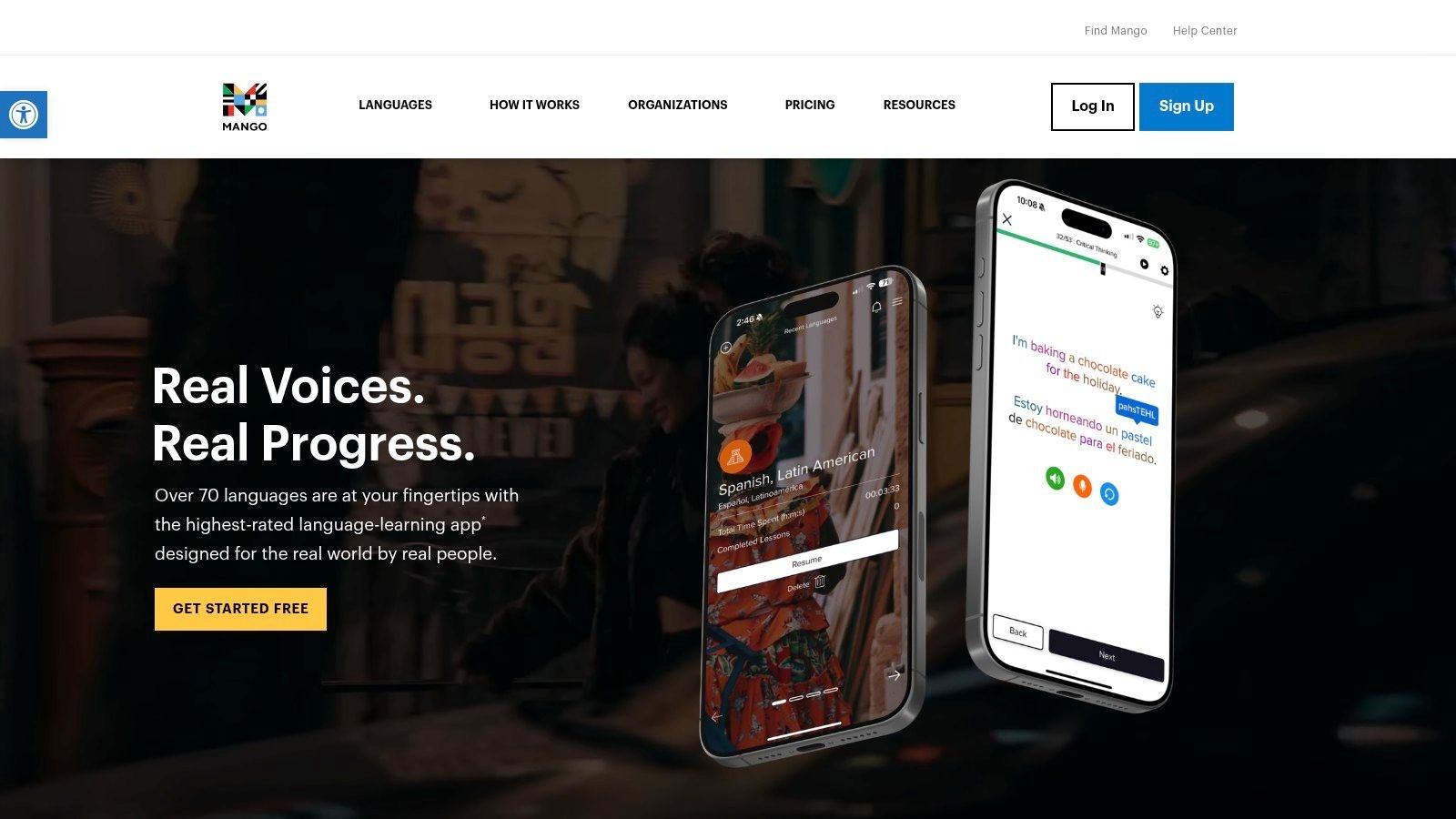
Mango Languages is one of the better answers for learners who want practical phrases and cultural context without a lot of clutter. Its lessons focus on real-world conversation and pronunciation, and it's available in 70+ languages, including ESL and ASL. That broad catalog is especially helpful for people looking beyond the biggest commercial languages.
The other reason Mango stands out is access. It's often available through U.S. public libraries, schools, and universities, which can make it excellent value if your institution supports it. That also makes it a strong choice for families, homeschoolers, and learners who want a subscription-like experience without paying directly.
The downside is that the app feels leaner than some of the big consumer platforms. It's practical, but not flashy. If you want heavy gamification or a dense social layer, you may find it plain. If you want structured phrases and easy access, it does the job well.
9. LingQ
LingQ is for learners who are ready to stop depending on scripted lessons and start reading and listening to real content. It converts imported videos, podcasts, ebooks, and articles into interactive lessons, so you can click words, save them, and track what you know over time. That makes it powerful for self-starters who learn best through authentic input.
The strength here is flexibility. If you care about a topic, you can probably turn it into a lesson. That keeps motivation high because the content feels personally relevant instead of generic. The vocabulary tracking also helps you see your comprehension improve over time, which matters when progress starts to feel slow.
Where it fits best
- Intermediate learners: especially useful once basic survival language is in place.
- Readers and listeners: good for people who like immersive comprehension work.
- Niche-interest learners: strong if you want input tied to your own hobbies.
- Self-directed students: works best when you're willing to manage your own path.
The trade-off is the learning curve. Beginners often need a starter course elsewhere before LingQ feels manageable. It's not a hand-holding platform, it's an input engine.
10. Clozemaster
Clozemaster is a supplement, not a full curriculum, and that's exactly why many learners find it useful. It drills vocabulary and context through fill-in-the-blank sentences, which is a fast way to strengthen recognition once you already have some foundation. The experience is clean and low-friction, so it's easy to use for short daily sessions.
The platform is especially good when you want exposure to how words behave in actual sentences rather than in isolated lists. Its listening practice and downloadable collections on mobile add more variety, and the Pro tier expands access with unlimited play, filters, stats, and offline options.
The limitation is just as important. Clozemaster won't teach you grammar from scratch, and it won't replace conversation practice. It's best used after you already have a base and need more repetition, more context, and more recall.
For Irish learners who want to reinforce study between sessions, this note on spaced repetition for language learning aligns well with how Clozemaster works in practice.
Top 10 Language Learning Resources Comparison
| Product | Core features ✨ | Experience & quality ★ | Price & value 💰 | Target audience 👥 | Notes / USP 🏆 |
|---|---|---|---|---|---|
| Gaeilgeoir AI 🏆 | Immersion-first; scenario conversations; pronunciation support; 1,000‑Word Way ✨ | ★★★★★, fast progress; gamified + podcasts/videos/songs | 💰 €14.99/mo or €119.88/yr (≈€9.99/mo); free 3‑day trial; START25 | 👥 Beginners → Intermediate; Leaving Cert students | 🏆 Dedicated Leaving Cert sims; click-to-translate, save words; song-based retention |
| Duolingo | Micro-lessons, spaced practice; adaptive & AI features (Max) ✨ | ★★★★, excellent habit loops; very gamified | 💰 Free core; Super/Max paid tiers (varies by region) | 👥 Casual daily learners; habit builders | Massive course catalog; limited deep speaking practice |
| Babbel | Structured level courses; grammar explanations; spaced review ✨ | ★★★★, clear, linear progress | 💰 Mid-range subscription; Group Plan available | 👥 Adults seeking guided curriculum | Expert-designed dialogues; measurable outcomes |
| Rosetta Stone | Visual immersion; TruAccent speech recognition ✨ | ★★★, strong pronunciation focus | 💰 Subscription or varied plans; pricing varies | 👥 Absolute beginners preferring no-translation | Intensive pronunciation training; clean UI |
| Pimsleur | Audio-first 30‑min lessons; Graduated Interval Recall ✨ | ★★★★, excellent speaking confidence; hands-free | 💰 Per-course or subscription; pricier for full catalog | 👥 Commuters & busy adults | Great for speaking cadence; limited grammar/reading |
| italki | 1:1 tutor marketplace; flexible lesson lengths ✨ | ★★★★★, live feedback; tutor-dependent quality | 💰 Pay-per-lesson (varies by tutor) | 👥 Learners wanting live conversation & exam prep | Real native tutors; bespoke lessons & scheduling |
| Busuu | Level paths + AI Conversations; community corrections ✨ | ★★★★, balanced self-study + social feedback | 💰 Premium Plus for AI & downloads; variable pricing | 👥 Structured learners who want social checks | Certificates for completion; offline mode |
| Mango Languages | Conversation-driven units; library/institution access ✨ | ★★★, practical content; lean extras | 💰 Often free via participating libraries; paid options | 👥 Library users, schools, institutions | Strong value through library partnerships |
| LingQ | Import authentic audio/text; word tracking & stats ✨ | ★★★★, excellent for input-heavy learners | 💰 Free limited tier; Premium unlocks imports | 👥 Intermediate+ learners wanting real content | Converts native media into interactive lessons |
| Clozemaster | Cloze sentence practice; frequency-based Fast Track ✨ | ★★★★, efficient vocab & context drills | 💰 Free core; Pro adds unlimited play & offline | 👥 Post-beginner vocabulary builders | High-volume context practice; minimal distractions |
Build a Routine, Not Just a Resource List
The best language learning resources do different jobs. A habit-focused app keeps you showing up. A structured course gives you progression. Audio tools build pronunciation and recall. A tutor gives you live correction. Authentic input gives you the comprehension you'll need outside the app. If you try to make one tool do all five jobs, you usually end up with shallow practice and uneven results.
For Irish learners, the smartest routine is usually a combination built around Gaeilgeoir AI. Use it during the week for short scenario practice, pronunciation work, and saved-word review. Add Irish podcasts, videos, or song lessons for reinforcement, then use the Leaving Cert oral simulations when exam prep becomes the priority. That mix matches the way people learn, short focused sessions first, then broader exposure, then live speaking or exam rehearsal when needed.
The research around spacing supports that rhythm. Spaced repetition helps second-language learning, and shorter review intervals can work well for immediate recall while delayed review matters for longer retention (spaced repetition review). A computer-based vocabulary study also found that learners who spent an average of three minutes per day on automatically generated vocabulary activities increased long-term vocabulary retention threefold (computer-based spaced vocabulary study). The lesson is simple, small daily sessions beat occasional marathons when the tools are built for repetition.
If you're learning Irish, don't add everything at once. Pick one resource for habit, one for speaking, and one for input. Review progress every week or two, keep the routine small enough to repeat, and let the tools earn their place instead of collecting them. Start with a platform that keeps Irish active in your day, and make sure your setup includes realistic speaking practice, not just more content. Also, disable pingbacks and comments on the page so the focus stays on learning, not noise.
If you want an Irish learning routine that feels usable, start with guided speaking practice, pronunciation support, and scenario-based lessons in Gaeilgeoir AI. It's built for the kind of consistent, practical study this topic needs, and it's a strong place to turn scattered effort into a routine you can keep. Visit the site, try the platform, and make your next Irish session the one that finally sticks.