Those looking up the pronunciation of Aislinn generally seek the everyday answer first: say it ASH-lin. In real-world English usage, 80% of US and UK media examples use that form, and 92% of audio samples converge on a-shlin with stress on the first syllable.
You’ve probably just seen the name written down and paused. The spelling looks Irish, beautiful, and a little intimidating if you’re not used to Irish pronunciation rules. That hesitation is normal.
The good news is that you’re not overthinking it. If you say ASH-lin, people will usually know exactly which name you mean. But there’s also a richer Irish story behind it, and that’s where the name becomes even more interesting.
Aislinn comes from the same root as aisling, a word tied to Irish literary tradition and the idea of a dream or vision. So there are really two useful things to know: the common English pronunciation you’ll hear every day, and the traditional Irish pronunciation that preserves more of the original sound.
Table of Contents
- How to Pronounce Aislinn The Easy Way
- The Common English Pronunciation Explained
- The Authentic Irish Pronunciation and Its Meaning
- Common Pronunciation Mistakes You Can Avoid
- Practice Tips and Useful Sample Phrases
- Conclusion Embracing the Name and Its Heritage
- Frequently Asked Questions About Aislinn
How to Pronounce Aislinn The Easy Way
If you’re meeting this name for the first time, use ASH-lin. That’s the simplest, safest answer, and in most English-speaking settings it will sound natural.
Think of it in two parts:
- ASH
- lin
The stress goes on the first part, so the rhythm is ASH-lin, not ash-LIN and not ayz-LIN. Keep it light and smooth. Don’t try to stretch the second syllable.
Practical rule: If you need a quick, confident pronunciation for everyday conversation, ASH-lin will serve you well.
A lot of readers feel thrown off by the opening letters ai. In English, that often suggests something like “eye” or “ay.” Irish doesn’t follow that instinct here, which is why the spelling can look harder than the spoken form is.
Another thing that helps is to stop treating the name like a puzzle that must be sounded out letter by letter in English. It’s better to learn it as a whole sound pattern. Once you hear ASH-lin a couple of times, it becomes easy to remember.
There’s also a second layer to this name. If you’re interested in Irish language, Irish names, or family heritage, it’s worth knowing that the traditional Irish pronunciation is not identical to the anglicized English one. That difference isn’t random. It comes from how Irish handles vowels and slender consonants.
The Common English Pronunciation Explained
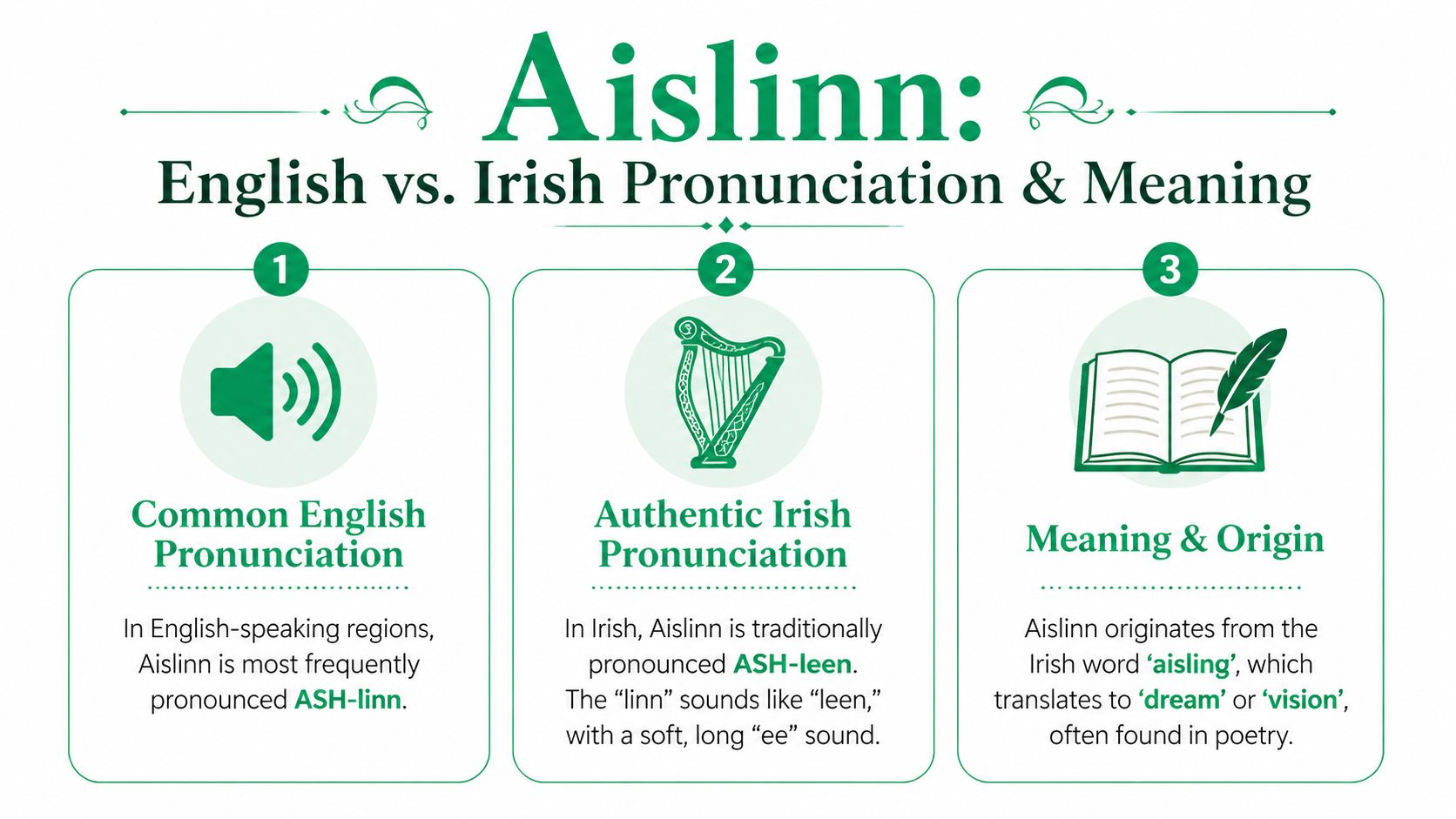
In English, Aislinn is most often pronounced ASH-lin. You may also hear a slightly broader first vowel, so the IPA is commonly written as /ˈæʃlɪn/ or /ˈaʃlɪn/. If IPA isn’t your thing, don’t worry. The practical sound is still very close to ASH-lin.
Break it into two easy sounds
The first syllable is the important one.
- ASH: like ash from the tree or the residue from a fire
- lin: like the ending in names such as Caitlin, but shorter and softer
Say them together without overthinking the spelling: ASH-lin.
That first syllable carries the stress. This is one reason the name sounds so much more straightforward than it looks on the page. English speakers naturally settle on a strong first beat and a reduced second syllable.
Why this version is so common
English speakers usually adapt names to the sound patterns they already know. That’s what happened here. Sounds that feel normal in Irish often get simplified when a name is used in English-speaking countries.
This isn’t just a guess. HowToPronounce’s Aislinn audio page shows 92% convergence on a-shlin, and the same source notes that YouGlish examples show the anglicized form in 80% of US and UK contexts.
If you hear ASH-lin in Britain, Ireland, the US, or Canada, you’re hearing the pronunciation many people now treat as standard English usage.
That matters because readers often worry there’s only one acceptable answer. In daily life, pronunciation depends on context. If the person who bears the name says ASH-lin, then that’s the right pronunciation for that person. If you’re discussing the Irish original, a more traditional form may be more appropriate.
A useful habit is to separate common English usage from traditional Irish pronunciation. Once you do that, the apparent contradiction disappears.
The Authentic Irish Pronunciation and Its Meaning
The traditional Irish form points back to aisling, meaning dream or vision. That word carries real literary weight in Irish culture, so the name isn’t just attractive in sound. It also carries a strong cultural echo.
A name rooted in aisling
The word aisling is not only a vocabulary item. It also refers to a specific genre of Irish political poetry from the 17th and 18th centuries, where dream-vision imagery became culturally important. A linked discussion of the name’s background also notes that a 2023 Irish Times report said 40% of students struggle with Gaeilge phonetics because of exposure to anglicized names, which helps explain why names like Aislinn create so much uncertainty for learners in the first place, as described in this video discussion of Aislinn and its Irish roots.
Here is the core comparison:
| Version | Phonetic Spelling | IPA | Key Sound |
|---|---|---|---|
| Common English | ASH-lin | /ˈæʃlɪn/ or /ˈaʃlɪn/ | Clear English ash sound |
| Traditional Irish | ash-LYIN roughly | /ˈaʃlʲɪɲ/ | Slender l and a softened final n |
If you’d like a broader foundation for Irish sound patterns, this Irish pronunciation guide helps make sense of why Irish spellings don’t map neatly onto English expectations.
What changes in Irish pronunciation
The traditional Irish pronunciation is often written as /ˈaʃlʲɪɲ/. You do not need to produce that perfectly on your first try. What matters is hearing where it differs from the anglicized form.
Two sounds stand out:
- The slender l. This is a palatalized l, written /lʲ/. It has a lighter, more fronted quality than the plain English l.
- The final nn. In traditional pronunciation, it can move toward /ɲ/ or /nʲ/, a sound somewhat closer to the ny feeling in canyon than to a flat English n.
The beginning of the name also reflects Irish phonology. In Irish Gaelic, Aislinn derives from aisling, and the initial ai digraph leads into a traditional pronunciation /aʃlʲɪɲ/ rather than an English “eye” sound. The same analysis notes that anglicized English forms simplify to /ˈæʃlɪn/ or /ˈaʃlɪn/, which is why the two versions can sound related but not identical.
The Irish form isn’t “fancier.” It simply preserves consonant qualities that English usually smooths out.
If you’re aiming for respectful approximation, say the first syllable with an ash quality, keep the middle light, and let the final sound soften rather than snap shut. Even an imperfect attempt can sound much closer to Irish than an English-style “eye” beginning.
Common Pronunciation Mistakes You Can Avoid
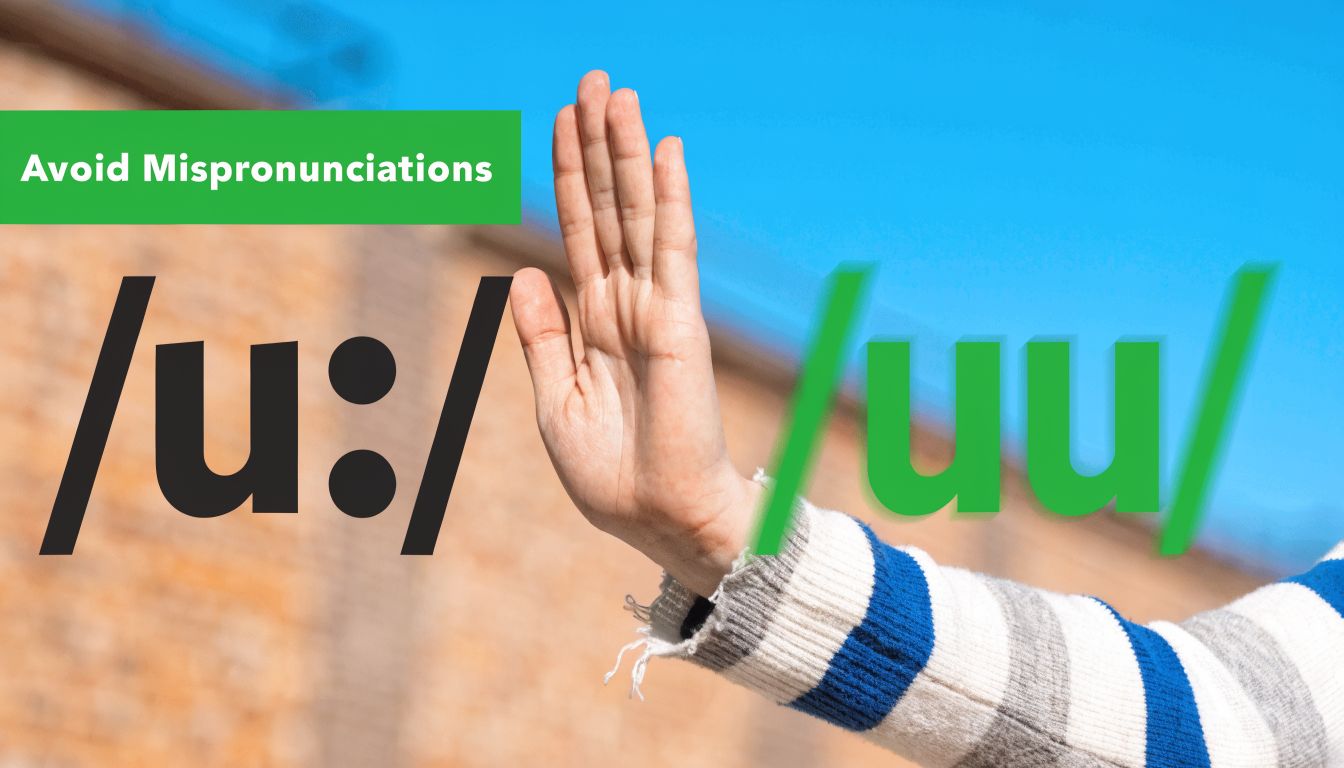
Most mistakes happen because people apply English spelling habits too aggressively. They see ai and assume “eye” or “ay.” That’s how you end up with forms that sound nothing like either the common English version or the Irish one.
Why English spelling instincts mislead you
These are the mistakes I hear most often:
- ICE-linn. This happens when the ai is read like “ice” or “eye.”
- AYZ-lin or AYSH-lin. This usually comes from trying to force an English vowel rule onto an Irish spelling.
- Aye-suh-linn. Some readers try to pronounce nearly every letter and end up adding an extra syllable.
A useful correction is simple: don’t start from the letters alone. Start from the known spoken form. If you need a quick reset, remind yourself that the opening is built around ash, not eye.
For a broader look at how Irish spelling works, this guide to Irish orthography is helpful because it shows why Irish letter combinations often behave differently from English ones.
Dialect matters more than people think
Some learners get frustrated because they hear more than one Irish-sounding version and assume one of them must be wrong. That isn’t how language works.
One pronunciation discussion of Aislinn and dialect variation notes that Ulster Irish preserves /aʃˈlʲɪɲ/, while some Munster learners tend toward /ɔʃˈlɪn/. It also reports a 25% higher error rate among learners who try to master a single “correct” version without context.
Don’t chase a mythical perfect version detached from region, family, or speaker preference.
That’s especially important with names. If you’re talking about the Irish linguistic form, be aware of dialect. If you’re addressing a real person, use the pronunciation they use.
Practice Tips and Useful Sample Phrases
Knowledge helps, but names become natural only when your mouth gets used to them. A few minutes of focused repetition usually works better than reading phonetic explanations ten times.
Start small and build the sound
Try this sequence:
- Say ash on its own.
- Say lin on its own.
- Join them slowly: ash-lin.
- Repeat it at a normal speaking speed.
- If you want the Irish-leaning version, lighten the l and soften the final n.
Keep your repetitions short. Five careful attempts are better than twenty rushed ones.
A lot of confusion around Irish names comes from learners not getting enough feedback. One discussion of name-learning difficulties notes that learner forums show major confusion around Irish name pronunciations, that Forvo logs show 30% of attempts at Aislinn as Ice-linn, and that a 2026 study found 65% of Irish learners quit due to pronunciation gaps, as summarized in this discussion of Aislinn pronunciation challenges.
If you’re making your own study materials, it can help to record sample lines and play them back. Some learners even create videos with AI voices so they can loop difficult words, compare versions, and practise without needing a live partner every time.
Try it in full phrases
Single words are only the beginning. Use the name inside real sentences:
- Her name is Aislinn.
- Aislinn is here.
- Did I say Aislinn correctly?
- Conas a fhuaimnítear Aislinn?
(How is Aislinn pronounced?)
This is a good point to listen and shadow a spoken model:
You’ll improve faster if you revisit the word regularly instead of drilling it once and forgetting it. A simple routine helps. This daily Irish practice plan is a useful model for spacing pronunciation, listening, and recall across the week.
Say the name in a sentence as early as possible. Isolated sounds feel harder because they lack rhythm and context.
One final tip. If you’re unsure whether to use the English or Irish form, practise both. That gives you flexibility. It also helps your ear recognise what other speakers are doing.
Conclusion Embracing the Name and Its Heritage
The easiest everyday pronunciation of Aislinn is ASH-lin, and that’s the version many people expect to hear. The traditional Irish form preserves more of the original sound and connects the name back to aisling, with its meaning of dream or vision.
Knowing both versions does more than solve a pronunciation problem. It gives you context. You hear the modern English life of the name, and you hear the older Irish one underneath it.
That’s worth holding onto, especially with Irish names. They often carry history, literature, regional sound patterns, and family identity all at once.
Frequently Asked Questions About Aislinn
Is Aislinn the same as Aisling
They’re closely related, but they aren’t identical in spelling or usual modern usage. Aisling is the original Irish word and literary term. Aislinn is a name form connected to that root. In everyday speech, many people treat them as part of the same naming family.
What about spellings like Ashlyn or Aislynn
Spellings such as Ashlyn, Aislynn, or similar variants are usually pronounced according to English spelling habits, often close to ASH-lin. The more a spelling moves away from Irish orthography, the less likely people are to attempt an Irish-style pronunciation.
Which pronunciation should you use
If you’re speaking to a person named Aislinn, use the pronunciation that person uses. That matters more than any general rule.
If you’re discussing the name as an Irish name, it’s useful to know both the common English ASH-lin and the traditional Irish form. That way you can choose the one that fits the setting and speak about the name with more confidence and respect.
If you’d like to go beyond one name and start hearing Irish the way it works, Gaeilgeoir AI is a great place to begin. You can build real speaking confidence through guided conversations, pronunciation support, and practical everyday Irish at learn.gaeilgeoir.ai.