Unveiling Slieve: Its Meaning and Significance in Irish

Have you ever wondered about the Irish roots of words used in describing Ireland’s majestic landscapes? One such word is “slieve,” commonly used in the names of various hills and mountains across Ireland. Understanding what ‘slieve’ means in Irish is not only interesting linguistically but also provides insights into Ireland’s rich cultural and natural heritage. At Gaeilgeoir AI, we delve into the essence of such terms, enhancing your appreciation of the Irish language and its connection to Ireland’s geography.

Unraveling the Meaning of “Slieve”

The term “slieve” in Irish stems from the word “sliabh,” which translates to ‘mountain’ or ‘moor’ in English. This term is widespread in place names throughout Ireland, indicating the geographic features of the region.

The Etymology and Usage of “Slieve”

Historical Context:

The use of “sliabh” has deep historical roots in the Irish language, featuring prominently in old texts and folklore. It is typically associated with descriptions of Ireland’s rugged and often mystical mountain landscapes.

Modern Usage:

In contemporary times, “slieve” has transcended its literal meaning to evoke imagery of Ireland’s picturesque and sometimes wild terrain. It’s a term that resonates with both locals and visitors who experience Ireland’s natural beauty.

Examples of “Slieve” in Irish Place Names

One of the best ways to understand the application of “slieve” is to explore how it appears in various Irish place names:

  • Slieve Donard: The highest peak in Northern Ireland, often referred to simply as ‘Donard,’ is named after Saint Donard and is part of the Mourne Mountains.
  • Slieve Bloom: This mountain range lies in the center of Ireland, lending its name to the Slieve Bloom Mountains, known for their scenic beauty and rich biodiversity.
  • Slieve League: Located on the coast of County Donegal, these cliffs are among the highest sea cliffs in Europe and are less commercialized than the more famous Cliffs of Moher.

The Cultural Significance of “Slieve”

Understanding place names in Ireland goes beyond linguistic interest; it’s a gateway to the cultural and historical tapestry of the country:

  • Connection to Nature: “Slieve” in place names reflects the deep connection and reverence the Irish have for their natural landscape.
  • Historical Lore: Many sites with “slieve” in their names are associated with ancient legends and historical events, enriching the cultural narrative of these places.

Why Learn Place Names in Irish?

Learning how to pronounce and understand place names in Irish can enhance your experience as a learner by:

  • Deepening Cultural Appreciation: You gain insights into the local culture, history, and values.
  • Improving Geographic Literacy: It helps in navigating the country and understanding regional differences and characteristics.
  • Enhancing Language Mastery: Such learning extends your vocabulary and your ability to engage more deeply with the Irish language.

Integrating “Slieve” Into Your Learning with Gaeilgeoir AI

At Gaeilgeoir AI, we encourage learners to embrace comprehensive aspects of the Irish language. Here’s how our platform can help:

  • Interactive Geography Lessons: Learn about the Irish landscape and its linguistic significance through our geo-specific language modules.
  • Pronunciation Practice: Master the correct pronunciation of “slieve” and other geographically significant Irish words.
  • Cultural Context: Our lessons are designed not just to teach language but to weave in the historical and cultural context that enriches your learning experience.

Conclusion

Learning what “slieve” means in Irish offers more than just a translation; it opens up a narrative about Ireland’s landscape and cultural heritage. As you continue your journey with Gaeilgeoir AI, embracing such terms will undoubtedly enrich your understanding and appreciation of the Irish language.

Want to learn more?

Are you ready to explore more fascinating Irish words and deepen your understanding of Ireland’s rich linguistic landscape? Sign up for a free trial at Gaeilgeoir AI today and join a community dedicated to celebrating and preserving the Irish language. Dive into an immersive learning experience that brings the beauty of Ireland’s culture and language straight to your fingertips!

Counting People in Irish: A Guide to Gaelic Numbers and Usage

Counting in any language is a fundamental skill, but when it comes to counting people, certain Learning how to count in Irish is one of the first steps in mastering the language. Whether you’re shopping, traveling, or having a chat with an Irish speaker, knowing how to count people in Irish is essential. In this article, we will explore the basics of counting in Irish, the structure of the Irish number system, and how to use these numbers in real-life situations. Understanding these fundamental skills will enrich your understanding of the Irish language and bring you closer to Irish culture.

History of Counting in Irish

Origins of Counting in Irish

The history of Irish counting dates back to ancient times, influenced by the Celtic peoples. Initially, the Irish language used a vigesimal system (based on 20), which is similar to other Celtic languages. Over time, this system was adapted to the more common decimal (base-10) system in use today.

Evolution of Irish Numbers

Irish counting numbers evolved through centuries of cultural and linguistic changes. The arrival of Christianity in Ireland in the 5th century had a significant impact on the development of the language, including its numerical system. As Irish culture continued to thrive, so did its system of counting, which is still used in daily life today. If you want to dive deeper into the origins of the Irish language, check out our Guide to Learning Gaelic.

Basic Counting Principles in Irish

Fundamentals of Irish Numbers

In Irish, numbers are structured in a way that may seem unfamiliar to English speakers. For example, the number for one is “a haon”, and two is “dhá”. Irish numbers from 11 to 19 are constructed by combining the basic numbers with the word for teen.

When it comes to counting people in Irish, the noun for “person” or “people” changes slightly depending on the number you’re using. For example:

  • One person = duine
  • Two people = dhá dhuine

It’s important to know these variations when you’re interacting with native speakers. Our Irish Language Lessons for Beginners are a great way to start practicing these essential skills.

Common Mistakes to Avoid

A frequent mistake when counting in Irish is incorrectly modifying nouns when numbers are involved. For instance, after the number two, Irish grammar dictates that the word “person” should change to the plural form, so it’s “dhá dhuine” (not just “dá duine”).

Comparison with Other Gaelic Languages

Differences Between Irish and Scottish Gaelic Numbers

While Irish and Scottish Gaelic share a common Celtic heritage, there are some key differences when it comes to counting. For example:

  • Irish (Gaeilge): “dhá” (two)
  • Scottish Gaelic (Gàidhlig): “dà” (two)

These differences in counting systems, along with others like pronunciation and grammatical rules, show how Gaelic languages have evolved differently. If you’re interested in learning more, our Comparison of Irish and Scottish Gaelic Grammar provides an in-depth look at the key differences.

Practical Applications of Counting in Irish

Using Irish Numbers in Everyday Life

Once you’ve mastered the basics, you can use Irish numbers in everyday conversations. Whether you’re counting people at a gathering, ordering food, or engaging in casual chats, knowing how to count in Irish will come in handy. Try using these phrases the next time you’re traveling through Ireland or interacting with native speakers:

  • “Cé mhéad daoine atá anseo?” – “How many people are here?”
  • “Tá trí dhuine ann.” – “There are three people.”

Incorporating Gaelic counting into your daily life will not only improve your fluency but also help you connect with Irish culture on a deeper level.

Learning Resources for Counting in Irish

Top Resources to Enhance Your Counting Skills

To become proficient in counting in Irish, it’s crucial to practice consistently. Here are some excellent resources to help:

Using these tools will give you a solid foundation to master counting people in Irish and gain confidence in speaking.

Mastering Counting Techniques in Irish

Tips for Advanced Counting Techniques

To advance your skills in counting, try focusing on more complex numbers and concepts like fractions or large numbers. Here are some techniques to improve:

  • Break down numbers into smaller, manageable chunks.
  • Practice counting in different contexts (e.g., shopping, meetings, or social gatherings).
  • Engage with native speakers to ensure accuracy and fluency.

By incorporating these strategies into your learning routine, you’ll quickly become more comfortable with Irish numbers and their applications.

Conclusion

Learning to count people in Irish is not just about memorizing numbers—it’s about connecting with the Irish language and culture. Whether you’re planning a trip to Ireland or just want to impress friends with your knowledge of Gaeilge, mastering counting is a great starting point. With the right resources and practice, you can quickly gain confidence and start using Irish numbers in everyday conversations.

Start your Gaelic language journey today by visiting learn.gaeilgeoir.ai for a free trial, and begin mastering the Irish language with fun, flexible lessons!


Related Resources:

Explore Irish Vocabulary

How to Count in Irish

Learn Irish Word for Backpack

Mastering Irish Future Tense

Sláinte is Táinte: Meaning, Use & Pronunciation

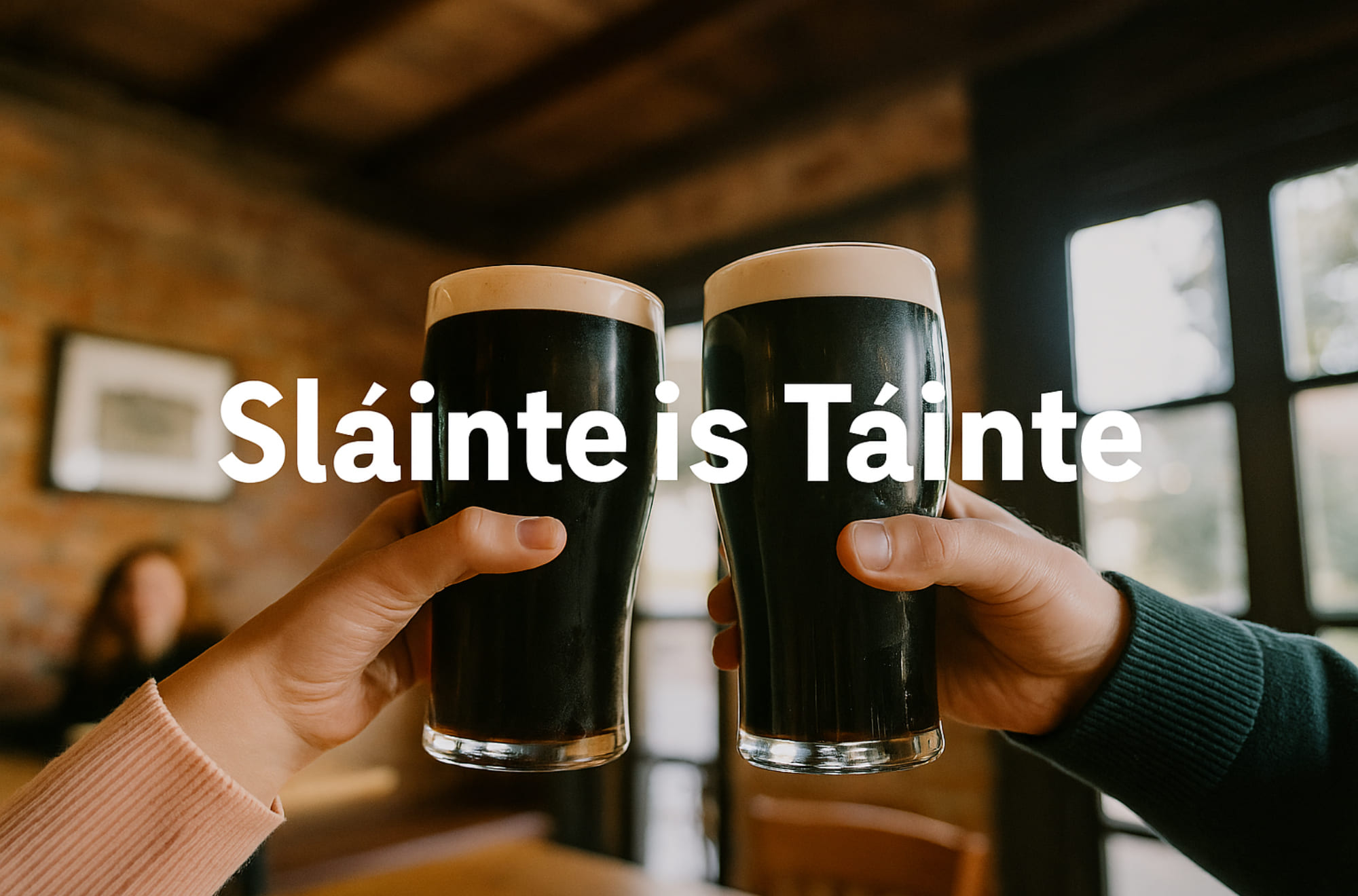
If you’ve ever raised a glass in Ireland or among Irish friends, you’ve probably heard the cheerful toast “Sláinte is Táinte!” But what is the sláinte is táinte meaning, and why is it such a beloved phrase in Irish culture? Translating roughly to “Health and wealth,” this traditional expression is more than just a toast—it’s a wish for well-being and prosperity.

Whether you’re planning a trip to Ireland, diving into Irish language learning, or just want to impress at your next gathering, understanding the pronunciation, history, and use of “Sláinte is Táinte” brings you closer to the heart of Irish tradition.


Understanding “Sláinte is Táinte”

Let’s break down this iconic phrase:

  • Sláinte means health in Irish.
  • Táinte means wealth.

Together, “Sláinte is Táinte” translates as “Health and Wealth.” It’s the Irish equivalent of a heartfelt toast wishing well-being and prosperity to those around you.

🍻 Proper Pronunciation

Pronounced roughly as:
Slawn-cha iss Tawn-cha

The Irish for cheers pronunciation often surprises English speakers. For a deeper dive into Irish sounds, check out our Irish Pronunciation Guide.

🎧 Listen & Learn

If you’re learning Irish or want to sound more natural when toasting, hearing native pronunciation is key. Try our audio lessons inside Gaeilgeoir AI, which include real Irish speakers saying common toasts.


History and Tradition Behind Irish Toasts

🍀 A Toast Rooted in Heritage

Irish toasts go back centuries and are often rooted in folklore, poetry, and blessings. Saying “Sláinte” has long been a way to show respect and goodwill during gatherings.

Phrases like “Sláinte is Táinte” blend old-world charm with modern-day hospitality. These sayings were used in everything from clan celebrations to small family dinners—offering not just a drink, but a connection.

Learn more about the history of the Irish language and how its vocabulary evolved to preserve culture even in times of suppression.


Using “Sláinte is Táinte” in Conversations and Celebrations

🥂 When to Say It

You don’t have to wait for a major event—“Sláinte is Táinte” can be used anytime you’re raising a glass or simply wishing someone well. Here are some practical examples:

  • Toasting a bride and groom at a wedding
  • Celebrating a promotion or graduation
  • Sharing a pint with friends at the pub
  • Marking a new year or a fresh start

Pair it with other Irish greetings and phrases like:

  • “Go maire tú!” (May you live long!)
  • “Slán agus beannacht!” (Goodbye and blessings!)

You’ll create a warm, inviting atmosphere—and maybe spark a few questions about what it all means!


Learning More About the Irish Language and Culture Online

Thanks to modern platforms, learning Irish is more accessible than ever.

📚 Online Irish Language Courses

Explore interactive Irish language courses that include cultural context and pronunciation support. Apps like Gaeilgeoir AI help learners absorb both words and their meanings in real-world situations.

🌍 Dialectal Differences

Regional dialects (Ulster, Connacht, Munster) may slightly change how “Sláinte is Táinte” sounds. For example, “Táinte” might have a softer ending in Munster Irish. Our guides on Dialectal Differences in Irish help clarify these subtleties.

💡 Cultural Immersion Tips

  • Join virtual language exchanges
  • Watch Irish-language films and shows
  • Listen to Irish radio or music with lyrics
  • Follow Irish creators who use everyday Gaeilge

Embracing the Spirit of “Sláinte is Táinte” in Daily Life

Learning Irish phrases isn’t just for tourists or special occasions—it’s a way to carry part of a vibrant culture with you every day.

Try using “Sláinte is Táinte” when celebrating small wins, toasting over dinner, or even as a sign-off in a thoughtful message.

Explore other cultural expressions like Seanfhocail (Irish proverbs) or brush up on adjectives and compliments using our guide to Mastering Adjectives in Irish.


Conclusion

The sláinte is táinte meaning goes far beyond a simple cheer—it’s a heartfelt wish for health and wealth, echoing centuries of Irish tradition. It’s a phrase rooted in community, celebration, and well-being.

Embrace it, use it, and share it—because every time you say it, you’re speaking a little bit of Irish history.

🚀 Want to go deeper? Start learning Irish with a free trial and discover more ways to bring this beautiful language into your daily life.

Learn Irish Vocabulary Online: A Step-by-Step Guide

Embarking on the journey to learn a new language can be both exciting and daunting. For enthusiasts of the Irish language, building a strong vocabulary is a crucial step towards fluency. Fortunately, with today’s technology, you can learn Irish vocabulary online effectively and enjoyably. At Gaeilgeoir AI, we provide innovative AI-powered tools designed to enhance your learning experience, making it easier for you to grasp and retain Irish words and phrases. This guide will walk you through effective strategies and resources to expand your Irish vocabulary from the comfort of your home.

Why Learn Irish Vocabulary Online?

Learning Irish vocabulary online offers numerous benefits:

  • Flexibility: Learn at your own pace and schedule, fitting lessons around your daily commitments.
  • Variety: Access a wide range of resources, from interactive courses to digital flashcards and games.
  • Immediate Feedback: Utilize AI-driven platforms like Gaeilgeoir AI to receive instant feedback and personalized learning tips.

Essential Irish Vocabulary Categories

To start, focus on basic and essential vocabulary categories that will form the foundation of your language skills:

  1. Greetings and Basic Expressions: Words and phrases used in daily interactions.
  2. Numbers and Colors: Fundamental vocabulary that is used frequently in conversation.
  3. Family and Relationships: Terms to describe family members and various relationships.
  4. Common Verbs and Adjectives: Action words and descriptors that add depth to your conversations.

Tools and Resources for Learning Irish Vocabulary

1. Gaeilgeoir AI Platform

Our platform offers a comprehensive approach to learning Irish vocabulary. Features include:

  • Interactive Exercises: Engage with vocabulary through use-case scenarios to improve retention.
  • Customizable Flashcards: Reinforce learning with digital flashcards that adapt to your proficiency level.
  • Pronunciation Guides: Listen and repeat with audio recordings to master pronunciation.

2. Online Irish Language Courses

Enroll in online courses that offer structured learning paths. Sites like Gaeilgeoir AI’s Learning Center provide modules ranging from beginner to advanced levels, ensuring all your learning needs are met.

3. Mobile Apps

Utilize mobile apps designed for language learning, which often include gamified lessons that make building vocabulary engaging. Apps like Duolingo and Babbel offer Irish language courses that are accessible on the go.

Strategies for Effective Vocabulary Learning

Routine Practice

Make vocabulary practice a daily habit. Even 10-15 minutes per day can significantly improve your language retention over time.

Use It or Lose It

Try to use new words in context as soon as you learn them, whether in writing or speaking. Join Irish language forums or social media groups where you can practice with others.

Multimedia Approach

Combine your studies with multimedia resources like Irish music, podcasts, and films. This not only helps with memory retention but also enhances your listening skills.

Overcoming Challenges in Vocabulary Acquisition

Learning a new language, especially one with unique pronunciation and structure like Irish, presents challenges:

  • Complex Pronunciation: Tackle this by listening to native speakers and using pronunciation tools provided by Gaeilgeoir AI.
  • Limited Exposure: Increase your exposure to the language by consuming Irish media and engaging with native speakers online.

Conclusion

With the right approach and tools, learning Irish vocabulary online can be a rewarding part of your language learning journey. Gaeilgeoir AI is here to support you every step of the way with our advanced AI-driven learning solutions that make mastering Irish enjoyable and effective.

Want to learn more?

Ready to expand your Irish vocabulary and embrace the beauty of Ireland’s native language? Sign up for a free trial of Gaeilgeoir AI today and take advantage of our comprehensive learning tools designed for learners of all levels. Join our community and start your journey to fluency now!

Understanding Maith Thú – Meaning and Usage

Introduction:

In the rich tapestry of the Irish language, certain phrases stand out for their versatility and frequency of use, and “Maith thú” (pronounced mah hoo) is one of those expressions. This phrase, akin to “well done” or “good job” in English, carries significance in both casual conversation and formal recognition. At Gaeilgeoir AI, we’re excited to help you understand and use this expression like a native speaker, enhancing both your spoken and written Irish.

The Significance of “Maith Thú” in Irish Culture

In Ireland, encouraging and recognizing others’ efforts and achievements holds cultural importance—whether in academic, professional, or daily settings. “Maith thú,” which directly translates to “good you,” serves as an affirmation or praise typically employed to acknowledge someone’s good work, success, or effort.

Breaking Down “Maith Thú”

Pronunciation:

  • “Maith” sounds like “mah” with a breathy ‘h’ at the end.
  • “Thú” is pronounced like “hoo.”

Usage Scenarios:

  • Academic settings: Teachers commonly use “Maith thú” to commend students on their work.
  • Sports: It’s prevalent in sports, cheering on team members for good plays.
  • Everyday Achievements: From completing a task well to succeeding in a challenging recipe at home, this phrase is versatile.

How to Use “Maith Thú” Correctly

Contextual Appropriateness:

Understanding when to use “Maith thú” is crucial. It’s typically reserved for moments of genuine achievement or effort. Overuse in trivial circumstances might diminish its value.

Response:

When someone says “Maith thú” to you, the typical response might be “Go raibh maith agat!” (Thank you!), acknowledging the compliment.

Enhancing Language Skills with “Maith Thú”

Integration in Daily Use:

Try to incorporate “Maith thú” in daily situations where praise is due. This practice can enhance your fluency and make your interactions more engaging.

Language Learning Benefits:

Using such phrases can boost your confidence in speaking Irish and help you better connect with the language’s emotional aspects.

Tools and Resources From Gaeilgeoir AI

To help you master the use of “Maith thú” and other similar expressions, Gaeilgeoir AI provides several resources:

  • Interactive Dialogue Simulations: Practice real-life scenarios where you can use “Maith thú” appropriately.
  • Feedback Mechanisms: Get immediate corrections and suggestions to improve your usage and pronunciation.
  • Cultural Insight Modules: Understand the deeper cultural contexts of when and why certain phrases are used.

Suggested Resource:

Explore our Guide to Learning Gaelic for more insights into common phrases and their usage.

Community Interaction and Real-Life Practice

Engaging with a community of learners can significantly improve your practical understanding of phrases like “Maith thú.” Consider the following:

  • Irish Language Meetups: Join or organize meetups where you can practice conversational Irish.
  • Online Forums: Participate in discussions on platforms dedicated to Irish language learners.

Conclusion

“Maith thú” is more than just a phrase—it’s a reflection of the Irish spirit of encouragement and recognition. By understanding and using this phrase correctly, you not only enhance your language skills but also deepen your connection to Irish culture. Whether you’re learning Irish for personal enrichment or academic purposes, integrating such expressions brings you closer to achieving fluency and cultural competence.

Want to learn more?

Eager to embrace the Irish language and its rich expressions? Sign up for a free trial at Gaeilgeoir AI today and start your journey with the best AI-powered tools available. Join our community of enthusiasts and make your language learning experience rewarding and successful!

Essential Guide to Basic Irish Conversation

Learning your first few Irish phrases is one thing. Knowing how to put them together in a real conversation is where Gaeilge starts to feel useful.

You don’t need hundreds of words before you can begin. A simple conversation might involve saying hello, asking how someone is, introducing yourself, thanking someone and saying goodbye. Once those exchanges become familiar, you can gradually add more vocabulary and more complicated sentences.

This guide covers some of the most useful Irish phrases for beginners and shows you how to start using them in everyday conversations.

If you want to go beyond individual phrases and follow a more structured learning path, you can also explore how to learn Irish online with Gaeilgeoir.

Starting a Conversation in Irish

A natural place to begin is with greetings.

Dia dhuit — Hello
Conas atá tú? — How are you?
Tá mé go maith. — I am well.
Agus tú féin? — And yourself?

Put them together and you already have the beginnings of a conversation:

Dia dhuit!
Hello!

Dia is Muire dhuit! Conas atá tú?
Hello! How are you?

Tá mé go maith, go raibh maith agat. Agus tú féin?
I’m well, thank you. And yourself?

Don’t worry about making your first conversations long. Becoming comfortable with a few short exchanges is far more useful than memorising a large dialogue that you struggle to adapt.

Useful Irish Greetings

Dia dhuit is one of the best-known ways to say hello in Irish when addressing one person. You may also hear Dia daoibh when addressing more than one person.

For more informal situations, particularly among younger speakers, you may also encounter greetings such as Haigh.

Other useful greetings include:

Maidin mhaith — Good morning
Tráthnóna maith — Good afternoon/evening
Conas atá tú? — How are you?
Cén chaoi a bhfuil tú? — How are you?

That last example is a useful reminder that Irish varies by dialect. You won’t always hear precisely the same phrases or pronunciation from speakers in different parts of Ireland.

As a beginner, you don’t need to master every regional variation immediately. Start with a form you understand and can use confidently, while gradually becoming familiar with alternatives as you listen to more Irish.

Everyday Courtesies in Irish

A few polite expressions will take you a surprisingly long way.

Le do thoil — Please
Go raibh maith agat — Thank you
Tá fáilte romhat — You’re welcome / You are welcome

One of the most useful phrases to learn early is go raibh maith agat. You’ll encounter it constantly, and using common expressions like this in context helps them become automatic rather than something you have to translate in your head.

This is also where active practice becomes important. Instead of reading a phrase five times, try imagining when you would actually say it.

Someone gives you something:

Go raibh maith agat.

You’re asking for something:

Le do thoil.

The more often you connect Irish with a situation, the easier it becomes to retrieve the language when you need it.

If you’d like somewhere to practise short exchanges like these, you can start learning Irish with Gaeilgeoir and combine conversation practice with lessons, vocabulary and review.

Introducing Yourself in Irish

Once you can greet someone, the next useful skill is introducing yourself.

Is mise Seán. — I’m Seán.
Cad is ainm duit? — What is your name?
Cá bhfuil tú i do chónaí? — Where do you live?
Tá mé i mo chónaí i mBaile Átha Cliath. — I live in Dublin.

Don’t feel that you need to learn an entire introduction at once. Start with your name, then gradually add where you live, where you’re from, what you do or something you like.

This gives you a small collection of sentences that are genuinely relevant to you, which usually makes them easier to remember.

Talking About Things You Like

Learning how to talk about your interests makes basic Irish conversation much more flexible.

One particularly useful structure is:

Is maith liom… — I like…

For example:

Is maith liom ceol. — I like music.
Is maith liom caife. — I like coffee.
Is maith liom peil. — I like football.

Once you’re comfortable with the structure, you can swap in vocabulary you already know instead of memorising each sentence separately.

That’s an important shift in language learning. You’re no longer collecting fixed phrases; you’re learning patterns that let you create new sentences.

Talking About the Weather

There is perhaps no safer conversational territory in Ireland than the weather.

A few useful expressions include:

Tá sé ag cur báistí. — It’s raining.
Tá sé fuar. — It’s cold.
Tá sé te. — It’s hot.
Tá an aimsir go deas. — The weather is nice.

You don’t need to memorise every possible weather expression. Learn a few that describe weather you actually experience and start noticing the patterns used to construct them.

Ordering Food and Drinks

Food and drink vocabulary gives you another practical way to use basic Irish.

A particularly useful structure is:

Ba mhaith liom… — I would like…

Once you know the structure, you can combine it with vocabulary you’ve already learned.

For example:

Ba mhaith liom caife. — I would like coffee.

This is another reason vocabulary and conversation practice work best together. A word becomes much more useful once you know how to put it into a sentence.

Saying Goodbye in Irish

Eventually, even the finest conversation has to end.

Slán — Goodbye
Slán go fóill — Goodbye for now
Feicfidh mé arís thú. — I’ll see you again.

You don’t need an elaborate farewell. Slán is short, useful and worth becoming comfortable with early.

A Simple Irish Conversation to Practise

Once you’ve learned a few of these phrases, try combining them instead of practising everything separately.

A: Dia dhuit!
B: Dia is Muire dhuit!

A: Conas atá tú?
B: Tá mé go maith, go raibh maith agat. Agus tú féin?

A: Tá mé go maith. Cad is ainm duit?
B: Is mise Aoife.

That’s already a real exchange.

Read it once, then try it again without looking at the English. After that, replace the name or change one of the answers.

The goal isn’t to recite the dialogue perfectly. It’s to reach the point where you can change it.

How to Get Better at Irish Conversation

Conversation improves when you move beyond simply recognising words on a screen.

Try saying phrases aloud rather than reading silently. Listen to native and fluent speakers so you become familiar with the rhythm of Gaeilge. Repeat short sections of audio, and practise retrieving phrases without immediately looking at the answer.

It also helps to combine different types of learning. Vocabulary gives you the building blocks, grammar helps you understand how those blocks fit together, and listening teaches you what Irish actually sounds like when spoken.

Most importantly, start speaking before you feel completely ready.

You will make mistakes. That’s part of learning a language.

Don’t Try to Translate Everything Word for Word

One of the biggest adjustments for English speakers learning Irish is accepting that Irish doesn’t always express ideas in the same way as English.

For example, Is maith liom… expresses the idea of liking something, but understanding it purely as a word-for-word substitution for English can make Irish grammar more confusing later.

Try to learn useful Irish structures as patterns with meanings, rather than assuming every English sentence has an identical Irish equivalent.

You’ll gradually begin recognising these patterns without needing to translate every individual word.

What About Irish Dialects?

You may notice differences between Irish spoken in Munster, Connacht and Ulster.

Pronunciation can vary, and speakers may prefer different words or constructions. That doesn’t mean one version is necessarily “wrong”.

For beginners, dialect differences can initially seem intimidating, but you don’t need to learn three versions of every sentence.

Build a solid foundation first. As you listen to more Irish through conversations, podcasts, videos and other media, you’ll naturally become more familiar with regional variation.

Can You Learn Basic Irish Conversation Online?

Yes. In fact, online learning can be particularly useful when you’re trying to build a regular practice habit.

Instead of waiting for a weekly class, you can practise vocabulary, listening and sentence building for a few minutes at a time throughout the week.

Gaeilgeoir combines structured lessons with vocabulary practice, conversation activities, personalised study, quizzes, Irish songs and access to podcasts and videos for immersion.

If you’re starting from scratch, you can learn Irish online for free before deciding how far you want to take your learning.

Build Your Irish Conversation Skills With Gaeilgeoir

The best way to improve your Irish conversation isn’t to memorise an enormous phrasebook.

Start with a small number of useful expressions. Say them aloud. Listen to Irish regularly. Learn sentence patterns that allow you to substitute different words, and gradually begin creating sentences that are relevant to your own life.

Gaeilgeoir gives you a place to bring those parts of learning together, including structured lessons, vocabulary, personalised study, conversation practice, quizzes, songs, podcasts and videos.

You can start learning Irish with Gaeilgeoir and begin putting the language into practice, or explore our guide to learning Irish online to compare different ways to learn.

Final Thoughts

Basic Irish conversation doesn’t have to begin with complicated grammar or hundreds of memorised phrases.

Learn how to say hello. Ask someone how they are. Introduce yourself. Talk about something you like. Say thank you. Say goodbye.

Then do it again.

Each small conversation gives you another opportunity to retrieve Irish instead of simply recognising it. Over time, those short exchanges start becoming something much more important: Irish you can actually use.

Go n-éirí leat!
Unveiling the Ogham Script Alphabet: Ireland’s Ancient Code

The Ogham script, one of the earliest forms of written expression in Ireland, holds a special place in the annals of Irish history and culture. This ancient alphabet, also known as the “Celtic Tree Alphabet,” consists of various marks along a central line and was primarily used for inscriptions on stone monuments. In this article, we’ll explore the fascinating aspects of the Ogham script alphabet, its origins, characteristics, and how modern technology, especially AI tools like those from Gaeilgeoir AI, can help preserve and teach such integral parts of Celtic heritage.

The Origins of Ogham Script

Historical Backdrop:

Ogham is believed to have been developed around the 4th century AD, possibly as a means of communication among the Irish elite or between Druids. It is predominantly found in Ireland, but examples can also be seen in parts of Wales, Scotland, and the Isle of Man.

Etymology:

The term “Ogham” is derived from Ogmios, the Celtic god of eloquence and literature, underscoring the script’s deep literary and cultural significance.

Deciphering the Ogham Script Alphabet

The Ogham script consists of 20 characters, each grouped into sets of five (aicmí), and each character or “fid” represents a different tree or plant. This symbolic connection with nature is a testament to the ancient Celts’ veneration of the natural world.

Characteristics of Ogham:

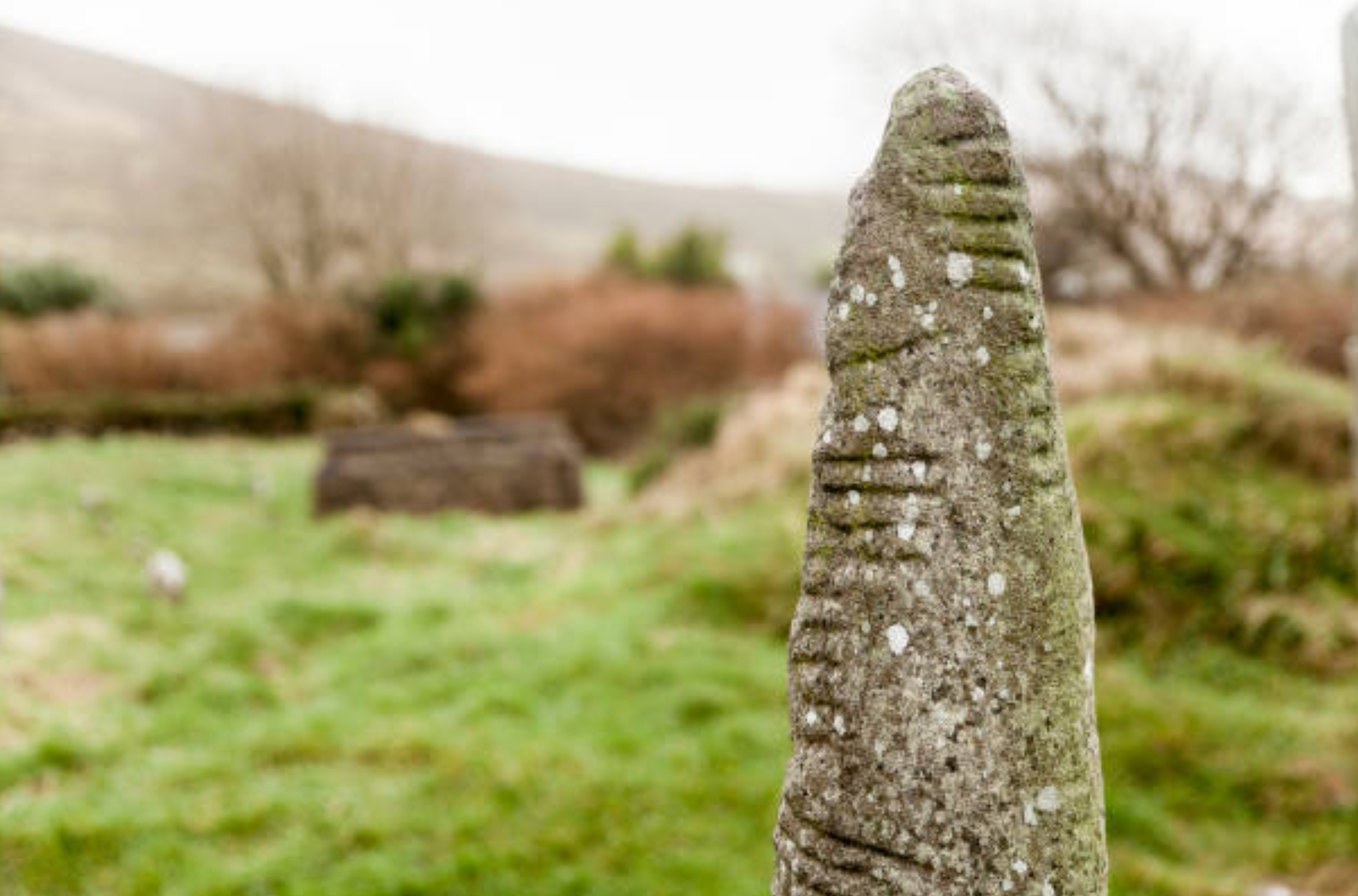
  • Structure: Ogham is written vertically and read from bottom to top, commonly on the edges of larger stones.
  • Letters: The script uses a series of marks or notches that are grouped in distinct ways around a central line, usually the edge of a stone or piece of wood.

The Linguistic Significance of Ogham

Language Insights:

While primarily inscribed in Primitive Irish, Ogham inscriptions provide crucial insights into the linguistic transitions to Old Irish and the evolution of the language. These inscriptions are not only important linguistically but also offer a glimpse into the society, beliefs, and structure of early Irish civilization.

Using Technology to Explore Ogham

At Gaeilgeoir AI, we harness AI-powered tools to bring ancient scripts like Ogham closer to modern learners:

  • Virtual Inscriptions: Interactive tools that allow learners to virtually inscribe their own Ogham messages, understanding the script’s structure and usage.
  • Decoding Programs: AI algorithms that help decipher inscriptions, making ancient messages accessible to everyone.
  • Educational Modules: Structured lessons that delve into the historical and cultural contexts of Ogham.

Integrate Ogham into Modern Learning:

Incorporating Ogham studies in contemporary education not only enriches language curriculum but also fosters an appreciation for Ireland’s ancestral heritage.

Beyond the Script: Ogham’s Cultural and Archaeological Importance

Cultural Icon:

Ogham stones are considered national treasures in Ireland, symbolizing the enduring legacy of the Irish language and its cultural continuity.

Archaeological Marvels:

Many Ogham stones are located at historically significant sites, offering insights into the religious and social dynamics of ancient Ireland.

The Ogham script alphabet is more than just a series of enigmatic marks carved into old stones—it’s a bridge to Ireland’s past, carrying the whispers of ancient Celts. By studying this unique script, we connect with the minds and spirits of those who lived centuries ago. Gaeilgeoir AI is committed to bringing such treasured knowledge into the modern era, making it accessible and engaging for new generations.

Want to learn more?

Are you intrigued by the ancient languages and scripts of Ireland? Embark on a journey of discovery with Gaeilgeoir AI. Sign up for a free trial and explore the rich tapestry of Irish history and language. Join our community of enthusiastic learners today and unlock the mysteries of the past!

Find the Perfect Irish Tutor: Enhance Your Learning Journey

Embarking on the journey to learn Irish can be thrilling and enriching. However, mastering a new language often requires more than self-study; it demands personalized guidance that suits your learning style and goals. This is where an Irish tutor can make a significant difference. Whether you’re a beginner or looking to advance your proficiency, finding the right tutor can accelerate your progress and deepen your understanding of the language. At Gaeilgeoir AI, we understand the importance of tailored educational experiences and offer resources to help you connect with expert tutors.

The Role of an Irish Tutor in Language Learning

An Irish tutor does more than teach grammar and vocabulary. They are your guide through the cultural nuances and intricate patterns of the language, providing:

  • Personalized Attention: Customized learning plans that address specific challenges and goals.
  • Interactive Practice: Real-time conversations and feedback to improve pronunciation and fluency.
  • Cultural Insights: Knowledge about Irish history, literature, and traditions, enriching your linguistic experience.

How to Choose the Right Irish Tutor

Selecting an Irish tutor suited to your needs involves several considerations:

  1. Qualifications and Experience: Look for tutors with formal qualifications in teaching Irish and experience in educating students at your learning level.
  2. Teaching Style: Choose a tutor whose teaching style aligns with your learning preferences—whether visual, auditory, or kinesthetic.
  3. Flexibility and Availability: Consider their availability and willingness to adapt schedules and content according to your requirements.

Top Platforms to Find Irish Tutors

1. Gaeilgeoir AI

Offering a connection to experienced, vetted Irish tutors through an AI-enhanced platform, Gaeilgeoir AI ensures a match that suits your learning pace and style.

2. Italki

This global language learning community connects students with language tutors for 1-on-1 online lessons tailored to their learning needs.

3. Preply

Preply offers a diverse range of tutors specialized in different languages, including Irish, allowing learners to choose tutors based on their profiles, reviews, and rates.

Integrating Technology in Learning with an Irish Tutor

Combining traditional tutoring with modern technology, such as language learning apps and online resources, can enhance the educational experience:

  • Interactive Tools: Use Gaeilgeoir AI’s interactive exercises for practice between your tutoring sessions.
  • Online Resources: Access extensive materials for grammar, vocabulary, and listening provided by your tutor or found on learning platforms.

Benefits of Learning Irish with a Tutor

  • Accelerated Learning: One-on-one tutoring helps overcome learning obstacles more quickly than classroom settings.
  • Motivation and Accountability: Regular sessions with a tutor provide structure and encourage consistency, keeping you motivated throughout your learning journey.
  • Customized Feedback: Immediate, personalized feedback helps rectify mistakes and refine language skills effectively.

Conclusion

Finding the right Irish tutor can transform your language learning experience, making it more engaging, efficient, and enjoyable. By utilizing the resources at Gaeilgeoir AI, you can ensure that your learning journey is supported by expert guidance tailored to your unique needs.

Want to learn more?

Ready to elevate your Irish language skills with a personalized tutoring experience? Sign up today for a free trial at Gaeilgeoir AI and explore our resources to find the perfect Irish tutor for your learning objectives. Join our community of passionate learners and embrace the journey to fluency!

Top Podcasts in Irish to Enhance Your Language Skills

In the digital age, podcasts have become a vital resource for language learners, offering a unique blend of entertainment and education. For those keen on mastering Irish, tuning into podcasts in Irish can be an exceptional way to enhance listening skills, expand vocabulary, and gain cultural insights. In this post, we’ll explore some of the top Irish language podcasts that can help you immerse yourself in the language, whether you’re a beginner or looking to polish your fluency.

Why Listen to Podcasts in Irish?

  1. Immersive Learning: Podcasts provide a naturalistic way to hear Irish spoken by native speakers, which is crucial for honing pronunciation and listening skills.
  2. Flexible Learning: You can listen to podcasts anytime and anywhere, making it easy to integrate Irish language learning into your daily routine.
  3. Cultural Context: Many podcasts also delve into Irish culture, history, and current affairs, offering listeners a deeper understanding of the context in which the language is used.

Top Podcasts in Irish You Shouldn’t Miss

1. Motherfoclóir

Hosted by Darach Ó Séaghdha, Motherfoclóir tackles various topics from linguistics to everyday Irish life, all with a humorous twist. Great for intermediate learners, this podcast not only teaches you the language but also gives you a laugh.

  • Recommended Episode: Dive into any episode that looks at the quirks and idiosyncrasies of the Irish language and culture.

2. Beo Ar Éigean

A light-hearted podcast by RTÉ, Ireland’s National Television and Radio Broadcaster, which focuses on the lives of Irish-speaking women. Each episode discusses different personal and cultural themes, offering enriching vocabulary and expressions.

  • Recommended for: Beginners and intermediate learners interested in conversational Irish.

3. Irish History Podcast

While primarily in English, this podcast by Fin Dwyer occasionally features episodes in Irish, focusing on Ireland’s rich history. It’s perfect for history buffs looking to mix language learning with historical narratives.

  • Recommended Usage: Listen to gain historical context and catch snippets of Irish usage.

4. An Saol ó Dheas

A more advanced podcast that features interviews and discussions entirely in Irish, covering topics from politics to the arts. It’s broadcast on RTÉ Raidió na Gaeltachta, providing insights into contemporary issues in Gaeltacht areas.

  • Recommended for: Advanced learners aiming for proficiency in understanding fast-paced, natural Irish.

Making the Most Out of Irish Language Podcasts

  1. Consistent Listening: Make it a habit to listen regularly. Even if you don’t understand everything at first, regular exposure is key.
  2. Active Listening: Take notes of new vocabulary and phrases, and try to use them in your speaking or writing.
  3. Repetition: Don’t hesitate to replay parts of the podcast to fully grasp the material or pronunciation.

Integrating Podcasts into Your Learning Routine

For an optimal learning experience, combine podcast listening with other learning methods:

  • Interactive Courses: Strengthen podcast learning with structured lessons from Gaeilgeoir AI’s Irish Language Courses.
  • Community Practice: Join discussions on the podcasts you listen to in online forums or study groups.

Conclusion

Podcasts in Irish offer a dynamic and practical way to improve your language skills and immerse yourself in Irish cultural life. By integrating these podcasts into your daily routine and utilizing other resources like Gaeilgeoir AI, you can accelerate your Irish language learning journey while enjoying every step.

Want to learn more?

Ready to boost your Irish language skills through engaging podcasts and interactive learning? Sign up for a free trial at Gaeilgeoir AI today, and join our vibrant community of learners. Let’s explore the Irish language together in a fun and effective way!

Learn Irish Online Free

Learning a new language opens doors to diverse cultures and experiences, and Irish, with its rich history and poetic flair, is no exception. Many aspiring learners often wonder where they can find reliable resources to learn Irish online for free. With advancements in digital education and AI, acquiring a new language skill has never been more accessible. In this guide, we’ll explore various platforms and techniques, including how Gaeilgeoir AI enhances your learning experience without costing you a penny.

Benefits of Learning Irish Online

Learning Irish online offers flexibility, diversity in learning materials, and the opportunity to connect with a global community. Whether you’re a seasoned polyglot or a curious beginner, online resources can provide:

  • Convenience: Learn at your own pace and schedule.
  • Variety: Access a wide range of learning formats, from interactive courses to engaging podcasts.
  • Community: Participate in forums and social media groups dedicated to Irish language learners.

Best Free Online Resources to Learn Irish

1. Gaeilgeoir AI

Our platform utilizes advanced AI technology to provide personalized learning experiences. Users can access interactive lessons, pronunciation guides, and practice exercises tailored to their learning level.

2. Duolingo

This popular app offers courses in Irish, allowing learners to build their skills in a game-like environment that’s effective and fun.

3. TG4 Player

TG4, the Irish language television channel, offers a plethora of shows and programs in Irish, providing immersive listening practice for free.

4. Teanglann.ie

An invaluable resource for grammar and vocabulary, featuring dictionaries, pronunciation databases, and grammar guides.

Strategies for Effective Learning

Set Clear Goals

Define what you want to achieve with your Irish learning journey, be it conversational fluency, reading literature, or understanding Irish music lyrics.

Integrate Daily Practice

Consistency is key in language learning. Dedicate at least 15-30 minutes daily to studying Irish using a mix of listening, speaking, reading, and writing exercises.

Engage with Native Content

Listening to Irish music, watching films, or following Irish news can significantly boost your comprehension and cultural knowledge.

Overcoming Challenges in Learning Irish

While free resources are invaluable, learners often face challenges such as:

  • Limited Advanced Material: Free resources tend to cater more to beginners.
  • Lack of Structured Path: Without a clear learning path, it’s easy to lose direction.

Solution: Use a combination of resources to address various skill levels and aspects of the language. Gaeilgeoir AI, for instance, helps by offering structured learning paths tailored to individual needs, from beginner to advanced levels.

Why Use Gaeilgeoir AI?

Gaeilgeoir AI stands out by offering:

  • AI-Powered Lessons: Adaptive learning technology that evolves with your progress.
  • Interactive Tools: Real-time feedback on pronunciation and quizzes to test your knowledge.
  • Cultural Insight: Learn not just the language but also immerse yourself in Irish culture, enhancing your overall learning experience.

Conclusion

The journey to learn Irish online for free is both rewarding and enriching. By utilizing the right tools and resources, anyone can embark on this linguistic adventure with success. Whether through comprehensive platforms like Gaeilgeoir AI or diverse tools available across the web, your path to fluency in Irish is just a few clicks away.

Want to learn more?

Begin your adventure in Irish today! Sign up for a free trial at Gaeilgeoir AI and access a plethora of customized learning materials and tools. Join our community of language enthusiasts and embrace the beautiful challenge of learning Irish!

Start Speaking Irish Today — 25% Off
Use code START25

Learn real Irish for real life with guided practice, pronunciation support, and everyday conversations.

Get 25% off any plan with code START25

Start Speaking Irish Today — 25% Off