The Irish language, known as Gaeilge, is renowned for its rich history and cultural significance. A fascinating aspect of Irish is its dialectal variety, which reflects the diverse heritage and regional identities within Ireland. Understanding these dialectal differences in Irish is crucial for learners aiming for depth and authenticity in their language skills. Gaeilgeoir AI provides advanced tools and insights to help you navigate these variations effectively, enhancing both your learning experience and your appreciation of the language’s rich tapestry.
The Landscape of Irish Dialects
Irish has three main dialects, each corresponding to different geographic regions in Ireland:
Connacht: Spoken in the province of Connacht, this dialect features a soft, melodious quality.
Munster: Found in the southern province of Munster, this dialect is known for its lyrical intonation and unique vocabulary.
Ulster: Predominant in parts of Ulster (mainly in Northern Ireland), characterized by its distinct pronunciation and terms.
Each dialect not only influences pronunciation and vocabulary but also imbues speakers with a distinct linguistic identity that traces back to Ireland’s historical and cultural divisions.
Key Differences Among Irish Dialects
Pronunciation Variations:
Vowels: Subtle differences in vowel pronunciation can significantly change the sound of words across dialects. For example, the word for “woman” in Irish, “bean,” is pronounced differently in each dialect.
Consonants: The treatment of consonants, especially broad and slender variants, varies, affecting the fluidity and rhythm of speech.
Grammatical Nuances:
Verb Conjugations: There are notable differences in verb endings and conjugations. Learners must pay attention to these variations to ensure accuracy and comprehension.
Prepositional Pronouns: These can vary significantly across dialects, influencing sentence structure and meaning.
Vocabulary:
Each dialect can have unique words or phrases for everyday concepts, which can be delightful to learn and add a rich layer to one’s understanding of regional cultures within Ireland.
Challenges and Opportunities in Learning Dialectal Variations
Challenges:
Resource Availability: Finding comprehensive resources that cover all dialects can be challenging.
Understanding Nuances: For beginners, distinguishing between dialects might be overwhelming at first.
Opportunities:
Cultural Immersion: Learning dialectal differences opens up diverse aspects of Irish culture and folklore.
Enhanced Communication: Knowledge of multiple dialects can improve communication with a broader range of native speakers.
How Gaeilgeoir AI Facilitates Mastery of Irish Dialects
At Gaeilgeoir AI, we understand that mastering dialectal differences enriches your linguistic skills significantly. Our platform offers:
Dialect-Specific Courses: Tailored lessons focusing on the nuances of each major dialect.
Interactive Speech Recognition: AI tools that help you practice and perfect pronunciation specific to different dialects.
Cultural Context Lessons: Insights into the historical and cultural backgrounds of each dialect to deepen your understanding.
Practical Tips for Embracing Dialectal Diversity
Listen and Learn: Regular exposure to Irish speakers from different regions through media such as radio, television, and podcasts.
Practice with Natives: Engage with native speakers from various parts of Ireland, if possible, to experience the dialects firsthand.
Language Exchanges: Participate in language exchange meetups that focus on Irish, where dialectal variations are often highlighted.
Conclusion
The dialectal differences in Irish reflect the rich mosaic of Ireland’s history and cultural diversity. Embracing these variations not only enhances your language proficiency but also deepens your connection to Irish heritage. With Gaeilgeoir AI, navigating these differences is more accessible and engaging, bringing you closer to achieving fluency and authentic expression in Irish.
Want to learn more?
Are you ready to explore the rich dialectal landscapes of the Irish language and enhance your communication skills? Sign up for a free trial with Gaeilgeoir AI today, and start your journey into the heart of Ireland’s linguistic diversity. Join our community of eager learners and embrace the full spectrum of the Irish language.
Many language enthusiasts often ask, “How hard is it to learn Gaelic?” The answer isn’t straightforward, as it depends on various factors including your language learning background, the resources you use, and how much time you dedicate to learning. In this article, we will explore the complexities of learning Gaelic, debunk common myths, and show you how Gaeilgeoir AI’s innovative tools can make your learning process smoother and more engaging.
Understanding the Gaelic Language
What is Gaelic?
Gaelic refers to the group of languages spoken in Scotland (Scottish Gaelic) and Ireland (Irish Gaelic). Each has its own dialects, history, and cultural significance, so specifying which Gaelic (Irish or Scottish) you are learning is crucial.
Challenges of Learning Gaelic
Pronunciation and Grammar:
Gaelic languages are known for their unique pronunciation and robust grammatical structures that can be daunting for beginners.
Pronunciation: Both Irish and Scottish Gaelic have sounds rarely found in English, which may require more practice to master.
Grammar: The verb-subject-object structure is a departure from the more common subject-verb-object syntax of English.
Limited Resources:
Compared to widely spoken languages like Spanish or French, there are fewer learning resources available for Gaelic, which can make sourcing quality learning materials challenging.
Why Gaelic May Be Easier Than You Think
Linguistic Similarities:
For those familiar with other Celtic languages, Gaelic may present some linguistic similarities that can accelerate the learning process.
Rich Cultural Material:
Learning Gaelic opens up a wealth of literature, music, and folklore. Engaging with authentic materials can significantly enhance your understanding and retention of the language.
How Gaeilgeoir AI Makes Learning Gaelic Easier
Gaeilgeoir AI leverages advanced technology to address common hurdles in learning Gaelic:
Interactive Learning Tools: Engage with the language actively through exercises that mimic real-life interactions and offer instant feedback.
Customized Learning Paths: The platform adapts to your learning speed and style, focusing on areas that need more attention.
Access to Native Speakers: Practice with AI simulations that use natural speech patterns of native Gaelic speakers, improving your listening and speaking skills.
Beginner Tips for Learning Gaelic
Start with Common Phrases: Learning essential phrases can boost your confidence and help you start small conversations.
Practice Regularly: Consistency is key in language learning. Even short, daily sessions can yield better results over time.
Use Technology: Utilize apps, podcasts, and online courses to immerse yourself in Gaelic wherever you are.
Advanced Strategies for Gaelic Mastery
For those looking to deepen their Gaelic proficiency:
Immerse Yourself: Spend time in Gaelic-speaking regions or participate in language immersion programs.
Read and Listen: Consume as much Gaelic media as you can, from radio programs to Gaelic books.
Conclusion
While learning Gaelic poses its challenges, it is by no means an insurmountable goal. With the right tools, resources, and commitment, you can significantly enhance your ability to speak and understand Gaelic. Gaeilgeoir AI is dedicated to supporting your language learning journey with tailored resources that make mastering Gaelic more accessible and enjoyable.
Call to Action
Ready to tackle the challenge and reap the rewarding experience of learning Gaelic? Sign up for a free trial at Gaeilgeoir AI today and take the first step towards fluency. Join our community of learners and explore the enriching world of Gaelic languages!
Introducing yourself is the first step in any conversation and a gateway to meaningful interactions. In Irish, learning to say “my name is” can open many doors, whether you’re in a casual meeting, a formal event, or just wanting to impress with your language skills. Here at Gaeilgeoir AI, we’re excited to help you navigate these initial interactions by teaching you how to confidently introduce yourself in Irish.
The Basics of Self-Introduction in Irish
The phrase “my name is” in Irish is “Is ainm dom” followed by your name. This phrase is pivotal for anyone starting their journey in learning Irish, as it forms the foundation for more complex conversations. But why stop at just one phrase? Understanding the context and variations can enhance your confidence and ability to connect with native speakers.
Understanding “Is ainm dom”
Pronunciation:
Is: pronounced almost like the English word “is” but with a softer ‘s’.
Ainm: sounds like “an-im”.
Dom: rhymes with “tomb”.
It’s essential to get the pronunciation right to ensure clarity and to make a good impression.
Usage:
“Is ainm dom” is typically used in formal or new interactions. In informal settings among friends or family, you might hear “mo ainm ná” instead, which is a more casual way to say “my name is.”
Contexts for Using “Is ainm dom”
Formal Meetings: Whether at a business gathering or social event, introducing yourself formally is common in Irish culture.
Classroom Settings: Ideal for language classes or workshops where introducing oneself can help in practicing pronunciation and building confidence.
First-time Introductions: Meeting someone for the first time in Ireland? Show respect and cultural appreciation by using the Irish phrase.
Expanding Your Introduction
Once comfortable with “Is ainm dom,” here are some additional phrases to expand your introduction:
“Tá mé ó” (I am from): Follow this by the name of your city or country to add more details about yourself.
“Is maith liom” (I like): Share something you enjoy to spark further conversation.
Mastering Pronunciation with Gaeilgeoir AI
At Gaeilgeoir AI, our state-of-the-art pronunciation tools help you perfect saying “Is ainm dom” like a native. Here’s what we offer:
Real-time Feedback: Our AI technology listens to your pronunciation and offers immediate corrections.
Practice Sessions: Engage in simulated dialogues that mimic real-life introductions.
Why Learning to Introduce Yourself in Irish Matters
Introducing yourself in Irish not only paves the way for deeper engagement with the culture but also:
Enhances Language Retention: Regular use of basic phrases helps cement your command of the language.
Builds Cultural Connection: Using Irish in Ireland shows respect and a willingness to integrate, which is highly appreciated by locals.
Conversation Starters Post Introduction
After mastering “Is ainm dom,” here are a few conversation starters to keep the dialogue flowing:
“Céard a dhéanann tú?” (What do you do?): Useful in professional settings.
“Cad iad do chaitheamh aimsire?” (What are your hobbies?): Great for casual conversations.
Conclusion
Knowing how to say “my name is” in Irish is more than a phrase—it’s your introduction to a world of cultural discovery and linguistic achievement. With Gaeilgeoir AI’s tools and resources, you’re well on your way to not just learning but experiencing the Irish language.
Want to learn more?
Ready to take your Irish language skills to the next level and impress with your perfect self-introduction? Sign up for a free trial at Gaeilgeoir AI today and start mastering “Is ainm dom” along with countless other phrases that will enrich your conversations and connections.
The Irish future tense, known as an aimsir fháistineach, is used to talk about things that will happen in the future.
If you want to say things like “I will go,” “she will speak,” “we will buy,” or “they will see,” you will need the future tense.
At first, Irish future-tense verbs can look complicated because the form of the verb changes. The good news is that most regular verbs follow one of two main patterns.
In this guide, we’ll explain how an aimsir fháistineach works, how the two Irish verb conjugations differ, and how to use some of the most important irregular verbs.
If you’re building your understanding of Gaeilge more generally, you can also explore our complete Irish grammar guide.
What Is the Future Tense in Irish?
The future tense describes something that will happen.
For example:
Ólfaidh mé tae. – I will drink tea.
Brisfidh sé é. – He will break it.
Ceannóidh sí carr. – She will buy a car.
Rachaidh mé abhaile. – I will go home.
Unlike English, Irish does not normally create the future tense simply by putting a word equivalent to “will” before an unchanged verb.
Instead, the verb itself changes.
This is part of the wider Irish verb system. If you want to understand how verbs behave across the past, present and future tenses, read our guide to how to conjugate Irish verbs.
How to Form the Irish Future Tense
Regular Irish verbs are divided into two conjugations, known in Irish as:
An Chéad Réimniú – the first conjugation
An Dara Réimniú – the second conjugation
This distinction matters because the two conjugations use different future-tense endings.
A useful beginner’s guide is:
Verb type
Broad
Slender
First conjugation
-faidh
-fidh
Second conjugation
-óidh
-eoidh
One important point is that broad and slender do not decide which conjugation a verb belongs to.
Instead, you first need to know whether the verb belongs to the first or second conjugation. Broad and slender then help determine the appropriate form within that pattern.
First Conjugation Verbs in the Future Tense
Many first-conjugation verbs have one syllable, although there are exceptions.
Two useful examples are:
mol – to praise
bris – to break
Broad first-conjugation verbs: -faidh
For many broad first-conjugation verbs, the future tense uses -faidh.
For example:
mol → molfaidh
Molfaidh mé. – I will praise.
Molfaidh tú. – You will praise.
Molfaidh sé. – He will praise.
Molfaidh sí. – She will praise.
Molfaimid. – We will praise.
Molfaidh sibh. – You will praise.
Molfaidh siad. – They will praise.
Another common example is:
ól → ólfaidh
Ólfaidh mé caife ar maidin. I will drink coffee in the morning.
Slender first-conjugation verbs: -fidh
Many slender first-conjugation verbs use -fidh.
For example:
bris → brisfidh
Brisfidh mé. – I will break.
Brisfidh tú. – You will break.
Brisfidh sé. – He will break.
Brisfidh sí. – She will break.
Brisfimid. – We will break.
Brisfidh sibh. – You will break.
Brisfidh siad. – They will break.
So two useful forms to remember are:
mol → molfaidh
bris → brisfidh
Second Conjugation Verbs in the Future Tense
Many second-conjugation verbs have more than one syllable.
These verbs can be a little more challenging because the stem of the verb may change before the future-tense ending appears.
Two useful examples are:
ceannaigh → ceannóidh
cruinnigh → cruinneoidh
Second-conjugation verbs with -óidh
Take ceannaigh, meaning “to buy.”
Its future form is:
ceannaigh → ceannóidh
For example:
Ceannóidh mé. – I will buy.
Ceannóidh tú. – You will buy.
Ceannóidh sé. – He will buy.
Ceannóidh sí. – She will buy.
Ceannóimid. – We will buy.
Ceannóidh sibh. – You will buy.
Ceannóidh siad. – They will buy.
In a sentence:
Ceannóidh mé leabhar nua amárach. I will buy a new book tomorrow.
Second-conjugation verbs with -eoidh
Take cruinnigh, meaning “to gather” or “to collect.”
Its future form is:
cruinnigh → cruinneoidh
For example:
Cruinneoidh siad na leabhair. They will collect the books.
The first-person plural form is:
cruinneoimid – we will gather.
What Is the Future Tense of Labhair?
Labhair, meaning “to speak,” is a useful verb to learn because its future form can surprise beginners.
It belongs to the second conjugation.
Its future form is:
labhair → labhróidh
For example:
Labhróidh mé Gaeilge. I will speak Irish.
Labhróidh sí leis amárach. She will speak to him tomorrow.
Notice that we do not simply add -faidh to labhair. The stem changes, producing labhróidh.
This is why learning the conjugation of a verb is more reliable than trying to guess its future form from its final letters alone.
The “We” Form in the Irish Future Tense
Irish often has a special first-person plural form corresponding to “we.”
For example:
molfaimid – we will praise
brisfimid – we will break
ceannóimid – we will buy
cruinneoimid – we will gather
You will also hear analytical forms using muid in spoken Irish, with usage varying by dialect.
As you become more familiar with Irish, exposure to real sentences will make these different forms much easier to recognise.
Irregular Verbs in the Irish Future Tense
Not every Irish verb follows the regular patterns.
Irish has 11 irregular verbs, and because many of them are among the most frequently used verbs in the language, they are worth learning early.
One common mistake is treating -faidh/-fidh and -óidh/-eoidh as though the choice simply depends on whether a verb looks broad or slender.
It doesn’t.
Remember:
First conjugation: -faidh / -fidh
Second conjugation: -óidh / -eoidh
You first need to identify the conjugation.
Assuming every one-syllable or multi-syllable verb follows the basic pattern
Thinking of first-conjugation verbs as generally shorter and second-conjugation verbs as generally longer can be helpful when you are starting out.
But there are exceptions, so do not treat syllable count as a perfect rule.
Applying regular rules to irregular verbs
Forms such as:
beidh, rachaidh, tiocfaidh and gheobhaidh
need to be learned individually.
Fortunately, they appear so frequently in Irish that you will encounter them again and again.
How to Practise An Aimsir Fháistineach
One of the easiest ways to become comfortable with the future tense is to use it to describe your actual plans.
Try answering:
Cad a dhéanfaidh tú amárach? What will you do tomorrow?
You can then build simple answers:
Rachaidh mé ag obair. I will go to work.
Feicfidh mé mo chairde. I will see my friends.
Déanfaidh mé dinnéar. I will make dinner.
Labhróidh mé Gaeilge. I will speak Irish.
Rather than memorising every possible conjugation at once, start with verbs you actually use and practise putting them into complete sentences.
If you’re at the beginning of your Gaeilge journey, you can also explore our free Irish learning resources covering grammar, phrases, vocabulary and pronunciation.
Irish Future Tense Quick Reference
Here’s the basic pattern again:
Type
Verb
Future
First conjugation, broad
mol
molfaidh
First conjugation, slender
bris
brisfidh
Second conjugation
ceannaigh
ceannóidh
Second conjugation
cruinnigh
cruinneoidh
Second conjugation
labhair
labhróidh
Irregular
bí
beidh
Irregular
téigh
rachaidh
Irregular
tar
tiocfaidh
Irregular
faigh
gheobhaidh
Irregular
feic
feicfidh
Once you recognise these patterns, an aimsir fháistineach becomes much easier to understand.
Start with common forms such as:
beidh mé – I will be rachaidh mé – I will go déanfaidh mé – I will do ceannóidh mé – I will buy feicfidh mé – I will see
Then gradually build them into longer sentences.
Frequently Asked Questions About the Irish Future Tense
What is the future tense called in Irish?
The future tense is called an aimsir fháistineach.
How do you form the future tense in Irish?
Regular Irish verbs belong to two main conjugations.
First-conjugation verbs use future forms ending in -faidh or -fidh, while second-conjugation verbs use forms ending in -óidh or -eoidh.
The verb stem can also change.
What is the future tense of bris?
The future tense of bris is brisfidh.
For example:
Brisfidh sé é. – He will break it.
What is the future tense of labhair?
The future tense of labhair is labhróidh.
For example:
Labhróidh mé Gaeilge. – I will speak Irish.
What is the future tense of téigh?
Téigh is irregular.
Its future form is rachaidh.
Rachaidh mé. means “I will go.”
What is the future tense of bí?
The future form of bí is beidh.
Beidh mé ann. means “I will be there.”
Keep Learning Irish
The future tense is only one part of Irish grammar. Once you’re comfortable with these forms, continue through our Irish grammar guides to learn more about verb conjugation, sentence structure and other important features of Gaeilge.
You can also learn Irish online with Gaeilgeoir through structured lessons, vocabulary activities, conversations, quizzes and Irish-language content.
Embarking on the journey to learn a new language is exhilarating, and if your choice is Irish, you’re in for an enriching experience. Learning how to speak Irish connects you not only to the language but also to the vibrant culture and history of Ireland. Whether you’re a complete beginner or someone looking to refresh their skills, Gaeilgeoir AI offers tailored tools and resources to make your learning process both enjoyable and effective. Let’s dive into how you can begin to speak Irish with confidence and authenticity.
Step 1: Understanding the Basics of Irish Language
Familiarize Yourself with the Alphabet and Sounds
Irish uses a version of the Latin alphabet but with its own set of phonetic rules. Getting comfortable with pronunciation is crucial:
The Irish Alphabet: Learn the 18 letters of the Irish alphabet.
Vowel Sounds: Pay special attention to the broad (a, o, u) and slender (e, i) vowels as their pronunciation can significantly alter the meaning of words.
Speaking Irish fluently is a rewarding endeavor that opens doors to new cultural insights and personal growth. With consistent practice, engagement with native content, and the use of Gaeilgeoir AI’s advanced learning tools, you’ll find yourself speaking Irish with increasing confidence and ease.
Want to learn more?
Eager to bring your dream of speaking Irish to life? Sign up for a free trial at Gaeilgeoir AI and access customized learning plans that cater to your individual needs. Connect with a vibrant community of learners and embark on a journey to mastering Irish today!
The Irish language is rich with expressions that are not only unique but also imbued with cultural significance and historical depth. For enthusiasts of the language, getting to know some cool Irish words can be a delightful way to enhance your linguistic repertoire and appreciate the poetic nature of Gaeilge. Whether you’re a beginner or looking to polish your conversational skills, these fascinating words are sure to impress. Join us at Gaeilgeoir AI as we explore some of the coolest Irish words, their meanings, and how you can use them in everyday conversation.
Why Learn Cool Irish Words?
Learning unique or “cool” words in any language can be fun and engaging, but in Irish, it also allows you to:
Connect more deeply with Ireland’s cultural heritage.
Express ideas and emotions in ways that are not possible with standard vocabulary.
Stand out in language learning communities or Irish-speaking groups.
Exploring Cool Irish Words
1. Craic (Pronounced: crack)
Meaning: Fun, enjoyment, entertainment, or news. Usage: Commonly used to describe fun or news, e.g., “What’s the craic?” means “What’s happening?” or “Any news?”.
2. Báisteach (Pronounced: bawsh-takh)
Meaning: Rain Usage: Perfect for describing typical Irish weather, e.g., “Tá báisteach ann” means “It’s raining”.
3. Síocháin (Pronounced: shee-uh-khawn)
Meaning: Peace Usage: Often used in the context of blessings or well-wishes, e.g., “Síocháin agus grá” means “Peace and love”.
4. Draíocht (Pronounced: dree-ukht)
Meaning: Magic Usage: Great for storytelling or describing something enchanting, e.g., “Tá draíocht sa cheol” means “There is magic in the music”.
5. Meascán (Pronounced: m’as-kawn)
Meaning: Mixture or medley Usage: Useful in cooking, music, or describing diversity, e.g., “Meascán de chultúir” means “A mix of cultures”.
Enhancing Your Conversations with Irish Words
Incorporating these words isn’t just about expanding vocabulary—it’s about bringing color and life to your dialogues. Here are some ways to start weaving these cool Irish words into your conversations:
In casual meet-ups: Impress friends by throwing in Irish words when discussing events, music, or weather.
During cultural festivals: Use these terms to connect with others and enhance your cultural experience.
On social media: Share posts or tweets using these Irish words to engage with followers interested in Irish culture.
How Gaeilgeoir AI Supports Your Learning Journey
At Gaeilgeoir AI, we provide:
Interactive Lessons: Learn cool Irish words through contextual and thematic lessons designed to boost retention.
Pronunciation Tools: Practice speaking with our AI-powered tools that help perfect your accent.
Cultural Insights: Gain insights into how these words fit into broader Irish cultural expressions.
Beyond Vocabulary: Dive Deeper into the Irish Language
After mastering these cool Irish words, you might be inspired to explore more complex phrases or even Irish poetry and songs. Check out our extensive resources and Guide to Learning Gaelic for more in-depth learning.
Conclusion
Adding some cool Irish words to your vocabulary is not just about language acquisition; it’s about embracing a vibrant culture and expressing yourself in new, exciting ways. Whether through conversation, writing, or media, these words can enrich your understanding of the Irish language and enhance your communication skills.
Want to learn more?
Ready to spice up your language skills with some cool Irish words and more? Join Gaeilgeoir AI today and start learning with our state-of-the-art AI tools. Become part of a vibrant community eager to explore and celebrate the Irish language together!
Learning to count in Irish is not only a fundamental skill for everyday communication but also a great way to deepen your understanding and appreciation of the language’s structure and nuances. Whether you’re a beginner aiming to expand your Irish vocabulary or someone interested in the beautiful intricacies of this Celtic language, mastering numbers can significantly enhance your linguistic capabilities. Gaeilgeoir AI’s advanced, AI-powered tools make learning to count in Irish interactive and enjoyable. Let’s dive into the world of numbers and how you can confidently count in Irish.
Understanding the Basics of Numbers in Irish
Numbers in the Irish language, or “uimhreacha” as they are known, play a critical role in various aspects of daily conversation and cultural expressions. From stating your age to discussing prices and even sharing historical dates, numbers are indispensable. The Irish counting system offers a unique perspective on number formation and usage, which reflects the language’s rich historical heritage.
Counting from 1 to 20 in Irish
The first step to counting in Irish is learning the numbers from one to twenty. Here’s a quick guide to get you started:
a haon (uh hayn)
a dó (uh doh)
a trí (uh tree)
a ceathair (uh kah-her)
a cúig (uh koo-ig)
a sé (uh shay)
a seacht (uh shocked)
a hocht (uh huckt)
a naoi (uh nee)
a deich (uh jeh)
a haon déag (uh hayn jayg)
a dó dhéag (uh doh yayg)
a trí déag (uh tree jayg)
a ceathair déag (uh kah-her jayg)
a cúig déag (uh koo-ig jayg)
a sé déag (uh shay jayg)
a seacht déag (uh shocked jayg)
a hocht déag (uh huckt jayg)
a naoi déag (uh nee jayg)
fiche (fih-huh)
Beyond Basics: Higher Numbers and Usage
Once you are comfortable with the basics, expanding your knowledge to include higher numbers will improve your ability to engage in more complex conversations. Here’s how you can form larger numbers:
Tens: Numbers like thirty (tríocha), forty (daichead), and fifty (caoga) follow specific patterns that will be easier to memorize as you practice.
Hundreds and Thousands: Learning to count by hundreds (céad) and thousands (míle) is crucial for discussing larger quantities and distances.
Practical Applications of Numbers in Irish
Being able to count in Irish can be incredibly beneficial in various real-life scenarios:
Shopping and Trading: Express prices and quantities.
Telling Time: Discuss hours and minutes.
Discussing Dates: Talk about days, months, and years for planning events.
Learning and Practicing with Gaeilgeoir AI
Gaeilgeoir AI enhances your learning experience by providing:
Interactive Exercises: Engage with tailored activities that reinforce your number skills.
Real-time Feedback: Get instant corrections and tips from our AI system to improve your pronunciation and number usage.
Cultural Insights: Understand the significance of numbers in Irish folklore and traditions, making your learning journey richer and more contextual.
Want to learn more?
Counting in Irish opens up new avenues for communication and cultural appreciation. With Gaeilgeoir AI, mastering this essential skill is not only straightforward but also engaging. Embrace the challenge and enrich your language repertoire with valuable numerical knowledge.
Call to Action
Are you ready to count in Irish and explore more of this enchanting language? Sign up now for a free trial of Gaeilgeoir AI and join our community of enthusiastic learners. Dive into a comprehensive learning experience that will expand your horizons and deepen your connection with the Irish culture.
Seanfhocail, or Irish proverbs, serve as a gateway to understanding the rich tapestry of Ireland’s history, culture, and philosophical insights. These time-honored expressions, packed with wisdom and wit, offer more than just quaint sayings—they provide valuable lessons that resonate across generations. With Gaeilgeoir AI, explore how these traditional phrases can enhance your understanding of the Irish language and culture, making your learning journey both enlightening and engaging.
The Essence of Seanfhocail
Seanfhocail, literally translating to “old words” in Irish, are integral to the Irish linguistic heritage. These proverbs often encapsulate ethical guidelines, practical advice, and the collective wisdom of the Irish people, passed down through oral tradition. Here at Gaeilgeoir AI, we believe that to truly grasp a language, one must also understand its cultural context—and seanfhocail are perfect embodiments of this belief.
Common Themes in Seanfhocail
Wisdom and Prudence: Many Irish proverbs emphasize the importance of wisdom and foresight in daily life. Example: “Mol an óige agus tiocfaidh sí” – Praise the youth and they will flourish.
Hospitality: Reflecting the famed Irish hospitality, certain seanfhocail address how to treat others. Example: “Níl aon tinteán mar do thinteán féin” – There’s no hearth like your own hearth.
Humor and Wit: Irish proverbs often include a sharp wit, reflecting the Irish love for playfulness and fun. Example: “Is minic a bhris béal duine a shrón” – Often a person’s mouth broke his nose.
Learning Seanfhocail with Gaeilgeoir AI
AI-Assisted Translation Tools:
Utilize Gaeilgeoir AI’s advanced translation tools to decipher complex proverbs, providing not just literal translations but also cultural explanations.
Interactive Learning Modules:
Engage with interactive lessons designed specifically to teach seanfhocail, including their usage and historical context, making learning fun and comprehensive.
Pronunciation Guides:
Since seanfhocail are often used in conversation, our AI technology aids in mastering pronunciation, ensuring you can impress native speakers with your fluency and cultural knowledge.
Practical Uses of Seanfhocail
Social Interactions: Spice up your conversations by dropping a seanfhocal. It shows linguistic flair and deep respect for Irish culture.
Cultural Events: Whether attending an Irish cultural event or St. Patrick’s Day celebration, using seanfhocail can enrich your interactions.
Educational Settings: For students of Irish history or literature, understanding these proverbs can provide deeper insights into the texts and contexts.
Beyond Proverbs: Expanding Your Irish Language Skills
Understanding seanfhocail is just the start. To fully embrace the Irish language, consider exploring further into other areas such as Gaelic poetry, traditional songs, and contemporary Irish literature. Gaeilgeoir AI offers a wide range of resources that cater to every aspect of learning Irish, from beginner to advanced levels. Check out our Guide to Learning Gaelic for more insights.
Joining the Gaeilgeoir AI Community
By joining our community, you gain access to a supportive network of learners and experts, regular language challenges, and cultural exchange opportunities that can significantly enhance your understanding and appreciation of the Irish language.
Conclusion
Seanfhocail are not just phrases; they are reflections of Ireland’s soul, imbued with centuries of wisdom, humor, and culture. By learning these proverbs with Gaeilgeoir AI, you are not only enhancing your language skills but also deeply connecting with the heart of Irish heritage.
Ready to learn more?
Ready to dive deeper into Irish culture and master its captivating language? Sign up for a free trial at Gaeilgeoir AI today, and start your journey with the best tools and resources available. Join our community to explore the profound wisdom of seanfhocail and beyond!
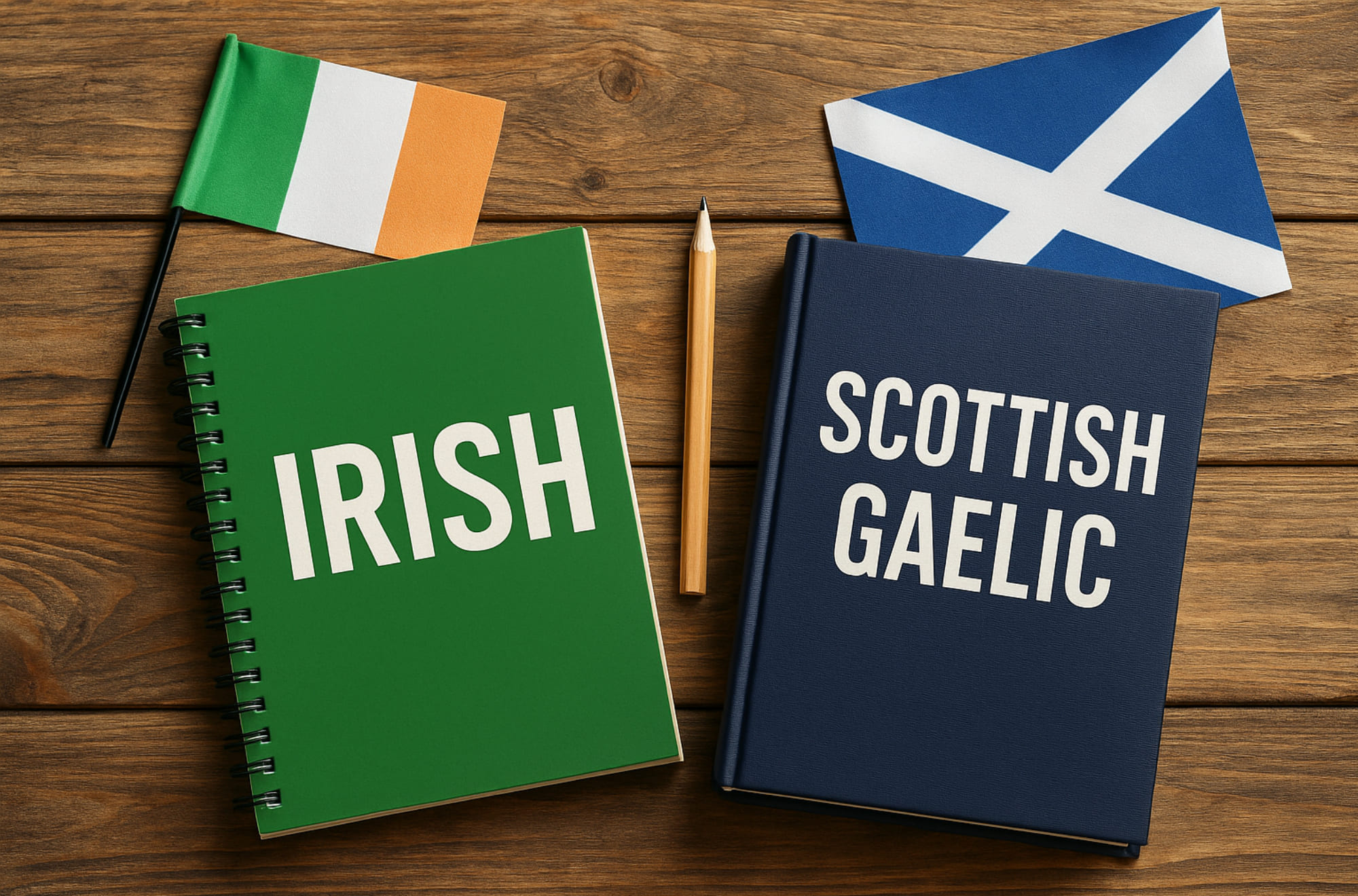
If you’ve ever wondered about Irish vs Scottish Gaelic, you’re not alone. While both languages are extremely closely related, each has its own history, features, and cultural significance. Whether you’re researching your ancestry, planning a trip, or you’re simply curious, understanding the comparisonofIrish and Scottish Gaelic opens up to rich linguistic heritage and present-day revival initiatives.
In this post, we’ll summarize the main differences—and parallels—between Scottish Gaelic and Irish Gaelic, so you can more easily see their position in heritage, identity, and modern-day learning.
History of the Languages
Irish language history dates back over 2,000 years, making it one of the oldest written languages in Europe. It evolved from Primitive Irish, seen in ancient Ogham inscriptions, into Old Irish, Middle Irish, and then modern Irish (Gaeilge). Scottish Gaelic diverged from Irish around the 5th century, brought to Scotland by Irish settlers.
Over time, both languages were deeply impacted by colonial history, with English dominance pushing them to the margins. Yet both have persisted—thanks to language activists and community-led revival efforts. Explore more in our History of Learning Gaeilge.
Language Learning Resources
If you’re ready to dive into learning Irish or Scottish Gaelic, you’re in luck—today’s resources are better than ever.
Conclusion: Why Irish vs Scottish Gaelic Still Matters
Understanding Irish vs Scottish Gaelic is more than a linguistic exercise—it’s about connecting with two vibrant, living cultures that have endured centuries of change. By appreciating their unique identities and shared roots, you become part of a growing movement of learners and heritage seekers.
Wishing someone “good night” is more than a simple farewell; it’s a warm gesture that enhances bonds and soothes the soul before sleep. Learning how to say good night in Irish can bring a unique charm to your nighttime routines, especially if you are keen on embracing Irish culture or connecting deeper with friends who speak the language. At Gaeilgeoir AI, we provide an accessible pathway to integrate such endearing Irish phrases into your daily life, making your language learning journey both successful and engaging.
The Importance of “Good Night” in Irish
In Ireland, where the language is a vital thread of national identity, knowing how to articulate daily phrases like “good night” is invaluable. The Irish phrase for “good night” is “Oíche mhaith” (pronounced “ee-hah wah”). This phrase isn’t just a nighttime farewell; it reflects a wish for a peaceful night.
How to Pronounce “Oíche mhaith”
To ensure your Irish good nights sound as authentic as possible, pronunciation is key:
Oíche (Oí as in oil, che like the German Bach)
Mhaith (Mh sounds like ‘w’ in most dialects, aith as in ‘wah’ with a soft ‘th’)
Check out our video below to learn how to pronounce “Oíche mhaith” in Irish like a native speaker!
When and How to Use “Oíche mhaith”
Common Contexts:
Family Settings: Saying “Oíche mhaith” to family members before bed can foster a nurturing environment.
Conversational Closings: Ending late-night phone calls with “Oíche mhaith” leaves a lasting, warm impression.
Social Media Sign-offs: A unique way to end your day’s postings on social media.
Gaeilgeoir AI: Your Partner in Learning Irish
Gaeilgeoir AI leverages advanced technology to help you master Irish at your own pace:
Interactive Exercises: Practice “Oíche mhaith” in various scenarios through role-playing modules.
Pronunciation Analysis: Receive instant feedback on your pronunciation, ensuring you learn how to speak like a native.
Cultural Context Lessons: Our lessons delve into when and why certain phrases are used, not just their translations.
Tips for Incorporating “Oíche mhaith” into Your Routine
Make “Oíche mhaith” a seamless part of your evening by:
Practicing Daily: Use “Oíche mhaith” every night with family or pets.
Reminder Tools: Set reminders on your phone to practice the phrase every evening.
Language Diary: Keep a journal of your experiences using the phrase and note any improvements or challenges.
Expanding Beyond “Good Night”
Once comfortable with “Oíche mhaith,” explore other related phrases that can enrich your nighttime language practices:
“Codladh sámh” (KUL-ah saw-v) – meaning “sleep peacefully”.
“Tá mé ag dul a luí” – meaning “I am going to bed”.
Engaging with the Community
Improve your learning by interacting with others on the Gaeilgeoir AI platform:
Community Forums: Share experiences, get tips, and practice common phrases like “Oíche mhaith”.
Cultural Exchange: Learn from native speakers about the nuances of Irish evening customs.
Conclusion
Saying “good night” in Irish is a beautiful step towards full linguistic immersion. “Oíche mhaith” isn’t just a phrase—it’s a cultural embrace that enhances your connection to Irish traditions. With Gaeilgeoir AI, you’re not only learning a language, you’re experiencing the rich tapestry of Irish culture.
Ready to learn more?
Ready to enrich your evenings with Irish charm? Sign up for a free trial today at Gaeilgeoir AI and join a vibrant community ready to explore the depth of the Irish language together. Start saying “Oíche mhaith” with confidence!
Start Speaking Irish Today — 25% Off Use code START25
Learn real Irish for real life with guided practice, pronunciation support, and everyday conversations.