Lughnasadh: Harvest Traditions for Irish Learners

What is Lughnasadh?

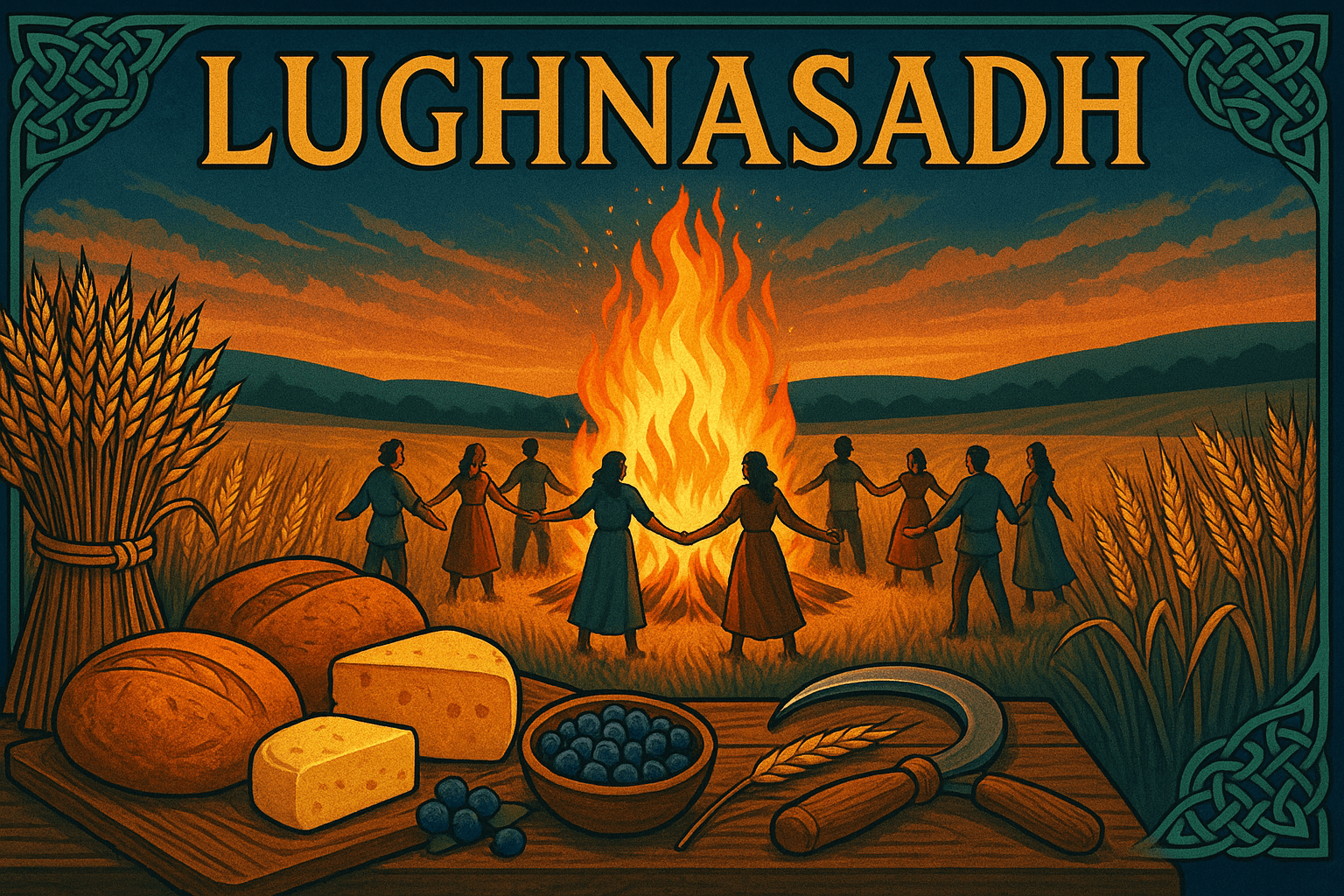
Lughnasadh (Irish: Lúnasa) is the first harvest festival of the Gaelic year—a joyful threshold between high summer and the coming autumn. If you’ve ever wondered “What is Lughnasadh?”, think of it as a celebration of ripening grain, community games, and gratitude for the land’s abundance. Rooted in the lore of Lugh (the skilled, many-gifted deity), Lughnasadh invites us to gather, feast, bless the fields, and set intentions for the season ahead.

At Gaeilgeoir AI, we love Lughnasadh because cultural festivals are perfect springboards for language. You’ll meet seasonal vocabulary, practice greetings, and learn idioms that bring Irish to life. In this guide we’ll explore Lughnasadh traditions, simple Lughnasadh ritual ideas, delicious Lughnasadh meals, and how to weave Irish phrases into your celebration.


When is Lughnasadh?

Traditionally, Lughnasadh begins at sunset on July 31 and continues through August 1. On the Gaelic calendar, it marks the midway point between the summer solstice and the autumn equinox. Communities historically gathered on hilltops, at sacred wells, and in market towns for games, fairs, and a great Lughnasadh bonfire.

If you’re syncing your study plan to the Gaelic year, our concise Gaelic Calendar guide explains how Lughnasadh relates to Imbolc, Bealtaine, and Samhain.


How to Pronounce Lughnasadh

Many learners ask about “Pronounce Lughnasadh” correctly. In Irish, you’ll typically hear it as:

  • “LOO-nuh-suh” (most common)
  • or “LOO-nah-sah” (regional/anglicized)

The Irish month name Lúnasa is pronounced “LOO-nuh-suh.” If pronunciation fascinates you, bookmark the Irish Pronunciation Guide.


A Short Mythic Backstory

The festival name connects to Lugh, the master of arts, crafts, and strategy—famous for winning with skill rather than brute force. In some tellings, Lugh institutes the games of Lughnasadh in honor of his foster-mother Tailtiu, who cleared the fields for agriculture. To learn more about the deity behind the day, see our profile of the Celtic God Lugh.


Lughnasadh Traditions (Old and New)

Classic Folk Customs

  • First Fruits: People gathered the first sheaves or berries (bilberries/blueberries), offering a portion back to the land.
  • Handfasting & Fairs: Trial marriages and market fairs added music, sport, and matchmaking to the harvest bustle.
  • Hilltop Gatherings: Climbs to high places—such as hilltops or cairns—symbolized greeting the turning season.
  • Community Games: Athletic contests honored Lugh’s mastery of skills.
  • Bonfires: A communal Lughnasadh bonfire offered warmth, protection, and blessing for the coming harvest.

Everyday Ways to Celebrate Today

  • Visit a local hill or park and share a simple picnic of seasonal foods.
  • Bake bread from new grain or craft a tiny corn doll for your table.
  • Organize friendly games with friends—think races, tug-of-war, or music sessions.
  • Create a gratitude list in Irish and read it aloud before your meal.

If you love learning through celebration, you might also enjoy the spring counterpart to Lughnasadh, Bealtaine: Bealtaine – Irish May Festival.


Lughnasadh Ritual: Simple, Meaningful, and Learner-Friendly

A Lughnasadh ritual doesn’t need to be elaborate. Here’s a gentle framework that blends tradition with Irish practice:

  1. Prepare a small altar with grain (oats, barley, wheat), berries, a candle, and a cup of water.
  2. Open with breath and Irish greeting: “A chairde, fáilte!” (Friends, welcome!) Find more phrases in our Basic Irish Conversation Guide.
  3. First Fruits Offering: Place a few berries or bread crumbs outside or in a plant pot as thanks to the land.
  4. Intention Setting: On paper, write what skill you’d like to grow (in Lugh’s spirit) and one Irish-learning goal for August.
  5. Blessing: Say a short Lughnasadh blessing (examples below), then share food and stories.

Lughnasadh ritual ideas for groups:

  • Hold a mini “skills fair” where each person teaches a tiny lesson (a song verse, a phrase in Irish, a craft tip).
  • Light a safe tabletop candle and pass it around; each person says one word of gratitude in Irish.

Lughnasadh Blessings & Phrases (As Gaeilge)

Sprinkle Irish into your celebration with seasonal language. Try these:

  • “Beannachtaí Lúnasa ort!” — Lughnasadh blessings to you!
  • “Go maire an fómhar go flúirseach.” — May the harvest be abundant.
  • “Go n-éirí an bóthar leat.” — May the road rise to meet you (classic well-wish).
  • “Bíodh bláth ar do shaothar.” — May your work bloom.

For more everyday salutations and nuance, see A Chara – Irish Greeting.


Lughnasadh Meals: From Field to Feast

Food is the heartbeat of Lughnasadh. Traditional Lughnasadh meals reflect the first fruits of the season and the generosity of the community table.

Classic Foods

  • New breads from early grain—simple soda bread or yeasted loaves.
  • Berries (bilberries/blueberries, blackberries) folded into tarts or scattered over cream.
  • Seasonal vegetables—early potatoes, onions, cabbage, courgettes.
  • Cheeses & butter—celebrating countryside dairying.

A Sample Menu (Beginner-Friendly)

  1. Herbed Brown Bread with butter and honey.
  2. Summer Broth (potatoes, leeks, carrots, parsley).
  3. Roasted Veg & Barley Salad with apple cider dressing.
  4. Bilberry/Blueberry Tart or oat crumble.

Cooking is a wonderful way to Celebrate Lughnasadh while learning vocabulary for ingredients and kitchen verbs. If you’re building a seasonal word bank, our Learn Irish Vocabulary Online guide will help you organize terms you meet at the table.


Celebrate Lughnasadh with Community

Whether you’re in Ireland or abroad, you can Celebrate Lughnasadh in ways that fit your life and location:

  • Host a language picnic: Everyone brings one dish and one Irish phrase to teach.
  • Plan friendly games: Races, music, poetry readings—the spirit of Lugh is skill and play.
  • Arrange a hill walk: Read a short blessing at the top; practice Irish vocabulary for nature—grian (sun), gaoth (wind), cnoc (hill).
  • Start a gratitude jar: For the month of August, add one note per day in Irish.

And if you like to go bigger, a well-planned, safe Lughnasadh bonfire or backyard fire pit creates unforgettable atmosphere. Always follow local safety rules and common sense.


Step-by-Step: A One-Hour Lughnasadh Gathering

  1. Welcome (10 min)
    Greet guests in Irish and share a one-sentence answer to “What is Lughnasadh?
    Example: “It’s the first harvest festival—time to give thanks and share skills.”
  2. Grain & Gratitude (10 min)
    Pass a small bowl of oats or barley. Each person names one harvest in their life (a project, habit, or relationship) and a learning goal for Irish this month.
  3. Skill Share (15 min)
    Three people show a tiny skill—playing a reel, teaching a proverb (seanfhocal), or a bread-kneading trick.
  4. Blessing & Candle (10 min)
    Offer a short Lughnasadh blessing and light a candle. Optional: read a line of poetry.
  5. Tasting Table (15 min)
    Try your Lughnasadh meals; label each dish in Irish and English for vocabulary practice.

Lughnasadh Ritual Ideas for Learners

  • Vocabulary Harvest: Walk outside and list five seasonal words in Irish (e.g., eorna—barley, fraochán—bilberry).
  • Proverb Pairing: Match a seanfhocal to your goal. Try “Is ar scáth a chéile a mhaireann na daoine” (People live in one another’s shadow).
  • Blessing Cards: Write three short blessings and keep one in your study space.
  • Skill of the Month: Take Lugh as your model—choose one micro-skill to master by the next festival.

For daily structure, steal ideas from our Daily Irish Practice Plan.


Lughnasadh for Motivation: Why Festivals Help You Learn Faster

Festivals anchor vocabulary in memory because they’re multisensory—you smell bread, hear music, see flames, feel summer air. That lived context strengthens recall far more than flashcards alone. With Gaeilgeoir AI, you can:

  • Generate themed word lists from your own menus and invitations.
  • Get pronunciation tips for tricky words like Lughnasadh.
  • Build goal-based prompts (e.g., five blessings in Irish for your altar).
  • Track your progress from Lughnasadh to Samhain in a motivating seasonal arc.

Curious how others blend tech and tradition? Our overview of Learning Gaeilge with Technology shows exactly how AI can personalize your path.


Quick FAQ

What is Lughnasadh all about?

It’s the first harvest festival, honoring skill, community, and gratitude—traditionally linked to the god Lugh and the first fruits of the land.

When is Lughnasadh?

Evening July 31 through August 1, midway between solstice and equinox.

How do I pronounce Lughnasadh?

Usually “LOO-nuh-suh.” The month name Lúnasa shares this sound.

What are easy Lughnasadh ritual ideas?

Offer first fruits, light a candle, set one Irish learning goal, and share bread with friends.

What do people eat for Lughnasadh meals?

New breads, berries, seasonal vegetables, and simple dairy dishes—comforting foods that honor the early harvest.


A Few Seasonal Irish Words

  • Lúnasa — August / Lughnasadh
  • fómhar — harvest
  • tine — fire
  • arán — bread
  • fraochán — bilberry/blueberry
  • beannachtaí — blessings
  • ceiliúradh — celebration
  • scil — skill

If this whetted your appetite for vocabulary, browse our Irish Vocabulary posts for themed lists and memory tips.


Call to Action: Share Your First Fruits

Lughnasadh invites you to share what you’ve grown—ideas, songs, bread, and words. If you’re ready to turn festival inspiration into steady progress, come learn with us. Gaeilgeoir AI builds personalized study paths, pronunciation feedback, and festive prompts so your Irish grows from seed to sheaf.

Join our friendly community and start a free trial: Sign up here.
Beannachtaí Lúnasa ort—may your harvest be full and your Irish flourish!

Beltane Fire Festival: The History and Traditions of Bealtaine

Beltane, known as Bealtaine in Irish, is the traditional Gaelic festival associated with the beginning of summer.

Celebrated around 1 May, Bealtaine marked an important transition in the traditional seasonal year. For farming communities, it was closely connected with livestock, summer grazing, protection and prosperity. Fire became one of the festival’s most memorable elements, with historical and folkloric sources describing bonfires and customs intended to protect cattle as they entered the summer season.

Today, Beltane is often presented as an ancient “Celtic fire festival”. There is truth behind that description, but the history is more interesting—and more complicated—than many modern retellings suggest.

To understand where Bealtaine fits alongside Samhain, Imbolc and Lughnasa, explore our Gaelic calendar guide to Ireland’s traditional seasonal year.

What Is Beltane?

Beltane is the English-language form commonly used for the traditional Gaelic festival of Bealtaine.

In modern Irish:

Bealtaine — May

Lá Bealtaine — May Day

Historically, Bealtaine marked the beginning of the summer half of the year.

This can seem strange if you’re accustomed to thinking of summer as beginning in June. But the traditional Gaelic seasonal cycle did not divide the year in exactly the same way as our modern astronomical or meteorological seasons.

For communities whose lives revolved around agriculture and livestock, early May represented a very real seasonal change.

Beltane or Bealtaine: Which Is Correct?

Both forms are encountered, but they appear in different contexts.

Bealtaine is the modern Irish form and the Irish word for May.

Beltane is a common anglicised spelling, particularly in English-language discussions of the historical festival and modern celebrations.

In Scottish Gaelic, you’ll encounter the related form Bealltainn.

Because this article focuses primarily on the Irish tradition, we’ll generally use Bealtaine when discussing Ireland historically and linguistically, while recognising that many people search for the festival as Beltane.

When Is Beltane Celebrated?

Bealtaine is traditionally associated with 1 May.

It marks the transition into the summer half of the traditional Gaelic year.

Rather than thinking of the festival as one isolated celebration, however, it helps to place it within a wider seasonal cycle:

Imbolc — beginning of spring

Bealtaine — beginning of summer

Lughnasa — beginning of the harvest season

Samhain — beginning of winter

These four festivals are commonly used to describe the traditional Gaelic calendar and the major transitions within the agricultural year.

The precise importance and customs associated with each festival varied across time and place.

Why Was Fire Important at Bealtaine?

Fire is one of the strongest traditions associated with Bealtaine.

Historical and folkloric accounts describe bonfires being lit around May Day, sometimes in connection with cattle and protective customs.

Fire could carry associations with:

  • protection
  • purification
  • prosperity
  • livestock health
  • seasonal transition

One particularly well-known tradition involved cattle passing between or near fires before being moved to summer grazing.

The intention was protective: to safeguard valuable animals as they entered a new stage of the agricultural year.

Did People Really Drive Cattle Between Beltane Fires?

There is historical evidence connecting Bealtaine fires with cattle.

One important medieval reference appears in the early Irish glossary Sanas Cormaic, or Cormac’s Glossary, which associates Beltaine with fires and describes cattle being driven between them as protection against disease.

That makes the fire-and-cattle connection much more than a modern invention.

However, we should be careful about imagining one perfectly standardised ritual practised identically throughout Ireland for thousands of years.

Seasonal customs varied enormously.

Different communities could preserve, modify or abandon traditions over time.

It is more accurate to speak of a tradition of Bealtaine fire customs than one universal Beltane ceremony.

The Beltane Fire at Uisneach

One place has become particularly associated with Bealtaine fire traditions: the Hill of Uisneach in County Westmeath.

Uisneach is an important archaeological and mythological landscape and was regarded in medieval Irish tradition as a significant centre of Ireland.

Later traditions associate the hill with great assemblies and seasonal fires.

Today, Uisneach is again strongly connected with Bealtaine celebrations.

It is tempting to draw a perfectly straight line between modern events and ancient ceremonies, but historical continuity is rarely that simple.

The site’s importance is real.

Its association with Irish tradition is real.

But modern festival practices should not automatically be treated as exact reconstructions of rituals performed there in pre-Christian Ireland.

Was Beltane an Ancient Celtic Fire Festival?

Calling Bealtaine a Celtic fire festival is broadly understandable, but it can obscure important details.

“Celtic” covers several different languages, regions and historical cultures.

The Bealtaine tradition discussed here belongs specifically to the Gaelic world, particularly Ireland and Scotland.

Related May customs existed elsewhere, but that doesn’t mean every Celtic-speaking society celebrated one identical Beltane festival.

It is usually more accurate to describe Bealtaine as a traditional Gaelic seasonal festival.

Bealtaine and the Beginning of Summer

To understand the festival properly, think less about abstract symbolism and more about everyday rural life.

Summer meant changes in:

grazing

livestock management

milk production

crop growth

weather

household food supplies

Moving cattle into summer pasture could represent a major moment in the year.

Protecting those animals mattered enormously.

Many customs that can look purely ritualistic today make considerably more sense when placed in this agricultural context.

Bealtaine was about entering summer safely and prosperously.

Fire as Protection

In traditional societies, fire could carry powerful protective associations.

At Bealtaine, this could relate particularly to livestock.

But fire was only one element in a much wider collection of May customs.

People also used:

  • flowers
  • greenery
  • decorated branches
  • household precautions
  • charms
  • rituals involving water or dew

Together, these traditions reflect the sense that the beginning of May was a significant threshold.

Crossing that threshold successfully mattered.

The May Bush

One of Ireland’s most distinctive May traditions is the May Bush.

A branch or small tree could be decorated with objects such as:

  • flowers
  • ribbons
  • coloured materials
  • shells
  • eggshells

The exact decorations and practices varied by region.

In some communities the May Bush belonged to an individual household. Elsewhere, it could become part of a wider community celebration.

The custom demonstrates that Bealtaine wasn’t solely a fire festival.

Greenery, flowers and visible signs of the changing landscape were equally important parts of May tradition.

May Flowers and Protection

Flowers were frequently associated with May Day.

Yellow spring flowers were particularly prominent in some traditions and might be placed around:

doors

windows

farm buildings

cattle

These decorations could carry protective significance.

They also visibly brought the changing season into the household.

This combination of beauty and protection is common in traditional customs: something decorative can simultaneously carry symbolic or supernatural meaning.

Bealtaine and Milk

Dairy appears repeatedly in Irish May folklore.

This makes sense once you understand how valuable milk and butter were to rural households.

Traditions sometimes expressed anxiety about another person—or a supernatural force—interfering with a household’s milk or butter production.

People therefore observed customs intended to protect their dairy prosperity.

To modern readers, these beliefs can sound unusual.

But beneath them lies a very practical concern:

If your cattle and milk production failed, your household could face serious economic consequences.

Folklore reflects what people cared about.

May Morning Dew

Another tradition associated with the first morning of May involves dew.

Folklore records beliefs that washing the face in May morning dew could promote beauty, health or good fortune.

Again, this reflects the special significance attached to transitional moments.

Ordinary things—water, flowers, fire—could acquire unusual power when encountered at a meaningful point in the seasonal year.

May morning was one such moment.

Beltane and the Aos Sí

Bealtaine also became associated with beliefs concerning supernatural beings, particularly the Aos Sí.

Seasonal transitions could be regarded as times requiring additional caution and protection.

This helps explain some of the protective customs surrounding:

  • cattle
  • houses
  • milk
  • fire
  • flowers

You’ll sometimes see this described today as a moment when “the veil between worlds was thin.”

That phrase is common in modern spiritual writing, but it shouldn’t automatically be presented as an ancient Irish formulation.

A more historically cautious description is that Bealtaine was a liminal seasonal period associated with supernatural danger and protective customs.

Beltane and Samhain

Bealtaine makes particularly good sense when compared with Samhain.

They sit opposite one another in the traditional seasonal cycle.

Bealtaine opens the summer half of the year.

Samhain opens the winter half.

One points toward growth, grazing and summer.

The other points toward winter and the completion of the agricultural cycle.

Both became associated with strong traditions concerning seasonal transition and the supernatural.

Together, they illustrate how the Gaelic year was organised around changes that mattered to agricultural communities.

What About Imbolc and Lughnasa?

Imbolc and Lughnasa complete the four-part seasonal pattern commonly used today.

Imbolc — associated with early spring and the beginning of the agricultural year’s renewal.

Bealtaine — associated with summer’s beginning and livestock.

Lughnasa — associated with harvest, gatherings and late summer.

Samhain — associated with winter’s beginning.

The four festivals should not necessarily be imagined as four identical celebrations spaced neatly through an ancient calendar.

Their customs, evidence and importance differ.

But together they provide a useful framework for exploring Ireland’s traditional Gaelic calendar.

Is Beltane Pagan?

Bealtaine has pre-Christian roots.

But describing every recorded Bealtaine tradition simply as pagan can be misleading.

Much of the folklore we know was recorded from communities that had been Christian for many centuries.

Seasonal customs could coexist with:

  • Christian prayer
  • saints’ traditions
  • holy wells
  • church observance
  • local folk belief

Traditions evolve.

An old seasonal custom does not have to remain unchanged for centuries to remain culturally meaningful.

So rather than attempting to classify every Bealtaine practice as either purely pagan or purely Christian, it is often more useful to examine when and where a particular custom was recorded.

Did Druids Celebrate Beltane?

This is an area where modern popular accounts often go beyond the evidence.

Druids certainly existed within ancient Celtic societies, and fire had ritual significance in various contexts.

But detailed descriptions of Druids performing the elaborate modern Beltane ceremonies sometimes presented online are much harder to substantiate.

We do not possess an ancient Irish instruction manual describing exactly how Druids celebrated Bealtaine.

That doesn’t mean the festival lacked pre-Christian ritual significance.

It means we should distinguish between:

what historical sources actually tell us

and

later reconstruction or modern interpretation.

Does Beltane Mean “Bel’s Fire”?

You will frequently encounter the claim that Beltane means “Bel’s fire” and was named for a Celtic god called Bel or Belenus.

That explanation is popular, but the etymology is not sufficiently certain to present it as settled fact.

The historical development of the word is debated.

Fire is unquestionably associated with Bealtaine traditions.

That does not automatically prove that the festival’s name literally means “Bel’s fire”.

When discussing ancient language, a plausible story is not the same thing as a demonstrated etymology.

Beltane Feasts

Food and communal gathering naturally formed part of seasonal celebrations.

However, the idea of one standardised ancient “Beltane feast” with a fixed traditional menu should be approached cautiously.

Historical rural communities ate according to:

  • season
  • region
  • household wealth
  • available livestock
  • stored food
  • local agricultural conditions

Modern Beltane celebrations may feature elaborate communal meals inspired by seasonal ingredients.

Those can be meaningful modern traditions without needing to be presented as exact recreations of an ancient Irish feast.

Beltane Bonfires Today

Bonfires remain one of the most visually powerful ways modern communities evoke Bealtaine.

Contemporary celebrations can include:

  • fire ceremonies
  • music
  • storytelling
  • dance
  • historical interpretation
  • seasonal food
  • community gatherings

Some deliberately draw inspiration from historical sources.

Others combine folklore with modern spiritual or cultural practice.

The important distinction is between revival and unbroken historical continuity.

A revived tradition can still have cultural value.

It simply needs to be described accurately.

Beltane in Modern Paganism

Beltane has become an important festival in several modern Pagan and Neopagan traditions.

Modern celebrations may emphasise:

  • fertility
  • sexuality
  • creativity
  • fire
  • nature
  • seasonal renewal
  • relationships
  • personal transformation

These practices can draw inspiration from historical Bealtaine while also incorporating much newer ideas.

Modern Pagan Beltane is therefore best understood as a living contemporary tradition influenced by older seasonal material, rather than a perfect reconstruction of one ancient Irish ceremony.

Beltane in Ireland Today

In modern Ireland, Bealtaine remains first and foremost the Irish word for May.

Historical May customs survive through folklore, heritage projects and local traditions, while contemporary events have revived interest in the festival.

The name also appears in modern cultural contexts unrelated to ancient ritual.

This is part of what makes Bealtaine interesting.

It isn’t a forgotten word excavated from the distant past.

It still belongs to Gaeilge.

Useful Irish Words Connected With Bealtaine

If you’re exploring the festival through Irish, here are some useful words:

Bealtaine — May

Lá Bealtaine — May Day

tine — fire

tine chnámh — bonfire

samhradh — summer

bláth — flower

— cow

bainne — milk

im — butter

féile — festival

cosaint — protection

crann — tree

The vocabulary itself tells you something about the festival’s traditional world: fire, summer, flowers, livestock and seasonal celebration.

How to Celebrate Bealtaine Respectfully Today

You don’t need to recreate an imagined ancient ceremony to mark Bealtaine.

You might simply:

learn some seasonal Gaeilge

explore folklore from your own county

decorate a May branch

visit an Irish heritage site

learn about traditional May customs

spend time outdoors noticing the seasonal change

attend a cultural celebration

read about Ireland’s other seasonal festivals

Historical traditions are often more interesting when we engage with what is actually known rather than filling every gap with invented certainty.

Frequently Asked Questions

What is Beltane?

Beltane, or Bealtaine, is the traditional Gaelic festival associated with the beginning of summer around 1 May.

Is Beltane Irish?

Bealtaine is an important part of Irish seasonal tradition, while closely related traditions also exist in Scotland and the wider Gaelic world.

What is the difference between Beltane and Bealtaine?

Bealtaine is the Irish form and the modern Irish word for May. Beltane is a common English spelling of the festival name.

Why were fires lit at Beltane?

Historical and folkloric sources associate Bealtaine fires particularly with protection, livestock and the transition into summer.

Were cattle driven between Beltane fires?

Historical tradition does associate Bealtaine with cattle passing between fires for protection. However, practices varied by region and period.

When is Beltane?

Beltane is associated with 1 May, although modern celebrations may take place on nearby dates.

Is Beltane a pagan holiday?

Bealtaine has pre-Christian roots, but many recorded Irish May traditions developed and survived within Christian communities.

Did Druids celebrate Beltane?

Druids existed in pre-Christian Celtic societies, but detailed modern claims about exactly how they conducted Beltane ceremonies often go beyond the surviving historical evidence.

What are the four Gaelic seasonal festivals?

They are commonly identified as Imbolc, Bealtaine, Lughnasa and Samhain.

Explore the Gaelic Calendar

Bealtaine is much easier to understand when you stop treating it as an isolated fire festival.

It belongs to a wider seasonal cycle shaped by farming, livestock, weather, harvest and the movement between summer and winter.

Explore our Gaelic calendar guide to discover how Bealtaine connects with Imbolc, Lughnasa and Samhain and how these festivals helped mark the changing year.

Final Thoughts

The Beltane fire tradition gives us a glimpse into a world where the beginning of summer had enormous practical importance.

Cattle represented wealth.

Milk and butter sustained households.

Summer grazing mattered.

And seasonal change could bring both opportunity and danger.

Fire became one way of marking and protecting that transition.

Around it developed traditions involving flowers, May Bushes, dew, livestock and supernatural belief.

Some customs are documented historically.

Others have changed, disappeared or been revived.

And modern Beltane celebrations continue to reinterpret the festival again.

Behind all of them sits one remarkably persistent idea:

Bealtaine marks the arrival of summer.

Imbolc: Traditions, Rituals, and Irish Culture

What is Imbolc?

Imbolc (pronounced “Im-bulk” or sometimes “Im-olg”) is one of the four great Celtic fire festivals, celebrated halfway between the winter solstice and the spring equinox. This ancient festival marks the return of light, the first stirrings of spring, and the honoring of Brighid, the goddess of poetry, healing, and smithcraft.

For learners of the Irish language, exploring Imbolc traditions and blessings opens the door to both cultural and linguistic discovery. At Gaeilgeoir AI, we encourage students to explore festivals like Imbolc not just as history, but as living traditions where you can practice Irish words, greetings, and phrases.


Imbolc Meaning and Origins

The word Imbolc is thought to come from i mbolg, meaning “in the belly,” referencing the pregnancy of ewes and the promise of new life. This festival was deeply tied to cycles of nature, fertility, and renewal.

In Celtic mythology, Imbolc honored Brighid, later adopted into Irish Christian tradition as Saint Brigid, whose feast day falls on February 1st. Many Imbolc rituals and blessings survived by blending pagan and Christian practices, making the festival one of Ireland’s most enduring cultural celebrations.

If you’d like a broader overview of how Imbolc fits into the Gaelic calendar, you can explore our Gaelic Calendar Guide.


Symbols of Imbolc

Several symbols are strongly associated with the season:

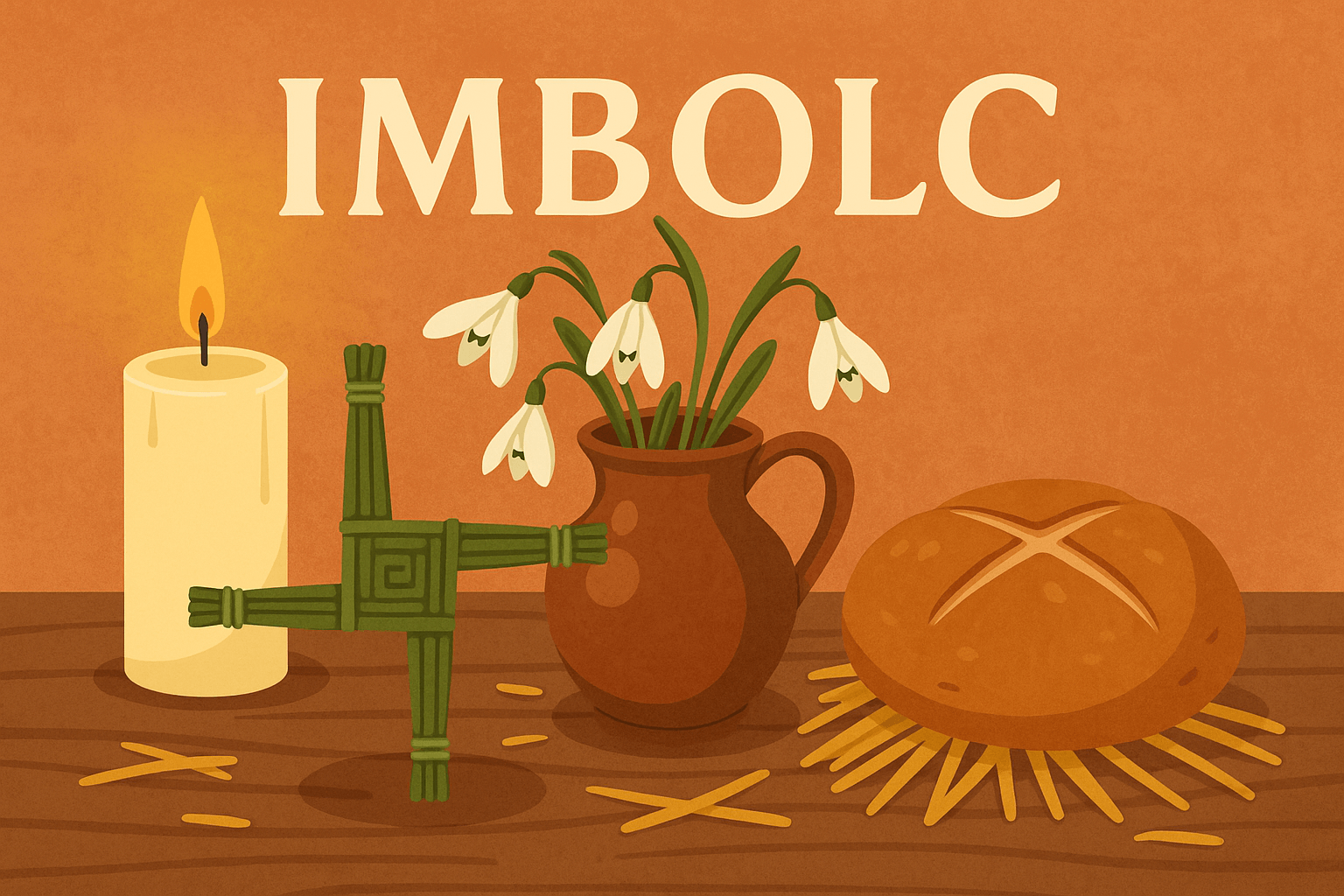
  • Brigid’s Cross – Woven from rushes, symbolizing protection and renewal.
  • Candles and Fires – Representing returning sunlight and purification.
  • White and Green Colors – Purity, fertility, and the earth’s awakening.
  • Milk and Seeds – Foods tied to fertility and nourishment.

These symbols of Imbolc are not just decorative but also carry layers of meaning that connect language learners to cultural storytelling.


Imbolc Traditions and Customs

Traditional Imbolc customs highlight themes of renewal, fertility, and blessing. Some of the most common include:

  1. Lighting Candles and Fires – To welcome back the sun and banish winter darkness.
  2. Crafting Brigid’s Crosses – Hung in homes for protection throughout the year.
  3. Household Blessings – Sprinkling water or sweeping hearths to invite good fortune.
  4. Visiting Holy Wells – Offering prayers and tying cloths (clooties) to sacred trees.
  5. Seasonal Feasts – Enjoying dairy-based dishes and fresh breads.

These Imbolc traditions continue to be celebrated in Ireland and among Celtic communities worldwide.


Imbolc Rituals: Then and Now

Ancient Rituals

  • Farmers performed fertility rites to ensure healthy crops and livestock.
  • Priests and druids lit sacred fires in Brighid’s honor.
  • Offerings of milk, butter, or bread were left outside for the goddess.

Modern Rituals

  • Lighting a candle at sunset on February 1st.
  • Creating personal altars with Imbolc decorations like white flowers and seeds.
  • Writing intentions for growth and renewal in the coming year.

Many learners enjoy pairing their language study with small seasonal Imbolc rituals, making vocabulary more memorable through lived practice.


Foods for Imbolc: Seasonal Recipes

Food played an important role in the Imbolc feast, symbolizing abundance and fertility. Traditional foods for Imbolc included:

  • Dairy products: Milk, butter, cheese – reflecting lambing season.
  • Oatcakes and Bannocks: Simple breads baked on hearth fires.
  • Seeds and Grains: Symbolizing the planting season.
  • Leeks, onions, and root vegetables: Winter staples.

Popular Imbolc Recipes Today

  • Colcannon – Mashed potatoes with cabbage or kale.
  • Barmbrack – A sweet bread with dried fruit.
  • Herbal teas – Especially chamomile or mint for cleansing.

Cooking traditional dishes is one of the easiest ways to celebrate Imbolc while learning new Irish food vocabulary.


How to Celebrate Imbolc Today

Whether you’re in Ireland or abroad, you can embrace Imbolc celebrations with simple practices:

  1. Light candles or a fire to welcome back the sun.
  2. Cook a traditional Imbolc recipe with friends or family.
  3. Make a Brigid’s Cross and hang it above your doorway.
  4. Write down intentions for the coming months.
  5. Practice Irish by learning Imbolc blessings and greetings.

These actions not only connect you with Irish culture but also make your language learning journey more immersive.


Blessed Imbolc: Greetings and Blessings

If you’d like to wish someone well during this season, here are a few phrases:

  • “Beannachtaí na Féile Bríde ort” – Blessings of St. Brigid’s Day upon you.
  • “Imbolc sona duit” – Happy Imbolc to you.
  • “Beannachtaí Imbolc” – Imbolc blessings.

If you’re curious about how greetings work in everyday Irish, check out our guide: A Chara – Irish Greeting.


Brighid and Imbolc

At the heart of Imbolc rituals is Brighid, a Celtic goddess associated with:

  • Poetry and Learning – Inspiration for bards.
  • Healing and Fertility – Protecting women, children, and livestock.
  • Smithcraft and Fire – Creative transformation.

Later venerated as Saint Brigid of Kildare, she remains one of Ireland’s most beloved figures. Her festival blends pagan Imbolc customs with Christian celebrations, making her central to both folklore and faith.


Imbolc Blessings in Irish

Using Irish phrases during seasonal celebrations is a wonderful way to integrate language and culture. Examples include:

  • “Go mbeannaí Bríd thú” – May Brigid bless you.
  • “Beannachtaí na Samhna agus na hImbolc ort” – Blessings of Samhain and Imbolc upon you.

For learners, phrases like these bring warmth and authenticity to the holiday.


Why Learn About Imbolc While Learning Irish?

Festivals like Imbolc provide:

  • Rich Vocabulary – Words for rituals, foods, and traditions.
  • Cultural Insight – Understanding Irish heritage beyond textbooks.
  • Practical Application – Seasonal greetings to use with fellow learners.

At Gaeilgeoir AI, our tools help you explore topics like Imbolc in interactive ways. By connecting seasonal festivals with your studies, you create stronger memory links and more meaningful learning.


Related Festivals: The Celtic Year

Imbolc is part of a cycle of Celtic fire festivals, including:

  • Bealtaine – Celebrated in May, marking fertility and summer’s arrival.
  • Lughnasa – The harvest festival in August.
  • Samhain – The Celtic New Year in late October.

You can read more about Bealtaine to see how these seasonal traditions connect.


Conclusion: A Season of Renewal

Imbolc is more than a date on the calendar – it is a reminder of renewal, light, and community. Whether you light a candle, bake bread, or weave a Brigid’s Cross, you are connecting with a tradition that stretches back thousands of years.

For learners of Irish, exploring Imbolc meaning, blessings, and rituals provides not just vocabulary, but a living connection to the culture.

Ready to bring Irish traditions into your language learning journey? Join our community and try Gaeilgeoir AI today: Sign up for free.

Samhain: Traditions, History, and Irish Language

What is Samhain?

Samhain (pronounced “Sow-in”) is one of the most important festivals in the Celtic calendar, marking the end of harvest and the beginning of winter. For centuries, Samhain traditions have shaped Irish culture, blending ancient ritual with seasonal change. Today, many recognize Samhain as the Celtic New Year, a time of transition when the veil between the living and the spirit world is said to be thinnest.

At Gaeilgeoir AI, we believe exploring Samhain is not only a way to connect with Irish history but also an inspiring opportunity to practice the Irish language. From Samhain greetings to learning about Samhain customs and symbols, understanding this festival helps learners deepen both cultural and linguistic knowledge.


When is Samhain?

Traditionally, Samhain was celebrated from sunset on October 31st to sunset on November 1st, aligning with the Gaelic calendar. This date marked the halfway point between the autumn equinox and the winter solstice.

Modern celebrations often coincide with Halloween, but in Ireland and parts of Scotland, Samhain is still understood as a spiritual and seasonal turning point.


Samhain History: Ancient Roots

The history of Samhain stretches back thousands of years to Celtic communities who followed a seasonal calendar based on the cycles of nature. Samhain was one of the four great fire festivals, alongside Imbolc, Bealtaine, and Lughnasa.

  • Agricultural Significance: It marked the end of harvest, when animals were brought in and communities prepared for the cold months.
  • Spiritual Beliefs: Celts believed that during Samhain, the boundary between worlds blurred, allowing spirits and ancestors to visit.
  • Fire Rituals: Great bonfires were lit on hilltops to protect people and livestock.

If you’re curious about how Samhain fits into the Gaelic calendar, you can explore more here: Gaelic Calendar Guide.


Samhain Traditions and Customs

Samhain traditions varied by region, but many themes remain constant.

Common Samhain Customs

  1. Bonfires – Symbolizing protection and purification.
  2. Divination – Using nuts, apples, or mirrors to predict the future.
  3. Feasting – Sharing food with family and leaving offerings for spirits.
  4. Costumes – Disguises were worn to ward off harmful beings.
  5. Ancestor Honoring – Places were set at the table for the departed.

These Samhain customs are still echoed in modern Halloween practices, from trick-or-treating to pumpkin carving (originally turnips in Ireland).


Samhain Symbols

Several symbols are associated with Samhain, each carrying deep cultural meaning:

  • The Cauldron – Transformation and rebirth.
  • Apples – Linked to love, health, and prophecy.
  • Black and Orange Colors – Representing death and harvest.
  • Masks and Costumes – A way to confuse wandering spirits.
  • The Hearth Fire – Extinguished and relit from communal bonfires.

Understanding Samhain symbols not only enriches cultural appreciation but also gives learners meaningful vocabulary to explore in Irish.


Samhain Rituals: Old and New

Ancient Rituals

  • Lighting sacred fires on hilltops.
  • Offering crops, animals, or symbolic gifts to deities for protection.
  • Storytelling about gods, heroes, and spirits.

Modern Rituals

  • Meditation, reflection, or journaling to honor ancestors.
  • Lighting candles at home instead of great bonfires.
  • Practicing Samhain greetings in Irish to connect with cultural roots.

One popular Samhain ritual today is writing down fears or challenges on paper and burning them in a fire as a symbol of release and renewal.


Samhain Greetings in Irish

If you’d like to greet someone during this season, try these:

  • “Oíche Shamhna Shona Duit” – Happy Samhain Night to you.
  • “Beannachtaí na Samhna” – Blessings of Samhain.

For more everyday greetings that connect with Irish culture, you might enjoy this guide: A Chara – Irish Greeting.


Samhain Pronunciation: Getting It Right

The word Samhain often confuses learners. In Irish, mh is pronounced like a soft “w” or “v,” depending on dialect. So Samhain is spoken as:

  • “Sow-in” in most Irish dialects.
  • Occasionally “Sah-win” in Scottish Gaelic.

Mastering Samhain pronunciation is a small but rewarding step for learners practicing Irish phonology. If you’d like to go deeper into pronunciation, explore our Irish Pronunciation Guide.


Samhain Celebrations Today

While rooted in ancient tradition, Samhain continues to be celebrated worldwide:

  • In Ireland and Scotland – Communities hold festivals with music, bonfires, and storytelling.
  • In Pagan and Wiccan traditions – Samhain is honored as a spiritual festival of remembrance.
  • Globally – Halloween incorporates many Samhain celebrations, though often in secular ways.

Learning about these celebrations is a wonderful way to expand your Irish vocabulary while also connecting with living culture.


Why Learn About Samhain While Learning Irish?

For language learners, festivals like Samhain provide:

  • Context – Vocabulary tied to real traditions and symbols.
  • Culture – A deeper connection to Irish heritage.
  • Motivation – Celebrating holidays in Irish makes learning fun.

At Gaeilgeoir AI, we offer AI-powered tools that help learners practice greetings, explore Irish mythology, and even generate personalized study plans. Cultural anchors like Samhain make learning more engaging and memorable.


Further Exploration: Related Festivals

Samhain is just one of the seasonal festivals. To compare, you might want to read about Bealtaine, the spring festival opposite Samhain on the Celtic calendar. Understanding these cycles helps learners see the rhythm of Irish tradition.


External Learning Resources

For those interested in further research, the National Museum of Ireland provides excellent insights into Samhain history and customs, blending archaeology and folklore.


Conclusion: Bringing Samhain Into Your Learning Journey

Samhain is more than just the root of Halloween—it is a celebration of change, memory, and renewal. By learning about Samhain traditions, rituals, and greetings, you gain a richer appreciation of Irish culture and language.

Whether you light a candle for ancestors, practice Irish phrases, or simply enjoy the changing season, Samhain invites reflection and growth.

Ready to bring cultural depth into your Irish learning? Join our community of learners and try Gaeilgeoir AI today: Sign up for free.

Irish Language Podcasts: How to Improve Your Gaeilge Through Listening

Listening to Irish regularly is one of the best ways to make the language feel more natural.

You can study vocabulary and grammar for months, but spoken Gaeilge can still feel fast and unfamiliar if you rarely hear it used in real conversations. Podcasts help bridge that gap because they expose you to Irish pronunciation, rhythm, vocabulary and sentence patterns over and over again.

The good news is that you don’t need to understand every word for listening practice to be useful.

Whether you’re a complete beginner or trying to move beyond classroom Irish, this guide will show you how to use Irish-language podcasts effectively and how to make listening part of a realistic learning routine.

Why Listen to Irish-Language Podcasts?

Podcasts give you something textbooks can’t: sustained exposure to spoken Irish.

When you listen regularly, you start becoming more familiar with how words flow together, where speakers naturally pause and which phrases appear repeatedly.

At first, you may only catch a few words.

Then those individual words become short phrases.

Eventually, entire sentences start standing out.

That progress happens gradually, which is why regular listening matters more than waiting until you think your Irish is “good enough”.

If you’re still building your foundations, you can learn Irish online for free alongside your listening practice and gradually develop the vocabulary and sentence patterns that make podcasts easier to follow.

Are Irish Podcasts Too Difficult for Beginners?

Some are.

A fast conversation between native speakers about politics or current affairs can be overwhelming if you’ve only just started learning Gaeilge.

That doesn’t mean beginners should avoid Irish audio entirely.

Instead, choose shorter or more learner-friendly material and change your goal.

You don’t need to understand an entire episode.

Try listening for:

  • familiar greetings
  • numbers
  • common verbs
  • names and places
  • words you studied recently
  • repeated expressions

If you recognise even a few things, you’re training your ear.

As your vocabulary grows, the same material will gradually become more understandable.

Start With Short Listening Sessions

You don’t need to listen to a 45-minute podcast every day.

Five focused minutes can be more useful than half an hour of audio playing in the background while you stop paying attention.

Choose a short section and listen carefully.

Then replay it.

The second time, you’ll often notice things that completely passed you by on the first listen.

A simple listening routine could be:

First listen: Focus on the overall meaning.

Second listen: Listen for familiar words.

Third listen: Choose one short phrase and repeat it aloud.

That might only take a few minutes, but it gives you much more active contact with the Irish than simply letting an episode play.

Don’t Try to Translate Every Word

One of the biggest mistakes learners make is trying to mentally translate everything into English.

Spoken language moves too quickly for that.

Instead, try to understand the idea.

If you recognise enough vocabulary to know that someone is talking about work, weather or travel, you’re already following part of the conversation.

You may not know every word inside the sentence.

That’s fine.

As your Irish improves, your brain gradually becomes better at understanding phrases directly rather than translating one word at a time.

Listen More Than Once

Repetition is particularly valuable with podcasts.

The first listen might feel difficult.

On the second, familiar phrases begin to appear.

By the third or fourth listen, sections that initially sounded like one continuous stream of sound may start breaking into recognisable words.

You don’t need to replay the entire episode.

Pick a 30-second or one-minute segment and work with that.

A small amount of audio you understand increasingly well can teach you more than constantly jumping to new episodes.

Use Transcripts When They’re Available

A transcript can be extremely helpful, especially at the beginning.

But use it in the right order.

Try listening before reading.

Then check the transcript to see what you missed.

Afterwards, listen again while following the text.

Finally, try listening once more without looking.

This connects the written form of Gaeilge with the sounds you’re hearing.

It also helps you notice cases where a word you already knew looked familiar on the page but sounded different from what you expected.

Repeat Irish Phrases Out Loud

Listening doesn’t have to remain passive.

When you hear a useful phrase, pause the audio and repeat it.

Try to imitate the speaker’s rhythm, not just the individual sounds.

This technique is sometimes called shadowing when you closely follow the speaker.

You don’t need to shadow entire episodes.

Even one or two sentences can help you become more comfortable producing Irish.

Listening and speaking reinforce one another.

The better your ear becomes, the easier it is to notice how your own pronunciation differs from what you’re hearing.

Combine Podcasts With Structured Irish Learning

Podcasts are excellent for immersion, but they don’t necessarily tell you what vocabulary or grammar to learn next.

That’s where structured learning can help.

A lesson might introduce a sentence pattern or group of words. Later, you hear one of those words in a podcast and suddenly recognise it in a real context.

That recognition is powerful because the language stops feeling like something that exists only in exercises.

If you want to combine podcasts with lessons, vocabulary, conversation practice and review, explore how to learn Irish online with a more structured approach.

The two methods work well together: structured study helps you understand more of what you hear, while listening gives everything you learn a real-world context.

Learn Vocabulary From What You Hear

Podcasts can become a useful source of vocabulary, but don’t try to collect every unfamiliar word.

Choose words that:

  • appear repeatedly
  • seem important to the topic
  • are useful for everyday conversation
  • connect with something you’re already learning

Write the word down with the phrase or sentence where you heard it.

Context makes vocabulary much easier to remember.

Instead of learning an isolated translation, you’re remembering how the word actually appeared in spoken Irish.

Expect Dialect Differences

Irish has three major traditional dialect regions: Munster, Connacht and Ulster.

That means podcasts may expose you to differences in pronunciation, vocabulary and phrasing.

At first, that can be confusing.

You don’t need to memorise every regional variation.

The important thing is to keep listening.

Over time, your ear becomes more flexible and you start recognising that different pronunciations can belong to the same language.

This exposure is one of the advantages of listening to different speakers rather than relying on a single voice.

Use Podcasts for Background Exposure Too

Focused listening is important, but not every podcast session needs to be intense study.

Sometimes it’s useful to simply have Irish around you.

Put on a podcast while walking, cooking or commuting.

You may not catch every sentence, but regular exposure helps the rhythm of the language become familiar.

Think of this as background immersion, not your only form of listening practice.

Combine it with occasional focused sessions where you pause, repeat and actively work with the audio.

Both serve different purposes.

How Often Should You Listen to Irish?

A little most days is ideal.

Even five or ten minutes can help.

You might listen to a short section during breakfast, on your commute or while walking.

The important thing is frequency.

Hearing Irish once every two weeks makes it much harder for your ear to adjust than hearing a small amount several times a week.

You don’t need to schedule a huge study session.

Make Irish something that appears regularly in your day.

A Simple 15-Minute Podcast Routine

Here’s an easy routine you can use with almost any Irish-language podcast.

Minutes 1–4: Listen to a short section without stopping.

Minutes 5–7: Replay it and listen for familiar words or phrases.

Minutes 8–10: Check a transcript or look up one or two important words if needed.

Minutes 11–13: Replay the same section.

Minutes 14–15: Repeat one or two sentences aloud.

This gives you listening, vocabulary, pronunciation and repetition in one short session.

What If You Understand Almost Nothing?

Keep going, but adjust the difficulty.

If every episode feels completely incomprehensible, find something slower or shorter.

You need enough difficulty to challenge you, but not so much that every second feels like noise.

Learner-focused audio can be useful until your vocabulary is large enough to move into more natural-speed content.

Then gradually increase the difficulty.

The transition doesn’t have to happen all at once.

Podcasts and the Irish Learning Habit

Podcasts are particularly useful because they make Gaeilge easier to fit into ordinary life.

You don’t always need a desk, notebook or dedicated study session.

A walk can become listening practice.

A commute can become immersion.

Ten minutes while making dinner can give you another encounter with spoken Irish.

That matters because language learning isn’t just about how much you study in one sitting.

It’s also about how frequently the language returns.

Use More Than One Type of Irish Audio

Podcasts are excellent, but don’t make them your only listening source.

Combine them with:

  • Irish-language radio
  • television and video
  • songs
  • interviews
  • learner audio
  • conversations

Different formats expose you to different voices, speeds and vocabulary.

Music can make phrases memorable.

News can expose you to formal vocabulary.

Conversational podcasts can help you hear natural speech.

Variety makes your listening skills more adaptable.

How Gaeilgeoir Fits Into Podcast Learning

Gaeilgeoir includes access to dozens of Irish podcasts and videos, allowing learners to move between structured learning and immersion.

You might begin with a lesson or vocabulary session, then listen to Irish content and see which words you can recognise.

On another day, listening might be your main activity.

That flexibility makes immersion easier to maintain without requiring you to search for new content every time you want to practise.

You can also pair listening with the 1,000 Word Way, personalised study lists, quizzes, conversation practice and Irish song lessons.

The point is to connect what you’re learning with the Irish you actually hear.

Start Listening Before You Feel Ready

There’s a tendency to think:

“I’ll start listening to real Irish once I know more vocabulary.”

But listening is part of how you build that vocabulary and understanding.

You don’t have to wait.

Start with five minutes.

Listen for one phrase.

Recognise one word.

Replay it tomorrow.

That’s enough.

As the weeks pass, things that once sounded completely unfamiliar begin to stand out.

Build Podcasts Into Your Irish Learning Routine

Irish-language podcasts are most effective when they sit alongside the rest of your Gaeilge learning rather than replacing it.

Use structured learning to build vocabulary and understand patterns.

Use podcasts to hear those patterns in real speech.

Use speaking practice to reproduce what you hear.

Then keep repeating the cycle.

If you want to build those skills together, explore how to learn Irish online through structured lessons and immersion.

Or, if you’re just beginning, you can learn Irish online for free and gradually introduce more listening as your foundation grows.

Final Thoughts

You don’t need to understand an entire Irish-language podcast for it to help your Gaeilge.

Listen for what you know.

Replay short sections.

Use transcripts strategically.

Repeat phrases aloud.

Save useful vocabulary.

And keep exposing yourself to different Irish voices.

At first you may recognise almost nothing.

Then you’ll catch a word.

Then a phrase.

Then part of a sentence.

That gradual change is exactly what listening practice is supposed to do.

The goal isn’t to understand everything immediately.

It’s to make spoken Irish less unfamiliar every time you hear it.

Go n-éirí leat!

Irish Gypsy Language: Exploring Shelta and Its Origins

Ireland’s rich linguistic heritage is more complex than many people realize. While Gaeilge (Irish Gaelic) is widely known and increasingly celebrated, there’s another lesser-known but deeply fascinating element of Irish language culture: the Irish Gypsy language, often referred to as Shelta.

Spoken within the Irish Traveller community, Shelta is a secretive, hybrid language with roots in both Irish Gaelic and English. Though Gaeilgeoir AI does not offer lessons in Shelta, we believe it’s important to acknowledge and explore all linguistic expressions of Irish identity. Understanding Shelta not only enriches our grasp of Ireland’s cultural landscape but also deepens our appreciation of the Irish language’s impact beyond mainstream usage.


What Is the Irish Gypsy Language?

The term Irish Gypsy language generally refers to Shelta, a traditionally spoken language used by Irish Travellers, a nomadic ethnic group indigenous to Ireland. Shelta is also known by other names, such as Cant, Gammon, or the Traveller’s language.

Key Features of Shelta:

  • Oral tradition: Passed down verbally through generations.
  • Blend of influences: Combines elements of Irish Gaelic, English, and unique Traveller-specific vocabulary.
  • Privacy and identity: Served as a linguistic shield to protect community identity and information from outsiders.

While some outsiders refer to it as a “gypsy language,” it’s more accurate—and respectful—to call it Shelta or Cant, recognizing the Traveller community’s own terminology.


Is Shelta the Same as Irish Gaelic?

No—but there are connections.

Shelta is not mutually intelligible with Irish Gaelic (Gaeilge). However, it contains many lexical influences from Gaeilge, often altered in form or pronunciation. This was historically done to obscure meanings from non-Travellers.

For example:

  • The Irish word uisce (water) may appear as a modified form like skuwi in some Shelta dialects.
  • Words are often reversed, masked, or changed in spelling to maintain their secretive nature.

If you’re interested in exploring how Gaeilge has influenced other languages and dialects, our Ancient Irish Language Guide is a great place to start.


A Brief History of the Irish Traveller Community

The Irish Travellers are a distinct ethnic group with their own customs, history, and language traditions. They’ve lived in Ireland for centuries—some scholars argue their roots predate Norman invasion, while others suggest their distinctiveness grew during the post-Famine period.

Shelta emerged as a code language, a way for Travellers to preserve autonomy and privacy in the face of discrimination and marginalization. Because it was never standardized in writing, the language evolved organically, varying across regions and families.


Why Shelta Is Culturally Important

Shelta is more than a language—it’s a living symbol of identity, resilience, and tradition for Irish Travellers. It carries not only words, but stories, rituals, and worldviews.

Its significance includes:

  • 🔐 Cultural preservation: It serves as a means of passing on traditions and values.
  • 🧠 Cognitive flexibility: The mixing and transforming of words show incredible linguistic creativity.
  • 📚 Historical insight: The influence of Gaelic vocabulary reveals how Irish has quietly endured outside formal education systems.

At Gaeilgeoir AI, we believe exploring this kind of cultural-linguistic intersection helps broaden awareness of Ireland’s diverse language heritage, even when it falls outside the scope of what we directly teach.


The Role of Language in Cultural Identity

Language is central to how people understand themselves and the world. For both Irish Travellers and speakers of Gaeilge, language has long been a tool of resistance and survival.

While mainstream Irish society has often viewed Gaeilge as a national heritage in need of revival, Travellers have fought to keep Shelta alive within their own communities, often in the face of misunderstanding or cultural erasure.

Understanding these parallels can spark deeper conversations about:

  • 🧭 How languages evolve under social pressure
  • 🎓 Why minority languages deserve recognition and respect
  • 🌐 How technology (including AI) might someday assist in documentation and preservation

Want to learn more about Irish as a cultural cornerstone? Visit our guide on The History of Learning Gaeilge.


Should Shelta Be Taught in Schools?

This is a growing debate in Ireland. Some advocate for Shelta to be recognized as a minority language, similar to Irish or Scots Gaelic. Others argue that it should remain a community-controlled and private tradition.

No matter your stance, it’s clear that Shelta deserves acknowledgment, respect, and preservation—ideally led by the Traveller community themselves.

At Gaeilgeoir AI, while we don’t offer Shelta lessons, we fully support community-led efforts to preserve linguistic heritage and celebrate cultural diversity through digital means, research, and storytelling.


How AI Can Support Lesser-Known Languages

While our AI tools are currently focused on Gaeilge, the underlying technology has the potential to support other minority or endangered languages, including:

  • Automated transcription of oral histories
  • AI-assisted language recognition for dialect preservation
  • Digital flashcards and pronunciation tools

If such tools were ever developed for Shelta, they’d need to be created in collaboration with the Traveller community to ensure ethical and accurate representation.


Learn More, Respectfully

Interested in exploring Shelta further? Here are a few ways to do so respectfully:

✅ 1. Start with cultural understanding

Learn about Irish Travellers’ history and heritage via Pavee Point, an advocacy organization dedicated to Traveller rights and culture.

📘 2. Deepen your knowledge of Gaeilge

Since Gaeilge forms the backbone of much of Shelta’s vocabulary, learning Irish can give you valuable insights into its linguistic structure. Check out our Learn Irish Gaelic for Beginners guide.

🎧 3. Listen to Irish voices

Podcasts, documentaries, and interviews with Traveller advocates and linguists offer powerful perspectives.


Final Thoughts: Honoring All Irish Voices

Ireland’s linguistic legacy is more than one language. From the poetic cadences of Gaeilge to the hidden syllables of Shelta, the country’s voice is multi-layered and profound.

At Gaeilgeoir AI, we’re proud to be part of a movement that champions language—not just as a tool for communication, but as a carrier of culture, memory, and meaning.

While we focus on helping learners master Irish Gaelic, we also recognize the importance of languages like Shelta in Ireland’s broader story. Learning Irish isn’t just about vocabulary and verbs—it’s about opening the door to a deeper, more inclusive Ireland.

👉 Curious to start your own journey? Sign up for a free trial of Gaeilgeoir AI and explore how language learning and cultural understanding go hand-in-hand.

How Old Is Irish Language? Tracing the Ancient Roots of Gaeilge

The question “How old is Irish language?” may seem simple, but the answer opens the door to one of the most fascinating linguistic journeys in Europe. The Irish language—Gaeilge—is not only one of the oldest written and spoken languages still in use today, but it’s also a living connection to a rich Celtic heritage that has endured for thousands of years.

In this article, we’ll explore the origins and evolution of the Irish language, its survival through centuries of change, and how modern tools like Gaeilgeoir AI are helping ensure its vibrant future.


The Origins of Irish: How Far Back Does It Go?

A Language Older Than English

Irish is a Gaelic language from the Celtic branch of the Indo-European language family. It is believed to have arrived in Ireland with Celtic tribes sometime between 500 BCE and 100 BCE. This makes Irish at least 2,500 years old, possibly older.

By comparison, English—as we know it—only began to take form after the 5th century CE, making Irish significantly older than English, German, and many other European languages.

Old Irish (c. 600–900 CE)

One of the earliest records of written Irish comes from the Ogham script, used between the 4th and 7th centuries CE. This early alphabet, often carved on standing stones, provides some of the first concrete evidence of Irish as a written language.

From there, Irish evolved into what scholars now call Old Irish, a complex and highly inflected language preserved in monastic manuscripts. These documents, such as the Book of Armagh and the Lebor na hUidre, are crucial for understanding early Irish thought, religion, and society.

For more on the Ogham script and early writing, check out this Ogham Alphabet Guide.


Irish Through the Ages

Middle Irish (c. 900–1200 CE)

Middle Irish developed after the Viking invasions, serving as a bridge between Old Irish and Modern Irish. It was widely spoken across Ireland, Scotland, and the Isle of Man, influencing both Scottish Gaelic and Manx Gaelic.

Early Modern Irish (c. 1200–1650)

As English and Norman influence increased, Irish continued to be spoken by the majority of people on the island. However, colonial policies, such as those during the Tudor and Cromwellian eras, began to undermine Irish as a public and administrative language.

Despite suppression, the Irish language remained dominant in rural areas and held strong cultural and poetic traditions. Explore more about this era’s decline and revival.

Modern Irish (1650–Present)

From the 17th century onward, Irish entered its modern phase. Though the language faced steep decline due to British rule, famine, and emigration, it never disappeared. Today, Irish is recognized as Ireland’s first official language and one of the 24 official languages of the European Union.


How Gaeilge Is Still Evolving

So, how old is Irish language in a living sense? While its roots stretch back over two millennia, Gaeilge is still evolving today—shaped by modern media, technology, and learners across the globe.

Irish has adapted remarkably well to the digital age, thanks in part to innovations like Gaeilgeoir AI, which uses artificial intelligence to make Irish language learning more accessible, accurate, and engaging.


Why the Age of Irish Matters Today

Understanding the age and depth of Irish isn’t just trivia—it’s empowering. Here’s why:

1. Cultural Identity and Pride

Knowing you’re learning one of the oldest living languages in Europe creates a strong connection to Irish heritage.

2. Linguistic Uniqueness

Irish has sounds, grammar, and structures found in few other languages. This makes learning Irish a deeply rewarding intellectual experience.

3. Preserving a Language Under Threat

While Irish has seen a revival in recent decades, it remains a minority language. By learning and using it, you contribute to its survival.

To dive deeper into the cultural impact of Irish, check out this guide to ancient Irish language and its legacy.


Modern Tools for Learning an Ancient Language

Learning Irish has never been easier, despite its ancient roots. Here’s how Gaeilgeoir AI is helping the next generation of Gaeilgeoirí:

📱 AI-Powered Language Assistance

  • Instant grammar correction
  • Smart translation and context suggestions
  • Adaptive learning tailored to your level

🎧 Pronunciation and Listening Practice

  • Native-speaker audio clips in multiple dialects
  • Real-time pronunciation feedback

📚 Rich Learning Materials

  • Flashcards, quizzes, and lesson plans
  • Daily practice goals and progress tracking
  • Cultural notes embedded in lessons

Explore their free daily Irish practice plan to build habits around learning.


Fun Facts About the Irish Language’s Age and Legacy

  • Ogham, the first known Irish alphabet, was often written vertically on standing stones.
  • Some Old Irish texts predate English literature by centuries.
  • Irish influenced English: words like “brogue,” “galore,” and “smithereens” have Irish roots.
  • Irish was once spoken as far away as Newfoundland, Canada, by Irish immigrants.

External Resource Spotlight: Harvard’s Celtic Languages Program

For academic learners, the Harvard University Celtic Languages Program offers a deep dive into Old and Middle Irish and their relationship with other Celtic tongues. It’s one of many reputable programs preserving Irish through research and teaching.


FAQs About the Age of the Irish Language

Q: Is Irish older than Latin?

While Latin is also ancient (dating to the 6th century BCE), Irish as a distinct language likely formed later. However, Irish has remained continuously spoken and written for longer than many other European tongues.

Q: Is Irish still spoken today?

Yes! Irish is spoken daily in Gaeltacht regions, taught in schools across Ireland, and used by a global community of learners and heritage speakers.

Q: Can I learn Irish even if I’m not in Ireland?

Absolutely. Thanks to online tools like Gaeilgeoir AI, learners from anywhere in the world can access high-quality lessons and resources. See if it’s right for you—start your free trial today.


Final Thoughts: A Timeless Language for Modern Learners

So, how old is Irish language? At least 2,500 years, and it’s still going strong. Whether you’re learning Irish to explore your heritage, understand Celtic mythology, or simply take on a new challenge, there’s never been a better time to begin.

With cutting-edge support from Gaeilgeoir AI, you can tap into an ancient tradition with modern tools—keeping Gaeilge alive for generations to come.


Interested in learning more?
Explore other topics like common mistakes in Irish or basic Irish conversation tips, and continue your journey toward fluency.

Ready to begin your own Irish language journey?
Join thousands of learners preserving this ancient language—sign up for free with Gaeilgeoir AI and start speaking Gaeilge today

Understanding Irish Language Dialects Today

The Irish language dialects—Munster, Connacht, and Ulster—are rich in sound, vocabulary, and identity. For learners, these dialects represent both a challenge and a unique opportunity to engage with the living, breathing culture of Ireland. At Gaeilgeoir AI, we recognize that no two Irish speakers are exactly the same, and our platform is designed to help you understand and navigate the subtle and beautiful differences in each dialect.

Whether you’re just starting out or deepening your Gaeilge skills, understanding the distinctions among Irish dialects is key to becoming a confident and culturally aware speaker.


What Are Irish Language Dialects?

A Language of Many Voices

Irish, or Gaeilge, is spoken in different forms across the island of Ireland. Though it’s the same language at its core, the way people speak it in different regions varies significantly. These variations form the three main dialects:

  • Ulster Irish (Gaeilge Uladh) – Predominantly spoken in County Donegal and parts of Northern Ireland.
  • Connacht Irish (Gaeilge Chonnacht) – Common in Connemara and surrounding regions in the west.
  • Munster Irish (Gaeilge na Mumhan) – Heard in counties Kerry, Cork, and Waterford in the south.

There is also Urban Irish, a more standardized or blended form spoken in cities and taught in schools across the country.

Each dialect has its own unique accent, vocabulary, and grammatical quirks—something that learners should embrace rather than fear.


Why Do Dialects Matter When Learning Irish?

Language Is Cultural Context

Learning about Irish dialects isn’t just an academic exercise; it connects you to the history, identity, and people of each region. Understanding dialects helps you:

  • Speak more naturally with native speakers in specific regions
  • Appreciate regional literature, music, and folklore
  • Avoid confusion between different terms and pronunciations
  • Choose a dialect focus that suits your interests and learning goals

At Gaeilgeoir AI, we incorporate dialectal variation into your learning journey, helping you recognize and adapt to different forms of Irish.

Check out our guide to dialectal differences in Irish for a more detailed breakdown.


Key Differences Between the Irish Language Dialects

1. Pronunciation

  • Ulster Irish has a Scottish Gaelic–like cadence and tends to pronounce the final consonants more distinctly.
  • Connacht Irish is known for a clearer vowel sound and has a more “neutral” tone compared to others.
  • Munster Irish has a musical intonation and longer vowels, often considered lyrical and flowing.

2. Vocabulary

While the meaning stays the same, words often differ by region:

  • “girl”:
    • cailín (Ulster)
    • girseach (Connacht)
    • cailínín (Munster)
  • “soon”:
    • go luath (Ulster)
    • ar ball (Connacht)
    • gan mhoill (Munster)

3. Grammar and Syntax

  • Ulster Irish favors the independent verb form in certain past tense situations.
  • Munster Irish may use double negatives, which are ungrammatical in standard English but completely acceptable in the local dialect.
  • Connacht Irish often preserves archaic structures that have faded elsewhere.

Choosing a Dialect: Which One Is Right for You?

There’s no “best” dialect—each is equally valid and fascinating. But your choice might depend on:

  • Where you plan to visit or live (e.g., Donegal = Ulster Irish)
  • Your interest in traditional music or literature from a specific region
  • Family heritage or ancestral ties
  • Your preferred sound or accent

Still not sure where to start? Many learners begin with a standardized form (like the one taught in schools), then dive deeper into dialects as they grow more confident.

Explore helpful basic Irish conversation phrases to get a feel for each dialect’s flavor.


Gaeilgeoir AI: Learn Dialects with AI-Powered Insight

Personalized Learning, Rooted in Culture

Our mission at Gaeilgeoir AI is to make Irish learning smart, accessible, and authentic. That means:

  • Offering custom lessons based on your dialect of interest
  • Providing audio from native speakers across regions
  • Highlighting dialectal differences in vocabulary and grammar
  • Delivering real-time pronunciation feedback using AI speech recognition
  • Blending technology and tradition to keep your learning dynamic and enjoyable

Whether you’re drawn to Munster’s musical flow, Connacht’s clarity, or Ulster’s strength, our platform lets you explore all three in a structured and intuitive way.


The Importance of Dialects in Language Revitalization

Ireland’s dialects are more than regional curiosities—they are living legacies. As the Irish language continues its revival, preserving dialectal diversity is critical. Here’s why:

  • Authentic Identity: Dialects preserve local expressions, sayings, and idioms that reveal the soul of a community.
  • Educational Value: They help linguists and learners understand how languages evolve and adapt.
  • Resilience: Language diversity makes Irish more flexible, inclusive, and resistant to standardization or loss.

Learn more about how Irish is experiencing a cultural comeback in our post on Irish language revival.


Real-World Application: Which Dialect Is Spoken Where?

Here’s a quick reference of where each dialect thrives:

RegionPrimary Dialect
DonegalUlster
Galway, MayoConnacht
Kerry, CorkMunster
Dublin, BelfastUrban/Standardized

Want to hear what these dialects sound like? Many top Irish-speaking courses include native audio recordings that demonstrate regional accents.


Helpful Tips for Navigating Irish Dialects

  1. Start with one dialect to avoid confusion, then branch out once you’re confident.
  2. Listen to native speakers via radio, YouTube, or podcasts like Raidió na Gaeltachta.
  3. Use Gaeilgeoir AI to hear and compare pronunciations across dialects.
  4. Practice aloud—AI can correct your pronunciation and help you sound natural.
  5. Don’t stress about differences—fluency matters more than perfection!

Looking for a structured routine? Try our Daily Irish Practice Plan for bite-sized, focused learning.


Embrace the Sound of Ireland – One Dialect at a Time

Irish language dialects are a treasure trove of history, culture, and color. Whether you’re practicing with native audio clips in Ulster Irish or writing your first sentence in Munster Irish, every step you take helps preserve and celebrate the language’s rich diversity.

Start your journey today—sign up for a free trial of Gaeilgeoir AI’s learning platform and explore the dialect that speaks to you. From smart AI feedback to cultural deep dives, we’re here to help you connect with Irish the way it’s really spoken.

Do Irish Have Their Own Language? Exploring Gaeilge Today

Do Irish have their own language? It’s a question that often arises among curious learners, travelers, and even some Irish people themselves. The short answer is yes—the Irish do have their own language, called Gaeilge (or Irish Gaelic). It’s one of the oldest written languages in Europe, deeply tied to Ireland’s history, culture, and identity.

In this post, we’ll explore the roots of the Irish language, its current status, the challenges it has faced, and how it’s being revived today through modern tools—including AI-powered resources from Gaeilgeoir AI.


What Is the Irish Language?

Irish, or Gaeilge, is a Celtic language native to Ireland. It is a member of the Goidelic branch of the Celtic language family, which also includes Scottish Gaelic and Manx. While English is now the dominant language in Ireland, Irish remains the first official language of the Republic of Ireland, protected by the Constitution and used in government, education, and media.

Gaeilge is not just a historical relic. It’s a living language spoken daily in communities across Ireland known as the Gaeltacht. And thanks to a growing movement to preserve and promote Irish culture, more and more people—both in Ireland and abroad—are learning it today.


A Brief History of the Irish Language

Irish has been spoken for over 2,000 years and was once the dominant language across the island. During the medieval period, it was used in legal documents, literature, and education. However, centuries of colonization, famine, and emigration led to a sharp decline in native speakers.

By the 19th century, English became the language of economic opportunity and public life, while Irish was often discouraged or outright suppressed. Despite these setbacks, a cultural revival in the late 19th and early 20th centuries helped reestablish Irish as a symbol of national identity.

Today, the answer to “Do Irish have their own language?” comes with a proud yes—but also a sense of urgency to keep Gaeilge thriving.

For a deeper historical perspective, check out our Ancient Irish Language Guide.


Is Irish Still Spoken Today?

Yes, Irish is still spoken today, though the number of daily speakers is relatively small. According to the Central Statistics Office (CSO) in Ireland, over 1.7 million people say they can speak Irish, though only around 70,000 use it daily outside of school. That said, Irish language schools, radio stations, and TV channels like TG4 have helped keep the language vibrant.

The Gaeltacht regions, primarily located in counties Galway, Kerry, Donegal, and Mayo, are areas where Irish is the community’s first language. However, learners are emerging from every corner of Ireland—and around the world—thanks to online resources and communities.


Why Learn Irish Today?

Irish is more than a means of communication; it’s a connection to heritage, culture, and identity. Learning Gaeilge allows you to:

  • Explore Irish mythology, poetry, and storytelling in their original form
  • Understand the deeper meaning behind Irish place names and expressions
  • Connect with Irish-speaking communities both locally and globally
  • Participate in the cultural revival of a language once endangered

For many, answering “Do Irish have their own language?” is just the beginning. The next question becomes: “Can I learn it?”

The answer is absolutely. And you don’t have to do it alone.


Common Misconceptions About the Irish Language

1. “Irish is just a dialect of English.”
False. Irish is a completely separate language with its own grammar, vocabulary, and syntax. It’s not related to English and predates it by centuries.

2. “Nobody speaks Irish anymore.”
Also false. While daily usage is limited, there are thriving communities and a growing number of learners and enthusiasts, both in Ireland and worldwide.

3. “Irish is impossible to learn.”
It may seem tricky at first, especially with its unique sounds and sentence structure, but tools like Gaeilgeoir AI make it accessible and fun for everyone.

Want to explore more common challenges? Read our article on Common Mistakes in Irish.


Fun Facts About the Irish Language

  • The word “smithereens” comes from the Irish smidiríní, meaning small fragments.
  • Irish was one of the earliest written European languages, using Ogham script.
  • The word “galore” is derived from go leor, meaning “plenty”.
  • There is no word for “yes” or “no” in Irish—you answer with the verb.
  • Irish is one of 24 official languages of the EU.

Discover more intriguing terms in our Cool Irish Words to Know post.


Ways to Start Learning Irish Today

Here are a few practical steps you can take if you’re ready to start learning Irish:

  1. Use Gaeilgeoir AI for structured, personalized lessons.
  2. Listen to Irish music or watch Irish-language films and shows on TG4.
  3. Label everyday items in your home with their Irish names.
  4. Join an online or local Irish language group.
  5. Practice a few minutes daily using digital flashcards or our Daily Practice Plan.
  6. Learn greetings and expressions with our Basic Irish Conversation Guide.

Even five minutes a day adds up over time. Start small, stay consistent, and enjoy the process.


Conclusion: Yes, the Irish Have Their Own Language—And You Can Learn It

To answer the question, “Do Irish have their own language?”—absolutely. That language is Gaeilge, a resilient and beautiful Celtic tongue that continues to evolve with the people who speak and cherish it.

Whether you’re Irish by birth, heritage, or heart, learning Irish opens doors to culture, community, and history. And with platforms like Gaeilgeoir AI, there’s never been a better or easier time to begin your journey.

Join the movement. Reconnect with Gaeilge.
👉 Sign up for a free trial of Gaeilgeoir AI and become part of the future of the Irish language.


Related Reading:

Mastering Irregular Verbs in Irish: A Practical Guide for Learners

If you’re learning the Irish language, you’ve likely stumbled upon one of its trickiest aspects—irregular verbs in Irish. These verbs, known in Irish as briathra neamhrialta, don’t follow the standard rules of conjugation and can leave even the most motivated learners scratching their heads.

But don’t worry—you’re not alone, and you’re not without support. With the help of Gaeilgeoir AI’s powerful learning tools, understanding and using these irregular Irish verbs becomes much more manageable. In this guide, we’ll walk you through what irregular verbs are, why they matter, and how to master them effectively—even if you’re just starting out.

What Are Irregular Verbs in Irish?
In any language, irregular verbs are those that don’t follow the usual conjugation patterns. Irish has 11 core irregular verbs, each with unique forms in the past, present, and future tenses. Rather than simply adding an ending like regular verbs, irregular verbs can change their stems entirely.

Here are the 11 irregular verbs you’ll need to know:

  1. Abair – to say
  2. Beir – to catch
  3. – to be
  4. Clois – to hear
  5. Déan – to do/make
  6. Faigh – to get
  7. Feic – to see
  8. Ith – to eat
  9. Tabhair – to give
  10. Tar – to come
  11. Téigh – to go

These verbs appear all the time in Irish, so getting comfortable with them early can dramatically improve your fluency.

Why Irregular Verbs Matter So Much
Irregular verbs in Irish form the backbone of everyday conversation. They help you express basic actions like going places (Téigh), being somewhere (), seeing things (Feic), or saying how you feel (Abair). Mastering these will help you move from basic phrases to actual conversations with confidence.

Many irregular verbs are also part of idiomatic expressions, which are essential if you want to sound natural and native. For example, Rug mé greim air means “I grabbed hold of it,” using the past tense of Beir.

How Gaeilgeoir AI Helps You Learn Irregular Verbs
Gaeilgeoir AI is designed specifically to make tricky grammar like this easier. With AI-powered grammar tools, real-time feedback, and interactive flashcards, you can master Irish irregular verbs with personalized support. You’ll get smart conjugation tools, targeted quizzes, and pronunciation feedback to help you nail each form. Best of all, the system adapts to your level, so whether you’re a complete beginner or brushing up for an exam, you’ll get exactly what you need. You can start your free trial here to explore these tools firsthand.

Breakdown of the 11 Irregular Irish Verbs

1. Abair (to say)
Present: Deir mé
Past: Dúirt mé
Future: Déarfaidh mé
Example: Dúirt sé go raibh sé tuirseach – He said he was tired.

2. Beir (to catch)
Present: Beirim
Past: Rug mé
Future: Béarfaidh mé
Used in expressions like rug mé greim air – I grabbed it.

3. Bí (to be)
Present: Tá mé
Past: Bhí mé
Future: Beidh mé
Arguably the most important verb in Irish.

4. Clois (to hear)
Present: Cloisim
Past: Chuala mé
Future: Cloisfidh mé
Example: Chuala mé an ceol – I heard the music.

5. Déan (to do/make)
Present: Déanaim
Past: Rinne mé
Future: Déanfaidh mé
Example: Rinne sí an obair bhaile – She did the homework.

6. Faigh (to get)
Present: Faighim
Past: Fuair mé
Future: Gheobhaidh mé
Example: Fuair mé bronntanas – I got a present.

7. Feic (to see)
Present: Feicim
Past: Chonaic mé
Future: Feicfidh mé
Example: Feicfidh mé thú amárach – I’ll see you tomorrow.

8. Ith (to eat)
Present: Ithim
Past: D’ith mé
Future: Íosfaidh mé
Example: D’ith mé an t-arán – I ate the bread.

9. Tabhair (to give)
Present: Tugaim
Past: Thug mé
Future: Tabharfaidh mé
Example: Thug sé an leabhar dom – He gave me the book.

10. Tar (to come)
Present: Tagaim
Past: Tháinig mé
Future: Tiocfaidh mé
Example: Tháinig siad go mall – They came late.

11. Téigh (to go)
Present: Téim
Past: Chuaigh mé
Future: Rachaidh mé
Example: Chuaigh muid chuig an trá – We went to the beach.

Quick Verb Conjugation Table

VerbPresentPastFuture
TéighTéimChuaigh méRachaidh mé
TarTagaimTháinig méTiocfaidh mé
FaighFaighimFuair méGheobhaidh mé
IthIthimD’ith méÍosfaidh mé
TabhairTugaimThug méTabharfaidh mé

Tips for Learning Irregular Verbs Effectively

1. Start Small
Begin with just 2 or 3 verbs and focus on using them in full sentences.

2. Group Similar Patterns
Note that some verbs follow similar patterns in certain tenses. For example, Chonaic mé (I saw) and Chuala mé (I heard) both start with “Cho-” in the past.

3. Use Context
Don’t just memorize isolated verb forms. Try using them in real contexts. For example, in your daily journal: Dúirt mé le mo chara…

4. Practice with Flashcards
Gaeilgeoir AI offers smart flashcards that test you on conjugation forms and usage.

5. Check for Common Errors
Avoid mistakes like saying deanaigh mé instead of rinne mé. These small slips are common but easily corrected. You can read more about them in our Common Mistakes in Irish article.

6. Use Realistic Dialogue
Check out our Basic Irish Conversation Guide to see these verbs in actual use. It’s easier to remember verbs when they’re tied to meaning and emotion.

How AI Is Revolutionizing Irish Grammar Learning
AI in education has made language learning more engaging and effective. According to a Cambridge study on AI tools in language learning, AI systems help learners retain grammar patterns, reduce errors, and stay motivated. Gaeilgeoir AI follows these same principles by offering smart, adaptive learning tailored to Irish.

Common Pitfalls to Avoid

  • Confusing irregular forms (e.g., Feic vs. Faigh)
  • Over-regularizing verbs (e.g., deanaigh mé)
  • Forgetting tense-specific stem changes

Final Thoughts
Irregular verbs in Irish may seem like an intimidating hurdle, but with the right approach and consistent practice, you’ll master them. These verbs are essential for expressing everyday actions and emotions. Learning them unlocks your ability to have real, flowing conversations.

Gaeilgeoir AI is here to make that journey easier. With personalized lessons, grammar tools, and pronunciation feedback, you’ll gain confidence in no time. If you’re serious about learning Irish, don’t waitjoin our learning platform and take your Irish to the next level today.

Further Reading

Start Speaking Irish Today — 25% Off
Use code START25

Learn real Irish for real life with guided practice, pronunciation support, and everyday conversations.

Get 25% off any plan with code START25

Start Speaking Irish Today — 25% Off