Áine is usually pronounced Awn-ya, with the Á sounding like the vowel in law and the full Irish pronunciation written as [ˈaːnʲə]. If you've been saying Ay-nee, you're not alone. A 2025 analysis found 65% of beginners struggle with this distinction in online Irish forums, especially when they see the unaccented spelling Aine in English-language contexts (discussion of Áine pronunciation confusion).
If you're here because you've seen the name in a book, met an Áine at work, or need to say it out loud for class, the good news is that this one gets much easier once you know what to listen for. Irish spelling can look mysterious at first, but it isn't random. With Áine, one tiny accent mark changes everything.
Table of Contents
- The Correct Pronunciation of Áine Explained
- Common Mispronunciations and How to Avoid Them
- Understanding Regional Pronunciation Differences
- Practice Your Pronunciation with Guided Feedback
- Frequently Asked Questions About Pronouncing Irish Names
The Correct Pronunciation of Áine Explained
Say it as Awn-ya.
That simple guide will serve you well in most situations, especially if you're aiming for the standard pronunciation most learners are taught. In the International Phonetic Alphabet, that's [ˈaːnʲə]. Think of IPA as a cheat code. It gives you the sound directly instead of making you guess from English spelling habits.
Break the name into two parts
The easiest way to hear it is this:
- Á sounds like aw in law
- ine softens into something close to nya
Put them together and you get Awn-ya.
The most important piece is the fada, the accent mark over the Á. In Irish, that mark tells you the vowel is long. For Áine, it creates the long /aː/ sound. That's part of Irish orthography standardized since 1958, and it's why the name isn't read the way an English speaker might expect (Irish pronunciation guide for Áine and the fada).
Practical rule: If you see Á, slow the vowel down a little. Don't rush it into a short English "a."
Why the ending sounds like ya
The second part often trips people up because learners expect every written letter to sound as it would in English. Irish doesn't work that way. In Áine, the consonant and following vowel create a softer sound, so the ending comes out close to ya, not nee.
If you want a useful memory aid, say this aloud a few times:
- Awn
- Ya
- Awn-ya
The name also carries lovely cultural weight. Áine is an Irish feminine given name meaning radiance, and it's linked to the Celtic goddess of summer and wealth. That older cultural connection helps many learners remember the name because it doesn't feel like a random sound to memorize. It feels rooted in Irish tradition.
For a broader look at sound patterns like this, a good next step is this Irish pronunciation guide for beginners.
Common Mispronunciations and How to Avoid Them
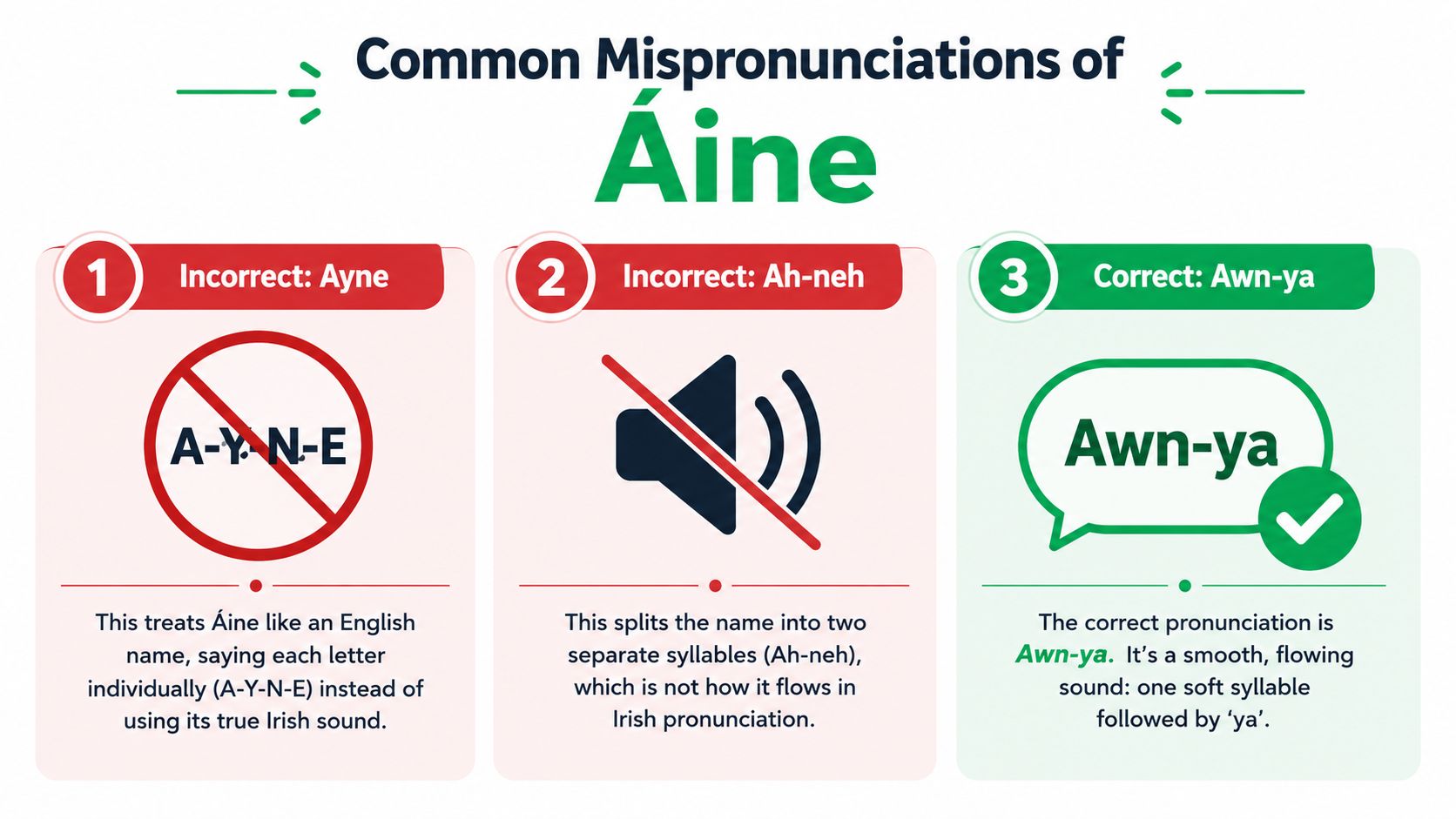
You are introduced to someone called Áine, you glance at the spelling, and your English reading habits jump in first. That is why the name often comes out as Ay-nee before a learner has had a chance to apply Irish sound rules.
The mistake English speakers make first
English trains readers to trust familiar letter patterns. So Aine may look as if it should rhyme with Jane, sound like Aimee, or end with a clear nee sound. Irish uses a different sound system, so those guesses lead you away from the name a Gaeilgeoir would expect to hear.
These are the pronunciations learners stumble into most often:
- Ay-nee: The classic English-style reading. It treats the name as if it followed English vowel patterns.
- Ayn: This cuts the name short and leaves out the soft ending.
- Ah-neh: This sounds careful, but it breaks the name into parts that do not match the usual Irish pronunciation.
- Anya: Closer, but still often too flat or too rushed at the start.
A helpful correction is simple. Keep the opening broad and long, then let the ending soften. If the final part sounds like a firm English nee, you are still reading the name through English spelling habits.
Why Áine and Aine cause so much confusion
The accented form, Áine, and the unaccented form, Aine, get mixed together constantly in everyday writing. That confuses beginners because English often treats accent marks as optional decoration, while Irish does not. In Irish, the fada changes the vowel sound and helps signal how the word should be read.
So the problem is not just pronunciation. It is also spelling recognition.
If you see Áine, the safest target is the familiar Irish pronunciation Awn-ya. If you see Aine without the accent, pause for a moment. It may be a simplified spelling used in English-language contexts, or it may reflect someone's own preferred written form. In real life, asking politely is often the best choice.
| Spelling | Common English misread | Safer response |
|---|---|---|
| Áine | Ay-nee | Say Awn-ya |
| Aine | Ayne, Ay-nee | Check whether it is standing in for Áine |
That distinction matters even more if you are listening to family names, local introductions, or regional speech. Irish pronunciation shifts by dialect, and the same name can sound a little different across the country. If you want a clear overview of those patterns, this guide to dialectal differences in Irish pronunciation gives helpful background.
A quick self-correction check
Use this short test while you practise:
- Does the first part sound like "day"? Start again.
- Does the first vowel feel longer, closer to "law" or "awn"? Better.
- Does the ending sound like a soft "ya" or "yə"? Good.
- Are you saying it as one smooth name rather than two separate chunks? That is what you want.
One more gentle warning for English speakers. Do not over-pronounce every written letter. Irish names often work more like a melody than a spelling puzzle. Once your ear catches the pattern, your mouth usually follows.
Understanding Regional Pronunciation Differences
Not every Irish speaker says Áine in exactly the same way.
The standard learner version, Awn-ya or [ˈaːnʲə], reflects Munster and Connacht pronunciation most closely. That's the form you'll hear in many guides, and it's a safe choice if you want a widely understood pronunciation.
The three main dialect areas
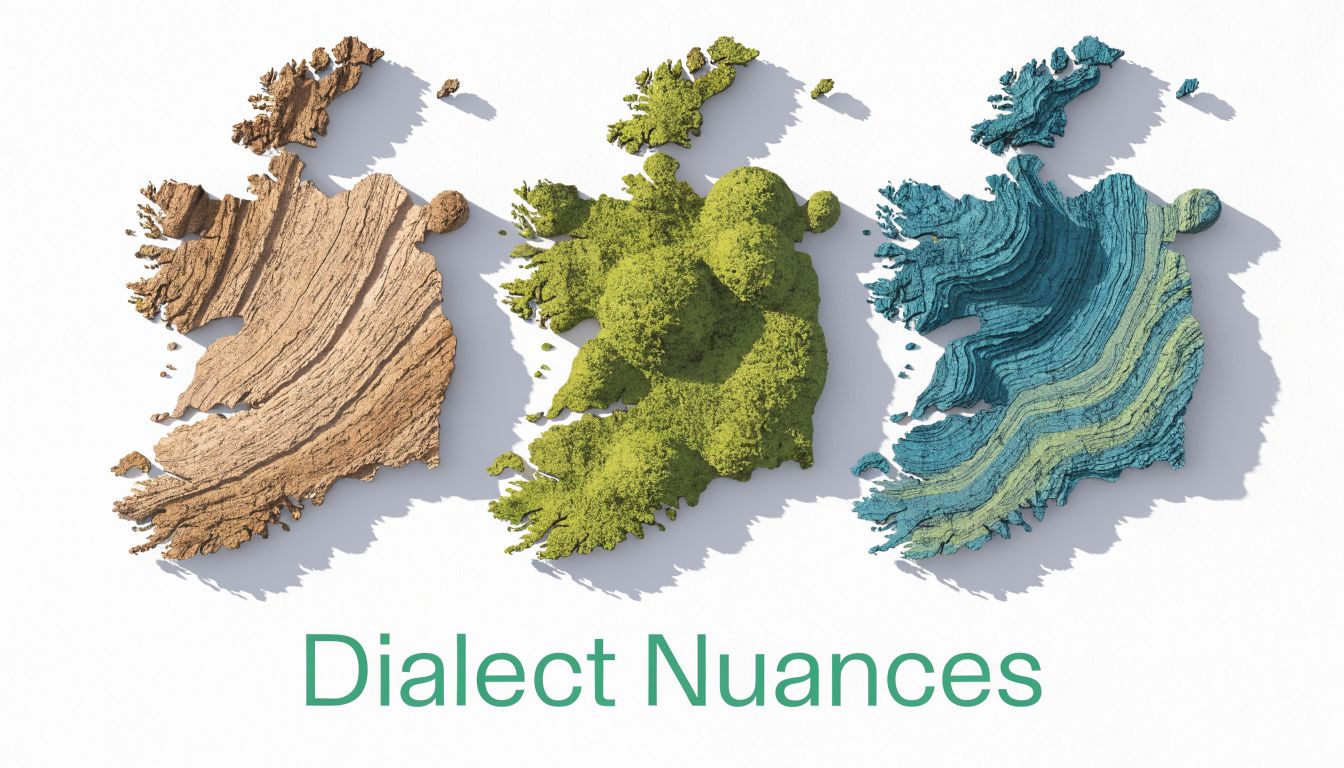
Irish has three major dialects:
- Munster
- Connacht
- Ulster
For Áine, Munster and Connacht are usually closest to the pronunciation learners are taught first. In Ulster, the á can shift a bit further back in the mouth, so the opening vowel may sound slightly different from the southern and western forms. That nuance is easy to miss, but it matters if you're learning speech tied to a particular region or family background (overview of dialect differences in pronouncing Áine).
When dialect matters
If you're introducing yourself, reading a name aloud, or speaking general Irish, the standard Awn-ya is completely reasonable. If you're reconnecting with family roots in Donegal or another Ulster area, it can be worth listening for that regional vowel quality.
Some guides teach one "correct" version. Real Irish has regional life in it.
That point matters because many learners aren't confused about the name itself. They're confused because they've heard more than one authentic version. If you want to explore those patterns further, this overview of dialectal differences in Irish pronunciation is a helpful next stop.
Practice Your Pronunciation with Guided Feedback
You are far more likely to say Áine well after using it in a real greeting than after repeating the name like a spelling drill. Irish names live in rhythm. Once the name sits inside a short phrase, your ear starts to notice whether the first vowel is long enough and whether the ending stays soft.
Try these out loud
Say each line slowly first, then at a natural speaking pace.
- Dia duit, a Áine
- Conas atá tú, a Áine
- Slán, a Áine
That small change matters. English speakers often pronounce a name more accurately in a phrase than on its own because the surrounding words guide the timing. It also helps you hear a point that often causes confusion. Áine with the fada has a long opening vowel, while Aine without the fada may be read differently depending on the speaker, the context, or whether the accent mark has been left off in writing.
What to listen for when you practice
Keep your attention on three parts of the sound:
- The long opening vowel. Let Á last a beat longer than an English "a."
- The glide into the second part. The ending should flow, not snap into two separate English syllables.
- The version you are aiming for. If you are following a family pronunciation, stay with that one consistently. If you are learning a general Irish form, keep your target steady from repetition to repetition.
A useful comparison is singing the first note of a tune slightly longer before moving on. If you rush that first note, the whole phrase feels off. The same thing happens with Áine.
Many learners also need to hear two authentic targets before the name really clicks. One speaker may give you the familiar southern or western sound close to Awn-ya. Another, especially from an Ulster background, may use a tenser or slightly further-back opening vowel. Neither recording means you have failed. It means Irish pronunciation carries regional life, and your job is to match the version you want to use.
For guided help rather than guessing, Gaeilgeoir AI offers pronunciation support, adaptive quizzes, and speaking practice. If you want one-to-one support as well, this guide on how to find an Irish tutor for enhanced learning is a practical next step.
Here's a short listening aid you can use before repeating the name yourself:
One final habit helps a lot. Record yourself saying the three phrases, then compare your version with a strong model. Listen for vowel length first, then for the smooth ending. If your pronunciation slips toward an English "Ayne" or a flattened "Anya," slow down, reset, and try again. A few careful repetitions beat twenty rushed ones.
Frequently Asked Questions About Pronouncing Irish Names
Is the fada really that important
Yes. In Irish, the fada changes the vowel sound. With Áine, it tells you the first vowel is long. If you ignore it, you're likely to fall into an English-style guess that doesn't match the Irish pronunciation.
Is Áine the same as Anya
Not exactly. They may sound similar to English ears, but they are not the same name in different spellings. Áine has its own Irish spelling, history, and pronunciation pattern. If you're saying an Irish name, it's worth aiming for the Irish sound rather than replacing it with the nearest familiar English or Slavic-sounding version.
Treat Irish names as names, not puzzles. Learn the sound the person uses.
Does every Irish name ending in ne sound like nya
No. Irish pronunciation depends on the full spelling and the relationship between vowels and consonants, not just the last two letters. That's why it's risky to learn one pattern and force it onto every name you meet.
What if I'm still not confident saying it
Start with Awn-ya, listen carefully, and repeat it slowly in short phrases. If you later learn a family or regional version, you can adjust. A respectful close pronunciation is better than avoiding the name altogether.
If you want more guided speaking practice, Gaeilgeoir AI gives you a structured way to work on Irish pronunciation, listening, and everyday conversation at your own pace.