Old Irish Male Names: A Guide to History and Meaning

Searching for a name that carries history, myth, and a sound that still feels alive in modern Ireland? That instinct is right, but it also hides a common mistake. Old Irish male names are not one neat category, because some belong to early medieval Gaelic tradition, some survived through Christian and royal records, and some live on mainly in Anglicised form. If you want the richest picture, you need the meaning, the pronunciation, and the historical layer behind each name.

That matters for family history too. Irish naming records can be wonderfully consistent in some periods and wildly variable in others, which is why researchers are told to test Gaelic, Latin, and Anglicised variants for the same person in church and civil records, rather than relying on exact-string matches (Irish Names Project guidance on aliases). The result is a language map, not just a list.

Old Irish male names also tell a bigger story about Ireland itself. In the 1911 Census of Ireland, John was the most common male name with 220,331 men, 13.9%, while Patrick was second with 167,150 men, 10.6%. Together, those two names accounted for close to a quarter of all males, and the top ten male names made up 60% of all male names recorded that year (CSO names census release). That same concentration shows up even earlier, in 1864, when among 70,075 baby boys born in Ireland, fewer than one in six were named John, one in nine were Patrick, and the top six names covered more than 60% of boys born (Irish genealogy toolkit on 1864 names).

Table of Contents

1. Seán

Seán is the name many learners meet first, and for good reason. It's the Irish form of John, and it sits inside the long historical current that made John the dominant male name in Ireland's 1911 census (CSO names census release). If you hear Seán in a village, a classroom, or a family tree, you're hearing a form that has moved comfortably between religion, daily life, and Irish identity for generations.

Pronunciation matters here. In Irish, Seán is /ʃaːn/, roughly “shawn.” The accent on á gives the vowel its broad, open sound, and that makes the name feel smoother than many English speakers expect. In practical speech, a learner can think “shawn” and stay close enough for everyday use.
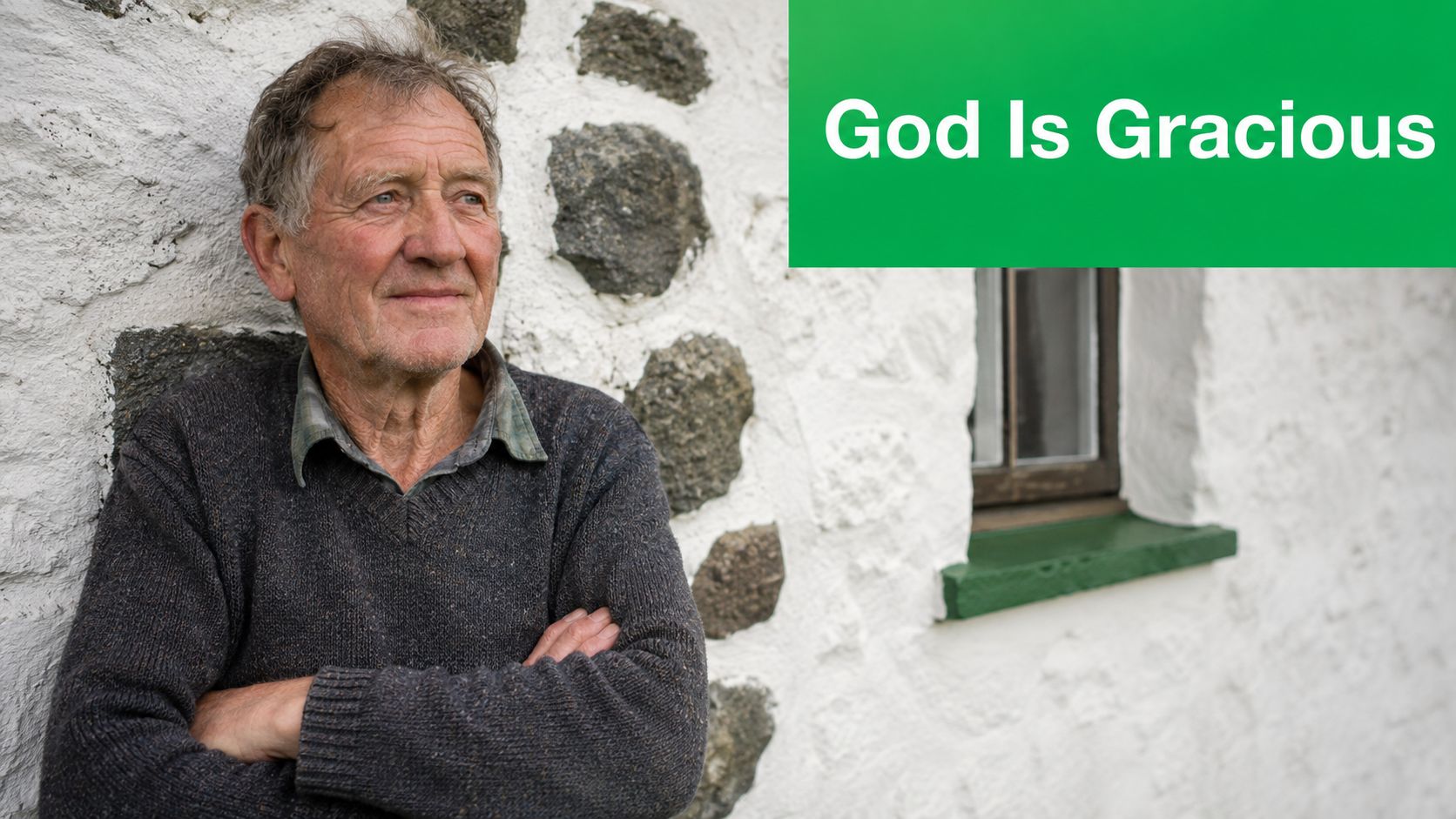
An older Irish man with a kind expression standing outdoors against a traditional white stone wall.

Why Seán stays recognizable

Seán is also one of the clearest examples of how Irish names survive through adaptation, not just preservation. The broader historical record shows that Irish male naming was already tightly concentrated by the start of civil registration in 1864, with a small core of traditional Christian names dominating boys' names (Irish genealogy toolkit on 1864 names). Seán sits in that tradition, even when it appears in modern documents beside English-language surnames, school records, or immigration papers.

For learners, the best way to remember Seán is to connect it to familiar, real-world settings. You'll see it in family trees, Irish-language classrooms, and contemporary Irish media. If you're mapping names back into Irish form, the English to Irish names tool can help you compare the Irish version with the English spelling without losing the relationship between them.

Practical rule: if a record says John, Seán, or even a Latinized form in a church register, don't assume those are different people until you check the surrounding family names and dates.

2. Liam

Liam feels modern to many people, but its roots are old enough to sit comfortably beside the historical names in Irish records. It comes through Uilliam, the Irish form of William, which reflects a broader pattern of names entering Irish life through adaptation and then becoming locally naturalized. That's one reason Liam can sound both international and unmistakably Irish at the same time.

Its pronunciation is straightforward for English speakers, /liəm/, or “lee-um.” Say the first syllable lightly, then let the second syllable fall away without overemphasizing it. In everyday speech, that relaxed rhythm is part of why the name feels so easy to use.

Liam also shows how modern popularity and historical authenticity don't always line up neatly. A name can be widely loved now without being the oldest form in the tradition. That distinction matters if you're trying to choose a name for heritage reasons, because a modern baby-name favorite and a historically attested Gaelic form are not always the same thing.

How Liam fits Irish naming history

The best way to think about Liam is as a bridge. It sits between Germanic naming roots, Irish linguistic adaptation, and current global use. In an Irish setting, that blending is ordinary, not accidental. Irish naming has long absorbed outside forms and reshaped them into something local and graceful.

For learners, Liam is useful because it's short, memorable, and easy to recognize in both Irish and English contexts. It also appears in real family settings, in school roll calls, and in name translation work, where clarity matters more than ornament. A simple practice routine is to say Liam, Uilliam, William out loud and notice how the sound shifts across languages.

If you're exploring Irish name forms for heritage or study, a focused language tool can help you move from recognition to active use. The ancient Celtic male names resource is a useful next stop if you want to compare older forms and see how Irish name traditions connect across time.

3. Pádraig

Pádraig is one of the most culturally loaded names in Irish tradition. It is the Irish form of Patrick, and that places it close to both faith and national memory. Saint Patrick's role in Irish Christianity gives the name a weight that goes far beyond sound alone, which is why it remains one of the most recognizable Irish male names anywhere in the world.

The pronunciation is /ˈpˠaːd̪ˠɾˠiɟ/, often simplified for learners as “PAW-drig” or “PAH-drig.” The broad first vowel and the slimmer ending are the key features to listen for. If you can keep the first syllable open and the second syllable soft, you're already close.
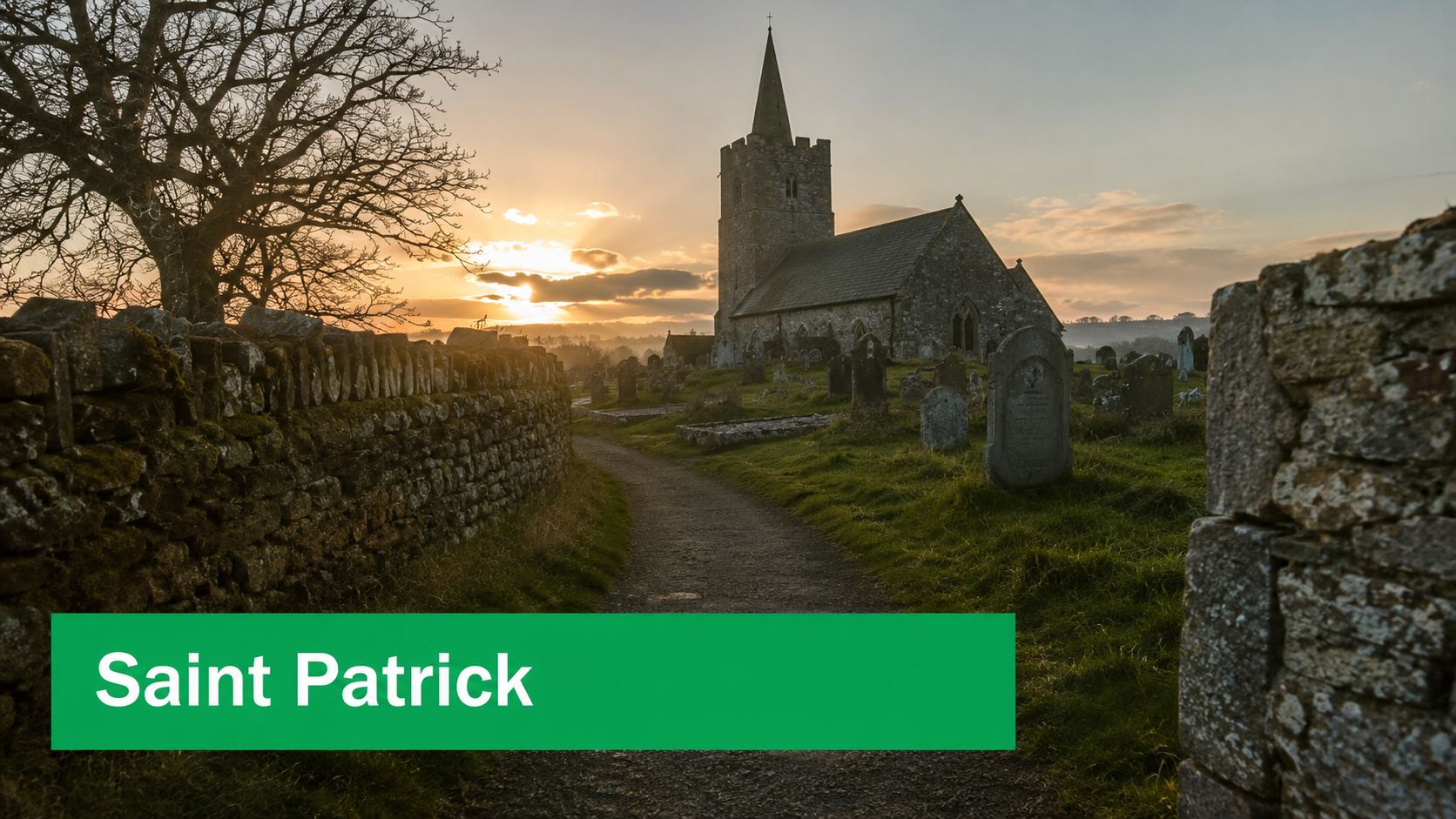
A scenic view of a historic stone church and cemetery at sunset in the English countryside.

Why Pádraig carries so much cultural memory

The historical depth of Patrick naming in Ireland is easy to see in the census record. In 1911, Patrick was the second most common male name in Ireland with 167,150 men, 10.6%, and that concentration shows how central the name remained in Irish male identity (CSO names census release). In older naming patterns too, Patrick appears in a small core of names that structured Irish boyhood for generations (Irish genealogy toolkit on 1864 names).

For learners, Pádraig is especially helpful because it teaches respect for Irish spelling conventions. The fada is not decorative. It changes the sound, and in a name like this, it carries the identity of the Irish form itself. It also reminds you that translation is not always enough. Patrick and Pádraig are connected, but they do different cultural work.

In family history, that distinction matters. A baptismal record may use the Latin tradition, a later civil record may use Patrick, and a household memory may preserve Pádraig. Each version tells part of the same story.

4. Cian

Cian is one of the oldest-looking Irish names that still feels clean and contemporary. Its meaning is commonly given as ancient or enduring, and that fits the name's tone perfectly. It sounds spare, strong, and a little mysterious, which is probably why it continues to appeal to learners, heritage seekers, and parents alike.

The pronunciation is /ˈkiən/, usually “kee-an.” Keep both vowels light, and don't turn the name into a hard two-syllable English word. Irish names often reward subtlety, and Cian is a good example of that.

Cian also works well as a teaching name because it sits at the intersection of history and modern use. It appears in older Irish tradition, but it's short enough to feel current. That makes it a useful entry point for anyone learning how Irish names can survive without sounding frozen in the past.

Myth and memory in one short name

Traditional storytelling links Cian with figures from Irish legend, and the name carries a sense of depth even when the mythic detail isn't always front and center in casual use. That's part of its appeal. A learner doesn't need to memorize every story before appreciating the way the name sounds and feels.

One of the strongest lessons Cian offers is that Irish names often preserve qualities as much as identities. Enduring, in this case, is more than a meaning. It reflects how some names stay visible across centuries because they fit both poetic and everyday registers.

If you're hearing Cian in a family setting, a sports club, or a classroom, the name will usually sound natural rather than formal. That flexibility makes it especially useful for learners who want names they can pronounce confidently in conversation. It's a name that doesn't demand ceremony, but still carries history in the background.

Cian is one of those names where a quiet pronunciation does the work. Speak it cleanly, and the name sounds much closer to Irish rhythm than an over-stressed English approximation.

5. Cormac

Cormac has a different kind of authority. It sounds older, heavier, and more regal than many short Irish names, and that tone matches its mythic associations. The name is linked to the legendary Cormac mac Airt, remembered as a High King whose reign is associated with wisdom and justice in Irish tradition.

The pronunciation is /ˈkɔɾˠmˠək/, often simplified as “كور-muk” or “KOR-mak.” The stress lands clearly at the start, and the ending is softer than many English speakers expect. If you want the name to sound natural, don't flatten it into a sharp English two-part word.
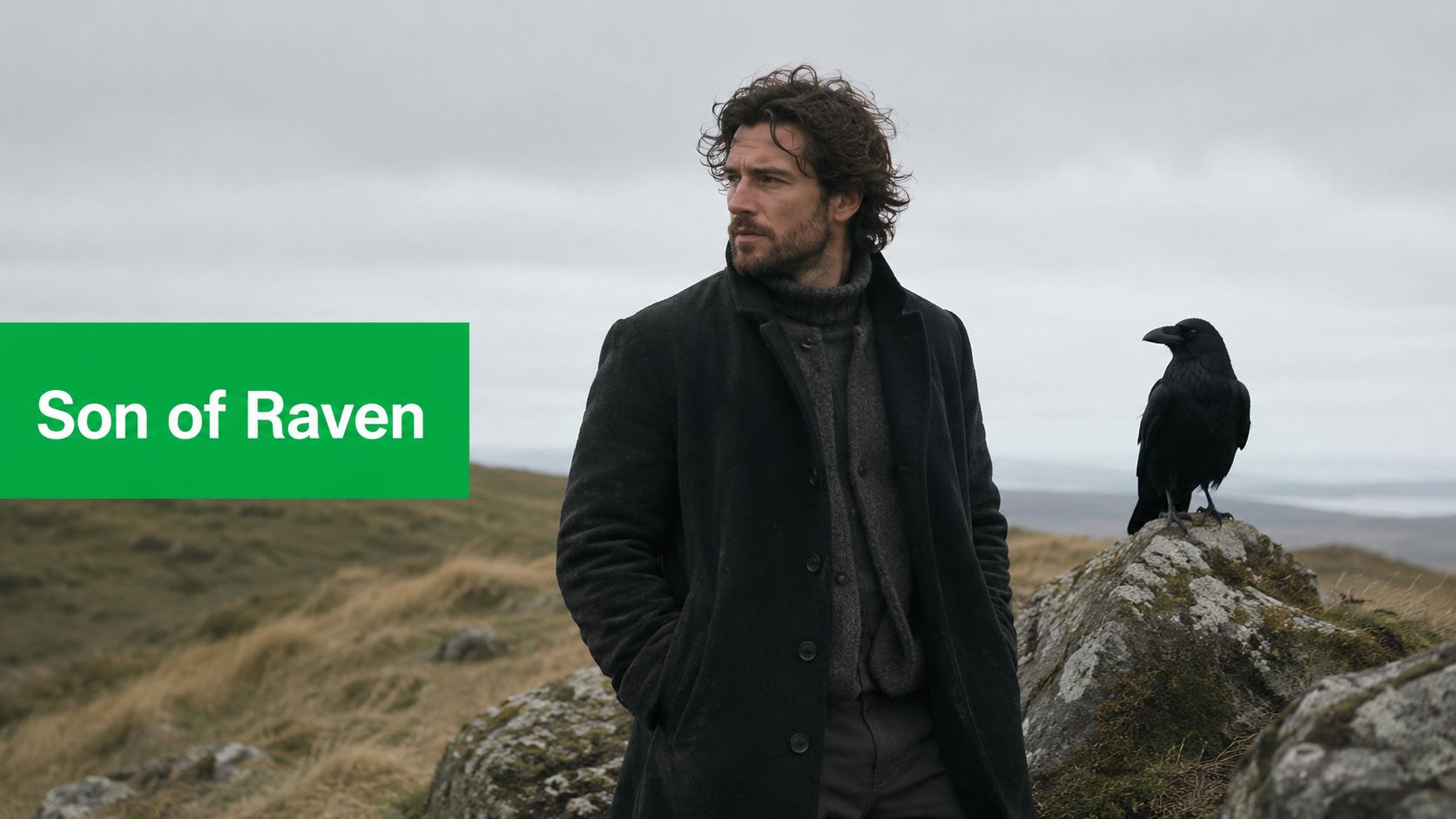
A rugged man with dark hair and a beard standing outdoors with a raven perched on a rock.

What the name suggests in Irish tradition

Cormac is often interpreted through old Irish elements connected with a chariot or charioteer, which gives it a martial, mobile feel. That makes sense beside the royal and heroic associations attached to the name. It's a name that sounds capable of carrying responsibility.

For learners, Cormac is also one of the best examples of how a name can move between literature, genealogy, and modern life. It appears in historical material, in family names, and in contemporary Irish usage without losing its distinctive shape. That continuity makes it especially satisfying to study.

If you're comparing older Irish male names, Cormac is a useful reminder that sound and status often travel together. A strong opening consonant, a compact shape, and a long cultural memory can make a name feel instantly substantial.

The ancient Celtic names for males resource is a good companion here if you want to place Cormac beside other historically rooted names and see how their forms differ across Irish tradition.

6. Tadhg

Tadhg is one of the most characterful names in Irish tradition. It has a compact shape, a striking sound, and a reputation that ties directly to poetry and storytelling. That combination makes it feel especially Irish, not because it's decorative, but because it points to the value Gaelic culture placed on learning and oral art.

Its pronunciation is /t̪ˠaɪɡ/, usually heard as “tige” or “tieg.” English speakers often want to add extra vowels, but the name works best when it stays tight. The final consonant should not disappear, because that crisp ending is part of the name's force.

Tadhg has long been used by kings and princes, especially in Munster and Connacht. That historical presence gives the name a noble edge, but its deeper significance lies in the way it honors the wordcraft of Irish culture.

Why poets matter in a name like Tadhg

In Gaelic society, poets were not decorative entertainers. They were custodians of memory, language, and status. A name associated with the poet or storyteller therefore carries social meaning, not just aesthetic charm. Tadhg captures that world elegantly.

For learners, the best way to approach Tadhg is to stop trying to make it behave like English spelling. It won't. The letters point to a sound system that rewards patience and listening. Say it slowly, then speed it up only after the shape feels stable in your mouth.

Practical rule: if a name looks short but feels difficult, write the pronunciation beside it and rehearse it in a full sentence, not in isolation.

Tadhg is also a strong reminder that old Irish male names often preserve occupations, social roles, or values, not just lineage. That's one reason the name still feels alive. It doesn't merely label a person, it gestures toward a culture that prized spoken skill.

7. Rían

Rían has the kind of royal resonance people notice immediately, even before they know the meaning. It's often understood as little king, which makes it sound both affectionate and commanding at the same time. That balance is rare, and it helps explain the name's enduring appeal.

The pronunciation is /ˈriːən/, commonly “ree-an.” Keep the first vowel long and clear, then let the second syllable stay light. The name should feel graceful, not clipped.

Rían also matters because it links directly to the modern surname Ryan. That makes it especially useful for learners who are tracing family names across time. A surname can begin as a personal name, survive through descent, and then come back into use as a first name again.

A name with clan memory

Traditionally, Rían is associated with the ancestor of the Ó Riain line, a connection that gives the name a dynastic feel. You can hear why families and heritage learners are drawn to it. It suggests lineage without sounding heavy.

The modern English-language surname Ryan often hides that older shape, so Rían can be a satisfying rediscovery for someone exploring Irish roots. The name gives you a direct bridge between the older language and later family identity.

For pronunciation practice, it helps to pair Rían with other slender Irish names and notice the vowel flow. Once you hear that rhythm, the name becomes easier to reproduce naturally in conversation or study.

Rían is one of those names that feels small on the page but expansive in cultural memory. It carries nobility, ancestry, and a clean modern sound without losing its traditional character.

8. Oisín

Oisín may be the most mythically vivid name in this list. It means little deer, and in Irish storytelling it belongs to the warrior-poet son of Fionn mac Cumhaill. That alone gives it enormous cultural reach, but the name is also loved for its softness. It's heroic without sounding harsh.

The pronunciation is /ˈoʃiːnʲ/, often rendered as “uh-SHEEN” or “o-SHEEN.” The middle sound is the key. If you treat it like a straightforward English spelling, you'll miss the Irish rhythm entirely. Listen for the gentle opening and the long, slender ending.
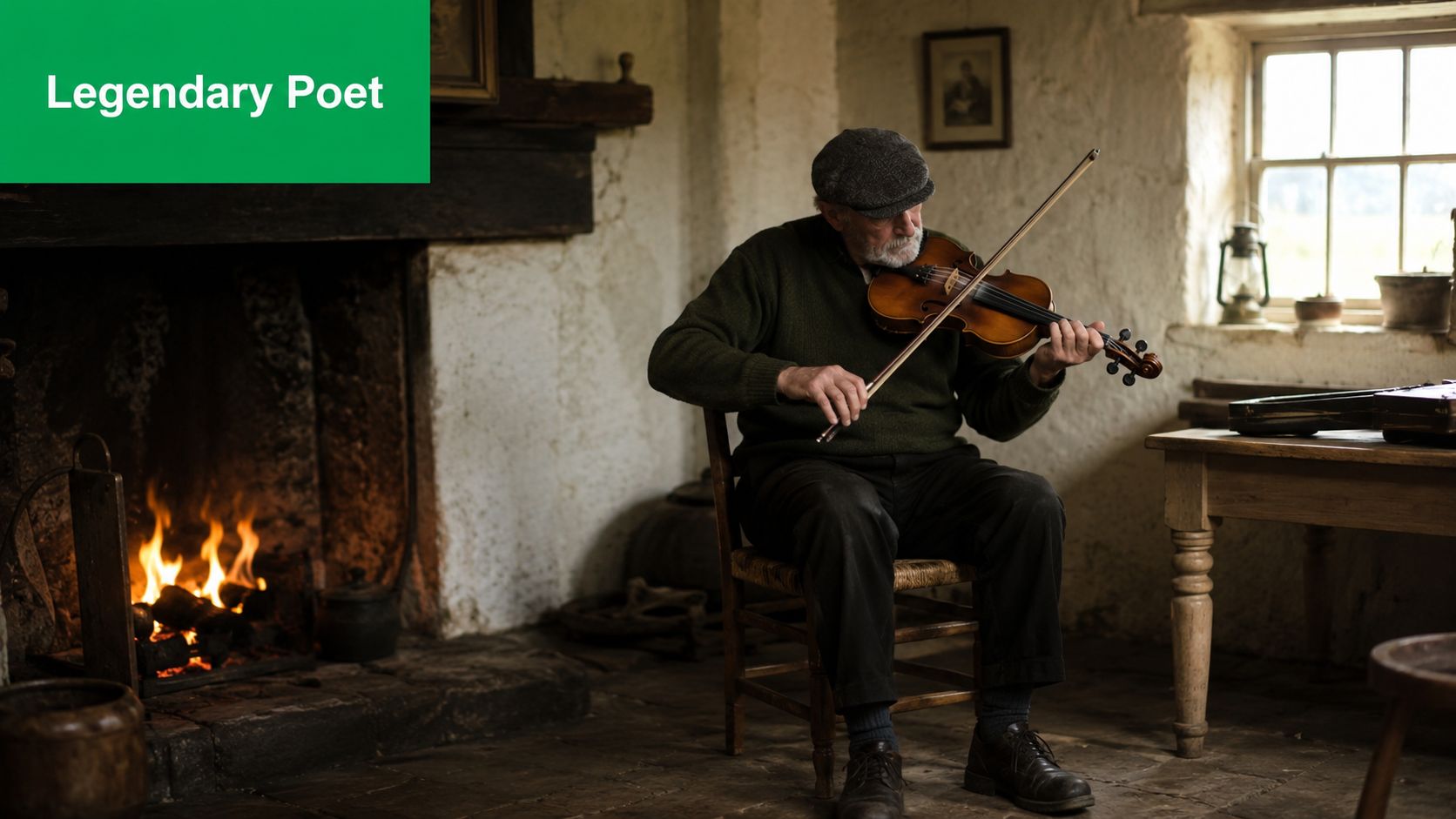
An elderly man wearing a flat cap playing the violin in a rustic room near a fireplace.

Mythology, youth, and loss

Oisín is tied to the great cycle of Irish legend, especially the story of his journey to Tír na nÓg, the land of eternal youth, with Niamh Chinn Óir. That tale has made him one of the most recognizable figures in Irish mythology. Even people who don't know the details often recognize the name as poetic and ancient.

The beauty of Oisín is that it sounds delicate while carrying epic weight. That contrast makes it especially memorable for learners. It also shows how Irish names can preserve tenderness, not just strength.

If you want to hear how mythic names travel into modern Irish learning, the Irish mythology names resource is a useful companion. It helps connect names like Oisín to the stories that made them endure.

Oisín is also a strong example of why pronunciation practice matters so much in Irish. The spelling looks compact, but the sound has its own logic. Once you get that logic, the name becomes one of the most beautiful on the page.

Comparison of 8 Old Irish Male Names

Name Pronunciation complexity 🔄 Ease of adoption ⚡ Cultural / Historical impact 📊 Ideal use cases 💡 Key advantages ⭐
Seán Moderate, "shawn" (/ʃɔːn/) High, variants Sean/Shawn common Very high, centuries of use, religious and national ties Honoring Irish heritage; formal and familiar use ⭐⭐⭐⭐, classic, widely recognized
Liam Low, "lee-um" (/ˈliːəm/) Very high, globally popular and easy to spell High (modern global prominence with Irish roots) Contemporary naming; broad international appeal ⭐⭐⭐⭐⭐, strong, modern, highly popular
Pádraig High, "paw-drig" (/ˈpˠɑːd̪ˠɾˠəɟ/) Moderate, Anglicized as Patrick eases use Very high, linked to St. Patrick and national identity Religious or strongly traditional contexts; formal use ⭐⭐⭐⭐⭐, iconic, deeply meaningful
Cian Low, "kee-an" (/kiːən/) High, easy for non-Irish speakers High, mythological and ancient associations Authentic Irish choice with smooth pronunciation ⭐⭐⭐⭐, timeless, approachable
Cormac Moderate, "kor-mack" (/ˈkɔːrmək/) Moderate, strong but less global High, legendary High King, royal connotations Traditional, strong masculine name; literary or historical use ⭐⭐⭐⭐, authoritative, historic
Tadhg High, "tie-g" (/t̪ˠəiɡ/) Low–moderate, spelling often unfamiliar outside Ireland High, associated with poets, kings, Gaelic tradition Cultural authenticity; families valuing Gaelic roots ⭐⭐⭐⭐, culturally rich, distinctive
Rían Moderate, "ree-an" (/ˈɾˠiːən/) Moderate, Ryan widely known, fada may be dropped High, clan and royal lineage; root of surname Ryan Traditional form for heritage-conscious parents ⭐⭐⭐⭐, noble connotations, traditional
Oisín High, "ush-een" (/ˈɔʃiːn/) Moderate, mythic but appealing sound Very high, central figure in Fenian Cycle mythology Literary or poetic naming; myth-inspired choices ⭐⭐⭐⭐, romantic, mythological resonance

From Legend to Legacy Carrying the Story Forward

These old Irish male names are more than labels. They're pieces of language history, traces of family memory, and living reminders of the way Irish names have carried faith, poetry, kingship, and myth across centuries. Seán connects to the deep Christian tradition reflected in the census records, Pádraig ties directly to Irish religious identity, Cormac and Rían point to kingship and lineage, and Oisín keeps the mythology of the Fianna alive in ordinary speech.

The strongest way to choose among them is to ask what kind of connection you want to make. Some names are best when you want a familiar heritage name that still feels natural in daily life. Others are better when you want to honor older Irish language forms, family roots, or a mythological story that matters to you personally.

If you're building a family narrative, these names can do more than sound beautiful. They can help you understand how a name moved through church records, civil records, Anglicised forms, and modern Irish usage. That's why variant awareness matters so much in genealogy and language study, especially when the same person may appear under different forms in different records (Irish Names Project guidance on aliases).

For learners, the next step is pronunciation practice and recognition. Say the names aloud, compare Irish and English forms, and notice how the fada changes the sound and meaning. Small details matter, and they're often the bridge between reading a name and knowing it.

If you want to keep going, a structured learning tool can help you work with real Irish forms instead of guessing. Gaeilgeoir AI is one option for that kind of practice, especially if you want help turning heritage curiosity into spoken confidence.


If you'd like to keep learning Irish names, pronunciation, and everyday phrases, visit Gaeilgeoir AI and start practicing with guided conversation. It can help you work with Irish name forms, hear the language more clearly, and build confidence with each session.
Best Ancient Celtic Names Male: Meanings & Origins

A grandfather in County Clare once corrected his grandson's pronunciation of an old family name before telling the story behind it. In that moment, the name stopped being a word on paper and became a living piece of memory.

In ancient Celtic lands, a name was more than a label. It carried ancestry, status, hope, and character. Many of the most enduring male names in Ireland survived for centuries, even through major cultural change. In the 1911 Census of Ireland, John accounted for 13.9% of all males recorded, Patrick was held by over 10%, and the top ten male names together made up 60% of all male names. That concentration shows how strongly old naming traditions held on, even when language and spelling shifted over time.

That's part of why ancient Celtic names still matter. They connect modern learners to old stories, to sound patterns in Irish, and to the way identity was once expressed through the natural world, lineage, and legend. If you're exploring ancient Celtic names male lists for a child, a character, or your own family history, the richest names are the ones that come with context. The meaning matters, but so do the people who carried it, the myths around it, and the Irish forms that shaped it.

Table of Contents

1. Conn

A short name can carry a long history. Conn does that almost better than any other early Irish name.

A kingly name with a sharp sound

Conn is usually linked with sense, reason, or wisdom in Old Irish tradition. That helps explain why the name feels so weighty despite its size. It is only one syllable, but it has the same effect as a carved stone marker. Brief, clear, and hard to miss.

The best-known bearer is Conn Cétchathach, remembered in legend as Conn of the Hundred Battles. He stands among the great High King figures of Irish story. The historical details are difficult to separate from legend, and that is part of the lesson here. Ancient Celtic names often survive not because every fact is certain, but because communities keep telling the story.

Conn also appears in royal genealogies and early dynastic memory. That gives the name a kind of continuity. It does not feel revived from a museum shelf. It feels transmitted, like a word passed from teacher to student across generations.

Practical rule: Say Conn with a firm K sound at the start, close to /kɔn/. Keep it short and steady.

For anyone learning Irish heritage through names, Conn is a useful starting point. It shows how an ancient name can be simple in form but dense with cultural meaning. A learner begins with one syllable and soon meets bigger subjects: kingship, oral tradition, and the way Old Irish words gather power through repeated use.

How to use Conn well today

For those who want a direct name from ancient Celtic male collections, Conn is one of the easiest to carry into modern life. It is brief, recognizable, and still distinctly Irish.

It also offers more than a basic meaning. Conn comes with a miniature biography built into the tradition. Its linguistic root points toward intelligence or judgment. Its legendary bearer adds rulership and martial fame. Its modern advantage is practicality. You can say it easily in English, but it still opens a door into older Irish pronunciation and history.

A few useful ways to approach it:

  • Start with the figure behind the name: Read about Conn Cétchathach and notice how often authority and wisdom appear together.
  • Practice the sound carefully: Short names are often harder than they look. With Conn, the value is in getting the crisp opening and clean ending right.
  • Use it as a language lesson: Names like Conn help beginners see that Irish learning is not only grammar and vocabulary. It is also memory, lineage, and story.

Conn works well for a child, a fictional character, or a family heritage project. Its strength comes from restraint. Nothing extra is needed.

2. Cormac

A child is given the name Cormac. At first it may sound strong and familiar. Then you trace it backward through old stories and manuscripts, and the name starts to feel like a small doorway into the Irish past.

A kingly name with a scholarly side

Cormac is usually explained from Old Irish elements, though scholars do not all agree on a single neat meaning. You will often see interpretations such as “son of the chariot,” while some traditions connect part of the name with the raven. That uncertainty can confuse beginners, but it is a useful lesson. Early Irish names often come down to us through layers of spelling, oral tradition, and later commentary, so one name can carry more than one credible explanation.

The best-known bearer is Cormac mac Airt, the legendary High King remembered for judgment, order, and wisdom. He is the kind of figure who gives a name its atmosphere. Even before you sort out every linguistic detail, you can feel what the tradition is doing with Cormac. It points toward authority shaped by intelligence.

A second major bearer sharpens that picture. Cormac mac Cuileannáin was both king and bishop, and he is linked with learning as well as rule. That matters because it shows a very old Irish ideal. The admired man was not only a fighter or ruler. He also understood law, memory, genealogy, and sacred learning, rather like a person expected to lead a community and preserve its library at the same time.

That blend helps explain why Cormac still feels alive in modern use. It sounds distinguished, but not remote.

What Cormac can teach you about Irish names

Cormac is a helpful name for learners because it shows how Irish naming works below the surface. Many names are built from older parts that have lives of their own, and once you start noticing those parts, other names become easier to recognize.

Cormac shows how an ancient name can act like a compact history lesson. Sound, status, and story all sit inside it.

A practical way to study Cormac is to treat it like a pattern, not just a label:

  • Look at the elements: If you come across explanations involving mac (son) and older roots such as corb, you begin to see how name pieces reappear across Irish tradition.
  • Compare historical bearers: Cormac mac Airt and Cormac mac Cuileannáin give you two different lenses, legendary kingship and learned authority.
  • Study it with recall tools: If you use Gaeilgeoir AI in your Irish study routine, make a flashcard deck for recurring name elements such as mac and corb, then add related names as you meet them. That gives you a clearer sense of how old forms echo through the language.

Cormac suits parents, writers, and heritage learners who want a name with depth rather than just a pleasant sound. It carries the memory of rule, learning, and language all at once.

3. Aedh (Aed)

Aedh is one of the oldest-feeling names in the Irish tradition. It burns with symbolic meaning even before you learn the history.

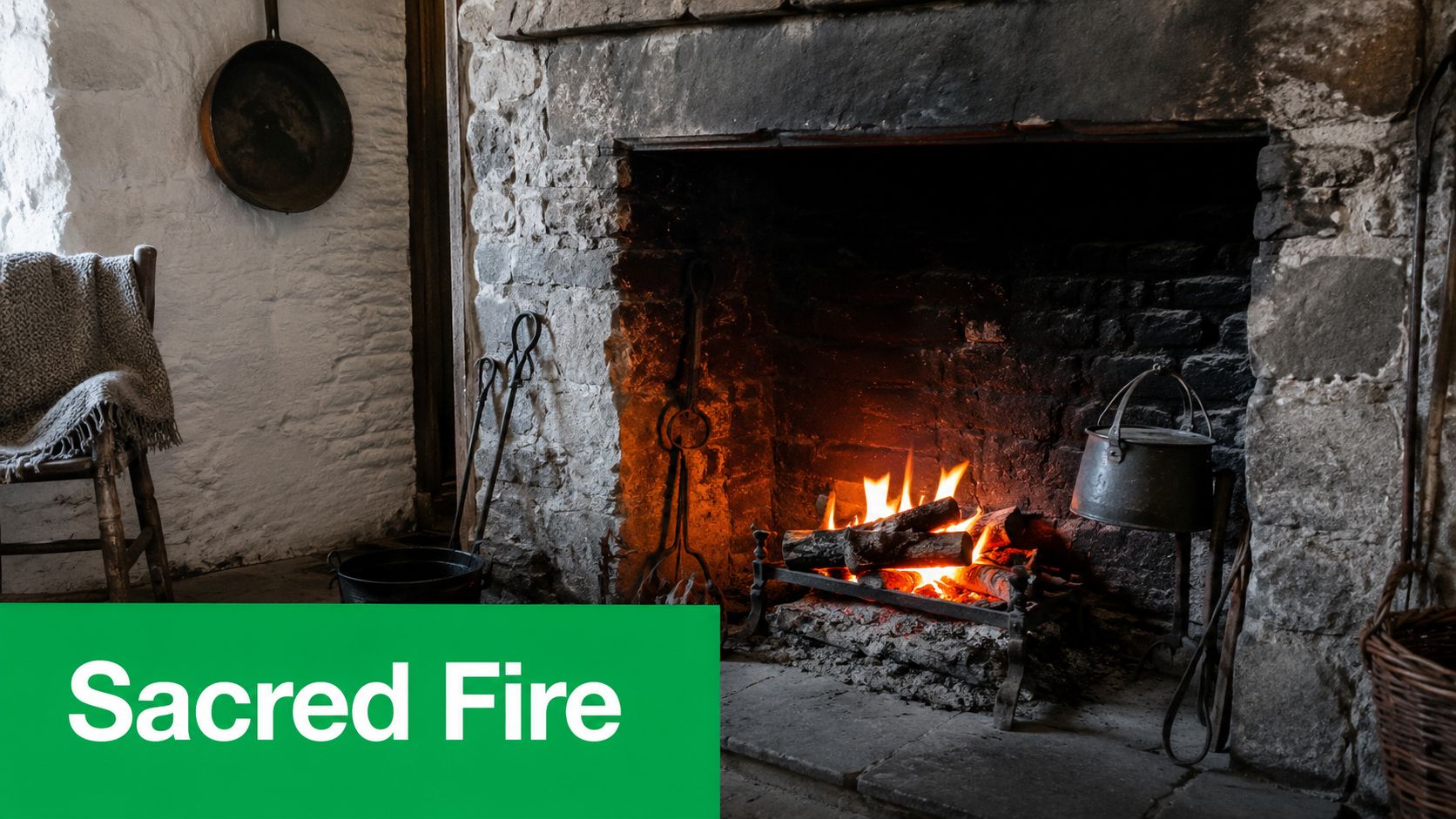
A rustic stone fireplace with a glowing fire, cast iron pots, and ancient interior decor.

The old fire at the center of the name

Aedh, also written Aed, means “fire” in Old Irish. That single image gives the name enormous power. Fire in Celtic tradition wasn't just a practical element. It suggested life, ritual, protection, brilliance, and sacred force. Aedh belongs to that older symbolic world, where a name could point to a quality people hoped to see in the child who carried it.

The name appears again and again in Irish genealogies and medieval records. You encounter kings, dynasts, and rulers with this name, which tells you how firmly rooted it was. It didn't belong to one isolated legend. It spread broadly through elite and regional traditions.

The modern learner can also place Aedh alongside related names. Aedan and Aodhán show how the older root kept generating new forms over time. That's useful if you're trying to understand why some modern Irish names feel connected even when they don't look identical at first glance.

Why the spelling matters

One of the biggest frustrations for heritage learners is the gap between the ancient form and the familiar modern spelling. In fact, 90% of popular articles surveyed in search results present modernized spellings like Aidan without explaining older forms such as Áedán or their historical pronunciation context. That's exactly where learners lose confidence.

Aedh helps fix that problem because it forces you to see the older orthography directly. The spelling may look unfamiliar, but that's part of the lesson.

  • Learn both forms: Aedh and Aed point to the same old root.
  • Connect it to meaning: Fire is easy to remember, which makes the name a strong anchor for vocabulary.
  • Trace the family: Moving from Aedh to Aodhán shows how Irish diminutives grow from older names.

For anyone exploring ancient Celtic names male options with real historical texture, Aedh is one of the best examples of how language, symbolism, and continuity come together.

4. Lugh

Lugh carries myth with it more openly than almost any other name on this list. Even before you know the details, it sounds bright and old.

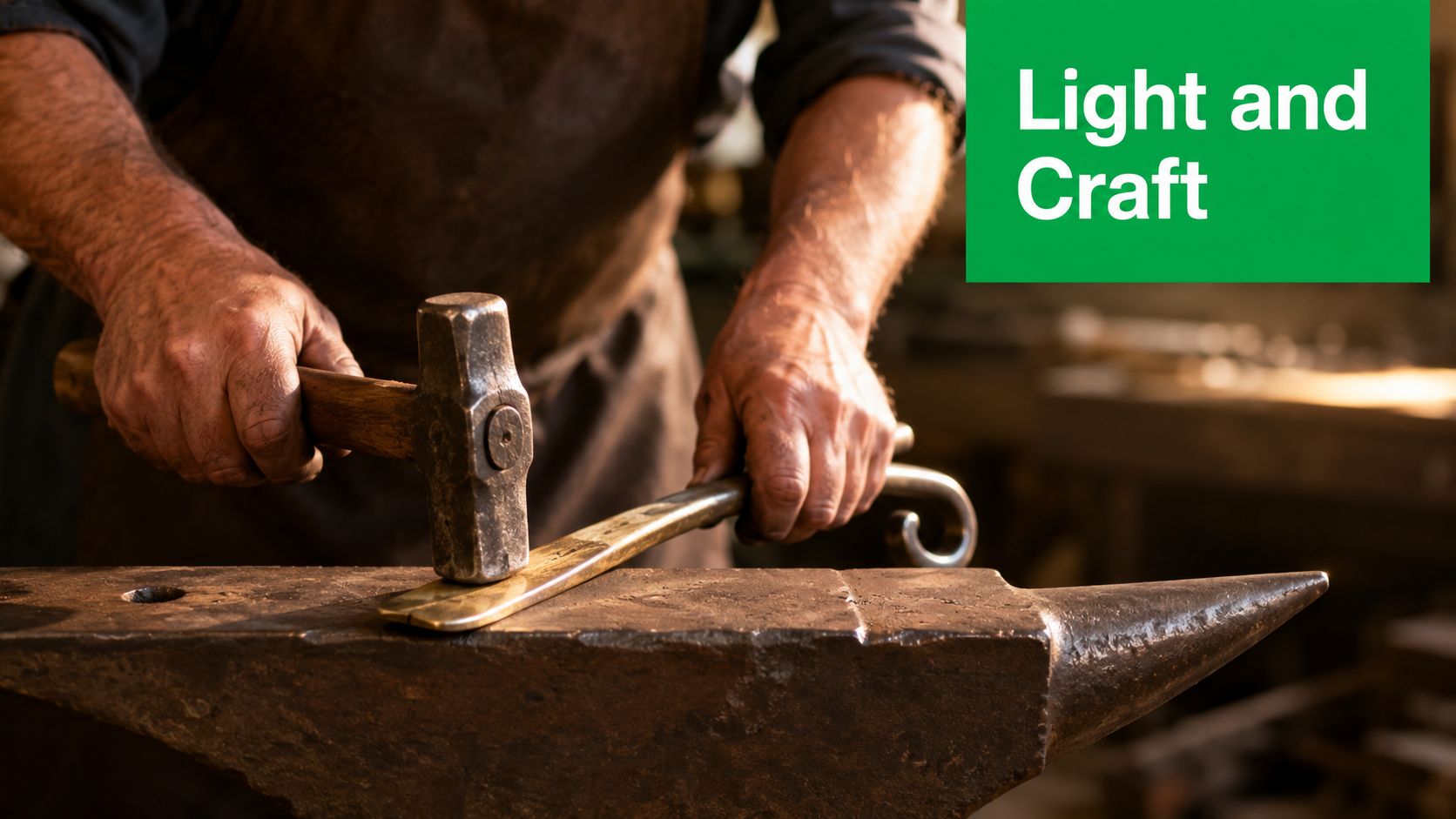
A blacksmith shaping a piece of metal on an anvil with a hammer in a workshop.

A divine name that became a human one

Lugh comes from the older Celtic divine name Lugus and is linked in Irish tradition with light, craft, skill, and warrior excellence. In mythology, Lugh is not narrow in talent. He is a many-sided figure, the kind of hero-god who can fight, create, and lead. That breadth is what gives the name its special force.

Because of that background, Lugh is distinct from names signifying mere strength or bravery. It suggests mastery. A person carrying the name stands in the shadow of a figure known for intelligence as much as power.

If you want the mythic background in more depth, this guide to the Celtic god Lugh is a useful next step. It helps place the name inside the wider framework of Irish myth rather than treating it as an isolated label.

A practical way to remember Lugh

Say it like /luː/, close to “loo.” The spelling can make learners hesitate, but the spoken form is straightforward once you hear it a few times.

There's also a wider cultural gap around names like this. A review of existing content found that 95% of it fails to connect male Celtic names to specific mythological archetypes, usually stopping at surface meanings instead of explaining the stories behind them. Lugh is the perfect example of why that deeper layer matters. Without the mythology, you miss the true personality of the name.

Here's a simple way to remember Lugh in study:

  • Link the name to craft: Think of smithwork, skill, and trained hands.
  • Link it to festival culture: Lughnasadh preserves the memory of the same mythic world.
  • Link it to story: Read one episode from Irish mythology and attach the name to an action, not just a definition.

A short visual introduction can help fix the character in your mind.

Lugh suits parents, writers, and learners who want a name with mythic brightness and strong Irish identity.

5. Eoghan (Euan/Owen)

Eoghan is a classic example of a name that changes shape as it travels. The Irish form is old, but many people first meet it through Owen or Euan.

A name with branches across the Celtic world

Eoghan is often linked to meanings such as “born of the yew tree” or ideas related to youthful warriorhood. The uncertainty is part of what makes old names interesting. Ancient naming traditions weren't always preserved with a neat modern dictionary entry. What did survive is the sense that Eoghan belongs to a natural and ancestral world.

The name appears across history, legend, and family tradition. Saints, rulers, and dynastic founders carried related forms, and that long survival gave it unusual flexibility. It can feel aristocratic, pastoral, or stoic depending on context.

That's why Eoghan remains so attractive to modern families reconnecting with Irish roots. It has depth, but it's still usable. It also shows how one name can branch into several familiar English-facing forms without losing its Gaelic center.

Pronunciation first, spelling second

If you're new to Irish, start by hearing the name before memorizing the letters. Many learners do better when they treat Eoghan as a spoken pattern first. The sound is often rendered close to “O-wan,” though regional and related forms vary.

Learn Eoghan by ear, then return to the spelling. Irish often becomes easier when sound leads the way.

This is also one of the best names for comparing Celtic traditions across regions. Irish, Scottish, and Anglicized forms all reveal something about migration and adaptation.

  • Use audio support: Hearing the name repeatedly builds confidence fast.
  • Compare forms: Eoghan, Euan, and Owen belong in the same family conversation, but they're not identical in feel.
  • Study the Irish form directly: The guide to Irish for Owen is especially useful if you want to understand how the English form relates back to Irish.

For people searching ancient Celtic names male lists that still work smoothly in modern life, Eoghan is one of the strongest choices.

6. Aodhán (Aidan)

Aodhán is a small, bright name with a long religious and cultural life. It's one of the clearest examples of how Irish diminutives work.

A small name with a long life

Aodhán comes from Aedh and means “little fire” or “small fire.” That gives it immediate warmth. It keeps the energy of the older root while softening it into something affectionate and personal. In many naming traditions, that's exactly what a diminutive does. It narrows the scale without reducing the dignity.

Saint Aodhán of Lindisfarne helped make the name famous well beyond Ireland. Through the saint, the name became associated not only with brightness and vitality but also with learning, mission, and spiritual influence. Other rulers and nobles also carried related forms, which kept the name moving through medieval records.

This combination is part of Aodhán's appeal. It sounds gentle, but it has historical weight.

Modern popularity and old form

Aodhán also matters because it shows how an ancient name can remain visibly alive. The available name data notes that Aidan remains a regular top 100 name in Ireland and sometimes appears inside the top 50 in the United States, showing sustained cultural relevance rather than any measurable tool adoption trend. That persistence says a lot. The old fire never fully went out.

For learners, Aodhán is an ideal bridge between ancient and modern usage.

  • Start with the root: Learn Aedh first, then Aodhán makes more sense.
  • Notice the suffix: The ending -án appears in many Irish names and often adds a diminutive sense.
  • Compare forms carefully: Aodhán and Aidan are related, but the Irish spelling carries more historical texture.

If you want an ancient Celtic male name that still feels familiar in contemporary life, Aodhán is one of the easiest to love.

7. Fionn

Few names in Irish tradition are as instantly evocative as Fionn. Say it, and story enters the room.

The hero behind the name

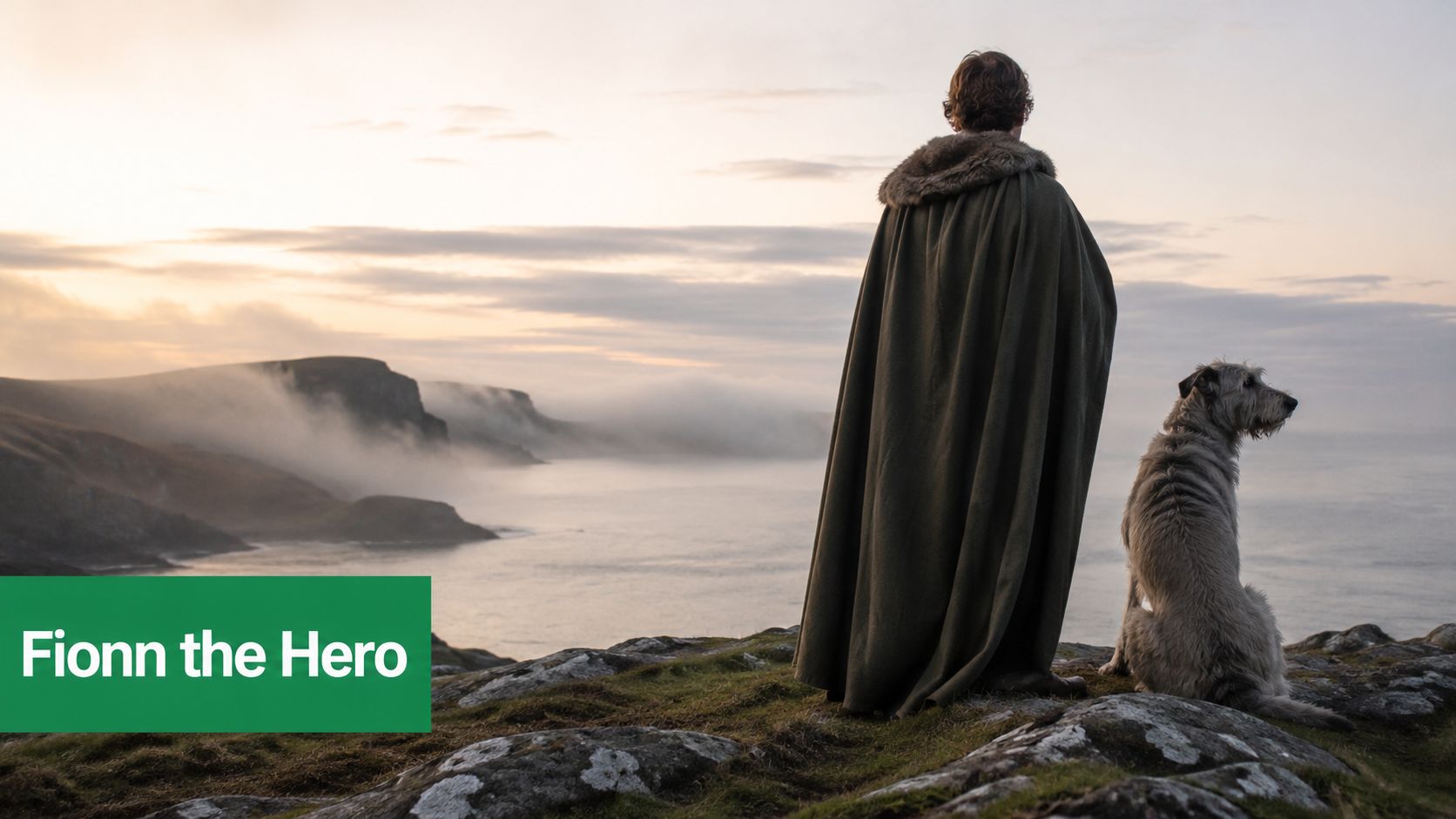
Fionn means “fair” or “white,” and its most famous bearer is Fionn mac Cumhaill, the great hero of the Fenian Cycle. He isn't memorable only because he fights well. He's also clever, perceptive, and tied to supernatural knowledge. That balance is important. In Irish tradition, the ideal hero often combines physical courage with insight.

Because of Fionn mac Cumhaill, the name became one of Ireland's iconic heroic names. It suggests command without stiffness and nobility without ceremony. For many readers and parents, that's the appeal. Fionn feels legendary, but still human.

A man in a green cloak stands with a large dog overlooking a misty ocean cliff.

Reading Fionn through story

Fionn is one of the best names to learn through narrative rather than etymology alone. If you only memorize “fair” or “white,” you miss the lived meaning the stories gave the name. The Fenian world filled it with leadership, loyalty, wilderness, poetry, and danger.

A good next step is exploring Irish mythology names, where Fionn sits among other figures whose names carry whole narrative worlds with them.

Some names are best understood in motion. Fionn is one of them. Read one tale, and the meaning deepens immediately.

A few practical notes help:

  • Practice the sound: Fionn is often pronounced close to “Fyunn” or “Finn,” depending on context and anglicization.
  • Follow the family line: Oisín, son of Fionn, opens the door to later Fenian stories.
  • Use translations wisely: English retellings are a fine beginning, especially if they lead you back to Irish names and forms.

Among ancient Celtic names male lists, Fionn stands out because the name still carries a complete heroic atmosphere.

8. Dáithí

Dáithí has the sound of a royal name. It feels bold without being heavy.

A royal name with an old edge

Dáithí is often linked to an old sense connected with allotting or sharing, though, as with many early names, the path from root to accepted meaning isn't always perfectly clear. The figure most associated with it is Dáithí mac Murchada, remembered in tradition as a High King. Whether one approaches him through legend, medieval narrative, or historical memory, the name took on the aura of command and ambition.

That older kingly association stayed with the name. Dáithí sounds like someone meant to act, decide, and lead. It has none of the softness of later sentimental naming fashions. It belongs to the world of chiefs, rivalries, and dynastic aspiration.

For modern readers, that makes it compelling. It's recognizably Irish, rich in history, and less internationally flattened than some more familiar forms.

Using Dáithí as a language bridge

Dáithí is also good for pronunciation practice because the spelling teaches you to respect Irish sound patterns. Learners who rush it usually anglicize it immediately. Learners who slow down begin to hear why the written accents matter.

Try approaching it in layers:

  • Start with the stress: Put the emphasis early and keep the flow smooth.
  • Compare variants: Anglicized forms can help you trace adaptation, but the Irish original carries more cultural precision.
  • Pair the name with story study: A legendary king's name becomes easier to remember when attached to deeds and place.

Dáithí works especially well for heritage learners who want a name that feels authentically Gaelic rather than merely Celtic in a broad, decorative sense. It has sharp edges, and that's part of its charm.

Comparison of 8 Ancient Celtic Male Names

Name 🔄 Pronunciation / Complexity ⚡ Resources & Speed to Learn 📊 Expected Outcomes (cultural & linguistic impact) ⭐ Key Advantages 💡 Tips / Ideal Use Cases
Conn Low, one syllable; /kɔn/ Minimal, quick to master Improves basic Irish phonetics and leadership vocabulary Strong historical resonance; easy recall Use for beginners; link to Conn Cétchathach myths
Cormac Moderate, compound structure (cor+mac) Moderate, benefits from etymology study Teaches compound-name formation and dual warrior-scholar themes Versatile literary and historical references across periods Break into elements; compare diminutives (Cormacán)
Aedh (Aed) Low–moderate, short but variant spellings (/eː/ or /eɪ/) Moderate, learn spelling/pronunciation variants and symbolism Deepens understanding of Celtic spiritual symbolism (fire) Ubiquitous in genealogies; strong symbolic weight Note Aedh vs Aed; connect to fire motifs and Aedan variants
Lugh Low, short, /luː/; mythological feel Moderate, requires mythological context (Lughnasadh) Opens study of deity names secularized in mortal genealogies Cross-Celtic presence; links craft, warfare, and festivals Explore Lughnasadh and Lugh's crafts-forces associations
Eoghan (Euan/Owen) Moderate, pronunciation tricky ('O-wan'); multiple spellings Moderate, study phonetic evolution and anglicizations Illustrates language change (Irish → English/Scottish forms) Wide regional variants; continuity across centuries Use pronunciation tools; compare Owen/Euan forms
Aodhán (Aidan) Moderate, diminutive morphology (-án) and pronunciation variations (/ˈiːdən/ or /ˈeɪdən/) Moderate, benefits from historical/saint context Teaches diminutive formation and Christianization of names Familiar anglicized form (Aidan); saintly associations Compare with Aedh; study -án suffix pattern
Fionn Low, one syllable; lenition nuance (/fʲɪn/) Moderate, requires reading Fenian Cycle for full context Rich literary insight into hero archetypes and oral tradition High cultural impact and recognizability (Finn variants) Read Fenian tales; explore Finn/Finlay variants
Dáithí Moderate, diacritics and pronunciation (/ˈdaːhiː/) Moderate, requires genealogical/myth study Provides access to High King legends and medieval annals Strong kingly/legendary association; distinctive modern form Practice pronunciation; compare anglicized Davy/Davey forms

Carry the Legacy Forward

Ancient names endure because they do more than identify a person. They preserve a way of seeing the world. In Irish and wider Celtic tradition, a male name could hint at fire, brightness, intellect, kingship, battle skill, or a bond with the natural world. Even when spellings shifted and stories changed in retelling, the names themselves kept carrying those older ideas forward.

That's why exploring ancient Celtic names male traditions can become much more than a naming exercise. A name like Conn brings you toward legendary kingship and questions of wisdom. Cormac points toward scholarship as well as rule. Aedh and Aodhán open the door to old imagery around fire and sacred brightness. Lugh leads into myth, craft, and festival memory. Eoghan shows how names travel across regions and forms. Fionn reveals how a single hero can shape the emotional life of a name for centuries. Dáithí reminds you that some names still carry the ring of sovereignty.

For learners of Irish, these names are especially valuable because they make language feel personal. You're not memorizing abstract vocabulary. You're meeting the sounds, symbols, and social values that shaped Irish-speaking communities over generations. Old names teach pronunciation, spelling habits, and cultural memory all at once. They also help returning learners reconnect with heritage in a way that feels concrete. A family tree, a saint's life, a heroic tale, or a local legend can suddenly become easier to approach when the names stop looking strange.

There's also a practical lesson here. Modern lists often flatten these names into quick meanings and easy English spellings. That may be convenient, but it strips away much of what makes them worth studying. The older forms matter. Their stories matter. Their place in Irish speech matters. When you learn the name with its history, you're not only choosing a beautiful word. You're keeping a chain of memory intact.

If these names have stirred your curiosity, the natural next step is the language itself. Learning even a little Irish changes how these names sound, feel, and live in the mind. You start to hear patterns. You notice connections. You understand why one spelling carries more history than another. That's where cultural reconnection becomes something active rather than symbolic.


If you want to move from admiring Irish names to understanding and speaking the language behind them, try Gaeilgeoir AI. It helps beginners, returning learners, and Leaving Cert students build real spoken confidence through guided conversations, pronunciation support, and everyday Irish you can use right away.

10 Gender Neutral Irish Names: Meanings & Pronunciation

You might be staring at a shortlist right now. One name feels modern but a little too detached from Irish tradition. Another has deep roots, but you are not sure how to say it out loud without hesitating. That is a common place to start with gender neutral Irish names.

Part of the appeal is their range. Some come from surnames. Some connect to the natural world, old stories, or qualities admired in early Irish naming traditions. Many also fit comfortably into present-day life, which is why they appeal to parents, writers, and anyone reconnecting with family heritage.

Pronunciation is often the sticking point.

Irish names can look less familiar on the page than they sound in conversation, especially if you are new to Irish spelling patterns. A useful way to approach them is to treat each name like a small language lesson. Learn the rhythm first. Then the vowel sound. Then the cultural background that gives the name its shape and meaning. If you want extra support as you go, this guide pairs well with Gaeilgeoir AI's Irish first names meanings and pronunciation guide.

The names below are here to help you do more than choose a name. They help you say it clearly, understand where it comes from, and hear why it has lasted.

Table of Contents

1. Riley (RY-lee)

Riley is one of the easiest entry points into gender neutral irish names because it already sounds familiar to many English speakers. Its Irish roots are usually linked to the surname Ó Raghallaigh, so it carries that classic Irish pattern where a family name gradually becomes a first name.

It has a bright, approachable sound. That matters more than people sometimes think. A name can have deep history, but if it feels awkward to say, many learners lose confidence fast. Riley doesn't create that barrier.

Why Riley feels modern and rooted

Riley works well because it sits comfortably in two worlds. It feels contemporary in a classroom, workplace, or family setting, but it also belongs to a long Irish surname tradition. That surname-to-first-name pathway is a major part of how many Irish names became widely used as gender-neutral given names.

If you're curious about how Irish surnames and first names connect, this guide to Irish first names and meanings gives helpful background without making the subject feel heavy.

A simple way to practise Riley is to say it in two beats: “RYE” and “lee.” Stress the first part. Keep the second light.

Practical rule: When an Irish-rooted name has an anglicised spelling like Riley, start with the version people actually use around you. Then, if you want, learn the older Irish form afterward.

Real-world example. If you're introducing yourself in an Irish-learning setting, Riley is the kind of name a teacher or conversation partner will usually catch on the first try. That makes it a reassuring choice for beginners who want heritage without pronunciation anxiety.

2. Rowan (ROH-ən)

Rowan has a soft strength to it. It often gets linked to the Irish name Ruadhán, usually understood as “little redhead,” and it also carries a nature connection through the rowan tree, a tree long associated in Celtic tradition with protection and inspiration.

That blend of person-name and tree-name is part of Rowan's appeal. It sounds gentle, but it doesn't feel slight.

Sound and story

Pronounce Rowan as “ROH-ən.” The first syllable is clear and open. The second is relaxed, almost disappearing into a soft “uhn.” Don't over-pronounce the ending.

Many learners are surprised to find that Irish names often become easier once you stop trying to pronounce every letter with equal force. Irish and anglicised Irish names usually have a rhythm. Rowan is a good example of that.

A real-life scenario helps. Say you're reading attendance, introducing a workshop participant, or naming a character in a story. Rowan tends to travel well across accents. It sounds natural in Ireland, Britain, and North America, which is one reason names like this keep appearing in wider lists of unisex Irish choices.

  • Meaning cue: Think of warmth and colour through its “red” association.
  • Nature cue: The tree connection gives the name a grounded, folklore-rich feel.
  • Use cue: It suits someone who wants a name that sounds literary, outdoorsy, or subtly traditional.

Rowan is a good reminder that Irish naming history often overlaps with landscape, seasons, and old symbolic plants.

3. Finley (FIN-lee)

You spot Finley on a shortlist, say it out loud once, and it feels familiar. Then a second question usually follows. Is it just modern English, or does it have older Gaelic roots?

The answer is both, and that is part of the name's appeal. Finley is commonly treated as an anglicised form of Fionnlagh, a Gaelic name often explained through elements connected with fairness or brightness and with a warrior or hero. If that sounds technical, break it into pieces. Irish and Gaelic names often work like small compounds, with meaning built from older word parts rather than from one single modern translation.

That background gives Finley more depth than its easy English spelling first suggests.

How to hear the Gaelic layer

A helpful clue is the opening sound pattern, “fionn.” You will meet that element in other Irish and Gaelic names too, often in names linked with light colouring, fairness, or brightness. You do not need to memorise grammar tables to notice the pattern. You only need to start recognising that certain sound clusters carry meaning across more than one name.

Pronunciation is straightforward once you keep the rhythm tidy. Say “FIN” first, clearly and briefly. Then add “lee.” The stress sits at the front, so the name should move in two quick steps: “FIN-lee.”

A common mistake is stretching it into three beats, such as “Fin-uh-lee.” That adds an extra sound that the name does not need. Finley works best when it stays compact.

If you want to practise names like this aloud, the Gaelic names pronunciation guide at Gaeilgeoir AI is useful because it lets you compare patterns across names instead of guessing from spelling alone.

  • Meaning cue: Brightness, fairness, and strength sit behind the older Gaelic form.
  • Sound cue: Two beats only. “FIN-lee.”
  • Style cue: It suits someone who wants a name that feels current but still has a clear Gaelic inheritance.

4. Quinn (KWIN)

You are at a playground, a classroom door, or a graduation ceremony, and someone calls out “Quinn.” It carries clearly the first time. That is part of this name's appeal. It is brief, easy to catch, and still full of Irish history.

Quinn comes from the Irish surname Ó Cuinn, connected to the older personal name Conn. In Irish naming history, that line is often associated with ideas of leadership, sense, and authority. For a one-syllable name, it carries surprising weight.

Short names can feel harder than they look because there is no extra syllable to soften or correct the sound. Quinn avoids that problem because the shape is so tidy. You start with “kw,” then close quickly on “in.” Say it once as “KWIN.” Keep it crisp.

A useful way to practise is to treat it like a clean pencil mark. One stroke, no extra line added. The most common mistake is inserting another vowel and turning it into “kuh-WIN.” English speakers sometimes do that automatically when they see a consonant cluster at the start of a word. Here, shorter is better.

Quinn also helps learners notice an important cultural pattern. Many Irish first names in everyday use began as surnames and then shifted into given names over time. That gives the name a grounded, inherited feel, even though it sounds modern in daily life.

If you want to hear whether your “kw” sound is staying tight enough, say Quinn aloud and then test it in a simple Irish sentence such as “Tá Quinn anseo,” meaning “Quinn is here.” The name stays compact, so you can focus on the rhythm of the Irish around it. For extra speaking practice, Gaeilgeoir AI can help you compare your pronunciation with the target sound until it feels natural.

Name note: Quinn is a good choice for someone who wants a gender-neutral Irish name that is easy to say, easy to hear, and rooted in older Irish naming tradition.

5. Casey (KAY-see)

Casey has warmth built into the sound. It usually comes from the Irish surname Ó Cathasaigh, linked to Cathasach, a name often explained as watchful or vigilant. Even with that serious meaning, Casey comes across as open and cheerful in daily use.

That contrast is part of its charm. The history is sturdy. The sound is friendly.

A lot of Irish surname-based first names work this way. They began as family identifiers, then moved into everyday first-name use because the rhythm was easy and appealing.

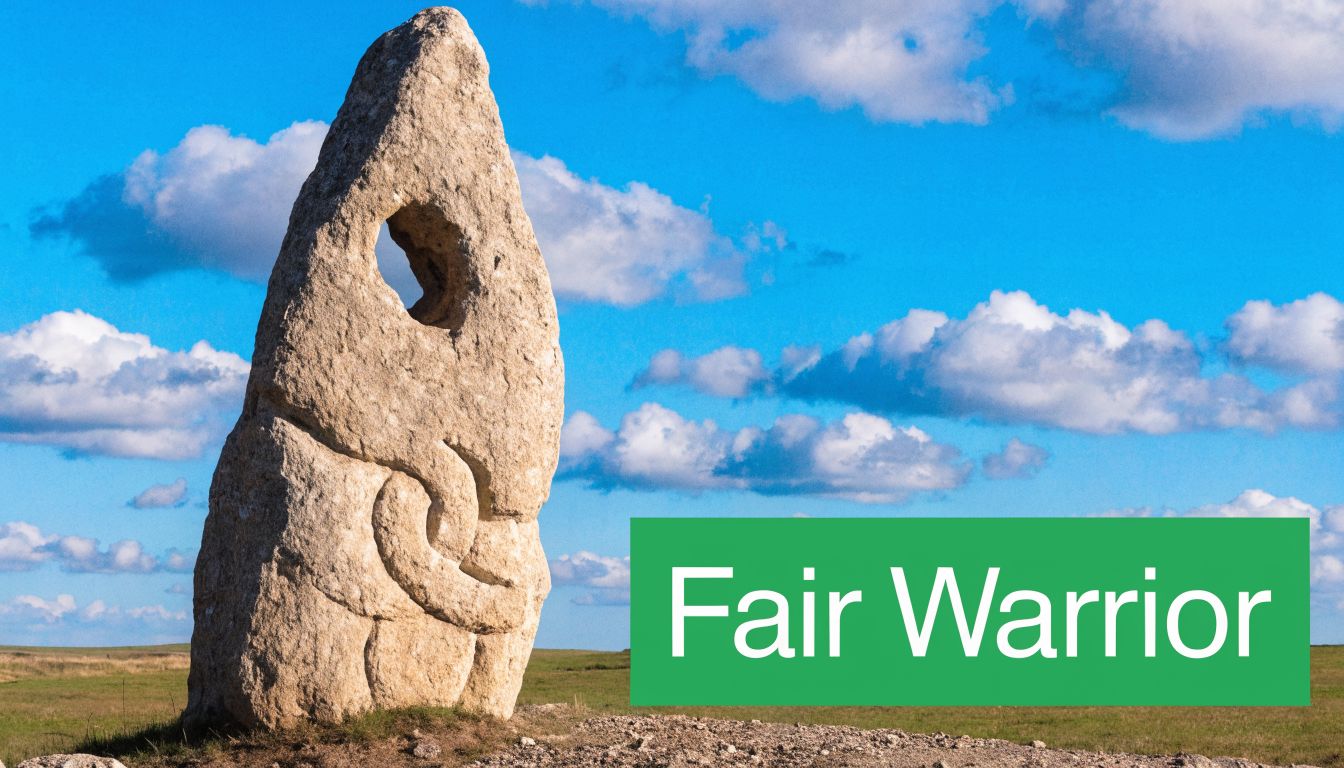
A carved ancient standing stone with a hole, situated in a grassy field under blue sky.

A friendly surname-name

Casey is pronounced “KAY-see.” This is straightforward for most English speakers, which makes it a practical choice if you want an Irish-rooted name that rarely needs correction.

It also works well in spoken situations where names are repeated often. Think of a teacher calling roll, a coach giving instructions, or a parent using a full name across a playground. Casey stays clear.

Three reasons Casey keeps lasting:

  • Sound: It's light and familiar without feeling flimsy.
  • Structure: Two simple syllables make it easy to say and remember.
  • Heritage: It belongs to the long Irish tradition of turning surnames into first names.

If you're learning Irish pronunciation more broadly, Casey can be a good confidence-builder. You get a real Irish connection, but you're not fighting an unfamiliar spelling at the same time.

6. Tiernan (TEER-nan)

Tiernan has a different texture from names like Riley or Casey. It feels a little more formal, a little more historical. It's usually taken from the Irish Tighearnán, a diminutive based on tighearna, meaning lord or master.

Historically, it was more masculine. Today, some people are drawn to it as a modern gender-neutral option because the sound is balanced and the ending is softer than many overtly masculine names.

How to handle the Irish form

The anglicised Tiernan is usually pronounced “TEER-nan.” Keep the first syllable like “tear” in “tear paper,” not like “tear from crying.” The second syllable is quick and light.

If you come across the older Irish spelling, don't panic. Irish spelling follows its own rules, and older forms often look more difficult than they sound. The best approach is to learn the spoken shape first, then connect it back to the written Irish version.

A useful learner strategy:

  • Say the common form first: Tiernan.
  • Notice the rhythm: strong first syllable, lighter second.
  • Treat the Irish spelling as a bonus layer: not a test you must pass immediately.

Real-world example. Tiernan suits someone who wants an Irish name that stands out a bit more in a room of familiar modern names. It has presence without being loud.

Older Irish spellings often carry the history. Anglicised forms often carry the everyday usability. You're allowed to appreciate both.

7. Shea (SHAY)

Shea is one of the sleekest names on this list. It comes from the surname Ó Séaghdha, and Séaghdha is often explained with meanings such as majestic, fortunate, or hawk-like. That's a lot of ancient character in one short, modern-feeling sound.

Because it's so brief, Shea often feels contemporary even though its roots are old.

Short name, old roots

Pronounce it as “SHAY,” one clean syllable. This is another name that rewards simplicity. Don't stretch it. Don't add a second beat.

Shea is especially appealing if you want an Irish-rooted name that doesn't immediately read as heavily traditional to people unfamiliar with Irish naming. It slips easily into modern life while still carrying cultural depth.

There's also something useful here for learners of Irish. Not every Irish-connected name has to look visibly “Irish” in English spelling to be meaningful. Some of the most effective heritage names are the ones that open a door rather than create a barrier.

Consider how Shea works in daily use:

  • Professional setting: It looks crisp on a name badge or email signature.
  • Family setting: It sounds warm and affectionate.
  • Learning setting: It's easy to practise in spoken Irish sentences because it's so short.

If you're reconnecting with Irish roots after years away from the language, Shea can feel like a gentle re-entry point. It gives you heritage, elegance, and very little pronunciation stress.

8. Rory (ROR-ee)

You can hear why Rory stays popular the moment someone says it out loud. It has a quick, rolling rhythm that feels lively in conversation, yet its Irish form, Ruaidhrí, carries older meaning often explained as “red king.” That mix is useful for many readers. The name sounds approachable in daily life, while still giving you a real link to Irish tradition.

A name that teaches rhythm

Say Rory as “ROR-ee.”

If the two r sounds feel awkward at first, that is normal. English speakers often rush this name and let the middle blur. A better method is to clap out two beats. “ROR.” “ee.” Once those two beats feel steady, join them without speeding up.

Irish names often become easier when you treat pronunciation like music rather than spelling. You are learning the rhythm first, then smoothing the sound. If you want extra practice hearing how Irish sound patterns work, this Irish pronunciation guide for beginners gives you a clear starting point.

Rory also has a broader modern, gender-neutral feel in English usage, which helps explain why it appears comfortably in many different settings. You might meet a Rory in a classroom, on a sports team, or in a family that wanted an Irish name people could learn quickly.

A good Gaeilge practice line is: “Is mise Rory.” It means “I am Rory.” Start slowly. Then repeat it at a natural pace. The sentence helps because the name stops feeling like a tongue twister and starts behaving like part of real speech.

Pronunciation shortcut: Repeating sounds are easier inside a full phrase. Your mouth finds the pattern faster when the name is part of a sentence.

9. Kerry (KEHR-ee)

Kerry comes straight from place. It's linked to County Kerry, one of Ireland's best-known regions, whose Irish name is Ciarraí, often understood as “people of Ciar.” Place names turned personal names have a special appeal because they connect identity with the natural environment.

Kerry feels open, breezy, and familiar. It carries coast, hills, and western weather even when used far from Ireland.

A scenic view of a calm, clear blue sea with rocky shores and a small boat drifting.

A place name that travels well

Pronounce Kerry as “KEHR-ee.” The first syllable sounds like “care” for many speakers, though accents vary. The second syllable stays light.

Place-derived names often feel instantly evocative, and Kerry is a strong example. If someone wants a name that sounds Irish without needing a long explanation, Kerry usually does that job well.

You might choose Kerry if you want:

  • A geographical connection: the name carries strong geographical identity.
  • An easy sound: it's familiar in many English-speaking places.
  • A softer feel: it doesn't sound severe or heavily formal.

In real life, Kerry works well for someone naming a child after family roots in the southwest, or for a learner who wants a heritage-inspired conversation name in class. It's direct, warm, and easy to revisit.

10. Dara (DA-ra)

You hear the name across a room, glance at the spelling, and wonder if you can trust your first instinct. With Dara, you usually can. That makes it a reassuring choice for anyone who wants an Irish name with real cultural depth but without a difficult first pronunciation.

Dara has long-standing Irish use and several related strands behind it. It is often connected with Mac Dara, usually understood as “son of the oak,” and also with dáire, a word linked in older usage with fertility, fruitfulness, and abundance. Those associations give the name a steady, grounded feel. The image is easy to hold onto too. Oak suggests strength, rootedness, and long memory.

One of the clearest unisex choices

Pronounce Dara as “DA-ra.” Stress the first syllable. The second stays light, almost like the ending of “sofa.” If you are new to Irish-influenced names, this is a good one to practise because the spelling and sound stay close together.

Dara is also widely recognised as a name used for more than one gender in Irish naming practice, which helps explain why it appears so often on modern gender-neutral lists. As noted earlier in the article, current Irish naming patterns include names that cross neatly between boys and girls, and Dara fits that pattern well.

For learners, this name teaches a useful cultural lesson. Irish names often carry meaning from the natural world, family lines, or older social values. Dara is a compact example of that habit. A short, easy name can still hold history.

A simple way to remember it is to pair the sound with an oak tree in your mind. Say “DA-ra” once slowly, then once at normal speed. If you want to check your rhythm and hear whether your stress is landing correctly, Gaeilgeoir AI can help you practise it out loud until it feels natural.

10 Gender-Neutral Irish Names Compared

Name Pronunciation Complexity 🔄 Learning Effort ⚡ Expected Outcomes 📊 Ideal Use Cases 💡 Key Advantages ⭐
Riley (RY-lee) Low, RY-lee (phonetic) Low, minimal practice Confident introductions; clear phonetics Beginner introductions; conversational practice Genuinely unisex; approachable
Rowan (ROH-ən) Low, ROH-ən (nature-linked) Low–Moderate, myth vocab Connects language with folklore and nature Lessons on trees, colors, and folklore Nature-rooted; protective symbolism
Finley (FIN-lee) Low, FIN-lee (compound) Low, learn root elements Understand name construction; myth ties Deconstruction exercises; mythology units Heroic connotations; anglicised familiarity
Quinn (KWIN) Low, single syllable (KWIN) Low, intonation practice Improved intonation; concise usage Intonation drills; crisp introductions Strong, concise, leadership connotation
Casey (KAY-see) Low, KAY-see (familiar) Low, common endings Practice present-tense verbs; 'ey' sound Verb practice; international use Upbeat, dependable, easy to spell
Tiernan (TEER-nan) Medium, TEER-nan (Tig sound) Moderate, Irish phonetics Grasp historical forms; noble register Social Q&A; historical name study Noble, historically rooted
Shea (SHAY) Low, SHAY (single syllable) Low, single-syllable ease Master 'sé' sound; smooth greetings Basic greetings; phonetic foundations Sleek, strong, ancient meaning
Rory (ROR-ee) Low–Medium, ROR-ee vs Ruaidhrí Moderate, compare anglicisation Learn anglicisation effects; possession use Comparative pronunciation; possession practice Regal, historic, widely recognized
Kerry (KEHR-ee) Low, KEHR-ee (toponymic) Low, geography vocabulary Place-name familiarity; cultural context Travel modules; county names Evokes landscape; place-based identity
Dara (DA-ra) Medium, DA-ra (flat 'a') Moderate, vowel drills Master flat 'a' sound; nature lexicon Phonetic drills; nature-themed lessons Traditional, nature-linked, historically unisex

Bring Your Name to Life with Confident Pronunciation

Choosing gender neutral irish names can feel personal. You may be honouring grandparents, reconnecting with ancestry, naming a child, or looking for something that feels truer to your values than a more rigidly gendered choice. Irish names offer a rich range of options for that. Some come from surnames. Some come from nature. Some carry echoes of old kingship, colour, or place.

But choosing the name is only half the experience. Saying it matters. Irish names live in the mouth as much as on the page. A name like Quinn lands in one beat. Rory needs rhythm. Dara opens easily once you stop overthinking it. Tiernan becomes less intimidating when you learn the stress pattern first and the older spelling second.

That's also why pronunciation practice shouldn't feel like an extra chore. It should be part of how you build connection. If you can hear a name, repeat it, and place it into a real sentence, it stops being an abstract cultural artifact and becomes something you can use. That's especially helpful if you're learning Irish as an adult and want progress that feels practical from day one.

A useful approach is to practise names in context instead of as isolated word lists. Say them in introductions. Use them in simple role-play. Put them into everyday phrases. If you're also working on speech tools for work or study, this guide on how to reduce voice-to-text errors for project codenames is a smart reminder that pronunciation and recognisable spoken forms matter in modern digital life too.

If you want to go further, work in small steps:

  • Start with the names you already love: Motivation matters more than forcing yourself through a random list.
  • Learn stress before spelling rules: A name often becomes manageable once the rhythm is clear.
  • Pair names with meaning: Oak, red, leader, warrior, place. Meaning helps memory.
  • Use names in full sentences: “Is mise Dara” will teach you more than repeating “Dara” ten times.
  • Return to the sound often: Short, repeated practice beats one long study session.

Irish naming culture has always balanced history and reinvention. That's one reason these names keep resonating. They can carry ancestry without trapping someone inside old expectations. They can sound traditional and contemporary at once. When you learn to pronounce them confidently, you're not just picking a name well. You're meeting the culture on speaking terms.


If you want real practice instead of guesswork, Gaeilgeoir AI is a smart next step. It helps you hear, repeat, and use Irish in guided conversations, so names like Riley, Rory, Dara, and Quinn stop feeling like tricky spellings and start feeling natural in your own voice.

10 Gender Neutral Irish Names (And How to Say Them)

You spot a name on a class list, a birth announcement, or an old family tree. You know you like it. Then you pause, because Irish spelling and Irish sound do not always line up the way English-trained eyes expect. That pause is normal, and it is often the first step toward understanding the name rather than just borrowing its look.

Gender neutral Irish names attract many families for the same reason. They carry history, but they also feel flexible and current. In Irish naming tradition, a name can move between surname and first name, between literature and daily life, and between older gender patterns and newer ones. The result is a group of names that feels rooted without feeling rigid.

Pronunciation is the key.

A written Irish name works a bit like sheet music. The letters matter, but the sound is what makes it live. If you only read the spelling, names such as Aoife or Saoirse can seem harder than they are. Once you hear the vowel patterns and stress clearly, they become much easier to remember and say with confidence. If you want guided practice before you choose a favorite, this Irish first names guide with meanings and pronunciation support gives you a direct way to hear the names, repeat them, and connect them to the living language.

The names in this article are not all identical in origin or usage, and that matters too. Some are strongly Irish in language. Some are used in Ireland but shaped by a wider Celtic or surname tradition. As you read, pay attention to three things: what the name meant first, how Irish speakers say it, and how it has traveled into modern use. That approach gives you more than a list. It helps you choose a name you can pronounce well, explain clearly, and appreciate in context.

Table of Contents

1. Aoife

Aoife is often one of the first Irish names people fall in love with, and one of the first that teaches you not to trust English spelling habits. It's elegant, compact, and Irish in both sound and history.

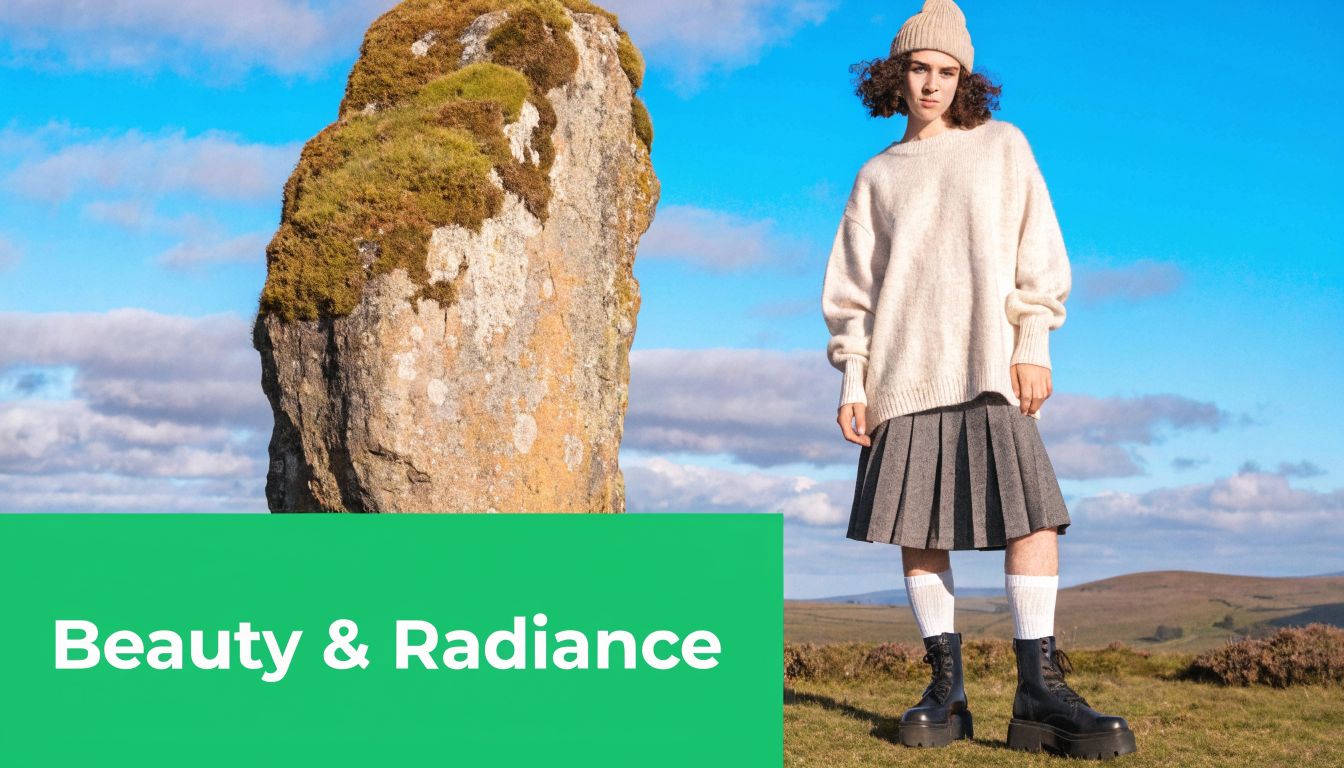
A person posing in a gender neutral outfit standing beside a large mossy stone in Ireland.

The name is usually understood to mean beauty or radiance. In Irish tradition, Aoife appears in legend and saga, including warrior figures, which gives the name a mix of grace and strength that many people find appealing in gender neutral Irish names, even though in modern everyday use it's more often read as feminine.

How to say Aoife

Say it as EE-fa. Put the stress on the first syllable.

If you're new to Irish spelling, the jump from “Aoife” to “EE-fa” can feel surprising. That's normal. Irish uses letter combinations differently from English, and once you learn a few patterns, names like this become much easier to decode.

A good first step is to pair the name with audio and meaning. The Irish first names meanings guide on Gaeilgeoir AI is useful for that kind of repeated practice.

Practical rule: Don't memorize Irish names by spelling alone. Hear them, repeat them, then connect them to meaning.

Aoife also works well in conversation practice because it has a clear rhythm. You can try simple lines like “Dia dhuit, Aoife is ainm dom” if you're learning introductions in Irish. The more often you say the name in a sentence, the less foreign it feels.

Later, it helps to hear it spoken naturally.

2. Saoirse

Saoirse is one of the most meaningful names in modern Irish usage because the word itself means freedom. Even people with very little Irish often recognize it because of actor Saoirse Ronan, whose public interviews have helped many English speakers hear the name correctly for the first time.

This is the kind of name that carries language with it. When you choose Saoirse, you're not only choosing a sound you like. You're choosing a living Irish word with emotional and historical weight.

Why the meaning matters

The most common pronunciation is SEER-sha, though local and family variations exist. If you're learning Irish, this is a great reminder that names often preserve old sound patterns better than classroom vocabulary lists do.

Practicing Saoirse out loud can also teach you confidence. At first glance, many learners freeze because the spelling looks dense. After a few repetitions, it becomes one of those names that suddenly feels natural.

Use the Irish pronunciation guide from Gaeilgeoir AI to break it into sound chunks rather than trying to force an English reading onto it.

  • Start with the first sound: Think “seer,” not “say.”
  • Keep the ending light: The final part is usually “sha.”
  • Use it in a sentence: Introductions help your mouth remember the rhythm.

Saoirse is a good example of why pronunciation matters in Irish. The spelling isn't there to trick you. It follows a different sound system.

As a cultural choice, Saoirse feels both grounded and current. It suits families who want a name that sounds unmistakably Irish while still feeling open, modern, and strong.

3. Cian

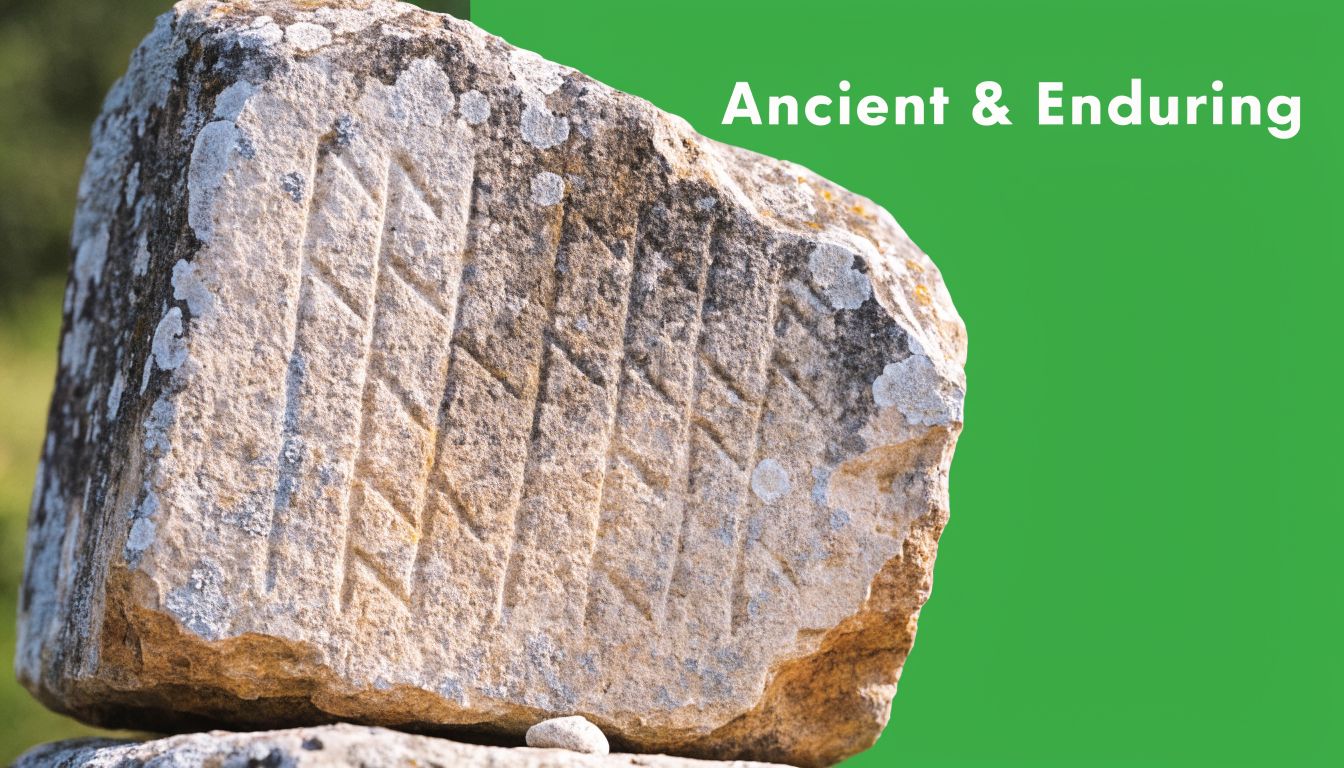
Cian is short, old, and easy to carry. It comes from Irish tradition and is usually glossed as ancient or enduring, which gives it a calm sense of depth. It doesn't sound heavy, though. That's part of its appeal.

You'll also hear it in contemporary life through public figures like Cian Lynch and Cian Ducrot. That combination of mythic age and present-day familiarity makes it especially approachable for learners.

A weathered ancient stone block featuring carved diagonal lines, set against a solid green background.

An old sound that still feels current

Say Cian as KEE-un. Keep it soft and flowing rather than clipped.

For English speakers, the temptation is to overcomplicate it. Don't. This name works best when you say it smoothly in two beats. If you're reconnecting with Irish heritage, Cian is a nice example of a name that sounds traditional without feeling difficult to use day to day.

The Gaelic names guide on Gaeilgeoir AI can help you compare names like Cian with other short Irish forms and hear how vowel groups shift across names.

A few ways to practice it:

  • Say it with another name: “Cian and Rowan” helps you feel the opening sound.
  • Link it to meaning: Enduring is a useful memory cue.
  • Use it aloud, not in your head: Irish names settle faster when spoken.

Cian can read as sleek and modern in English-speaking settings while still staying visibly connected to Irish language roots. That balance is one reason names like this continue to attract people looking for gender neutral Irish names with real cultural texture.

4. Rowan

Rowan is one of the easiest entries on this list for English speakers, but it still has Celtic and Irish associations worth understanding. In Irish contexts, it's often linked with Ruadhán, a name connected to the idea of red or reddish coloring. It also calls up the rowan tree, which gives it a strong nature-based feel.

That blend of tree, color, and old language roots makes Rowan feel gentle without being slight. It works well for people who want something flexible and familiar.

A close up of a vibrant cluster of red mountain ash berries hanging from a branch.

A name tied to color and nature

Many pronounce it as RO-un. Some accents make the middle sound slightly fuller, but the overall shape stays simple.

Nameberry notes that Rowan is one of the unisex Irish names with broad modern appeal, alongside names such as Quinn, Ryan, and Finley, and that list shows how many Irish-derived names now travel easily across genders and across countries in Nameberry's unisex Irish names roundup.

If you appreciate names rooted in the natural world, Rowan is particularly charming. It offers more than a simple title; you can explore Irish geographical vocabulary, tree lore, and color-related terms.

Learn names in clusters. Rowan becomes easier to remember when you link it to red, trees, and Irish nature words.

A practical advantage is that Rowan usually doesn't need much correction in international settings. You get an Irish-linked name with a low barrier to daily use.

5. Casey

Casey is a strong example of how Irish surnames moved into first-name use. It comes from Ó Cathasaigh, and that shift from family name to given name is one of the big stories behind many modern gender neutral Irish names.

Because Casey already feels natural in everyday English, people sometimes miss its Irish depth. But that surname origin matters. It tells you the name didn't appear out of nowhere. It traveled through naming traditions, changed context, and stayed useful.

From family name to first name

Say it as KAY-see. It's straightforward, but the background gives it more personality than many people realize.

If you're learning Irish cultural patterns, Casey opens a helpful door. Irish naming isn't only about ancient mythological first names. It also includes surnames that became first names over time, especially as families looked for names that felt modern while keeping a visible link to heritage.

That pattern appears in many popular choices. Nameberry highlights surname-derived neutrals such as Riley, Quinn, Brody, and Connor as part of this broader Irish naming stream, which helps explain why Casey feels so established in unisex use today, as noted earlier in that Nameberry discussion.

Try practicing Casey in short social phrases. It works well in role-play because the sound is crisp and easy to repeat. You can use introductions, attendance lists, or family-tree exercises to make the name stick.

  • Use the surname memory trick: Think Ó Cathasaigh behind Casey.
  • Notice the transition: Family name first, given name later.
  • Practice in context: “Casey is anseo” is simple and memorable.

6. Morgan

Morgan often gets grouped into a broad Celtic naming world, and that's useful as long as you keep the cultural context clear. It's widely used across Celtic traditions and has long carried associations with the sea, strength, and movement.

That maritime feel gives Morgan a different energy from many softer-sounding names. It has breadth to it. You can imagine it suiting someone quiet, someone bold, or someone who wants a name that doesn't feel pinned down.

A sea-linked Celtic name

Morgan is commonly pronounced as MOR-gun. The first syllable carries the emphasis, while the second remains unstressed.

The meaning is often given in sea-linked terms such as sea warrior or sea circle. Even if meanings vary across traditions, the ocean association is part of why the name feels expansive. That can be useful if you like names with a sense of motion and history rather than a purely decorative feel.

In language learning, Morgan is easy to practice because the spelling and pronunciation are close for many English speakers. That frees you to focus on cultural context. Think of coastlines, travel, and older Celtic storytelling.

For a broader naming contrast, some readers also explore non-Irish naming resources while deciding what style they like, including options such as American-made custom stickers, though Morgan itself stands strongest when you keep the focus on its Celtic sea-linked character.

A name doesn't have to be difficult to be culturally rich. Morgan is a good example of easy pronunciation with deep regional associations.

7. Rory

Rory is one of the clearest examples of a name with old prestige and modern flexibility. It comes from Ruaidhrí, commonly understood as red king or red-haired king, and it has a long association with leadership and high status in Irish history.

Today, it's also one of the best-known Irish names internationally. You'll hear it in sports through Rory McIlroy, and in historical discussions through figures like Ruaidhrí Ó Conchobair.

A classic that crossed categories

Say it as ROR-ee. The repeated r sound gives it bounce, so it's worth slowing down at first if your accent tends to swallow one syllable.

Name use has shifted in ways that make Rory especially interesting in conversations about gender neutral Irish names. Verified IrishCentral background included a 2023 CSO benchmark describing unisex Irish names as 8.2% of total births, with Rory listed at number 45 overall and showing a 55% male and 45% female split in the IrishCentral discussion of gender-neutral Irish baby names.

That doesn't mean Rory has lost its history. It means the name has widened in use while keeping its older associations. That's often how Irish names evolve. They don't erase the past. They carry it differently.

For practice, Rory is excellent for oral work because of the rolling r sounds. If you're preparing for spoken Irish, repeat it slowly, then in short phrases, then in natural-speed introductions.

8. Finlay

Finlay has a soft landing and a strong core. It comes from Fionnlagh and is often explained through meanings such as fair-haired or white warrior. That combination is very Irish in spirit. A name can sound light while carrying an image of toughness.

It's also a good reminder that names don't stay fixed in one lane forever. Finlay and related forms have moved across regions and into unisex use in different English-speaking contexts.

Soft sound, strong roots

Say it as FIN-lee. Keep the first syllable clear and the second quick.

Nameberry notes that Finley has been used for both sexes in the US since the early 2000s, which helps explain why Irish-derived forms in this family now feel widely accessible outside Ireland as well, especially in naming cultures that like surname-style or warrior-rooted names.

If you like names that sound modern but have old roots, Finlay is a smart choice. It feels polished without being flashy. It also sits comfortably beside other Irish favorites, so it won't sound out of place in a family with mixed traditional and contemporary naming tastes.

  • Hear the old form behind it: Fionnlagh gives the modern form more depth.
  • Keep the ending light: Don't overstress “lay.”
  • Use image memory: Fair-haired warrior is easy to hold onto.

Finlay is also one of those names that works well across ages. It sounds believable on a child, a teenager, and an adult.

9. Darcy

Darcy has an understated elegance that makes it popular with people who want something flexible and stylish without sounding trendy in a fleeting way. In Irish discussion, it's often connected to surname roots such as Ó Darchaigh, which places it in the same broad surname-to-first-name tradition as several other modern unisex picks.

Because many people know Darcy through literature, the name already carries a polished social image. But the Irish surname angle gives it extra weight and makes it more than a borrowed character reference.

A surname style with Irish texture

Say it as DAR-see. It's clean and easy to repeat, which is one reason it has traveled so well.

Darcy is useful for learners because it shows how Irish influence can remain visible even when a name sounds fully at home in modern English. You don't need a dramatically unfamiliar spelling for a name to carry heritage. Sometimes the history sits in the family-name layer underneath.

If you're comparing styles, Darcy tends to appeal to people who like:

  • Surname-based names: It has that custom, modern feel.
  • Simple pronunciation: Very little correction needed.
  • Quiet cultural depth: The Irish root is there without dominating the surface.

The name works especially well in spoken settings because there's little risk of hesitation. You can focus on the person and the conversation rather than the mechanics of saying it.

10. Riley

Riley is one of the clearest examples of an Irish surname-origin name that now feels fully unisex in everyday life. It's commonly linked to Ó Raghaillaigh or Raghaileach, and for many families it offers the ideal balance of Irish connection and modern ease.

If you're choosing among gender neutral Irish names, Riley is often a practical favorite because nearly everyone can say it, spell it, and recognize it. That matters more than people sometimes admit.

One of the clearest modern unisex choices

Say it as RY-lee. The sound is familiar, but the Irish lineage gives it a deeper backstory than it first appears to have.

Nameberry includes Riley among surname-derived unisex Irish names that have become highly visible choices in the US, alongside names like Quinn and Brody. That wider pattern helps explain why Riley feels contemporary without feeling disconnected from heritage, as noted earlier.

Riley is also a helpful teaching name if you're trying to understand how naming changes over time. A surname becomes a first name. A first name becomes widely shared across genders. The cultural thread remains, but the social use broadens.

Some of the most successful gender neutral Irish names aren't the most difficult or the rarest. They're the ones people can live with easily while still feeling a real link to Irish naming traditions.

Use Riley in speaking practice, family tree notes, or heritage journaling. It's simple enough for beginners and meaningful enough to stay interesting.

Comparison of 10 Gender-Neutral Irish Names

Name Pronunciation complexity 🔄 Ease of adoption ⚡ Cultural impact 📊 Suitability ⭐ Tips 💡
Aoife Medium (may need guidance) Moderate High (ancient mythology, literary presence) ⭐⭐⭐⭐ Practice "EE-fa"; learn meaning "beauty"
Saoirse High (non‑intuitive for many) Low High (modern Irish identity, symbolic) ⭐⭐⭐ Use pronunciation tools; learn "freedom"
Cian Low (straightforward) High High (ancient roots, historical texts) ⭐⭐⭐⭐ Use "KEE-un" guide; connect to myths
Rowan Low (familiar English form) High Moderate‑High (nature symbolism, growing use) ⭐⭐⭐⭐ Link to rowan tree vocabulary; practice aloud
Casey Low (very accessible) High Moderate (surname→given name trend) ⭐⭐⭐⭐ Note origin "Ó Cathasaigh"; use in introductions
Morgan Low (widely known) High High (Celtic maritime & myth connections) ⭐⭐⭐⭐ Emphasize sea/warrior meaning in lessons
Rory Low (clear pronunciation) High High (royal/warrior heritage) ⭐⭐⭐ Teach "red king" origin; discuss historical figures
Finlay Low (phonetic) High Moderate (warrior heritage, evolving use) ⭐⭐⭐ Practice audio pronunciation; study meaning
Darcy Low (simple English form) High Moderate (literary popularization, surname roots) ⭐⭐⭐⭐ Mention "Ó Darchaigh" origin; reference literary use
Riley Low (common, phonetic) High Moderate‑High (modern popularity, surname evolution) ⭐⭐⭐⭐ Learn surname origin; use in conversational practice

Final Thoughts

A name often looks simple on the page until you try to say it out loud in front of another person. That is usually the moment Irish names stop feeling like a list and start feeling like part of a living language.

The ten names in this guide show how flexible that tradition can be. Some carry very old roots, like Cian and Rory. Some travel easily across Irish and English usage, like Rowan, Casey, and Riley. Some, especially Saoirse, keep the sound patterns of Irish right at the surface, which is why pronunciation matters so much to understanding the name itself.

Recent coverage of naming in Ireland, as noted earlier, also points to a wider pattern. Names can shift in gender use over time, and families often choose them for sound, heritage, meaning, or personal connection rather than for a fixed category alone. That makes Irish naming feel less like a shelf of preserved artifacts and more like a spoken tradition that keeps adapting.

Pronunciation is the bridge between recognition and real connection. Reading Aoife or Saoirse is a bit like reading music without hearing it. You can understand something on the page, but the shape of it only fully makes sense when the sound arrives.

That is why practice should be active. Say the name. Hear it again. Repeat it in a full sentence, not in isolation. Try, “Seo Aoife,” or “Is é Rory an t-ainm atá air,” even if you are only beginning. The name settles faster when your mouth, ear, and memory all work together.

If you want guided help with that process, try Gaeilgeoir AI. It gives you a direct way to hear Irish sounds, repeat names in conversation-style practice, save the ones you want to return to, and build confidence step by step. For a topic like gender neutral Irish names, that matters because the difference between knowing a spelling and speaking a name well is often where confidence is won or lost.

Choose the name whose sound, history, and feeling stay with you. Then learn to say it clearly. That is where the culture becomes audible.

And if your interest in names opens the door to other themed naming traditions, you might also enjoy browsing a lighter seasonal contrast like this UK guide to Halloween names.

Start Speaking Irish Today — 25% Off
Use code START25

Learn real Irish for real life with guided practice, pronunciation support, and everyday conversations.

Get 25% off any plan with code START25

Start Speaking Irish Today — 25% Off