Old Irish Male Names: A Guide to History and Meaning

Searching for a name that carries history, myth, and a sound that still feels alive in modern Ireland? That instinct is right, but it also hides a common mistake. Old Irish male names are not one neat category, because some belong to early medieval Gaelic tradition, some survived through Christian and royal records, and some live on mainly in Anglicised form. If you want the richest picture, you need the meaning, the pronunciation, and the historical layer behind each name.

That matters for family history too. Irish naming records can be wonderfully consistent in some periods and wildly variable in others, which is why researchers are told to test Gaelic, Latin, and Anglicised variants for the same person in church and civil records, rather than relying on exact-string matches (Irish Names Project guidance on aliases). The result is a language map, not just a list.

Old Irish male names also tell a bigger story about Ireland itself. In the 1911 Census of Ireland, John was the most common male name with 220,331 men, 13.9%, while Patrick was second with 167,150 men, 10.6%. Together, those two names accounted for close to a quarter of all males, and the top ten male names made up 60% of all male names recorded that year (CSO names census release). That same concentration shows up even earlier, in 1864, when among 70,075 baby boys born in Ireland, fewer than one in six were named John, one in nine were Patrick, and the top six names covered more than 60% of boys born (Irish genealogy toolkit on 1864 names).

Table of Contents

1. Seán

Seán is the name many learners meet first, and for good reason. It's the Irish form of John, and it sits inside the long historical current that made John the dominant male name in Ireland's 1911 census (CSO names census release). If you hear Seán in a village, a classroom, or a family tree, you're hearing a form that has moved comfortably between religion, daily life, and Irish identity for generations.

Pronunciation matters here. In Irish, Seán is /ʃaːn/, roughly “shawn.” The accent on á gives the vowel its broad, open sound, and that makes the name feel smoother than many English speakers expect. In practical speech, a learner can think “shawn” and stay close enough for everyday use.
An older Irish man with a kind expression standing outdoors against a traditional white stone wall.

Why Seán stays recognizable

Seán is also one of the clearest examples of how Irish names survive through adaptation, not just preservation. The broader historical record shows that Irish male naming was already tightly concentrated by the start of civil registration in 1864, with a small core of traditional Christian names dominating boys' names (Irish genealogy toolkit on 1864 names). Seán sits in that tradition, even when it appears in modern documents beside English-language surnames, school records, or immigration papers.

For learners, the best way to remember Seán is to connect it to familiar, real-world settings. You'll see it in family trees, Irish-language classrooms, and contemporary Irish media. If you're mapping names back into Irish form, the English to Irish names tool can help you compare the Irish version with the English spelling without losing the relationship between them.

Practical rule: if a record says John, Seán, or even a Latinized form in a church register, don't assume those are different people until you check the surrounding family names and dates.

2. Liam

Liam feels modern to many people, but its roots are old enough to sit comfortably beside the historical names in Irish records. It comes through Uilliam, the Irish form of William, which reflects a broader pattern of names entering Irish life through adaptation and then becoming locally naturalized. That's one reason Liam can sound both international and unmistakably Irish at the same time.

Its pronunciation is straightforward for English speakers, /liəm/, or “lee-um.” Say the first syllable lightly, then let the second syllable fall away without overemphasizing it. In everyday speech, that relaxed rhythm is part of why the name feels so easy to use.

Liam also shows how modern popularity and historical authenticity don't always line up neatly. A name can be widely loved now without being the oldest form in the tradition. That distinction matters if you're trying to choose a name for heritage reasons, because a modern baby-name favorite and a historically attested Gaelic form are not always the same thing.

How Liam fits Irish naming history

The best way to think about Liam is as a bridge. It sits between Germanic naming roots, Irish linguistic adaptation, and current global use. In an Irish setting, that blending is ordinary, not accidental. Irish naming has long absorbed outside forms and reshaped them into something local and graceful.

For learners, Liam is useful because it's short, memorable, and easy to recognize in both Irish and English contexts. It also appears in real family settings, in school roll calls, and in name translation work, where clarity matters more than ornament. A simple practice routine is to say Liam, Uilliam, William out loud and notice how the sound shifts across languages.

If you're exploring Irish name forms for heritage or study, a focused language tool can help you move from recognition to active use. The ancient Celtic male names resource is a useful next stop if you want to compare older forms and see how Irish name traditions connect across time.

3. Pádraig

Pádraig is one of the most culturally loaded names in Irish tradition. It is the Irish form of Patrick, and that places it close to both faith and national memory. Saint Patrick's role in Irish Christianity gives the name a weight that goes far beyond sound alone, which is why it remains one of the most recognizable Irish male names anywhere in the world.

The pronunciation is /ˈpˠaːd̪ˠɾˠiɟ/, often simplified for learners as “PAW-drig” or “PAH-drig.” The broad first vowel and the slimmer ending are the key features to listen for. If you can keep the first syllable open and the second syllable soft, you're already close.
A scenic view of a historic stone church and cemetery at sunset in the English countryside.

Why Pádraig carries so much cultural memory

The historical depth of Patrick naming in Ireland is easy to see in the census record. In 1911, Patrick was the second most common male name in Ireland with 167,150 men, 10.6%, and that concentration shows how central the name remained in Irish male identity (CSO names census release). In older naming patterns too, Patrick appears in a small core of names that structured Irish boyhood for generations (Irish genealogy toolkit on 1864 names).

For learners, Pádraig is especially helpful because it teaches respect for Irish spelling conventions. The fada is not decorative. It changes the sound, and in a name like this, it carries the identity of the Irish form itself. It also reminds you that translation is not always enough. Patrick and Pádraig are connected, but they do different cultural work.

In family history, that distinction matters. A baptismal record may use the Latin tradition, a later civil record may use Patrick, and a household memory may preserve Pádraig. Each version tells part of the same story.

4. Cian

Cian is one of the oldest-looking Irish names that still feels clean and contemporary. Its meaning is commonly given as ancient or enduring, and that fits the name's tone perfectly. It sounds spare, strong, and a little mysterious, which is probably why it continues to appeal to learners, heritage seekers, and parents alike.

The pronunciation is /ˈkiən/, usually “kee-an.” Keep both vowels light, and don't turn the name into a hard two-syllable English word. Irish names often reward subtlety, and Cian is a good example of that.

Cian also works well as a teaching name because it sits at the intersection of history and modern use. It appears in older Irish tradition, but it's short enough to feel current. That makes it a useful entry point for anyone learning how Irish names can survive without sounding frozen in the past.

Myth and memory in one short name

Traditional storytelling links Cian with figures from Irish legend, and the name carries a sense of depth even when the mythic detail isn't always front and center in casual use. That's part of its appeal. A learner doesn't need to memorize every story before appreciating the way the name sounds and feels.

One of the strongest lessons Cian offers is that Irish names often preserve qualities as much as identities. Enduring, in this case, is more than a meaning. It reflects how some names stay visible across centuries because they fit both poetic and everyday registers.

If you're hearing Cian in a family setting, a sports club, or a classroom, the name will usually sound natural rather than formal. That flexibility makes it especially useful for learners who want names they can pronounce confidently in conversation. It's a name that doesn't demand ceremony, but still carries history in the background.

Cian is one of those names where a quiet pronunciation does the work. Speak it cleanly, and the name sounds much closer to Irish rhythm than an over-stressed English approximation.

5. Cormac

Cormac has a different kind of authority. It sounds older, heavier, and more regal than many short Irish names, and that tone matches its mythic associations. The name is linked to the legendary Cormac mac Airt, remembered as a High King whose reign is associated with wisdom and justice in Irish tradition.

The pronunciation is /ˈkɔɾˠmˠək/, often simplified as “كور-muk” or “KOR-mak.” The stress lands clearly at the start, and the ending is softer than many English speakers expect. If you want the name to sound natural, don't flatten it into a sharp English two-part word.
A rugged man with dark hair and a beard standing outdoors with a raven perched on a rock.

What the name suggests in Irish tradition

Cormac is often interpreted through old Irish elements connected with a chariot or charioteer, which gives it a martial, mobile feel. That makes sense beside the royal and heroic associations attached to the name. It's a name that sounds capable of carrying responsibility.

For learners, Cormac is also one of the best examples of how a name can move between literature, genealogy, and modern life. It appears in historical material, in family names, and in contemporary Irish usage without losing its distinctive shape. That continuity makes it especially satisfying to study.

If you're comparing older Irish male names, Cormac is a useful reminder that sound and status often travel together. A strong opening consonant, a compact shape, and a long cultural memory can make a name feel instantly substantial.

The ancient Celtic names for males resource is a good companion here if you want to place Cormac beside other historically rooted names and see how their forms differ across Irish tradition.

6. Tadhg

Tadhg is one of the most characterful names in Irish tradition. It has a compact shape, a striking sound, and a reputation that ties directly to poetry and storytelling. That combination makes it feel especially Irish, not because it's decorative, but because it points to the value Gaelic culture placed on learning and oral art.

Its pronunciation is /t̪ˠaɪɡ/, usually heard as “tige” or “tieg.” English speakers often want to add extra vowels, but the name works best when it stays tight. The final consonant should not disappear, because that crisp ending is part of the name's force.

Tadhg has long been used by kings and princes, especially in Munster and Connacht. That historical presence gives the name a noble edge, but its deeper significance lies in the way it honors the wordcraft of Irish culture.

Why poets matter in a name like Tadhg

In Gaelic society, poets were not decorative entertainers. They were custodians of memory, language, and status. A name associated with the poet or storyteller therefore carries social meaning, not just aesthetic charm. Tadhg captures that world elegantly.

For learners, the best way to approach Tadhg is to stop trying to make it behave like English spelling. It won't. The letters point to a sound system that rewards patience and listening. Say it slowly, then speed it up only after the shape feels stable in your mouth.

Practical rule: if a name looks short but feels difficult, write the pronunciation beside it and rehearse it in a full sentence, not in isolation.

Tadhg is also a strong reminder that old Irish male names often preserve occupations, social roles, or values, not just lineage. That's one reason the name still feels alive. It doesn't merely label a person, it gestures toward a culture that prized spoken skill.

7. Rían

Rían has the kind of royal resonance people notice immediately, even before they know the meaning. It's often understood as little king, which makes it sound both affectionate and commanding at the same time. That balance is rare, and it helps explain the name's enduring appeal.

The pronunciation is /ˈriːən/, commonly “ree-an.” Keep the first vowel long and clear, then let the second syllable stay light. The name should feel graceful, not clipped.

Rían also matters because it links directly to the modern surname Ryan. That makes it especially useful for learners who are tracing family names across time. A surname can begin as a personal name, survive through descent, and then come back into use as a first name again.

A name with clan memory

Traditionally, Rían is associated with the ancestor of the Ó Riain line, a connection that gives the name a dynastic feel. You can hear why families and heritage learners are drawn to it. It suggests lineage without sounding heavy.

The modern English-language surname Ryan often hides that older shape, so Rían can be a satisfying rediscovery for someone exploring Irish roots. The name gives you a direct bridge between the older language and later family identity.

For pronunciation practice, it helps to pair Rían with other slender Irish names and notice the vowel flow. Once you hear that rhythm, the name becomes easier to reproduce naturally in conversation or study.

Rían is one of those names that feels small on the page but expansive in cultural memory. It carries nobility, ancestry, and a clean modern sound without losing its traditional character.

8. Oisín

Oisín may be the most mythically vivid name in this list. It means little deer, and in Irish storytelling it belongs to the warrior-poet son of Fionn mac Cumhaill. That alone gives it enormous cultural reach, but the name is also loved for its softness. It's heroic without sounding harsh.

The pronunciation is /ˈoʃiːnʲ/, often rendered as “uh-SHEEN” or “o-SHEEN.” The middle sound is the key. If you treat it like a straightforward English spelling, you'll miss the Irish rhythm entirely. Listen for the gentle opening and the long, slender ending.
An elderly man wearing a flat cap playing the violin in a rustic room near a fireplace.

Mythology, youth, and loss

Oisín is tied to the great cycle of Irish legend, especially the story of his journey to Tír na nÓg, the land of eternal youth, with Niamh Chinn Óir. That tale has made him one of the most recognizable figures in Irish mythology. Even people who don't know the details often recognize the name as poetic and ancient.

The beauty of Oisín is that it sounds delicate while carrying epic weight. That contrast makes it especially memorable for learners. It also shows how Irish names can preserve tenderness, not just strength.

If you want to hear how mythic names travel into modern Irish learning, the Irish mythology names resource is a useful companion. It helps connect names like Oisín to the stories that made them endure.

Oisín is also a strong example of why pronunciation practice matters so much in Irish. The spelling looks compact, but the sound has its own logic. Once you get that logic, the name becomes one of the most beautiful on the page.

Comparison of 8 Old Irish Male Names

Name Pronunciation complexity 🔄 Ease of adoption ⚡ Cultural / Historical impact 📊 Ideal use cases 💡 Key advantages ⭐
Seán Moderate, "shawn" (/ʃɔːn/) High, variants Sean/Shawn common Very high, centuries of use, religious and national ties Honoring Irish heritage; formal and familiar use ⭐⭐⭐⭐, classic, widely recognized
Liam Low, "lee-um" (/ˈliːəm/) Very high, globally popular and easy to spell High (modern global prominence with Irish roots) Contemporary naming; broad international appeal ⭐⭐⭐⭐⭐, strong, modern, highly popular
Pádraig High, "paw-drig" (/ˈpˠɑːd̪ˠɾˠəɟ/) Moderate, Anglicized as Patrick eases use Very high, linked to St. Patrick and national identity Religious or strongly traditional contexts; formal use ⭐⭐⭐⭐⭐, iconic, deeply meaningful
Cian Low, "kee-an" (/kiːən/) High, easy for non-Irish speakers High, mythological and ancient associations Authentic Irish choice with smooth pronunciation ⭐⭐⭐⭐, timeless, approachable
Cormac Moderate, "kor-mack" (/ˈkɔːrmək/) Moderate, strong but less global High, legendary High King, royal connotations Traditional, strong masculine name; literary or historical use ⭐⭐⭐⭐, authoritative, historic
Tadhg High, "tie-g" (/t̪ˠəiɡ/) Low–moderate, spelling often unfamiliar outside Ireland High, associated with poets, kings, Gaelic tradition Cultural authenticity; families valuing Gaelic roots ⭐⭐⭐⭐, culturally rich, distinctive
Rían Moderate, "ree-an" (/ˈɾˠiːən/) Moderate, Ryan widely known, fada may be dropped High, clan and royal lineage; root of surname Ryan Traditional form for heritage-conscious parents ⭐⭐⭐⭐, noble connotations, traditional
Oisín High, "ush-een" (/ˈɔʃiːn/) Moderate, mythic but appealing sound Very high, central figure in Fenian Cycle mythology Literary or poetic naming; myth-inspired choices ⭐⭐⭐⭐, romantic, mythological resonance

From Legend to Legacy Carrying the Story Forward

These old Irish male names are more than labels. They're pieces of language history, traces of family memory, and living reminders of the way Irish names have carried faith, poetry, kingship, and myth across centuries. Seán connects to the deep Christian tradition reflected in the census records, Pádraig ties directly to Irish religious identity, Cormac and Rían point to kingship and lineage, and Oisín keeps the mythology of the Fianna alive in ordinary speech.

The strongest way to choose among them is to ask what kind of connection you want to make. Some names are best when you want a familiar heritage name that still feels natural in daily life. Others are better when you want to honor older Irish language forms, family roots, or a mythological story that matters to you personally.

If you're building a family narrative, these names can do more than sound beautiful. They can help you understand how a name moved through church records, civil records, Anglicised forms, and modern Irish usage. That's why variant awareness matters so much in genealogy and language study, especially when the same person may appear under different forms in different records (Irish Names Project guidance on aliases).

For learners, the next step is pronunciation practice and recognition. Say the names aloud, compare Irish and English forms, and notice how the fada changes the sound and meaning. Small details matter, and they're often the bridge between reading a name and knowing it.

If you want to keep going, a structured learning tool can help you work with real Irish forms instead of guessing. Gaeilgeoir AI is one option for that kind of practice, especially if you want help turning heritage curiosity into spoken confidence.


If you'd like to keep learning Irish names, pronunciation, and everyday phrases, visit Gaeilgeoir AI and start practicing with guided conversation. It can help you work with Irish name forms, hear the language more clearly, and build confidence with each session.
Strong Irish Male Names: Meanings & History

A learner once told me the first Irish word he could say without freezing was not a verb or a classroom phrase. It was a name. That makes sense in Irish, because names carry sound, history, and meaning in one small package.

Strong Irish male names are useful for more than choosing a baby name or recognising a family surname. They give learners a practical way to hear how Irish spelling works, notice recurring sound patterns, and meet pieces of Irish history in words short enough to remember. A name like Séamas or Fionn is almost like a pocket lesson. You practise vowels, broad and slender consonants, and older roots of the language at the same time.

That is what makes this list different. Each name below works as a mini lesson in Irish phonetics, etymology, and cultural memory, with a clear chance to practise what you learn on the Gaeilgeoir AI platform. If you are learning for family connection, everyday Irish, or exam practice, names are a good place to start because they feel personal and stay in the memory.

There is a long tradition behind them. Early Irish census records show that a small group of male names appeared again and again, shaping how generations of men were named across Ireland. More recent Central Statistics Office's 2025 Irish Babies' Names results show that Irish naming is still alive and changing, with names such as Rían and Oisín standing beside long-established favourites.

So as you read, do not treat these names as a simple list. Treat them as practice words. Say them aloud, notice where the fada changes the sound, and pay attention to the bits of history hidden inside each one.

Table of Contents

1. Séamas (James) The Strong Supplanter

A learner often meets Séamas and pauses for a second. The letters look familiar, but the sound does not. That pause is useful. It is the moment Irish stops looking like English in new clothes and starts showing its own logic.

Séamas is the Irish form of James. Its deeper root is the biblical name Jacob, often explained as “supplanter,” a word tied to taking another's place. You do not need to love that exact gloss to learn from it. What matters for Irish study is that one common name carries a trail of language contact, religion, and history from Hebrew to Latin to English and Irish.

Sound first

Pronounce Séamas as SHAY-mus. The fada on é lengthens the vowel, so the first part should not be rushed. The opening sound also teaches a pattern many learners need early. In Irish, s before a slender vowel often softens toward sh, which is why Séa does not sound like English “sea.”

That makes Séamas a small pronunciation lesson disguised as a name.

Try it in a line you can use every day: Is mise Séamas. If you are introducing yourself, changing only the final word gives you a complete practice frame. One name becomes a speaking drill for identity statements, pronunciation, and rhythm.

A name with history you can hear

Séamas has long been used in Irish-speaking communities, and you will see it attached to writers, musicians, and local tradition. That matters for learners because Irish names are not decorative extras. They often signal family background, regional identity, and the continuing presence of Gaeilge beside English.

There is also a helpful cultural lesson here. Many people know the English form first, then discover the Irish form later. Seeing James and Séamas together shows how names can shift across languages without losing their connection. For heritage learners, that is often a clearer entry point into Irish than a grammar table.

Try using Séamas in a short dialogue on the Gaeilgeoir AI platform. Introduce Séamas, ask where he is from, and answer in one or two lines. Repeating a real name inside a real sentence teaches faster than staring at a list.

For Irish learners, Séamas helps with three practical skills:

  • Pronunciation: the fada in é and the softened opening s
  • Etymology: how an Irish name can grow from an older biblical root through several languages
  • Conversation practice: simple frames such as Is mise Séamas and Is é Séamas atá air

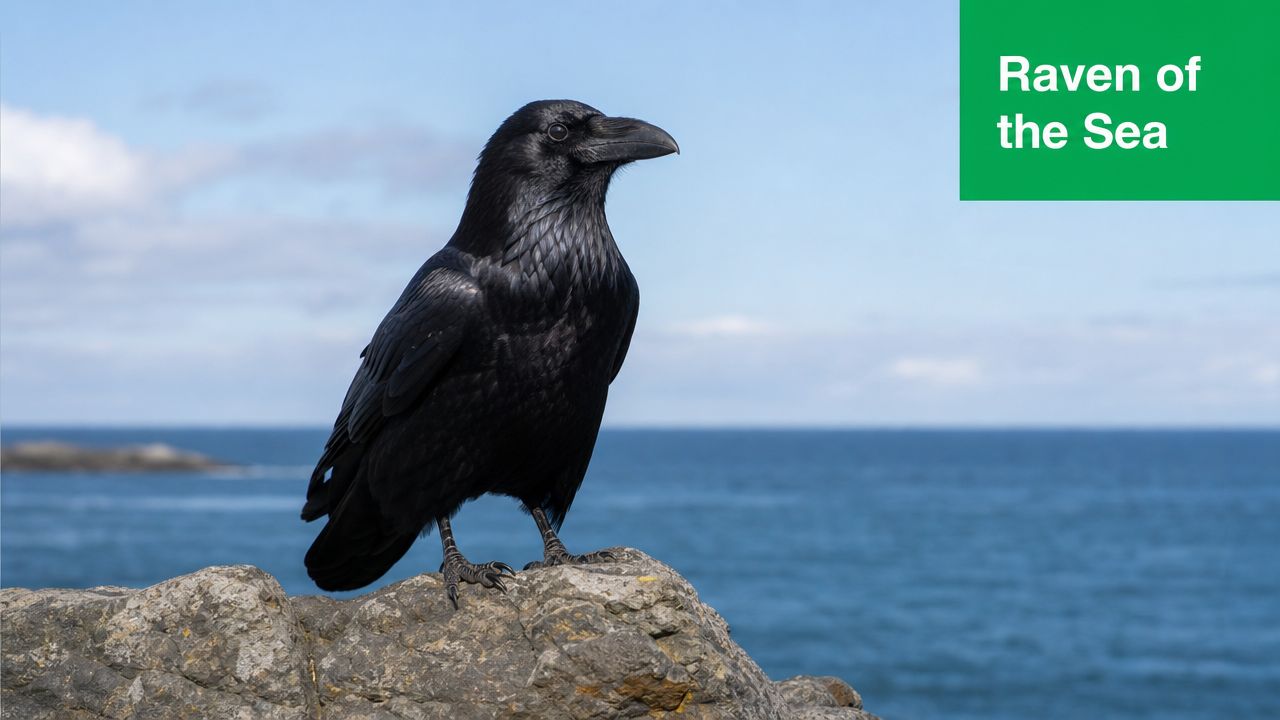
2. Cormac The Raven of the Sea

Cormac feels strong the moment you say it. It's short, hard-edged, and old. Traditional explanations connect it to older Irish elements often linked with “raven” and “son,” and in Irish cultural memory the name is especially tied to Cormac mac Airt, a legendary High King.

A majestic black raven perched on a rocky cliff overlooking the blue ocean on a sunny day.

A name built from parts

Cormac is useful because it looks compact but hints at an H_older naming system. Learners start noticing that Irish names often carry pieces of kinship, animals, natural features, or rank. That's valuable if you want to understand why Irish names feel so grounded in the natural and heroic worlds.

Pronounce it KOR-mak, with a clear hard C. That hard opening sound shows up in many strong Irish male names, including Cian and Cillian. Once your ear gets used to it, you'll read Irish names more confidently.

What to practise with Cormac

Use Cormac when studying mythology or kingship vocabulary. A sentence like Ba rí é Cormac gives you a name, a past-tense structure, and a cultural reference in just a few words. If you're preparing for oral work, names like this also help when describing legends or famous figures.

Try pairing Cormac with related vocabulary:

  • Éan: bird
  • Fiach: raven
  • Mac: son
  • Rí: king

Cormac works well because it doesn't feel like a museum piece. It still sounds usable now, but it carries the weight of older Ireland. That balance is part of why strong Irish male names remain so appealing to learners. They don't just label a person. They carry an entire worldview in a few syllables.

3. Fionn The Fair-Haired Warrior

A learner often meets Fionn first in a story, not in a vocabulary list. One moment you are reading about a hero on a hillside or by a fire, and the next you are staring at four letters that do not sound the way English spelling suggests. That is exactly why this name is so useful.

Fionn is bound up with Fionn mac Cumhaill, leader of the Fianna and one of the best-known figures in Irish tradition. The name comes from fionn, a word associated with fairness, brightness, and light colour. In older storytelling, that brightness carries more than a physical description. It suggests presence, clarity, and the kind of distinction that marks a heroic figure.

A fair-haired young man wearing a green hooded cloak standing in a vast, scenic Irish coastal landscape.

A short name that teaches a lot

Fionn works like a compact lesson in Irish culture. Learn the name, and you immediately gain access to the Fianna, to Oisín, and to the storytelling world that shaped so much of Irish identity. The Irish name guide from My Irish Jeweler highlights that link to Fionn mac Cumhaill, which helps explain why the name still feels heroic and distinctly Irish.

It also teaches an important reading habit. Irish spelling is sound-based, but the sound system is not the same as English. If you read Fionn as “fee-on,” you are applying English rules to an Irish word. A closer guide is FYUN, and in some contexts you will hear something nearer to FIN. That small adjustment trains your ear to expect Irish patterns instead of forcing English ones onto them.

What to practise with Fionn

This name is especially good for story-based learning. If Séamas helped with familiar forms and Cormac pointed toward older naming parts, Fionn lets you practise mythic vocabulary in a living setting.

Try using it in short, usable ways:

  • Name and title: Is laoch é Fionn. You get a name and the word for hero.
  • Family link: Is mac é Oisín le Fionn. You practise relationship language through a famous pair.
  • Story setting: pair the name with seasonal tradition through the Imbolc folklore and language guide, then describe a simple scene in Irish.

One name can carry pronunciation practice, etymology, and cultural memory at the same time. That makes Fionn more than a strong Irish male name. It becomes a doorway into how Irish stories sound, how Irish words are built, and how language learning gets easier when each word is tied to a real piece of tradition.

4. Ronan The Little Seal

Ronan, from the Irish Rónán, is one of the gentler-sounding strong Irish male names. Its root is tied to rón, meaning seal, with the diminutive ending -án, often understood as “little seal.” That combination gives the name warmth without making it weak.

Nature and softness

Irish names often connect strength with the natural world rather than brute force alone. Ronan shows that clearly. A seal is agile, watchful, and at home between land and sea. That kind of image feels very Irish, especially in a culture shaped by coastline, weather, and animal symbolism.

The name also appears in saintly tradition, which gives it another layer. Learners often discover through names that Irish culture holds older nature imagery and Christian history together rather than keeping them in separate boxes.

A practical pronunciation lesson

Say Rónán roughly as ROH-nawn. The fada on ó lengthens the vowel, and the ending teaches your ear how Irish often softens a name that looks firm on the page. It's a useful pattern because you'll hear similar endings in many Irish names.

Try introducing the name in a simple line such as Is mise Rónán. Then expand it: Is mise Rónán agus is as Corcaigh mé. That gives you name practice, a place phrase, and a full introduction.

For learners, Ronan is especially good for noticing structure:

  • The root word matters: rón gives you an animal word you can reuse.
  • The ending matters: -án helps you spot a common Irish name pattern.
  • The rhythm matters: Irish often places beauty in the vowel length, not just the consonants.

Ronan shows that a name can sound calm and still feel strong. That's an important lesson if you're studying Irish through names rather than only through grammar charts.

5. Daithí The Swift Warrior

Daithí has energy in it. Even before you know the meaning, the name sounds quick and lively. Traditional explanations connect it with swiftness or nimbleness, and Irish historical memory links it to a High King named Dáithí.

An Irish form with presence

This is the kind of name that reminds learners not to flatten Irish names into their nearest English equivalent. Daithí isn't just a decorative spelling. It belongs to Irish sound patterns and has its own personality. When learners pronounce it correctly, they're practising more than a name. They're practising respect for the language itself.

A common guide pronunciation is DAH-hee or DAW-hee, depending on accent. The final í gives the ending its light, lifted sound. That makes Daithí a good name for hearing how Irish vowels can carry the shape of a word.

Where learners can use it

Daithí works well in modern conversation practice because it feels traditional without sounding distant. You can put it into work, school, or social settings and it still feels natural. A sentence like Tá Daithí ag obair inniu is useful beginner material and sounds like real Irish.

If you're studying how Irish adapts and preserves names, Daithí also helps you compare forms across languages. That comparison trains your eye to see when a name has been translated, anglicised, or kept in Irish.

Learner note: Names with fadas are pronunciation tools, not decoration. If you ignore them, you usually change the word.

Daithí teaches sharp listening. It encourages you to hear the difference a single accent mark makes, and that skill carries straight into everyday Irish vocabulary.

6. Páraic The Nobleman

A learner often meets Patrick first and only later discovers that Irish keeps its own older music in the name. Páraic carries that music. It comes from the same Latin root behind Patrick, linked with nobility, but in Ireland the name grew far beyond its original meaning and became tied to faith, memory, and public celebration.

A name that teaches history

Few names open as many doors into Irish culture as Páraic. Across generations, the name became closely associated with Saint Patrick and with the spread of Christianity in Ireland. That association is why the Irish forms of Patrick matter to learners. They sit at the meeting point of language, religion, and national tradition.

You will also see Pádraig far more often than Páraic in modern Irish. That can confuse beginners.

The two forms belong to the same name family, but they give you a useful lesson in variation within Irish itself. Irish names are not always fixed in one spelling, especially when they have long histories and strong regional use. Spotting that relationship trains you to read Irish with more confidence instead of assuming one English form always maps to one Irish form.

How to say it, and what to listen for

A simple guide pronunciation for Páraic is PAW-rick.

That makes this name a helpful phonetics exercise. The long vowel in asks you to slow down at the start, and the final syllable stays lighter than in English Patrick. If you practise both Páraic and Pádraig aloud, you start hearing a pattern that appears again and again in Irish. Small spelling changes often signal real sound changes.

On Gaeilgeoir AI, this is the kind of name worth repeating in short drills. Say it in isolation first. Then place it in a sentence. Then compare it with Patrick and listen for where the Irish rhythm shifts.

A practical mini-lesson for Irish learners

Páraic gives you useful cultural vocabulary almost immediately. Once the name is familiar, you can build practice sentences around festivals, identity, and family introductions.

A few natural examples are:

  • Naomh Pádraig: Saint Patrick
  • Lá Fhéile Pádraig: Saint Patrick's Day
  • Páraic is ainm dó: His name is Páraic

Each phrase teaches something different. Naomh gives you a common religious title. Lá Fhéile Pádraig introduces a famous feast-day structure in Irish. Is ainm dó helps with a basic pattern for naming someone, which is useful far beyond this one example.

That is why Páraic belongs on a language-learning list, not only a name list. It gives you pronunciation practice, a window into variant forms such as Pádraig, and a direct route into one of the most recognisable strands of Irish cultural history.

7. Liam The Unwavering Protector

A learner often meets Liam before realising how much Irish history is packed into those four letters. It sounds familiar in English, yet it opens a door into the Irish form Uilliam, and from there into a useful lesson about how names travel across languages.

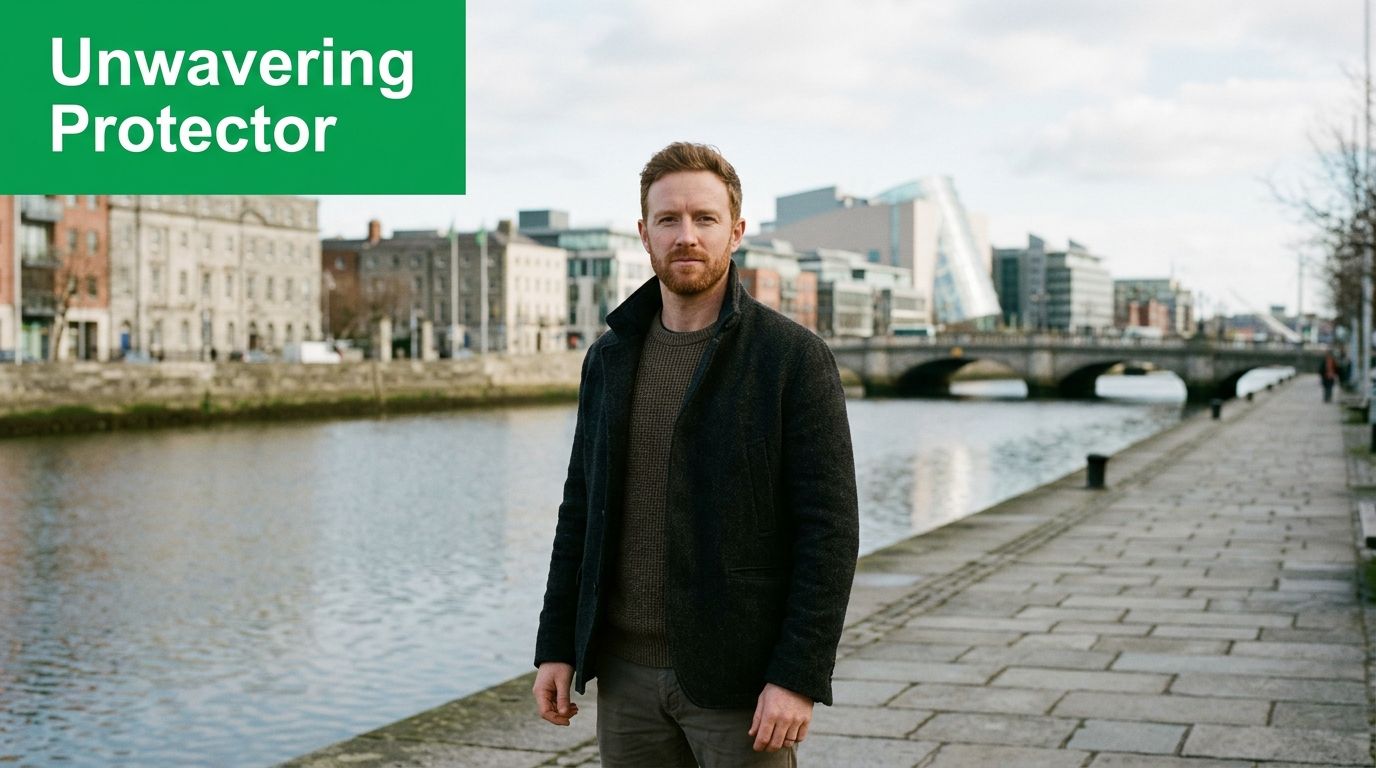
A man with red hair standing by the river Liffey in Dublin, wearing a dark coat and sweater.

Liam is widely treated as a shortened Irish form of Uilliam, the Irish version of William. The meaning usually given is “strong-willed warrior” or “protector.” Even if different name guides phrase that meaning slightly differently, the central idea stays steady. Strength, resolve, and guardianship all sit close to the heart of the name.

That makes Liam more than a popular choice. It is a small pronunciation lesson with training wheels.

For beginners, LEE-um is approachable, but it still teaches something useful. Irish names do not always need to be long or difficult to carry deep cultural roots. Liam shows that a compact form can preserve Irish identity while remaining easy for new speakers to say with confidence.

There is also a helpful language-learning contrast here. Uilliam looks more visibly Irish on the page, while Liam feels lighter and faster in conversation. Practising both is like comparing a full phrase with its everyday spoken version. You begin to notice how Irish keeps older forms alive while daily usage often trims them into something more agile.

On Gaeilgeoir AI, Liam works well for first speaking drills because you can focus on sentence structure without getting stuck on pronunciation. Start with the name on its own. Then place it into short, useful patterns that appear again and again in beginner Irish.

Try lines like these:

  • Is mise Liam. I am Liam.
  • Seo é Liam. This is Liam.
  • Tá Liam i mBaile Átha Cliath. Liam is in Dublin.

Each one teaches a different building block. Is mise helps with self-introduction. Seo é gives you a simple way to identify a male person. Tá…i introduces location, and Baile Átha Cliath adds a place name that learners meet early.

Liam belongs on a language-learning list because it gives you an easy entry point into Irish naming history, a clear pronunciation win, and a practical set of speaking patterns you can reuse far beyond this one name.

8. Niall The Champion

Niall is one of those names that feels old in the best possible way. Traditional explanations often connect it with “champion,” and the name is strongly associated with Niall of the Nine Hostages, a legendary High King remembered in dynastic history.

Kingly memory

If you're drawn to names with political and historical force, Niall is hard to beat. It points toward the Uí Néill, one of the most important dynastic groupings in Irish history. That makes it a strong choice for learners who want names that lead into genealogy, territory, and kingship vocabulary.

Pronunciation varies in teaching guides, but many learners use something close to NEEL. What matters most at beginner level is choosing a careful pronunciation and saying it consistently while you listen to native speech.

History you can speak aloud

Niall works well in more advanced speaking practice because it naturally invites historical description. You can use it in past tense sentences, family lineage phrases, and short accounts of Irish rulers. That gives it a different role from a simpler name like Liam.

The gap in many baby-name lists is that they don't always explain whether a name feels currently Irish in use or is Irish in origin. A Pampers guide to Irish boy names notes that Liam is one of the top Irish boy names in Ireland and North America and that Cillian has recently reached Ireland's top 10, but it also leaves room for a more practical comparison between heritage depth and international ease. Niall sits in that interesting middle space. It is recognisably Irish, historically loaded, and still familiar enough to travel.

Strong Irish male names don't all solve the same problem. Some maximise recognisability. Others maximise cultural depth. Niall gives you a lot of both.

For a learner, Niall opens rich territory:

  • Dynasty words: family, descendants, kings
  • History language: past tense, time markers, place names
  • Identity talk: ancestry, clan memory, heritage

8 Strong Irish Male Names: Meanings & Traits

Name 🔄 Learning complexity 📚 Resource requirements ⚡ Acquisition speed 📊 Outcomes & ⭐ Advantages 💡 Ideal use cases
Séamas (James) Low–Moderate, clear pronunciation patterns Low, beginner texts, literary examples ⚡ Fast, easy to adopt in speech ⭐ High recognizability; 📊 strong cultural linkage to Irish-English forms Practice introductions; literary/cultural lessons
Cormac Moderate, compound etymology to learn Moderate, mythology and etymology sources ⚡ Moderate, short, clear form aids speed ⭐ Good for teaching compound names; 📊 deep mythic context Mythology, etymology, and cultural symbolism lessons
Fionn Moderate, phonetic nuance (slender F) High, Fenian Cycle texts and narratives ⚡ Moderate, iconic but context-heavy ⭐ Iconic cultural depth; 📊 rich storytelling resources Advanced literature, storytelling, immersion activities
Rónán (Ronan) Low, simple pronunciation and diminutive form Low–Moderate, hagiography and social contexts ⚡ Fast, common in modern use ⭐ Practical modern use; 📊 bridges pagan and Christian history Beginner conversations, religious vocabulary, introductions
Daithí Low, accent/diacritic awareness needed Low, contemporary usage examples, pronunciation guides ⚡ Fast, familiar anglicized equivalents help ⭐ Balanced historical and modern relevance; 📊 versatile in registers Work/social scenarios; studying name adaptation
Páraic Low, familiar anglicized cognate, clear pronunciation Moderate, Saint Patrick materials and cultural notes ⚡ Fast, widely recognized ⭐ Strong national recognition; 📊 useful for cultural confidence Cultural identity discussions, exam prep, public speaking
Liam Very Low, minimal phonetic difficulty Minimal, everyday exposure and media examples ⚡ Very fast, immediate conversational utility ⭐ High practicality and modern relevance; 📊 excellent for real-world practice Beginner real-life conversations, travel, social interactions
Niall Moderate, historical context required High, genealogies, medieval chronicles, historical texts ⚡ Slower, depth requires study ⭐ Strong historical prestige; 📊 valuable for deep cultural understanding Advanced historical study, Leaving Cert prep, genealogical topics

Bringing Names to Life in Your Language Journey

A good Irish name works like a pocket lesson. You can hold one word in your mind, say it aloud, and suddenly meet spelling, sound, history, and identity in a form you can put to use.

That is what makes these eight names valuable for learners. Séamas gives you practice with a familiar biblical name in Irish form. Cormac points back to older word-building patterns in Gaelic naming. Fionn brings in saga tradition and one of the best-known heroic figures in Irish storytelling. Rónán lets you hear how Irish endings soften a name. Daithí draws your attention to the fada and how a small mark changes rhythm and pronunciation. Páraic connects language study with one of the strongest strands in Irish religious and cultural memory. Liam shows how a short Irish name can travel widely while keeping its roots. Niall opens the door to dynasties, annals, and family history.

Names help because they give grammar something to attach to. Instead of memorising isolated forms, you can build real phrases around a person, whether historical, legendary, or invented. Is mise Liam. Tá Páraic anseo. Ba laoch é Fionn. That kind of practice turns vocabulary into speech and helps you remember structures for longer.

They also make pronunciation less intimidating. Irish spelling can feel dense at first, especially if you are meeting fadas, broad and slender consonants, or sound combinations that do not match English habits. A single name keeps the task small. You hear one pattern, repeat one pattern, and then meet it again in other words. Learning Séamas or Daithí is not just learning a name. It is training your ear for Irish.

The cultural side matters just as much. These names do not come from one source. Some belong to myth, some to saints, some to kings, and some to everyday modern life. Studying that range helps you notice register and context. You start to sense which names carry an older literary feel, which sound contemporary, and which lead naturally into larger topics such as genealogy, folklore, religion, or national history.

Use them actively. Say each name aloud. Write short introductions. Build two-line dialogues. Describe a character's family, job, or place of origin. Retell one small part of a legend using simple verbs. Each exercise gives you pronunciation practice, sentence-building practice, and cultural recall at the same time.

The best part is how well names scale with your level. A beginner can introduce himself as Séamas or Liam. A more advanced learner can discuss Fionn mac Cumhaill, the Uí Néill, or the naming habits found in older Irish texts. The same set of names grows with your Irish.

If you want to turn recognition into real use, practise these names in spoken and written Irish through guided conversations, pronunciation work, and culture-based exercises on Gaeilgeoir AI.

Start Speaking Irish Today — 25% Off
Use code START25

Learn real Irish for real life with guided practice, pronunciation support, and everyday conversations.

Get 25% off any plan with code START25

Start Speaking Irish Today — 25% Off