Irish Thanksgiving: Myth, Tradition, and Language Guide

You're probably here because you've seen the phrase Irish Thanksgiving somewhere and paused. Maybe it showed up in a family story, on a social post, or in a conversation about Irish heritage. It sounds familiar, but also slightly off. Is it a real holiday in Ireland, an Irish-American tradition, or just a catchy phrase attached to an old story?

The confusion makes sense. “Irish Thanksgiving” gets used for at least two different ideas. One is a piece of Irish-American folklore about a ship from Dublin helping the Pilgrims. The other is much more practical: families in America adding Irish food, music, blessings, or language to a Thanksgiving meal. Those two meanings often get blended together, and that's where people start talking past each other.

This is one of those topics where a simple yes-or-no answer doesn't help much. The history is layered, the identity piece is emotional, and the language side is more interesting than many people expect.

Table of Contents

What Is an Irish Thanksgiving Anyway

You hear the phrase at a family table in Boston or Chicago. Someone mentions an "Irish Thanksgiving," and it can sound like Ireland has its own version of the holiday, with a fixed date and long-standing customs. That is where the confusion begins.

Irish Thanksgiving usually refers to one of two ideas. It can mean a piece of Irish-American folklore tied to early colonial history, or it can mean a Thanksgiving celebration in the United States shaped by Irish family traditions, food, music, memory, or language.

That difference matters. If you blur those ideas together, the topic gets muddy fast. If you separate them, it becomes much easier to understand, a bit like sorting a family recipe box into "old stories" and "what we still cook."

A person with short hair and glasses holding a small teacup and looking confused while sitting.

Two common meanings

The first meaning belongs to the world of heritage storytelling. It points to a popular tale that Irish aid helped the Plymouth colonists survive, a story many Irish-American families have passed along with pride. Stories like that matter in diaspora life because they answer a human question: where do we fit in the larger national story? If you enjoy that kind of folklore, these Irish myths and storytelling traditions offer useful cultural context for how memorable narratives take root.

The second meaning is much more concrete. It shows up at the dinner table. An Irish-American household might add colcannon beside the turkey, say a blessing with Irish phrasing, play trad music after the meal, or teach the children a few words of Gaeilge before dessert.

Irish Thanksgiving is best understood as a meeting point of family heritage, American holiday practice, and cultural memory.

Why people get tangled up

Part of the mix-up comes from the name itself. "Irish Thanksgiving" sounds official, as if it belongs on Ireland's national calendar. In Ireland, though, Thanksgiving is not a standard public holiday in the way it is in the United States.

The language side can confuse people too. Irish has a term for Thanksgiving Day, Lá an Altaithe, but that does not mean the holiday developed in Ireland as a shared national tradition. That means Irish speakers can talk about it, just as they can talk about Halloween, baseball, or pumpkin pie.

A good way to keep your footing is to hold three separate ideas in mind: holiday folklore, Irish-American custom, and present-day life in Ireland. Once those are in the right places, the phrase "Irish Thanksgiving" stops feeling mysterious and starts making cultural sense.

The Historical Myth of the First Irish Thanksgiving

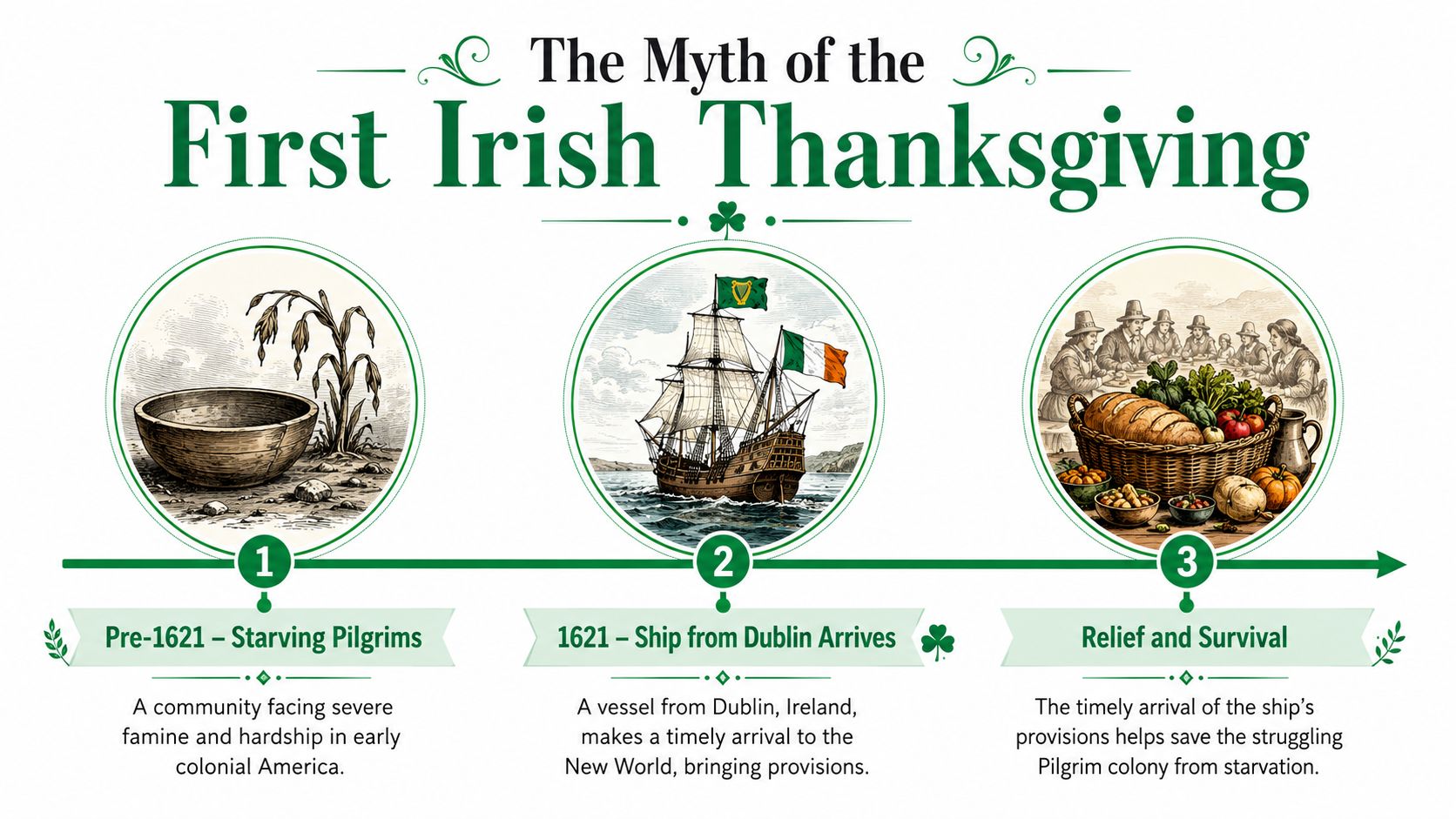
You hear the phrase "the first Irish Thanksgiving," and it sounds like a settled chapter from a history textbook. The usual version says the Pilgrims were in desperate trouble at Plymouth, then help arrived from Ireland in the form of provisions sent from Dublin. It is easy to see why that story stayed alive. It gives Irish families, especially Irish Americans, a place inside a founding American memory.

An infographic depicting the myth of the first Irish Thanksgiving with a timeline of events.

The difficulty is that the timeline does not line up cleanly. A commonly repeated version places the rescue in 1621, but later discussion ties the ship Lyon to 1631. Once those dates shift, the story stops looking like a firm origin point and starts looking more like a piece of heritage folklore built around a real desire to belong.

That does not make the story pointless. Folklore often lasts because it carries emotional truth for a community, even when the historical record stays fuzzy. For Irish Americans, this tale expresses dignity, contribution, and presence. It answers a human question many immigrant families ask: where do we fit in the larger story?

Irish culture has long treated storytelling as a way of holding memory, identity, and pride together. If you want more background on how legends and belonging intertwine, these Irish myths and storytelling traditions offer helpful context.

A practical way to understand this is to separate symbolic value from documentary certainty. Family stories work a bit like heirlooms. They may gather embellishments over time, but they still reveal what a community wanted to remember about itself.

The wider history of Thanksgiving is also more layered than one dramatic rescue scene. Historians point to several moments that shaped the holiday over time, including early European thanksgiving observances in Newfoundland, later colonial thanksgivings in New England, Washington's national proclamation, Lincoln's Civil War era proclamation, and the later federal standardization of the November date. The modern holiday formed gradually through religion, politics, harvest customs, and national mythmaking, as noted earlier in the article's cited historical sources.

That pattern should feel familiar. Many origin stories grow simpler in popular retellings than they are in the archive. You can see the same thing in debates over the historic origins of whiskey, where identity, pride, and evidence often travel together.

Practical rule: treat the “Irish saved Thanksgiving” claim as folklore supported by partial evidence, rather than as a confirmed single origin story.

So where does that leave us? In a useful middle ground. The "first Irish Thanksgiving" story matters because it reflects Irish-American memory and the wish to be seen as contributors to American life. At the same time, careful history asks us to describe it with humility. Meaningful, widely shared, and still open to question is the fairest way to put it.

How Irish Americans Blend Traditions Today

Modern Irish Thanksgiving is easiest to understand at the table. It's usually not about claiming a separate holiday. It's about taking a classic American feast and making room for family heritage.

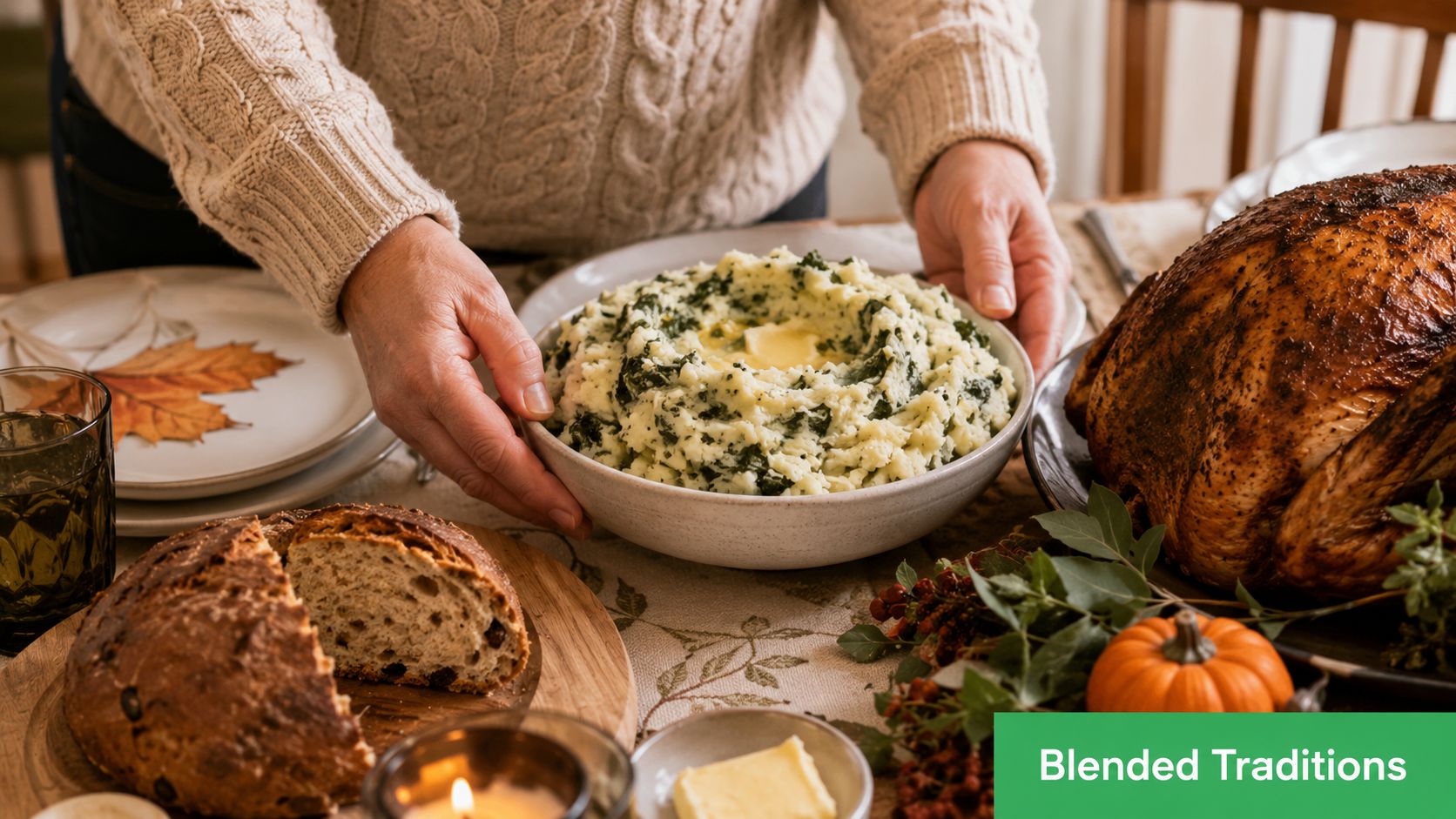
A person preparing a bowl of colcannon potatoes on a festive dinner table for a Thanksgiving meal.

You can see this in small choices. A bowl of mashed potatoes becomes colcannon. Someone brings brown bread. A relative says an old mealtime blessing before the turkey is carved. None of that turns Thanksgiving into an Irish holiday in the formal sense, but it does turn the meal into a family document of sorts.

What shows up on the table

In many homes, the Irish element appears through side dishes more than through the main course. Turkey stays. The supporting cast changes.

A few familiar examples:

  • Potato upgrades: Colcannon or boxty can sit comfortably beside turkey and stuffing.
  • Root vegetables: Some families prefer the kinds of hearty vegetables that feel closer to Irish home cooking.
  • Bread and butter: Soda bread or brown bread adds a very different mood from standard dinner rolls.
  • A spoken grace: Gratitude before eating often feels like the most natural bridge between Irish family culture and Thanksgiving.

Those choices work because they don't fight the holiday. They personalize it.

Food music and after-dinner ritual

The atmosphere matters as much as the menu. One household might play traditional Irish music once the dishes are cleared. Another might bring out Irish coffee later in the evening. If the family enjoys spirits, a quick read on the historic origins of whiskey can add some context to the after-dinner conversation without turning the meal into a history lecture.

Here's a good example of the mood many families aim for. The meal still looks recognizably American, but the details carry family memory.

A blended holiday works best when the Irish elements feel lived-in, not staged.

This short clip captures that spirit of Thanksgiving cooking and table warmth:

Some families also use the day to talk about grandparents, migration stories, or the recipes that survived because someone insisted on keeping them. That's often the deepest form of Irish Thanksgiving. Not a costume. Not a slogan. A meal where heritage gets remembered out loud.

Is Thanksgiving Celebrated in Modern Ireland

The short answer

No, Thanksgiving isn't celebrated in Ireland as a national holiday. That's the clearest answer, and it's the one many people need first.

Still, stopping there leaves out the part that helps. The American holiday belongs to North American history, but the ideas behind it, gratitude, harvest, family meals, blessings, are easy to recognize in an Irish setting too.

Where the Irish connection is real

Some Irish writers draw that distinction well. Thanksgiving itself is not an Irish holiday, yet its themes can overlap with older and broader traditions of giving thanks, harvest time, and family gatherings. One example is the connection often made to Samhain, an ancient Celtic harvest festival, along with the everyday custom of mealtime blessings, discussed in this reflection on the Irish connection to Thanksgiving.

That helps answer a common question: if Ireland doesn't celebrate Thanksgiving, why does it still feel like there's something Irish around it? The answer is that people are often sensing values rather than a formal calendar event.

A useful way to think about it is this:

Question Better answer
Is Thanksgiving an Irish public holiday? No
Do Irish people understand harvest gratitude and family meals? Absolutely
Can Irish families in Ireland still mark the day privately? Yes, especially through family or American connections

For some readers, another seasonal comparison helps. If you want to explore how Irish traditions sit on their own terms, not just beside American holidays, this look at St. Stephen's Day in Ireland shows how different the Irish festive calendar can feel.

The cleanest distinction is simple. Thanksgiving is American. Gratitude at the table is universal. Irish culture already has its own ways of expressing that.

That's why “Irish Thanksgiving” works better as a cultural phrase than as a literal holiday label.

Your Practical Irish Language Thanksgiving Toolkit

You are at the table, someone passes the potatoes, and you want to add one small Irish phrase without making the moment feel stiff or performative. That is the sweet spot for this topic. A few well-chosen words in Gaeilge can make the meal feel warmer and more personal, even though Thanksgiving itself belongs to the American calendar rather than the Irish one.

Start with the holiday name, because it gives you a clear anchor. In Irish, Thanksgiving Day is Lá an Altaithe. If you are speaking to one person, say Lá an Altaithe sona duit. If you are greeting a group, say Lá an Altaithe sona daoibh.

That single change from duit to daoibh teaches an important Irish habit. Irish often shifts depending on who you are addressing. It works a bit like changing “you” and “you all” in English, except Irish makes that distinction more clearly.

Useful Irish Thanksgiving phrases

The goal is not to perform a perfect speech. The goal is to use a few phrases that fit naturally around food, family, and thanks.

English Phrase Irish Phrase (Gaeilge) Simple Pronunciation
Thanksgiving Day Lá an Altaithe law on AL-ti-ha
Happy Thanksgiving to you (one person) Lá an Altaithe sona duit law on AL-ti-ha SUN-a ditch
Happy Thanksgiving to you all Lá an Altaithe sona daoibh law on AL-ti-ha SUN-a deeve
Family clann klown
Potato práta PRAW-ta
Turkey turcaí TOOR-kee
Thanks go raibh maith agat guh rev mah ah-gut
Thank you all go raibh maith agaibh guh rev mah ah-giv
Please le do thoil leh duh hull
Welcome fáilte FAWL-cheh

A few quick notes make this easier to use well:

  • Duit is for one person. Daoibh is for more than one.
  • Go raibh maith agat is one of the handiest phrases you can bring to any meal.
  • Warmth matters more than a polished accent. People usually remember the effort and the kindness behind it.

If you want a clearer feel for everyday Irish thank-you expressions, this guide to go raibh maith agat and when to use it is a helpful next step.

A short table dialogue you can try

Many readers worry they need a long blessing or a formal toast. You do not. A short exchange is enough to make Irish part of the meal.

Host: Lá an Altaithe sona daoibh.
Guests: Go raibh maith agat.
Host: Fáilte.
Guest: Prátaí, le do thoil.
Host: Seo duit.

That little exchange does something important. It turns Irish from a family symbol into a living language used at the exact moment it belongs, around shared food and conversation.

Try practicing in ways that match the meal itself:

  1. Say the greeting while setting plates or lighting candles.
  2. Pick two food words, such as práta and turcaí, and repeat them as you cook.
  3. Pair phrase with action. Say le do thoil when asking for a dish and go raibh maith agat when someone hands it to you.
  4. Listen and repeat if you can. Irish pronunciation becomes much less intimidating once your ear knows the shape of the sounds.

If you like short, repeatable study methods, these fast language learning strategies can help you build a routine around phrases you will use right away.

One greeting and one thank-you phrase is enough for a first holiday meal.

That is how Irish grows in a family. Not through grand claims about an “Irish Thanksgiving,” but through small, real moments of gratitude spoken aloud.

A Holiday of Heritage and Gratitude

Irish Thanksgiving makes the most sense when you stop asking whether it's “real” in only one way. It's real as folklore for some families. It's real as a blended home tradition for others. It's not a standard Irish holiday, but it does open a meaningful conversation about heritage, gratitude, and how families carry culture across borders.

That's why the myth-versus-reality distinction matters so much. If you treat the old Plymouth story as settled fact, you flatten history. If you dismiss the whole idea because Ireland doesn't officially celebrate Thanksgiving, you flatten culture. The richer answer sits in the middle.

For many people, the best part of an Irish Thanksgiving isn't proving a historical claim. It's making the meal feel like your own family's story. That might mean a blessing, a recipe from a grandparent, a few words in Gaeilge, or even a thoughtful host gift. If you're visiting someone's table and want something a bit more personal than the usual bottle, these unique Thanksgiving gift ideas can spark good ideas.

The unifying thread connecting all of this is simple. Shared food matters. Family memory matters. Gratitude matters. Irish culture has long had room for all three.


If this topic made you want to go beyond a few holiday phrases and start using Irish in everyday life, Gaeilgeoir AI is a practical place to begin. It's built to help learners start speaking from day one with guided conversations, pronunciation support, and real-world practice that fits around a busy schedule.

10 Essential Irish Idioms and Their Meanings for 2026

A learner in a café tries out a new phrase, gets the grammar a bit wrong, and the other person smiles and answers anyway. That moment matters more than perfect accuracy. Irish idioms live in that space where language becomes relationship, humor, and shared understanding.

Beyond the tourist clichés, Irish idioms open a door into how people soften a point, signal warmth, tease gently, or talk around difficulty. This guide keeps things practical. You'll learn ten well-known sayings in Irish, what they mean, how to pronounce and use them, and why they reflect values that run deep in Irish life. If you've searched for irish idioms and found only quick glossaries, the missing piece is usually context. Some expressions belong to Irish itself, some to Irish English, and some shift by region or tone, so using them well means hearing the culture inside the phrase. That matters for learners because Irish speech is not just literal. It often carries stance, kindness, irony, and social awareness.

Modern explainers of Irish speech regularly gather dozens of expressions around common functions like greeting, approval, surprise, joking, and criticism, which shows how broad this layer of everyday language is in Ireland, not just a handful of curiosities from postcards or pub talk, as shown in this Ireland-based overview of common sayings. Keep that in mind as you learn. You're not memorizing ornaments. You're building cultural fluency.

Table of Contents

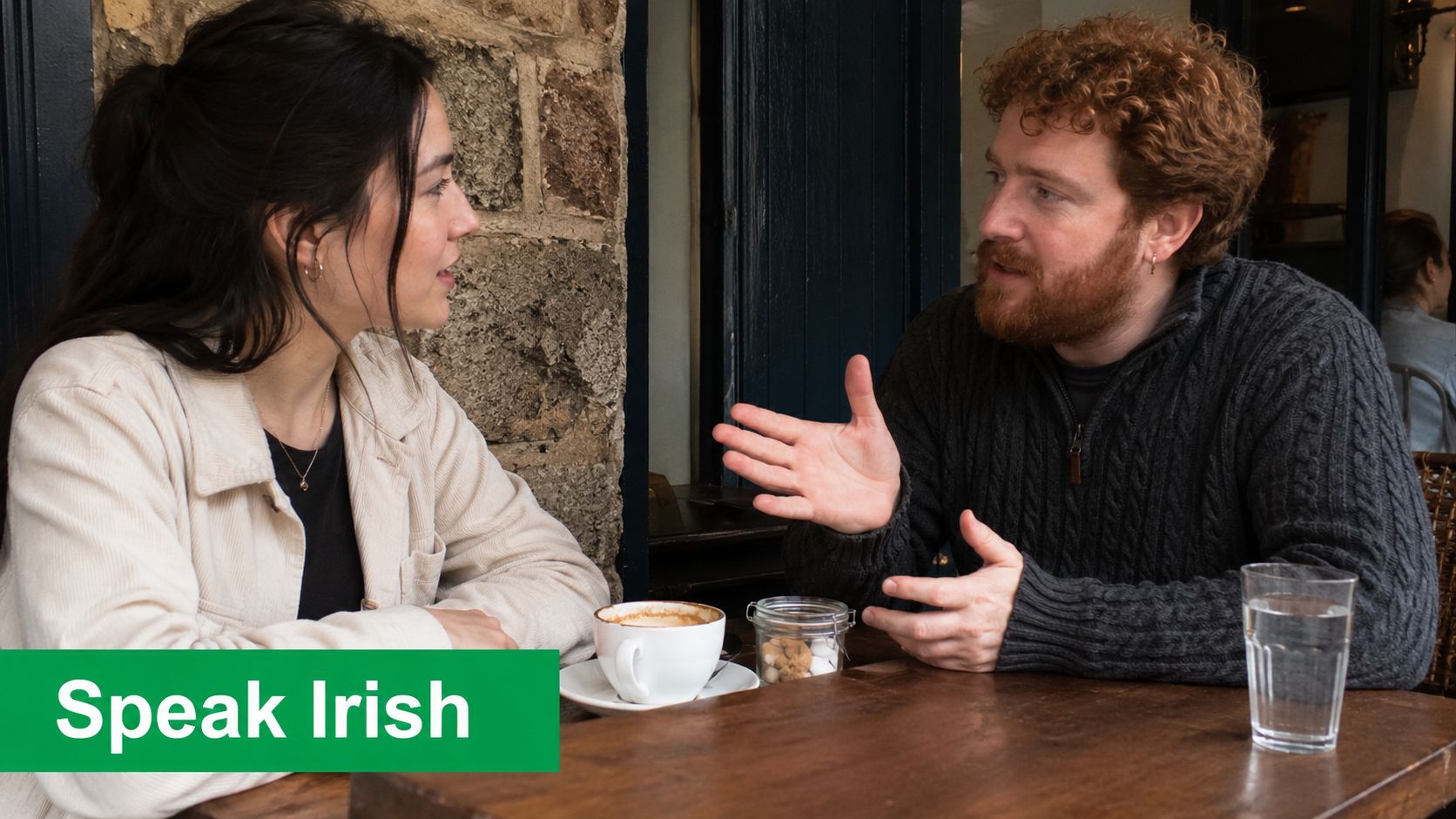
1. Is fearr Gaeilge bhriste, ná Béarla cliste

This is one of the most important irish idioms for any learner. It means “Broken Irish is better than clever English.” The heart of it is simple. Trying matters.

A woman and a man sitting at a table in a cafe having a friendly conversation.

If you know only a few words and still use them, you're already living this proverb. A student who hesitates over verb endings but keeps speaking is doing better, in cultural terms, than someone who waits for flawless Irish and never opens their mouth. That's why this saying survives. It protects courage.

Why learners love this one

Say it to yourself when embarrassment starts creeping in. Irish often feels intimate because using it can connect you to family, place, and identity. That can make mistakes feel bigger than they are.

Practical rule: Start speaking from day one, even if your sentence is only three words long.

A useful pronunciation shortcut is to keep the rhythm steady rather than chasing perfection. You can practice by saying the first half, pausing, then saying the second half. Over time the phrase becomes more than vocabulary. It becomes permission.

A good real-world example is a beginner ordering tea, greeting someone, or asking a simple question in Irish, then switching only when needed. That is exactly the spirit behind this saying. If you want more learner-friendly examples, this Irish idioms language learning guide builds on the same idea of using phrases actively instead of only memorizing them.

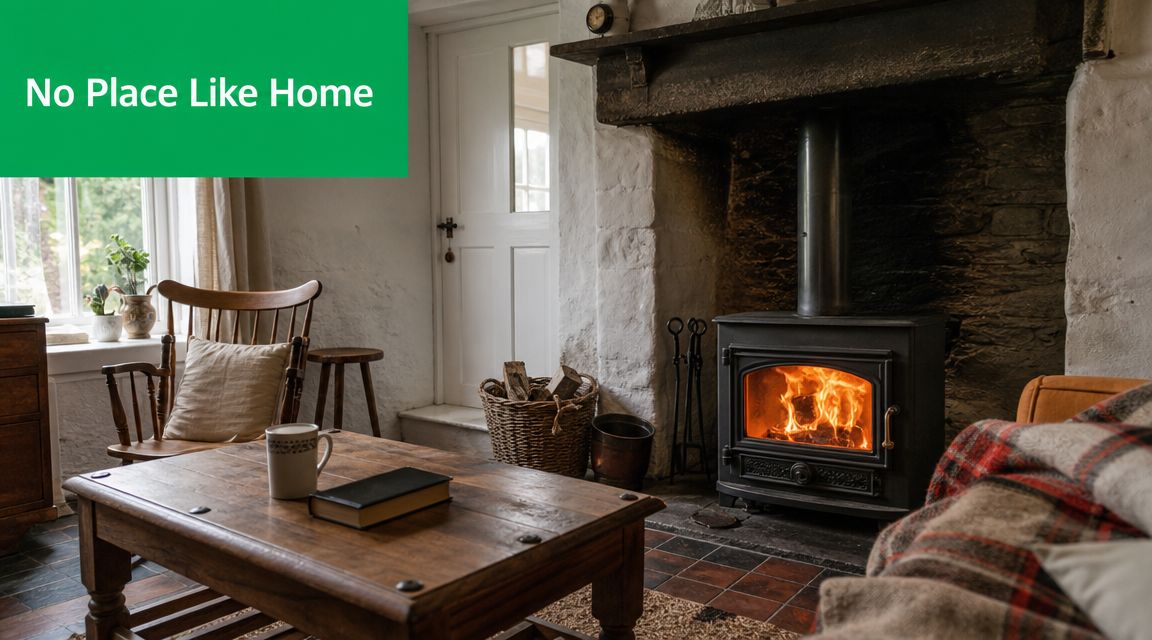
2. Níl aon tinteán mar do thinteán féin

This saying means “There's no fireside like your own fireside,” or more naturally, “There's no place like home.” The image matters. A fireside is not just a room feature. It suggests warmth, welcome, family stories, and being known.

A cozy, rustic living room featuring a wood-burning fireplace, a wooden table with a book, and comfortable seating.

For heritage learners, this one often lands hard. Someone living abroad may learn Irish not because they need it for daily transactions, but because it brings them closer to grandparents, songs, place names, or a sense of belonging. The saying gives that feeling words.

A phrase full of home and memory

Try learning this idiom alongside a small set of related words: teach for house, muintir for family, and baile for home or hometown. That cluster helps you use the phrase naturally in conversation about visits, roots, and return.

You might say it when a family member comes back after time away, or when discussing why learning Irish matters to you personally. The phrase also carries a quiet worldview. Home is not only where you sleep. It is where your speech relaxes.

In a broader social sense, language exposure shapes whether people continue using Irish in adulthood. Self-reported ability differs strongly by jurisdiction, with 41% in the Republic of Ireland reporting they can speak Irish compared with 11% in Northern Ireland, according to this ESRI study on Irish language exposure and use.pdf). That doesn't make this proverb less personal. It makes the question of home, transmission, and belonging even more vivid.

3. Éadaigh bhreá agus páipéar bán a chuireann geal ar chéachta

This proverb warns against surface polish. A loose English sense is “Fine clothes and white paper brighten fools.” In other words, appearance can flatter something empty.

It's a sharp saying, and that sharpness is part of its value. Irish tradition often admires wit, but it also distrusts showiness without substance. A flashy display, a smooth pitch, or a polished image doesn't automatically deserve respect.

Why this still feels modern

You can hear the wisdom of this proverb in everyday decisions. A learner comparing two language tools might be tempted by the prettier interface, not the clearer explanations. A person scrolling social media may assume confidence equals expertise. This proverb tells you to slow down.

Use it when discussing authenticity, reputation, or first impressions. It works especially well with intermediate learners because it invites you to unpack the grammar word by word.

  • Break the image apart: Learn the nouns first, then the verb phrase, so the saying becomes memorable rather than overwhelming.
  • Apply it to media: If a video, ad, or app looks impressive, ask what kind of learning or truth sits underneath.
  • Use it in debate: It's a strong phrase for conversations about image, branding, and public performance.

Fine wrapping can still hide poor goods.

That line captures the spirit of many traditional irish idioms. They don't just label life. They judge it.

4. Mol an óige agus tiocfaidh siad

This means “Praise the young and they will flourish.” It's generous, hopeful, and practical. Encouragement is not treated as softness here. It is treated as fuel.

For language learners, that matters every day. A teacher who notices a better pronunciation, a classmate who says your answer was good, or a tool that marks progress clearly can keep you going through the awkward middle stage when you know more than you can comfortably say.

Encouragement as a learning method

If you're studying Irish, borrow this proverb as a habit. Praise effort you can name. “You remembered the phrase.” “Your rhythm was better.” “You answered without switching to English.” Specific encouragement works better than vague approval because it tells the learner what to repeat.

This saying also belongs to the long tradition of seanfhocail, or Irish proverbs, where moral instruction is packed into memorable language. If you want to spend time with more sayings in that tradition, this introduction to exploring seanfhocail in Irish is a useful next read.

A real-world example is easy to imagine. A student freezes during speaking practice, manages one imperfect sentence, and the teacher answers warmly in Irish instead of correcting every flaw at once. That learner is far more likely to try again tomorrow.

  • Use it with peers: Encourage another learner after a conversation practice session.
  • Use it with yourself: Keep a record of small wins, not just mistakes.
  • Use it with younger speakers: If a child or teen tries Irish, answer with warmth before precision.

Many idiom lists explain meanings but stop before tone. This one is all tone. It tells you what kind of speech community people want to build.

5. Ní bhíonn aon rogha ag an bhfear bocht ach glacadh le'a bhreall

This is a harder proverb. It means, roughly, “The poor man has no choice but to accept his lot.” It reflects a sober realism about limits, hardship, and making do.

Not every Irish saying is playful. Some come out of lives shaped by scarcity, migration, and constraint. That doesn't mean they celebrate suffering. Often they name it plainly, without ornament.

A hard saying with practical wisdom

A modern learner can use this proverb without treating it as fatalism. Maybe you work long hours, have family responsibilities, and only get ten minutes a day for Irish. You still practice with what you have. The saying recognizes constraint, but it can also sharpen resolve.

Here's one way to turn it into action:

  • Shrink the session: If a full lesson won't happen, do a short speaking drill or review saved words.
  • Use waiting time: Practice one phrase while commuting, cooking, or walking.
  • Choose consistency over ideal conditions: Small contact with the language keeps the thread alive.

This proverb also helps explain why many traditional sayings carry both toughness and dignity. They were not written from a position of abundance. They were written by people who knew that endurance is often made of ordinary decisions.

In conversation, use it carefully. It can sound heavy. But in the right context, it expresses realism without self-pity, and that tone is one reason so many irish idioms feel emotionally mature.

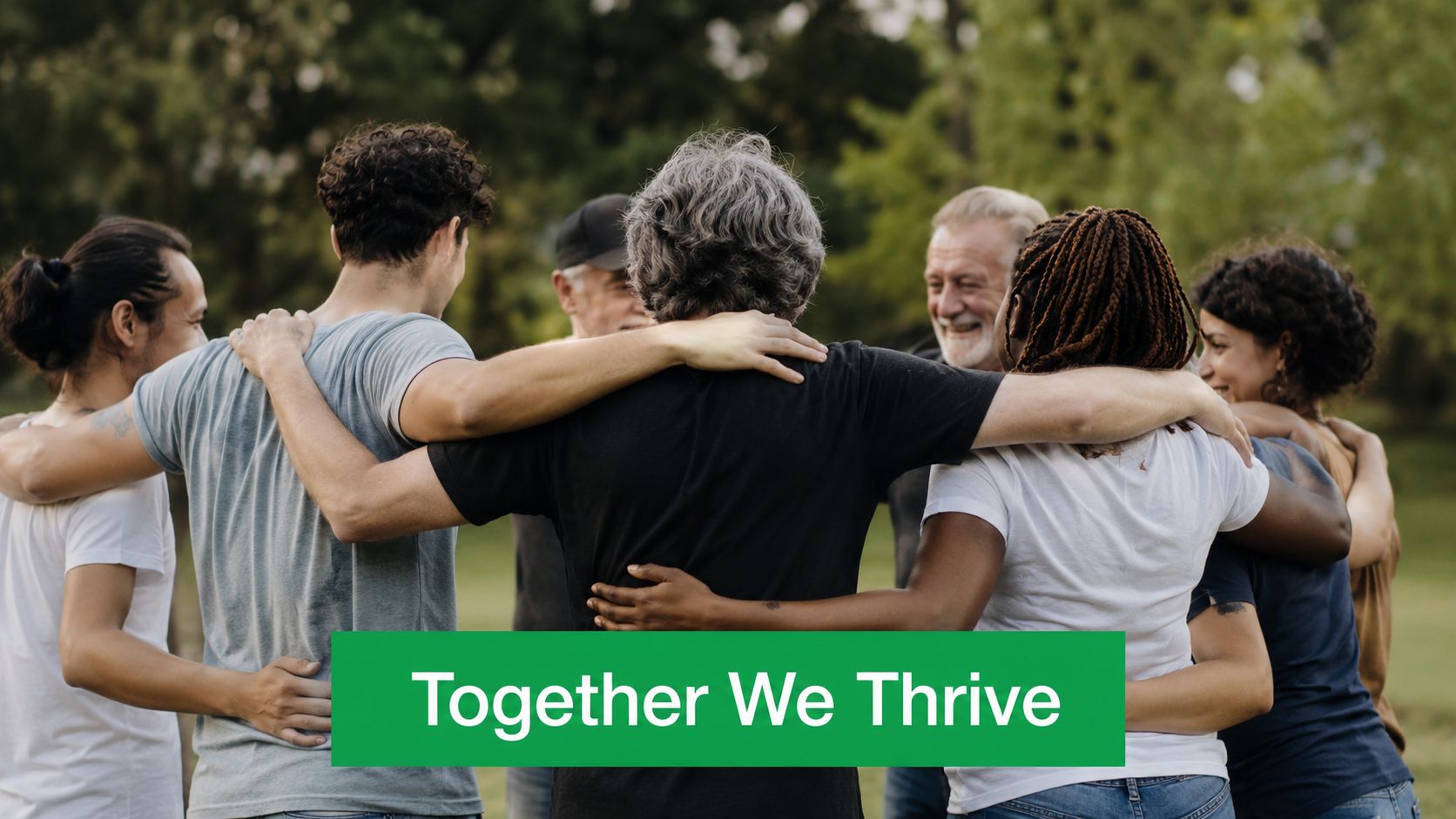
6. Ar scáth a chéile a bhímid beo

This beautiful saying means “We live in the shelter of each other.” It's one of the clearest expressions of interdependence in Irish thought. Nobody becomes fully themselves alone.

A diverse group of people standing in a circle with their arms around each other in solidarity.

For language learning, this is more than sentiment. Feeling safe, heard, and helped enhances one's ability to speak. A study partner, a patient relative, a local conversation circle, or an online learning community can create that shelter.

What community sounds like

This saying also helps correct a common misunderstanding. Many individuals looking for “Irish idiom” often expect one neat list. In reality, usage varies by region and social setting, and dialect experts stress that these forms belong to active regional speech rather than one fixed standard, as discussed in this expert conversation on Irish dialect variation. Community shapes language, and language reflects community back.

That matters when you hear one phrase often in Cork and less often in Donegal, or when a familiar expression lands differently depending on age, county, or company. Learning Irish well means learning who says what, where, and why.

You don't need to carry the language alone.

In practical terms, join spaces where Irish is spoken kindly. Ask questions. Listen to stronger speakers. Share what you know with someone newer than you. This proverb teaches that support is not extra. It is part of the language itself.

7. Go n-éiri an bóthar len do chois

This traditional blessing is often rendered as “May the road rise up to meet you.” Even if you've heard it in English before, learning it in Irish gives it new life. It is blessing as movement.

A quiet, scenic rural road stretching through green countryside during a beautiful golden hour sunset.

The phrase fits journeys of all kinds. A student starting oral exam preparation, a beginner speaking Irish for the first time, or a returning learner reconnecting with heritage can all receive this blessing naturally. It doesn't only wish luck. It imagines the path itself helping you along.

A blessing for beginnings

Try memorizing this one as a set phrase rather than analyzing every grammatical piece at first. Blessings often work by sound and repetition. Their emotional force comes from saying them whole.

You can use it when a friend begins a course, takes an exam, moves abroad, or commits to speaking more Irish each week. That makes it one of the warmest irish idioms to keep ready.

For beginners building a bank of useful expressions, this collection of essential Gaelic phrases for everyday use pairs well with blessings like this one.

A real-life scene is easy to picture. One learner messages another before an oral practice session: “Go n-éiri an bóthar len do chois.” It's short, generous, and unmistakably Irish in spirit. Language here is not just information. It is goodwill made audible.

8. Bréag agus dhá bhréag is fírinne

This proverb means “A lie and two lies make the truth.” It sounds cynical, and it is. But it's also observant. Repetition can make weak claims feel solid.

That makes this saying surprisingly relevant for modern learners. If you keep seeing a phrase translated the same way on random posts, or hear broad claims about “real Irish sayings” with no nuance, you may start trusting a simplified version of the truth.

Use this one to stay sharp

Many mainstream explainers of Irish sayings bundle together Irish, Irish English, and Hiberno-English without clearly separating them. This discussion of common Irish sayings and meanings highlights that gap and points out how phrases like “what's the craic,” “the Jacks,” “give out,” and “grand” are often treated as if they belong to one standard set, yet their nature is more layered and often region-specific.

That's exactly where this proverb helps. It reminds you not to confuse frequent repetition with precision.

  • Compare meanings: Check whether a phrase is Irish, Irish English, or a translation from Irish.
  • Notice register: Ask whether the phrase sounds formal, playful, rural, urban, old-fashioned, or current.
  • Watch for oversimplification: A quick glossary may give a rough meaning but miss tone and audience.

If you're learning with curiosity, this saying becomes a method. Be open, but verify. It's a healthy instinct in language study and in life.

9. Is geal an scéal é seo

At first glance, this sounds positive. A natural sense is “That's a great story” or “That's wonderful news.” But often the phrase is used ironically. Tone can flip it from praise to skepticism.

The depth of Irish speech becomes apparent to learners. Meaning does not sit only in the dictionary. It lives in facial expression, timing, shared knowledge, and voice.

How irony changes everything

Suppose someone tells an unlikely tale, or makes an exaggerated claim about how easy something was. A speaker might answer with this phrase in a way that really means, “I'm not fully buying that.” The words alone won't teach you that. Context will.

This is one reason beginner lists can mislead. They often flatten expression into neat one-to-one translations. Yet many common sayings in Irish life shift with politeness, stance, and setting. This overview of common Irish sayings points to that gap, noting that phrases such as “give out,” “grand,” and “what's the craic” often need pragmatic explanation, not just dictionary glosses.

Listen for the smile behind the sentence.

To learn this well, watch conversations, interviews, or drama where speakers react naturally. Notice when a phrase sounds warmer, drier, or more doubtful than its literal meaning suggests. Once you hear that layer, irish idioms stop feeling decorative and start feeling alive.

10. Ní neart go cur le chéile

This means “There is no strength like unity.” It's close in spirit to Ar scáth a chéile a bhímid beo, but it has more force. It speaks not just of mutual shelter, but of combined power.

That makes it a strong phrase for study groups, language revival, community classes, and shared cultural effort. One learner working alone can do a lot. A group that practices together, recommends resources, and keeps each other accountable can do more.

Strength in shared effort

Use this saying when you want to rally people. A teacher might say it before group work. A community organizer might use it for an Irish event. A learner might use it to invite others into a weekly speaking circle.

The deeper lesson is cultural. Irish has long depended on collective care, not only individual interest. Families, schools, local groups, and committed learners all help keep speech in circulation.

Try applying the phrase in practical ways:

  • Build a small circle: Even two people meeting regularly can create momentum.
  • Share phrases aloud: Idioms stick better when they become social, not private.
  • Support beginners openly: Strong communities grow when newcomers feel welcome.

This is a fitting final entry because it points outward. Language learning starts in the mouth and ear of one person, but it survives in the bonds between many.

10 Irish Idioms Compared

Idiom Implementation Complexity 🔄 Resource Requirements ⚡ Expected Outcomes ⭐📊 Ideal Use Cases 💡 Key Advantages
Is fearr Gaeilge bhriste, ná Béarla cliste Low 🔄, simple to teach Low ⚡, conversational drills ⭐ High, 📊 Greater speaking confidence 💡 Beginner conversation practice, immersion Normalizes mistakes; increases usage
Níl aon tinteán mar do thinteán féin Low–Moderate 🔄, cultural framing needed Moderate ⚡, cultural/context materials ⭐ Moderate, 📊 Strong emotional resonance 💡 Heritage learning, family & home topics Teaches cultural values; builds connection
Éadaigh bhreá agus páipéar bán a chuireann geal ar chéachta Moderate 🔄, phrase analysis required Moderate ⚡, intermediate lessons, examples ⭐ Moderate, 📊 Improves discernment & vocabulary 💡 Discussions on authenticity, branding Encourages critical thinking; rich vocabulary
Mol an óige agus tiocfaidh siad Low 🔄, straightforward proverb Low ⚡, praise-based activities ⭐ High, 📊 Boosts motivation and persistence 💡 Feedback, gamified learning, mentoring Supports growth mindset; motivates learners
Ní bhíonn aon rogha ag an bhfear bocht ach glacadh le'a bhreall Moderate 🔄, contextual sensitivity Low ⚡, historical/context notes ⭐ Moderate, 📊 Teaches resilience perspective 💡 Learning with constraints, social discussions Validates pragmatic learning; fosters resilience
Ar scáth a chéile a bhímid beo Low 🔄, easily integrated Moderate ⚡, community platforms/tools ⭐ High, 📊 Strengthens peer support & retention 💡 Study groups, community-based programs Fosters collaboration; boosts engagement
Go n-éiri an bóthar len do chois Low 🔄, simple blessing form Low ⚡, memorization, ceremonial use ⭐ Moderate, 📊 Enhances motivation at milestones 💡 Course starts, milestone celebrations Emotional encouragement; ritual for beginnings
Bréag agus dhá bhréag is fírinne Moderate–High 🔄, requires explanation Moderate ⚡, examples of misinformation ⭐ High, 📊 Improves critical evaluation skills 💡 Media literacy, vetting learning resources Teaches skepticism; prevents misinformation uptake
Is geal an scéal é seo Moderate 🔄, nuance & irony teaching Moderate–High ⚡, advanced practice, media ⭐ Moderate, 📊 Develops cultural nuance & irony detection 💡 Intermediate/advanced learners, literature Teaches irony and pragmatic competence
Ní neart go cur le chéile Low 🔄, easily applied in group design Moderate ⚡, group coordination tools ⭐ High, 📊 Increases collective outcomes & advocacy 💡 Community campaigns, collaborative study Encourages unity; historically and practically effective

From Words to Wisdom Your Next Steps in Irish

These ten idioms do more than decorate speech. They teach attitudes. Is fearr Gaeilge bhriste, ná Béarla cliste tells you to begin before you feel ready. Níl aon tinteán mar do thinteán féin reminds you that language is tied to belonging. Ar scáth a chéile a bhímid beo and Ní neart go cur le chéile place community at the center, while sayings like Éadaigh bhreá agus páipéar bán a chuireann geal ar chéachta and Bréag agus dhá bhréag is fírinne sharpen your judgment.

That mix is part of what makes Irish so rewarding to learn. The language carries warmth, irony, resilience, and moral clarity all at once. Even when two idioms seem contradictory, one hopeful and one hard-edged, they often reflect different sides of the same worldview. People need encouragement, but they also need realism. They need home, but they also need courage for the road. Irish idioms hold those tensions comfortably.

If you're a beginner, don't try to master all ten at once. Pick two. Say them aloud. Write one in a notebook and use it in a practice sentence. Learn the situation as well as the translation. Ask yourself when you would say it, to whom, and with what tone. That habit will take you further than memorizing long lists.

It also helps to remember that not every “Irish idiom” online belongs to the same category. Some expressions are in Irish. Some belong to Irish English. Some are local. Some are old but still understood. Some sound warm in one setting and sharp in another. That isn't a problem. It's the living texture of the language.

Real progress begins when you move from recognition to use. Try speaking one proverb before a study session. Send a blessing to a friend. Use a phrase of encouragement in a language exchange. Notice when a native or fluent speaker uses irony or understatement and ask what made it work. Those moments build intuition.

Ready to start speaking with confidence? Gaeilgeoir AI gives you guided, real-world conversations and pronunciation support so you can use idioms like these naturally in context. The platform is built for learners who want to speak from day one, whether you're returning to Irish, preparing for an oral exam, or learning on a busy schedule. And if you run a program or teach in a structured environment, Tutorbase for language schools is also worth exploring.


If you want to turn these sayings into real speech, Gaeilgeoir AI is a smart place to begin. You can practice everyday conversations, get pronunciation help, and build confidence with guided Irish from your first session. For a direct next step, start here at Learn with Gaeilgeoir AI.

Strong Irish Male Names: Meanings & History

A learner once told me the first Irish word he could say without freezing was not a verb or a classroom phrase. It was a name. That makes sense in Irish, because names carry sound, history, and meaning in one small package.

Strong Irish male names are useful for more than choosing a baby name or recognising a family surname. They give learners a practical way to hear how Irish spelling works, notice recurring sound patterns, and meet pieces of Irish history in words short enough to remember. A name like Séamas or Fionn is almost like a pocket lesson. You practise vowels, broad and slender consonants, and older roots of the language at the same time.

That is what makes this list different. Each name below works as a mini lesson in Irish phonetics, etymology, and cultural memory, with a clear chance to practise what you learn on the Gaeilgeoir AI platform. If you are learning for family connection, everyday Irish, or exam practice, names are a good place to start because they feel personal and stay in the memory.

There is a long tradition behind them. Early Irish census records show that a small group of male names appeared again and again, shaping how generations of men were named across Ireland. More recent Central Statistics Office's 2025 Irish Babies' Names results show that Irish naming is still alive and changing, with names such as Rían and Oisín standing beside long-established favourites.

So as you read, do not treat these names as a simple list. Treat them as practice words. Say them aloud, notice where the fada changes the sound, and pay attention to the bits of history hidden inside each one.

Table of Contents

1. Séamas (James) The Strong Supplanter

A learner often meets Séamas and pauses for a second. The letters look familiar, but the sound does not. That pause is useful. It is the moment Irish stops looking like English in new clothes and starts showing its own logic.

Séamas is the Irish form of James. Its deeper root is the biblical name Jacob, often explained as “supplanter,” a word tied to taking another's place. You do not need to love that exact gloss to learn from it. What matters for Irish study is that one common name carries a trail of language contact, religion, and history from Hebrew to Latin to English and Irish.

Sound first

Pronounce Séamas as SHAY-mus. The fada on é lengthens the vowel, so the first part should not be rushed. The opening sound also teaches a pattern many learners need early. In Irish, s before a slender vowel often softens toward sh, which is why Séa does not sound like English “sea.”

That makes Séamas a small pronunciation lesson disguised as a name.

Try it in a line you can use every day: Is mise Séamas. If you are introducing yourself, changing only the final word gives you a complete practice frame. One name becomes a speaking drill for identity statements, pronunciation, and rhythm.

A name with history you can hear

Séamas has long been used in Irish-speaking communities, and you will see it attached to writers, musicians, and local tradition. That matters for learners because Irish names are not decorative extras. They often signal family background, regional identity, and the continuing presence of Gaeilge beside English.

There is also a helpful cultural lesson here. Many people know the English form first, then discover the Irish form later. Seeing James and Séamas together shows how names can shift across languages without losing their connection. For heritage learners, that is often a clearer entry point into Irish than a grammar table.

Try using Séamas in a short dialogue on the Gaeilgeoir AI platform. Introduce Séamas, ask where he is from, and answer in one or two lines. Repeating a real name inside a real sentence teaches faster than staring at a list.

For Irish learners, Séamas helps with three practical skills:

  • Pronunciation: the fada in é and the softened opening s
  • Etymology: how an Irish name can grow from an older biblical root through several languages
  • Conversation practice: simple frames such as Is mise Séamas and Is é Séamas atá air

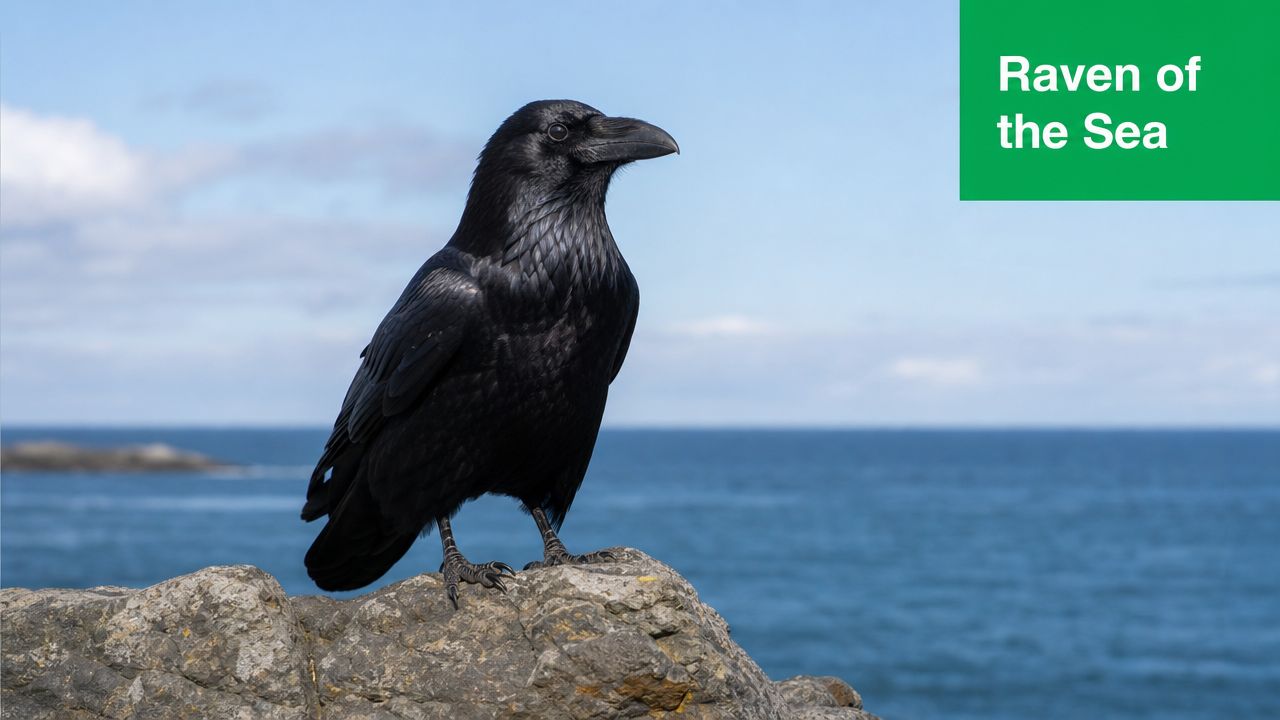
2. Cormac The Raven of the Sea

Cormac feels strong the moment you say it. It's short, hard-edged, and old. Traditional explanations connect it to older Irish elements often linked with “raven” and “son,” and in Irish cultural memory the name is especially tied to Cormac mac Airt, a legendary High King.

A majestic black raven perched on a rocky cliff overlooking the blue ocean on a sunny day.

A name built from parts

Cormac is useful because it looks compact but hints at an H_older naming system. Learners start noticing that Irish names often carry pieces of kinship, animals, natural features, or rank. That's valuable if you want to understand why Irish names feel so grounded in the natural and heroic worlds.

Pronounce it KOR-mak, with a clear hard C. That hard opening sound shows up in many strong Irish male names, including Cian and Cillian. Once your ear gets used to it, you'll read Irish names more confidently.

What to practise with Cormac

Use Cormac when studying mythology or kingship vocabulary. A sentence like Ba rí é Cormac gives you a name, a past-tense structure, and a cultural reference in just a few words. If you're preparing for oral work, names like this also help when describing legends or famous figures.

Try pairing Cormac with related vocabulary:

  • Éan: bird
  • Fiach: raven
  • Mac: son
  • Rí: king

Cormac works well because it doesn't feel like a museum piece. It still sounds usable now, but it carries the weight of older Ireland. That balance is part of why strong Irish male names remain so appealing to learners. They don't just label a person. They carry an entire worldview in a few syllables.

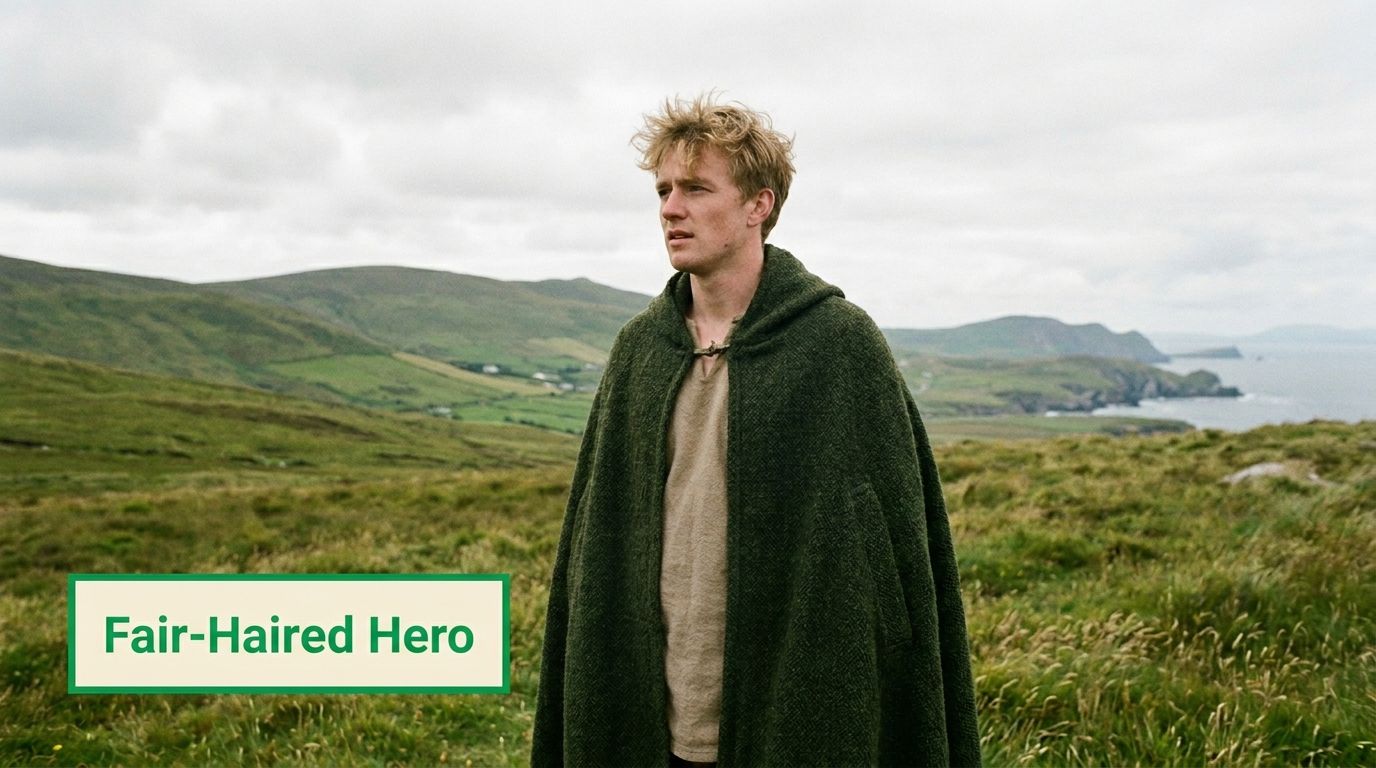
3. Fionn The Fair-Haired Warrior

A learner often meets Fionn first in a story, not in a vocabulary list. One moment you are reading about a hero on a hillside or by a fire, and the next you are staring at four letters that do not sound the way English spelling suggests. That is exactly why this name is so useful.

Fionn is bound up with Fionn mac Cumhaill, leader of the Fianna and one of the best-known figures in Irish tradition. The name comes from fionn, a word associated with fairness, brightness, and light colour. In older storytelling, that brightness carries more than a physical description. It suggests presence, clarity, and the kind of distinction that marks a heroic figure.

A fair-haired young man wearing a green hooded cloak standing in a vast, scenic Irish coastal landscape.

A short name that teaches a lot

Fionn works like a compact lesson in Irish culture. Learn the name, and you immediately gain access to the Fianna, to Oisín, and to the storytelling world that shaped so much of Irish identity. The Irish name guide from My Irish Jeweler highlights that link to Fionn mac Cumhaill, which helps explain why the name still feels heroic and distinctly Irish.

It also teaches an important reading habit. Irish spelling is sound-based, but the sound system is not the same as English. If you read Fionn as “fee-on,” you are applying English rules to an Irish word. A closer guide is FYUN, and in some contexts you will hear something nearer to FIN. That small adjustment trains your ear to expect Irish patterns instead of forcing English ones onto them.

What to practise with Fionn

This name is especially good for story-based learning. If Séamas helped with familiar forms and Cormac pointed toward older naming parts, Fionn lets you practise mythic vocabulary in a living setting.

Try using it in short, usable ways:

  • Name and title: Is laoch é Fionn. You get a name and the word for hero.
  • Family link: Is mac é Oisín le Fionn. You practise relationship language through a famous pair.
  • Story setting: pair the name with seasonal tradition through the Imbolc folklore and language guide, then describe a simple scene in Irish.

One name can carry pronunciation practice, etymology, and cultural memory at the same time. That makes Fionn more than a strong Irish male name. It becomes a doorway into how Irish stories sound, how Irish words are built, and how language learning gets easier when each word is tied to a real piece of tradition.

4. Ronan The Little Seal

Ronan, from the Irish Rónán, is one of the gentler-sounding strong Irish male names. Its root is tied to rón, meaning seal, with the diminutive ending -án, often understood as “little seal.” That combination gives the name warmth without making it weak.

Nature and softness

Irish names often connect strength with the natural world rather than brute force alone. Ronan shows that clearly. A seal is agile, watchful, and at home between land and sea. That kind of image feels very Irish, especially in a culture shaped by coastline, weather, and animal symbolism.

The name also appears in saintly tradition, which gives it another layer. Learners often discover through names that Irish culture holds older nature imagery and Christian history together rather than keeping them in separate boxes.

A practical pronunciation lesson

Say Rónán roughly as ROH-nawn. The fada on ó lengthens the vowel, and the ending teaches your ear how Irish often softens a name that looks firm on the page. It's a useful pattern because you'll hear similar endings in many Irish names.

Try introducing the name in a simple line such as Is mise Rónán. Then expand it: Is mise Rónán agus is as Corcaigh mé. That gives you name practice, a place phrase, and a full introduction.

For learners, Ronan is especially good for noticing structure:

  • The root word matters: rón gives you an animal word you can reuse.
  • The ending matters: -án helps you spot a common Irish name pattern.
  • The rhythm matters: Irish often places beauty in the vowel length, not just the consonants.

Ronan shows that a name can sound calm and still feel strong. That's an important lesson if you're studying Irish through names rather than only through grammar charts.

5. Daithí The Swift Warrior

Daithí has energy in it. Even before you know the meaning, the name sounds quick and lively. Traditional explanations connect it with swiftness or nimbleness, and Irish historical memory links it to a High King named Dáithí.

An Irish form with presence

This is the kind of name that reminds learners not to flatten Irish names into their nearest English equivalent. Daithí isn't just a decorative spelling. It belongs to Irish sound patterns and has its own personality. When learners pronounce it correctly, they're practising more than a name. They're practising respect for the language itself.

A common guide pronunciation is DAH-hee or DAW-hee, depending on accent. The final í gives the ending its light, lifted sound. That makes Daithí a good name for hearing how Irish vowels can carry the shape of a word.

Where learners can use it

Daithí works well in modern conversation practice because it feels traditional without sounding distant. You can put it into work, school, or social settings and it still feels natural. A sentence like Tá Daithí ag obair inniu is useful beginner material and sounds like real Irish.

If you're studying how Irish adapts and preserves names, Daithí also helps you compare forms across languages. That comparison trains your eye to see when a name has been translated, anglicised, or kept in Irish.

Learner note: Names with fadas are pronunciation tools, not decoration. If you ignore them, you usually change the word.

Daithí teaches sharp listening. It encourages you to hear the difference a single accent mark makes, and that skill carries straight into everyday Irish vocabulary.

6. Páraic The Nobleman

A learner often meets Patrick first and only later discovers that Irish keeps its own older music in the name. Páraic carries that music. It comes from the same Latin root behind Patrick, linked with nobility, but in Ireland the name grew far beyond its original meaning and became tied to faith, memory, and public celebration.

A name that teaches history

Few names open as many doors into Irish culture as Páraic. Across generations, the name became closely associated with Saint Patrick and with the spread of Christianity in Ireland. That association is why the Irish forms of Patrick matter to learners. They sit at the meeting point of language, religion, and national tradition.

You will also see Pádraig far more often than Páraic in modern Irish. That can confuse beginners.

The two forms belong to the same name family, but they give you a useful lesson in variation within Irish itself. Irish names are not always fixed in one spelling, especially when they have long histories and strong regional use. Spotting that relationship trains you to read Irish with more confidence instead of assuming one English form always maps to one Irish form.

How to say it, and what to listen for

A simple guide pronunciation for Páraic is PAW-rick.

That makes this name a helpful phonetics exercise. The long vowel in asks you to slow down at the start, and the final syllable stays lighter than in English Patrick. If you practise both Páraic and Pádraig aloud, you start hearing a pattern that appears again and again in Irish. Small spelling changes often signal real sound changes.

On Gaeilgeoir AI, this is the kind of name worth repeating in short drills. Say it in isolation first. Then place it in a sentence. Then compare it with Patrick and listen for where the Irish rhythm shifts.

A practical mini-lesson for Irish learners

Páraic gives you useful cultural vocabulary almost immediately. Once the name is familiar, you can build practice sentences around festivals, identity, and family introductions.

A few natural examples are:

  • Naomh Pádraig: Saint Patrick
  • Lá Fhéile Pádraig: Saint Patrick's Day
  • Páraic is ainm dó: His name is Páraic

Each phrase teaches something different. Naomh gives you a common religious title. Lá Fhéile Pádraig introduces a famous feast-day structure in Irish. Is ainm dó helps with a basic pattern for naming someone, which is useful far beyond this one example.

That is why Páraic belongs on a language-learning list, not only a name list. It gives you pronunciation practice, a window into variant forms such as Pádraig, and a direct route into one of the most recognisable strands of Irish cultural history.

7. Liam The Unwavering Protector

A learner often meets Liam before realising how much Irish history is packed into those four letters. It sounds familiar in English, yet it opens a door into the Irish form Uilliam, and from there into a useful lesson about how names travel across languages.

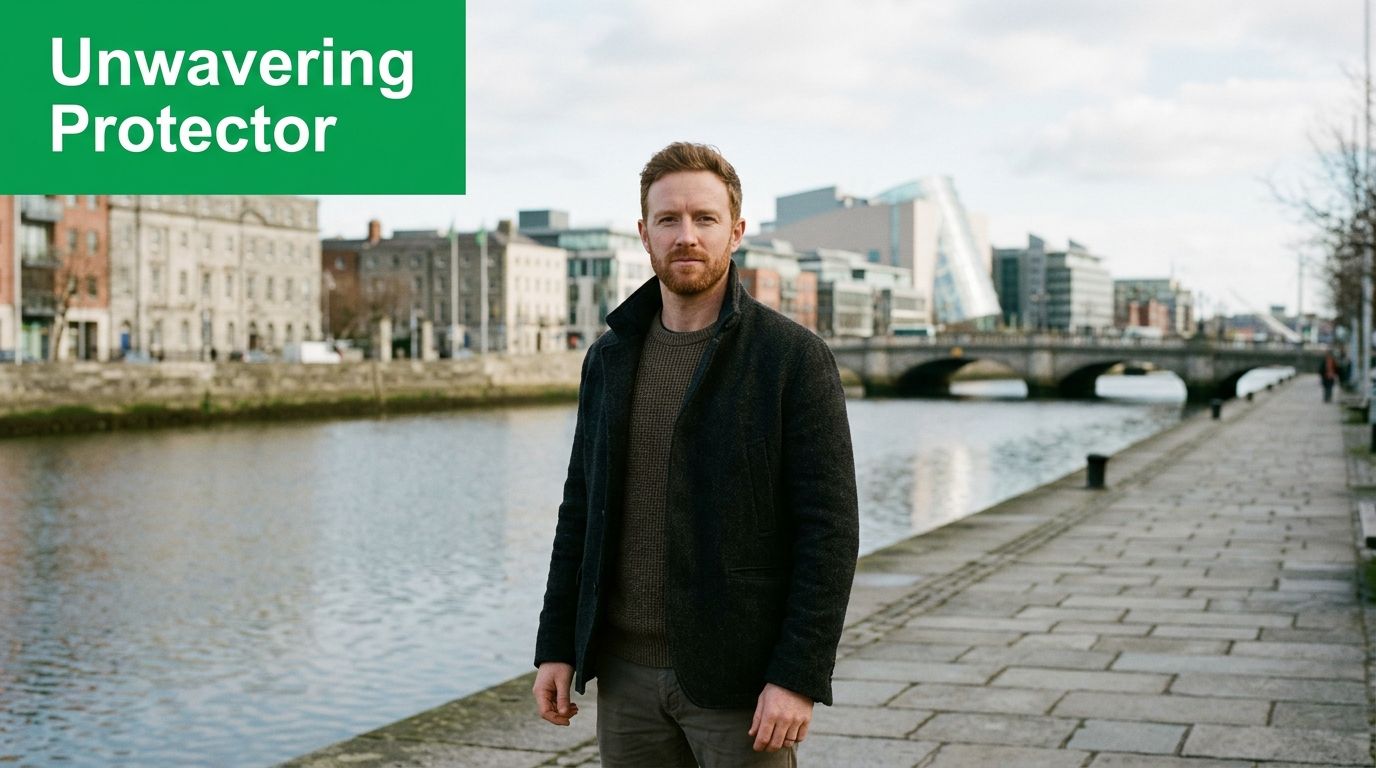
A man with red hair standing by the river Liffey in Dublin, wearing a dark coat and sweater.

Liam is widely treated as a shortened Irish form of Uilliam, the Irish version of William. The meaning usually given is “strong-willed warrior” or “protector.” Even if different name guides phrase that meaning slightly differently, the central idea stays steady. Strength, resolve, and guardianship all sit close to the heart of the name.

That makes Liam more than a popular choice. It is a small pronunciation lesson with training wheels.

For beginners, LEE-um is approachable, but it still teaches something useful. Irish names do not always need to be long or difficult to carry deep cultural roots. Liam shows that a compact form can preserve Irish identity while remaining easy for new speakers to say with confidence.

There is also a helpful language-learning contrast here. Uilliam looks more visibly Irish on the page, while Liam feels lighter and faster in conversation. Practising both is like comparing a full phrase with its everyday spoken version. You begin to notice how Irish keeps older forms alive while daily usage often trims them into something more agile.

On Gaeilgeoir AI, Liam works well for first speaking drills because you can focus on sentence structure without getting stuck on pronunciation. Start with the name on its own. Then place it into short, useful patterns that appear again and again in beginner Irish.

Try lines like these:

  • Is mise Liam. I am Liam.
  • Seo é Liam. This is Liam.
  • Tá Liam i mBaile Átha Cliath. Liam is in Dublin.

Each one teaches a different building block. Is mise helps with self-introduction. Seo é gives you a simple way to identify a male person. Tá…i introduces location, and Baile Átha Cliath adds a place name that learners meet early.

Liam belongs on a language-learning list because it gives you an easy entry point into Irish naming history, a clear pronunciation win, and a practical set of speaking patterns you can reuse far beyond this one name.

8. Niall The Champion

Niall is one of those names that feels old in the best possible way. Traditional explanations often connect it with “champion,” and the name is strongly associated with Niall of the Nine Hostages, a legendary High King remembered in dynastic history.

Kingly memory

If you're drawn to names with political and historical force, Niall is hard to beat. It points toward the Uí Néill, one of the most important dynastic groupings in Irish history. That makes it a strong choice for learners who want names that lead into genealogy, territory, and kingship vocabulary.

Pronunciation varies in teaching guides, but many learners use something close to NEEL. What matters most at beginner level is choosing a careful pronunciation and saying it consistently while you listen to native speech.

History you can speak aloud

Niall works well in more advanced speaking practice because it naturally invites historical description. You can use it in past tense sentences, family lineage phrases, and short accounts of Irish rulers. That gives it a different role from a simpler name like Liam.

The gap in many baby-name lists is that they don't always explain whether a name feels currently Irish in use or is Irish in origin. A Pampers guide to Irish boy names notes that Liam is one of the top Irish boy names in Ireland and North America and that Cillian has recently reached Ireland's top 10, but it also leaves room for a more practical comparison between heritage depth and international ease. Niall sits in that interesting middle space. It is recognisably Irish, historically loaded, and still familiar enough to travel.

Strong Irish male names don't all solve the same problem. Some maximise recognisability. Others maximise cultural depth. Niall gives you a lot of both.

For a learner, Niall opens rich territory:

  • Dynasty words: family, descendants, kings
  • History language: past tense, time markers, place names
  • Identity talk: ancestry, clan memory, heritage

8 Strong Irish Male Names: Meanings & Traits

Name 🔄 Learning complexity 📚 Resource requirements ⚡ Acquisition speed 📊 Outcomes & ⭐ Advantages 💡 Ideal use cases
Séamas (James) Low–Moderate, clear pronunciation patterns Low, beginner texts, literary examples ⚡ Fast, easy to adopt in speech ⭐ High recognizability; 📊 strong cultural linkage to Irish-English forms Practice introductions; literary/cultural lessons
Cormac Moderate, compound etymology to learn Moderate, mythology and etymology sources ⚡ Moderate, short, clear form aids speed ⭐ Good for teaching compound names; 📊 deep mythic context Mythology, etymology, and cultural symbolism lessons
Fionn Moderate, phonetic nuance (slender F) High, Fenian Cycle texts and narratives ⚡ Moderate, iconic but context-heavy ⭐ Iconic cultural depth; 📊 rich storytelling resources Advanced literature, storytelling, immersion activities
Rónán (Ronan) Low, simple pronunciation and diminutive form Low–Moderate, hagiography and social contexts ⚡ Fast, common in modern use ⭐ Practical modern use; 📊 bridges pagan and Christian history Beginner conversations, religious vocabulary, introductions
Daithí Low, accent/diacritic awareness needed Low, contemporary usage examples, pronunciation guides ⚡ Fast, familiar anglicized equivalents help ⭐ Balanced historical and modern relevance; 📊 versatile in registers Work/social scenarios; studying name adaptation
Páraic Low, familiar anglicized cognate, clear pronunciation Moderate, Saint Patrick materials and cultural notes ⚡ Fast, widely recognized ⭐ Strong national recognition; 📊 useful for cultural confidence Cultural identity discussions, exam prep, public speaking
Liam Very Low, minimal phonetic difficulty Minimal, everyday exposure and media examples ⚡ Very fast, immediate conversational utility ⭐ High practicality and modern relevance; 📊 excellent for real-world practice Beginner real-life conversations, travel, social interactions
Niall Moderate, historical context required High, genealogies, medieval chronicles, historical texts ⚡ Slower, depth requires study ⭐ Strong historical prestige; 📊 valuable for deep cultural understanding Advanced historical study, Leaving Cert prep, genealogical topics

Bringing Names to Life in Your Language Journey

A good Irish name works like a pocket lesson. You can hold one word in your mind, say it aloud, and suddenly meet spelling, sound, history, and identity in a form you can put to use.

That is what makes these eight names valuable for learners. Séamas gives you practice with a familiar biblical name in Irish form. Cormac points back to older word-building patterns in Gaelic naming. Fionn brings in saga tradition and one of the best-known heroic figures in Irish storytelling. Rónán lets you hear how Irish endings soften a name. Daithí draws your attention to the fada and how a small mark changes rhythm and pronunciation. Páraic connects language study with one of the strongest strands in Irish religious and cultural memory. Liam shows how a short Irish name can travel widely while keeping its roots. Niall opens the door to dynasties, annals, and family history.

Names help because they give grammar something to attach to. Instead of memorising isolated forms, you can build real phrases around a person, whether historical, legendary, or invented. Is mise Liam. Tá Páraic anseo. Ba laoch é Fionn. That kind of practice turns vocabulary into speech and helps you remember structures for longer.

They also make pronunciation less intimidating. Irish spelling can feel dense at first, especially if you are meeting fadas, broad and slender consonants, or sound combinations that do not match English habits. A single name keeps the task small. You hear one pattern, repeat one pattern, and then meet it again in other words. Learning Séamas or Daithí is not just learning a name. It is training your ear for Irish.

The cultural side matters just as much. These names do not come from one source. Some belong to myth, some to saints, some to kings, and some to everyday modern life. Studying that range helps you notice register and context. You start to sense which names carry an older literary feel, which sound contemporary, and which lead naturally into larger topics such as genealogy, folklore, religion, or national history.

Use them actively. Say each name aloud. Write short introductions. Build two-line dialogues. Describe a character's family, job, or place of origin. Retell one small part of a legend using simple verbs. Each exercise gives you pronunciation practice, sentence-building practice, and cultural recall at the same time.

The best part is how well names scale with your level. A beginner can introduce himself as Séamas or Liam. A more advanced learner can discuss Fionn mac Cumhaill, the Uí Néill, or the naming habits found in older Irish texts. The same set of names grows with your Irish.

If you want to turn recognition into real use, practise these names in spoken and written Irish through guided conversations, pronunciation work, and culture-based exercises on Gaeilgeoir AI.

8 Key Goddess Brigid Symbols and Their Meanings

You might be coming to Brigid from different directions at once. Maybe you're learning Irish because of family roots, maybe you're preparing for a class or oral exam, or maybe you saw a Brigid's cross in an Irish home and realized there was a whole layer of meaning behind it. That moment matters, because language and symbol often travel together.

Brigid stands at a rare crossroads in Irish culture. She appears as goddess and saint, in seasonal custom and household tradition, in stories about healing, craft, poetry, and protection. When people talk about Irish heritage in a living, everyday sense, Brigid is often somewhere close by. Her symbols aren't just decorative. They carry memory, belief, and ways of seeing the world.

Learning the meanings behind goddess Brigid symbols can make your Irish feel less like isolated vocabulary and more like part of a cultural tapestry. A word like lasair becomes more memorable when you connect it to Brigid's flame. A word like baile gains warmth when you picture a cross hanging over a family doorway. Cultural context gives language weight.

This guide focuses on eight key symbols linked with Brigid, their meanings, and their place in both older tradition and modern life. Along the way, each symbol becomes a language-learning tool. You'll get simple Irish terms, conversation ideas, and ways to use cultural knowledge as speaking practice.

Table of Contents

1. The Brigid's Cross (Croíoch Bhríde)

You notice a small woven cross above an Irish doorway in early spring. It looks simple at first, just rushes folded into a balanced shape. Then someone tells you it is made for Brigid, hung for protection, and tied to the turning of the season. A household object becomes a piece of cultural memory.

A home symbol that carries history

Brigid's cross is traditionally woven from rushes or reeds and placed in the home, often over a door or near an entrance. In Irish tradition, that placement matters. The cross marks the house as a protected space, but it also points to a wider pattern in the year. It is closely associated with Imbolc and the beginning of spring, when people marked change not with abstract ideas, but with objects they could make, hold, and hang in daily life.

Its form also helps explain why the symbol has lasted. The woven center gathers the arms together, much like a spoken phrase gathers separate words into one meaning. For learners of Irish, that is a useful comparison. You are not only memorizing the word crois. You are connecting it to baile (home), doras (door), cosaint (protection), and the seasonal language around Imbolc in Irish tradition and learning.

Some readers may wonder about the spelling here. You will often see Crois Bhríde as the standard Irish name for Brigid's cross. If your source uses a variant such as Croíoch Bhríde, treat that as a prompt to pay attention to regional usage and editorial choices. That habit helps in language learning too, because Irish often preserves meaning through local form as well as standard spelling.

Learn the symbol by speaking around it

Brigid's cross is one of the easiest symbols to turn into real language practice because it gives you visible, concrete things to describe. You can say what it is made from, where it hangs, who made it, and why it is kept.

Start with short, usable ideas. Tá an chros os cionn an dorais. The cross is above the door. Tá sí déanta as luachair. It is made from rushes. Cosnaíonn sí an baile. It protects the home.

That kind of practice works well for beginners because the object stays in front of you. It gives your memory a hook. A woven cross also teaches culture and vocabulary at the same time, which is often how Irish is best learned.

  • Home words: practice baile, teach, doras, and fuinneog with simple location phrases
  • Craft words: add luachair (rushes), déanta (made), and fite (woven)
  • Speaking prompt: describe a Brigid's cross you have seen in a house, school, museum, or photo
  • Conversation idea: ask a partner, An bhfuil cros Bhríde i do theach? and answer with one or two full sentences

If you want a visual prompt while practicing, even a crafted object can help you hold the image of form, balance, and radiating shape in mind. Collections such as Astro West's curated mineral art can serve as a reminder that symbolic objects often teach through shape before they teach through explanation.

That is part of Brigid's lasting appeal. Her cross is not only something to study. It is something people still make, still display, and still talk about. For an Irish learner, that makes it more than a symbol from the past. It becomes a doorway into vocabulary, memory, and lived tradition.

2. The Sacred Flame (An Lasair Dhílis)

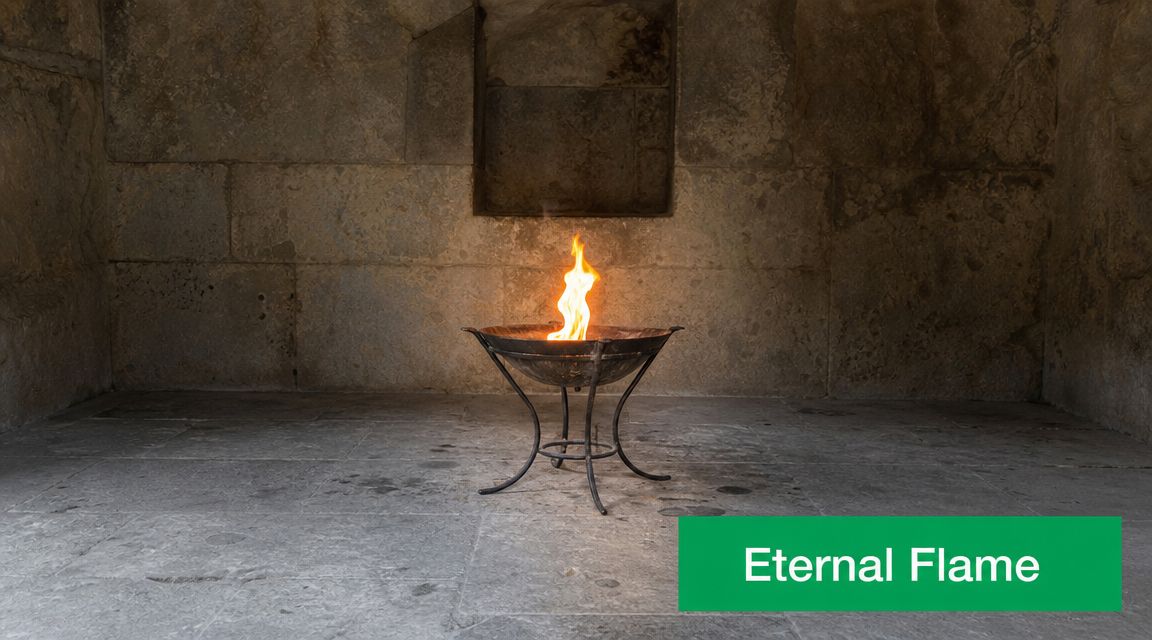
You are studying Irish on a dark evening, and one word stays with you after the lesson ends. Lasair. Flame. Brigid's sacred flame works that way in tradition too. It is less like a museum object and more like a living image that keeps meaning warm.

A small fire burning in a decorative metal bowl placed against a stone wall background.

Fire as sacred presence

Brigid's flame is closely tied to Kildare and to the long memory of fire as both daily necessity and holy sign. In older tradition, a tended flame suggests continuity, care, and devotion. It also points to ordinary human needs. Fire gives heat, light, cooked food, and the conditions for skilled work.

That overlap helps explain why this symbol matters so much. Brigid is not linked to inspiration in an abstract way only. The flame represents the kind of inspiration that feeds life, shelters people, and supports making, healing, and learning.

A flame also changes whatever comes near it. Metal softens. Darkness recedes. Raw food becomes nourishing. That makes it a strong symbol for inner change as well. In stories and devotional memory, Brigid's fire often stands for the spark that turns effort into insight.

A helpful symbol for Irish learners

This image is especially useful if you are learning Irish because it gives you a small cluster of words that belong together. That is how memory often works best. One image holds several meanings at once.

Start with a few core terms:

  • lasair, flame
  • solas, light
  • teas, warmth
  • dóchas, hope

Then build very short sentences:

  • Tá an lasair geal. The flame is bright.
  • Tugann sí solas. It gives light.
  • Tugann sí teas dom. It gives me warmth.
  • Coinním an dóchas beo. I keep hope alive.

If metaphor feels difficult, begin with the physical sense first. Describe what fire does. Then move one step outward and describe what learning feels like. That progression is useful for conversation practice because it teaches concrete language before abstract language.

For example, a learner on Gaeilgeoir AI might practice seasonal vocabulary through Imbolc-focused Irish lessons and then answer a prompt such as: Cad a choinníonn do chuid Gaeilge beo? What keeps your Irish alive? You could answer with simple phrases about daily study, songs, prayer, community, or memory.

Why the flame still speaks to people

The sacred flame remains relevant because it expresses steady attention. Language learning needs that same quality. You do not master Irish in one burst. You tend it, return to it, and protect it from going cold.

A visual reminder can help. Even a modern object shaped by flame imagery, such as Astro West's curated mineral art, can keep that association in view. Shape teaches before explanation does. A rising form suggests energy, focus, and renewal.

Brigid's flame, then, is more than a religious or mythic symbol from the past. For an Irish learner, it becomes a practical model. Keep the light small if needed. Keep it steady.

3. The Triple Goddess Form (Tríocha na Bandia)

Not every Brigid symbol is an object. Some are patterns of identity. The triple form is one of the most important because it helps explain why Brigid appears in so many roles at once.

Three roles, one figure

In tradition, Brigid is often understood through a threefold nature. People commonly describe her as healer, poet, and smith or craftsperson. That combination tells you a lot about the kind of power she represents. She doesn't belong to only one domain. She joins care, imagination, and skill.

For learners, this is useful because it keeps Brigid from becoming a flat historical figure. She isn't just “the goddess of one thing.” She's a cultural figure who gathers several valued human activities into one presence. Healing tends the body and spirit. Poetry shapes language. Craft turns effort into something durable.

In some modern interpretations, people also connect this triple form to broader life stages or cycles of feminine power. Even when details vary, the central idea remains clear. Brigid often stands for wholeness through plurality.

A strong model for descriptive Irish

This symbol is perfect for practicing linked description in Irish. Learn three words together and use conjunctions naturally: leigheas for healing, filíocht for poetry, and a craft-related word set for making or skilled work. Then build sentences with agus.

  • Describe a person: “She is a healer and a poet.”
  • Describe yourself: “I like language and craft.”
  • Compare qualities: “Poetry is creative, healing is gentle, and smithcraft is strong.”

That kind of triad practice helps beginners move beyond naming isolated nouns. You start organizing ideas, which is what actual conversation requires.

If a symbol has three parts, use it to make three-part sentences. The structure of the tradition can support the structure of your language practice.

This is also a good symbol for mythology-themed discussion prompts. Ask simple questions in Irish or English first, then answer in Irish where you can: Which part of Brigid speaks to you most? Healing, poetry, or craft? The answer usually becomes more personal than a textbook exercise.

4. The Healing Wells (Toibreacha Leighis)

Brigid's world isn't only made of fire and woven rushes. It also includes water. That contrast is one reason her symbolism feels so complete.

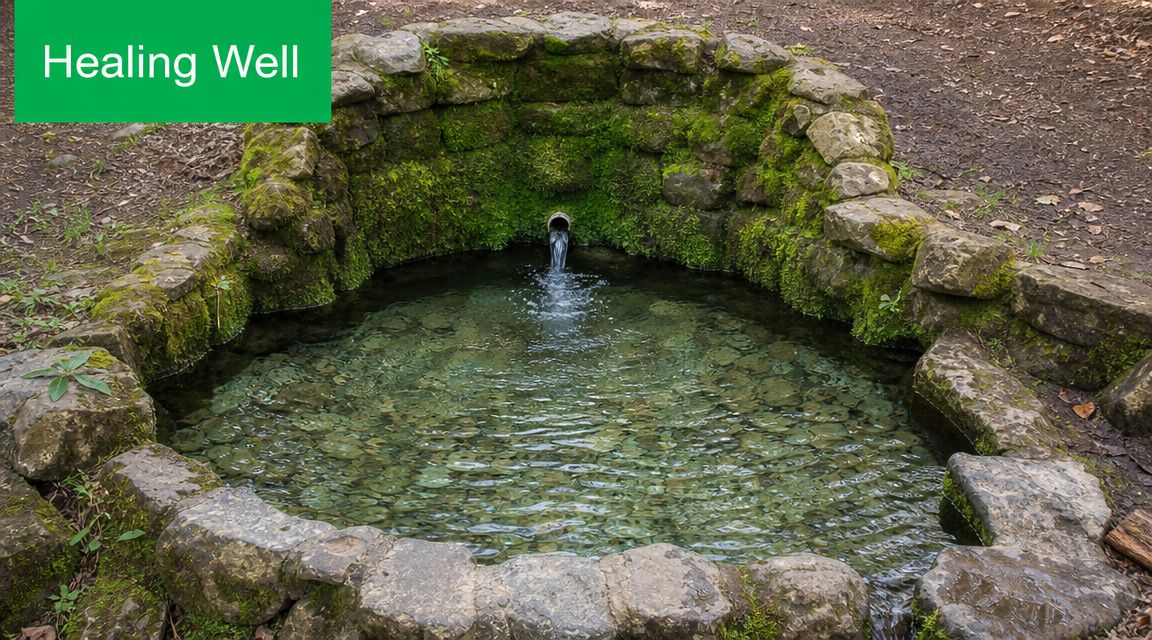
A natural spring or healing well surrounded by stone masonry covered with vibrant green moss.

Water, place, and pilgrimage

Healing wells associated with Brigid appear in Irish cultural memory as places of care, prayer, and connection to the land. Whether someone approaches them through folklore, devotion, local history, or pilgrimage, the key idea is the same. Water becomes a sign of restoration.

This is one of the goddess Brigid symbols that links belief directly to geography. A cross can be brought into the home. A well asks you to go somewhere. It places Brigid in the Irish land itself, not just in story.

That matters for language learners because place is central to Irish identity. Talking about a well quickly leads into talking about roads, counties, journeys, weather, and local tradition. A single symbol opens a whole practical vocabulary field.

Speaking about landscape in Irish

Words connected to this symbol can support real conversation. Learn tobar for well, leigheas for healing, taisteal for travel, and ionad for a site or place. Then use them in simple travel-style exchanges.

You might practice a scenario such as asking for directions to a holy well, describing the setting around it, or saying why someone wants to visit. These are realistic speaking tasks because they combine place, purpose, and feeling.

  • Direction language: Ask where a site is and how to get there.
  • Surroundings language: Describe stones, water, grass, roads, and quiet places.
  • Personal response: Say whether a place feels peaceful, important, or beautiful.

A good exercise is to describe a sacred place you already know, even if it isn't a Brigid well. Then swap in the new vocabulary. This keeps the language grounded in real memory instead of abstract study.

5. The Serpent and Renewal (An Nathair agus Athnuachan)

Some Brigid symbols feel gentle and domestic. The serpent feels older, wilder, and closer to the deep rhythms of nature.

A symbol of change

The serpent is often linked with renewal because it sheds its skin. That makes it a natural symbol for rebirth, healing, and transition. In Brigid-centered interpretation, those themes fit well with springtime and with the movement from darkness into light around Imbolc.

The serpent also carries a sense of ancient wisdom. It is more than a sign of danger. In this context, it suggests life returning, patterns repeating, and change arriving in visible form. That fits Brigid's role as a figure of transformation.

For a modern reader, this symbol can also work psychologically. Language learning often feels like shedding an old layer of self. You begin awkwardly, repeat basic forms, and slowly emerge into a new level of expression.

Seasonal vocabulary you can actually use

This symbol is useful because it supports discussion of cycles. Learn nathair for serpent, athnuachan for renewal, cruth for form, and words connected to seasons and natural change. Then put them into personal language rather than keeping them at the level of myth.

Growth in language is usually cyclical, not linear. You revisit old material and return to it with a new skin.

Try a speaking prompt such as, “What changes in spring?” or “How am I changing as a learner?” Those questions can be answered with simple structures and still feel meaningful. If dream or symbol interpretation interests you, cultural reflection can also branch into wider symbolic reading, including topics like interpreting snake dreams, though your Irish practice should stay grounded in clear everyday vocabulary.

This is also a strong symbol for journal work. Write a few lines about what you're leaving behind in your learning and what feels new. Then read those lines aloud in Irish as far as your level allows.

6. The Brigid Doll (Bab Bhríde)

A learner sits at a kitchen table, tying straw with awkward fingers and saying each step out loud in Irish. That small scene captures why the Bab Bhríde matters. It turns culture into something you can hold, name, and remember.

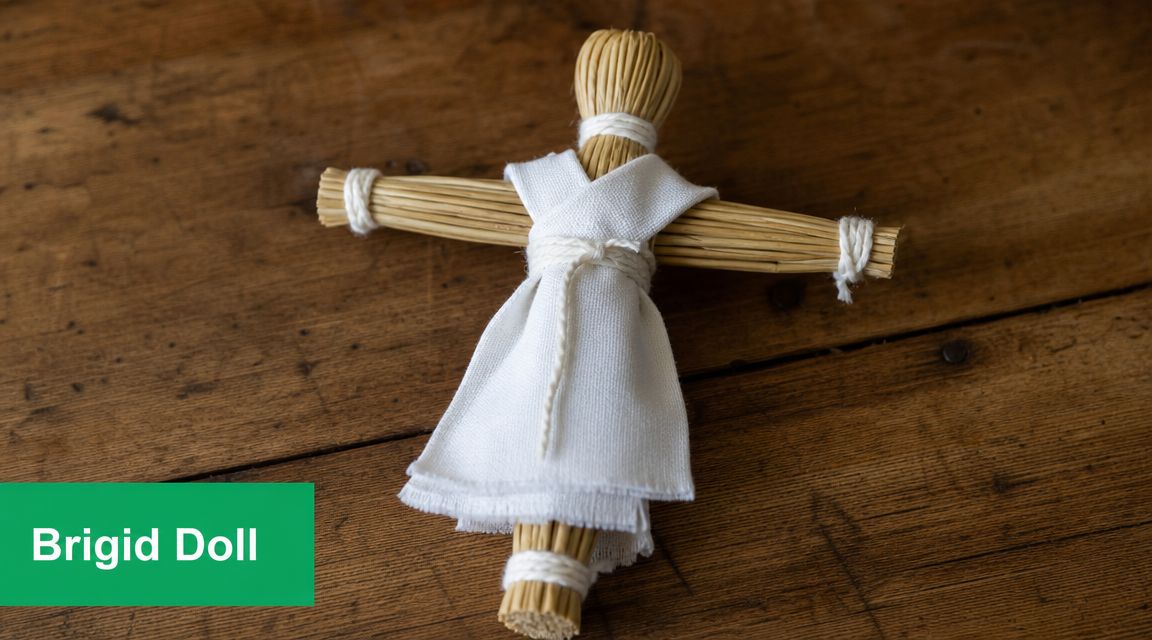
A handmade straw Brigid doll adorned in a white dress, resting on a rustic wooden table surface.

A living folk tradition

The Brigid doll, or Bab Bhríde, belongs to seasonal folk practice linked with Brigid and Imbolc. People have often made it from rushes, straw, or cloth, then placed it in the home as part of a local custom of welcome, blessing, and remembrance. That matters because this symbol is not only something seen in art or read about in myth. It lives in hands, homes, and repeated actions.

For language learners, that difference is useful. Abstract symbols can stay distant. A handmade object gives you concrete nouns, visible details, and actions you can describe in simple Irish. In other words, the doll works like a beginner-friendly lesson in cultural fluency.

It also teaches an important point about Irish tradition. Brigid is remembered not only through grand stories, but through ordinary domestic practices passed between generations.

Turn craft into speaking practice

The Bab Bhríde is especially helpful because it gives you verbs you can use right away. You can practice déan (make), ceangail (tie), cuir (put), glac (take), and éascaigh or simpler descriptive phrases for handling materials, depending on your level. You also get everyday nouns such as straw, cloth, thread, dress, hand, and table.

If you want a seasonal context for that practice, Imbolc learning activities in Irish can support the vocabulary around the custom.

Try a short spoken routine while you make or examine the doll. Say what the object is made of. Say what color it is. Say where you place it. This kind of repetition helps the language stick because each word attaches to a physical action, much like labeling tools while learning a craft.

  • Materials vocabulary: Practice words for rushes, straw, cloth, thread, and dress.
  • Action verbs: Use simple commands and present-tense forms such as make, tie, hold, place, and cut.
  • Home and placement language: Describe where the doll rests, such as on a shelf, near a door, or on a table.

This symbol also opens conversation practice that goes beyond naming objects. Ask, “Who made this?” “What is it for?” or “What customs does my family have in spring?” Those questions connect heritage and speech. For learners using Gaeilgeoir AI or any structured Irish practice, that connection is powerful because language grows faster when words belong to a real cultural scene, not an isolated word list.

7. The Brigandine and Metalwork (Gréine agus Ceardaíochta)

Brigid isn't only associated with soft things like wells, mantles, and household blessings. She's also linked with the forge, skilled labor, and the transformation of raw material through heat and effort.

Brigid the maker

Her connection with smithcraft gives Brigid a practical strength that many learners find memorable. In this form, she stands for craft, technique, discipline, and the ability to shape something useful from something rough. That image broadens how people understand the feminine in Irish tradition. Brigid protects, but she also makes.

Metalwork symbolism fits her especially well because forging is both physical and symbolic. It requires patience, repetition, timing, and attention. Those same qualities matter in language learning.

A poem, a tool, and a sentence all have something in common. Someone shaped them.

Why this matters for learners

This symbol opens excellent vocabulary for work and skill. Learn words connected to craftsperson, forge, metal, tools, and making. Then use them metaphorically to talk about your own progress. A beginner doesn't need advanced grammar to say, “I am building my Irish,” or “Practice makes my speech stronger.”

  • Skill language: Speak about learning as a craft rather than a test.
  • Work verbs: Make, build, shape, practice, and improve.
  • Personal reflection: Describe what part of Irish still feels raw and what has become more polished.

This is also a helpful way to talk about mistakes. In a forge, rough material isn't failure. It's the starting point. That mindset can calm learners who expect perfect speech too early.

Treat pronunciation like metalwork. Heat it with repetition, shape it with feedback, and return to it often.

Among goddess Brigid symbols, this may be the one that speaks most directly to steady effort. It reminds you that fluency isn't magic. It's made.

8. The Brigid's Mantle and Protection (Brat Bhríde)

If the forge shows Brigid's strength, the mantle shows her care. This is one of the warmest and most intimate symbols connected with her.

Care, shelter, and blessing

Brigid's mantle, or Brat Bhríde, represents protection, covering, and blessing. In tradition, being under Brigid's mantle suggests being sheltered from harm and held within a space of care. It's a symbol centered on relationships. It speaks to family, home, safety, and community.

That makes it especially resonant in Irish cultural memory, where household spirituality and spoken blessing often remain important. The mantle isn't dramatic in the way a flame is dramatic. Its force is quieter. It protects by enclosing.

For many learners reconnecting with heritage, this symbol lands strongly because it feels close to ordinary life. It belongs around children, elders, kitchens, thresholds, and daily routines.

Useful Irish for home and community

This symbol supports some of the most useful beginner vocabulary in the language. Learn brat for mantle or cloak, dídean for protection or shelter, baile for home, and pobal for community. Those words lead naturally into real conversation.

You can practice speaking about who lives in your home, what makes a place safe, and how a community cares for its members. Those are practical topics for everyday Irish, not only cultural study.

A simple speaking exercise works well here. Describe your home in a few sentences, then add one sentence about protection, welcome, or comfort. If you know any Irish blessings, this is also a natural place to learn and repeat them aloud.

Among all goddess Brigid symbols, the mantle may be the easiest to translate into daily speech. Discussions of home and family are frequent. Brigid gives those topics a deeper cultural frame.

Brigids Symbols: 8-Item Comparison

Item 🔄 Implementation Complexity ⚡ Resource Requirements 📊 Expected Outcomes ⭐ Key Advantages 💡 Quick Tips
The Brigid's Cross (Croíoch Bhríde) Low–Medium, simple weaving pattern; practice needed Low, rushes/straw and basic tools Tangible craft + seasonal vocabulary for conversations Highly recognizable cultural icon; hands-on learning Learn "croíoch", "dídean"; describe construction in present tense
The Sacred Flame (An Lasair Dhílis) Low, conceptual study of history and symbolism Low, texts, images, occasional site visits (Kildare) Deep literary/spiritual vocabulary and metaphor use Strong historical pedigree; links poetry, healing, creativity Learn "lasair"; read Brigid poems; discuss metaphorical meaning
The Triple Goddess Form (Tríocha na Bandia) Medium–High, layered mythology and variant traditions Low, readings, lessons, comparative sources Ability to discuss complex spiritual concepts and roles Rich symbolic depth; frames multiple facets of Brigid Learn aspect terms (healing, poetry, craft); use conjunction practice
The Healing Wells (Toibreacha Leighis) Low, descriptive and travel-oriented; simple rituals Medium, travel/virtual visits, site guides, maps Practical travel/pilgrimage vocabulary and sensory descriptions Tangible sites; strong tie to landscape and pilgrimage culture Learn "tobar", "leigheas"; practice directions and site descriptions
The Serpent and Renewal (An Nathair agus Athnuachan) Medium, metaphorical symbolism and seasonal cycles Low, literary sources and season-focused lessons Metaphors for transformation, seasons, and personal growth Universally relatable renewal theme; rich figurative language Learn "nathair", "athnuachan"; use seasonal vocabulary in metaphors
The Brigid Doll (Bab Bhríde) Medium, craft technique and ritual context Medium, rushes/straw, cloth, time and instruction Hands-on vocabulary, imperatives, family/community dialogue Highly interactive; multisensory and culturally immersive Practice imperative verbs while making a doll; follow Irish instructions
The Brigandine and Metalwork (Gréine agus Ceardaíochta) Medium–High, technical craft terms and metaphorical use Medium, texts, museum examples, tool vocabulary Skill-building metaphors; craft and tool vocabulary Strong metaphor for mastery; connects to Irish craft heritage Learn "gréine", "ceardaí", "iarainn"; use craft metaphors to explain learning
The Brigid's Mantle and Protection (Brat Bhríde) Low, straightforward metaphorical concept Low, prayers, examples, short texts Core family/home vocabulary and blessing phrases Emotionally resonant and accessible for beginners Learn "brat", "dídean"; practice home and family dialogues

From Symbols to Speech Deepen Your Irish Connection

Understanding goddess Brigid symbols isn't only about collecting bits of folklore. It's about learning how Irish culture stores meaning. A woven cross over a door, a remembered flame, a healing well, a handmade doll, a mantle of protection. Each one carries vocabulary, but each one also carries a worldview. When you learn both together, the language starts to feel more alive.

That's especially important if you're returning to Irish after years away, or starting from scratch with family history somewhere in the background. Many learners don't struggle because they lack motivation. They struggle because vocabulary can feel detached from real life. Brigid's symbols solve part of that problem. They root words in image, place, craft, ritual, and memory.

The cross teaches household language and seasonal custom. The flame gives you a way to talk about inspiration and perseverance. The triple form helps you describe layered identity. The wells lead into travel, environments, and place-based speech. The serpent opens the door to renewal and the language of change. The doll turns making into verbal practice. Metalwork reframes learning as craft. The mantle brings you back to family, safety, and community.

That kind of cultural fluency matters. It helps you understand why certain words matter, not just what they translate to. It also helps you sound more natural in conversation because you're responding to Irish culture as people live and remember it. Even at beginner level, that makes a difference.

You don't need to master every symbol at once. Pick one that stays with you. Learn a handful of related Irish words. Describe the image aloud. Use it in a short conversation. Write two or three sentences about it. Repeat that process and you'll build language through connection rather than memorization alone.

If you want structured practice, a platform like Gaeilgeoir AI can help turn these ideas into actual speaking habits. The goal isn't only to recognize Brigid in art or tradition. It's to speak about her, and about Irish culture more broadly, with growing confidence and clarity. To continue that work through guided conversation practice, explore Gaeilgeoir AI.


If you want to turn cultural knowledge into actual speaking practice, Gaeilgeoir AI offers guided, real-world Irish conversation work for beginners and returning learners. It's a practical next step if Brigid's symbols have sparked your interest and you want to build everyday vocabulary, pronunciation, and confidence through regular use.

Irish New Year’s Tradition: Ancient Rites & Modern Joy

If you're looking at the end of the year and feeling a little tired of the same countdown, the same noise, and the same resolutions that vanish by mid-January, Irish tradition offers something richer. An irish new year's tradition often asks a different question. Not just how to celebrate, but how to cross a threshold well.

In Ireland, New Year customs have long blended household ritual, community gathering, memory, and hope. Some are lively and public. Others are small enough to do in a quiet kitchen just before midnight. That mix is what makes them so appealing, especially if you want a celebration that feels personal.

For language learners, there’s another layer. Knowing a custom is one thing. Being able to talk about it in Gaeilge makes it feel lived-in. A phrase as simple as Athbhliain shona duit! can turn heritage from something you read about into something you can use.

Table of Contents

Welcoming the New Year the Irish Way

An Irish New Year often feels less like a party theme and more like a way of entering time carefully. You tidy the house. You think about who crosses the threshold. You remember the people who are gone. You make room for luck, but you also act as if luck needs an invitation.

A cozy green armchair with a plaid blanket next to a wooden table with a tea cup.

That’s where many readers get confused. They assume these customs are random superstitions, a collection of charming habits with no thread connecting them. In practice, the thread is quite clear. People wanted to leave hardship behind, welcome blessing into the home, and start the year in right relationship with family, neighbors, and the unseen world.

What makes it different

Three ideas sit at the heart of many Irish customs:

  • Thresholds matter: Doors, windows, and gates aren’t just practical spaces. They mark crossing points, and crossing points carry meaning.
  • The home matters: Many traditions happen indoors, around bread, firelight, a table, or the front door.
  • Community matters: Even when the ritual is private, it still connects the household to a wider circle of visitors, relatives, and local gatherings.

Irish New Year customs often treat midnight as a moment that can be shaped, not just observed.

That makes them useful even now. You don’t need a village square or a family farm to understand the instinct behind them. You only need a willingness to be intentional.

A good way to approach these traditions

If you're new to them, keep it simple:

  1. Choose one household ritual such as tidying or a symbolic welcome at the door.
  2. Add one act of remembrance for a loved one.
  3. Learn one Irish phrase so the custom has a voice, not just an action.

That last part matters more than people think. Cultural tradition becomes much easier to remember when you can say it out loud. A greeting, a blessing, or the name of a custom can turn a borrowed ritual into a felt connection.

Ancient Roots of Irish New Year Superstitions

Irish New Year's Eve traditions trace back to ancient Celtic times, when the night was known as Oíche Chinn Bliana. It was understood as a liminal moment, a bridge between one year and the next, and also a bridge between the human world and the world of spirits. That old worldview still explains why so many customs focus on protection, welcome, and signs of fortune, as described in this account of Oíche Chinn Bliana and first-footing.

A night between worlds

For the Celts, transition nights weren't ordinary. They carried risk and possibility at the same time. The end of the year was not just a calendar event. It was a moment when the usual boundaries felt thinner.

That helps explain why New Year's customs often seem so alert to invisible influence. A household might watch who enters first, how the home is prepared, or what kind of energy is carried over from the old year. These actions weren’t decorative. They were protective.

If you want to place these customs in a wider seasonal context, it helps to read about the older Celtic framework around the Celtic New Year.

Why luck mattered so much

One of the clearest examples is first-footing. Historical sources note that it was widely observed, especially in urban areas and parts of the northeast of Ireland a generation ago. The belief held that the first person to enter a home after midnight could shape the household’s luck for the year ahead.

A dark-haired male visitor was seen as a fortunate sign. A red-haired visitor, by contrast, could be taken as unlucky. To modern readers, that can sound arbitrary or uncomfortable. The key is to understand the older logic rather than defend every detail of it.

Historical lens: These beliefs came from a culture that saw luck as limited, something families had to actively secure.

That idea of finite luck is one of the most useful keys for understanding Irish New Year superstition. People did not assume good fortune would arrive on its own. They believed the household had to prepare, welcome, and guard it.

This is why seemingly small acts mattered so much. A visit, a threshold crossing, the timing of a knock at the door. Each one could become a sign.

For language learners, tradition simplifies the act of remembering. Instead of memorizing isolated vocabulary, you connect words to a scene. A door opening after midnight. A guest being welcomed in. A family watching for the year's first sign of blessing.

Key Rituals for Luck and Remembrance

Once you know the worldview behind the customs, the household rituals start to make sense. They weren’t done because someone needed entertainment on a winter night. They were done because every action carried a hoped-for result.

An infographic displaying five traditional Irish New Year rituals illustrated with icons and descriptive text.

Household customs with clear purpose

One often overlooked ritual is banging bread, or buaile arán, against the walls and doors of the home at midnight. It was done to chase out lingering bad luck from the old year and to help ensure the family would have enough food in the new one, a tradition described in this discussion of buaile arán and Irish New Year customs.

That custom is wonderfully concrete. You can hear it. You can feel it. And you immediately understand what the family hoped for: protection and plenty.

Other traditions often named alongside it include welcoming wandering souls, honoring the dead, and preparing the home as if it were about to receive both guests and blessing.

Bread at the wall wasn't a performance. It was a household prayer made physical.

How to try them respectfully at home

You don’t need to recreate every custom exactly. A respectful approach works better than a theatrical one.

  • Prepare the house with intention: A tidy room, a cleared table, or a swept threshold can stand for release from the old year.
  • Use bread symbolically: If banging bread feels too literal for your setting, hold a loaf at the doorway and name what you want to leave behind and what you hope to welcome.
  • Honor absent loved ones: An empty place setting, a candle, or a quiet spoken memory keeps the tradition of remembrance at the center.
  • Mark the doorway: Open the door for a moment around midnight and treat the threshold as meaningful.

A related custom appears in older ideas of blessing the home itself. If that interests you, this guide to an Irish house blessing tradition gives useful context.

Here’s where people sometimes hesitate. They worry that adapting a tradition means doing it wrong. In most cases, a simple, sincere version is far closer to the spirit of the custom than an elaborate version copied without understanding.

A family meal, a quiet doorway ritual, and a moment for remembrance already carry the heart of the tradition. What matters is the meaning attached to the act.

Modern New Year Celebrations in Ireland

Not every Irish New Year custom stays inside the home. In modern Ireland, many celebrations unfold in shared public spaces, where sound, light, and cold sea air all play their part.

A crowd of people gathering in an Irish city street while celebrating with fireworks in the sky.

From church bells to city streets

One of the most visible modern traditions is the ringing of bells on New Year's Eve. Across Ireland, bells sound from cathedrals, churches, and homes. In Dublin, Christ Church Cathedral provides a striking example through its annual festival and its sixteen pealing bells, part of a midnight tradition described in this overview of Irish New Year celebrations and bell-ringing.

The same source describes an "awesome cacophony of sound that sweeps the country" as midnight arrives. That phrase captures something essential. Even when celebrations are modern, they still carry the old instinct to make the turning of the year audible and communal.

The Dublin New Year Festival builds on that mood with an open-air countdown concert, light show, and procession. In other words, a custom that once belonged mainly to sacred and domestic spaces now spills into the street.

Practical reading of the tradition: The public celebration is newer in form, but it keeps the older Irish habit of marking the year together.

A short clip can help you feel the atmosphere better than description alone:

A bracing start on New Year's Day

Then comes one of the liveliest modern customs. The New Year's Day Swim. Formalized gatherings now take place at locations such as the Forty Foot in Sandycove, Dublin, along with beaches throughout Galway, where people plunge into the cold water on January 1st.

This is a good example of how Irish tradition evolves. The older customs focused on cleansing, luck, and renewal at home. The swim turns those ideas outward. The body meets the cold. The crowd cheers. The year begins with a shock that feels almost ceremonial.

Here, the mood shifts from superstition to shared courage. But the underlying hope is familiar. Start fresh. Enter the year awake.

How You Can Celebrate an Irish New Year Anywhere

You don't need to be in Dublin, Galway, or a rural Irish cottage to keep an irish new year's tradition alive. Most customs can travel well because they depend more on intention than location.

A person holding a glass of dark stout beer with a green background and a clover decoration.

A simple home version

Try building your evening around three moments rather than one big event.

Moment What to do Why it fits the tradition
Before midnight Tidy one room or clean your doorway It marks a clear break from the old year
At midnight Open the door, speak a blessing, or welcome a chosen first visitor It gives the threshold symbolic meaning
After midnight Share food, raise a glass, and remember absent loved ones It keeps hospitality and memory together

That pattern works for one person, a couple, or a larger family gathering. You can keep it quiet or festive.

If you want a language element without turning the evening into a lesson, pick one phrase and use it naturally. If you’re studying Irish already, one option is Gaeilgeoir AI, which offers guided conversation practice and pronunciation support that can help learners use seasonal phrases in realistic social situations.

Ways the diaspora keeps traditions alive

Traditions also change when families live far apart. That doesn't make them weaker. It often makes people more intentional about keeping them.

A source discussing diaspora adaptations notes a 30% rise in virtual first-footing via video calls among expats, and says #IrishNewYear videos garnered over 5 million views in late 2025, showing renewed interest in reconnecting with heritage in modern ways, as described in this piece on Irish New Year traditions among diaspora communities.

That matters because many readers are not trying to recreate a museum version of Irish culture. They’re trying to build a meaningful family practice where they are now.

Some easy adaptations work well:

  • Virtual first-footer: Ask a relative or friend to be the first face you greet after midnight by video call.
  • Shared remembrance: Light a candle in different households and speak the same family names.
  • Small ritual for children: Let them knock gently on the front door, then enter laughing and welcomed, so the threshold becomes memorable rather than solemn.
  • Online storytelling: Share one family story connected to Ireland before the countdown.

A living tradition isn't frozen. People carry it, reshape it, and keep its meaning intact.

Speak the Season with These Irish Phrases

This is the part most culture guides skip. They explain the ritual, but they don't help you say anything. For learners, that leaves the tradition half-finished.

Irish New Year customs become more personal when you can name them in Gaeilge. Even a few phrases can help you greet someone, describe a custom, or connect family practice to language study.

Essential Irish phrases for New Year's

Here is a practical starter table.

Irish Phrase Phonetic Pronunciation English Meaning When to Use It
Athbhliain shona duit! ah-vleen hun-uh ditch Happy New Year to you A friendly greeting at midnight or on New Year's Day
Athbhliain faoi mhaise duit! ah-vleen fwee vosh-uh ditch A happy prosperous New Year to you A warmer traditional greeting
Oíche Chinn Bliana ee-huh hin blee-uh-nuh New Year's Eve When naming the night itself
céadchosán kayd-khuh-sawn first-footing When talking about the first visitor tradition
cling cloig cling clug ringing of bells When describing midnight bells
buaile arán bool-yuh aw-rawn banging bread When discussing the bread ritual

If you want help with one of the most common seasonal expressions, this guide on how to say New Year in Irish Gaelic is a useful next step.

How to practice without overthinking

Most beginners make the same mistake. They wait until they can pronounce everything perfectly before saying anything out loud. That usually slows progress.

Try this instead:

  • Use one greeting repeatedly: Say it to family, text it to a friend, or write it in a card.
  • Pair phrase with action: Say Oíche Chinn Bliana as you set the table on New Year's Eve.
  • Build a tiny script: “Athbhliain shona duit. This year we welcome good luck.” Even mixing English and Irish helps.
  • Name one custom in Irish: If you're doing a threshold ritual, say céadchosán and explain it to someone.

For heritage learners, this is often the turning point. The language stops feeling like a school subject and starts sounding like family, season, and memory.

The goal isn't to perform fluency at the dinner table. It's to create a small bridge between words and life. Once that bridge is there, both the culture and the language become easier to carry forward.


If this sparked your interest, Gaeilgeoir AI is a practical next step. It helps learners build spoken Irish through guided, real-world conversation practice, pronunciation support, and everyday scenarios, so customs like New Year greetings become something you can say with confidence rather than just recognize on the page.

Start Speaking Irish Today — 25% Off
Use code START25

Learn real Irish for real life with guided practice, pronunciation support, and everyday conversations.

Get 25% off any plan with code START25

Start Speaking Irish Today — 25% Off