You might be coming to Brigid from different directions at once. Maybe you're learning Irish because of family roots, maybe you're preparing for a class or oral exam, or maybe you saw a Brigid's cross in an Irish home and realized there was a whole layer of meaning behind it. That moment matters, because language and symbol often travel together.
Brigid stands at a rare crossroads in Irish culture. She appears as goddess and saint, in seasonal custom and household tradition, in stories about healing, craft, poetry, and protection. When people talk about Irish heritage in a living, everyday sense, Brigid is often somewhere close by. Her symbols aren't just decorative. They carry memory, belief, and ways of seeing the world.
Learning the meanings behind goddess Brigid symbols can make your Irish feel less like isolated vocabulary and more like part of a cultural tapestry. A word like lasair becomes more memorable when you connect it to Brigid's flame. A word like baile gains warmth when you picture a cross hanging over a family doorway. Cultural context gives language weight.
This guide focuses on eight key symbols linked with Brigid, their meanings, and their place in both older tradition and modern life. Along the way, each symbol becomes a language-learning tool. You'll get simple Irish terms, conversation ideas, and ways to use cultural knowledge as speaking practice.
Table of Contents
- 1. The Brigid's Cross (Croíoch Bhríde)
- 2. The Sacred Flame (An Lasair Dhílis)
- 3. The Triple Goddess Form (Tríocha na Bandia)
- 4. The Healing Wells (Toibreacha Leighis)
- 5. The Serpent and Renewal (An Nathair agus Athnuachan)
- 6. The Brigid Doll (Bab Bhríde)
- 7. The Brigandine and Metalwork (Gréine agus Ceardaíochta)
- 8. The Brigid's Mantle and Protection (Brat Bhríde)
- Brigids Symbols: 8-Item Comparison
- From Symbols to Speech Deepen Your Irish Connection
1. The Brigid's Cross (Croíoch Bhríde)
You notice a small woven cross above an Irish doorway in early spring. It looks simple at first, just rushes folded into a balanced shape. Then someone tells you it is made for Brigid, hung for protection, and tied to the turning of the season. A household object becomes a piece of cultural memory.
A home symbol that carries history
Brigid's cross is traditionally woven from rushes or reeds and placed in the home, often over a door or near an entrance. In Irish tradition, that placement matters. The cross marks the house as a protected space, but it also points to a wider pattern in the year. It is closely associated with Imbolc and the beginning of spring, when people marked change not with abstract ideas, but with objects they could make, hold, and hang in daily life.
Its form also helps explain why the symbol has lasted. The woven center gathers the arms together, much like a spoken phrase gathers separate words into one meaning. For learners of Irish, that is a useful comparison. You are not only memorizing the word crois. You are connecting it to baile (home), doras (door), cosaint (protection), and the seasonal language around Imbolc in Irish tradition and learning.
Some readers may wonder about the spelling here. You will often see Crois Bhríde as the standard Irish name for Brigid's cross. If your source uses a variant such as Croíoch Bhríde, treat that as a prompt to pay attention to regional usage and editorial choices. That habit helps in language learning too, because Irish often preserves meaning through local form as well as standard spelling.
Learn the symbol by speaking around it
Brigid's cross is one of the easiest symbols to turn into real language practice because it gives you visible, concrete things to describe. You can say what it is made from, where it hangs, who made it, and why it is kept.
Start with short, usable ideas. Tá an chros os cionn an dorais. The cross is above the door. Tá sí déanta as luachair. It is made from rushes. Cosnaíonn sí an baile. It protects the home.
That kind of practice works well for beginners because the object stays in front of you. It gives your memory a hook. A woven cross also teaches culture and vocabulary at the same time, which is often how Irish is best learned.
- Home words: practice baile, teach, doras, and fuinneog with simple location phrases
- Craft words: add luachair (rushes), déanta (made), and fite (woven)
- Speaking prompt: describe a Brigid's cross you have seen in a house, school, museum, or photo
- Conversation idea: ask a partner, An bhfuil cros Bhríde i do theach? and answer with one or two full sentences
If you want a visual prompt while practicing, even a crafted object can help you hold the image of form, balance, and radiating shape in mind. Collections such as Astro West's curated mineral art can serve as a reminder that symbolic objects often teach through shape before they teach through explanation.
That is part of Brigid's lasting appeal. Her cross is not only something to study. It is something people still make, still display, and still talk about. For an Irish learner, that makes it more than a symbol from the past. It becomes a doorway into vocabulary, memory, and lived tradition.
2. The Sacred Flame (An Lasair Dhílis)
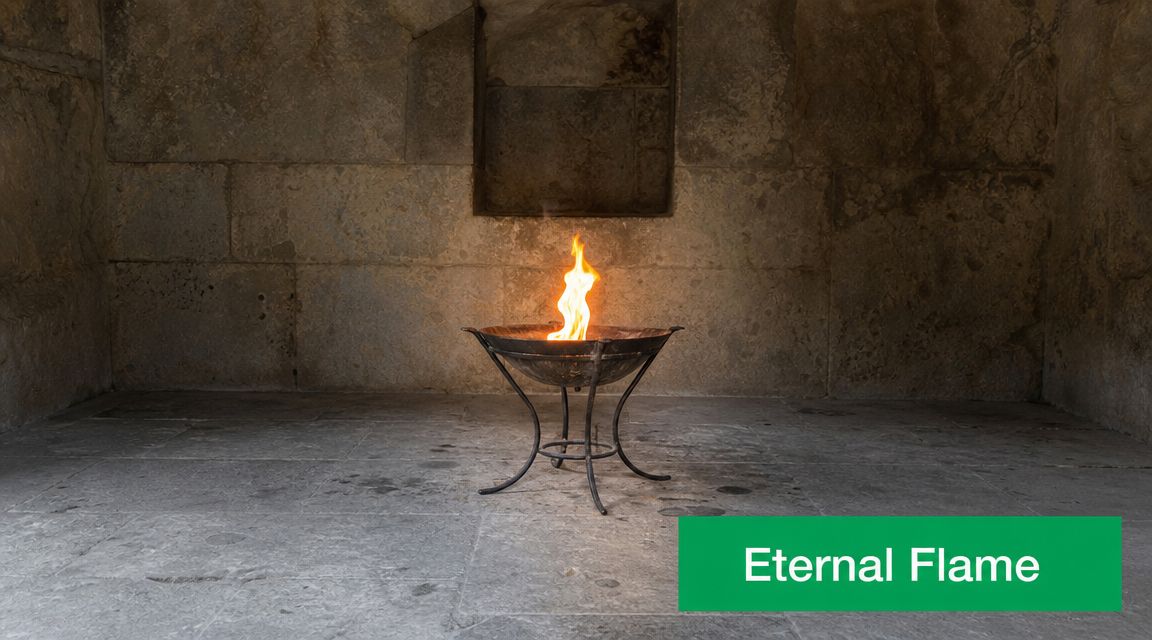
You are studying Irish on a dark evening, and one word stays with you after the lesson ends. Lasair. Flame. Brigid's sacred flame works that way in tradition too. It is less like a museum object and more like a living image that keeps meaning warm.
Fire as sacred presence
Brigid's flame is closely tied to Kildare and to the long memory of fire as both daily necessity and holy sign. In older tradition, a tended flame suggests continuity, care, and devotion. It also points to ordinary human needs. Fire gives heat, light, cooked food, and the conditions for skilled work.
That overlap helps explain why this symbol matters so much. Brigid is not linked to inspiration in an abstract way only. The flame represents the kind of inspiration that feeds life, shelters people, and supports making, healing, and learning.
A flame also changes whatever comes near it. Metal softens. Darkness recedes. Raw food becomes nourishing. That makes it a strong symbol for inner change as well. In stories and devotional memory, Brigid's fire often stands for the spark that turns effort into insight.
A helpful symbol for Irish learners
This image is especially useful if you are learning Irish because it gives you a small cluster of words that belong together. That is how memory often works best. One image holds several meanings at once.
Start with a few core terms:
- lasair, flame
- solas, light
- teas, warmth
- dóchas, hope
Then build very short sentences:
- Tá an lasair geal. The flame is bright.
- Tugann sí solas. It gives light.
- Tugann sí teas dom. It gives me warmth.
- Coinním an dóchas beo. I keep hope alive.
If metaphor feels difficult, begin with the physical sense first. Describe what fire does. Then move one step outward and describe what learning feels like. That progression is useful for conversation practice because it teaches concrete language before abstract language.
For example, a learner on Gaeilgeoir AI might practice seasonal vocabulary through Imbolc-focused Irish lessons and then answer a prompt such as: Cad a choinníonn do chuid Gaeilge beo? What keeps your Irish alive? You could answer with simple phrases about daily study, songs, prayer, community, or memory.
Why the flame still speaks to people
The sacred flame remains relevant because it expresses steady attention. Language learning needs that same quality. You do not master Irish in one burst. You tend it, return to it, and protect it from going cold.
A visual reminder can help. Even a modern object shaped by flame imagery, such as Astro West's curated mineral art, can keep that association in view. Shape teaches before explanation does. A rising form suggests energy, focus, and renewal.
Brigid's flame, then, is more than a religious or mythic symbol from the past. For an Irish learner, it becomes a practical model. Keep the light small if needed. Keep it steady.
3. The Triple Goddess Form (Tríocha na Bandia)
Not every Brigid symbol is an object. Some are patterns of identity. The triple form is one of the most important because it helps explain why Brigid appears in so many roles at once.
Three roles, one figure
In tradition, Brigid is often understood through a threefold nature. People commonly describe her as healer, poet, and smith or craftsperson. That combination tells you a lot about the kind of power she represents. She doesn't belong to only one domain. She joins care, imagination, and skill.
For learners, this is useful because it keeps Brigid from becoming a flat historical figure. She isn't just “the goddess of one thing.” She's a cultural figure who gathers several valued human activities into one presence. Healing tends the body and spirit. Poetry shapes language. Craft turns effort into something durable.
In some modern interpretations, people also connect this triple form to broader life stages or cycles of feminine power. Even when details vary, the central idea remains clear. Brigid often stands for wholeness through plurality.
A strong model for descriptive Irish
This symbol is perfect for practicing linked description in Irish. Learn three words together and use conjunctions naturally: leigheas for healing, filíocht for poetry, and a craft-related word set for making or skilled work. Then build sentences with agus.
- Describe a person: “She is a healer and a poet.”
- Describe yourself: “I like language and craft.”
- Compare qualities: “Poetry is creative, healing is gentle, and smithcraft is strong.”
That kind of triad practice helps beginners move beyond naming isolated nouns. You start organizing ideas, which is what actual conversation requires.
If a symbol has three parts, use it to make three-part sentences. The structure of the tradition can support the structure of your language practice.
This is also a good symbol for mythology-themed discussion prompts. Ask simple questions in Irish or English first, then answer in Irish where you can: Which part of Brigid speaks to you most? Healing, poetry, or craft? The answer usually becomes more personal than a textbook exercise.
4. The Healing Wells (Toibreacha Leighis)
Brigid's world isn't only made of fire and woven rushes. It also includes water. That contrast is one reason her symbolism feels so complete.
Water, place, and pilgrimage
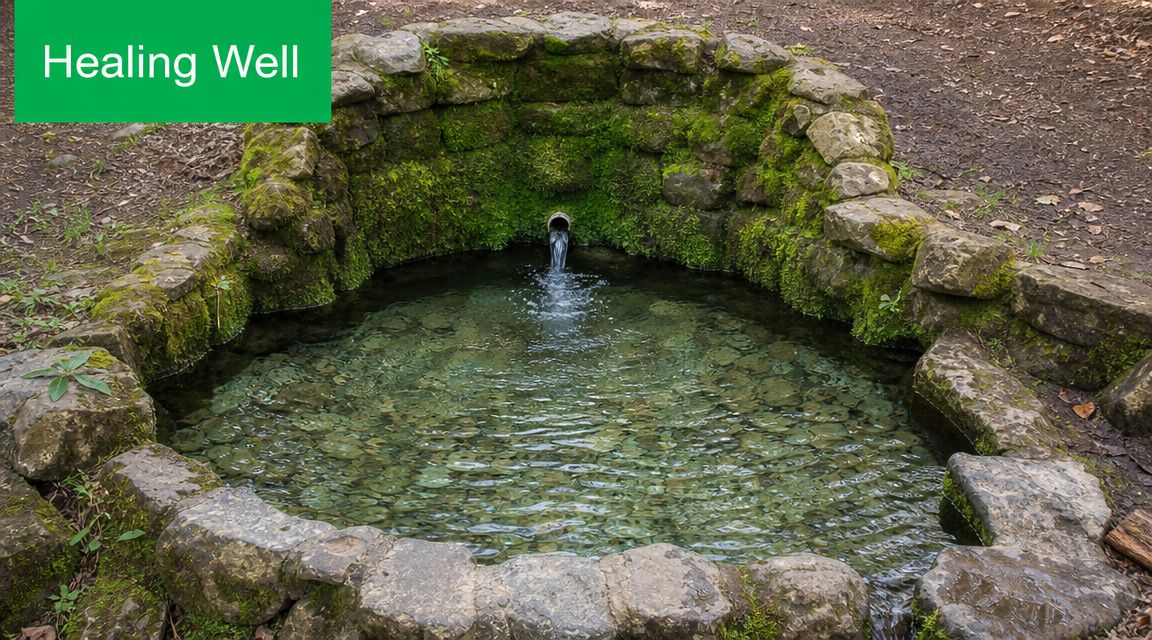
Healing wells associated with Brigid appear in Irish cultural memory as places of care, prayer, and connection to the land. Whether someone approaches them through folklore, devotion, local history, or pilgrimage, the key idea is the same. Water becomes a sign of restoration.
This is one of the goddess Brigid symbols that links belief directly to geography. A cross can be brought into the home. A well asks you to go somewhere. It places Brigid in the Irish land itself, not just in story.
That matters for language learners because place is central to Irish identity. Talking about a well quickly leads into talking about roads, counties, journeys, weather, and local tradition. A single symbol opens a whole practical vocabulary field.
Speaking about landscape in Irish
Words connected to this symbol can support real conversation. Learn tobar for well, leigheas for healing, taisteal for travel, and ionad for a site or place. Then use them in simple travel-style exchanges.
You might practice a scenario such as asking for directions to a holy well, describing the setting around it, or saying why someone wants to visit. These are realistic speaking tasks because they combine place, purpose, and feeling.
- Direction language: Ask where a site is and how to get there.
- Surroundings language: Describe stones, water, grass, roads, and quiet places.
- Personal response: Say whether a place feels peaceful, important, or beautiful.
A good exercise is to describe a sacred place you already know, even if it isn't a Brigid well. Then swap in the new vocabulary. This keeps the language grounded in real memory instead of abstract study.
5. The Serpent and Renewal (An Nathair agus Athnuachan)
Some Brigid symbols feel gentle and domestic. The serpent feels older, wilder, and closer to the deep rhythms of nature.
A symbol of change
The serpent is often linked with renewal because it sheds its skin. That makes it a natural symbol for rebirth, healing, and transition. In Brigid-centered interpretation, those themes fit well with springtime and with the movement from darkness into light around Imbolc.
The serpent also carries a sense of ancient wisdom. It is more than a sign of danger. In this context, it suggests life returning, patterns repeating, and change arriving in visible form. That fits Brigid's role as a figure of transformation.
For a modern reader, this symbol can also work psychologically. Language learning often feels like shedding an old layer of self. You begin awkwardly, repeat basic forms, and slowly emerge into a new level of expression.
Seasonal vocabulary you can actually use
This symbol is useful because it supports discussion of cycles. Learn nathair for serpent, athnuachan for renewal, cruth for form, and words connected to seasons and natural change. Then put them into personal language rather than keeping them at the level of myth.
Growth in language is usually cyclical, not linear. You revisit old material and return to it with a new skin.
Try a speaking prompt such as, “What changes in spring?” or “How am I changing as a learner?” Those questions can be answered with simple structures and still feel meaningful. If dream or symbol interpretation interests you, cultural reflection can also branch into wider symbolic reading, including topics like interpreting snake dreams, though your Irish practice should stay grounded in clear everyday vocabulary.
This is also a strong symbol for journal work. Write a few lines about what you're leaving behind in your learning and what feels new. Then read those lines aloud in Irish as far as your level allows.
6. The Brigid Doll (Bab Bhríde)
A learner sits at a kitchen table, tying straw with awkward fingers and saying each step out loud in Irish. That small scene captures why the Bab Bhríde matters. It turns culture into something you can hold, name, and remember.
A living folk tradition
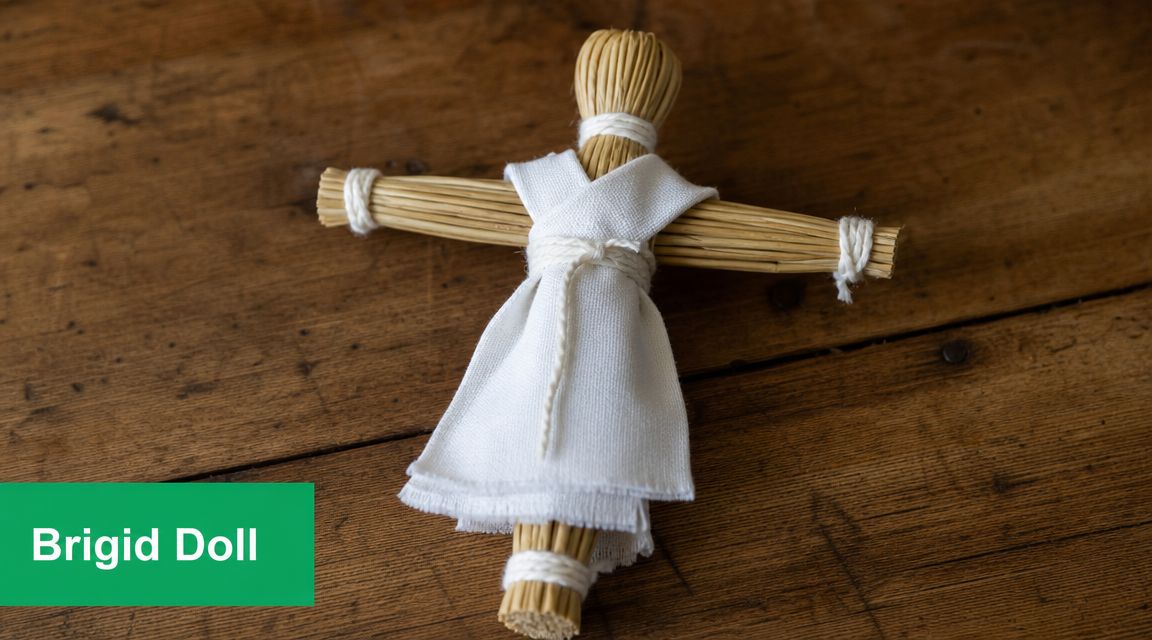
The Brigid doll, or Bab Bhríde, belongs to seasonal folk practice linked with Brigid and Imbolc. People have often made it from rushes, straw, or cloth, then placed it in the home as part of a local custom of welcome, blessing, and remembrance. That matters because this symbol is not only something seen in art or read about in myth. It lives in hands, homes, and repeated actions.
For language learners, that difference is useful. Abstract symbols can stay distant. A handmade object gives you concrete nouns, visible details, and actions you can describe in simple Irish. In other words, the doll works like a beginner-friendly lesson in cultural fluency.
It also teaches an important point about Irish tradition. Brigid is remembered not only through grand stories, but through ordinary domestic practices passed between generations.
Turn craft into speaking practice
The Bab Bhríde is especially helpful because it gives you verbs you can use right away. You can practice déan (make), ceangail (tie), cuir (put), glac (take), and éascaigh or simpler descriptive phrases for handling materials, depending on your level. You also get everyday nouns such as straw, cloth, thread, dress, hand, and table.
If you want a seasonal context for that practice, Imbolc learning activities in Irish can support the vocabulary around the custom.
Try a short spoken routine while you make or examine the doll. Say what the object is made of. Say what color it is. Say where you place it. This kind of repetition helps the language stick because each word attaches to a physical action, much like labeling tools while learning a craft.
- Materials vocabulary: Practice words for rushes, straw, cloth, thread, and dress.
- Action verbs: Use simple commands and present-tense forms such as make, tie, hold, place, and cut.
- Home and placement language: Describe where the doll rests, such as on a shelf, near a door, or on a table.
This symbol also opens conversation practice that goes beyond naming objects. Ask, “Who made this?” “What is it for?” or “What customs does my family have in spring?” Those questions connect heritage and speech. For learners using Gaeilgeoir AI or any structured Irish practice, that connection is powerful because language grows faster when words belong to a real cultural scene, not an isolated word list.
7. The Brigandine and Metalwork (Gréine agus Ceardaíochta)
Brigid isn't only associated with soft things like wells, mantles, and household blessings. She's also linked with the forge, skilled labor, and the transformation of raw material through heat and effort.
Brigid the maker
Her connection with smithcraft gives Brigid a practical strength that many learners find memorable. In this form, she stands for craft, technique, discipline, and the ability to shape something useful from something rough. That image broadens how people understand the feminine in Irish tradition. Brigid protects, but she also makes.
Metalwork symbolism fits her especially well because forging is both physical and symbolic. It requires patience, repetition, timing, and attention. Those same qualities matter in language learning.
A poem, a tool, and a sentence all have something in common. Someone shaped them.
Why this matters for learners
This symbol opens excellent vocabulary for work and skill. Learn words connected to craftsperson, forge, metal, tools, and making. Then use them metaphorically to talk about your own progress. A beginner doesn't need advanced grammar to say, “I am building my Irish,” or “Practice makes my speech stronger.”
- Skill language: Speak about learning as a craft rather than a test.
- Work verbs: Make, build, shape, practice, and improve.
- Personal reflection: Describe what part of Irish still feels raw and what has become more polished.
This is also a helpful way to talk about mistakes. In a forge, rough material isn't failure. It's the starting point. That mindset can calm learners who expect perfect speech too early.
Treat pronunciation like metalwork. Heat it with repetition, shape it with feedback, and return to it often.
Among goddess Brigid symbols, this may be the one that speaks most directly to steady effort. It reminds you that fluency isn't magic. It's made.
8. The Brigid's Mantle and Protection (Brat Bhríde)
If the forge shows Brigid's strength, the mantle shows her care. This is one of the warmest and most intimate symbols connected with her.
Care, shelter, and blessing
Brigid's mantle, or Brat Bhríde, represents protection, covering, and blessing. In tradition, being under Brigid's mantle suggests being sheltered from harm and held within a space of care. It's a symbol centered on relationships. It speaks to family, home, safety, and community.
That makes it especially resonant in Irish cultural memory, where household spirituality and spoken blessing often remain important. The mantle isn't dramatic in the way a flame is dramatic. Its force is quieter. It protects by enclosing.
For many learners reconnecting with heritage, this symbol lands strongly because it feels close to ordinary life. It belongs around children, elders, kitchens, thresholds, and daily routines.
Useful Irish for home and community
This symbol supports some of the most useful beginner vocabulary in the language. Learn brat for mantle or cloak, dídean for protection or shelter, baile for home, and pobal for community. Those words lead naturally into real conversation.
You can practice speaking about who lives in your home, what makes a place safe, and how a community cares for its members. Those are practical topics for everyday Irish, not only cultural study.
A simple speaking exercise works well here. Describe your home in a few sentences, then add one sentence about protection, welcome, or comfort. If you know any Irish blessings, this is also a natural place to learn and repeat them aloud.
Among all goddess Brigid symbols, the mantle may be the easiest to translate into daily speech. Discussions of home and family are frequent. Brigid gives those topics a deeper cultural frame.
Brigids Symbols: 8-Item Comparison
| Item | 🔄 Implementation Complexity | ⚡ Resource Requirements | 📊 Expected Outcomes | ⭐ Key Advantages | 💡 Quick Tips |
|---|---|---|---|---|---|
| The Brigid's Cross (Croíoch Bhríde) | Low–Medium, simple weaving pattern; practice needed | Low, rushes/straw and basic tools | Tangible craft + seasonal vocabulary for conversations | Highly recognizable cultural icon; hands-on learning | Learn "croíoch", "dídean"; describe construction in present tense |
| The Sacred Flame (An Lasair Dhílis) | Low, conceptual study of history and symbolism | Low, texts, images, occasional site visits (Kildare) | Deep literary/spiritual vocabulary and metaphor use | Strong historical pedigree; links poetry, healing, creativity | Learn "lasair"; read Brigid poems; discuss metaphorical meaning |
| The Triple Goddess Form (Tríocha na Bandia) | Medium–High, layered mythology and variant traditions | Low, readings, lessons, comparative sources | Ability to discuss complex spiritual concepts and roles | Rich symbolic depth; frames multiple facets of Brigid | Learn aspect terms (healing, poetry, craft); use conjunction practice |
| The Healing Wells (Toibreacha Leighis) | Low, descriptive and travel-oriented; simple rituals | Medium, travel/virtual visits, site guides, maps | Practical travel/pilgrimage vocabulary and sensory descriptions | Tangible sites; strong tie to landscape and pilgrimage culture | Learn "tobar", "leigheas"; practice directions and site descriptions |
| The Serpent and Renewal (An Nathair agus Athnuachan) | Medium, metaphorical symbolism and seasonal cycles | Low, literary sources and season-focused lessons | Metaphors for transformation, seasons, and personal growth | Universally relatable renewal theme; rich figurative language | Learn "nathair", "athnuachan"; use seasonal vocabulary in metaphors |
| The Brigid Doll (Bab Bhríde) | Medium, craft technique and ritual context | Medium, rushes/straw, cloth, time and instruction | Hands-on vocabulary, imperatives, family/community dialogue | Highly interactive; multisensory and culturally immersive | Practice imperative verbs while making a doll; follow Irish instructions |
| The Brigandine and Metalwork (Gréine agus Ceardaíochta) | Medium–High, technical craft terms and metaphorical use | Medium, texts, museum examples, tool vocabulary | Skill-building metaphors; craft and tool vocabulary | Strong metaphor for mastery; connects to Irish craft heritage | Learn "gréine", "ceardaí", "iarainn"; use craft metaphors to explain learning |
| The Brigid's Mantle and Protection (Brat Bhríde) | Low, straightforward metaphorical concept | Low, prayers, examples, short texts | Core family/home vocabulary and blessing phrases | Emotionally resonant and accessible for beginners | Learn "brat", "dídean"; practice home and family dialogues |
From Symbols to Speech Deepen Your Irish Connection
Understanding goddess Brigid symbols isn't only about collecting bits of folklore. It's about learning how Irish culture stores meaning. A woven cross over a door, a remembered flame, a healing well, a handmade doll, a mantle of protection. Each one carries vocabulary, but each one also carries a worldview. When you learn both together, the language starts to feel more alive.
That's especially important if you're returning to Irish after years away, or starting from scratch with family history somewhere in the background. Many learners don't struggle because they lack motivation. They struggle because vocabulary can feel detached from real life. Brigid's symbols solve part of that problem. They root words in image, place, craft, ritual, and memory.
The cross teaches household language and seasonal custom. The flame gives you a way to talk about inspiration and perseverance. The triple form helps you describe layered identity. The wells lead into travel, environments, and place-based speech. The serpent opens the door to renewal and the language of change. The doll turns making into verbal practice. Metalwork reframes learning as craft. The mantle brings you back to family, safety, and community.
That kind of cultural fluency matters. It helps you understand why certain words matter, not just what they translate to. It also helps you sound more natural in conversation because you're responding to Irish culture as people live and remember it. Even at beginner level, that makes a difference.
You don't need to master every symbol at once. Pick one that stays with you. Learn a handful of related Irish words. Describe the image aloud. Use it in a short conversation. Write two or three sentences about it. Repeat that process and you'll build language through connection rather than memorization alone.
If you want structured practice, a platform like Gaeilgeoir AI can help turn these ideas into actual speaking habits. The goal isn't only to recognize Brigid in art or tradition. It's to speak about her, and about Irish culture more broadly, with growing confidence and clarity. To continue that work through guided conversation practice, explore Gaeilgeoir AI.
If you want to turn cultural knowledge into actual speaking practice, Gaeilgeoir AI offers guided, real-world Irish conversation work for beginners and returning learners. It's a practical next step if Brigid's symbols have sparked your interest and you want to build everyday vocabulary, pronunciation, and confidence through regular use.