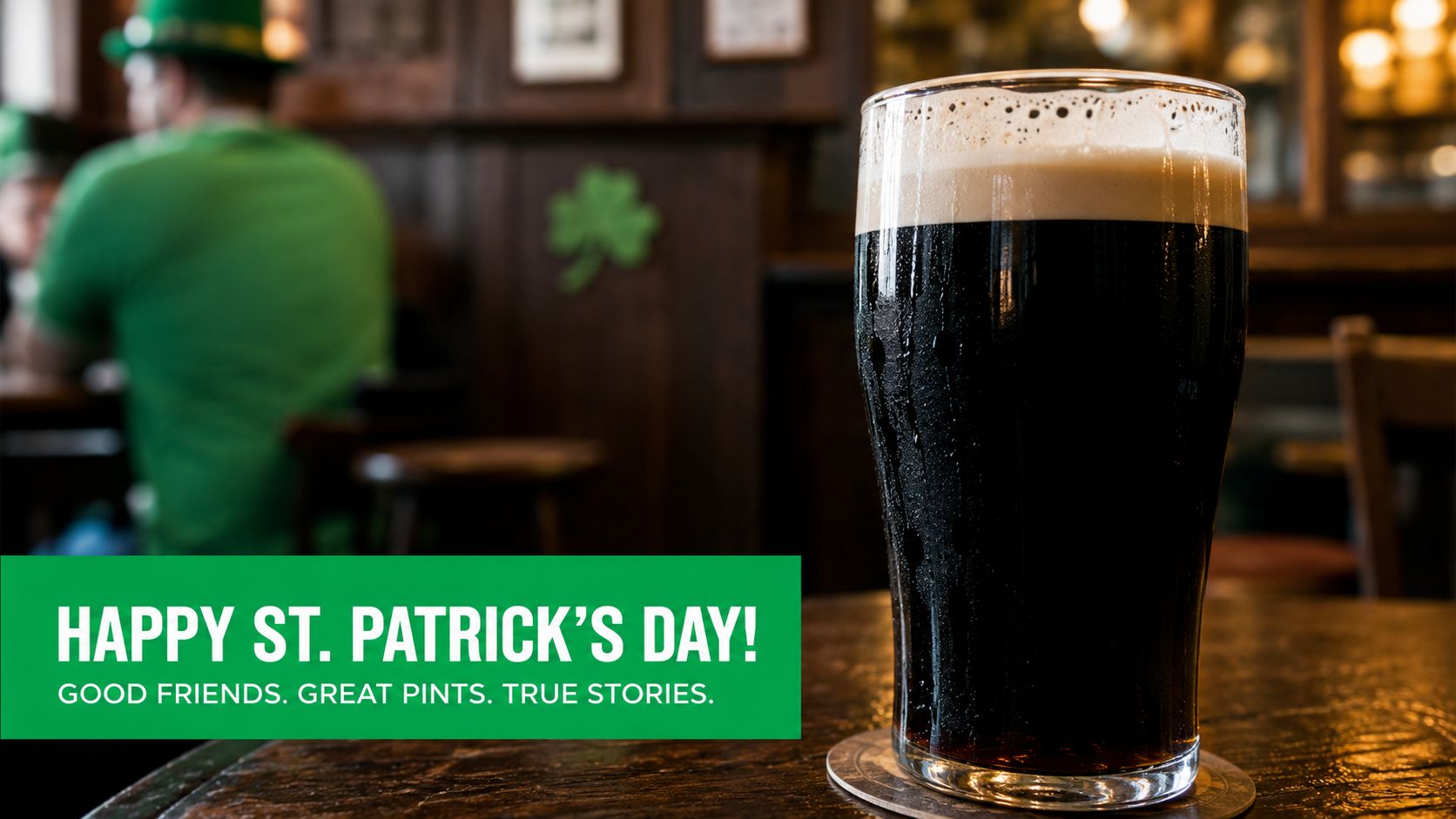
The main Irish greeting is “Lá Fhéile Pádraig Sona Duit” for one person, and the plural form is “Lá Fhéile Pádraig Sona Daoibh” for two or more people. In plain-English pronunciation, learners can start with “Law AY-leh PAW-drig SUN-ah gwitch” and “Law AY-leh PAW-drig SUN-ah deev.” English phonetics only get you close, though; Irish sounds vary by region, and I’ve found it better to aim for a respectful, understandable version than to freeze up trying to sound perfect.
Learning to say “Happy St. Patrick’s Day” in Irish adds authenticity to your celebrations and allows you to connect with the culture. The most common way to express this festive greeting in Irish (Gaeilge) is:
“Lá Fhéile Pádraig Sona Duit”
- Pronunciation: Law Ay-lah Paw-drig Sun-ah Gwitch
- Literal Meaning: “Happy St. Patrick’s Day to you” (singular)
When addressing multiple people, you would use:
“Lá Fhéile Pádraig Sona Daoibh”
- Pronunciation: Law Ay-lah Paw-drig Sun-ah Deev
- Literal Meaning: “Happy St. Patrick’s Day to you all” (plural)
A shorter, less formal variation you might hear is:
“Lá ‘le Pádraig Sona Duit”
- Pronunciation: Law leh Paw-drig Sun-ah Gwitch
Breakdown of the Phrase
The phrase breaks down into these components:
- Lá – Day
- Fhéile – Feast or Festival
- Pádraig – Patrick
- Sona – Happy
- Duit/Daoibh – To you (singular/plural)
You can practice these pronunciations by breaking them into smaller parts. The Irish language places emphasis on the first syllable of words, creating a distinctive rhythm in speech.
Some regional variations exist across different parts of Ireland. In Ulster (Northern Ireland), you might hear:
“Lá Fhéile Pádraig Sona dhuit”
- Pronunciation: Law Ay-lah Paw-drig Sun-ah Yu-itch
St. Patrick’s Day itself is held annually on March 17 and marks the traditional death date of Saint Patrick, making the greeting part of a living feast-day tradition rather than just a party slogan, as noted in this Irish Road Trip language guide.
How I Chose These Irish St. Patrick’s Day Greetings
I prioritized phrases that meet four tests: they are commonly used in modern Irish, grammatically correct, teach the singular/plural distinction clearly, and are realistic for non-speakers to pronounce. That meant keeping the standard duit/daoibh pair near the top and avoiding decorative phrases that look festive but are much less useful in an actual conversation.
I also excluded lines that get copied around the internet without context, especially phrases that are really general blessings rather than standard St. Patrick’s Day greetings. In my view, most readers do not need a dozen poetic options; they need one phrase for one person, one phrase for a group, and enough explanation to use them without guessing.
For meaning and usage, I leaned on established Irish-language explanations and cultural context. One helpful point from Irish Imbas Books is that Irish greetings often carry the sense of a blessing being placed upon someone, which helps explain why some forms feel warmer and slightly different in tone from direct English equivalents.
Quick Decision Aid: Which St. Patrick’s Day Greeting Should You Use?
Use this quick rule:
- Speaking to one person: Lá Fhéile Pádraig Sona Duit
- Speaking to a group: Lá Fhéile Pádraig Sona Daoibh
- Not sure and you want the safest default: use Lá Fhéile Pádraig Sona Duit if you are clearly addressing one person; otherwise switch to Daoibh
If you only memorize one distinction, make it this: duit = one person, daoibh = more than one. That is the point learners most often miss, and in my experience it is also the detail that makes your greeting sound considered rather than copied.
1. The Importance of St. Patrick’s Day in Irish Culture and Beyond
St. Patrick’s Day is a celebration of Ireland’s rich cultural heritage, observed with lively festivities every March 17th. This beloved holiday commemorates the death of St. Patrick, Ireland’s patron saint, who introduced Christianity to the Emerald Isle in the 5th century.
What started as a religious observance has grown into a worldwide celebration of Irish culture, identity, and traditions. The holiday is celebrated not only in Ireland but also in various countries around the world with grand parades, festivals, and events:
- New York City hosts the world’s oldest civilian parade
- Chicago turns its rivers green in tribute
- Sydney illuminates its iconic Opera House in emerald hues
- Tokyo hosts cultural festivals featuring Irish music and dance
The widespread appeal of this celebration lies in its ability to bring people together through shared happiness, regardless of their background. People from all walks of life can be seen joyfully participating in the festivities by wearing green clothing, displaying shamrocks, and enthusiastically embracing Irish customs.
Incorporating the Irish language into these celebrations adds an extra layer of authenticity to the experience. Greeting others in Irish (Gaeilge) can establish a deeper connection to the origins of the holiday and pay homage to Ireland’s linguistic heritage. This immersion into the culture elevates St. Patrick’s Day from a festive occasion to a meaningful exploration of Irish traditions, making your celebration unforgettable.
2. Exploring Traditional Irish Blessings, Sayings, and Quotes for St. Patrick’s Day
If your real goal is to say the holiday greeting correctly, skip the generic quote lists and start with the forms people can use.
The main greeting in Irish
Lá Fhéile Pádraig Sona Duit means “Happy St. Patrick’s Day to you” when speaking to one person. This is the standard choice if you are greeting a friend, colleague, bartender, shopkeeper, or family member directly. The same guide linked above notes this as the most common holiday greeting, with daoibh used for more than one person in the plural form.
The plural form for a group
Lá Fhéile Pádraig Sona Daoibh means “Happy St. Patrick’s Day to you all.” Use it for a table, a family, a classroom, a work team, or any group. If you want the exact sense of “to you all,” this is the form that answers it directly.
A shorter variant you may hear
Lá ’le Pádraig sona duit is a shorter, more casual version. It is understandable and natural in speech, but if you are learning from scratch, I would still memorize the full form first because it makes the structure clearer.
What the phrases mean beyond a word-for-word translation
In natural English, both greetings function like “Happy St. Patrick’s Day.” But there is a cultural nuance worth knowing: Irish often frames goodwill as something offered to or resting upon a person. That is why blessing-style expressions feel especially at home in Irish. If you like that older, warmer tone, Beannachtaí na Féile Pádraig ort means roughly “St. Patrick’s Day blessings on you.” For extra everyday greeting context beyond this holiday, a broad Irish greetings discussion can be useful once you have the core festive phrase down.
Useful extra greetings and responses
These are authentic additions you can use in conversation:
- Beannachtaí na Féile Pádraig ort, “St. Patrick’s Day blessings on you” (to one person)
- Beannachtaí na Féile Pádraig oraibh, “St. Patrick’s Day blessings on you all” (to a group)
- Go raibh maith agat, agus ort féin, “Thank you, and the same to you” as a natural reply to a singular greeting
- Go raibh maith agaibh, agus oraibh féin, “Thank you, and the same to you all” when replying to a group
I like the ort féin / oraibh féin reply pattern because it is easier to reuse across different Irish greetings once you notice the logic.
What about “Paddy’s Day” in Irish?
English speakers often say “Paddy’s Day,” but there is no especially natural Irish-language equivalent that learners need to memorize here. If you want to sound respectful and clear, stick with Lá Fhéile Pádraig sona duit/daoibh rather than trying to translate the nickname.
If you enjoy seeing how other languages handle festive greetings naturally rather than word-for-word, Translate AI's page on saying happy birthday in Japanese is a useful comparison.
For readers who also want a broader collection of Irish blessings, those can add warmth to a toast or card, but they should come after you have the core holiday greeting right.
3. Indulging in Traditional Irish Cuisine and Drinks for St. Patrick’s Day
No St. Patrick’s Day celebration is complete without authentic Irish cuisine and beverages. The rich culinary traditions of Ireland bring warmth and satisfaction to any festive gathering.
Traditional Irish Dishes
- Corned Beef and Cabbage: This hearty dish combines tender, brined beef with fresh cabbage, carrots, and potatoes. The meat slow-cooks to perfection, creating a melt-in-your-mouth texture that’s irresistible.
- Irish Stew: Made with succulent lamb, root vegetables, and fresh herbs, this comforting stew represents the heart of Irish home cooking. Each spoonful delivers a taste of authentic Irish tradition.
- Colcannon: This creamy mashed potato dish incorporates fresh kale or cabbage, creating a perfect side dish. Butter pools in the center, adding richness to every bite.
Festive Irish Treats
- Irish Soda Bread: This quick bread requires no yeast – just buttermilk, flour, baking soda, and salt. The cross scored on top holds both religious significance and practical purpose, helping the bread bake evenly.
- Shamrock Cookies: Green-tinted sugar cookies shaped like Ireland’s beloved symbol add a festive touch to any celebration.
- Dublin Coddle: A warming dish of sausages, bacon, onions, and potatoes – perfect for cold March evenings.
Traditional Irish Beverages
- Guinness: This iconic Irish dry stout, known for its dark color and creamy head, remains a St. Patrick’s Day essential. The proper pour takes exactly 119.5 seconds.
- Irish Whiskey: Brands like Jameson, Bushmills, and Powers represent Ireland’s rich distilling heritage. Serve neat, on rocks, or in an Irish Coffee.
- Irish Coffee: Hot coffee meets Irish whiskey, brown sugar, and fresh whipped cream in this beloved drink. The cream must float on top – never stirred in.
- Green Beer: While not traditionally Irish, this American adaptation has become a popular festive drink, created by adding food coloring to beer.
4. Fun Facts and Historical Insights About St. Patrick
The life story of St. Patrick is an incredible tale filled with adventure, spirituality, and significant cultural impact. He was born in Britain around 385 AD with the name Maewyn Succat and lived a comfortable life as the son of a Roman-British officer until he was kidnapped by Irish raiders at the age of 16.
Key Events in St. Patrick’s Life:
- Spent 6 years as a slave in Ireland tending sheep
- Escaped captivity after hearing a divine voice in his dreams
- Studied priesthood in France for 15 years
- Returned to Ireland as a missionary in 432 AD
- Died on March 17, 461 AD
St. Patrick became a saint through his extraordinary work as a missionary. He established churches, schools, and monasteries throughout Ireland, converting thousands to Christianity. His methods were unique – he incorporated existing Irish cultural symbols into Christian teachings.
Fascinating Historical Facts:
- St. Patrick wasn’t Irish by birth
- His birth name wasn’t Patrick
- He never banished snakes from Ireland (there weren’t any)
- The shamrock became his teaching tool to explain the Holy Trinity
St. Patrick’s influence on Irish culture goes beyond religious conversion. His legacy shaped Ireland’s educational system, monasticism, and literary traditions. The Book of Armagh, dating from 812 AD, contains St. Patrick’s writings, including his famous Confession.
Cultural Impact:
- Introduced Latin literature and Christian education to Ireland
- Developed a unique Celtic Christian tradition
- Created a bridge between Irish paganism and Christianity
- Inspired countless works of art, literature, and music
St. Patrick’s approach to spreading Christianity showed great respect for Irish culture. Instead of trying to get rid of Irish customs, he blended Christian teachings with existing Celtic traditions. This harmonious mix created a distinct form of Irish Christianity that thrived for centuries, and it also helps explain why Irish-language celebrations still connect so naturally with poetry and reflection, whether in classic verse or more recent collections such as these lockdown poems.
The places connected to St. Patrick are still considered sacred in Irish culture today. Croagh Patrick, where he is said to have fasted for 40 days, attracts thousands of pilgrims every year. Down Cathedral in Downpatrick is believed to be his burial site, marked by a large granite stone.
5. The Role of Music, Dance, and Entertainment in Celebrating St. Patrick’s Day
Music, dance, and entertainment play a vital role in celebrating St. Patrick’s Day, bringing people together and showcasing Irish culture. From lively folk songs to energetic dance performances, these elements create an atmosphere of joy and connection during the festivities.
The Power of Irish Music
Irish music is at the heart of every St. Patrick’s Day celebration, setting the tone for the festivities. Traditional Irish folk songs have a way of bringing people together, whether it’s in pubs, homes, or streets around the world. Classic tunes like “Danny Boy,” “Whiskey in the Jar,” and “The Wild Rover” can be heard echoing through festive gatherings, creating an atmosphere of joy and cultural connection.
Some Popular Irish Folk Songs for St. Patrick’s Day Include:
- “The Fields of Athenry” – A powerful ballad about Ireland’s Great Famine
- “Molly Malone” – Dublin’s unofficial anthem
- “The Irish Rover” – A lively sailing song perfect for group singing
- “Rocky Road to Dublin” – A fast-paced song showcasing traditional Irish rhythm
The Importance of Traditional Irish Pub Sessions
One of the key aspects of St. Patrick’s Day entertainment is the traditional Irish pub session (seisiún). These sessions are spontaneous gatherings where musicians come together to play authentic instruments and share their love for Irish music.
Some common instruments played during these sessions include:
- Fiddles
- Tin whistles
- Bodhrán (Irish drum)
- Uilleann pipes
- Celtic harp
The Visual Spectacle of Irish Dance
In addition to music, Irish dance adds a spectacular visual element to St. Patrick’s Day celebrations. Professional dancers and enthusiasts showcase their skills with intricate footwork in both soft and hard shoe styles.
Traditional Irish Dances You Might See Include:
Céilí Dances
- Group dances performed at social gatherings
- Popular variations: “The Walls of Limerick” and “The Siege of Ennis”
Solo Step Dances
- Jigs – Performed in 6/8 time
- Reels – Fast-paced dances in 4/4 time
- Hornpipes – Characterized by dotted rhythms
Blending Tradition with Modern Entertainment
St. Patrick’s Day celebrations have evolved over time, incorporating modern elements while still honoring tradition. Irish rock bands such as U2, The Cranberries, and The Pogues have brought new dimensions to Irish musical heritage, bridging the gap between traditional and contemporary celebrations.
The Significance of Pub Culture
Pub culture plays a significant role in amplifying these musical traditions. Pubs serve as spaces where stories, songs, and dances intertwine, fostering a sense of community and shared experience.
This combination of music, dance, and social gathering embodies the craic – a uniquely Irish term that encompasses fun, entertainment, and good company.
6. Embracing the Spirit of St. Patrick’s Day: Final Thoughts and Encouragements
Quick recap: the exact phrases to use
- One person: Lá Fhéile Pádraig Sona Duit, “Happy St. Patrick’s Day to you”
- Two or more people: Lá Fhéile Pádraig Sona Daoibh, “Happy St. Patrick’s Day to you all”
- Shorter casual version: Lá ’le Pádraig sona duit
- Blessing-style option: Beannachtaí na Féile Pádraig ort, “St. Patrick’s Day blessings on you”
Usage reminders
- Use duit when talking to one person.
- Use daoibh when speaking to a group.
- If you want the clearest, safest learner phrase, use the full Lá Fhéile Pádraig sona… form rather than a shortened variant.
Best default phrase if you only memorize one
If you are likely to say it face-to-face to one person, memorize Lá Fhéile Pádraig Sona Duit first. That is the form I’d recommend to most learners because it is the most broadly useful and the easiest to understand once you know what each word is doing.
A note on pronunciation confidence
Do not worry if your accent is not perfect. Irish pronunciation has regional variation, and a careful attempt with the right duit/daoibh choice usually matters more than chasing flawless phonetics. If you say it slowly and with confidence, you will already sound much more informed than someone repeating a random internet version.
7. FAQs (Frequently Asked Questions)
How do you say “Happy St. Patrick’s Day” in Irish?
The standard Irish greeting is Lá Fhéile Pádraig Sona Duit when speaking to one person, or Lá Fhéile Pádraig Sona Daoibh when speaking to more than one person. Nollaig Shona Duit means “Merry Christmas,” so it is not correct here.
What does “Lá Fhéile Pádraig Sona Daoibh” mean?
It means “Happy St. Patrick’s Day to you all.” The key word is daoibh, which is the plural “to you.”
What is the traditional Irish greeting for St. Patrick’s Day?
The most widely used greeting is Lá Fhéile Pádraig Sona Duit for one person and Lá Fhéile Pádraig Sona Daoibh for a group. St. Patrick’s Day itself is Lá Fhéile Pádraig in Irish.
What should you say to Irish people on St. Patrick’s Day?
A safe and natural choice is Lá Fhéile Pádraig Sona Duit if you are greeting one person directly. If you are addressing a group, use Lá Fhéile Pádraig Sona Daoibh instead.
What does “Pádraig” mean in English?
Pádraig is the Irish form of Patrick. On this holiday, it refers to Saint Patrick, the patron saint of Ireland.
Is St. Patrick’s Day a religious holiday, a cultural holiday, or both?
Both. It is celebrated on March 17, the traditional death date of Saint Patrick, and it developed as a feast day while also becoming a major cultural celebration of Irish identity, history, and community, as summarized in this Saint Patrick’s Day overview.
Is there a natural Irish equivalent of “Happy Paddy’s Day”?
Not really in the way learners usually expect. The more natural choice is to use the proper Irish-language greeting: Lá Fhéile Pádraig Sona Duit or Lá Fhéile Pádraig Sona Daoibh.