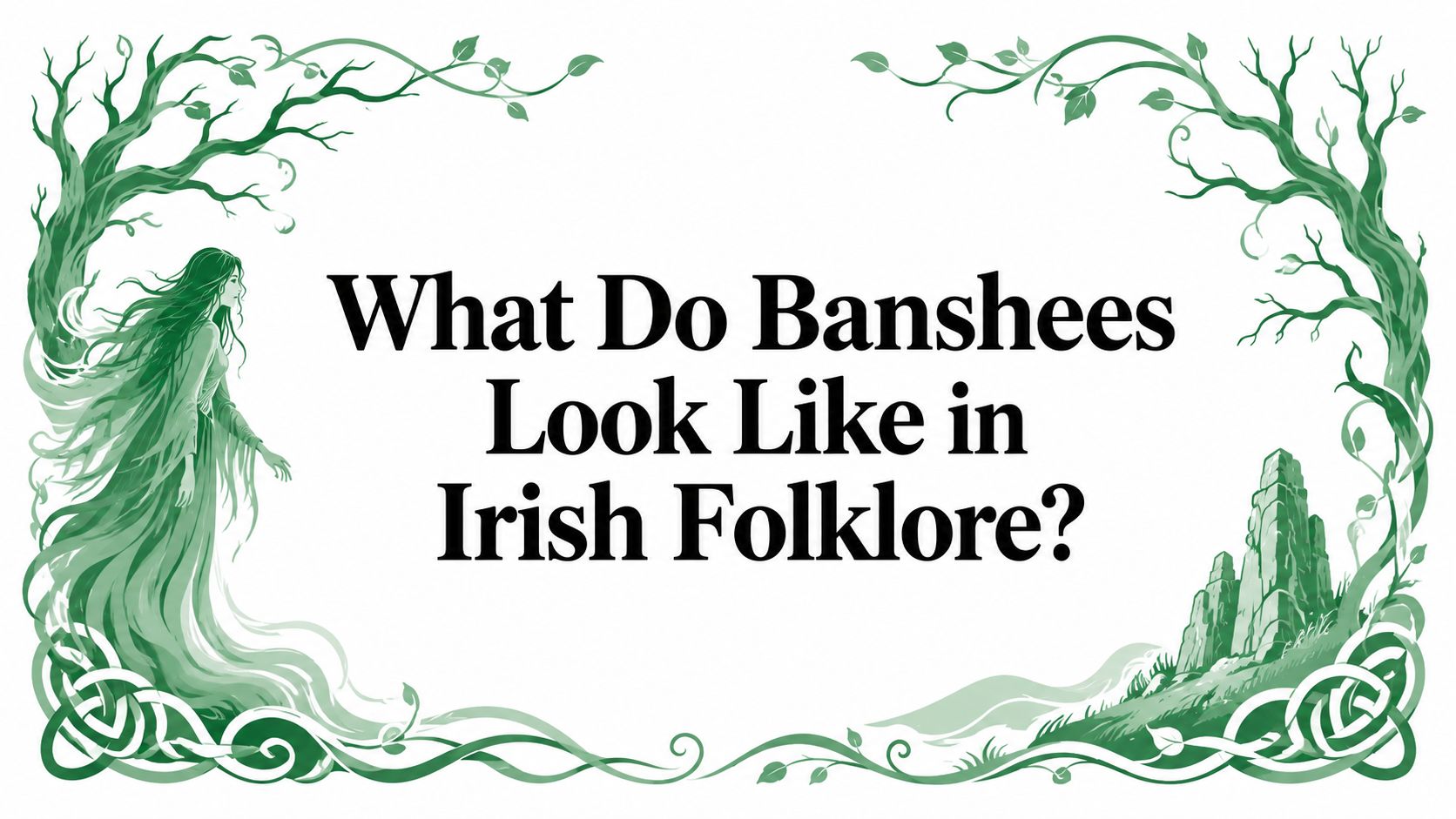
Banshees do not have one fixed look, across Irish folklore they are most commonly described as either a small old woman or a tall young woman, with pale hair, mournful clothing, and signs of weeping. In one household story, the cry comes before anyone sees her, and the family knows the night has turned uncanny long before dawn.
Table of Contents
- The Bean Sí and the Omen of Her Cry
- The Core Visual Traits of a Banshee
- Two Faces in the folklore
- Regional Variations Across Ireland
- How Banshees Differ From Similar Figures
- From Oral Tradition to Modern Media
- Depicting Banshees With Respect for the Source
- Keep Exploring Irish Folklore Through the Language
The Bean Sí and the Omen of Her Cry
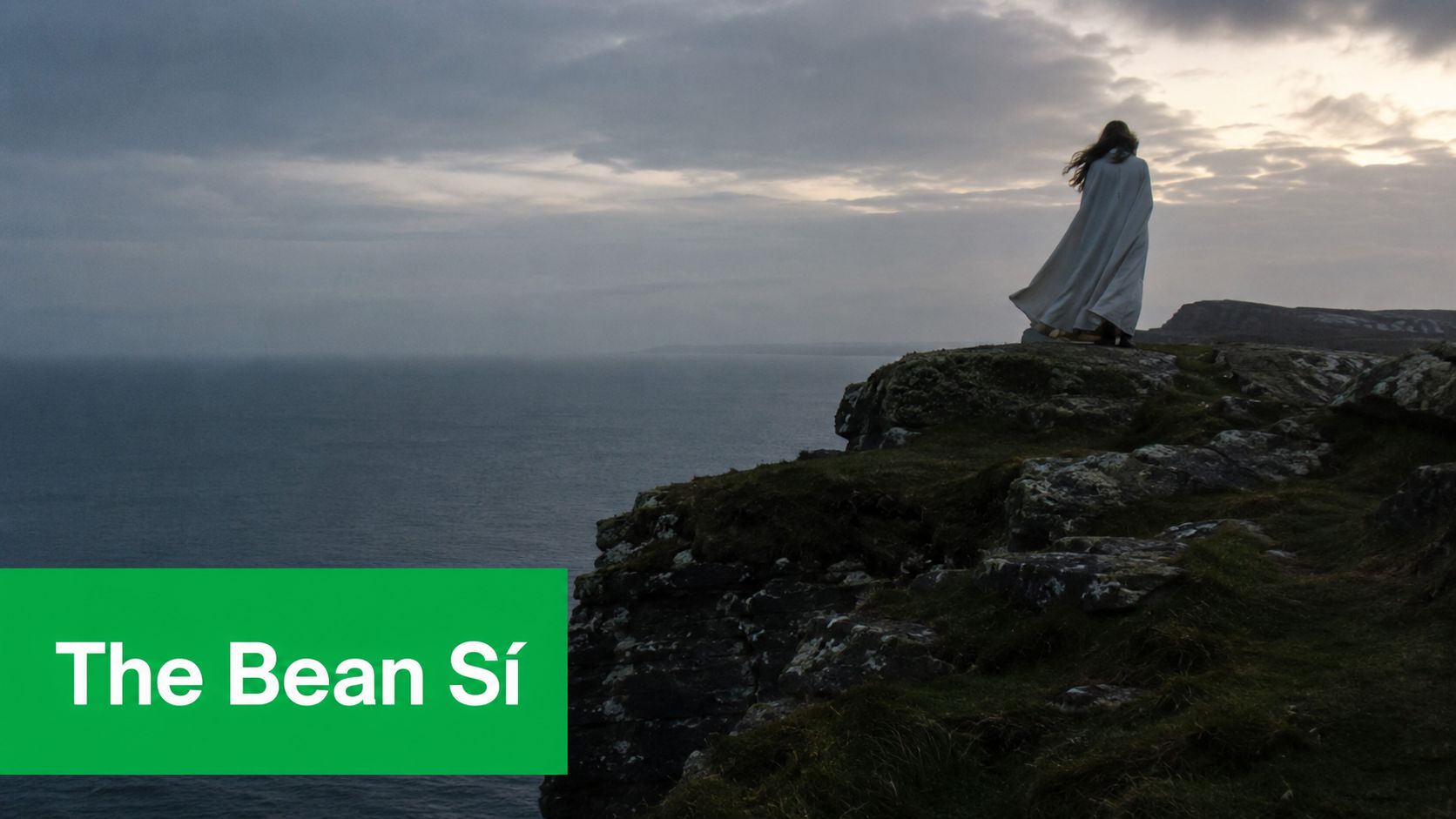
A farmer's kitchen goes quiet, then someone outside hears a woman crying where no woman should be. In Irish tradition, that sound belongs to the bean sí, the banshee, a figure whose presence is tied to a death warning rather than a simple ghost story.
The name comes from bean sí or ben síde, often glossed as “woman of the fairy mound” or “fairy woman”. That matters because it roots her in Gaelic tradition, not modern horror invention. Even the rough spoken form, ban-shee, keeps the emphasis on the figure's old Irish identity instead of a later pop-culture image. Irish folklore naming and family-lore traditions
Why the cry matters more than a fixed face
The banshee is first a mourning omen. People tell the story through sound, timing, and family connection, then describe the body only after the warning has already done its work. That's why asking “what do banshees look like” can be a little misleading if you ignore the cry that defines her.
Practical rule: if a description doesn't link the figure to lamentation, grief, or a household death warning, it's drifting away from the traditional bean sí.
The visual details often feel secondary because they support that role. Hair, clothing, and expression are there to make the cry believable as part of a grieving presence, not to turn her into a generic monster. Once you read her that way, the scattered descriptions start to make sense together.
The Core Visual Traits of a Banshee
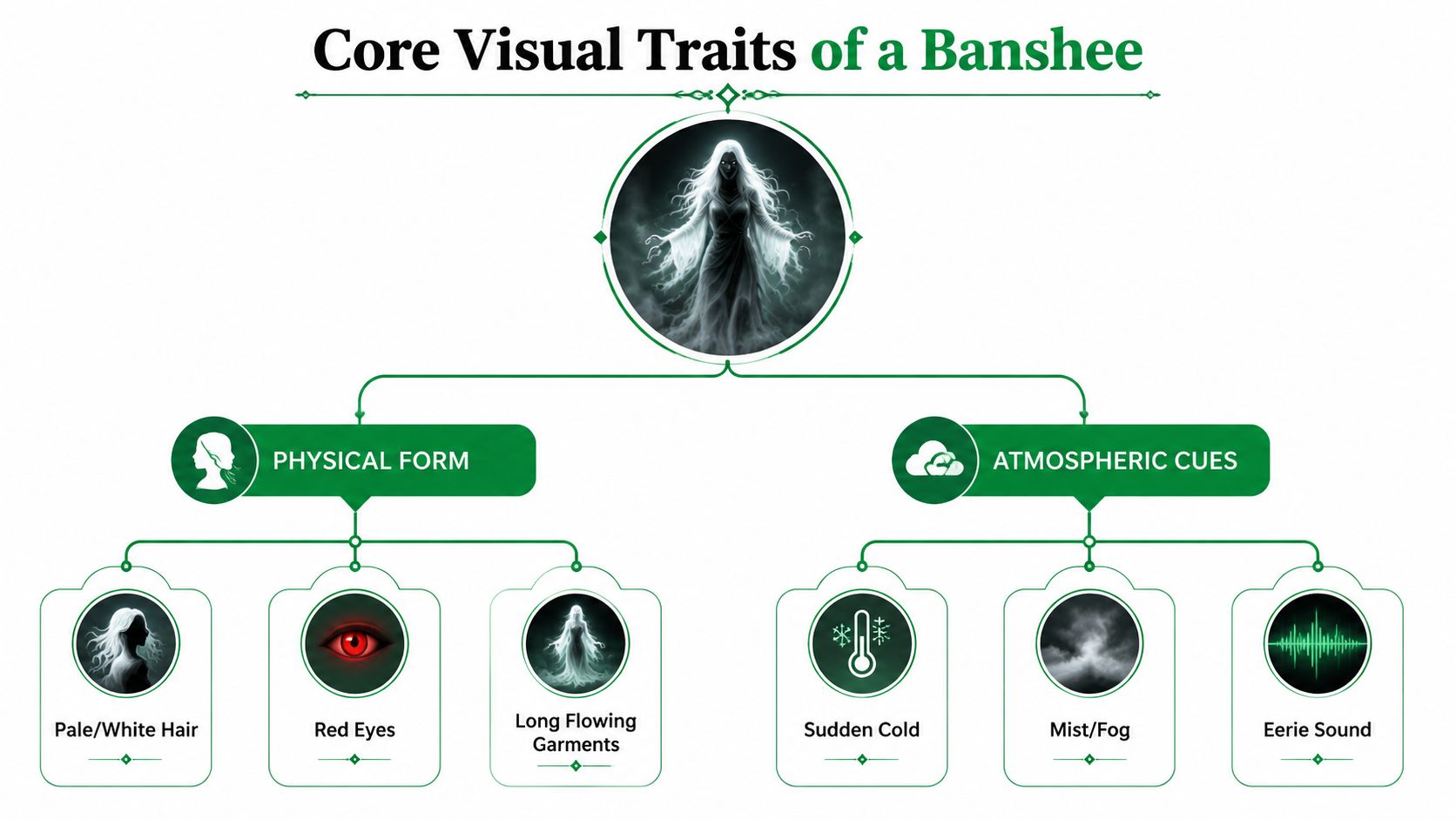
A banshee is easier to picture when her appearance is treated as a cluster of recurring traits rather than a single fixed costume. Folklore keeps bringing her back with pale or white hair, red or inflamed eyes from weeping, long nails, and a cloak or shroud paired with a white or gray dress. Those details are not casual ornament. They fit her role as a figure whose presence is tied to lamentation, and they help explain why descriptions often feel more sorrowful than frightening. High-frequency banshee traits in folklore
Start with the hair and face
The hair is often the first detail that stands out in descriptions. It may be long, pale, white, or gray, and it usually looks uncombed or wind-tossed, as if grief has been pressing on it for a long time. The face tends to carry the same mood, with red eyes that point to endless weeping.
That pattern gives the figure her logic. A mourner who never stops crying would not look like a warrior spirit or a skeletal ghost, and banshee stories keep returning to that idea. Her body reads as worn down by lament, not shaped for battle.
Then read the clothing and hands
The clothing is usually white or gray, sometimes a cloak, sometimes a shroud-like dress, and sometimes something so plain that it feels funerary. The hands can be described with long fingernails, which make the figure feel old, strained, and unsettling without turning her into an animal or demon.
A single silhouette is not the point here. Folklore assembles a grieving presence from repeated signs, the way a room can feel like mourning before anyone speaks.
If you want a simple mental picture, gather those clues in one scene. A thin woman, pale hair loose around her face, a gray or white covering clinging to her, eyes raw from crying, standing at the edge of hearing. That image stays closer to the tradition than a polished horror design because it keeps the omen at the center. An infographic titled Core Visual Traits of a Banshee detailing her physical form and atmospheric cues.
Two Faces in the folklore
Irish tradition preserves two strong visual patterns for the bean sí, and both belong to the same omen. One presents a tall, thin woman with long hair and a white cloak or sheet. The other presents a very old woman of small stature, bent and wrapped in something grave-like. These forms appear in older printed collections and later summaries of the folklore, which shows that the tradition kept both images in circulation rather than forcing one fixed model.
The small old woman tradition
In the older, harsher version, the banshee is small, bent, and worn by age. Her covering often feels like a grave cloth, so the image carries sorrow more than threat. She can seem folded in on herself, as if grief has pressed her body into that shape over time.
That is one reason this form feels so memorable. The body itself becomes a sign of mourning.
The tall young woman tradition
The other version is striking in a different way. She is tall, thin, and often described as beautiful, but the beauty sits under the shadow of sorrow. Long hair and a white cloak keep her tied to mourning, while the height gives her a more spectral, elegant presence.
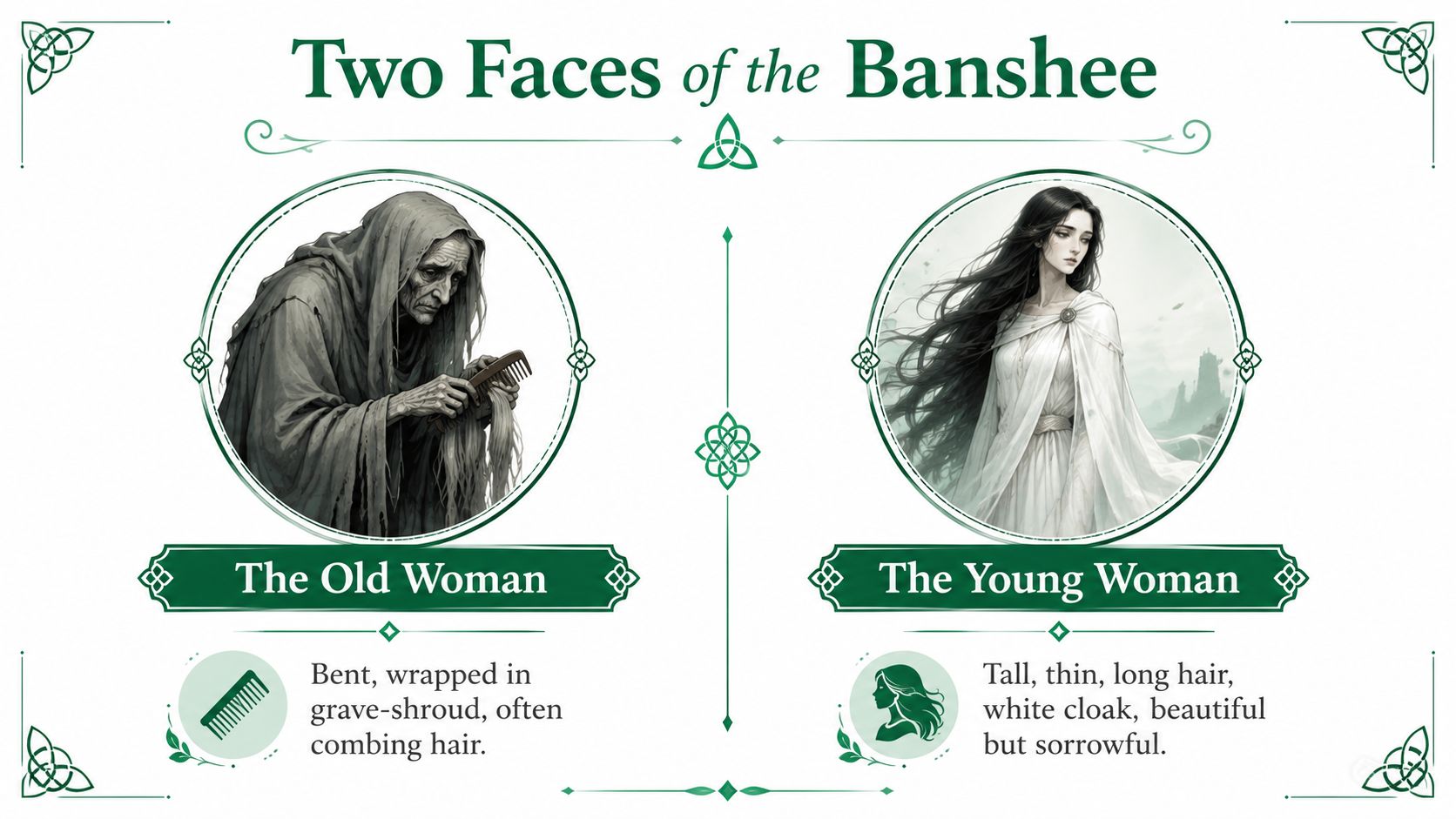
These are not contradictions that cancel each other out. Folklore often keeps several images alive at once, and different tellers emphasize age, beauty, frailty, or severity according to what their community remembered most clearly. The important point is simple, both forms still carry the same mourning omen.
Regional Variations Across Ireland
The banshee does not keep one fixed face across Ireland. In some tellings, she is reduced to a low, compact figure, almost house-sized in her presence. In others, she appears tall and thin, with the sort of shape that seems to stretch the air around her. Regional folklore often places her somewhere along that range, which is why it helps to read the descriptions as a family of repeated traits rather than a single exact body type. Regional banshee variations across Irish folklore
What changes and what stays stable
The parts that shift most are size, the weight or plainness of the clothing, and whether the story presents her as old or young. The parts that stay steady are the mourning signs, especially white or gray hair, grave-like covering, and the sense that she appears before a death in a household. Those repeated markers work like a thread running through different local stories, holding the figure together even when the details change.
Munster, Connacht, Leinster, and Ulster each preserve their own way of telling the story. One area may emphasize a small, wrapped presence, while another prefers a tall woman with a sorrowful air. The setting changes, the family memory changes, and the image changes with it.
Folklore rarely behaves like a museum label. It behaves like memory, and memory keeps the parts that matter most to the people telling the story.
Family lore and local identity
The banshee is often linked to particular families or households, which gives her image a local root. That family connection helps explain why the same figure can take different forms in different places and still remain the same being. The name, the cry, and the omen role matter more than one settled body plan.
This is also where Irish fairies and folklore traditions helps readers place her in the wider Gaelic world. The bean sí belongs to a tradition in which place, kinship, and supernatural presence are tightly connected, so local variation is part of the folklore rather than a problem to solve.
How Banshees Differ From Similar Figures
The banshee sits near a wider family of mourning and fairy figures, but she is not identical to them. Her strongest marker is the death-warning cry attached to a household or family line, alongside the familiar visual cluster of pale hair, cloak, and grief. The bean sí also belongs to the fairy-mound tradition, which separates her from figures that look similar but carry different functions. Irish fairies and folklore traditions
| Figure | Region | Typical Look | Role |
|---|---|---|---|
| Banshee | Ireland | Old small woman or tall thin woman, pale hair, cloak or shroud | Announces death with a cry |
| Keening woman | Ireland | Human mourner, often described in plain clothes | Laments the dead at wakes or funerals |
| Bean nighe | Scotland | Washer at a river, often shown as ghostly and laboring | Foretells death and washes bloodied clothes |
| Cyhyraeth | Wales | Usually an unseen or heard presence rather than a fixed body | Death omen marked by a dread sound |
| Fairy women of the sí mounds | Gaelic tradition | Variable, often otherworldly and tied to mounds | Broad supernatural category, not always a death omen |
Why this distinction helps
The keening woman is easy to confuse with the banshee because both are connected to grief, but one is a human mourner and the other is a supernatural warning figure. The bean nighe and cyhyraeth also share the death-omen mood, yet their regional stories give them different settings and different visual habits.
If you keep one question in mind, the differences stay clear. Ask whether the figure is a mourner, a washer, a sound, or a family omen. That answer usually tells you whether you're dealing with a banshee or a related spirit.
From Oral Tradition to Modern Media
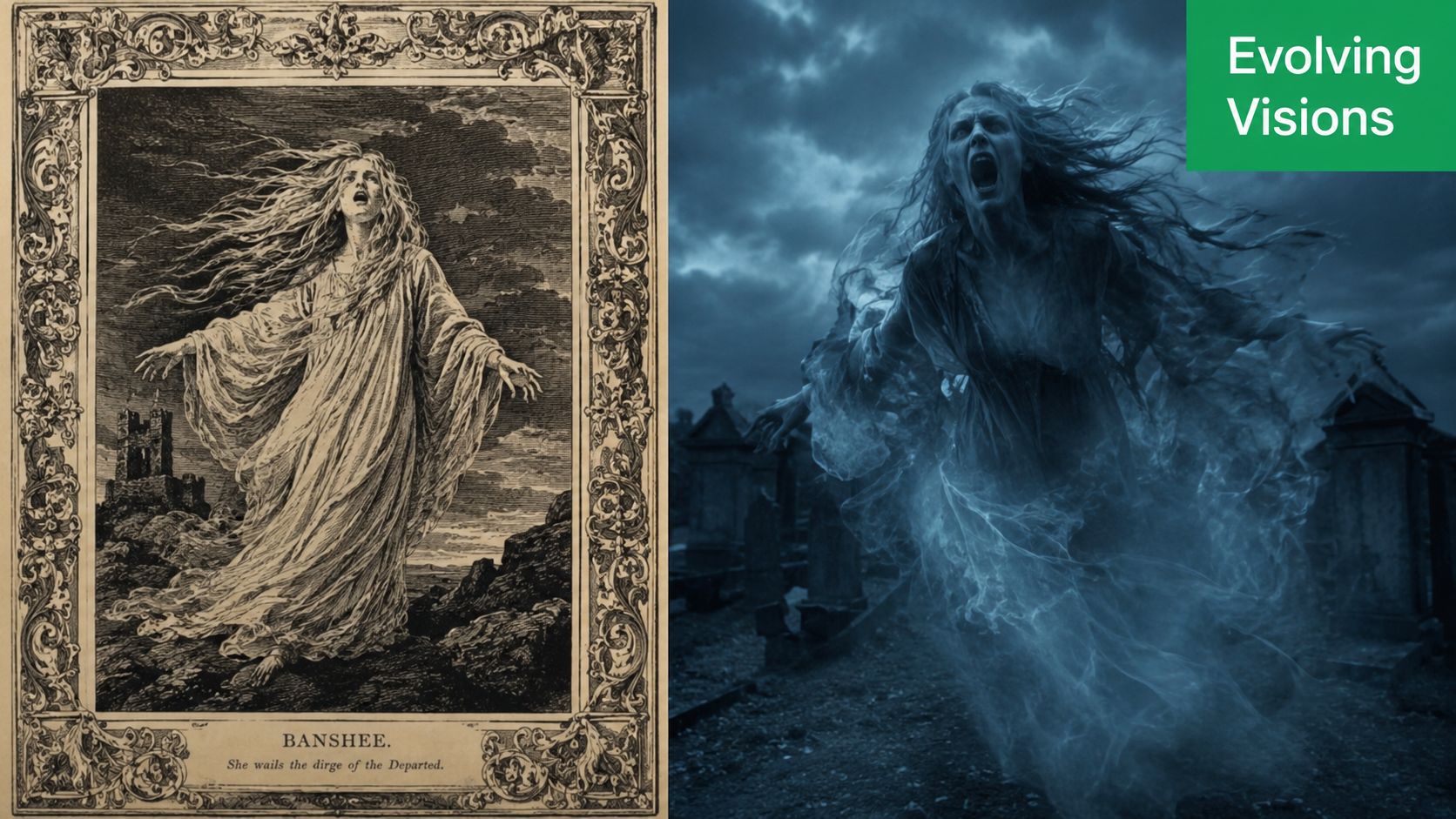
The visual banshee that reaches modern readers comes through layers of retelling. Nineteenth-century collectors preserved the tall, thin woman version and the small, bent old woman version, while later fiction and screen adaptations often narrowed the figure into a more polished ghost aesthetic. The older record is messier, but it's also richer. Banshee imagery in historical collections
What modern media keeps
Modern adaptations usually keep pale hair, flowing garments, a sorrowful face, and the sense of a wail. Those choices fit the folklore well because they preserve the mourning mood. When a film or game gets those pieces right, the banshee still feels like a banshee, even if the costume is stylized.
What modern media often changes
Creators sometimes add features that the folklore does not require, like heavier monster makeup, dramatic claws, or a generic horror silhouette. Those choices can work for entertainment, but they can also flatten the figure into something that loses her family-lore specificity. The strongest depictions usually keep the shape of grief instead of replacing it with a random fright mask.
After you see enough versions, a pattern becomes obvious. The tradition gives you the bones of the image, and modern media decides how glossy or severe to make them.
A note on storytelling voice
For a deeper sense of how Irish stories survive through retelling, look at Irish storytellers and seanchaí traditions. The banshee works the same way, because each generation repeats the core image while adjusting the surface details.
Depicting Banshees With Respect for the Source
If you're writing, drawing, or designing a banshee, start with the tradition instead of the genre shortcut. Give her mourning markers first, then decide how stylized you want the scene to be. A good depiction feels rooted in Irish folklore even when it's imaginative.
Keep the omen role visible
A banshee should look like someone or something connected to lamentation. If the cry, the grief, and the household warning are missing, the design stops reading as a banshee and starts reading as a generic ghost. You do not need to over-explain the folklore in the image, but the atmosphere should point toward loss.
Use attested traits, not random horror cues
The safest visual anchors are the ones folklore repeats. Pale hair, white or gray clothing, a cloak or shroud, red eyes from weeping, and a thin or aged body all fit the source material. By contrast, horns, wings, monster jaws, or excessive gore usually pull the design away from the bean sí tradition and into something else.
Best practice: build the image from grief, not from shock.
Respect the cultural setting
The banshee is part of living Irish cultural heritage, so it helps to treat her as more than a costume element. If you're adapting her for fiction or art, ground the visual choice in the kind of family-lore and mourning presence the tradition preserves. That approach keeps the work creative without turning the figure into a detached fantasy prop.
The cleanest designs often do less, not more. They let the hair, clothing, posture, and expression carry the meaning, which is exactly how the older stories tend to work.
Keep Exploring Irish Folklore Through the Language
The clearest answer to what do banshees look like is still a pattern, not a portrait. She appears as a cluster of mourning signs, pale hair, grave-like clothing, red-rimmed eyes, and the uneasy sense that a family warning has entered the room. For more folkloric context, creative arts on maxijournal.com can be a useful place to keep your curiosity moving, and you can also explore Irish Gaelic words in English to see how language carries old stories forward.
If you want to go deeper into the language behind the lore, Gaeilgeoir AI gives you a practical way to keep learning Irish while staying close to the stories that shaped words like bean sí. Visit Gaeilgeoir AI and keep building your connection to Irish folklore through the language itself.