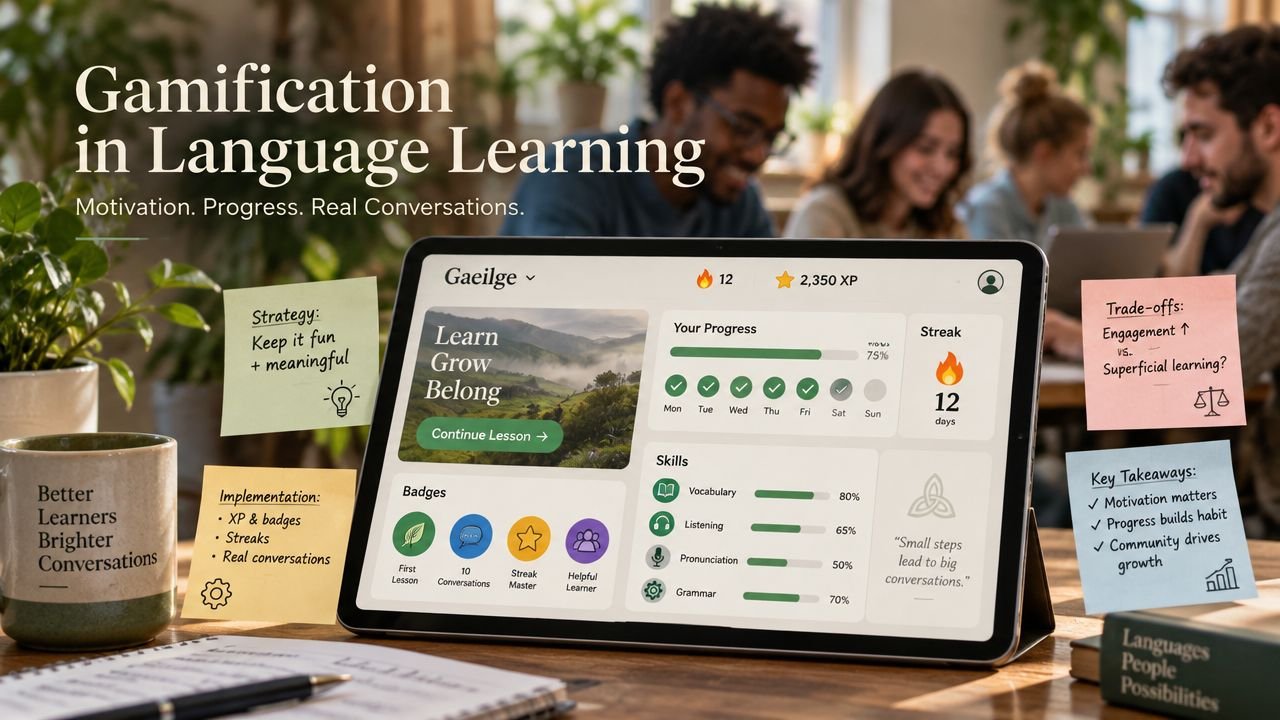
The strongest gamified learning examples don't begin with points. They begin with a behavior worth repeating. A learner might earn recognition for retrieving a word from memory, practising every day, speaking in context, reviewing a personal weakness, or helping a peer. The reward matters because it makes useful progress visible, not because it turns a lesson into an arcade.
Research has moved gamification in education far beyond a novelty. A 2024 literature review reported that Scopus-indexed publications on gamification in education and training grew from 7 in 2011 to 1,510 in 2023, with 93 already indexed by February 6, 2024. A 2020 meta-analysis found a statistically significant medium effect in favour of gamified learning over non-gamified learning, with Hedges' g = 0.504. The research also shows why design matters: a 2025 systematic review found that short-term motivation doesn't always become durable learning, and that competition can create anxiety for beginners.
This list compares ten mechanics by the learner behavior they shape, the risk they introduce, and the design choice that makes each useful for language practice. The recurring lens is simple: mechanic, implementation, trade-off, and practical takeaway. For a broader comparison of language platforms, see this guide to evaluating Intonetic and Rosetta Stone.
Table of Contents
- 1. Points and Reward Systems
- 2. Streak Systems and Habit Tracking
- 3. Adaptive Quizzes with Instant Feedback
- 4. Scenario-Based Learning and Role-Playing
- 5. Personalized Study Lists and Spaced Repetition
- 6. Levels and Progression Systems
- 7. Achievement Badges and Milestones
- 8. Leaderboards and Social Competition
- 9. Multiplier Systems and Combo Mechanics
- 10. Community Features and Social Learning
- 10 Gamified Learning Examples Comparison
- Turn These Mechanics Into Better Language Practice
1. Points and Reward Systems
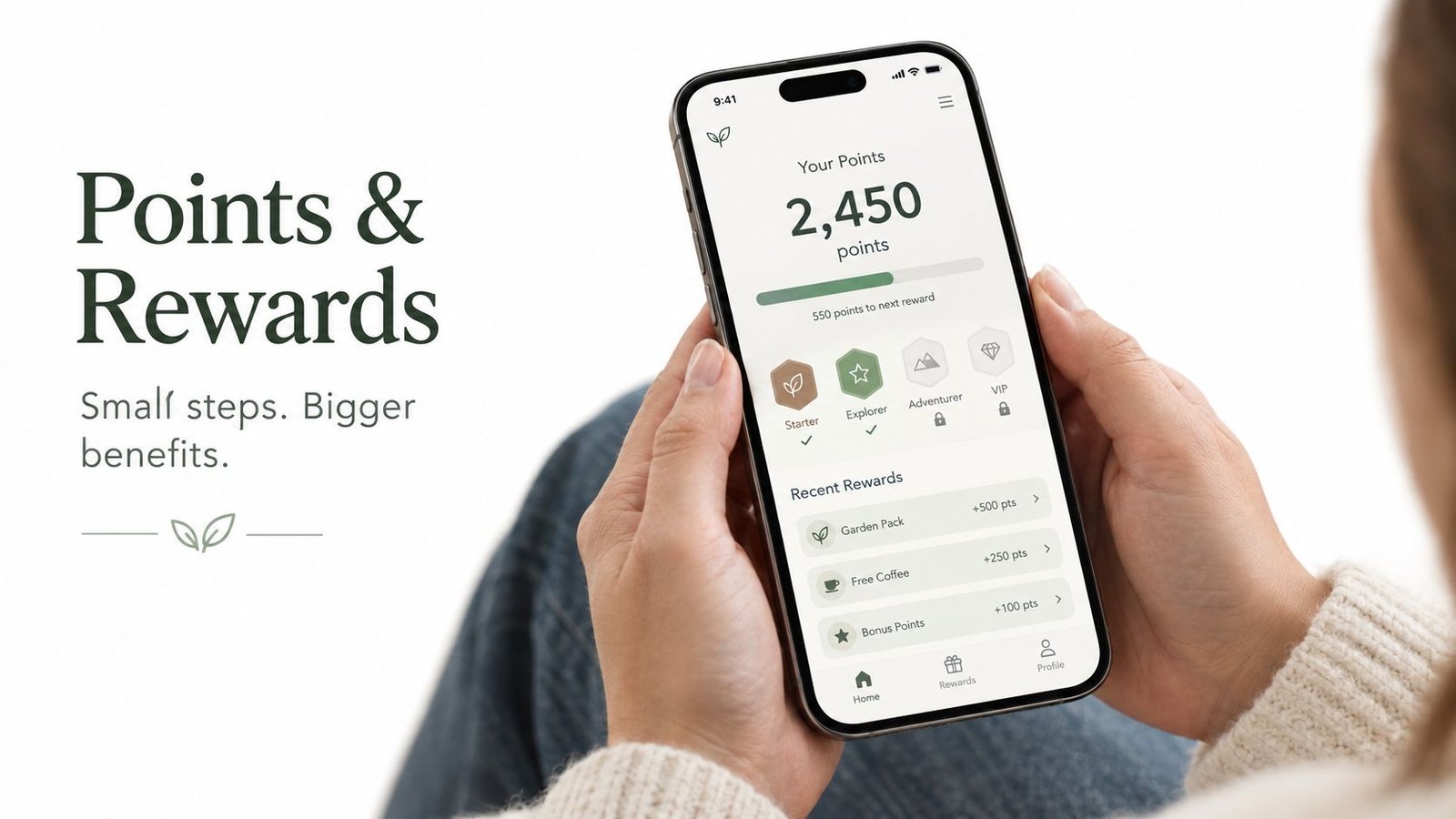
Points turn invisible effort into a visible progress signal. In a language lesson, a learner might receive points for completing a conversation, answering a quiz question, saving a difficult word, or finishing a pronunciation exercise. Gaeilgeoir AI can connect points with completed conversations and quiz answers, while Duolingo uses XP for lesson activity, Kahoot applies score multipliers in timed quizzes, and Memrise uses point-based progression.
The behavior being shaped is active participation. Points can encourage a learner to open a lesson, attempt another answer after a mistake, or complete a conversation instead of stopping after passive vocabulary review. The mechanic works best when the score reflects the value of the task.
Practical rule: Reward demonstrated learning more heavily than simple attendance.
A useful point structure might give more recognition to a challenging speaking task than to opening the app. A correct answer on a familiar word can earn something, while using a new phrase accurately in a realistic conversation earns more. That distinction protects educational integrity.
The risk of shallow point chasing
Points can also distort behavior. If every click receives the same reward, learners may choose the fastest activities rather than the most useful ones. A learner could accumulate a large total while avoiding spontaneous speaking, difficult grammar, or retrieval from memory.
Designers should vary point values by difficulty, relevance, and evidence of mastery. They can also tie points to concrete outcomes, such as vocabulary progress or improved conversational performance, rather than making points the outcome themselves. A practical guide to gamified language learning shows how this mechanic fits into a broader learning experience.
For Irish practice, use points to encourage a sequence: answer a vocabulary question, use the word in a sentence, then say it in a guided conversation. The reward then supports a transfer from recognition to production.
2. Streak Systems and Habit Tracking
A streak system rewards continuity. The learner sees a chain of completed practice sessions and feels a reason to return tomorrow. Duolingo's streak is the familiar language-learning example, while Gaeilgeoir AI can use daily practice tracking and consistency rewards. Outside education, Habitica turns daily habits into game activity, StayFocusd tracks productive behavior, and GitHub's contribution calendar makes regular participation visible.
The behavior here is habit formation, which matters because a language rarely develops through occasional bursts alone. A short daily session can reinforce retrieval, keep phrases active, and lower the effort required to restart after a gap.
The risk is pressure. A learner who misses one day may treat the entire routine as failed, particularly when the platform frames a streak as something fragile or morally important. A 2025 review of virtual learning environments identified a gap between short-term motivational spikes and durable learning, so a long streak shouldn't be treated as proof of retention.
Make consistency flexible
A better system allows different forms of valid practice. Reading a short dialogue, completing a quiz, speaking with an AI tutor, or reviewing saved vocabulary could all maintain a learner's routine. A daily language practice approach can support this flexibility without reducing every session to the same minimum action.
Useful safeguards include:
- Recovery options: Let learners restore a missed day without making the loss feel catastrophic.
- Flexible practice goals: Accept varied session lengths and activity types.
- Milestone recognition: Celebrate sustained effort, but don't imply that longer is always better.
- Rest-aware design: Encourage breaks when learners need them.
For Irish, a streak could require one meaningful action, such as answering a question aloud or revisiting a small personal study list. The tactic is to make the daily action achievable, but still connected to language use.
3. Adaptive Quizzes with Instant Feedback
Adaptive quizzes shape retrieval and correction. The learner commits to an answer, then the system adjusts the next task according to performance. Correct answers can lead to greater challenge, while mistakes can bring back a weak concept with a clearer explanation. Gaeilgeoir AI uses adaptive quizzes for Irish vocabulary and grammar. Duolingo applies progressive difficulty, Khan Academy uses mastery-based progression, ALEKS maps mathematical knowledge, and Rosetta Stone includes adaptive learning features.
The mechanic changes learner behavior by making errors useful rather than final. A learner sees a question, retrieves an answer, receives a reason, and attempts the idea again. In language practice, feedback might separate a spelling mistake from a grammar problem, or explain why a phrase suits one context but not another.
The main risk is shallow guessing. A fast correct answer may reflect recognition rather than durable recall, while vague feedback leaves the learner unsure what to change. Designers should therefore connect each correction to a specific word, sound, structure, or context, then provide another chance to retrieve it without just copying the answer.
Instant feedback works best when it explains the cause of the error and creates a next use for the corrected language.
Learners should be able to flag confusing questions, choose a suitable difficulty, and move from quiz work into conversation. AI language tutors can turn a missed quiz item into a short spoken exchange, giving the learner a reason to use the correction instead of leaving it as an isolated result.
For Irish, a transferable sequence is:
- Answer a vocabulary question.
- Read a brief explanation.
- Retrieve the word again without seeing it.
- Use it in a short spoken response.
This design makes the quiz a bridge to language use. Its value comes from the behavior it shapes, deliberate retrieval followed by meaningful application, rather than from the score alone.
4. Scenario-Based Learning and Role-Playing
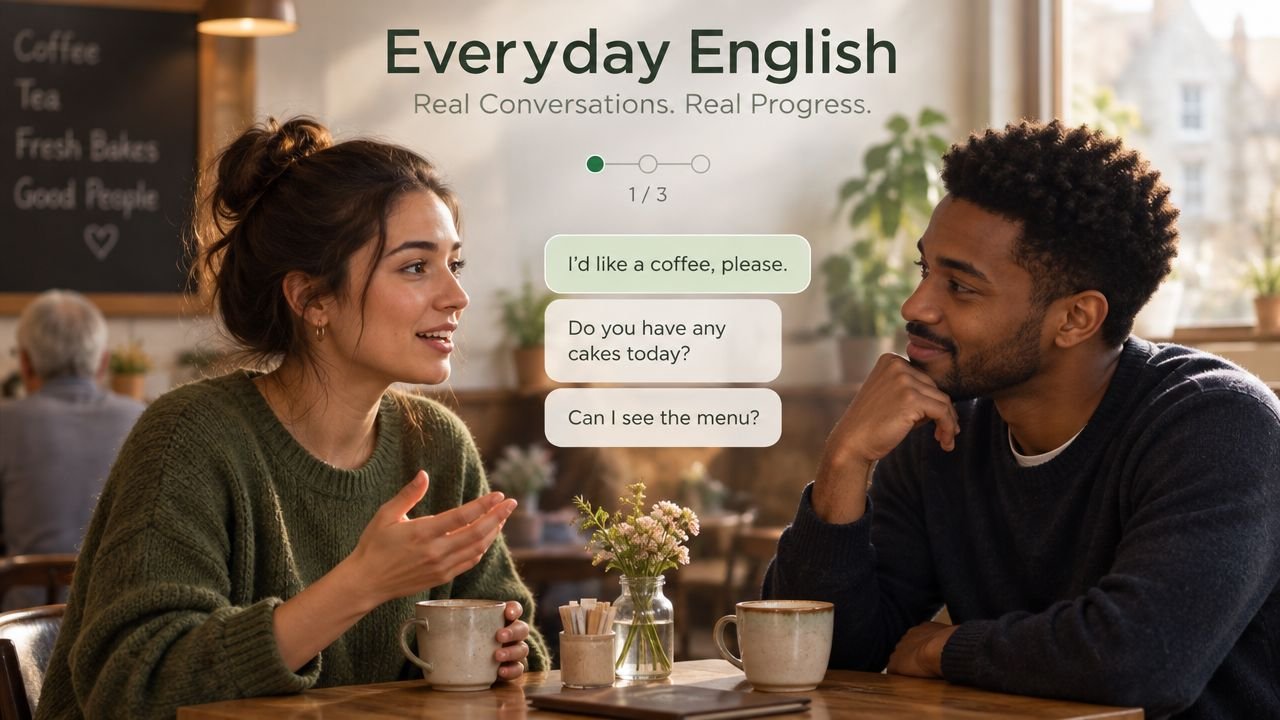
Scenario-based learning shapes contextual decision-making. The learner doesn't merely choose a translation. They use language to order food, ask for directions, introduce themselves, handle a workplace exchange, or answer an oral examination prompt.
Gaeilgeoir AI can place learners in real-world Irish conversations, including ordering food, asking directions, and work interactions. Rosetta Stone uses everyday immersive scenarios, VR language applications add environmental immersion, and Busuu connects learners with real-world conversation practice and native-speaker feedback.
The main benefit is transfer. A learner who practises “I'd like…” in a restaurant dialogue has a stronger reason to remember the phrase than someone who sees it in a disconnected list. The scenario supplies purpose, social cues, and a consequence for choosing one response over another.
Design for more than one answer
Rigid role-play can penalize a correct response just because it doesn't match the expected wording. Strong scenarios accept multiple natural expressions, offer branching dialogue paths, and use authentic cultural context. They should also connect speaking with pronunciation feedback, vocabulary support, and reflection after the exchange.
The role play story guide offers a useful way to think about scenarios as structured interactions rather than scripted drills.
Leaving Certificate Irish provides a particularly clear application. The oral exam is worth 240 marks and 40% of the total grade, and commonly includes poetry, picture sequence, and conversation sections, as described in this Leaving Certificate Irish preparation guide. A learner can practise each format through timed simulations, then repeat the same topic with different prompts.
The practical tactic is to mirror the learner's real need. Build scenarios around family, home, hobbies, sport, social media, future plans, and problems facing young people, all common Leaving Cert oral topics identified in this Irish oral preparation guide.
5. Personalized Study Lists and Spaced Repetition
Personalized study lists shape attention toward individual gaps. A learner saves a word or phrase during a lesson, then sees it again through planned review. Gaeilgeoir AI supports one-click word saving and personalized study lists. Anki uses community-built decks, Quizlet organizes study sets, SuperMemory adapts review, and Mnemosyne provides an open-source spaced repetition system.
This mechanic is more useful than a generic vocabulary feed because learners don't struggle with the same items. One learner may need help with family vocabulary, another with verb forms, and another with pronunciation. Saving a word during a conversation preserves the context in which the difficulty appeared.
The risk is monotony. If the system only shows flashcards, learners may become good at recognizing an isolated prompt without being able to use the word in a sentence. A study list also becomes less useful when saving is cumbersome or when learners collect items without reviewing them.
Connect review with use
A strong system can offer several review formats:
- Recognition: Choose the meaning or correct form.
- Recall: Produce the word without seeing a translation.
- Context: Complete a sentence or dialogue.
- Speaking: Say the phrase and receive pronunciation guidance.
- Reflection: Explain when the expression would be appropriate.
Learners should be able to organize saved items by topic, difficulty, or lesson. The system can then return a word shortly before it's likely to be forgotten, while still placing it back into a realistic exchange.
For Irish, begin with the top 1,000 most common Irish words, a widely used vocabulary benchmark for learners who want to speak the language today. The application tactic is simple: save unfamiliar words from that foundation, review them in varied formats, and use them in a scenario before marking them secure.

6. Levels and Progression Systems
A level should answer one practical question: What can the learner do now, and what can they do next? Levels shape direction by dividing a large language into manageable stages. Gaeilgeoir AI can organize movement from beginner to intermediate study, while CEFR levels provide a recognized reference from A1 through C2. Duolingo uses course skill levels, Rosetta Stone uses units and lessons, and World of Warcraft shows how staged progression can sustain attention outside formal education.
The learner gains orientation, especially at the beginning. A task may focus on survival language, conversation, or advanced expression. A returning learner can also use levels to identify familiar material instead of repeating every activity.
The design risk is false precision. Completing enough exercises to reach a new label does not prove that a learner can understand or produce the language. Progression must therefore work like a map with checkpoints, not a staircase controlled only by activity totals.
Make each level a competence checkpoint
Placement checks can suggest a sensible starting point. Inside each broad level, smaller milestones should represent observable abilities, such as introducing yourself, asking a question, understanding a short dialogue, or handling a familiar conversation.
A transferable progression system should:
- Name the skill: State what the learner can do at that level.
- Permit flexible pacing: Let learners spend more time where they need practice.
- Create useful sub-goals: Divide broad stages into visible communicative tasks.
- Collect varied evidence: Combine quizzes with speaking, listening, and review.
- Support re-entry: Let returning learners test out of content they already understand.
For Irish, a progression map might begin with personal information, then move through family and home, the local area, hobbies, future plans, and exam-style speaking. The application tactic is to attach each stage to a real exchange. A learner reaches the next checkpoint after using the target language in context, not merely collecting enough completed activities.
A level motivates when it describes demonstrated ability. It misleads when it only records activity.

7. Achievement Badges and Milestones
Achievement badges shape recognition and goal completion. They make an accomplishment visible, whether that means finishing a first conversation, mastering a vocabulary category, or completing a specific exam task. Gaeilgeoir AI can mark conversation and skill milestones. Duolingo connects achievements with practice and course activity, while Khan Academy, Codecademy, and LinkedIn Learning use badges or certificates to recognize mastery, projects, skills, or course completion.
The learner behavior is reflection. A well-designed badge acts like a signpost on a trail: it shows what has been reached and suggests a useful direction for the next stage. The risk is rewarding activity instead of ability. A badge for clicking through a lesson records motion, but a badge for handling an unscripted conversation records performance that transfers beyond the app.
The design choice is inspectable evidence. Each badge should name the target skill, explain why it was awarded, and point to the practice or successful attempts that support it. That turns recognition into feedback. Learners can review the evidence, identify a weak area, and choose their next practice task.
Different learners also need different measures of progress. One may value pronunciation, another vocabulary, and another an exam-focused speaking goal. A varied badge system recognizes these paths without forcing everyone to compete on one dimension.
For Irish practice, useful milestones could include:
- First Conversation: Complete a guided exchange from beginning to end.
- Everyday Vocabulary: Use a themed word set accurately in context.
- Speaking Confidence: Repeat scenario practice and respond to pronunciation feedback.
- Oral Practice: Complete simulations based on common Leaving Cert topics.
- Review Discipline: Revisit saved vocabulary and use it correctly in context.
The application tactic is simple: award the badge only after observable language use, then attach one follow-up activity. Shareable recognition may motivate some learners, but it should remain optional. A badge should prompt the next useful action, not turn learning into public performance.
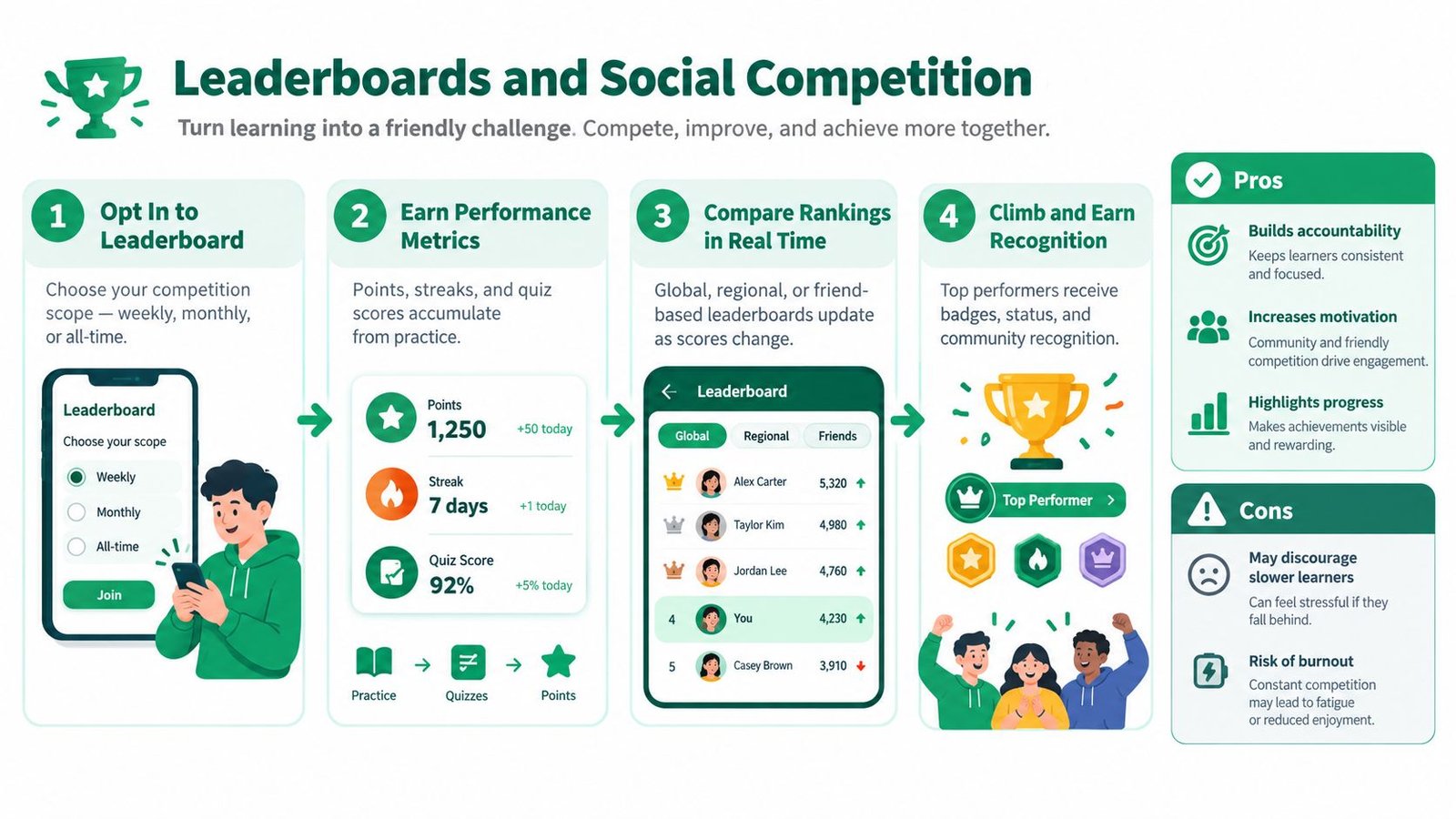
8. Leaderboards and Social Competition
A leaderboard changes the learner's reference point. Progress becomes a comparison with friends, classmates, or a defined group, which can prompt regular practice. Gaeilgeoir AI can apply this mechanic to Irish conversation, while Duolingo places learners in weekly groups. Babbel and LinkedIn Learning use progress tracking or ranking features in some learning contexts.
The behavior is straightforward: a learner who might postpone practice completes a conversation to keep a position or catch a friend. In an exam class, a shared ranking can also create a regular rhythm for oral practice.
The risk is exclusion. A learner with less time, lower confidence, or higher anxiety may read a low rank as proof that they do not belong. Language-app gamification also suits different motivations differently. Externally motivated users may prefer points and rewards, while self-development-oriented learners may prefer challenges. One ranking cannot represent both preferences fairly.
A leaderboard should measure the behavior that supports learning, not simply the learner with the most available time.
Use choice to reduce that mismatch. Learners can opt in, then select a ranking based on a meaningful target:
- Effort ranking: Recognize completed practice.
- Improvement ranking: Reward progress from the learner's own baseline.
- Consistency ranking: Highlight regular participation.
- Team ranking: Encourage peer support.
- Skill ranking: Reflect demonstrated language ability.
Reset rankings periodically so new learners have a fair entry point. Recognition should also include improvement, helpful feedback, and sustained participation, rather than stopping at the top position.
For a Leaving Cert group, rank completed oral simulations or pronunciation improvement instead of raw app time. The practical design rule is clear: connect the visible comparison to the language behavior the teacher wants repeated, and make private participation available for learners who need less public pressure.
9. Multiplier Systems and Combo Mechanics
Multipliers shape momentum and sustained focus by increasing the reward for connected actions. Gaeilgeoir AI can apply them to consistent practice and conversational fluency. Duolingo uses XP multipliers in some lesson contexts, Kahoot uses timed score multipliers, and video games use combos to recognize continuous sequences.
The learner behavior is easy to see: one completed activity encourages the next. A vocabulary review can lead into a grammar question, pronunciation practice, and a short dialogue. The sequence gives a longer session a clear path, much like linking steps in a conversation rather than practising each skill in isolation.
The learning risk is multiplier decay. Losing progress after an interruption can favor uninterrupted availability over flexible learning. Busy adults, parents, workers, and learners with limited study time may avoid a system that makes pausing feel like failure.
A better design connects the bonus to language use. For example, a platform could reward a learner for using three saved words in a scenario, rather than completing three activities. The multiplier then reflects a meaningful transfer of knowledge. Casual and intensive modes can also let learners choose the level of pressure that suits their routine.
A practical combo might follow this route:
- Retrieve a word without a translation.
- Select its correct grammatical form.
- Say the phrase aloud.
- Use it in a role-play exchange.
- Review the correction.
The design choice determines whether the mechanic transfers to real practice. Each step should prepare the next one, while the system remains forgiving when a learner pauses. That sequence rewards depth, and the multiplier becomes a prompt to connect skills that learners often practise separately.
10. Community Features and Social Learning
Community mechanics shape peer support, accountability, and authentic communication by giving learners reasons to use language with other people. Busuu connects learners with native-speaker feedback, Tandem pairs language exchange partners, Duolingo includes discussion and leaderboard communities, and HelloTalk supports social language exchange. These models differ in format, yet each turns practice into a shared activity.
The learner behavior is participation with a purpose. A student may ask how an expression sounds in context, compare cultural experiences, rehearse a short dialogue, or encourage someone who has lost confidence. For heritage learners, that social setting can connect language study with identity and belonging.
The learning risk is unreliable input. Poor moderation, inaccurate corrections, uneven participation, and social anxiety can reduce the value of a group. Clear roles and expectations help learners distinguish a native speaker's perspective from authoritative grammar guidance.
Design community practice around a task
A teacher or platform can assign prompts that require a useful language outcome. One group might practise introductions, another could discuss weekend activities, and a third might rehearse oral exam topics. Scheduled sessions make participation easier to plan, while respectful guidelines show members how to correct, question, and encourage one another.
Useful design choices include:
- Structured topics: Give learners a concrete prompt and a target expression.
- Scheduled practice: Set a time for written, spoken, or live participation.
- Contributor recognition: Thank members who provide specific, useful support.
- Voice opportunities: Include spoken exchanges alongside text.
- Cultural context: Ask how expressions change across communities.
- Exam groups: Give Leaving Cert learners a focused place to rehearse.
For Irish, a Gaeilgeoir AI group challenge could ask learners to record a short response about their local area. Peers can then comment on vocabulary, pronunciation, and clarity using a simple feedback guide. The design choice makes social participation produce language learners can use.
10 Gamified Learning Examples Comparison
| Mechanic | Implementation Complexity 🔄 | Resource Requirements ⚡ | Expected Outcomes 📊 | Ideal Use Cases 💡 | Key Advantages ⭐ |
|---|---|---|---|---|---|
| Points and Reward Systems | 🔄🔄 (Low–Medium) | ⚡ (Low) | 📊 Boosts short-term engagement and measurable progress; risk of surface-level focus | 💡 Beginner motivation, daily drills, gamified lessons | ⭐ Immediate reinforcement; flexible rewards; easy tracking |
| Streak Systems and Habit Tracking | 🔄 (Low) | ⚡ (Low) | 📊 Strong habit formation and daily retention; risk of pressure/burnout | 💡 Daily practice habits, habit-forming courses, micro‑practice | ⭐ Simple to understand; powerful consistency driver |
| Adaptive Quizzes with Instant Feedback | 🔄🔄🔄 (High) | ⚡⚡⚡ (High) | 📊 Personalized mastery, faster retention, targeted remediation | 💡 Assessment, remediation, intermediate+ learners, mastery paths | ⭐ Optimizes pace; precise gap identification; boosts learning efficiency |
| Scenario-Based Learning & Role‑Playing | 🔄🔄🔄 (Medium–High) | ⚡⚡⚡ (High) | 📊 Improves real‑world application and retention; lowers speaking anxiety | 💡 Conversational practice, exam simulations, workplace/travel language | ⭐ Contextualized learning; transfers to real situations |
| Personalized Study Lists & Spaced Repetition | 🔄🔄 (Medium) | ⚡⚡ (Medium) | 📊 Long‑term retention and efficient review when used consistently | 💡 Vocabulary building, targeted weak‑point study, long‑term learners | ⭐ Science‑backed retention; highly personalized practice |
| Levels and Progression Systems | 🔄🔄 (Medium) | ⚡⚡ (Medium) | 📊 Clear roadmap and sustained motivation; may not fit non‑linear progress | 💡 Structured courses, certification prep (CEFR), goal setting | ⭐ Clear milestones; curriculum organization; external credibility |
| Achievement Badges and Milestones | 🔄🔄 (Low–Medium) | ⚡ (Low) | 📊 Visual recognition and shareable proof of progress; can cause badge fatigue | 💡 Micro‑goals, social sharing, recognition programs | ⭐ Tangible milestones; motivates collectors; social validation |
| Leaderboards and Social Competition | 🔄🔄 (Medium) | ⚡⚡ (Medium) | 📊 Increases engagement for competitive users; can discourage others | 💡 Group challenges, cohort learning, friendly competitions | ⭐ Drives accountability; fosters community motivation |
| Multiplier Systems and Combo Mechanics | 🔄🔄 (Medium) | ⚡⚡ (Low–Medium) | 📊 Amplifies rewards for sustained sessions; may penalize irregular schedules | 💡 Intensive practice streaks, immersion events, challenge modes | ⭐ Encourages momentum; rewards extended focus |
| Community Features and Social Learning | 🔄🔄 (Medium) | ⚡⚡⚡ (Medium–High) | 📊 Authentic practice and peer feedback; quality varies with moderation | 💡 Conversation exchange, group study, cultural learning | ⭐ Real interactions; peer support; diverse practice opportunities |
Turn These Mechanics Into Better Language Practice
The best gamified learning examples don't use every mechanic at once. They start with a target behavior and choose the smallest system that can reinforce it. If the problem is irregular practice, begin with a flexible streak. If learners recognize words but can't recall them, add adaptive retrieval. If they know grammar but freeze in conversation, use scenarios and role-playing. If they forget personal vocabulary, add saved study lists and spaced review.
A practical selection framework has four steps:
- Name the behavior: Decide whether learners need to retrieve, speak, listen, review, reflect, or collaborate.
- Choose one primary mechanic: Use a streak for continuity, points for visible effort, a scenario for transfer, or a leaderboard for optional accountability.
- Connect the reward to evidence: Require an answer, spoken response, corrected attempt, or demonstrated competency.
- Add a safeguard: Provide flexible pacing, opt-in competition, recovery options, clear feedback, or alternative forms of recognition.
The research supports this disciplined approach. A 2021 meta-analysis found a significant overall effect on behavioral change, with Cohen's d = 0.48 and a confidence interval from 0.33 to 0.62. It also reported stronger effects for short interventions lasting days or less than one week, with ES = 1.57, than for longer interventions lasting up to 20 weeks, with ES = 0.30. In adults in higher education, the effect was ES = 0.95, compared with weaker results in K-12 settings. For language products, that points toward focused, repeatable loops instead of large, diffuse reward campaigns.
A balanced Irish practice loop might combine a habit mechanic with retrieval through adaptive quizzes, contextual speaking through scenario-based practice, and personalized review through saved study lists. Points or multipliers can make the sequence visible, while a leaderboard remains optional for learners who enjoy competition. Badges and levels can mark meaningful skills, but they shouldn't replace feedback or actual language use.
Teachers and product teams should also watch for the novelty gap. A learner may enjoy a new reward system at first, then stop responding once the surprise disappears. The durable design question is whether the mechanic keeps directing attention toward practice that matters. If it doesn't, simplify it.
Gaeilgeoir AI brings these ideas together through guided Irish conversations, pronunciation support, adaptive quizzes with instant feedback, scenario-based practice, points, multipliers, and leaderboards. Learners can practise everyday situations, build from common vocabulary, and prepare for Leaving Cert oral topics in a flexible format. For schools and tutors considering broader delivery options, this overview of language school software may help with the operational side of structured practice.
Try Gaeilgeoir AI's guided Irish conversations and use one short practice loop today: retrieve a word, say it aloud, use it in a scenario, and save anything you still need to review. Visit Gaeilgeoir AI to start practising.
Gaeilgeoir AI combines guided real-world Irish conversations, pronunciation support, adaptive quizzes, scenario practice, personalized study lists, points, multipliers, and leaderboards. Use it to turn gamified features into consistent speaking and retrieval practice, then visit Gaeilgeoir AI to explore the platform.