Adaptive learning is a method that adjusts lessons, pace, and feedback to each learner's performance in real time. In practice, an Irish beginner who misses a phrase gets extra support, while someone who already knows it moves on instead of repeating the same exercise.
You may recognize the frustration behind that difference. You open a one-size-fits-all language lesson, understand the greetings, then spend several minutes reviewing them because the book follows its own schedule. A few pages later, the grammar suddenly becomes difficult, but the lesson keeps moving whether you're ready or not.
Adaptive learning changes that fixed route. It uses your answers, errors, response patterns, and progress to decide what you should practise next. The approach has grown from a small research topic into a major field. One bibliometric study recorded 1 publication in 1990 and 636 in 2023, while a separate Web of Science analysis identified 3,518 indexed publications from 1990 to 2024, including 2,501 articles and 762 conference proceedings. The published analysis of adaptive learning research shows how the idea moved from early experimentation into mainstream academic and applied interest.
Table of Contents
- What Adaptive Learning Means in Plain English
- How Adaptive Learning Systems Actually Work
- The Core Mechanics That Make Lessons Adapt
- Adaptive Learning in Language Apps and How Gaeilgeoir AI Fits
- Real Benefits and Honest Trade-Offs for Learners
- How to Choose an Adaptive Learning Platform That Works for You
- Common Misconceptions About Adaptive Learning
What Adaptive Learning Means in Plain English
Suppose you're learning Irish and the textbook gives every beginner the same sequence. You study greetings, family words, numbers, sentence structure, and pronunciation in that order. If you already know some family words, you still complete the entire unit. If the pronunciation section leaves you confused, the next page doesn't know that.
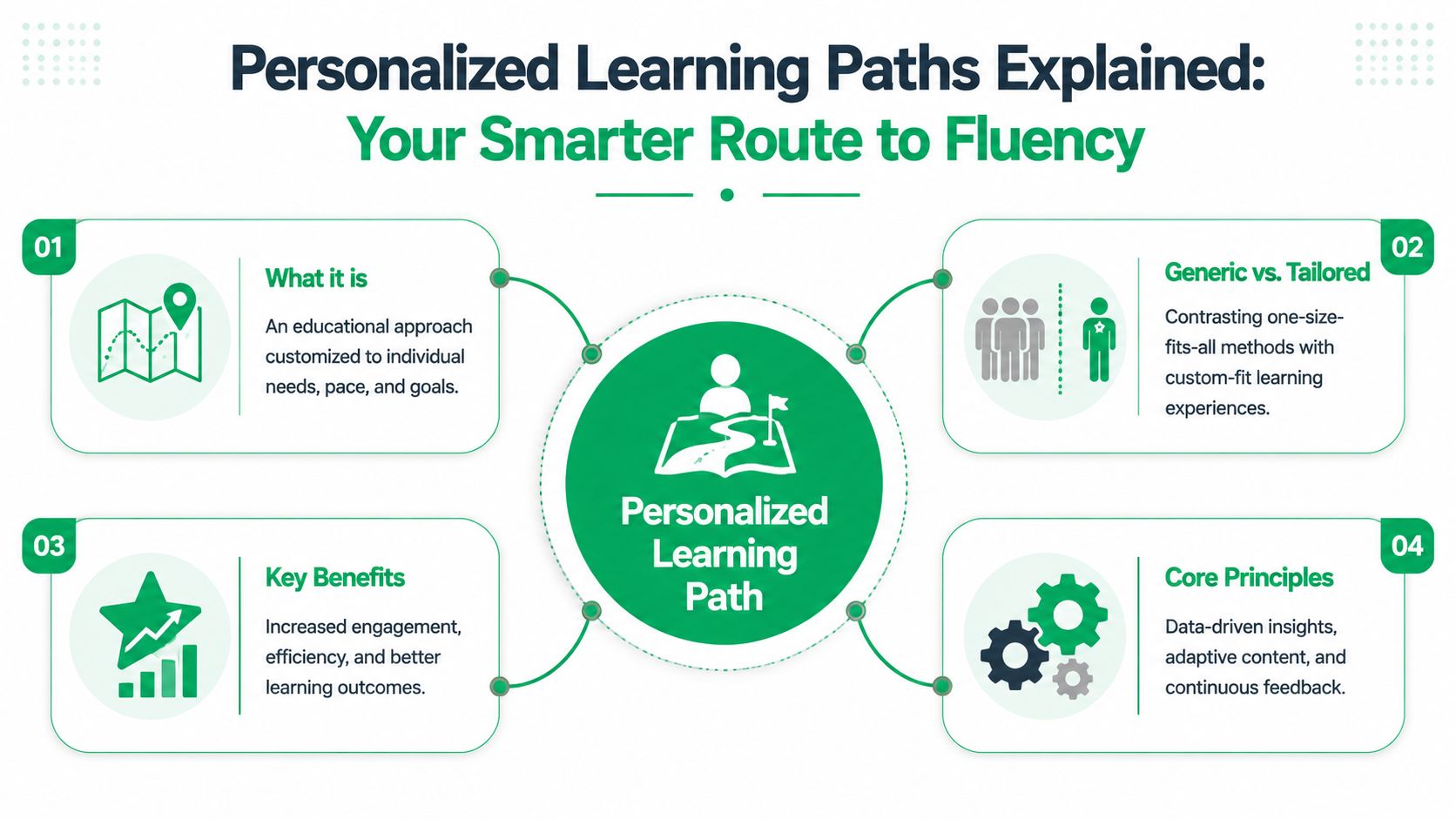
Adaptive learning is a method that continuously adjusts lesson difficulty, sequencing, pacing, and feedback based on your current performance and patterns. The system doesn't just ask what you want to study. It watches what you can do, notices where you hesitate or make repeated errors, and changes the next activity accordingly.
A personalized learning path is the individual route a learner follows through a larger set of lessons. Two people may study the same subject but receive different examples, practice items, revision intervals, or explanations. Personalization is the broad goal. Adaptive learning is a more specific, data-driven form of personalization because the platform changes the route using evidence from your learning activity.
That distinction matters. A tutor who remembers your name and asks about your interests is offering personal attention, but the lesson isn't necessarily adaptive. An adaptive system must use learner information to make instructional decisions, such as returning to a missed word, changing the difficulty of a grammar task, or slowing the pace of a pronunciation activity.
Practical rule: If a platform only lets you choose a topic, it may be personalized. If it changes what happens next because of your demonstrated performance, it's adaptive.
The rest of the subject becomes easier when you separate the questions:
- How does the system work? It combines a learner model, a content structure, and decision logic.
- What changes? Content selection, pacing, feedback, and sequencing can all respond to your performance.
- What does it look like in language learning? Vocabulary quizzes, grammar drills, pronunciation practice, and conversation scenarios can branch in different directions.
- What are the limits? Adaptive tools can reduce unnecessary repetition, but they can't measure every part of real communication.
- How should you choose one? Look for transparent adaptation, useful progress information, and a clear path from practice to real-world use.
Readers who want to explore the wider idea of digital personalization can also browse the SupportGPT personalization guides, especially when comparing simple customization with systems that respond to user behaviour.
How Adaptive Learning Systems Actually Work
A useful way to understand an adaptive system is to meet its three characters.
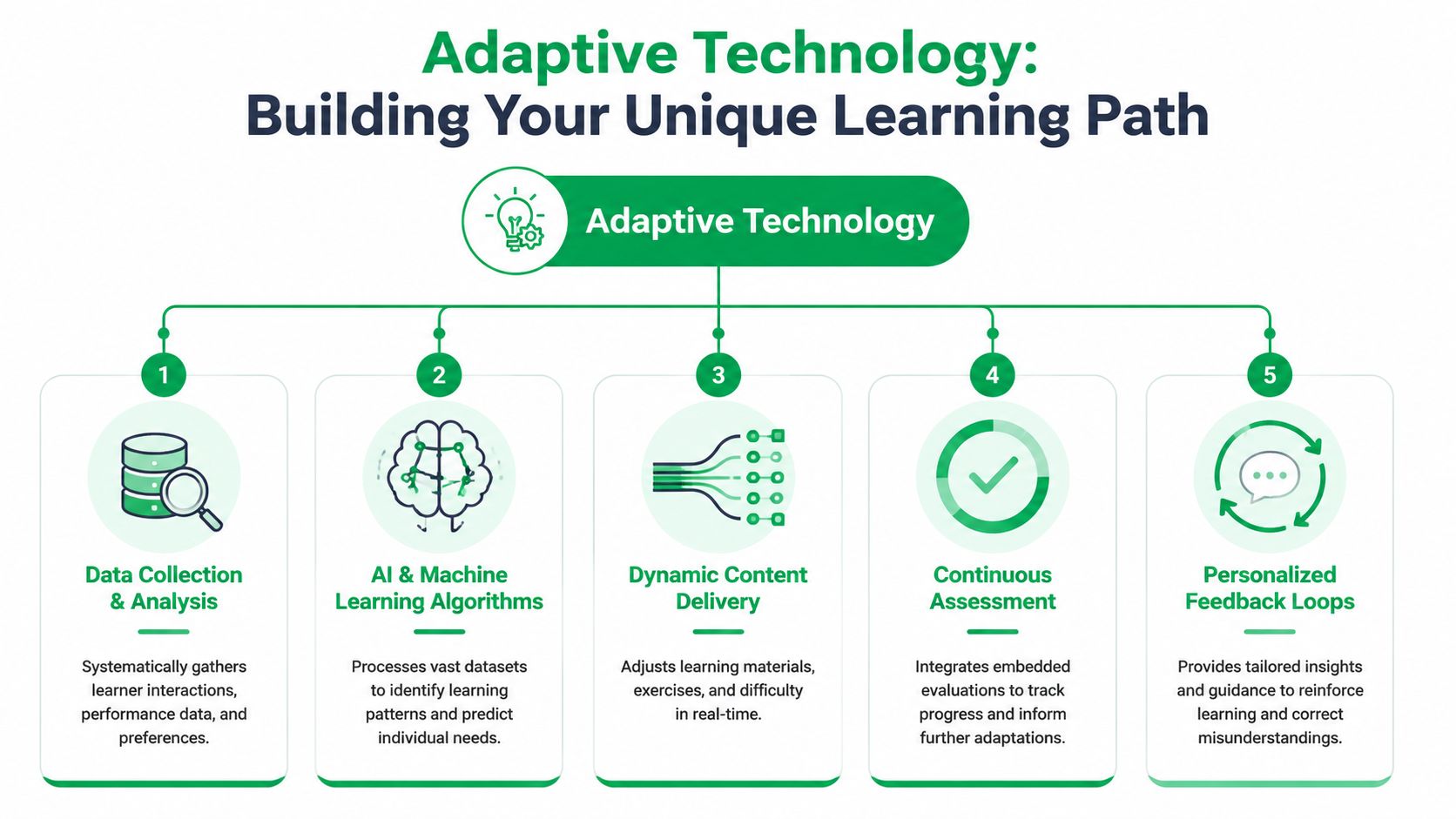
The first is a tutor who keeps notes. After each exercise, the tutor records what you know, what you confuse, how quickly you answer, and which kinds of help you need. In technical language, this is the learner model, a changing profile of your current knowledge, weaknesses, and learning behaviour.
The second is a library of lessons. It contains the Irish greetings, vocabulary items, pronunciation clips, grammar explanations, conversation prompts, and review exercises that the system can offer. This is the domain model, the organized map of the subject. It shows which skills belong together and which ideas usually need to come first.
The third is the tutor's decision-making brain. It examines the notes, looks at the available lessons, and chooses the next useful activity. This is the adaptation engine. Its job is to translate evidence about your performance into an instructional decision.
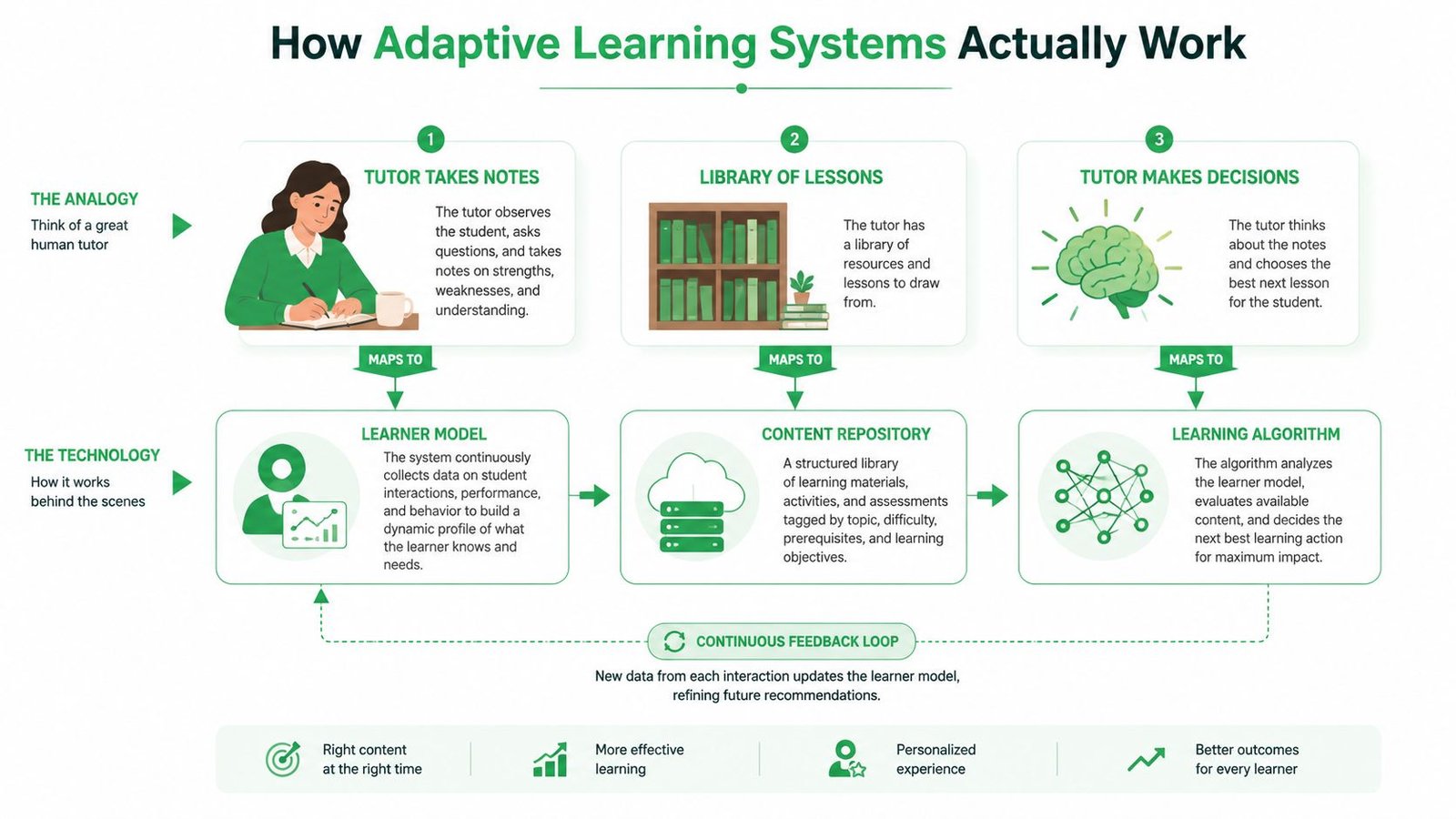
An algorithm is the set of rules or learned patterns used to make that decision. A simple algorithm might follow an if-then rule: if you miss a vocabulary item, show it again with a hint. A more data-driven system may look for patterns across many interactions and estimate which activity is most likely to help next.
The process repeats in a loop:
- You answer or interact. You translate a phrase, choose a word, repeat audio, or respond to a prompt.
- The learner model updates. The system records accuracy, errors, response time, or other permitted signals.
- The adaptation engine chooses. It selects an item, explanation, difficulty level, or review interval.
- You practise again. Your next response gives the system new information.
That loop is why adaptive learning feels different from a fixed worksheet. The system doesn't wait until the end of a unit to discover that you're struggling. It can react during the lesson.
The architecture is common in language education. A guide to machine learning in education can help you see how these models fit into the wider technology field, while discussion of scalable AI customer support offers a useful comparison for understanding how software can respond to changing user needs.
In an Irish app, the loop might lead to a short drill on a phrase you repeatedly confuse, followed by an easier example and then a conversational prompt using the same structure.
The Core Mechanics That Make Lessons Adapt
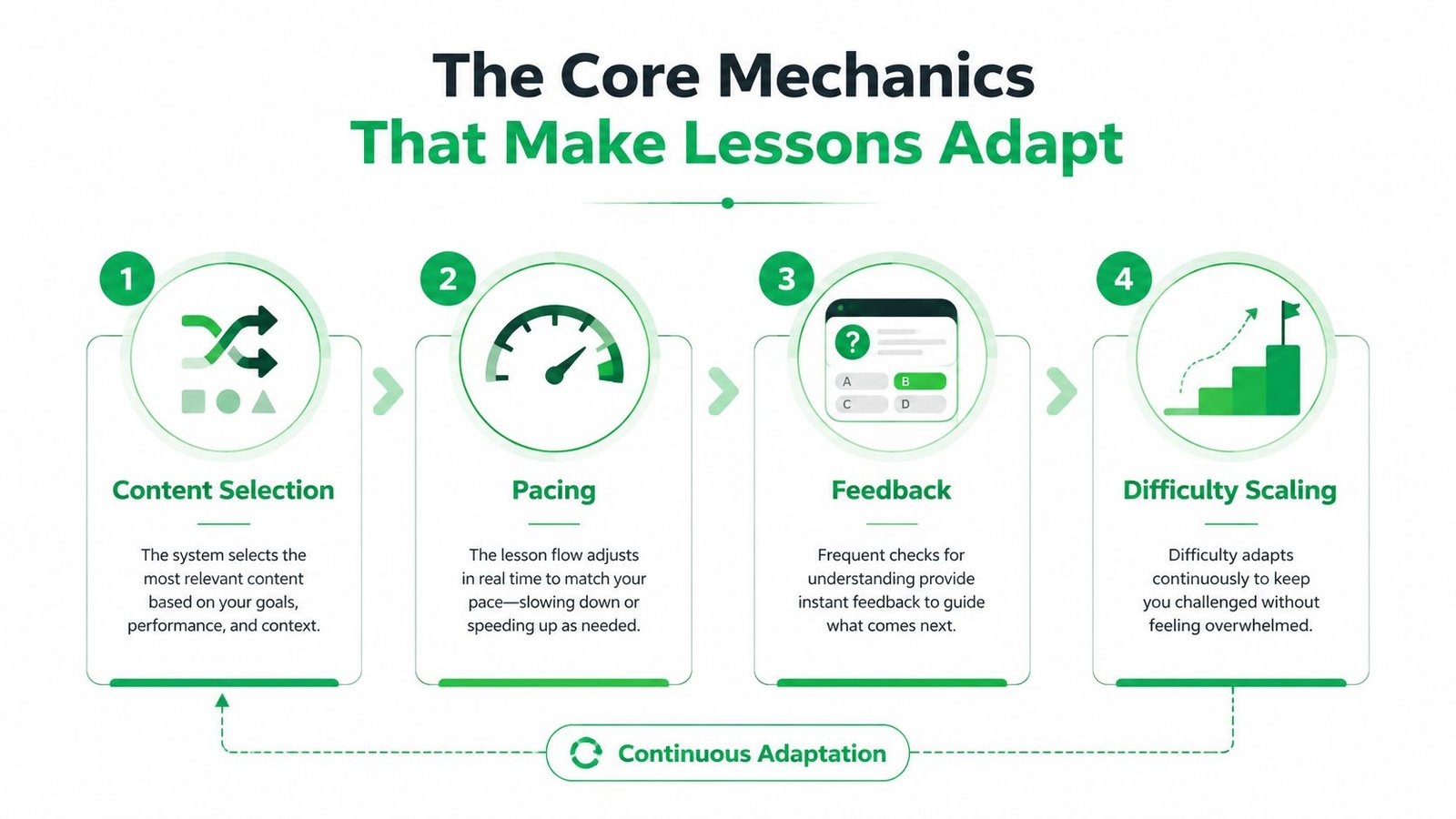
The phrase “the lesson adapts” can sound vague until you separate the changes into four mechanics. These are the practical levers a platform can adjust.
Content selection
Content selection means choosing which learning item appears next. If you miss an Irish word for “house,” the system might offer that word again, place it in a simpler sentence, or show an image before asking you to recall it. If you answer several related items comfortably, it may introduce a new word instead of filling your screen with familiar material.
The important question is not whether the platform has many lessons. It's whether it chooses from those lessons using a meaningful picture of your needs.
Pacing
Pacing is the amount of time or practice you receive before moving forward. A learner who recognizes a phrase quickly may need only a short check. Someone who pauses, guesses, and then repeats the same mistake may benefit from another explanation or a slower activity.
Pacing doesn't always mean making everything slower. It can also remove material you've already demonstrated. That's how an adaptive course can feel less tiring without becoming less demanding.
Feedback
Feedback tells you what happened and what to try next. A weak message says “wrong.” Useful feedback might identify the word you confused, replay a pronunciation model, show a translation, or give you a hint before another attempt.
In language learning, timing matters. Feedback that arrives immediately can connect the correction to the mistake while you still remember what you were thinking.
Sequencing and difficulty scaling
Sequencing is the order in which skills appear and return. Difficulty scaling changes the challenge within that order. A platform might revisit greetings before introducing a longer exchange, then increase the difficulty by removing a translation or requiring a spoken response.
These mechanics can use different kinds of decision-making:
- Rule-based adaptation uses visible if-then logic, such as returning an item after an incorrect answer.
- Data-driven adaptation uses statistical or AI-based patterns drawn from prior learning activity.
- Hybrid adaptation combines instructional rules with performance signals, so the system has both clear boundaries and room to respond.
A language app might respond to missed vocabulary by serving easier greetings, or insert pronunciation practice when your audio accuracy drops. The quality of that response depends on whether the system understands the skill being tested. A vocabulary mistake shouldn't automatically trigger a difficult grammar lesson.
Adaptive Learning in Language Apps and How Gaeilgeoir AI Fits
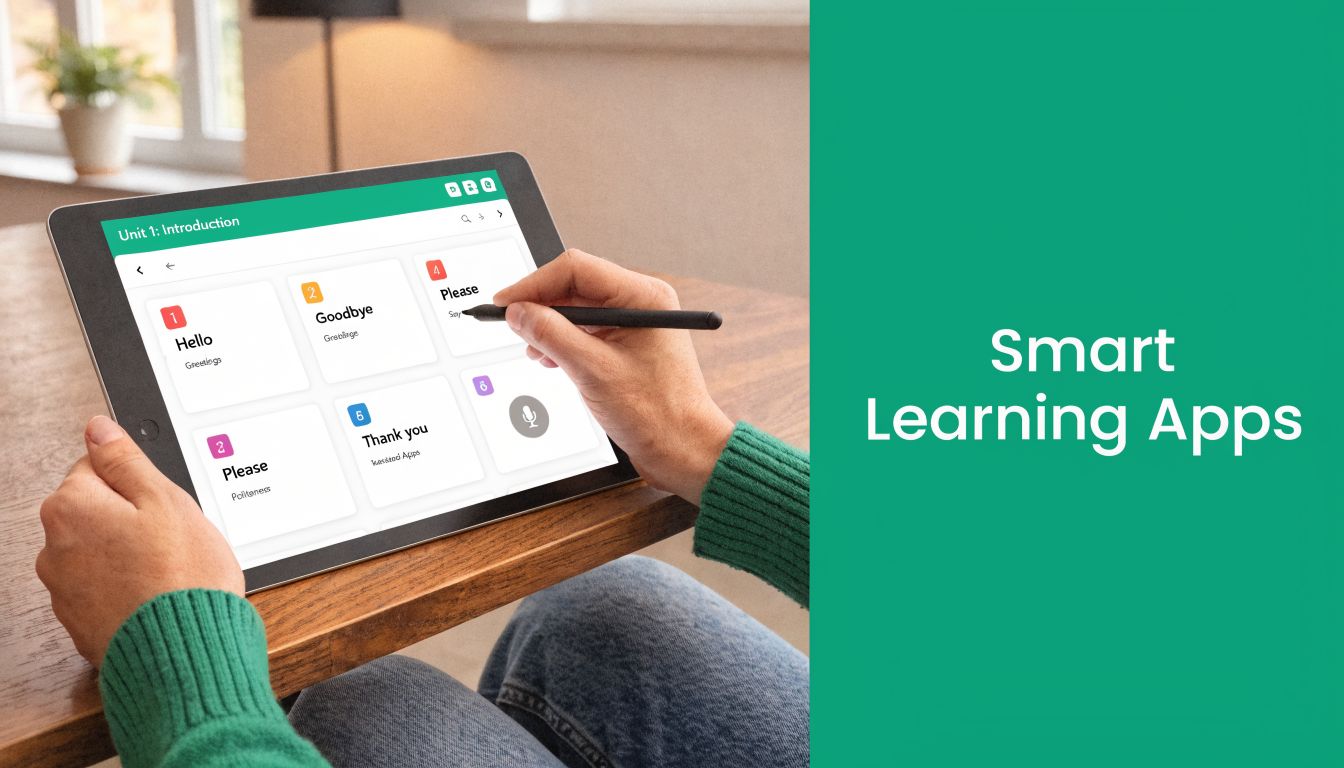
The clearest way to see adaptive learning is to follow one beginner through a lesson. You're practising Irish vocabulary, and the app tests whether you recognize a word in a short sentence. You answer correctly several times, so the item appears less often. Another word keeps causing confusion, so the app brings it back sooner and may place it in a more supportive context.
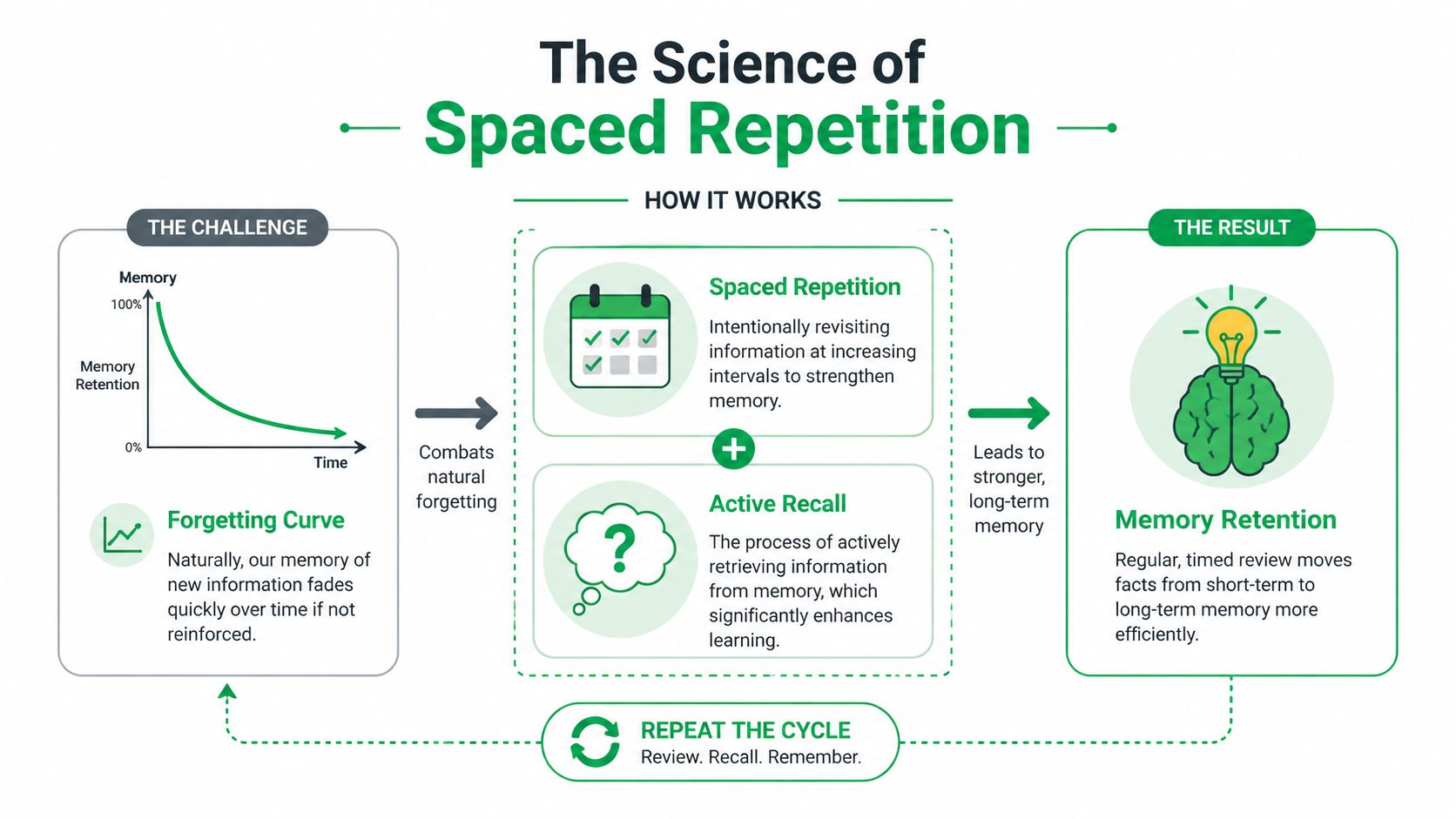
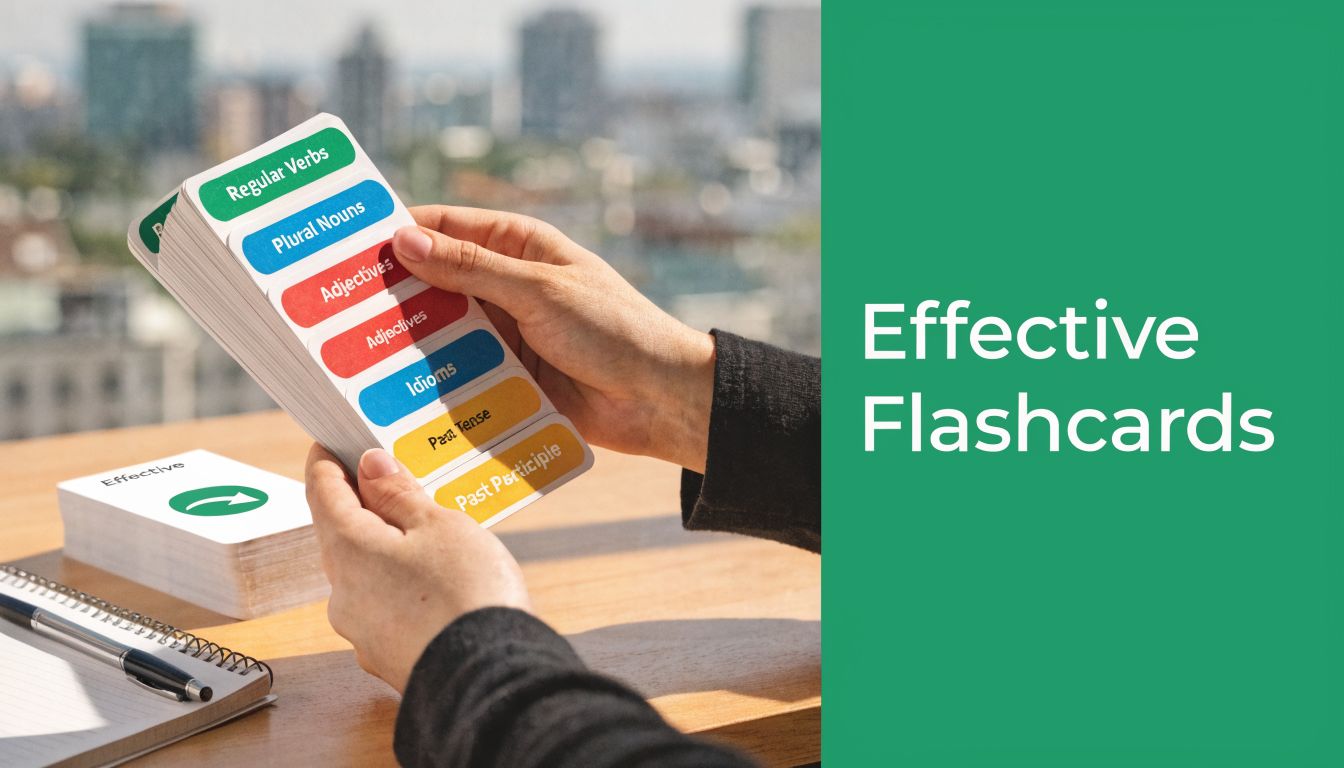
That approach differs from a standard flashcard deck. A non-adaptive deck may show cards according to a fixed order or a general schedule. An adaptive quiz uses your history to decide which items deserve more attention. Known words don't disappear forever, but they need less immediate practice than words you repeatedly forget.
The same principle can apply to grammar. A beginner may handle a simple sentence pattern but struggle when the subject changes or when a sentence appears without an English cue. Difficulty scaling can introduce those changes gradually rather than presenting the hardest form at once.
Conversation practice adds another layer. You might receive a prompt to greet someone, order food, ask for directions, or respond in a social situation. Your earlier choice can influence the next prompt, creating a branch that reflects the conversation rather than forcing every learner through identical lines.
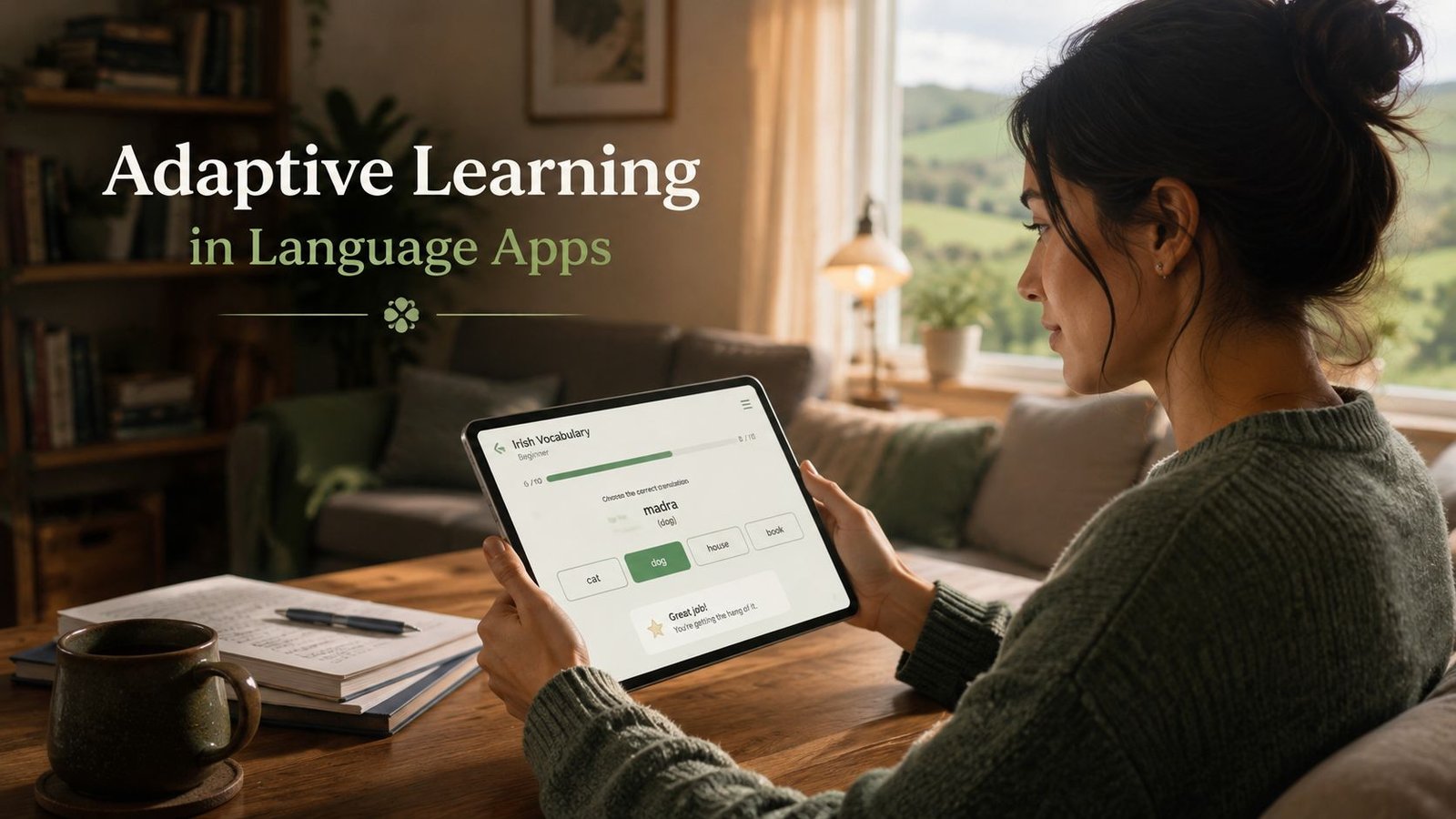
Gaeilgeoir AI illustrates this kind of language-learning approach through adaptive quizzes, instant feedback, pronunciation support, and scenario-based practice. Its Irish learning environment is designed for beginners through intermediate learners, with everyday situations such as social interactions, work, travel, ordering food, and asking for directions. Learners can also explore AI language tutors as part of a broader practice routine.
The value lies in the combination. A quiz can identify a vocabulary gap, a pronunciation activity can address a sound, and a scenario can test whether you can use the material in context. Adaptation happens inside the tool, though it doesn't replace listening to real speakers, speaking with people, or handling the unpredictability of an actual conversation.
Real Benefits and Honest Trade-Offs for Learners
Adaptive learning can make daily practice feel more relevant because it directs attention toward what you haven't mastered. A systematic review of personalized adaptive learning in higher education included 69 eligible studies and reported medium-positive effects across cognitive, affective, and behavioral outcomes. The review in PubMed Central connects the strongest value to individualized content selection and continuous adjustment, not to static personalization alone.
That evidence supports several practical benefits, but each one has a boundary.
You spend more time on weak areas
A system can return to a difficult word, grammar pattern, or pronunciation task instead of asking you to repeat an entire unit. This may make practice more efficient and can help you notice a clearer relationship between a mistake and the next exercise.
The trade-off is that efficiency can become narrowness. If the system measures quiz accuracy well but measures spontaneous speech poorly, you may improve inside the exercises without becoming equally comfortable in an unpredictable conversation.
Familiar material creates less friction
Learners often lose patience when a fixed course makes them repeat material they already know. Adaptive content can reduce that boredom by moving through familiar items more lightly while preserving opportunities for review.
However, skipping too quickly can create false confidence. Recognition is not the same as recall, and recalling a word in a quiz is not the same as using it while listening to a fast speaker.
The useful question isn't “Did I get this item right?” It's “Can I still use this skill when the prompt changes?”
Feedback closes the loop
Immediate explanations and targeted corrections help you connect an answer to a learning decision. The system can also show patterns that are difficult to notice alone, such as repeated confusion between similar words.
A traditional tutor may still outperform an app when you need encouragement, cultural explanation, flexible questioning, or a response to something the software didn't anticipate. A fixed curriculum can also help an absolute beginner who needs a dependable structure before making many choices.
The evidence is not a guarantee that adaptation always wins. A large-scale study reported that adaptive paths reduced instructional time and content exposure, but effectiveness varied by module. Some topics improved, while others favoured regular instruction. The study of efficiency and effectiveness in adaptive learning paths reinforces a useful caution: adaptation works best when the content structure and the system's signals match the skill being taught.
How to Choose an Adaptive Learning Platform That Works for You
Before choosing an adaptive language platform, test what happens behind its friendly interface. A beginner learning Irish might miss maidin mhaith. A useful system should respond differently from one that treats every mistake the same way.
Does it adapt beyond shuffling questions?
Shallow adaptation changes card order. Deep adaptation changes the type of feedback based on error patterns. For example, repeated confusion between two Irish words might trigger a shorter example, a pronunciation prompt, a contrastive explanation, or a later review in a new sentence. If the app only presents the same explanation after every wrong answer, its personalization is limited.
A platform such as Gaeilgeoir AI's personalized learning paths should make its route understandable enough for you to see how practice changes.
What evidence does it use?
Look for a plain explanation of the signals involved. Does the platform consider accuracy, recurring error patterns, response time, pronunciation, confidence, or progress through related skills? It should also state what it does not measure. A pause might indicate confusion, distraction, or a noisy room, so the system should not treat every pause as proof that a learner lacks the skill.
Can you understand or influence the route?
Progress information should explain why an item has returned or why a lesson has become harder. Difficulty controls help if you already know some Irish and do not want to restart at the beginning. If recommendations appear without explanation, you cannot tell helpful personalization from random variation.
Does practice transfer beyond the screen?
Move from isolated vocabulary to phrases, listening, pronunciation, and scenario responses. If the platform tests recognition only, you will need another way to practise producing Irish. Questions about accessibility, cognitive load, and learner control can also be informed by Orange Neurosciences for learners.
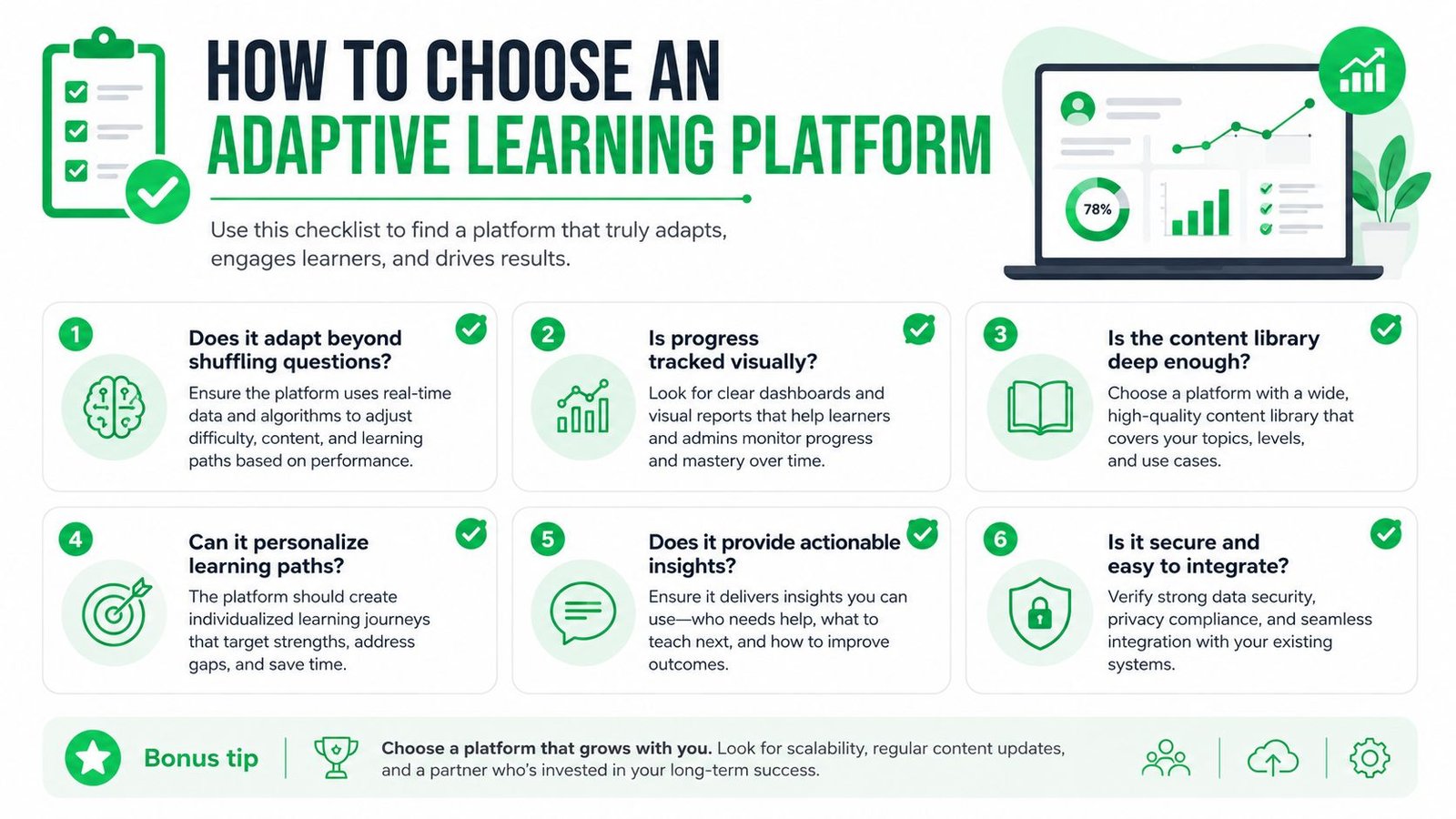
Check the content library too. A system cannot choose a suitable next activity if it offers only a narrow range of exercises. Onboarding matters as well. A beginner-friendly Irish course should explain its assumptions, introduce the first tasks clearly, and avoid treating unfamiliarity as failure.
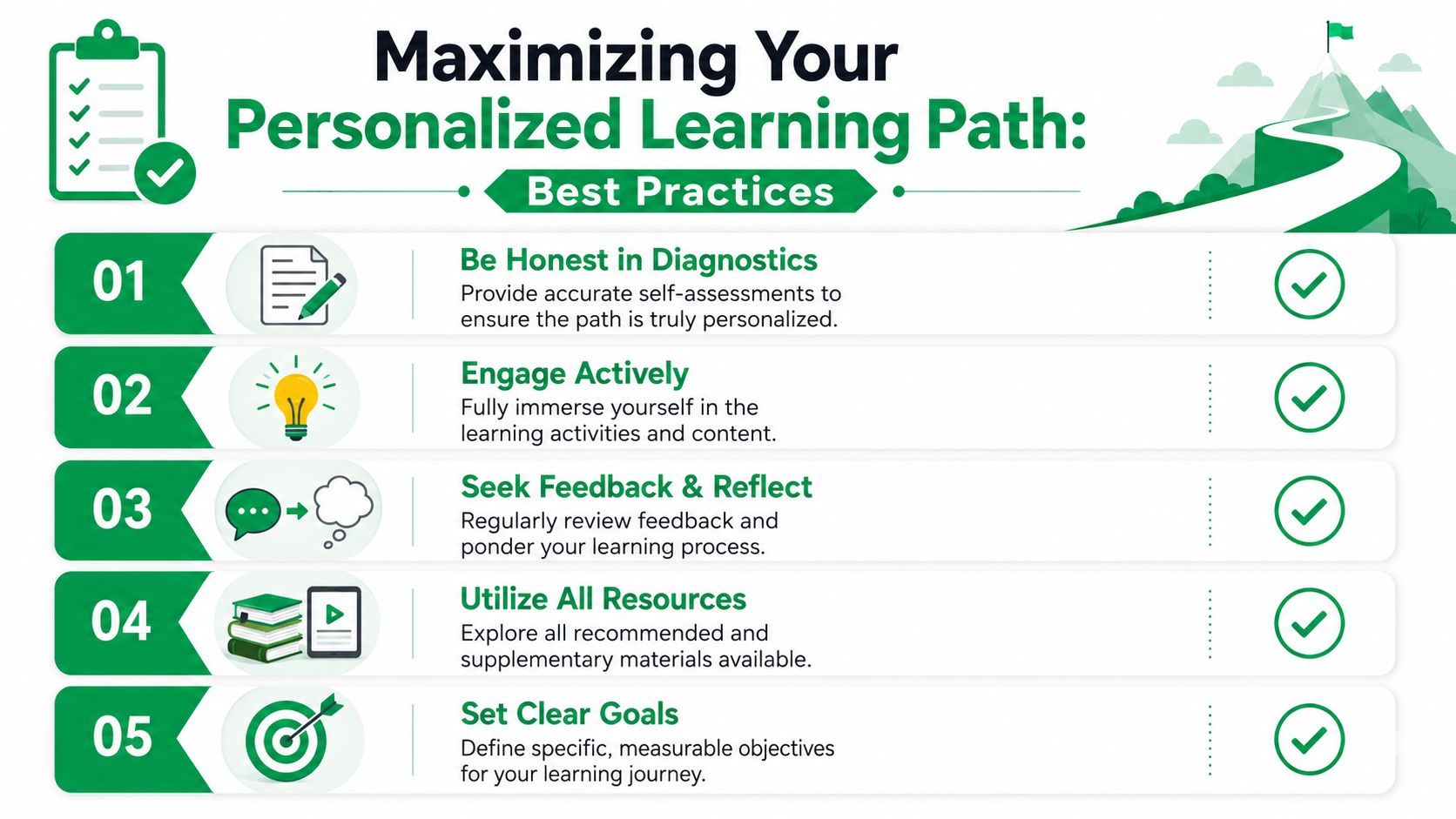
A two-week pilot lets you observe the platform using your real habits. Note whether repeated errors receive targeted practice, familiar skills stop dominating sessions, and new material remains usable outside the quiz.
Common Misconceptions About Adaptive Learning
Myth one, adaptive means effortless
Adaptive learning removes unnecessary repetition, not the need to practise. If you keep missing an Irish phrase, a responsive system may return to it in different forms, but you still have to retrieve it, listen carefully, and produce it.
Myth two, more data always means better learning
A learner model becomes useful when its signals are accurate and relevant. Tracking every pause or click won't automatically improve instruction. A smaller profile built around meaningful performance evidence can be more helpful than a noisy record that mistakes distraction for confusion.
Myth three, adaptive systems replace teachers
Adaptive technology can personalize practice, identify patterns, and offer immediate responses. It can't fully replace a teacher's ability to explain an unexpected question, respond to emotion, introduce culture, or reshape a lesson around a group.
Myth four, conjugation drills equal fluency
Grammar drills can strengthen a specific pattern. Fluency also requires listening, retrieval, pronunciation, vocabulary, interaction, and the ability to respond when nobody gives you four answer choices.
Myth five, scenario practice replaces real conversation
A scenario can prepare you for an interaction by giving you a safe place to rehearse. Real conversation includes unfamiliar accents, interruptions, imperfect audio, cultural context, and replies you didn't predict, so you need live or real-world practice as well.
Myth six, one platform fits every learner
An adaptive route is still constrained by the content, design, and measurements built into the platform. One learner may need pronunciation support, another may need reading practice, and another may need a teacher to explain why a form sounds natural in one context but not another.
Use this quick check when a product claims to be adaptive:
- Specific signals: Does it explain what learner behaviour affects recommendations?
- Visible changes: Can you see content, pace, feedback, or sequence changing?
- Skill coverage: Does it measure more than multiple-choice accuracy?
- Human support: Can a teacher or learner override a poor recommendation?
- Real-world bridge: Does practice lead toward listening and speaking beyond the platform?
Adaptive learning is neither magic nor a synonym for personalization. It's a method for using evidence from your performance to make the next learning decision more relevant.
Gaeilgeoir AI offers adaptive quizzes, pronunciation support, instant feedback, and scenario-based Irish practice for everyday situations, so you can apply the ideas in this guide while building from beginner foundations. Visit Gaeilgeoir AI to explore a guided way to practise Irish at your own pace.