Unlock Fluency: Personalized Learning Paths 2026

You might be in this exact spot right now. You downloaded an Irish app, bought a grammar book, or promised yourself that this time you'd finally stick with learning Gaeilge. For a few days, it felt exciting. Then the lessons got oddly mismatched. Some were too easy, some jumped ahead, and some taught phrases you'd never use in real life.

That frustration doesn't mean you're bad at languages. It usually means the system wasn't built around you. Language learners don't all start in the same place, move at the same speed, or want the same outcome. A beginner who wants to order coffee in Galway needs a different route from a student preparing for the oral exam, and both need something different again from a heritage learner reconnecting with school Irish.

Table of Contents

The Problem with One-Size-Fits-All Language Learning

A generic language course usually assumes there's a “normal learner.” That imaginary person starts with the right background, has the same free time every week, enjoys the same lesson style, and needs the same vocabulary in the same order. Real learners don't look like that.

A beginner learning Irish often meets this problem on day one. The app throws in grammar labels before the learner can hold a tiny conversation. Or it spends too long drilling words they already know from school while skipping the phrases they want, such as greeting someone, asking for directions, or introducing themselves. Progress starts to feel random.

A common Irish learning pattern

Take three learners:

  • The busy adult: They want practical spoken Irish for travel and family connection, but the course keeps feeding them classroom-style exercises.
  • The heritage learner: They remember scattered phrases from school, yet the platform treats them like a total beginner.
  • The student: They need oral fluency under exam pressure, but the lessons focus on broad exposure rather than targeted speaking practice.

Each learner hits a wall for a different reason. The material isn't wrong. It's just poorly matched.

Practical rule: When a course feels too fast, too slow, or oddly irrelevant, the issue often isn't your ability. It's the pathway.

That's why personalized learning paths have gained so much attention. This isn't a tiny trend. The global market for personalized learning reached $1.8 billion in 2023 and is projected to surge to $19.86 billion by 2030, according to SkillPanel's overview of personalized learning pathways. That growth reflects a broad move away from fixed, one-track teaching and toward systems that adapt to the learner.

Why generic study advice falls short

Many learners also collect disconnected tips. One video says to memorize vocabulary lists. Another says only speak. Another says use AI. Helpful in theory, messy in practice.

If you want a practical companion piece on using AI without turning your study routine into chaos, this guide to effective AI study techniques is worth reading. It's useful because it focuses on study habits, not hype.

A better Irish course acts more like a guide than a conveyor belt. It figures out what you know, what you're ready for next, and what matters for your goal. That's the core idea behind personalized learning paths.

A Smarter Route to Fluency Personalized Learning Paths Explained

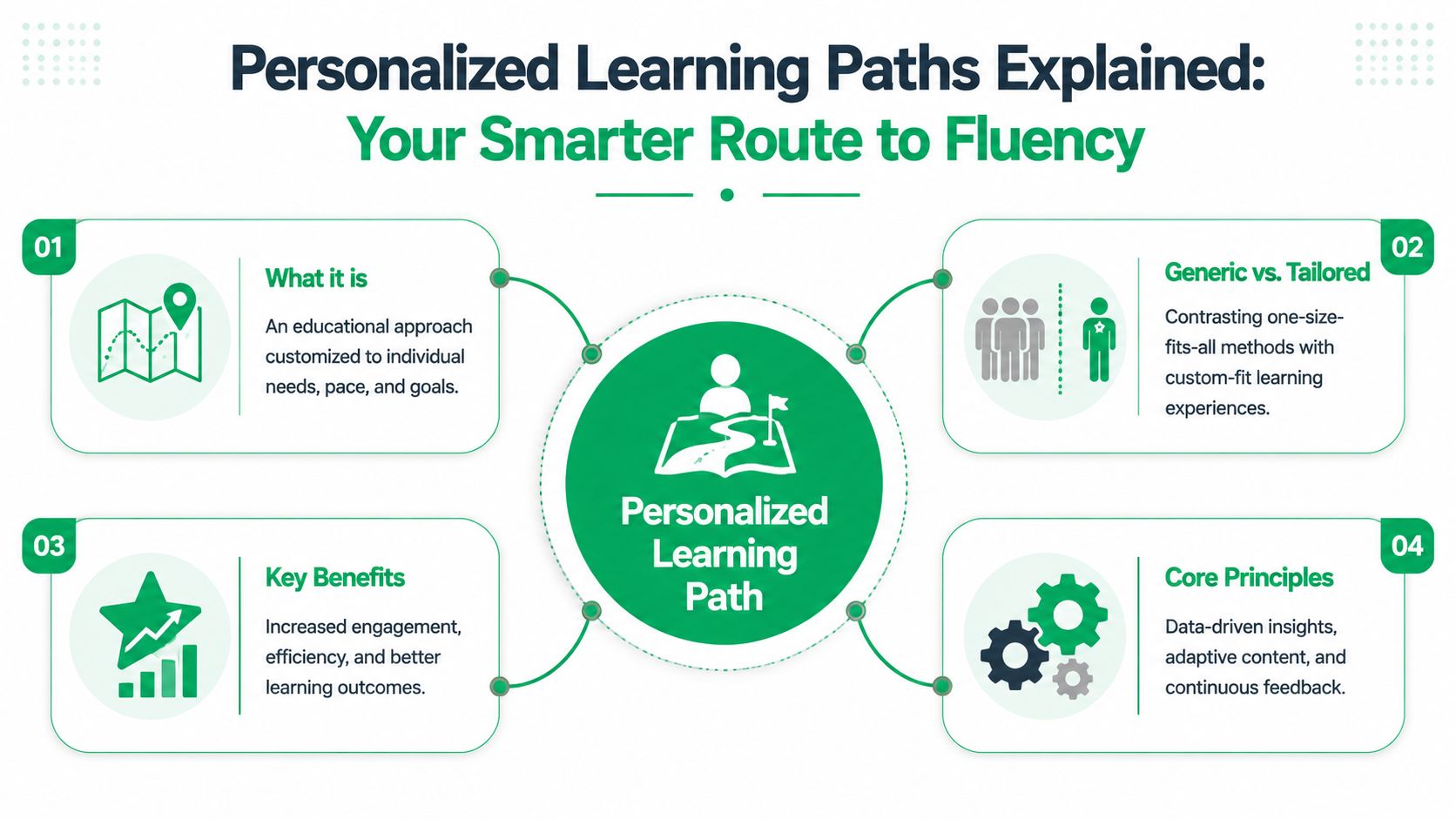
A personalized learning path is a learning route shaped around your current level, your goals, and your pace. It's not just “self-paced” in the casual sense. It's structured, but the structure bends around the learner rather than forcing the learner into a fixed sequence.

Early in the journey, a visual map helps more than a long definition.

A diagram illustrating the concept of personalized learning paths with four key components and their benefits.

Think of a personal trainer, not a photocopied plan

The easiest analogy is fitness. A generic workout from a magazine tells everyone to do the same routine. A good trainer asks better questions. Are you recovering from injury? Training for a race? Trying to build strength? Short on time? Strong in some areas and weak in others?

Language learning works the same way.

A generic Irish course says, “Lesson 1, then Lesson 2, then Lesson 3.” A personalized path asks:

  • What can you already do? Maybe you can read simple Irish but freeze when speaking.
  • What do you need first? Maybe conversation matters more than formal grammar labels.
  • Where do you stumble? Maybe verb forms are fine, but listening speed knocks you out.
  • What's your target? Daily speech, heritage reconnection, or Leaving Cert performance.

Evidence summarized in this overview of personalized learning in education notes that personalized learning emphasizes learner agency, competency-based progression, and flexible environments. In plain English, that means you get more say, you move forward by mastering skills, and the learning environment adjusts instead of staying rigid.

Later, it helps to hear the concept explained from another angle.

What makes the path personalized

A real personalized path usually has a few core features:

Element What it means for an Irish learner
Learner profile The system tracks your strengths, weak spots, and goals
Adaptive sequence You don't get the same next lesson as everyone else
Competency-based progress You move on when you can do the thing, not when the calendar says so
Flexible practice Reading, listening, speaking, and review can shift based on need

That last point matters a lot. If you can recognize “Dia duit” on screen but can't respond when someone says it aloud, your path should change. It shouldn't keep rewarding recognition alone.

Personalized learning works best when it feels like someone noticed where you are, not just where the curriculum starts.

How Adaptive Technology Builds Your Unique Path

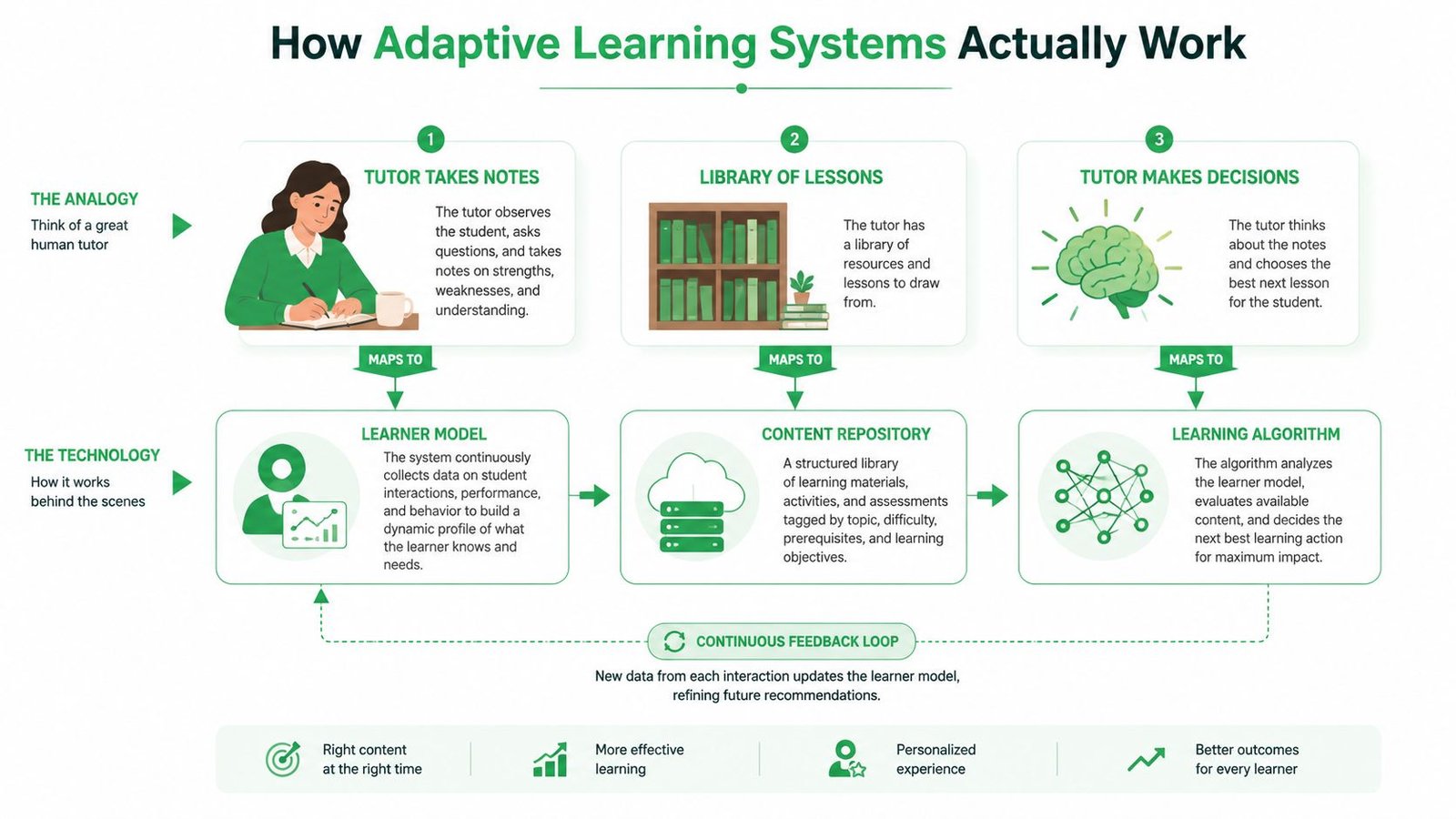
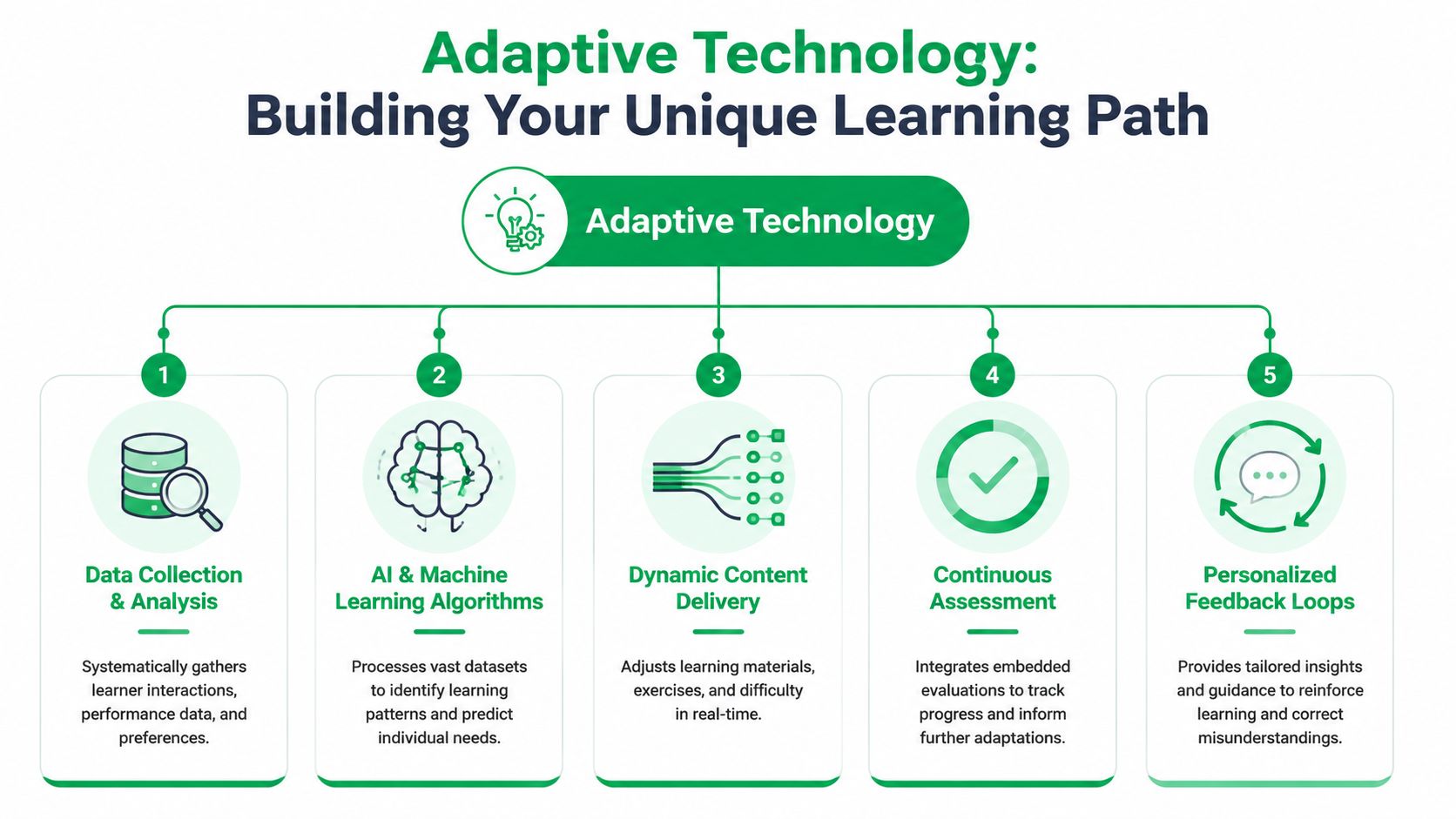
When people hear “adaptive technology,” they often picture a mysterious black box. In practice, the good version is simpler. It watches how you perform, notices patterns, and changes what comes next.

This visual breaks the process down.

A diagram illustrating the five key components of adaptive technology for building personalized learning paths.

Your starting point matters

The first piece is diagnosis. Before a system can personalize anything, it needs to know where you are.

Like a satnav, if the starting point is wrong, the route will be wrong too. In Irish, that could mean giving a returning learner endless beginner word matching, or handing a new learner fast dialogue practice before they've built a foundation in sounds and core phrases.

A good diagnostic does more than sort you into “beginner” or “intermediate.” It tries to detect specific patterns, such as:

  • Recognition without recall: You understand words when you see them but can't produce them.
  • Grammar without fluency: You know rules from school but can't use them in conversation.
  • Vocabulary gaps by topic: You can discuss school but not travel, family, or daily routines.

For a deeper look at how these systems work behind the scenes, this piece on machine learning in education is a useful companion.

How the system adjusts as you learn

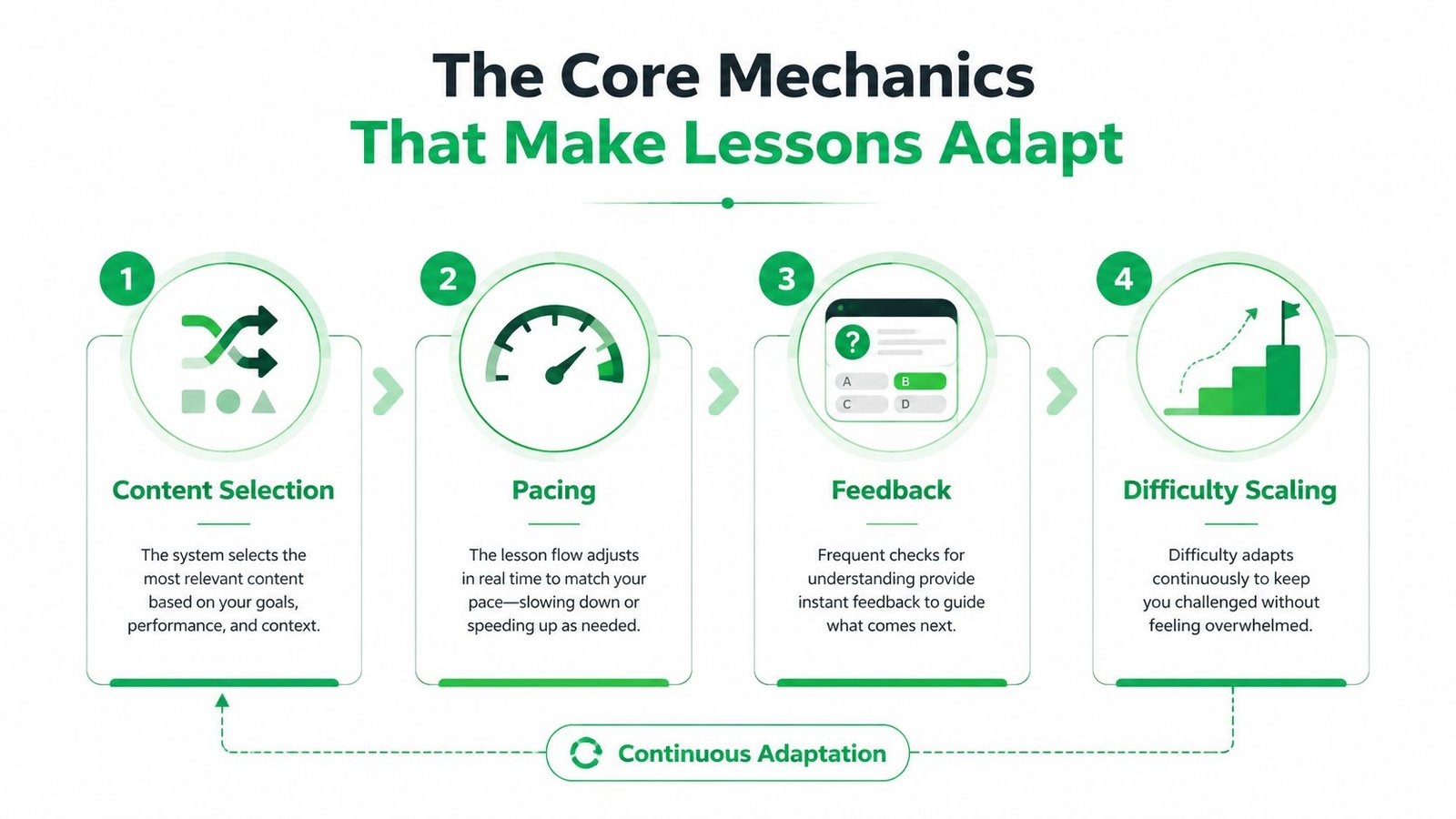
The second piece is adaptation. Once the system has a baseline, it starts changing the route in response to your performance.

If you keep missing a listening item, the platform might slow the pace, repeat the structure in a new context, or switch to simpler audio. If you consistently answer a form correctly, it may stop wasting your time and move to the next challenge.

The U.S. Department of Education summary discussed in the earlier education overview highlights learner agency, competency-based progression, flexible environments, and instruction shifts such as data-driven decisions, targeted instruction, and increasing student ownership. Those ideas sound technical, but the learner-facing version is concrete: the work becomes more relevant.

Why feedback loops matter in Irish study

A strong adaptive system also uses feedback loops. Through these loops, many learners feel the difference.

Instead of waiting until the end of a unit to discover you misunderstood a pattern, the platform responds in the moment. That might mean showing a pronunciation cue, surfacing a review card just before you forget a word, or giving you a simpler speaking prompt before returning to the harder one.

Here's how the main pieces feel from the learner's side:

  1. Diagnostic assessment helps you avoid starting in the wrong place.
  2. Adaptive difficulty keeps tasks from becoming dull or crushing.
  3. Spaced review brings words back before they fade.
  4. Scenario practice teaches language in context, not in isolation.
  5. Progress feedback shows whether you're building real ability or just clicking through.

A good adaptive system doesn't race you through content. It keeps adjusting until the content fits.

For Irish, that fit matters because learners often have uneven skills. Someone may know isolated school vocabulary, mishear everyday speech, and still be ready for useful conversation if the path is arranged properly.

Why Personalized Learning Accelerates Language Skills

Language progress speeds up when your energy goes to the right problem. That's the practical advantage of personalization. You spend less time proving what you already know and more time strengthening what's weak.

Research summarized by Third Rock Techkno on personalized learning paths for students states that AI-powered personalized learning systems improve student outcomes by 25% while simultaneously reducing teacher workload. For learners, the key takeaway is straightforward. Better targeting can improve results because the system keeps adapting to real performance.

Motivation improves when the challenge fits

Motivation drops fast when work feels mismatched.

If your Irish lesson is too easy, you drift. If it's too hard, you tense up and avoid it. The sweet spot is the “just manageable” challenge. You have to think, but you don't feel lost.

That's especially useful in speaking practice. A personalized system can move from “My name is…” to short exchanges about family, work, or travel at a pace you can handle, instead of throwing you into a long dialogue before your ears and mouth are ready.

Retention gets stronger through timing and context

A language doesn't stick because you saw it once. It sticks when you meet it again at the right moment and in the right setting.

Personalized review is helpful here because the system can keep resurfacing Irish words, sentence patterns, and listening items that are at risk of fading. It can also connect them to scenarios that matter. “An bhfuil cead agam?” lands better when tied to a school or social situation than when it appears as an abstract line on a worksheet.

The brain remembers language more easily when meaning, timing, and use show up together.

That's why contextual practice often feels smoother than isolated memorization. You're not just learning the phrase. You're learning when it belongs.

Efficiency comes from not wasting effort

Efficiency in language study doesn't mean rushing. It means using your limited time well.

A personalized path can skip repeated drills on material you've clearly mastered and redirect your effort toward weak pronunciation, shaky listening, or high-value vocabulary. For adult learners, that matters because study time is usually squeezed between work, family, and everything else.

A short comparison makes the difference clearer:

Study style Likely experience
Fixed sequence course Everyone gets the same material in the same order
Personalized path Your review, pacing, and next tasks respond to your performance

That's why personalized learning paths often feel lighter even when they're demanding more of the right kind of effort.

Personalized Irish Learning from Beginner to Leaving Cert

The easiest way to understand personalization is to look at how different Irish learners need different routes. The content may overlap, but the order, pacing, and practice style shouldn't.

The complete beginner

Niamh is starting from scratch. She wants one simple outcome first. Hold a short conversation without panicking.

Her path shouldn't begin with dense grammar explanations. It should begin with sounds, high-frequency words, and small social exchanges. She needs greetings, introductions, common questions, and listening practice that trains her ear to the rhythm of Irish.

A beginner path might look like this:

  • Week focus: Core phrases for meeting people
  • Practice type: Short listen-and-repeat drills, simple prompts, and tiny dialogues
  • Success marker: She can greet someone, say where she's from, and ask one basic question

That foundation matters because beginners often mistake speed for progress. If the platform rushes ahead, they can end up clicking through material without building stable recall.

The returning learner with patchy school Irish

Seán learned Irish in school and remembers more than he thinks. He can recognize bits of vocabulary and grammar, but his active recall is uneven. He knows some forms on paper and struggles to say anything spontaneously.

His ideal path starts with diagnosis. The system needs to find the gaps instead of starting over from zero. Maybe his listening is stronger than his speaking. Maybe he knows school topics but lacks practical everyday language.

A personalized route for Seán would likely emphasize:

  • Gap filling: Spotting missing verb patterns or topic vocabulary
  • Conversion to active use: Turning passive recognition into spoken production
  • Confidence repair: Giving manageable speaking tasks that prove he knows more than he feels

This kind of learner often benefits from targeted review rather than broad beginner content. The aim is reconstruction, not restart.

The Leaving Cert student

Aoife has a clear deadline. She needs oral exam fluency, topic control, and confidence under pressure.

Her path should be shaped around exam-style interaction. That means repeated practice with common oral themes, short-answer agility, and speaking prompts that feel realistic rather than generic. She also needs feedback on where she hesitates, where her vocabulary thins out, and which topics need reinforcement.

If that's your situation, this Leaving Cert Irish guide is a useful extra resource.

A student like Aoife doesn't need endless broad exposure. She needs focused repetition in likely scenarios. The platform should help her build from topic phrases to fuller responses, then to fluid back-and-forth speech.

Different Irish learners don't need different motivation speeches. They need different routes.

That's the core promise of personalized learning paths. The path changes because the learner changes.

Best Practices for Maximizing Your Learning Path

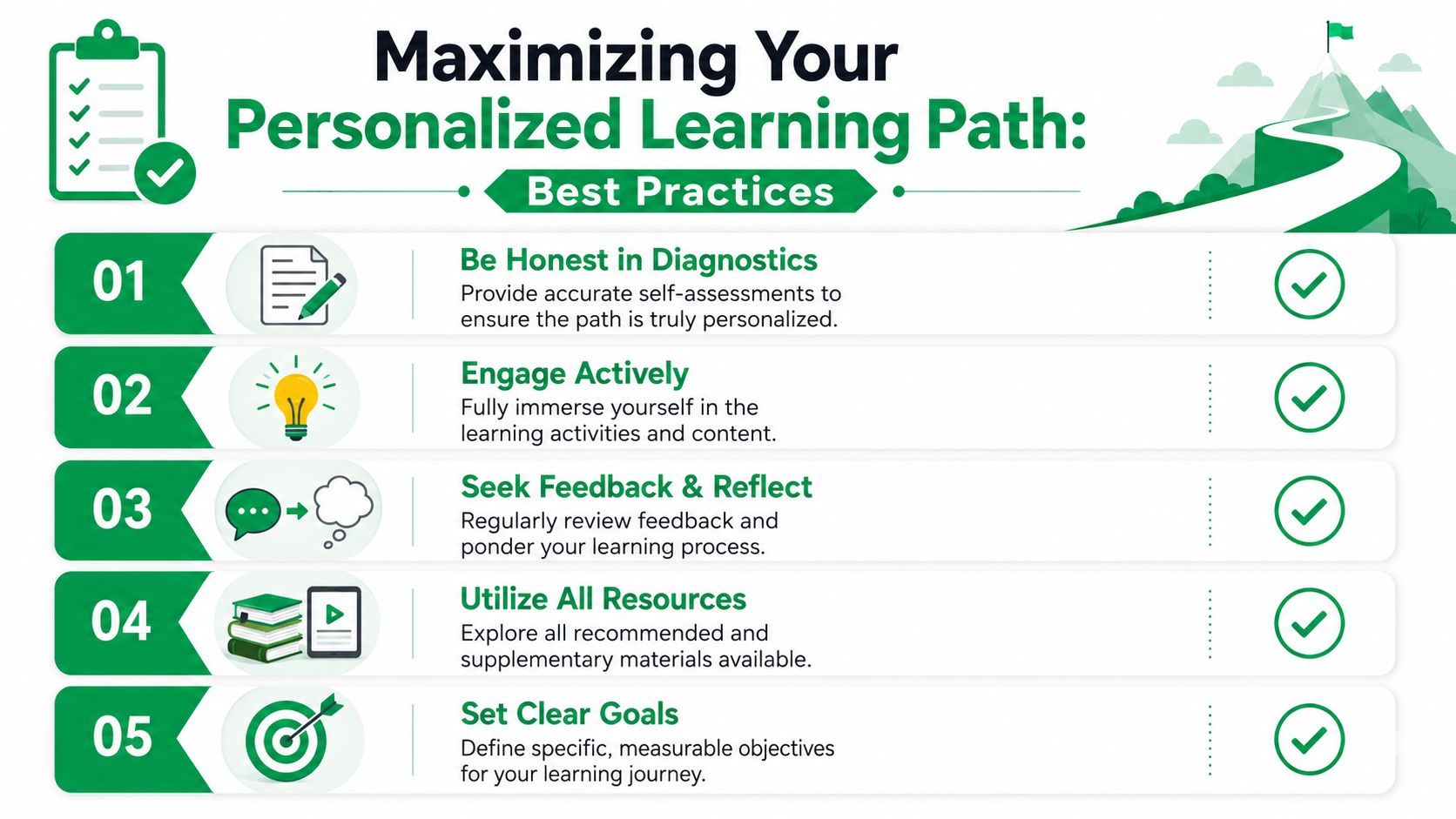
Even the smartest system can't do the learning for you. Personalization works best when the learner participates honestly and when the platform is built on sound teaching, not flashy shortcuts.

This checklist captures the habits that make a difference.

An infographic detailing five best practices for maximizing a personalized learning path with green icons and text.

How to get better results from the system

Start with the diagnostic and answer truthfully. If you guess, rush, or try to “place higher,” the system may give you a route that looks impressive but feels frustrating. In language learning, the correct starting point is a gift.

A few habits help a lot:

  • Use feedback immediately: If the platform flags a weak point, revisit it while it's fresh.
  • Set a concrete goal: “Speak for five minutes about my family” is stronger than “get better at Irish.”
  • Work with full attention: If your study sessions are shallow and distracted, even good personalization won't help much. This guide on how to learn to achieve deep work is useful if your study time keeps getting fragmented.
  • Review on schedule: Systems are more effective when you return for the reviews they surface.

If you want a focused explanation of one of the most useful review methods, this resource on spaced repetition for language learning is worth your time.

How to spot shallow AI learning

This is where healthy skepticism matters. Not every AI learning tool is well designed.

Recent 2025 studies on English learners show that some models can lead to “low learning efficiency” when they prioritize speed over foundational mastery, as discussed in this ScienceDirect article on AI-enabled language learning. That warning matters for beginners especially. If a system keeps pushing you forward before the basics are stable, progress can become superficial.

Watch for these signs:

Warning sign What it often means
You keep “unlocking” new content fast The platform may value pace more than mastery
You recognize lessons but can't produce language Practice may be too passive
Mistakes repeat without meaningful correction Feedback may be weak or generic
The tool replaces teaching logic with novelty AI is driving the lesson, but pedagogy isn't guiding it

A sound system balances adaptation with old-fashioned good teaching. It should revisit foundations, slow down when needed, and ask you to produce language, not just consume it.

Fast progression can feel satisfying. Deep mastery is what actually holds up in conversation.

How Gaeilgeoir AI Creates Your Personalized Path

The strongest Irish platforms combine adaptive technology with practical teaching choices. That means diagnosis, scenario-based practice, useful feedback, and a clear focus on what learners can say and understand.

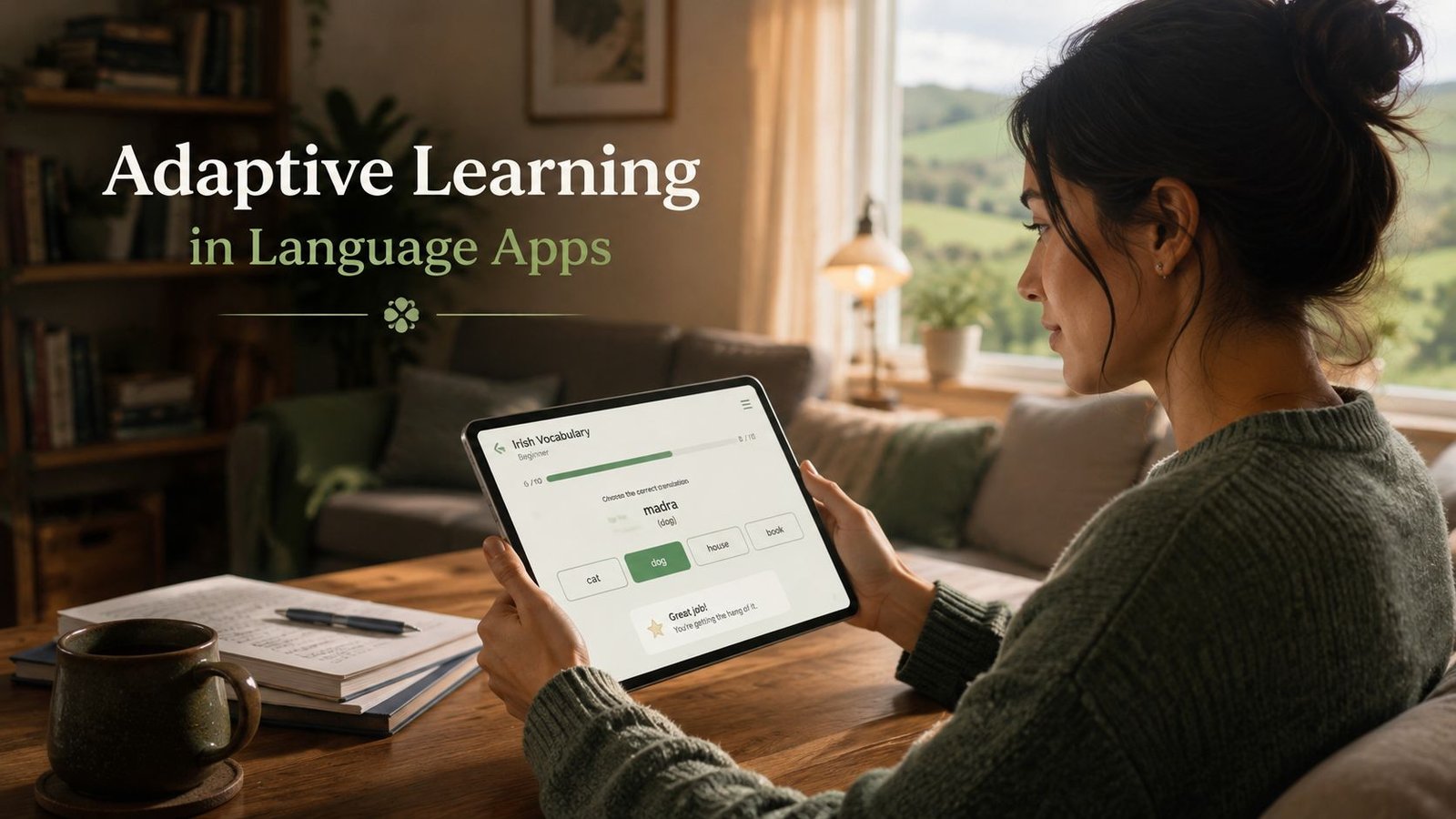
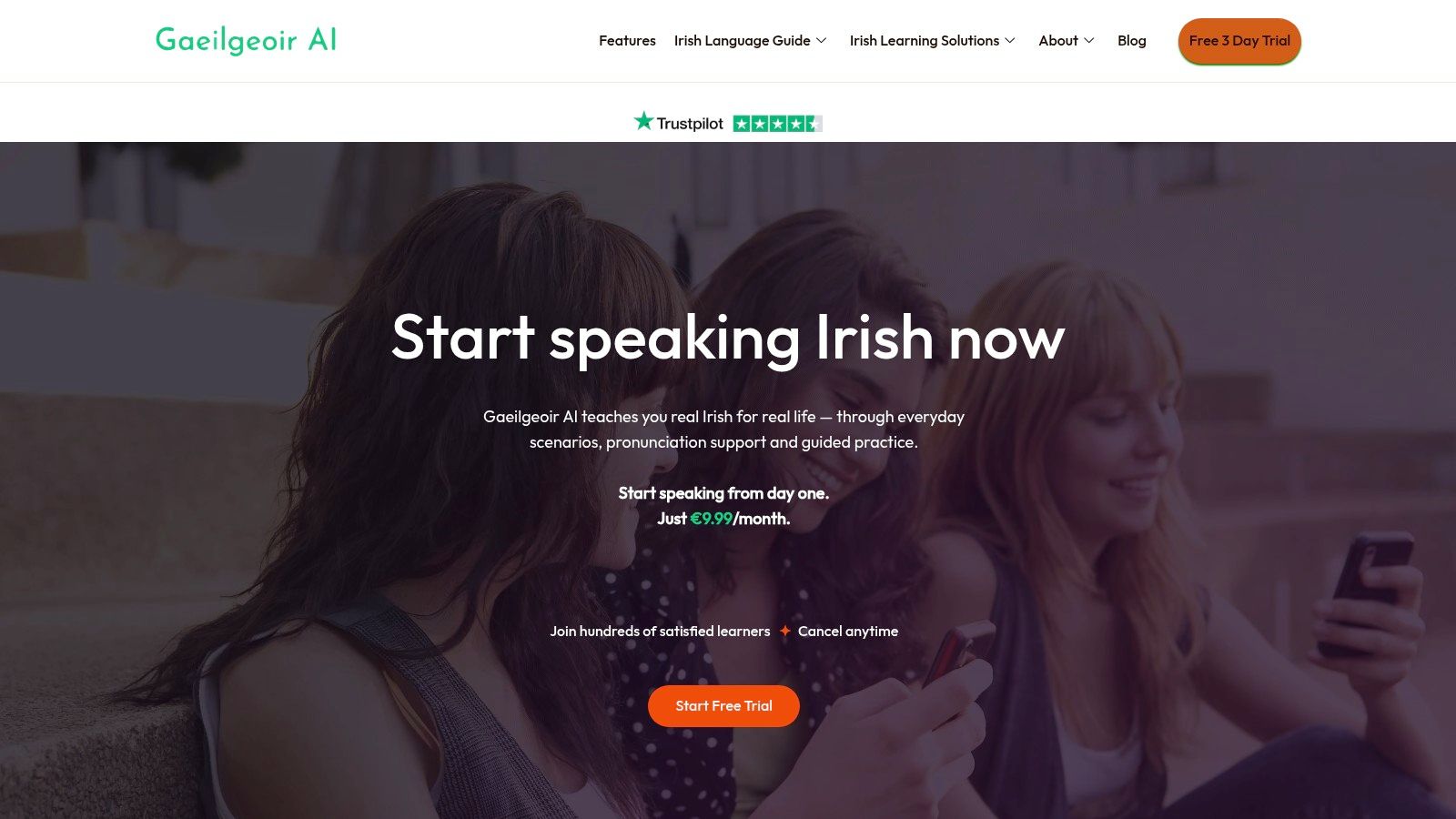
One example is Gaeilgeoir AI, which offers guided real-world conversations, adaptive quizzes with instant feedback, pronunciation support, personalized study lists, and dedicated Leaving Cert oral preparation. Those features line up with what a well-built personalized path should do. They help learners practice everyday interactions, track weak spots, and keep study tied to real use rather than abstract completion.

What a sound Irish learning system looks like

A learner-centered Irish platform should do a few things well:

  • Start with practical communication: Everyday social interactions, work, travel, food, and directions are more useful than random sentence collections.
  • Support foundational mastery: Core words and repeat exposure matter, especially for beginners.
  • Use adaptive review: Weak areas should reappear until they stabilize.
  • Offer scenario practice: Learners need to use Irish in context.
  • Track progress clearly: You should be able to see what's improving and what still needs attention.

This kind of design matches broader findings from adaptive learning research. In an AI-driven personalized learning path optimization study, the experimental group achieved a 28.8% improvement rate in learning effect, significantly higher than the control group, according to this SPIE conference paper on adaptive resource recommendation. The practical lesson isn't that every tool gets the same result. It's that careful adaptation can improve outcomes when the recommendations are well targeted.

For readers curious about the broader technical side of language models, Gydel's LLM details offer an interesting reference point on how language systems can be documented.

This is what the learning experience looks like in practice:

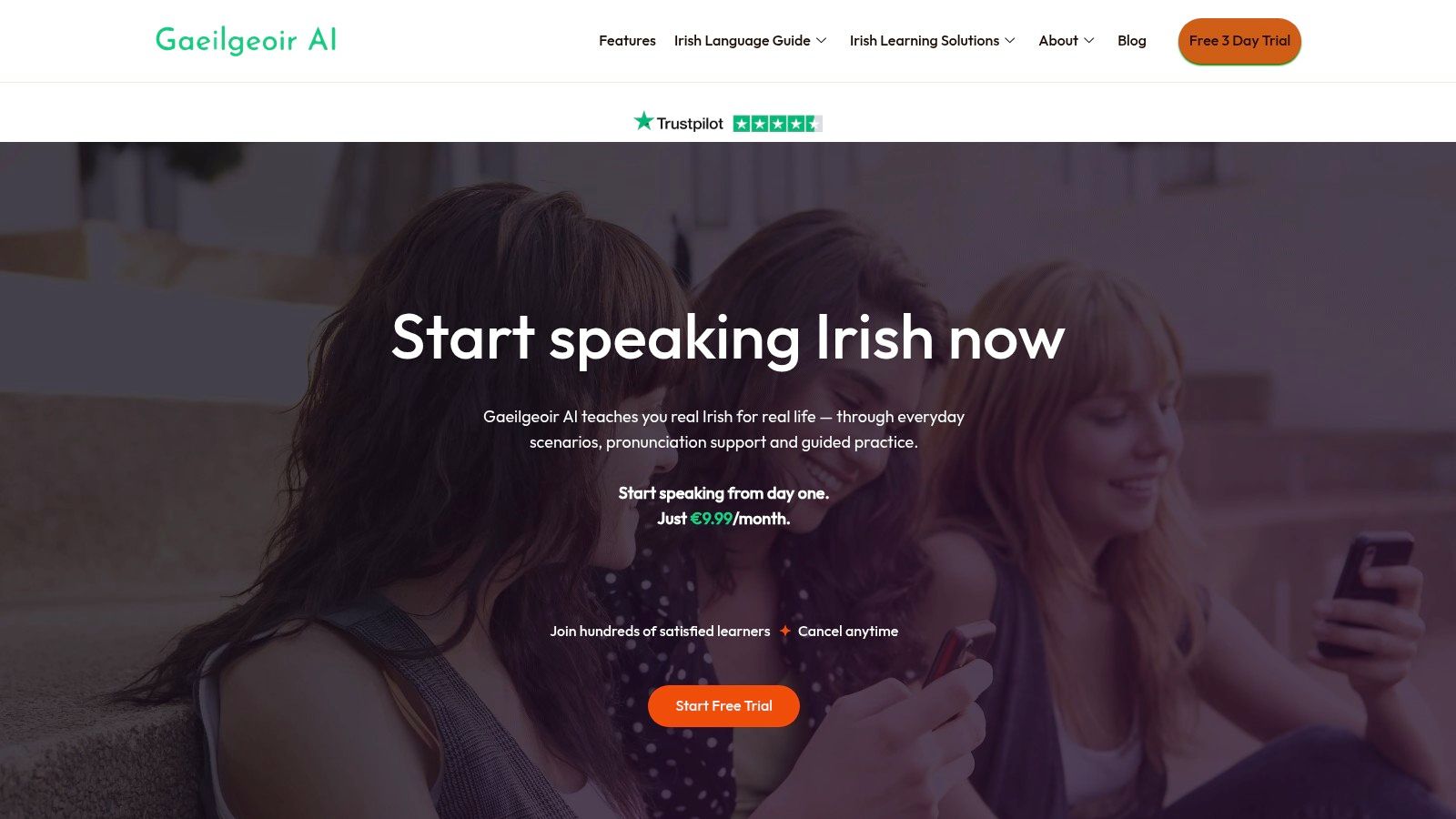
Screenshot from https://gaeilgeoir.ai

A personalized path won't make Irish effortless, but it can make your effort count. Instead of dragging you through the same route as everyone else, it can help you build fluency in a way that fits your level, your gaps, and your reason for learning.


If you're tired of generic language tools and want a more personalized route into Irish, try Gaeilgeoir AI and start your path at this learning page.

Machine Learning in Education: A Practical Guide for 2026

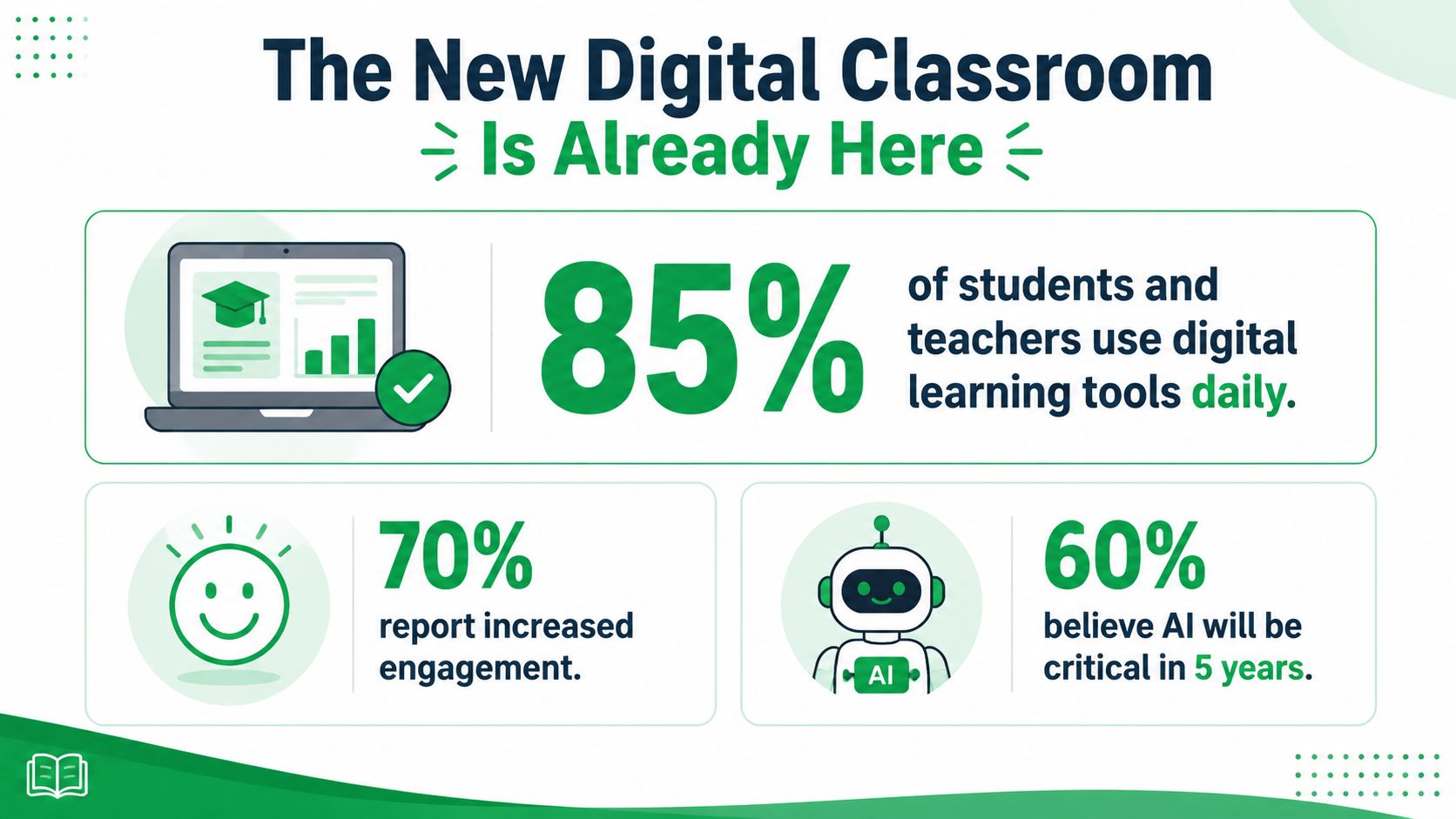
A lot of educators still talk about machine learning as if it's just around the corner. It isn't. In the 2024 to 2025 school year, 85% of teachers and 86% of students used AI, and 92% of higher-education students reported using generative AI in some form, up from 66% in 2024, according to these education AI adoption figures. That changes the conversation completely.

The question isn't whether machine learning belongs in education. It's how to understand it well enough to use it wisely. For teachers, that means knowing which tools support learning instead of adding noise. For families, it means seeing past the hype. For developers, it means building systems that help real students, not just dashboards.

Machine learning in education can sound technical, but in practice it often comes down to a simple idea. A system watches how a learner responds, notices patterns, and adjusts what happens next. In a classroom, that can look like a reading platform changing the next task, a writing tool giving personalized feedback, or a language app helping a student hear where their pronunciation drifted off target.

Table of Contents

The New Digital Classroom Is Already Here

AI is no longer waiting at the edge of school life. It is already part of the daily routine in many classrooms, study sessions, and homework habits.

That shift moves AI in schools from a pilot project to a daily reality. Teachers use it to draft examples, adapt practice, and give students faster feedback. Students use it for review, writing support, tutoring, and language practice. What changed was not just access to the tools. The bigger change was that both teachers and learners started treating them like ordinary school technology.

An infographic showing statistics about digital learning tools, student engagement, and the future role of AI in classrooms.

A useful comparison is the spellchecker. At first, it felt like an extra feature. Then it became a standard part of writing. Machine learning tools are following a similar path, except their role is broader. They can suggest the next activity, spot where a student is stuck, and respond differently based on patterns in performance.

That practical shift is especially visible in language learning. A student no longer has to wait for the next class meeting to practice pronunciation, get vocabulary review, or try a short conversation. Tools for AI-powered Irish language learning show how machine learning can bring guided practice into everyday study, even when a teacher cannot sit beside each learner one by one.

Machine learning now sits where calculators, search engines, and learning platforms once sat. At first it looked optional. Then it became part of the normal toolkit.

The classroom opportunity is real, but so is the need for judgment. Some tools save time and support learning. Others produce polished-looking mistakes, weak feedback, or unfair recommendations. Teachers do not need to become engineers to tell the difference, but they do need a clear mental model of what these systems are doing and where they can go wrong.

Understanding Machine Learning Without the Jargon

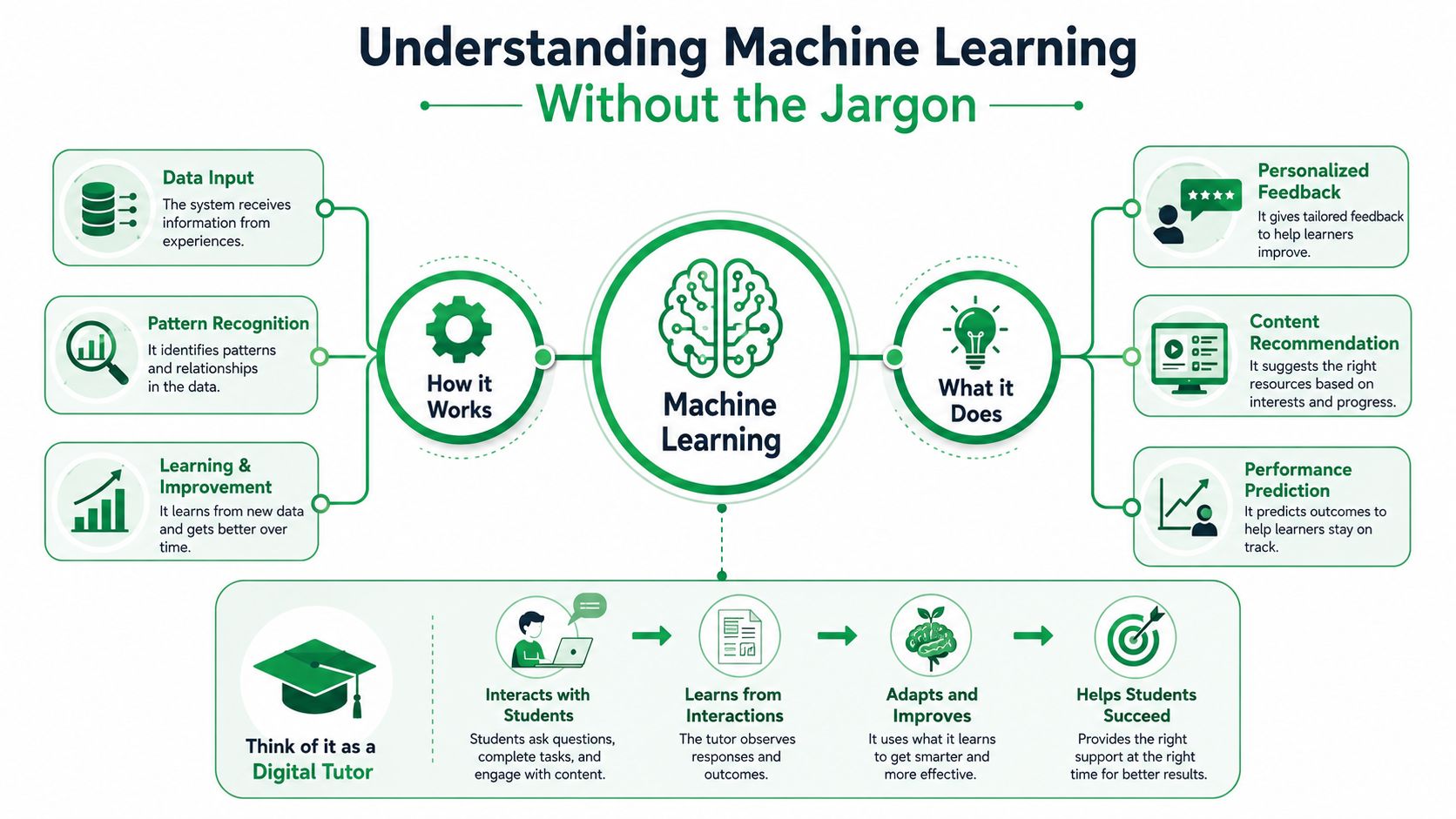
The simplest way to understand machine learning is to think of it as a digital tutor that gets better at responding. Not a human tutor. Not a magical mind. A system that notices patterns in student behavior and uses those patterns to make a decision about what should happen next.

That decision might be small. A different practice question. A hint instead of an answer. A review activity instead of a harder task. The key point is that the system doesn't just store information. It uses information to adjust its behavior.

An infographic explaining how machine learning works in education using a digital tutor concept for students.

A plain-language way to think about it

A traditional worksheet treats every learner the same. Everyone gets the same sequence, the same timing, and the same next step.

A machine learning system tries to do something more responsive:

  • It observes: What did the student get right or wrong?
  • It compares: Does this pattern look familiar based on earlier learner behavior?
  • It decides: What task, prompt, or support is most useful next?

That's the heart of machine learning in education. It learns from data, then uses what it has learned to make a prediction or a choice.

For readers who want a quick visual explanation before going deeper, this short overview is helpful:

Where people often get confused

Many people mix up automation and machine learning. They're not the same thing.

A basic automated system follows fixed rules. If a student scores below a set mark, it shows review content. That can be useful, but it isn't especially flexible.

A machine learning system looks for patterns that aren't hand-written one by one. It may notice, for example, that a student answers correctly but slowly, or succeeds with vocabulary but stalls on sentence order. That richer pattern lets the tool respond more intelligently.

Practical rule: If a tool can explain what learner signals it watches and how those signals shape the next step, you're probably looking at a real machine-learning use rather than a simple scripted workflow.

That's why the phrase personalized learning can mean very different things. Some products personalize the surface. They change colors, names, or topic choices. Others personalize instruction itself. If you're curious how this shows up in language study, technology-supported Gaeilge learning is a good example of where adaptation can become concrete for the learner.

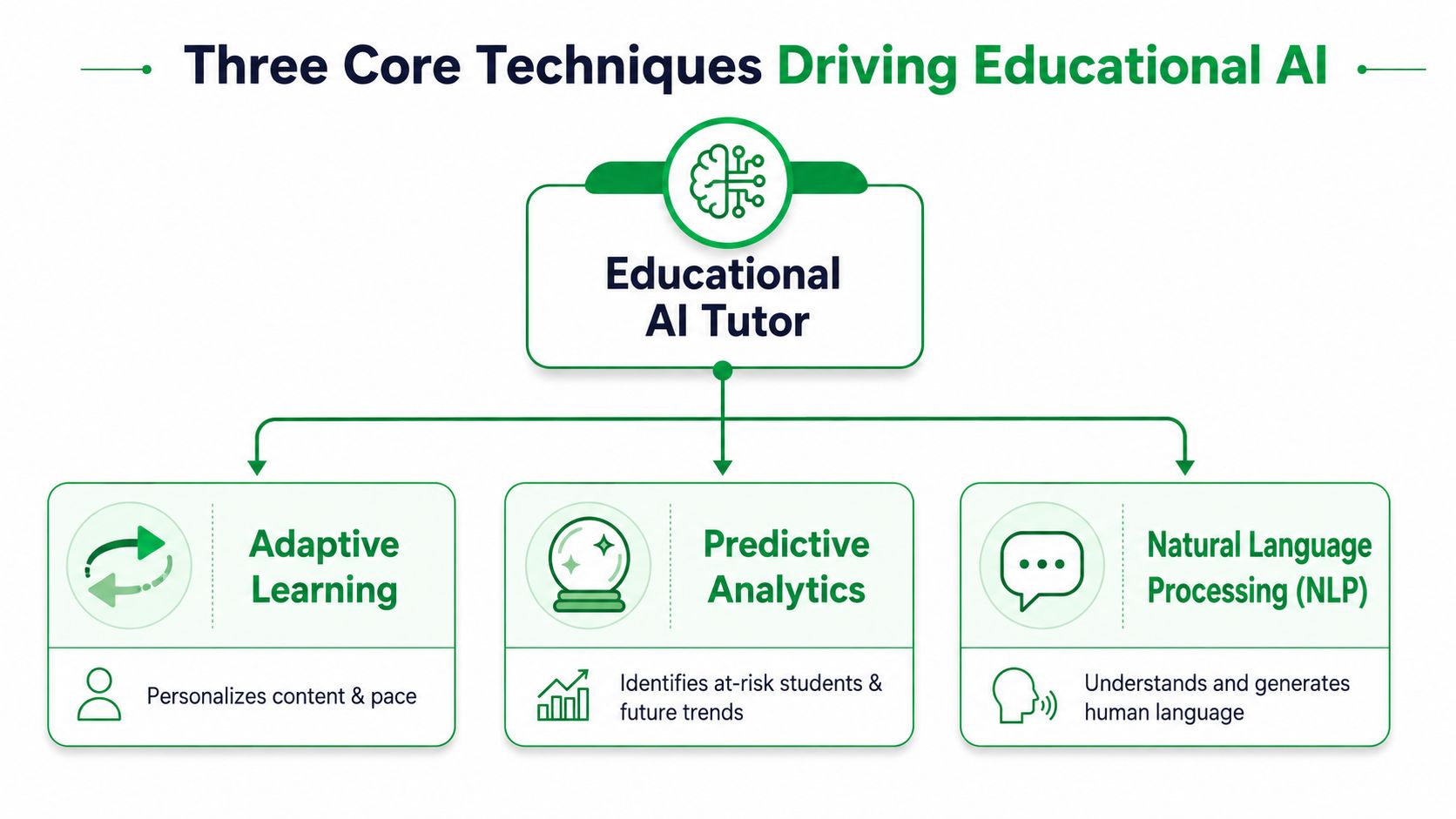
Three Core Techniques Driving Educational AI

Behind most educational AI tools, three techniques show up again and again. You don't need the math to understand them. You just need to know what job each one is doing.

A diagram illustrating the three core techniques of educational AI: adaptive learning, predictive analytics, and natural language processing.

Adaptive systems that respond while a student is learning

This is the most classroom-friendly form of machine learning in education. The system watches learner signals such as accuracy, response time, engagement, and sequence history, then changes the next step in real time. The U.S. Department of Education describes this shift as moving from merely capturing data to detecting patterns in data and automating decisions about instruction, including adjusting sequence, pace, hints, or trajectory through a learning experience in its report on AI and teaching and learning.

In plain terms, the tool is acting less like a library shelf and more like a coach. It sees what just happened and chooses what should come next.

A useful example is math practice. If a student gets several fraction problems right but takes a long time on each one, the system might keep the topic the same while reducing time pressure and adding a worked example. If another student answers quickly and accurately, it can raise the difficulty so that learner isn't stuck doing repetitive work.

This same logic shows up in language tools too. A system may review a word just before a learner is likely to forget it, which is one reason spaced repetition in language learning fits naturally with machine learning.

Natural language processing for reading writing and speech

Natural language processing, often shortened to NLP, is what lets a machine work with human language. It helps tools analyze text, respond to writing, interpret speech, and generate feedback.

In education, NLP appears in writing assistants, reading support systems, chat-based tutors, and pronunciation tools. A student writes a paragraph. The system identifies unclear phrasing, missing structure, or repeated errors. A learner speaks into a microphone. The system compares the audio with expected pronunciation patterns and gives targeted feedback.

The confusing part is that NLP doesn't “understand” language like a teacher does. It recognizes patterns well enough to perform useful tasks. That distinction matters. It can be excellent for practice and feedback, but teachers still provide the deeper judgment about meaning, intent, and context.

Technique What it does Classroom example
Adaptive learning Changes task difficulty, pacing, or hints Reading app adjusts the next passage level
NLP Works with student language input Writing tool flags awkward sentence construction
Predictive analytics Estimates what may happen next Dashboard flags a student who may disengage

Predictive models that flag risk early

Predictive analytics uses past learner data to estimate future outcomes. In schools and colleges, that often means trying to identify which students may be at risk of disengaging before a teacher could confirm it by observation alone.

This can sound cold if it's framed badly. Used well, it's not about labeling students. It's about noticing patterns early enough to offer support while support can still help.

A prediction is only useful if a school treats it as a prompt for care, not as a verdict about a student.

The strongest implementations connect the prediction to action. A risk signal might trigger tutoring, advisor outreach, or a change in instructional support. Without that next step, prediction becomes little more than a report.

Real World Examples of Machine Learning in Education

The easiest way to judge machine learning in education is to look at what it does for actual learners. When the technology is useful, it usually solves a concrete classroom problem that would otherwise take a lot of human time.

General classroom uses

Start with a science class. A student is solving multi-step problems and keeps making the same kind of mistake in the middle of the process. An intelligent tutoring system can notice the pattern and offer guidance at the exact step where confusion appears, instead of waiting until the final answer is marked wrong.

In writing, machine learning can support draft review. A tool may detect recurring issues with structure, repetition, or clarity and give the student another chance to revise before a teacher reads the final version. That changes feedback from a one-time event into an ongoing loop.

Schools also use machine learning for early-risk prediction. Research on the ML life cycle in education describes a high-value use case where supervised models are trained on historical academic, attendance, behavioral, and engagement data to identify students likely to disengage or drop out before the outcome is directly observable. The same research stresses that prediction alone isn't enough. Institutions need to connect those signals to interventions and test whether those interventions change outcomes in practice, as discussed in this review of machine learning deployment in education.

That last point is significant. If a system flags a student but nobody follows up, the model hasn't helped. If a school uses the signal to trigger tutoring, outreach, or a change in support, then machine learning starts to matter in a human way.

For curriculum planning, some educators also explore tools that help organize materials and sequence content more efficiently. One example is PDF AI's curriculum agent, which shows how AI can assist with curriculum development tasks that usually involve a lot of manual document review.

Language learning as a high-impact example

Language learning is one of the clearest places to see machine learning at work because the feedback loop is so immediate. Learners need repeated practice, fast correction, and tasks that stay challenging without becoming discouraging.

Screenshot from https://gaeilgeoir.ai

A strong language platform can listen for pronunciation patterns, track what vocabulary a learner knows, surface the right review item at the right time, and keep conversation practice within reach of the learner's current level. That's much harder to do well with static lessons.

One example in this space is Gaeilgeoir AI, which supports Irish learners with conversational practice, pronunciation feedback, and adaptive quizzes. That kind of setup matters because language learners often need many short cycles of attempt, correction, and retry. Machine learning can make those cycles immediate.

Good language software doesn't just ask, “Did the learner finish the lesson?” It asks, “What happened during the attempt, and what practice will help most now?”

In practical scenarios, the technology feels less abstract. A student mispronounces a phrase, hesitates on a common verb, or forgets a recently learned word. The system notices that pattern and changes the next prompt. That's machine learning translated into a teaching move.

How to Implement Machine Learning Tools

Adopting machine learning tools well has less to do with novelty and more to do with fit. The smartest question isn't “What can this AI platform do?” It's “What learning problem does it solve, and under what conditions?”

What teachers and school leaders should ask first

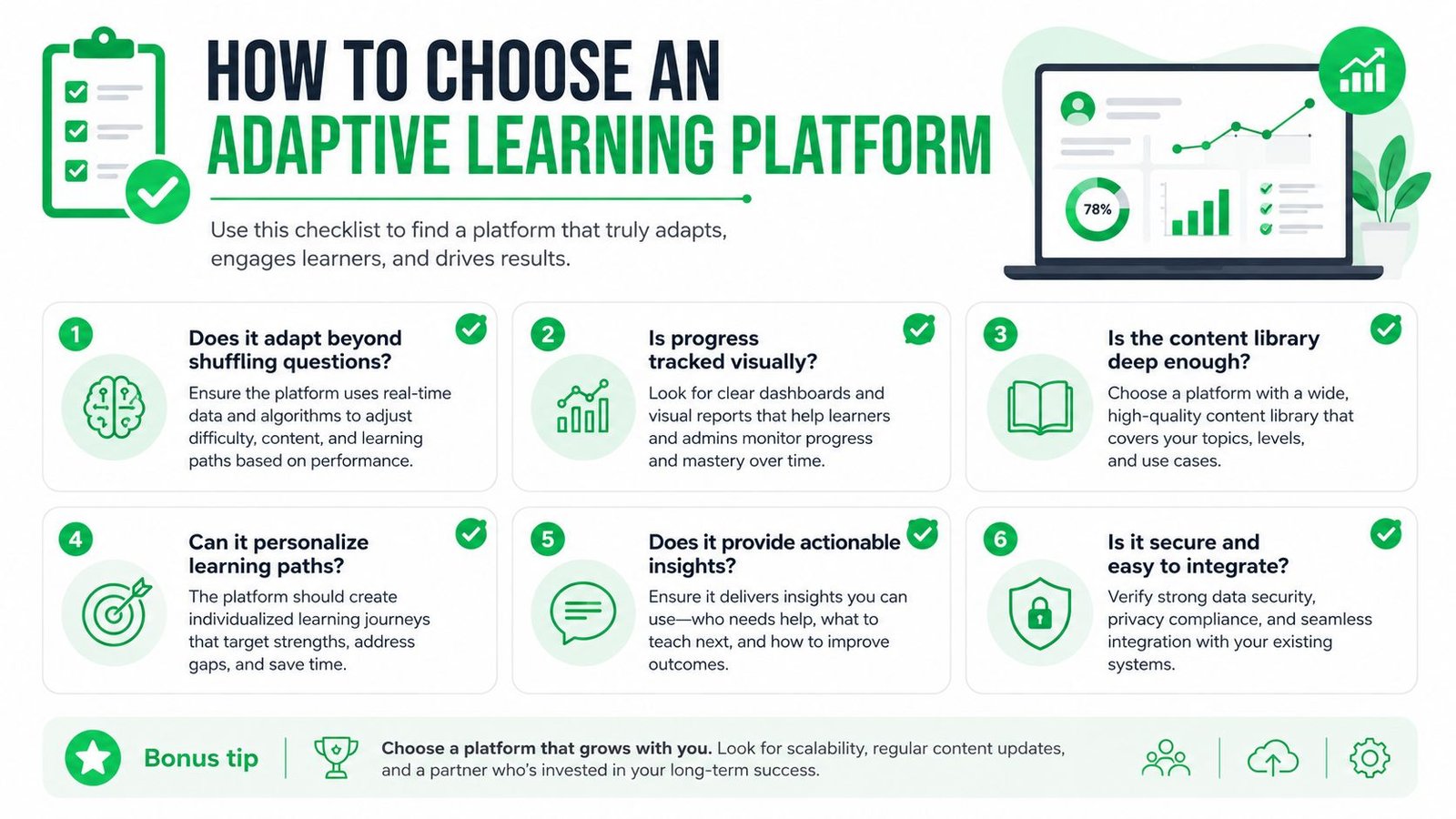
When schools evaluate a new product, flashy demos can distract from the basic educational test. A useful tool should make learning clearer, feedback faster, or support easier to target.

A simple review checklist helps:

  • Learning fit: Does the tool support a real instructional goal, such as reading fluency, writing revision, or language practice?
  • Teacher control: Can staff override suggestions, adjust tasks, and see what the system is doing?
  • Student visibility: Will learners understand why they are seeing a certain prompt, hint, or pathway?
  • Data boundaries: Is it clear what learner data is collected and how it is used?
  • Support for rollout: Will teachers get enough training time to use the tool well?

A pilot should also be small enough to observe closely. Watch how students respond. Notice whether teachers change their workflow. Look for friction points. Sometimes a tool looks impressive but asks too much of class time, attention, or setup.

For school teams wanting a practical institutional example, DocsBot's impact on education offers a concrete look at how an AI system can be embedded into an education setting.

What developers should build for

Developers often begin with model capability. Educators begin with learner need. The best products meet in the middle.

A responsible build process usually includes these design habits:

  1. Start with one learning problem. “Help students revise clearer essays” is a better starting point than “add AI to writing.”
  2. Work with teachers early. They'll show where students get stuck and what kind of feedback is usable in real time.
  3. Design for varied learners. A system should work for students who move quickly, students who need repetition, and students who use different devices or supports.
  4. Show the reasoning. If the product changes difficulty or flags a risk, users should be able to understand why.
  5. Test the intervention, not just the model. A prediction may be technically accurate and still educationally weak if it doesn't lead to better action.

That last point separates educational software from a pure analytics product. In schools, success isn't just whether the system noticed a pattern. Success is whether the response helped a student learn.

Addressing the Ethical Challenges of AI in Education

The biggest mistake schools can make with machine learning is treating it as neutral by default. It isn't. These systems reflect the data, assumptions, and design choices behind them.

Where bias enters the system

A recent review on inclusive AI in K to 12 found that underserved and disadvantaged populations are particularly vulnerable to exclusion from AI-integrated learning. The same discussion notes that, in higher education, machine learning systems can reproduce historical inequities when training data reflects biased structures. It recommends routine algorithm audits, human oversight in decision-making, and more diverse development teams, as outlined in this review on inclusive AI in education.

That issue becomes sharper in language learning. Students don't all speak, read, or interact with language in the same way. Learners from minority-language contexts, students with disabilities, and students whose prior schooling was uneven may all produce patterns that a system interprets poorly if the training data is too narrow.

People often get misled by the word personalized. A tool can feel personalized while still being unfair. If it only works well for learners who resemble the data it was built on, then the personalization is selective.

Fairness in educational AI doesn't mean treating every student identically. It means checking whether the system works well across different groups and adjusting when it doesn't.

What responsible implementation looks like

Ethical use needs procedures, not slogans. Schools and developers can take practical steps:

  • Audit for uneven outcomes: Check whether certain learner groups are getting weaker recommendations, lower-quality feedback, or more false risk flags.
  • Keep humans in the loop: Teachers, counselors, and school leaders should review high-stakes outputs rather than accepting them automatically.
  • Explain system behavior: Students and staff should know why a recommendation appeared and what data influenced it.
  • Design for access: Tools should be usable for learners with different needs, devices, and support requirements.

Accessibility belongs in this conversation too. If an AI tool personalizes content but ignores usability barriers, it still excludes students. For teams reviewing that side of implementation, this guide to web accessibility for education institutions is a useful companion resource.

Machine learning in education is worth pursuing. But it's only worth scaling when schools can show that it supports learning without implicitly narrowing who gets full benefit.

The Future of Personalized Learning Is Collaborative

The most promising future for machine learning in education isn't a teacherless classroom. It's a classroom where software handles the data-heavy parts of personalization and teachers handle the human parts that matter most.

That division of labor makes sense. A machine can track hundreds of tiny signals across practice sessions and respond instantly. A teacher can notice confidence, motivation, confusion, humor, and social dynamics in ways no model can fully capture. When those strengths work together, students get something neither side can provide alone.

This is especially visible in language learning. Students need repetition, feedback, correction, encouragement, and real use. Machine learning can make practice more responsive and more available. Teachers, tutors, and mentors still give the learning its direction, meaning, and care.

The best way to understand that shift is to try a tool that uses these ideas in a focused, practical setting.


If you want to see how this works in everyday language learning, Gaeilgeoir AI offers a hands-on example through guided conversations, pronunciation support, and adaptive practice designed for Irish learners.

Start Speaking Irish Today — 25% Off
Use code START25

Learn real Irish for real life with guided practice, pronunciation support, and everyday conversations.

Get 25% off any plan with code START25

Start Speaking Irish Today — 25% Off