You’ve probably done the same thing most beginners do. You open the app store, type “learn a language,” and get buried under bright icons, streak counters, free trials, and big promises. Every app says it’s the easiest, fastest, smartest way to learn. Most of them are only telling part of the truth.
Here’s the short version. The best language learning apps for beginners aren’t the ones with the loudest marketing. They’re the ones that match your goal. If you want a low-friction daily habit, one kind of app works. If you want to speak quickly, a different kind wins. If you’re learning a less common language like Irish, most mainstream apps won’t take you far enough.
A crowded market makes this harder, not easier. Language learning apps generated $1.08 billion in 2023, up 28% from the prior year, with 231 million downloads according to Business of Apps’ language learning app market data. That growth is good news for learners. It also means there’s more noise to cut through.
Table of Contents
- Starting Your Language Journey What to Look For
- Comparing Top Language Apps at a Glance
- Choosing an App Based on Your Learning Goals
- Gamification vs Immersion Which Teaching Method Wins
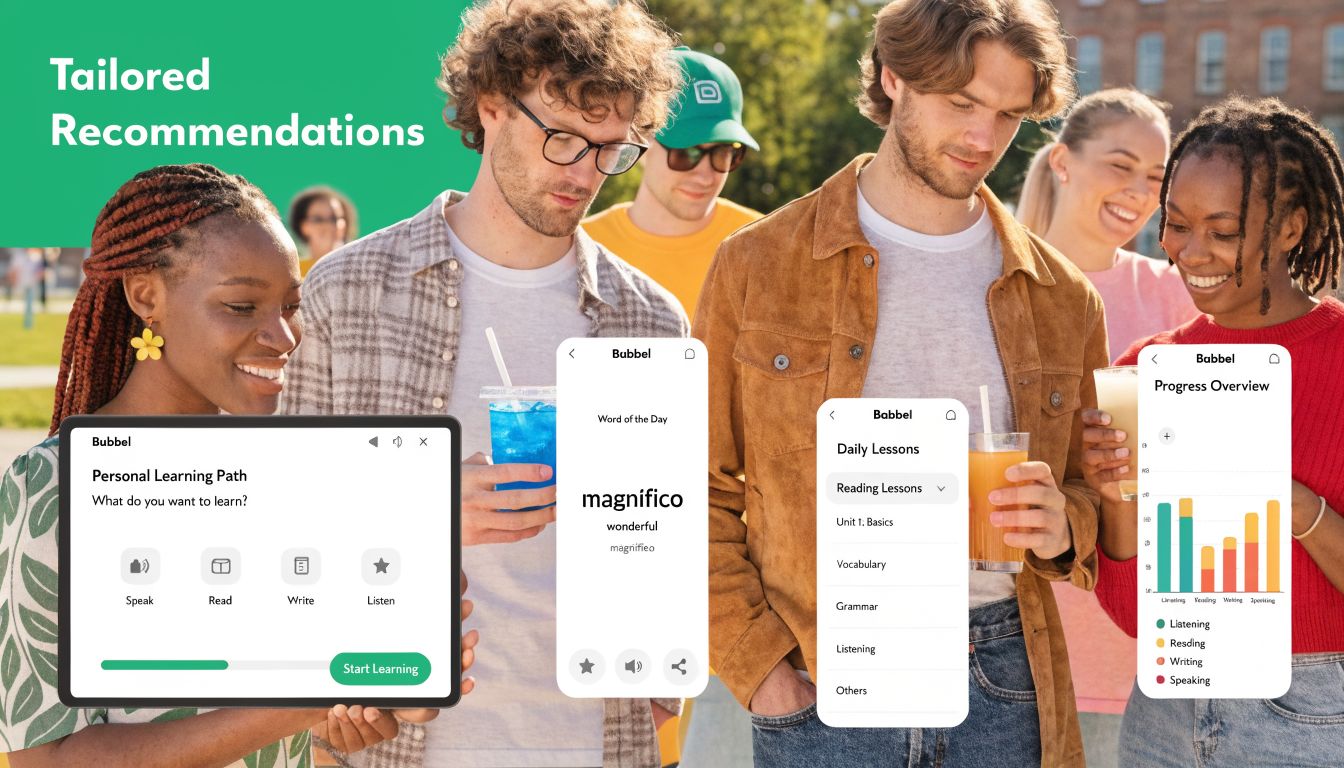
- Tailored App Recommendations for Every Beginner
- Why Gaeilgeoir AI is Best for Learning Irish
- Building a Habit Your First 30-Day Study Plan
Starting Your Language Journey What to Look For
The first mistake beginners make is asking, “What’s the best app?” The better question is, “What do I need this app to do for me this month?” That one shift saves you from wasting weeks on an app that feels fun but doesn’t move you toward your real goal.
A good beginner app should reduce friction. It should tell you what to study next, make review easy, and stop you from drowning in menus and optional features. If an app feels clever but leaves you unsure what to do tomorrow, it’s already failing the beginner test.
Ask these five questions first
-
What’s your real goal
Travel phrases, conversational confidence, exam prep, heritage reconnection, or a casual hobby all require different tools. Don’t pick an app for “language learning” in the abstract. -
Do you need speaking or just exposure
Some apps are good at helping you recognize words. Fewer apps push you to produce language out loud. -
Can you handle structure
If you’re self-directed, you can combine multiple tools. If you’re not, you need one app with a clear path. -
How much time will you realistically give this
Ten honest minutes daily beats a fantasy plan of one hour that never happens. -
Is your target language well served
This matters more than most reviews admit. Popular languages get polished content. Niche languages often get scraps.
Practical rule: Choose for your bottleneck, not your ambition. If your problem is consistency, pick the app you’ll open every day. If your problem is speaking, pick the app that forces output.
What beginners should value most
A lot of people overrate features and underrate learning design. Leaderboards, badges, and AI chat all sound nice. The key question is whether the app helps you remember and use what you studied yesterday.
That’s why I’d look closely at review systems and sentence practice. If you want a deeper look at why that matters, this guide on spaced repetition for language learning is worth reading before you commit.
If you’re studying through a school, tutor, or organized program, the admin side matters too. Many learners underestimate how much smoother progress feels when scheduling, tracking, and communication are handled well. That’s also why tools like Tutorbase for language schools are useful for programs that want less chaos around lessons.
Comparing Top Language Apps at a Glance
You don’t need a list of twenty apps. You need a clean shortlist.
For most beginners, the field breaks into recognizable types. There’s the gamified giant, the structured teacher, the audio coach, the immersion classic, and the vocabulary booster. Each can work. Each also has a ceiling.
Duolingo is the benchmark because it’s everywhere, and the scale behind it is hard to ignore. It recorded approximately 147 million downloads in 2025 and reported 50.5 million daily active users in Q3 2025, up 36% year over year, according to Statista’s language app download data. That doesn’t make it perfect. It does make it the app every beginner ends up comparing everything else against.
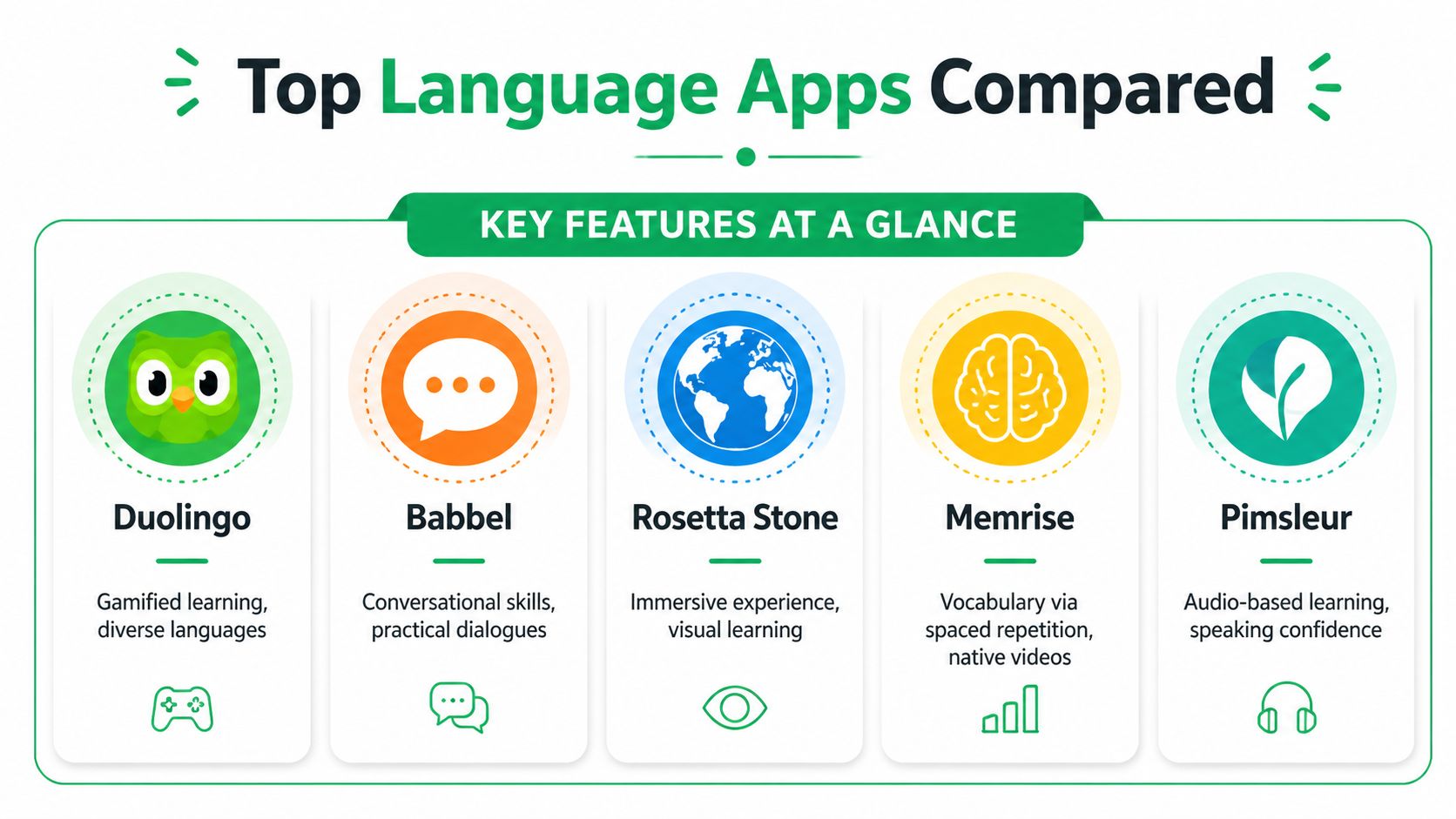
Top Language Learning Apps Comparison
| App | Primary Method | Best For | Beginner Friendliness | Pricing Model |
|---|---|---|---|---|
| Duolingo | Gamified bite-sized lessons | Building a daily habit and trying a language with low friction | Very high | Free with premium upgrade |
| Babbel | Structured lessons and practical dialogues | Learners who want order and clearer progression | High | Paid subscription |
| Pimsleur | Audio-first speaking practice | Commuters and learners who want oral repetition | Medium to high | Paid subscription |
| Rosetta Stone | Visual immersion | Learners who like learning through context and repetition | Medium | Paid subscription |
| Memrise | Vocabulary plus native-style exposure | Learners who want listening and word acquisition support | High | Free and paid options |
My blunt take on the main contenders
Duolingo is the easiest app to start and the easiest app to overstay on. It’s great at reducing resistance. It’s weaker at forcing real output.
Babbel feels more like an adult made it. The lessons usually feel more intentional, and the structure is better for beginners who want a curriculum, not a game.
Pimsleur is still one of the better picks for people who learn through their ears. If you spend a lot of time walking, driving, or doing chores, audio-first practice can fit your life better than flashy screens ever will.
Most beginners don’t need the “best app.” They need the app whose teaching style matches how they’ll actually study on a Tuesday night when they’re tired.
Choosing an App Based on Your Learning Goals
The right app changes when your reason for learning changes. That’s why generic rankings are usually weak. They mix together people preparing for a holiday, students facing an oral exam, and adults trying to reconnect with family roots.
As Olesen Tuition’s breakdown of language app strengths points out, apps specialize. Pimsleur leans into audio, Quizlet into vocabulary, and Babbel into structured curriculum. That’s the key lens to use. No single app is universally optimal for beginners.
If you want basic conversation for travel
You need listening and speaking before you need grammar depth. Travel learners often waste time on abstract vocabulary they’ll never use.
Look for:
- Pronunciation support: You need to hear and repeat useful phrases.
- Scenario-based dialogues: Ordering food, asking directions, checking in.
- Fast review: Travel prep works best when you revisit practical chunks often.
Avoid apps that make you feel busy without making you speak.
If you’re reconnecting with heritage
This goal is more emotional than most app reviews admit. You’re not only learning words. You’re rebuilding a relationship with family, place, or identity.
That means you need:
- Relevant cultural context: Not generic tourist lessons only.
- Useful everyday language: The kind of language relatives use.
- A path you’ll stick with: Heritage learners often carry baggage from school or past failed attempts.
For heritage learners in particular, being able to combine structured study with real Irish can make the language feel much more relevant. If Gaeilge is your focus, our guide to how to learn Irish online looks at lessons, vocabulary, listening, immersion and regular practice as parts of the same learning process.
If you’re preparing for an exam
Exam learners need less romance and more alignment. If there’s an oral component, speaking practice matters. If there are expected themes, you need topic coverage and controlled repetition.
For students juggling study tools beyond language work, this roundup of discover top student apps is also useful for building a more workable study setup.
If you’re learning as a flexible hobby
Then enjoyment matters. A lot.
Pick an app that:
- Feels easy to open: Friction kills hobby learning.
- Rewards consistency: Streaks and visible progress help.
- Lets you dabble without guilt: Some people need freedom more than structure.
If your goal is fuzzy, choose an app that builds habit first. If your goal is specific, choose an app that serves that goal even if it’s less entertaining.
Gamification vs Immersion Which Teaching Method Wins
This is the argument hidden underneath almost every beginner app review. Do you learn better through gamified repetition or through more immersive sentence-based practice?
My answer is simple. Gamification wins for starting. Immersion wins for transfer. If you can only pick one forever, I’d rather have the method that gets you producing language.
Why gamification works early
Gamified apps lower the barrier to entry. They make it easy to do one lesson, then another. That matters because beginners usually don’t quit from difficulty alone. They quit from friction, boredom, and uncertainty.
The best part of the gamified model is psychological, not linguistic. It helps you return tomorrow. That’s not a minor benefit. A method you don’t use is worthless.
The downside is just as clear. Recognition is not the same as recall. Tapping the right answer can feel like progress long before you can say anything on your own.
Why immersion and sentence recall go deeper
According to Taalhammer’s comparison of beginner language app methods, platforms implementing full-sentence recall with spaced repetition demonstrate superior retention compared to word-based gamification models. That matters because beginners don’t just need vocabulary lists. They need patterns that stick.
When you practice full sentences, grammar stops being a list of rules and starts becoming something your brain expects. You absorb structure through use. That’s far closer to real conversation than picking from multiple choice options.
What I’d choose for different beginners
If you get overwhelmed easily, start with a gamified app. Momentum matters.
If you’re serious about speaking, don’t stay there too long. Move toward tools that make you retrieve full phrases and build answers yourself.
A practical split looks like this:
| Teaching style | Strongest use | Main weakness |
|---|---|---|
| Gamification | Habit building and low-pressure entry | Too much passive recognition |
| Audio immersion | Pronunciation and speaking rhythm | Less visual support |
| Sentence-based repetition | Recall and conversational structure | Higher effort at the start |
| Structured lessons | Clarity and progression | Can feel dry if overdone |
Recognition-based apps teach you to notice language. Production-based apps teach you to use it.
Tailored App Recommendations for Every Beginner
This is the part most readers need. Not theory. A recommendation.
For the complete beginner
Start with Duolingo if you freeze when there are too many choices. It removes enough friction that you can build a habit without overthinking. That matters more than people like to admit.
I wouldn’t marry it. I would use it as a launchpad.
For the learner who wants structure
Pick Babbel if you want lessons that feel ordered and purposeful. It suits people who dislike the chaos of streak culture and want a clearer sense of progression.
If you’re the type who asks, “What should I study next?” Babbel is often a better fit than more game-like tools.
For the busy adult
Choose Pimsleur if your life already has dead time built into it. Audio lessons work when screen-based study doesn’t. A commute, walk, or kitchen session can become study time without needing extra willpower.
This recommendation is practical, not glamorous. Busy adults need formats that survive real life.
For the vocabulary-focused beginner
Use Memrise or Quizlet-style tools as support, not as your main course. They’re useful when your problem is word recall. They’re weak when your problem is speaking spontaneously.
For the returning learner
Returning learners usually have rusty recognition and low confidence. They often remember more than they think.
A structured app like Babbel or an audio-heavy option like Pimsleur tends to work better here than a pure beginner game. You need something that feels like rebuilding, not starting from zero.
For the learner focused on Irish
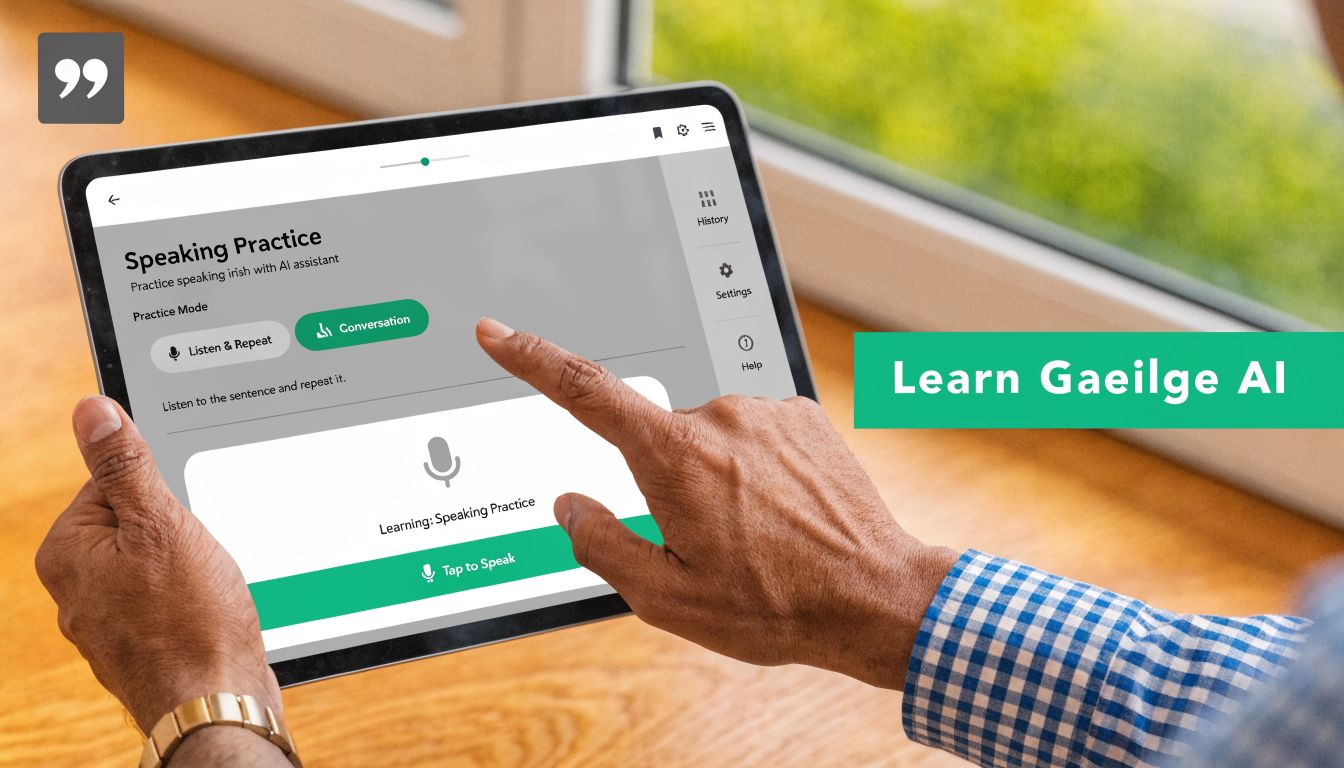
If your target language is Irish, mainstream apps often won’t match your needs. A specialist Irish learning app like Gaeilgeoir can focus specifically on the things Irish learners need: structured lessons, useful vocabulary, personalised study, conversation practice, quizzes and opportunities to hear more Gaeilge through songs, podcasts and videos.
Why Gaeilgeoir Is Built Differently for Irish Learners
Most mainstream app roundups fail Irish learners before they even begin. They act like every beginner is choosing between Spanish, French, German, or Japanese. That’s fine if you’re learning a major language. It’s useless if you want Gaeilge.
The problem isn’t just content volume. It’s design intent. Mainstream apps are usually built for global demand first, and niche languages get trimmed-down courses, limited speaking support, or awkward coverage that never moves beyond basics.
As TalkReal’s review of language app gaps notes, Google Trends data from 2025 shows a 25% year-over-year increase in “learn Irish app” searches, yet top-ranked beginner apps still don’t offer full Irish support with features like pronunciation feedback or scenario-based practice. That gap is real, and Irish learners feel it quickly.
Where general apps fall short for Irish
A beginner learning Irish doesn’t just need random phrases and vocabulary drills. They need:
- Pronunciation help: Irish spelling and sound patterns can throw off new learners fast.
- Real scenarios: Social interaction, everyday questions, and practical exchanges matter more than novelty lessons.
- A focused vocabulary base: High-frequency language beats sprawling, unfocused word lists.
- Exam relevance when needed: Students preparing for oral work need targeted speaking practice, not generic gamification.
That’s why specialist tools usually beat broad platforms in low-resource languages. They’re built around the actual problems learners face.
Why a specialist platform works better
If you’re learning a major language, a broad app can often get you started. If you’re learning Irish, a specialist platform is usually the smarter first choice because it can prioritize what Irish learners need from day one.
That includes guided conversation, practical scenarios, pronunciation support, and a more relevant vocabulary foundation. If you want a closer look at how that approach works, see learn Gaelic language with AI.
One more thing mainstream reviews miss is the importance of good spoken audio. For learners and creators alike, natural voice quality affects how believable and repeatable practice feels. If you’re curious about that side of the puzzle, this guide to realistic voiceovers for content creators is a useful reference.
Irish learners don’t need “more content.” They need the right content, in the right situations, with support for actually speaking it.
Who benefits most
Three groups stand out.
First, complete beginners who want a cleaner path into Irish without digging through disconnected resources.
Second, heritage learners who want to reconnect with the language in a way that feels alive, not academic only.
Third, students preparing for oral performance, especially when confidence is the primary bottleneck.
Building a Habit Your First 30-Day Study Plan
A beginner doesn’t need a perfect system. A beginner needs a repeatable week.
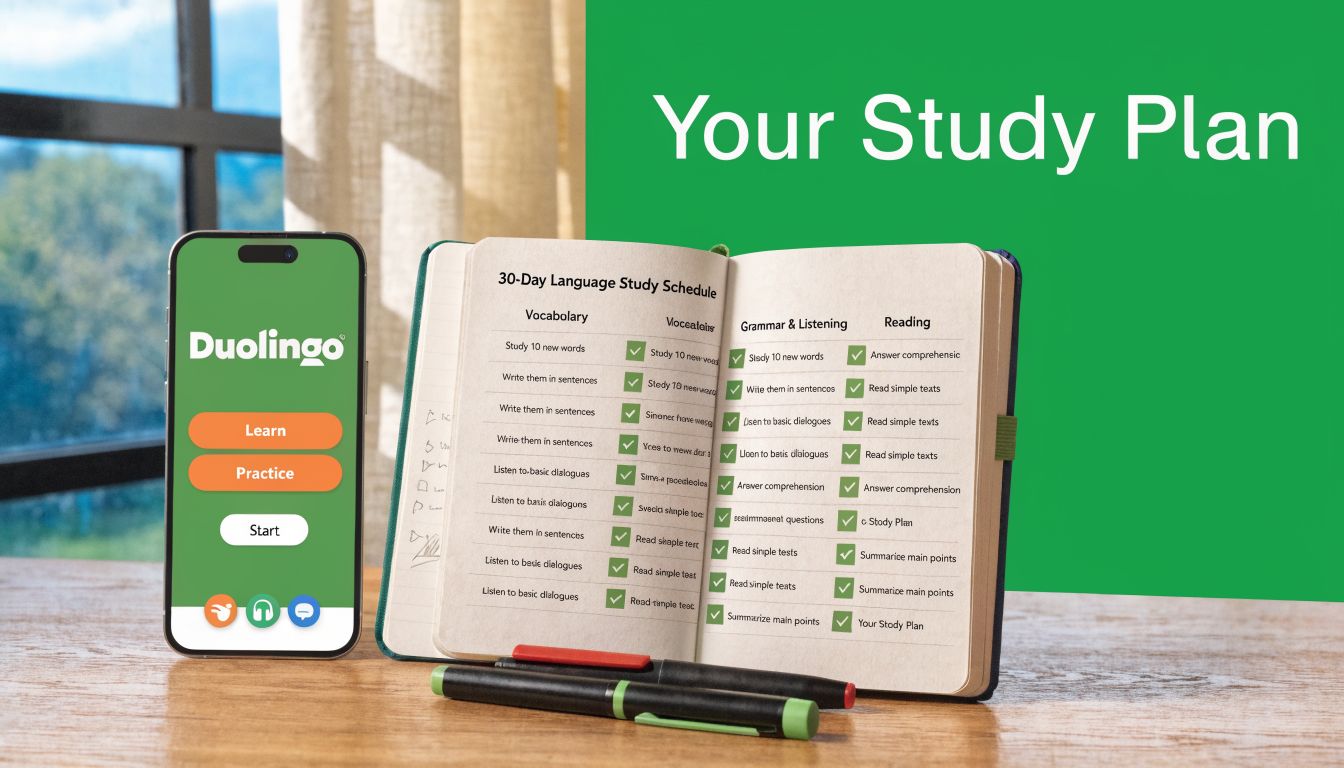
The biggest danger in the first month is intensity. People download three apps, buy a notebook, make a color-coded plan, then disappear after six days. Keep it smaller. Consistency beats enthusiasm.
A simple 30-day rhythm
Week 1
Focus on sound and core vocabulary. Keep sessions short. Learn a small set of useful words and phrases and repeat them until they feel familiar.
Week 2
Add simple scenario practice. Greetings, introductions, asking basic questions, and understanding short replies are enough.
Week 3
Increase recall. Stop only recognizing phrases and start producing them. Use quizzes, short speaking prompts, and review sessions.
Week 4
Push into short interactions. Try mini conversations, light roleplay, and mixed review so old material doesn’t vanish.
Daily rules that actually work
- Study at the same time: Even a rough routine helps.
- Stop while it still feels easy: That makes tomorrow easier to start.
- Track sessions, not mood: You won’t always feel motivated.
- Use one core app: Supplement later, not now.
For Irish learners, a structured routine works better than random dabbling. This daily Irish practice plan is a good model for keeping sessions realistic and repeatable.
If you want a visual walkthrough alongside your plan, this video is a useful companion:
Start with 15 minutes a day. Protect the streak of showing up, not the fantasy of studying perfectly.
If Irish is the language you want to learn, you don’t have to piece together your learning from apps designed primarily for other languages. Explore the Gaeilgeoir Irish learning app or see how you can learn Irish online with structured lessons, vocabulary, personalised study, conversation practice and Irish-language immersion.