You're probably in one of two places right now. You either love the sound of Irish names but aren't sure which ones feel current, usable, and easy to live with, or you're learning Irish and want names that help you hear the language more clearly. Both are good reasons to look closely at modern irish boy names.
What makes these names interesting is that they often do two jobs at once. They sound contemporary in everyday life, but they also carry older Irish spelling patterns, mythology, and word roots. That means a name like Oisín or Tadhg isn't just a label. It can also be a small lesson in Irish pronunciation, history, and meaning.
Ireland's naming patterns show a strong attachment to familiar classics. Jack held the top spot for boys since 2007 with one exception in 2016, stayed in the top 5 since 1998, and remained the most popular boys' name in 2024, with Noah in second place for the fourth year in a row, according to the CSO main results for Irish Babies' Names 2024. At the same time, newer-looking Irish choices keep attracting attention at home and abroad.
Table of Contents
- 1. Cillian
- 2. Saoirse
- 3. Fionn
- 4. Liam
- 5. Oisín
- 6. Tadhg
- 7. Seán
- 8. Conor
- 9. Niamh
- 10. Rory
- Top 10 Modern Irish Boy Names Comparison
- Final Thoughts
1. Cillian
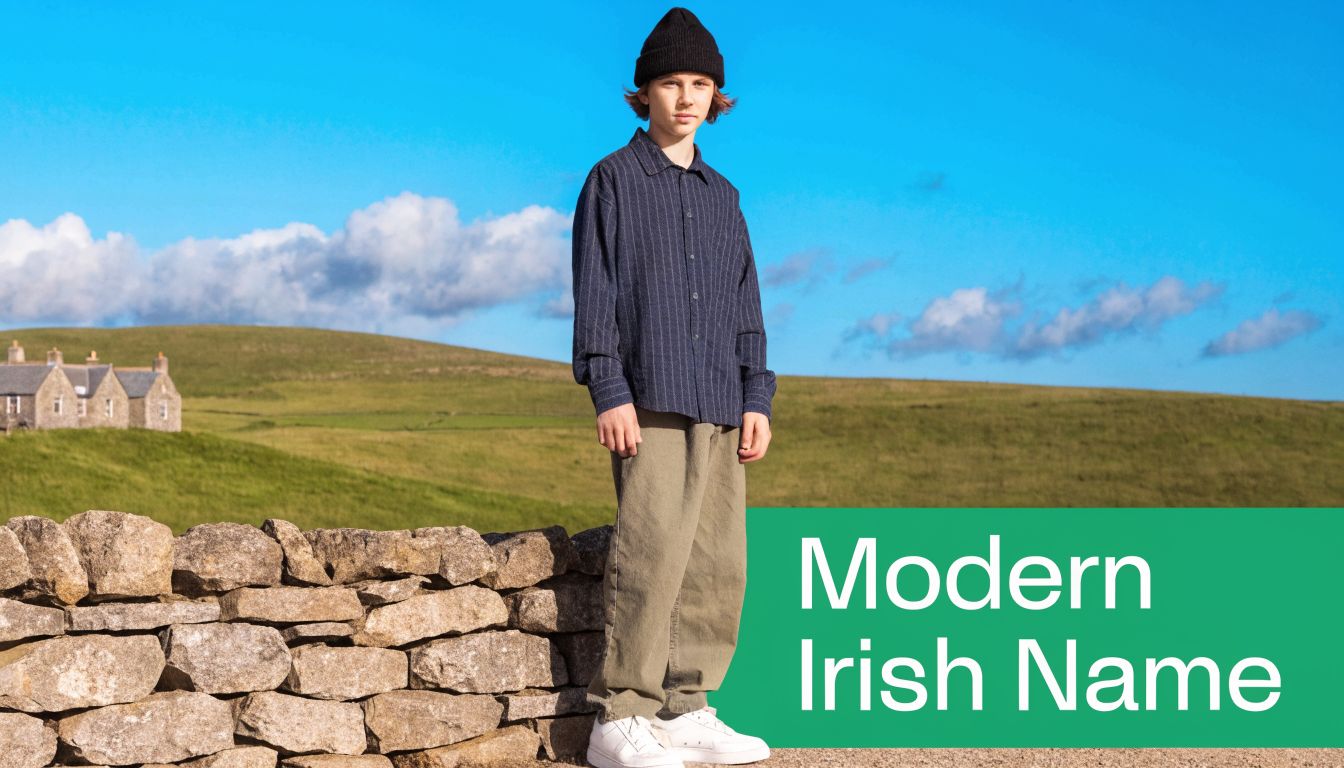
Cillian is one of the best examples of a name that feels current without losing its Irish identity. Many people first hear it through actor Cillian Murphy, which helps the name travel well outside Ireland, but its appeal runs deeper than celebrity recognition.
It looks distinctive on the page, sounds calm and confident, and still carries a clear Irish character. That balance is why it keeps showing up in conversations about modern irish boy names. It doesn't feel old-fashioned, yet it doesn't feel invented either.
Why Cillian feels modern
For language learners, Cillian is useful because it pushes you to notice how Irish names don't always follow English sound expectations. That's part of the value. A name can train your ear.
If you're practicing pronunciation, the Irish pronunciation guide from Gaeilgeoir AI is a strong place to hear how Irish spelling patterns work in real words, not just isolated rules. Once you can say a name like Cillian comfortably, names with similar structure stop looking intimidating.
Practical rule: Pick one name you like and use it in full sentences. “Is mise Cillian.” “Tá Cillian anseo.” That's often more effective than memorizing a bare pronunciation list.
Cillian also makes a good bridge name. It's recognizably Irish, but many people outside Ireland can say it after hearing it once or twice. If you want a name with cultural depth that still works in school rolls, sports teams, and travel, Cillian is a smart choice.
2. Saoirse
You are filling out a school form, and one name keeps pulling your attention because it sounds unmistakably Irish. Then you notice the article is about boy names, and Saoirse creates a problem. In current use, Saoirse is widely understood as a girl's name, so it does not fit this list well.
A better choice here is Rían, a clearly masculine Irish name that feels modern without sounding newly invented. It is short, easy to pair with surnames, and familiar enough to work outside Ireland while still keeping a strong Irish identity.
Why Rían works better here
Rían solves a practical problem that many lists ignore. Parents often want a name that is recognizably Irish but does not require a long explanation every time it appears on a class register, sports roster, or email signature. Rían sits in that useful middle ground.
It also helps to separate three different questions that often get blurred together. Is the name traditionally masculine? Does it feel current? Can people learn to say and spell it without much friction? Rían scores well on all three.
If you want to compare spellings, meanings, and related Irish given names, this guide to Irish first names and meanings is a helpful reference point.
What makes Rían feel modern
Some Irish boy names carry a heavy legendary feel. Others become so international that their Irish character fades into the background. Rían avoids both extremes.
Its appeal comes from balance. The name is compact, distinct on the page, and contemporary in tone. It also gives learners a useful lesson in accent marks. The fada is not decoration. It changes how the word is read, much like a road sign that redirects traffic before you take the wrong turn.
For practice, keep the work concrete:
- Start with the full form: Write and say Rían, not a stripped-down version.
- Pair it with real contexts: Try it in introductions, attendance lists, or family sentences.
- Notice the fada: It is part of the name, not an optional extra.
Rían is a stronger fit for a list of modern Irish boy names because it keeps the promise of the article clear. Readers looking for boys' names get a name they can practically use, and learners still get something valuable to study.
3. Fionn
Fionn is short, strong, and full of cultural memory. It's tied to Fionn mac Cumhaill, one of the best-known figures in Irish mythology, but the name still feels easy to wear now. That's rare. Some mythological names sound too grand for daily life. Fionn doesn't.
The name's clean shape is part of its modern appeal. It's compact, memorable, and visually distinctive. If you're scanning lists of modern irish boy names, Fionn often stands out because it feels ancient and simple at the same time.
Mythology without heaviness
For learners, Fionn is a good example of how Irish mythology can support language study instead of distracting from it. When you know the story behind a name, you remember the word more easily. Narrative helps memory.
If you want to connect names to legends, the Irish mythology names resource from Gaeilgeoir AI can help you place Fionn in a wider cultural setting. That gives the name more texture than a one-line meaning ever could.
Fionn works well if you want a name that opens the door to folklore, storytelling, and spoken Irish without feeling formal.
You can also use Fionn in creative practice. Write a few simple lines about a hero, a journey, or a scene. Even beginner Irish becomes more memorable when it attaches to a figure you can picture.
4. Liam
Liam may be the most internationally accessible name on this list. It's short, familiar, and unmistakably modern in everyday use. Yet it still comes from the Irish form Uilliam, so it carries a real linguistic link rather than just sounding Celtic from a distance.
Its reach outside Ireland is hard to ignore. According to Nameberry's list of Irish baby names for boys, Liam has held the number one position in the United States for the past eight years. That kind of staying power helps explain why so many people think of Liam first when they think about modern irish boy names.
The easiest entry point
For a beginner, Liam is reassuring because nothing about it feels hard to say. That matters. Starting with a familiar Irish name can build confidence before you move into names with fadas or less obvious spelling patterns.
The Irish first names and meanings guide from Gaeilgeoir AI is useful if you want to connect names you already know to their Irish forms and roots. Liam is exactly the kind of name that makes this process feel manageable.
Actor Liam Neeson gives the name a clear Irish association in global culture. But even without famous examples, Liam would still work because it travels smoothly across accents and countries.
- For beginners: Use Liam when practicing introductions and everyday dialogues.
- For heritage learners: Notice how a globally familiar name still carries Irish structure underneath.
- For parents: It's one of the safest choices if you want Irish roots with almost no practical friction.
5. Oisín
Oisín is one of the richest names on this list for anyone who cares about sound, story, and spelling. It means “little deer” and is linked with the legendary poet-warrior Oisín, son of Fionn. That gives it a softer image than names built around battle or kingship, but not a weaker one.
What makes Oisín feel modern is the combination of brevity and distinctiveness. The fada gives it visual character. The ending sound makes it memorable. And once you hear it said properly, it tends to stick.
A name that teaches sound patterns
Oisín is also one of the best examples of how modern Irish names can support language learning. The gap in many naming guides is that they treat names as decorative choices rather than vocabulary anchors. But names like Rowan, Cillian, and Aodán show learners real Irish patterns, roots, and diminutive forms, as discussed in Made for Mums' guide to Irish boy names.
That same logic applies to Oisín. It isn't just a beautiful name. It's a way into Irish sound systems.
Before the video, try saying the name slowly a few times and listen for the long vowel quality.
If you're studying for the Leaving Cert oral or returning to Irish as an adult, Oisín is the sort of name that helps you see how culture and pronunciation reinforce each other. A name becomes easier when you understand why it looks the way it does.
6. Tadhg
Tadhg is a classic choice for people who want something unmistakably Irish. It doesn't soften itself for English spelling habits, and that's part of its appeal. The name carries a literary sense because it's associated with “poet” or “bard,” so it has cultural weight without sounding heavy.
This is one of those names that many people outside Ireland hesitate over at first. Then they hear it spoken and realize it's concise, warm, and practical. That contrast gives Tadhg a very modern kind of confidence.
A strong name with a literary edge
If you're learning Irish, Tadhg rewards patience. You can't rely on English instincts. You have to listen, repeat, and absorb the pattern. That's exactly why names like this are useful in language study.
Use Tadhg in anything related to literature, school, or the arts. It fits naturally into those settings, and the meaning gives you an easy mental hook.
“If a name looks difficult, treat it like a mini pronunciation lesson, not a problem.”
Tadhg also works well for parents who want a name that feels rooted rather than fashionable. It doesn't depend on current trends to sound distinctive. It already is.
7. Seán
A parent writes the name on a school form. Without the accent, it reads as Sean. With the fada, it becomes Seán. That tiny mark changes how the name looks and how Irish readers understand it.
Seán is useful for a modern list because it shows that Irish identity in naming is not only about rare spellings or unfamiliar sounds. Sometimes the clearest lesson comes from a name people already know. Seán keeps the name accessible while still teaching one of the first rules of Irish spelling.
Learning the fada through Seán
The fada works like a signpost over the vowel. It tells you the vowel is pronounced differently, so it is part of the name, not an optional extra. That makes Seán a practical example for anyone trying to understand why Irish names should be written carefully.
This also helps explain why Seán and Sean are not visually interchangeable. In casual English writing, people often drop accent marks. In Irish, that changes the form of the name itself. For parents, teachers, and learners, Seán is a good reminder to copy the spelling exactly.
For everyday use, Seán is easy to place in realistic examples that many articles skip. A teacher calling attendance. A passport application. A text introducing a friend. A child learning to write his own name. Those small situations are where the fada stops feeling academic and starts feeling real.
- Watch the vowel: The fada changes the written form in a meaningful way.
- Write it in full: Seán is the correct Irish spelling, not a decorative version of Sean.
- Practice in context: Use it in names lists, forms, and short dialogue so the spelling becomes automatic.
8. Conor
Conor has a steady, athletic feel to it. It's one of the names on this list that many people can say immediately, but it still keeps enough Irish character to avoid feeling generic. That makes it a practical middle ground between highly traditional spellings and fully internationalized forms.
In public life, the name is visible through figures like Conor McGregor, which gives it broad recognition. But even apart from celebrity, Conor works because it sounds direct and grounded.
Why Conor still works
Conor suits modern life because it doesn't ask much from the outside world. Teachers, classmates, employers, and friends are unlikely to stumble over it for long. At the same time, it still connects to older Irish naming history rather than sounding imported.
For language learners, that makes Conor useful in speaking drills. You can focus on sentence structure and pronunciation flow without getting stuck on the name itself.
A good way to use Conor is in everyday action scenes. Ordering food. meeting a friend. asking directions. introducing a teammate. The name blends into real conversation, which is exactly what many learners need.
Conor is a strong choice when you want an Irish name that feels natural in fast, ordinary speech.
9. Niamh
A parent scans a list of Irish boy names, gets to Niamh, and stops. The confusion makes sense. Niamh is a well-known Irish girl's name, so it does not belong in this spot.
A stronger choice here is Darragh.
Darragh is clearly used as a boy's name in Ireland, and it solves a practical problem many lists skip. It feels distinctly Irish without being as intimidating to non-Irish readers as some older spellings. That makes it useful for families who want cultural substance and a name their child will not have to explain in every introduction.
Why Darragh fits a modern list
The name comes from the Irish word connected with oak. That gives it a steady, grounded feel. If Conor feels sporty and direct, Darragh feels calmer and more thoughtful.
Pronunciation is often the first question, so it helps to deal with that early. In everyday use, many people say it close to "DA-ra" or "DA-rah," though local accents can shift the sound. The spelling takes a moment to learn, but once you hear it, the pattern becomes much easier to remember.
Darragh has an advantage over some other Irish names. It teaches one useful Irish spelling feature without piling on several at once. For readers who want a boy's name that is recognizably Irish yet still manageable outside Ireland, that balance matters.
Try it in ordinary settings: Darragh is absent today. Darragh plays midfield. I met Darragh after class. Those examples show how the name sits in real speech. It sounds natural in school, work, and sport, which is often the true test of whether a name feels modern.
Darragh also has range. It suits a young child, but it does not sound childish on an adult. That kind of flexibility is hard to find, and it is one reason the name earns its place on a current list of Irish boy names.
10. Rory
Rory is one of the most straightforward names on this list, and that's a strength. It comes from Ruaidhrí and carries the meaning “red king,” but in daily use it feels casual, friendly, and easy to place. That combination keeps it relevant.
You'll hear Rory in sports, media, and ordinary conversation, which is part of why it holds up so well. It doesn't need much explanation. It arrives already usable.
Short, clear, and culturally grounded
Rory is also worth noting because names beginning with R are getting more attention in current naming conversations. The discussion of rising R names such as Rowan, Rory, Rafferty, and Redmond appears in the earlier naming gap noted from Made for Mums, and Rory fits that broader sound pattern without feeling experimental.
For learners, Rory is a strong intermediate choice because it lets you compare anglicized and Irish-rooted forms. You can start with the easier everyday version, then trace it back into deeper Irish spelling and history.
Golfer Rory McIlroy has helped make the name globally familiar, but its appeal would still be there without that visibility. It's brief, warm, and culturally grounded.
- Easy to say: Good for learners who want an Irish name they can use immediately.
- Rich in background: The older form adds historical depth when you want it.
- Modern in tone: It sounds current without feeling trendy.
Top 10 Modern Irish Boy Names Comparison
Choosing from Irish names often comes down to one practical question. Which names will feel easy to use every day, and which ones ask for more explanation before they settle in?
A comparison table helps when you read it like a map, not a scoreboard. A name with lower pronunciation difficulty is not "better." It asks less from teachers, relatives, and strangers on the first try. A name with a stronger cultural connection may ask for more patience, but it often gives more back in identity and meaning.
| Name | Pronunciation Difficulty | Familiarity Outside Ireland | Cultural Connection | Key Strength | Best For… |
|---|---|---|---|---|---|
| Cillian | Low to moderate | Moderate | Strong | Distinctive sound with broad modern appeal | Families who want an Irish name that feels current without being too hard to explain |
| Cian | Low | Moderate | Strong | Short, neat, and clearly Irish | Parents who want a brief name that travels well |
| Fionn | Moderate | Moderate | Very strong | Mythological depth in a compact form | People who want a name with story and heritage behind it |
| Liam | Very low | Very high | Moderate to strong | Familiar almost everywhere | Families who want the easiest crossover option |
| Oisín | Moderate to high | Lower | Very strong | Literary and legendary richness | Parents happy to teach pronunciation for a name with real character |
| Tadhg | High | Low | Very strong | Deeply Irish and memorable | Families who want a name that keeps its Irish identity intact |
| Seán | Low | High | Strong | Classic Irish form with lasting recognition | Parents who want tradition, clarity, and a direct link to Irish spelling |
| Conor | Very low | High | Strong | Easy to say and easy to place | Families looking for a dependable, widely usable choice |
| Darragh | Moderate | Moderate | Strong | Soft sound with a modern feel | Parents who want something recognizably Irish but less overused |
| Rory | Very low | High | Moderate to strong | Friendly, simple, and versatile | Families who want an Irish name that works quickly in daily life |
One useful way to read the chart is by grouping the names into three tiers of day-to-day ease.
Liam, Conor, Rory, and Seán are the quickest to use in school lists, introductions, and paperwork. Cillian, Cian, Fionn, and Darragh sit in the middle. They are manageable, but some people may pause at the spelling. Oisín and Tadhg need the most guidance, especially outside Ireland, yet they often appeal to parents who want a name that keeps a strong link to Irish language and tradition.
That trade-off matters. A name can be easy, culturally rich, or both, but each one balances those qualities differently. This table works best as a practical shortcut before you return to the individual name sections and ask a more personal question: do you want instant familiarity, stronger heritage signals, or a middle ground that gives you some of each?
Final Thoughts
Modern irish boy names work best when you look beyond the surface. A good name isn't only about popularity or sound. It's also about what the spelling teaches, what the meaning carries, and how naturally the name fits into real life.
Some names on this list are easy entries. Liam, Conor, and Rory travel well and don't ask much from unfamiliar ears. Others, like Oisín, Tadhg, and Seán, ask for a little more attention but give more back in return. They teach you something about Irish itself. That's part of their value.
There's also room for a broader modern conversation. Names like Saoirse and Niamh show that naming isn't always as rigid as standard boy-name lists suggest. For families thinking about inclusivity, heritage, or linguistic identity, that flexibility matters.
If you're choosing a name for a child, the practical test is simple. Say it aloud in ordinary situations. Write it by hand. Imagine hearing it at school, on a team sheet, or across a kitchen table. The best names usually survive that test easily.
If you're learning Irish, use these names as study tools. They're small but powerful pieces of the language. A fada in Seán, the vowel pattern in Oisín, the compact strength of Fionn, the literary weight of Tadhg. Each one can sharpen your ear and deepen your connection to the language.
Modern Irish naming keeps balancing continuity and change. Traditional favorites have had remarkable staying power, but newer preferences and stronger visibility for Irish orthography show that naming trends are evolving. That's good news for learners and families alike. You don't have to choose between living language and cultural roots. The best Irish names give you both.
If you want to move from recognizing Irish names to using Irish with confidence, Gaeilgeoir AI is a practical next step. It helps beginners and returning learners practice real conversations, improve pronunciation, and build vocabulary through everyday scenarios. You can also start learning now through Gaeilgeoir AI's learning platform.