Languages Spoken in Ireland: A Quick Guide

When we look at the languages spoken in Ireland, we find a rich tapestry of speech—Irish (Gaeilge), English, regional dialects and minority languages all play a role. For anyone learning Irish or curious about language in Ireland, understanding which languages are spoken in Ireland gives valuable context. In this article we’ll explore the main languages spoken in Ireland, their status, and how they relate to learners of Gaeilge and Irish culture.


The Main Official Languages

Irish (Gaeilge)

Among the languages spoken in Ireland, Irish holds a special position—it is the first official language of the Republic of Ireland and is recognised throughout the island. en.wikipedia.org+3en.wikipedia.org+3coimisineir.ie+3
Some key points:

  • Irish is a Celtic Goidelic language with deep roots in the island’s history. en.wikipedia.org+1
  • In the Republic of Ireland, Irish is constitutionally the national and first official language; English is recognised as a second official language. Encyclopedia Britannica+1
  • Although many people study Irish in schools, the number of daily first-language speakers is relatively small. en.wikipedia.org+1

English

English is the dominant language in most parts of Ireland and is one of the key languages spoken in Ireland today. Ireland.com+1
Important facts:

  • English is the de facto primary language in everyday life—business, media, education—across much of Ireland. https://www.educations.com+1
  • The variety of English spoken in Ireland is sometimes referred to as Hiberno-English. en.wikipedia.org

Minority & Regional Languages

Beyond the two main languages, there are other languages and dialects worth knowing when considering “languages spoken in Ireland”.

Ulster Scots (Ullans)

  • In Northern Ireland, Ulster Scots (sometimes called Ullans) is recognised as a regional language and is part of the linguistic landscape. en.wikipedia.org+1
  • It is spoken by a smaller group, and its role is more cultural and regional than national.

Traveller Cant: Shelta

  • Among the languages spoken in Ireland is Shelta, a cant used by the Irish Traveller community. en.wikipedia.org
  • While used by relatively few people, it contributes to the full picture of languages in Ireland.

Sign Languages & Other Speech Communities

  • Irish Sign Language (ISL) is used by the deaf community in Ireland. It is part of the broader set of languages spoken in Ireland. en.wikipedia.org+1
  • Additionally, with immigration and international movement, many other languages (Polish, Lithuanian, Chinese, etc.) are spoken in Ireland today—even if they are not national official languages. en.wikipedia.org

Why Knowing the Languages Spoken in Ireland Matters for Learners

If you’re studying Irish (Gaeilge) or simply interested in the culture, it helps to understand why so many languages are spoken in Ireland and how they interact.

Cultural and Social Awareness

  • By knowing Irish is the first official language, you’ll appreciate why road signs, place names and official documents often appear in Irish and English.
  • Recognising regional languages like Ulster Scots gives insight into local identity, particularly in Northern Ireland.

Better Learning Strategy

  • When you learn Irish, acknowledging the dominance of English helps understand why many learners are working to use Irish actively, not just passively.
  • Understanding that languages spoken in Ireland are many—and that Irish is one among them—helps you set realistic goals and see where you can practise in community or media.

Motivational Boost

  • Knowing you’re part of a larger language ecosystem can inspire you to explore not just Irish, but its relationship with English, Scots, and minority languages.
  • Learning Irish with awareness of this context adds depth—you’re not just memorising words, you’re connecting with the languages spoken in Ireland and their heritage.

How to Explore the Languages Further

Here are practical ways to deepen your understanding of the languages spoken in Ireland:

1. Explore Irish language media

  • Look for radio, podcasts or TV programmes in Irish—especially from Gaeltacht regions where Irish is more commonly spoken.
  • Use resources like our Learn Irish Online Free Guide to locate media and practice materials.

2. Study language status and history

  • Dive into the history of the Irish language, how English became dominant, and the place of minority languages.
  • You might find our Ancient Irish Language Guide helpful for the historical perspective of Irish among the languages spoken in Ireland.

3. Practise conversation in Irish

  • Try lessons, conversation partners or apps that focus on Irish usage. For beginners, check our Irish Language Lessons for Beginners page.
  • Ask questions like: “Which language do people speak at home in this area?” or “How often do you hear Irish in daily life?” to increase awareness of where Irish stands among languages spoken in Ireland.

4. Observe linguistic variation and context

  • Recognise that in areas like the Gaeltacht, Irish may be stronger. In urban centres, English dominates.
  • Consider how minority languages still contribute culturally, though less visible in daily public life.
  • Reflect on how languages spoken in Ireland interact—how Irish influences English in Hiberno-English, or how bilingual signage shows dual-language usage.

Challenges & Opportunities When Learning Irish

Since Irish is one of the languages spoken in Ireland, learners might face both unique challenges and opportunities:

Challenges

  • Limited daily use: Though Irish is official, English dominates many settings.
  • Dialect variation: Different regions have different dialects of Irish, which can complicate learning.
  • Minority language status: Some speech communities use smaller languages/dialects, so finding practise settings for Irish can require effort.

Opportunities

  • Cultural richness: Learning Irish connects you with one of the primary languages spoken in Ireland, opening doors to tradition, literature and place-names.
  • Deep context: Understanding that Irish is officially recognised gives your learning purpose—it’s not just an academic exercise.
  • Diverse practise environments: You can engage in immersion in Gaeltacht areas, online courses, language meet-ups and bilingual signage to see the real-life usage of languages spoken in Ireland.

Quick Facts: Languages Spoken in Ireland

Here’s a handy summary:

  • Irish (Gaeilge): First official language in the Republic, Celtic Goidelic origin.
  • English: Broadly spoken and dominant across much of Ireland.
  • Ulster Scots (Ullans): Regional language in parts of Northern Ireland.
  • Shelta: Traveller Cant used by the Irish Traveller community.
  • Irish Sign Language (ISL) and other minority languages: Contribute to the full linguistic landscape of Ireland.
  • Immigrant languages: Polish, Lithuanian, Chinese and others feature due to recent migration and contribute to the diversity of languages spoken in Ireland.

Bringing It Back to Your Irish Learning Journey

If your goal is to learn Irish (Gaeilge) and engage with the languages spoken in Ireland, then this context adds real value. Here are some tips to integrate this knowledge:

✅ Set clear goals

Decide your aim: Do you want conversational Irish? To read Irish literature? To understand bilingual signage? Knowing your goal helps you see where Irish sits among languages spoken in Ireland.

✅ Use structured resources

Use lessons that recognise this linguistic context. For example, our Irish Pronouns Guide helps build grammar based on Irish being one of Ireland’s languages.

✅ Immerse where you can

Visit Gaeltacht areas or join online Irish-language communities. Seeing how Irish is used alongside English (and in relation to minority languages) reinforces its role as a living language among the languages spoken in Ireland.

✅ Appreciate the broader awareness

When you say a phrase in Irish, you’re engaging with one of the languages spoken in Ireland—not just learning words in isolation. That gives you motivation, connection and relevance.


Conclusion: A Rich Linguistic Landscape

The languages spoken in Ireland reflect centuries of history, migration, change and cultural resilience. English and Irish dominate public life, while regional, minority and migrant languages add depth to the story. For a learner of Irish (Gaeilge), recognising this landscape enriches your path—it’s not just about one language, but about how it sits among many.

By exploring how Irish interacts with English, regional dialects, minority languages and immigrant speech, you’ll deepen your understanding, practice more meaningfully and connect more fully with Ireland’s living language culture.

Your Irish-language journey begins with awareness—of the languages spoken in Ireland—and builds through practice, interaction and cultural engagement. Whether you’re studying grammar, practising phrases, or just exploring signage in Irish, you’re part of that rich tapestry.

So, embrace the context, dive into your lessons, and move forward with confidence knowing you’re learning one of the languages spoken in Ireland and helping keep it active and alive.

Go n-éirí le tú—may your journey in Irish, among the languages spoken in Ireland, be joyful, meaningful and rewarding.

Decoding Gaelic Runes: History, Meaning, and Mystery

The phrase “Gaelic runes” often evokes images of mystical symbols carved into ancient stones, whispering secrets of Celtic druids and warriors. While the term can be misleading — as the Gaelic world didn’t use Norse-style runes — there were unique writing systems used by the Irish and Scottish Gaels that served similar purposes: recording language, marking boundaries, and preserving sacred knowledge.

In this guide, we’ll uncover the origins and meaning of Gaelic runes, explain how they differ from traditional Norse runes, and explore the real ancient writing system of the Gaels — the Ogham script. We’ll also look at how these symbols survive in modern Irish culture and what they teach us about language and identity.


What Are Gaelic Runes?

Strictly speaking, Gaelic runes are not runes in the same way as the Norse Futhark alphabet. The Irish never used runic symbols derived from Germanic or Scandinavian traditions. Instead, the ancient Irish and Scottish Gaels developed Ogham, a writing system used between the 4th and 9th centuries CE.

Ogham is sometimes referred to as “Gaelic runes” because it shares similar mystical and memorial uses with the runic alphabets of Northern Europe. However, it’s a distinctly Celtic system, deeply tied to the Irish language and landscape.

To understand Gaelic runes, we must first understand Ogham — the original alphabet of the Gaels.

For a detailed breakdown of its characters, visit our Ogham Script Alphabet Guide.


Origins of the Ogham Script

1. A Native Irish Invention

Historians believe Ogham was created in Ireland during the early Christian era, possibly around the 4th century CE. It was used to write Primitive Irish, the earliest known form of the Irish language.

Ogham inscriptions are found primarily on stone monuments across Ireland and western Britain — regions rich in Gaelic heritage.

2. The Purpose of Ogham

The inscriptions were often used to:

  • Mark graves or clan boundaries
  • Record family lineages
  • Honor deities or ancestors
  • Identify territories

Because Ogham was written on vertical or slanted stone edges, it was ideally suited for engraving — making it durable, elegant, and uniquely suited to Celtic artistry.


How Gaelic Runes (Ogham) Were Written

The Ogham alphabet is composed of 20 basic letters, arranged in four groups called aicmí. Each letter is formed by a series of strokes or notches cut along a central line (often the edge of a stone).

Here’s a simplified example:

Group (Aicme)Example LettersMeaning / Sound
Aicme Beitheᚁ (B), ᚂ (L), ᚃ (F/V), ᚄ (S), ᚅ (N)Named after trees
Aicme Húathaᚆ (H), ᚇ (D), ᚈ (T), ᚉ (C), ᚊ (Q)Hard consonants
Aicme Muineᚋ (M), ᚌ (G), ᚍ (NG), ᚎ (Z), ᚏ (R)Soft consonants
Aicme Ailmeᚐ (A), ᚑ (O), ᚒ (U), ᚓ (E), ᚔ (I)Vowels

Each symbol’s name — Beith (Birch), Luis (Rowan), Nion (Ash) — corresponds to a tree or natural element, reinforcing the Gaels’ connection to the earth.

This tree symbolism makes Ogham one of the world’s most poetic alphabets, linking sound, meaning, and nature in one continuous language system.


Gaelic Runes vs. Norse Runes

It’s common to hear Ogham mistakenly described as “Irish runes.” While they share a carved aesthetic, their origins and linguistic foundations differ:

FeatureGaelic (Ogham)Norse (Runes)
RegionIreland, Scotland, WalesScandinavia, Iceland
LanguagePrimitive Irish / Old GaelicOld Norse / Proto-Germanic
Alphabet NameOgham (᚛ ᚜)Futhark
StructureLinear strokes along a central lineAngular letters for wood or metal carving
SymbolismNature and familyMagic, communication, war
Time Period4th–9th centuries CE2nd–12th centuries CE

Despite their differences, both systems show how early European peoples saw writing as sacred — not just practical, but spiritual.


The Spiritual and Symbolic Meaning of Gaelic Runes

Ogham was far more than a writing system. In Druidic and poetic traditions, each letter carried deep symbolic meaning related to trees, elements, and emotions.

For example:

  • Beith (ᚁ) – Birch: new beginnings, purification
  • Luis (ᚂ) – Rowan: protection, strength
  • Nion (ᚅ) – Ash: balance, connection between worlds
  • Sail (ᚄ) – Willow: intuition, cycles, the moon
  • Dair (ᚇ) – Oak: endurance, wisdom, stability

This intertwining of language and spirituality makes Gaelic runes an artistic bridge between words and nature.

You can learn more about Celtic symbolism and deities in our Celtic Deities Guide.


Where to Find Gaelic Runes Today

There are over 400 known Ogham inscriptions across Ireland, Scotland, and parts of Wales. Some of the most famous examples include:

  1. The Emlagh East Stone (Kerry) – One of the earliest Ogham stones, reading a family lineage.
  2. The Silchester Stone (England) – Shows evidence of Irish settlers during early medieval migrations.
  3. The Knockmahon Stone (Waterford) – Features both Ogham and Latin inscriptions, showing cultural exchange.
  4. The Inchagoill Stone (Galway) – Believed to mark the grave of a Christian missionary named Luguaedon.

If you visit these stones today, you’re standing before the earliest written form of the Irish language — the true script of the Gaels.


Modern Revival of Gaelic Runes

Ogham’s legacy endures as a symbol of Celtic identity and language preservation. Artists, linguists, and spiritual practitioners use Ogham symbols in jewelry, tattoos, and digital fonts as a way to reconnect with their heritage.

Modern Uses Include:

  • Art & Tattoos: Used to represent family names or meaningful words.
  • Language Learning: Teaching tools for Old and Modern Irish pronunciation.
  • Technology: Unicode now supports Ogham characters (U+1680–U+169F).
  • AI and Language Preservation: Projects like Gaeilgeoir AI integrate Ogham insights into linguistic learning tools.

For learners curious about Irish’s ancient forms, explore our Ancient Irish Language Guide to understand how modern Irish evolved from these early roots.


The Linguistic Importance of Gaelic Runes

Ogham was the foundation of written Irish, bridging oral poetry and written culture. It provided the Gaels with a way to record:

  • Genealogies (clan ancestry)
  • Territorial claims
  • Commemorative inscriptions
  • Early Christian prayers

As Ireland transitioned from Paganism to Christianity, Ogham coexisted with Latin, influencing how Irish orthography developed over time.

Today, its influence can still be seen in the Gaelic love of wordplay, poetic alliteration, and respect for language as a form of art.

For a deeper linguistic comparison, see our post on Irish Orthography.


Learning from the Past: What Gaelic Runes Teach Us

The story of Gaelic runes isn’t just about history — it’s about identity. Ogham shows that writing was once more than communication; it was connection — to land, lineage, and the sacred.

Here’s what learners and enthusiasts can take from it today:

  1. Language is alive – Every letter carries cultural memory.
  2. Symbols matter – Even minimalist marks can hold complex meanings.
  3. Learning Gaelic helps preserve more than words — it keeps a worldview alive.

By studying Ogham, we honor the ancestors who carved Ireland’s first written thoughts into stone, ensuring that the voice of the Gael continues to echo through time.


Discover Gaelic Language Through Modern Tools

If you’re fascinated by Gaelic scripts and want to explore the living language behind them, Gaeilgeoir AI can guide your journey.

Our platform combines AI technology with traditional language learning — helping you master pronunciation, grammar, and cultural insights while staying true to Gaelic roots.

You can start for free at learn.gaeilgeoir.ai and join a growing community of Irish language learners worldwide.


External Resource

For those who want to explore Ogham academically, the University College Cork (UCC) Ogham in 3D Project is an excellent research database of scanned Ogham stones:
🔗 https://ogham.celt.dias.ie/


Conclusion

The term “Gaelic runes” may be a modern shorthand, but it points toward something ancient and profound: the Ogham script, Ireland’s first written language.

More than marks on stone, these symbols are the heartbeat of Gaelic culture — recording family ties, spiritual beliefs, and the dawn of Irish literacy. Whether you’re tracing ancestral roots, studying Celtic history, or learning Irish today, Ogham remains a bridge between the mystical past and the modern revival of Gaelic identity.

By understanding these ancient “runes,” we reconnect not only with the words of our ancestors but with their worldview — poetic, natural, and enduring.

Slán agus beannacht — farewell and blessings.

Faith and Begorrah: The Irish Expression Explained

If you’ve ever watched an old Irish film or read classic literature, chances are you’ve heard the phrase “faith and begorrah.” It’s a saying brimming with Irish charm, humor, and a touch of nostalgia. But what exactly does faith and begorrah mean?

In this article, we’ll uncover the true meaning, history, and cultural roots of the expression faith and begorrah, explore how it fits into Irish English (also known as Hiberno-English), and show how understanding phrases like this can deepen your appreciation for the Irish language and its colorful influence on global English.

Whether you’re tracing your Irish heritage or learning Gaeilge with Gaeilgeoir AI, this delightful phrase is the perfect place to begin exploring Ireland’s unique blend of language and culture.


What Does “Faith and Begorrah” Mean?

At its core, “faith and begorrah” is an old Irish exclamation expressing mild surprise, emphasis, or excitement — something like saying “Well, indeed!” or “By golly!” in English.

It’s typically used in informal, cheerful contexts, and you might hear it in phrases such as:

  • Faith and begorrah, it’s good to see you again!”
  • Faith and begorrah, that’s grand news altogether!”

While it may sound quaint or humorous today, it reflects a genuine linguistic tradition from Ireland’s past — one deeply influenced by Irish Gaelic speech patterns and religious expressions.


Breaking Down the Phrase: “Faith” and “Begorrah”

1. “Faith”

In this context, “faith” isn’t necessarily religious — it’s an old-fashioned intensifier or exclamation. It comes from the days when people commonly invoked faith or divine truth to give weight to their statements.

It’s similar to saying “indeed” or “truly” — a verbal emphasis that adds sincerity or surprise.


2. “Begorrah”

Here’s where things get more interesting. The word “begorrah” is a euphemistic form of “by God.”
It developed as a polite way to express emotion or astonishment without directly taking the Lord’s name in vain.

So “begorrah” = by God → softened to be Gorrahbegorrah.

This practice of modifying or “softening” religious expressions was common in Ireland, especially during the 18th and 19th centuries, when strong religious sentiment shaped daily speech.

Other examples include:

  • “Begosh” or “Begob” = by God
  • “Bedad” = by Dad (God)
  • “Begorra” = another variant of begorrah

Together, faith and begorrah roughly translates to “By God, indeed!” — a friendly, expressive, and unmistakably Irish way to emphasize a statement.


Where Did “Faith and Begorrah” Come From?

The expression grew out of Hiberno-English, the unique variety of English spoken in Ireland. When English spread to Ireland during the late Middle Ages and early modern period, it absorbed Irish idioms, rhythms, and expressions from native Gaelic speakers.

Irish Gaelic has a strong tradition of colorful, poetic, and indirect expressions, and this influence shaped how the Irish spoke English too.

Phrases like faith and begorrah, sure, it’s yourself, or may the road rise to meet you all reflect this Gaelic linguistic creativity.

In Irish, people often used religious or spiritual references in everyday speech — not out of formality, but as part of the living rhythm of conversation. Expressions like Mo Dhia! (“My God!”) or A Dhia ár ndea! (“Good God above!”) were common in Gaelic, and when people switched to English, these habits carried over — giving us lively sayings like faith and begorrah.


How “Faith and Begorrah” Became a Stereotype

By the 19th and early 20th centuries, faith and begorrah became widely recognized as a stereotypical “Irishism.”

It appeared in:

  • Victorian stage plays and novels featuring “comic Irish” characters
  • Early Hollywood films
  • Postcards, songs, and even St. Patrick’s Day merchandise

While this sometimes led to caricature or cliché, the phrase also became a symbol of Irish wit and warmth — cheerful, good-natured, and instantly recognizable.

Even today, people abroad might jokingly say faith and begorrah when imitating an Irish accent, though modern Irish people rarely use it in real life anymore.

However, understanding its linguistic roots helps reclaim the phrase’s authenticity — showing that it’s more than a stereotype; it’s a genuine reflection of Ireland’s rich speech tradition.


Irish Expressions Similar to “Faith and Begorrah”

The Irish language is filled with lively exclamations and blessings that capture the same warmth and humor as faith and begorrah. Here are a few examples:

Irish / English PhraseMeaningUsage
Begob! / Bedad!“By God!” (softened exclamation)Surprise or emphasis
Jaysus!“Jesus!” (colloquial interjection)Shock or disbelief
Ah, sure lookit!“Ah, well now!”Acceptance or conclusion
Beannachtaí!“Blessings!”Greeting or farewell
Dia dhuit!“God be with you”Hello
Go n-éirí an bóthar leat!“May the road rise to meet you”Blessing for good fortune

Each one shows how Irish communication weaves faith, humor, and humanity into everyday speech.

For more delightful expressions, check out our guide to Essential Gaelic Phrases.


Is “Faith and Begorrah” Still Used in Ireland Today?

In modern Ireland, faith and begorrah isn’t commonly heard in daily conversation. It’s considered old-fashioned or even humorous — something your grandparents might have said, or that appears in older books, plays, or films.

However, Irish people still love expressions that show personality, rhythm, and emotion. You might hear updated versions or similar exclamations like:

  • “Ah, for God’s sake!”
  • “Begob!”
  • “Fair play to ya!”
  • “Would you look at the state of that!”

These continue the Irish tradition of expressive, musical speech — a quality deeply rooted in the cadence of the Irish language.


The Gaelic Influence on “Faith and Begorrah”

While faith and begorrah itself is in English, its rhythm and phrasing feel Gaelic. That’s because of Gaelic syntax — how Irish speakers traditionally structure sentences.

For instance, Irish often emphasizes emotion and rhythm over rigid grammar, giving its phrases a lyrical feel:

  • Irish: Ó, mo Dhia, nach álainn é sin! → “Oh my God, isn’t that lovely!”
  • English (Hiberno-English): “Faith and begorrah, isn’t it grand!”

Notice the similar structure — both express feeling first, followed by the observation. That natural flow of emotion and melody carries through even when Irish speakers switch languages.


The Spiritual and Cultural Tone of the Phrase

In Ireland, speech has long carried a sense of spirituality — even in everyday expressions. Saying faith and begorrah reflected not just surprise, but also a worldview where faith, humor, and humanity intertwined.

Ireland’s oral tradition — from storytelling (seanchas) to blessing and lament — often blended the sacred and the secular.

So while faith and begorrah may sound like a quaint old saying, it actually mirrors something deeply Irish: the habit of speaking from both the heart and the soul.


How Learning Irish Deepens Understanding of Expressions Like “Faith and Begorrah”

When you learn Irish (Gaeilge), you begin to see the hidden patterns behind Hiberno-English expressions. Phrases like faith and begorrah make much more sense when you understand how Irish works beneath the surface.

Learning Gaeilge reveals:

  • Why Irish speakers often invert word order (“It’s grand, so it is.”)
  • How emotion and emphasis shape sentence flow
  • The roots of expressions like sure, to be sure, begob, and by Jaysus!

Through Gaeilgeoir AI’s intelligent tools, learners can hear authentic pronunciation, explore grammar interactively, and understand how Irish thought patterns shaped the English we know today.

👉 Start learning Irish naturally today at learn.gaeilgeoir.ai


How Gaeilgeoir AI Makes Learning Irish Easy

At Gaeilgeoir AI, our mission is to make learning Irish accessible, modern, and enjoyable.

Our AI-powered platform helps you:

  • Master Irish pronunciation with speech recognition technology
  • Explore real idioms, proverbs, and sayings in context
  • Receive personalized lessons that adapt to your learning style
  • Discover cultural insights alongside grammar and vocabulary

You can even learn through common Irish expressions, songs, and sayings — from Dia dhuit to faith and begorrah.


External Insight: Language, AI, and Cultural Preservation

According to a study by the European Commission’s Directorate-General for Education and Culture, AI technologies are revolutionizing language preservation — especially for minority languages like Irish.

By combining tradition with technology, learners worldwide can now experience languages once at risk of fading away. Gaeilgeoir AI is part of this movement — blending machine learning with Irish storytelling to make Gaeilge both accessible and alive.


A Few Fun Facts About “Faith and Begorrah”

  1. Famous in Pop Culture: The phrase appeared in early Irish-American films and even old Lucky Charms cereal commercials, often used to evoke “Irishness.”
  2. From Stage to Screen: 19th-century “stage Irishmen” popularized sayings like faith and begorrah, cementing them in Anglo-Irish theater.
  3. Part of Irish Diaspora Speech: Irish immigrants carried it abroad, especially to the U.S. and Canada, where it became part of Irish-American vernacular.
  4. Modern Humor: It’s now used playfully, often on St. Patrick’s Day or in Irish pubs — a wink to the past.

Conclusion: The Living Legacy of “Faith and Begorrah”

Faith and begorrah may sound like a phrase from another time, but it still carries the wit, warmth, and rhythm that define Irish expression.

It reminds us of a culture where language is alive — full of humor, reverence, and melody. Whether you hear it in a film, read it in a poem, or say it with a smile, it’s part of Ireland’s storytelling soul.

By learning Irish, you connect not just to a language, but to the spirit behind expressions like this — one that celebrates faith, laughter, and identity in every word.

So go on — faith and begorrah, why not start your Irish journey today?
👉 Sign up for free with Gaeilgeoir AI and bring the language of Ireland to life.

Timeless Gaelic Female Names and Their Meanings

There’s something undeniably magical about Gaelic female names. With their lyrical tones, ancient roots, and deep cultural meanings, these names carry the spirit of Ireland and Scotland in every syllable. Whether drawn from mythology, nature, or history, each Gaelic name for women tells a story — one that connects generations and keeps the Celtic language alive.

Names like Aoife, Caoimhe, Niamh, and Mairéad may look intricate to the untrained eye, but behind their spellings lies a musical beauty that reflects centuries of Gaelic heritage.

In this article, we’ll explore the origins and meanings of Gaelic female names, how to pronounce them, their cultural significance, and why they’re experiencing a worldwide revival today.


The Origins of Gaelic Female Names

1. Language and Legacy

Gaelic names trace their origins to Old Irish and Scottish Gaelic, two branches of the Celtic language family that evolved over a thousand years ago. These names were more than just identifiers — they symbolized lineage, values, and the natural world.

In Gaelic culture, names often derived from:

  • Virtues – qualities like beauty (Aoife), gentleness (Caoimhe), or wisdom (Brigid).
  • Nature – elements of the landscape, such as rivers, flowers, or the sun.
  • Mythology – heroes, goddesses, and ancient spirits of Ireland and Scotland.

You can learn more about how the Irish language shaped these naming traditions in our Ancient Irish Language Guide.


Irish vs. Scottish Gaelic Female Names

While both Irish and Scottish Gaelic share the same linguistic roots, they have unique characteristics and influences that make their naming traditions distinct.

FeatureIrish Gaelic NamesScottish Gaelic Names
Linguistic OriginOld Irish (Goídelic)Derived from Old Irish, evolved in Scotland
ExamplesAoife, Niamh, SiobhánMairi, Eilidh, Catrìona
PronunciationSofter, more fluid tonesBroader, more guttural sounds
InfluenceTied to Irish mythology and saintsTied to Highland clans and Norse contact

Both variations preserve the poetic essence of the Gaelic tongue, where names flow with rhythm and emotion, echoing the sounds of an ancient oral tradition.


Popular Gaelic Female Names and Their Meanings

Here are some of the most beloved and enduring Gaelic female names, along with their meanings and pronunciations.

1. Aoife (EE-fa)

Meaning: “Beauty” or “radiance.”
Origin: Irish mythology — Aoife was a warrior princess known for her courage and strength.
Why it’s loved: Combines elegance and fierceness, representing both inner and outer beauty.

2. Caoimhe (KWEE-va or KEE-va)

Meaning: “Gentle,” “beautiful,” or “precious.”
One of Ireland’s most graceful names, symbolizing kindness and warmth of spirit.

3. Niamh (NEEV)

Meaning: “Radiant” or “bright.”
In Irish legend, Niamh of the Golden Hair was the daughter of a sea god who carried Oisín to Tír na nÓg, the land of youth.

4. Mairéad (ma-RAYD)

Meaning: The Gaelic version of Margaret, meaning “pearl.”
Symbolizes purity, wisdom, and resilience.

5. Eilidh (AY-lee)

Meaning: “Light” or “sunshine.”
A Scottish Gaelic name derived from Helen, representing brightness and warmth.

6. Róisín (ROH-sheen)

Meaning: “Little rose.”
A name of deep affection, famously immortalized in the Irish love song Róisín Dubh (“Little Black Rose”).

7. Deirdre (DEER-dra)

Meaning: “Sorrowful” or “woman.”
A name from Irish legend — Deirdre of the Sorrows is one of the most tragic and romantic figures in Celtic mythology.

8. Aisling (ASH-ling)

Meaning: “Dream” or “vision.”
In Irish poetry, the aisling was a symbolic vision of Ireland as a beautiful woman, representing hope and freedom.

9. Catrìona (ka-TREE-na)

Meaning: Scottish Gaelic form of Katherine, meaning “pure.”
A name that bridges ancient tradition and modern use.

10. Fionnuala (fin-OO-lah)

Meaning: “Fair-shouldered.”
Derived from The Children of Lir myth, Fionnuala was transformed into a swan, symbolizing grace and endurance.


Unique and Rare Gaelic Female Names

If you’re drawn to more distinctive names that preserve old Celtic sounds, here are some less common but equally enchanting options:

  • Étaín (AY-teen) – A goddess of rebirth and transformation in Irish mythology.
  • Liadan (LEE-uh-dawn) – Means “grey lady,” a name from early Gaelic poetry.
  • Orlaith (OR-la) – “Golden princess,” combining ór (gold) and flaith (sovereignty).
  • Ailbhe (AL-va) – Means “white” or “noble.” A unisex name used since the 7th century.
  • Gráinne (GRAWN-ya) – Means “love” or “grain.” Associated with the legend of Gráinne and Diarmuid.

These names are beautiful reminders of Ireland and Scotland’s poetic past — words that seem to sing when spoken aloud.


Gaelic Female Names from Myth and Legend

Gaelic mythology is rich with powerful female figures whose names continue to inspire. Many of these names are tied to goddesses, queens, and warriors from Celtic lore.

NameMeaningMythological Connection
Brigid“Exalted one”Goddess of poetry, healing, and fire; later Christianized as St. Brigid.
Ériu“Ireland”The goddess who gave her name to Éire (Ireland).
Macha“Battle” or “field”A fierce goddess of war and sovereignty.
Banba“Pioneer woman”One of Ireland’s legendary founders.
Danu“Flowing” or “river”The mother goddess of the Tuatha Dé Danann.

You can dive deeper into these legendary figures and their stories in our Irish Goddess Names Guide.


How to Pronounce Gaelic Female Names

Gaelic names may appear challenging, but their pronunciation follows consistent phonetic patterns. Once you learn a few rules, the mystery melts away.

Here are some tips for mastering the sound of Gaelic female names:

  1. “bh” and “mh” usually sound like “v.”
    • Example: Siobhán → “shi-VAWN.”
  2. “fh” is often silent.
    • Example: Aifric → “AFF-rick.”
  3. “ao” sounds like “ee.”
    • Example: Caoimhe → “KEE-va.”
  4. “dh” and “gh” make a soft “y” sound or are silent.
    • Example: Medbh → “Maeve.”

Want to hear authentic pronunciation examples? Explore our Irish Pronunciation Guide.


The Modern Revival of Gaelic Names

Over the last few decades, Gaelic female names have made a remarkable comeback, both in Ireland and among the Irish diaspora. Parents today are rediscovering the beauty of traditional names that carry history, poetry, and pride.

Reasons for the revival:

  • Cultural Identity: A renewed appreciation for Irish and Scottish heritage.
  • Language Revival: Gaelic education and cultural movements are helping preserve the language.
  • Global Appeal: Many Gaelic names have appeared in literature, film, and music, sparking worldwide interest.

Names like Saoirse (freedom) and Bríd (strength) are now celebrated across continents — proof that Gaelic culture continues to thrive in the modern world.

For learners interested in how the Gaelic language itself is experiencing a revival, check out our article on Irish Language Decline and Revival.


Choosing a Gaelic Female Name

When selecting a Gaelic female name, consider its:

  1. Meaning – Many reflect traits like love, beauty, courage, or light.
  2. Sound – Choose a name whose pronunciation feels natural and musical to you.
  3. Origin – Decide whether you prefer an Irish or Scottish Gaelic tradition.
  4. Connection – Some families choose ancestral or regional names tied to their roots.

Each Gaelic name carries layers of significance — a fusion of linguistic artistry and spiritual symbolism.


The Enduring Beauty of Gaelic Female Names

What makes Gaelic names so special is their ability to blend language, mythology, and identity. They are living reminders of a culture that values poetry, storytelling, and connection to nature.

Whether you’re naming a child, exploring family heritage, or simply drawn to the elegance of Celtic words, Gaelic female names offer endless inspiration.

If you’d like to immerse yourself deeper in Gaelic language and culture, consider joining our growing community of learners at learn.gaeilgeoir.ai. Our AI-powered tools make it easier than ever to learn Irish pronunciation, vocabulary, and grammar — while exploring the cultural roots behind every word.

Nollaig Chridheil: What It Means and How to Say It

If you’ve ever seen or heard the phrase “nollaig chridheil,” you’ve already come across one of the most heartfelt greetings in the Gaelic world. It’s the Scottish Gaelic way to say “Merry Christmas,” and it carries with it warmth, tradition, and a sense of connection to Celtic heritage.

For learners exploring the Gaelic languages—whether Scottish Gaelic or Irish (Gaeilge)—phrases like nollaig chridheil are a perfect starting point to experience the emotional beauty of the language. Platforms like Gaeilgeoir AI make learning these expressions fun and accessible through interactive guides and pronunciation tools.

Let’s unwrap the meaning, pronunciation, and cultural story behind this beautiful seasonal phrase.


The Meaning of “Nollaig Chridheil”

In Scottish Gaelic, nollaig means “Christmas”, while chridheil comes from cridhe, meaning “heart.” Together, nollaig chridheil translates to something like “heartfelt Christmas” or “Merry Christmas from the heart.”

It’s a phrase that goes beyond a simple greeting—it’s an expression of goodwill and togetherness. When someone wishes you nollaig chridheil, they’re sharing a warm, personal message of joy and kindness.

In Irish Gaelic, the equivalent phrase would be Nollaig Shona Dhuit (pronounced “null-ig hunna ghwitch”), which also means “Merry Christmas to you.”
If you’re studying Irish, you can explore more festive phrases and greetings in our Irish Language Greetings and Phrases Guide.


Pronouncing “Nollaig Chridheil” Correctly

Pronunciation can feel tricky at first, but with a bit of practice, you’ll have it sounding beautiful. Here’s a simple breakdown:

  • NollaigNOL-lig (with a soft “g”)
  • ChridheilKHREE-yell (the “ch” sounds like the soft “ch” in “loch”)

So together it’s roughly: “NOL-lig KHREE-yell”

To make practice easier, you can use Irish and Gaelic pronunciation tools or even say it aloud with the rhythm of a song. Try using resources like Gaeilgeoir AI’s pronunciation guides to help fine-tune your accent.


When to Use “Nollaig Chridheil”

You can use nollaig chridheil in many festive settings, such as:

🎄 Holiday gatherings – When greeting family or friends during Christmas.
📜 Cards and letters – Writing “Nollaig Chridheil!” in a message adds warmth and cultural flair.
🥂 Toasts and celebrations – Combine it with another Gaelic expression, like “Slàinte!” (cheers), for a festive toast.
🌍 Online or abroad – Wish your friends nollaig chridheil on social media to share your Celtic spirit with the world.

For example, you might say:

“Nollaig Chridheil agus Bliadhna Mhath Ùr!”
(“Merry Christmas and Happy New Year!”)

If you’re learning Irish, you could also say:

“Nollaig Shona Dhuit agus Athbhliain Faoi Mhaise Dhuit.”
(“Merry Christmas and a Happy New Year to you.”)

To learn more about expressing good wishes in Irish, check out our Good Luck in Irish Expression Guide.


Gaelic Culture and the Spirit of Christmas

In Gaelic-speaking communities—especially in Scotland’s Highlands and Ireland’s west coast—Christmas traditions blend Christian faith with ancient Celtic customs of light, hospitality, and renewal.

Here’s what makes the Gaelic version of Christmas so special:

1. A Celebration of Warmth and Kinship

Gaelic phrases like nollaig chridheil reflect an emphasis on community and heartfelt connection. In rural areas, Christmas gatherings often include singing, storytelling, and festive meals shared among family and neighbours.

2. Language as a Living Tradition

By using nollaig chridheil, you help keep the Gaelic language alive. Every spoken word, every greeting, continues a chain that stretches back centuries.
If you want to dive deeper into how Celtic languages evolved and influenced one another, visit our Ancient Irish Language Guide.

3. A Bridge Between Scottish and Irish Gaelic

While nollaig chridheil is Scottish Gaelic, and nollaig shona dhuit is Irish, they share linguistic roots. Learning both can give you a deeper appreciation for the Celtic language family and how these tongues reflect shared history, culture, and kinship.
Explore this topic further in our article on Irish vs Scottish Gaelic Differences.


Fun Ways to Practise “Nollaig Chridheil”

Learning a new phrase is more enjoyable when you make it interactive and creative! Try these ideas:

🎁 1. Make Gaelic Christmas Cards

Design a card that says Nollaig Chridheil agus Bliadhna Mhath Ùr! and send it to friends or family. Writing by hand helps you remember the spelling and rhythm of the words.

📱 2. Record Yourself

Say nollaig chridheil out loud and record yourself. Then compare your pronunciation using online lessons or interactive Irish learning apps. If you’re studying Irish pronunciation too, see our Fada Keyboard Shortcut Guide to type Irish accents correctly.

🎶 3. Learn a Gaelic Christmas Song

There are many Scottish and Irish carols that use nollaig in their lyrics. Singing phrases helps fix them in your memory.

🗣️ 4. Host a Language Exchange

Gather fellow learners online or in person and share festive greetings in Irish, Scottish Gaelic, and even Manx! It’s a great way to celebrate together and explore linguistic variety. You can start your practice sessions with Gaeilgeoir AI’s daily Irish practice plan.


Common Questions About “Nollaig Chridheil”

❓ Is nollaig chridheil used in Ireland too?

Not commonly—it’s mainly Scottish Gaelic. In Ireland, people say Nollaig Shona Dhuit (to one person) or Nollaig Shona Dhaoibh (to several people). Still, Irish speakers will understand and appreciate the Scottish version!

❓ How is it different from “Happy Christmas” in English?

While the translation is similar, nollaig chridheil feels more personal and emotive, as “chridheil” literally means “heartfelt.” It’s a greeting that carries warmth and cultural identity.

❓ Can I pair it with other Gaelic phrases?

Absolutely! Try combining it with:

  • Slàinte! – “Cheers!”
  • Bliadhna Mhath Ùr! – “Happy New Year!”
  • Beannachdan na Nollaige! – “Christmas blessings!”

You’ll sound festive and authentic in any Gaelic-speaking setting.


Celebrate with Language and Connection

The beauty of Gaelic, whether Irish or Scottish, lies in its sense of community, warmth, and music. Saying nollaig chridheil connects you not just with words, but with the spirit of the season itself—a heartfelt wish passed down through generations of Celtic speakers.

If you’d like to expand your Gaelic learning this holiday season, explore learn.gaeilgeoir.ai — where you can find lessons, pronunciation guides, and festive phrases to help you sound fluent and confident in no time.


Final Thought

As the fire glows and songs fill the air, remember the simple beauty of this wish:

“Nollaig Chridheil!” — A heartfelt Christmas to you.

Let this be the season you celebrate not just with lights and gifts, but with language, culture, and connection.

Beautiful Gaelic Names for Girls and Their Meanings

Few things capture the poetic beauty of the Celtic world like Gaelic names for girls. With their lyrical sounds and deep meanings rooted in nature, mythology, and history, these names reflect centuries of cultural storytelling. Whether you’re searching for a unique baby name or reconnecting with your Gaelic heritage, understanding these names opens a window into the soul of Ireland and Scotland.

Many of the most beloved Gaelic girl names, such as Aoife, Caoimhe, and Saoirse, have gained international recognition, yet they remain distinctly tied to Gaelic language traditions. In this article, we’ll explore the origins, meanings, and pronunciation of these timeless names — and what makes them so enduring today.


The Origins of Gaelic Names for Girls

1. A Language of Beauty and Meaning

Gaelic names are drawn from both Old Irish and Scottish Gaelic, languages that date back over 1,000 years. These names often carry meanings related to:

  • Nature – inspired by the land, water, and seasons.
  • Virtue – reflecting qualities like kindness, wisdom, or bravery.
  • Mythology – honoring legendary figures and Celtic goddesses.

Each name tells a story — not just of the person who bears it, but of a shared cultural memory that stretches through generations.

If you’re fascinated by the ancient roots of Gaelic, you might also enjoy our Ancient Irish Language Guide, which explores how the Irish language evolved from its earliest forms.


Irish vs. Scottish Gaelic Names

Although both Irish and Scottish Gaelic share the same linguistic ancestry, their names differ slightly in form and pronunciation.

FeatureIrish Gaelic NamesScottish Gaelic Names
SpellingMore lenited (e.g., “bh,” “mh,” “fh”)Uses “dh,” “gh,” and “ch” more often
ExamplesAoife, Niamh, SiobhánMairi, Eilidh, Catrìona
PronunciationSofter, melodicBroader vowel sounds
Cultural TiesLinked to Irish myths and saintsLinked to Highland clans and history

Both traditions share a focus on lyrical flow — one reason Gaelic names for girls sound so elegant and timeless.


Popular Gaelic Names for Girls and Their Meanings

Let’s explore some of the most cherished Gaelic girl names, each with its own rich backstory.

1. Aoife (EE-fa)

Meaning: “Beauty” or “radiance.”
Origin: Irish mythology — Aoife was a fierce warrior and one of Ireland’s most celebrated heroines.
Why it’s loved: Combines strength and grace, much like its mythic inspiration.

2. Caoimhe (KWEE-va or KEE-va)

Meaning: “Gentle,” “beautiful,” or “precious.”
A name that embodies warmth and kindness, reflecting inner beauty rather than outward appearance.

3. Niamh (NEEV or NEE-iv)

Meaning: “Bright” or “radiant.”
In legend, Niamh was the daughter of a sea god who carried the hero Oisín to Tír na nÓg, the land of eternal youth.

4. Saoirse (SEER-sha)

Meaning: “Freedom” or “liberty.”
A modern favorite symbolizing independence, Saoirse rose to prominence during Ireland’s fight for freedom.

5. Aisling (ASH-ling)

Meaning: “Dream” or “vision.”
Originating from Irish poetry, “aisling” was a literary style that personified Ireland as a beautiful woman.

6. Eilidh (AY-lee)

Meaning: The Scottish Gaelic form of “Helen,” meaning “light” or “torch.”
Popular in the Highlands and across modern Scotland.

7. Róisín (ROH-sheen)

Meaning: “Little rose.”
A diminutive of “Róis,” this name has romantic and patriotic significance — it appears in the famous Irish ballad Róisín Dubh (“Little Black Rose”).

8. Mairéad (ma-RAYD)

Meaning: Gaelic form of “Margaret,” meaning “pearl.”
Symbolizes purity and value, common in both Irish and Scottish naming traditions.

9. Deirdre (DEER-dra)

Meaning: “Sorrowful” or “woman.”
Inspired by the tragic heroine Deirdre of the Sorrows, one of Ireland’s most famous legends.

10. Clodagh (CLO-da)

Meaning: Named after the River Clodagh in County Waterford.
A nature-inspired name tied to Ireland’s geography and history.


Rare and Unique Gaelic Names for Girls

For those seeking something a little less common but deeply authentic, these Gaelic girl names carry ancient resonance and poetic charm:

  • Étaín (AY-teen) – Meaning “jealousy” or “passion,” tied to a goddess of rebirth.
  • Liadan (LEE-uh-dawn) – “Grey lady,” a name from early Irish poetry.
  • Orlaith (OR-la) – “Golden princess,” from Ór (gold) + flaith (sovereignty).
  • Ailbhe (AL-va) – “White” or “noble,” used for both boys and girls in early Gaelic history.
  • Fionnuala (fin-OO-lah) – “Fair-shouldered,” from the Children of Lir legend.
  • Gráinne (GRAWN-ya) – “Love,” linked to a legendary princess who defied tradition for romance.

Names Inspired by Gaelic Goddesses

Celtic mythology has left a powerful mark on Gaelic naming traditions. Many Gaelic names for girls come from deities who represented wisdom, war, fertility, and poetry.

Goddess NameMeaning / DomainModern Equivalent
BrigidGoddess of poetry, fire, and wisdomBríd, Bridget
ÉriuPatron goddess of IrelandErin
BanbaOne of the mythic founders of IrelandRare but poetic
MachaGoddess of war and sovereigntyEvokes strength and courage
DanuMother goddess of the Tuatha Dé DanannA timeless spiritual name

You can learn more about Celtic divine figures in our Irish Goddess Names Guide.


How to Pronounce Gaelic Girl Names

Gaelic names are often admired for their unique spellings and enchanting sounds — but pronunciation can be tricky for beginners!

Here are a few quick pronunciation tips:

  1. “bh” and “mh” often sound like “v.”
    • Example: Siobhán → “shi-VAWN.”
  2. “fh” is usually silent.
    • Example: Aifric → “AFF-rick.”
  3. “ae” and “ao” make an “ee” sound.
    • Example: Caoimhe → “KEE-va.”

Learning to pronounce these names correctly is a beautiful way to appreciate the rhythm of the Gaelic language. For help mastering sounds and accents, check out our Irish Pronunciation Guide.


The Revival of Gaelic Names

In recent decades, Gaelic names have experienced a renaissance across Ireland, Scotland, and the global Irish diaspora. Parents are increasingly choosing traditional Gaelic girl names for their beauty and authenticity.

Why this revival matters:

  • Cultural pride: Reflecting Irish and Scottish identity in a globalized world.
  • Language revival: Encouraging the preservation of Irish and Scottish Gaelic.
  • Uniqueness: Offering timeless, meaningful alternatives to more common English names.

At Gaeilgeoir AI, we celebrate this revival by helping learners connect not only with the language but also with its living cultural expressions — names, stories, and traditions.


How Gaelic Names Reflect Identity

Each Gaelic name carries layers of identity:

  • Linguistic: Rooted in centuries-old Gaelic grammar and phonetics.
  • Cultural: Reflecting Celtic spirituality and storytelling.
  • Personal: Often chosen to embody hope, virtue, or connection to heritage.

In Gaelic culture, a name isn’t just a label — it’s a reflection of your family’s past and your place in an ancient continuum.

If you’d like to learn how names, expressions, and greetings form part of Gaelic daily life, explore our Irish Language Greetings and Phrases Guide.


Modern Popularity and Global Influence

Gaelic names for girls are now cherished worldwide. Celebrities, authors, and even non-Irish parents have embraced them for their melodic sounds and deep cultural meaning.

Famous examples include:

  • Saoirse Ronan – Academy Award–nominated Irish actress.
  • Niamh Algar – Acclaimed Irish performer.
  • Bríd Brennan – Celebrated Northern Irish actress.

Their visibility has helped introduce Gaelic pronunciation and culture to a broader audience — a quiet yet powerful celebration of language revival.


Final Thoughts: A Living Tradition

Gaelic names for girls are far more than beautiful words — they are living relics of one of Europe’s oldest languages. They tell stories of mythic heroines, ancient goddesses, and the landscapes that shaped Irish and Scottish hearts.

Choosing or learning about a Gaelic name is an act of cultural remembrance — a bridge between the past and present. Whether you’re naming a child, studying the language, or rediscovering your roots, every name is a whisper from history waiting to be spoken again.

If you’d like to explore more about Gaelic language, culture, and pronunciation, join the global community of learners at learn.gaeilgeoir.ai.

Go maire tú i bhfad — may you live long!

Mo Cuishle Meaning: The Heartfelt Irish Term of Love

Few Irish phrases have captured global imagination quite like “Mo Cuishle.” You’ve probably heard it in films, on tattoos, or spoken softly between loved ones. But what does mo cuishle really mean? Where does it come from—and how is it used in Irish today?

In this article, we’ll unpack the meaning, pronunciation, and cultural significance of mo cuishle, one of Ireland’s most tender and poetic terms of affection. We’ll also explore how it connects to the living Irish language, and how you can learn to use phrases like this naturally with the help of Gaeilgeoir AI’s smart learning tools.


What Does “Mo Cuishle” Mean?

At its core, “mo cuishle” (pronounced muh KWIH-shla) translates literally to “my pulse” or “my vein.”

It comes from the Old Irish expression “mo chuisle mo chroí”, meaning “pulse of my heart.” In poetic English, the sense is “my darling” or “my beloved.”

Breaking It Down

  • Mo = my
  • Chuisle / Cuishle = pulse, heartbeat, lifeblood

So when you call someone mo cuishle, you’re not just saying “I love you”—you’re saying, “You are the very pulse of my heart.” It’s a deeply intimate expression of love and connection, symbolizing that the person is essential to your life and being.


The Irish Roots of “Mo Cuishle”

Irish has long been celebrated for its rich vocabulary of affection. Terms of endearment often draw on nature, body, and spirituality—reflecting how love is interwoven with daily life.

In the case of mo cuishle, the imagery of the heart and veins speaks to closeness and vitality. It echoes older Gaelic expressions where the beloved is compared to something life-giving, like blood or breath.

If you’d like to discover more romantic and affectionate Irish phrases, visit our guide to Irish Gaelic Terms of Endearment.


How to Pronounce “Mo Cuishle” Correctly

Because Irish spelling doesn’t always match English pronunciation, mo cuishle can sound tricky at first.

Here’s how to say it:

Mo Cuishlemuh KWIH-shla

Tips for Pronunciation

  1. The “c” in cuishle is softened to a kw sound.
  2. The “ui” gives a short ih sound (like wish).
  3. The “sle” ending becomes shla, where the l and sh merge softly.

To hear how it sounds in context, check out Gaeilgeoir AI’s Irish Pronunciation Guide. You can even record your own voice and let AI help refine your accent and rhythm.


“Mo Cuishle” in Irish Culture

1. A Traditional Term of Endearment

In everyday Irish speech, mo cuishle is used as a loving nickname, similar to sweetheart, darling, or my love in English. Parents might say it to their children, couples to each other, or even friends affectionately.

In older Irish songs and poems, the expression appears frequently alongside other romantic endearments like mo stórín (my little treasure) and mo chroí (my heart).


2. From Gaelic Poetry to Hollywood

You may recognize mo cuishle from the 2004 film Million Dollar Baby, where Clint Eastwood’s character writes the phrase on a robe as a message of love and pride.

The movie introduced the term to a global audience, but few viewers realized its Irish language origin. While the film popularized it as “my darling,” its deeper meaning—“pulse of my heart”—carries far greater emotional weight.

For learners, this shows how Irish phrases often hold layers of meaning that don’t translate neatly into English.


3. Symbolism in Irish Identity

Beyond romance, mo cuishle also reflects how the Irish language intertwines emotion and identity. Words like this remind us that Gaeilge isn’t just about grammar—it’s about connection, heritage, and feeling.

Each expression embodies centuries of culture, shaped by music, storytelling, and community.

To explore how language and identity have evolved together, read our Ancient Irish Language Guide.


Common Variations and Similar Phrases

Here are some related expressions you might encounter while learning Irish:

Irish PhraseEnglish MeaningNotes
Mo chuisle mo chroíMy pulse, my heartMore traditional/poetic form
A chuisle!My dear! (literally “O pulse!”)Used as a vocative exclamation
Mo chroíMy heartCommon, simple endearment
Mo stórínMy little treasureDiminutive form of stór
Mo grá gealMy bright loveRomantic and poetic

These variations show how Irish expresses love through vivid, living imagery. Each one carries slightly different nuances—from gentle affection to passionate devotion.


Grammar Note: Why It’s “Chuisle,” Not Cuishle

In written Irish, the correct spelling is “mo chuisle”—the h appears because of a grammar rule called lenition (séimhiú).

When the possessive pronoun mo (“my”) precedes a feminine noun beginning with a consonant, that initial consonant is softened by adding an h.

Without LenitionWith LenitionTranslation
cuislemo chuislemy pulse
caramo charamy friend
bádmo bhádmy boat

This subtle change affects both spelling and pronunciation—a hallmark of Irish grammar that gives the language its lyrical quality.

You can learn more about patterns like lenition in our Irish Pronouns Guide.


How to Use “Mo Cuishle” in Conversation

In Everyday Speech

  • To your partner: Good morning, mo cuishle!
  • To your child: Sleep well, mo chuisle mo chroí.
  • In a message: Thinking of you always, mo cuishle.

Because it’s such a personal phrase, context matters—it conveys deep affection and closeness.


In Poetry and Song

Irish ballads often weave mo cuishle into lyrics about love and loss. You might hear it in traditional laments or modern Celtic songs where the beloved is described as the singer’s heartbeat.

This musical tradition keeps the phrase alive in modern culture and helps learners experience its rhythm and sound naturally.

If you enjoy learning through song, explore our Irish Language Lessons for Beginners—they integrate real Irish phrases and listening practice.


Why Expressions Like “Mo Cuishle” Matter

1. Emotional Connection

Studying Irish isn’t just about vocabulary lists. When you learn expressions like mo cuishle, you’re connecting to centuries of Irish emotion and expression. These words capture human feeling in uniquely Gaelic ways.


2. Cultural Depth

Every phrase tells a story. Mo cuishle comes from a time when Irish poets used the language to express loyalty, courage, and love. Understanding these layers helps learners appreciate Irish not only as a language but as a worldview.


3. Language Learning Benefit

Using real phrases boosts memory retention and motivation. According to a study from the British Council on learning languages through culture, learners who connect vocabulary with cultural stories are more likely to retain and apply what they learn.

That’s why Gaeilgeoir AI combines AI technology with authentic Irish content—so every new word carries emotional meaning.


How Gaeilgeoir AI Helps You Learn Naturally

At Gaeilgeoir AI, we know that mastering a language means going beyond translation. Our AI-powered tools help learners internalize Irish through:

  • Real-world context: Lessons featuring everyday phrases like mo cuishle
  • Cultural notes: Understand the stories behind Irish expressions
  • Personalized practice: Adaptive AI plans fit your pace and goals

Whether you’re starting from scratch or polishing your pronunciation, Gaeilgeoir AI makes Irish learning immersive, efficient, and fun.

👉 Start your journey for free today: Join Gaeilgeoir AI


“Mo Cuishle” in Modern Ireland

In contemporary Ireland, mo cuishle is still heard in families, songs, and poetry—and even on gifts and jewelry. It embodies the tender spirit of Irish love that transcends time.

It also reminds learners that Irish is not a dead language—it’s alive, evolving, and intimately tied to the heart of Irish culture.

If you’d like to understand how Irish has survived and thrived through centuries of change, see our article on the Irish Language Decline and Revival.


Quick Recap: The Essence of “Mo Cuishle”

FeatureDetails
Literal MeaningMy pulse / my vein
Symbolic MeaningMy darling, my beloved
Pronunciationmuh KWIH-shla
Grammar NoteLenited form: mo chuisle
Cultural SignificanceTerm of deep affection in Irish poetry and song
Modern UsageRomantic nickname, symbol of Irish love and heritage

Conclusion: “Mo Cuishle” — A Phrase from the Heart

The phrase mo cuishle carries more than just a translation—it holds centuries of Irish emotion, poetry, and love. To call someone mo cuishle is to say they are your heartbeat, your lifeblood, and your connection to something greater.

By learning its meaning, pronunciation, and grammar, you’re doing more than studying a language—you’re touching the heart of Ireland itself.

So the next time you say mo cuishle, remember: you’re speaking not just to someone you love, but in the language of the Irish soul.


💚 Ready to Learn More Beautiful Irish Phrases?

Explore the culture, grammar, and sound of Irish with AI-powered lessons that make learning natural and fun.
👉 Sign up free at Gaeilgeoir AI

Gaelic Last Names: History, Meanings & Origins

Gaelic last names carry with them a remarkable story — one of ancestry, identity, and linguistic heritage that has endured for centuries. Rooted in both Irish and Scottish Gaelic traditions, these surnames reflect ancient family lineages, occupations, and even the landscapes that shaped Celtic culture.

From names like O’Brien and MacCarthy to MacLeod and MacGregor, Gaelic last names are living connections to the past. They trace back to a time when names told who your ancestors were, where you came from, and sometimes, what you did for a living.

In this guide, we’ll explore the origins, meanings, and structures of Gaelic last names, their evolution through time, and why they continue to inspire people worldwide — especially those seeking to reconnect with their Irish or Scottish roots.


The Origins of Gaelic Last Names

1. A Heritage Written in Language

Gaelic last names originated from Old Irish and Scottish Gaelic, languages that predate English influence by centuries. These names were often patronymic — based on the name of an ancestor — or descriptive, relating to personal traits or geography.

For example:

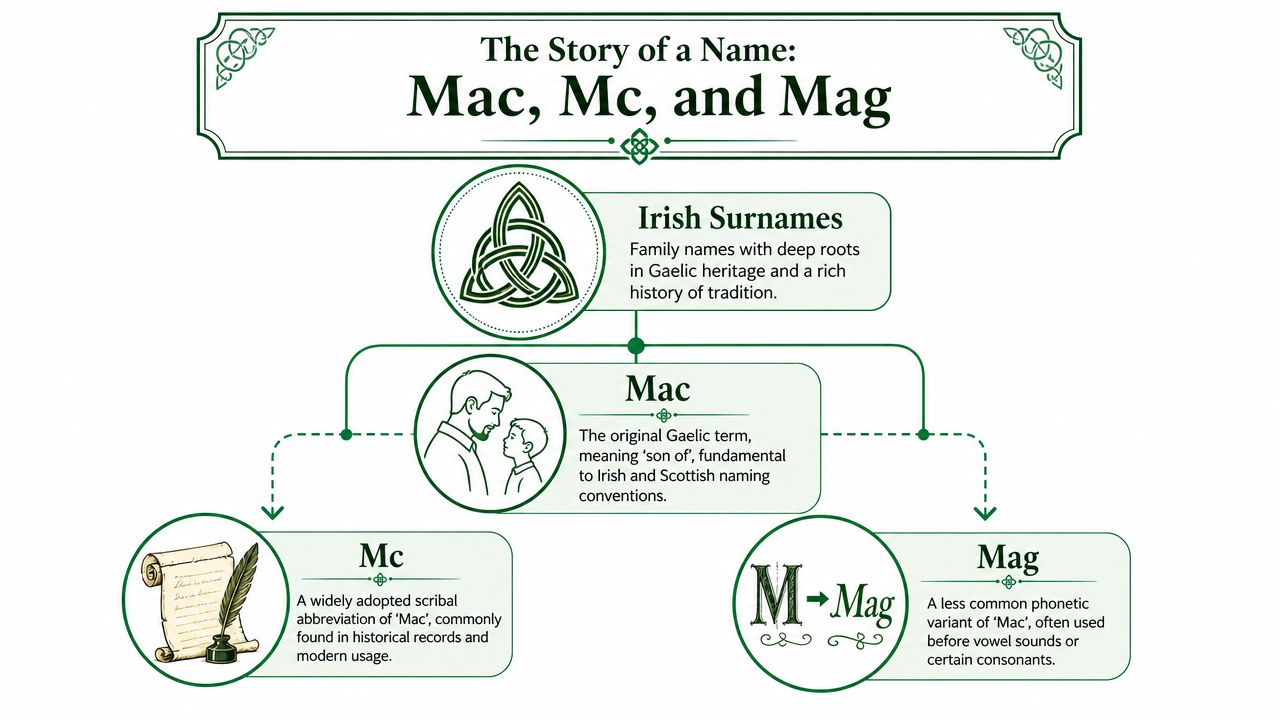
  • Ó (Irish) or Ua in Old Irish meant “descendant of.”
  • Mac (Scottish and Irish) meant “son of.”
  • Nic (Scottish Gaelic) was the female version, meaning “daughter of.”

This system made surnames fluid: a son might be Mac Domhnaill (son of Domhnall), while his son could become Ó Domhnaill (descendant of Domhnall), creating lineage-based variations over generations.


The Difference Between Irish and Scottish Gaelic Surnames

Although both Irish and Scottish surnames come from Gaelic, each has its own nuances.

FeatureIrish Gaelic NamesScottish Gaelic Names
PrefixÓ (“descendant of”) or Mac (“son of”)Mac (“son of”) or Nic (“daughter of”)
ExamplesÓ Briain (O’Brien), Mac Carthaigh (MacCarthy)MacLeòid (MacLeod), MacDhòmhnaill (MacDonald)
Language InfluenceOld Irish & Middle IrishOld Irish → Evolved in Scotland
Common AnglicizationO’, Mc, or MacMac or Mc (sometimes dropped entirely)

Over time, both traditions were anglicized during British rule — Gaelic spellings and pronunciations often changed to fit English norms. Yet, even in anglicized forms, the Gaelic roots remain visible.


Understanding Gaelic Name Structures

To truly appreciate Gaelic last names, it helps to know how they’re built.

1. The Prefixes

  • Mac / Mc – “Son of.”
    • Mac Néill → “Son of Niall” → MacNeill / McNeil.
  • Ó / O’ – “Descendant of.”
    • Ó Conchobhair → “Descendant of Conchobhar” → O’Connor.
  • Nic – “Daughter of” (Scottish).
    • NicDhòmhnaill → “Daughter of Donald.”
  • – “Daughter of” (Irish).
    • Ní Bhraonáin → “Daughter of Brennan.”

2. The Roots

The root word that follows the prefix usually refers to an ancestor’s given name or trait. For example:

  • Ó Ceallaigh → descendant of Ceallach (“bright-headed”) → Kelly.
  • Mac Giolla Phádraig → son of the devotee of St. PatrickFitzpatrick / Kilpatrick.

These linguistic components tell us much more than genealogy — they tell us about faith, family, and personality in early Gaelic society.


Common Gaelic Last Names and Their Meanings

Below are some of the most recognizable Gaelic surnames and their origins.

Irish Gaelic Last Names

  • O’Brien (Ó Briain) – Descendant of Brian, famously linked to High King Brian Boru.
  • O’Sullivan (Ó Súilleabháin) – “Dark-eyed one” or “hawk-eyed.”
  • Murphy (Ó Murchadha) – “Sea warrior.”
  • Kelly (Ó Ceallaigh) – “Bright-headed” or “warrior.”
  • Walsh (Breathnach) – Means “Welshman,” referring to settlers from Wales.

Scottish Gaelic Last Names

  • MacLeod (Mac Leòid) – “Son of Leod,” a Norse-Gaelic hybrid name.
  • MacGregor (Mac Griogair) – “Son of Gregory.”
  • MacDonald (Mac Dhòmhnaill) – “Son of Donald.”
  • Campbell (Caimbeul) – Means “crooked mouth.”
  • MacKenzie (Mac Coinnich) – “Son of Coinneach” or “handsome one.”

Each of these names encapsulates a story — about kinship, heritage, and the intertwining of Gaelic and Norse or English influences through the centuries.


How Gaelic Last Names Were Anglicized

When English rule spread across Ireland and Scotland, Gaelic naming conventions were often suppressed or misunderstood by English recordkeepers.
This led to:

  1. Simplification: Complex Gaelic spellings were shortened (e.g., Ó SúilleabháinO’Sullivan).
  2. Translation by Sound: Surnames were written as they were heard by English speakers.
  3. Loss of Prefixes: Many names dropped Mac or O’ entirely to avoid discrimination.

In the 19th and 20th centuries, many families restored their prefixes — a quiet act of cultural revival and pride.

If you’re curious about how Gaelic orthography evolved over time, visit our Irish Orthography Guide.


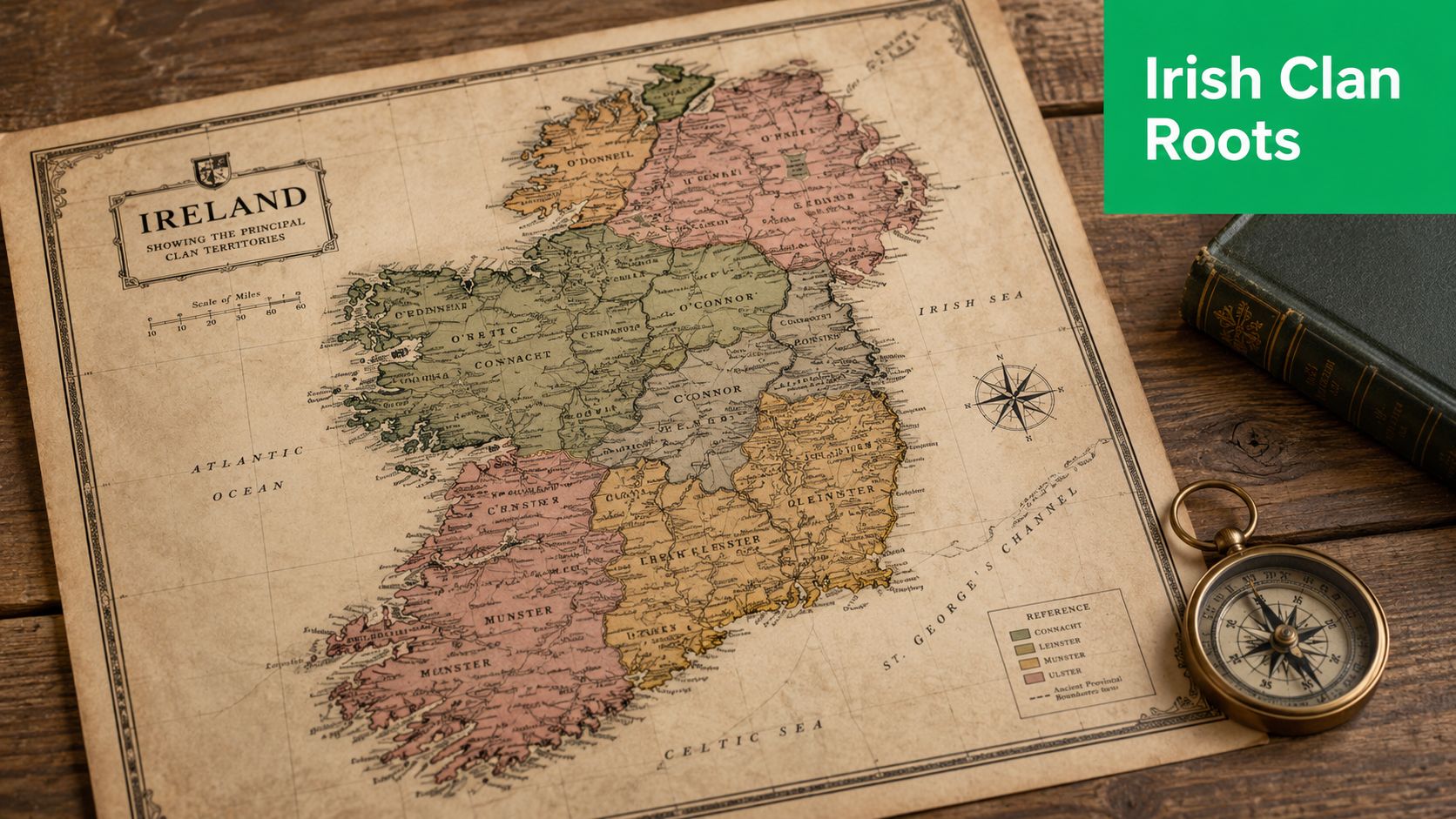
Regional and Clan Associations

In both Ireland and Scotland, surnames weren’t just identifiers — they were tribal and territorial markers.

In Ireland:

  • O’Neill of Ulster
  • O’Connor of Connacht
  • MacCarthy of Munster
  • O’Brien of Thomond

In Scotland:

  • MacDonald of the Western Isles
  • MacLeod of Skye and Harris
  • Campbell of Argyll
  • MacGregor of Glenstrae

Clan names often tied families to specific territories or historical allegiances, and these affiliations remain a proud part of Gaelic heritage today.

To learn more about the historic role of clans in Gaelic society, see our Irish Clans Guide.


Gaelic Last Names and Their Modern Revival

In recent decades, interest in Gaelic last names has surged — not only among those of Irish or Scottish descent but also among language and culture enthusiasts worldwide.

This revival is driven by:

  • Genealogy research through DNA and ancestry platforms.
  • Global Irish and Scottish diasporas, reconnecting with family roots.
  • Cultural renewal movements, emphasizing Gaelic language and identity.
  • Digital tools, making language learning and history more accessible.

At Gaeilgeoir AI, for example, we use technology to bridge ancient tradition with modern accessibility — helping learners understand the language behind names, phrases, and culture.


Fascinating Facts About Gaelic Surnames

  1. Gender variations exist in Gaelic surnames — daughters often take a modified form of the family name (e.g., Ó).
  2. Norse influence is strong in coastal Gaelic names, especially in the Hebrides and northern Ireland.
  3. Occupational surnames are rare — Gaelic names typically emphasized lineage over profession.
  4. Place-based names like Mac an Bhaird (“son of the bard”) or Ó hEalaighthe (“descendant of the skilled one”) show the importance of art and skill in Gaelic culture.

Preserving Gaelic Heritage Today

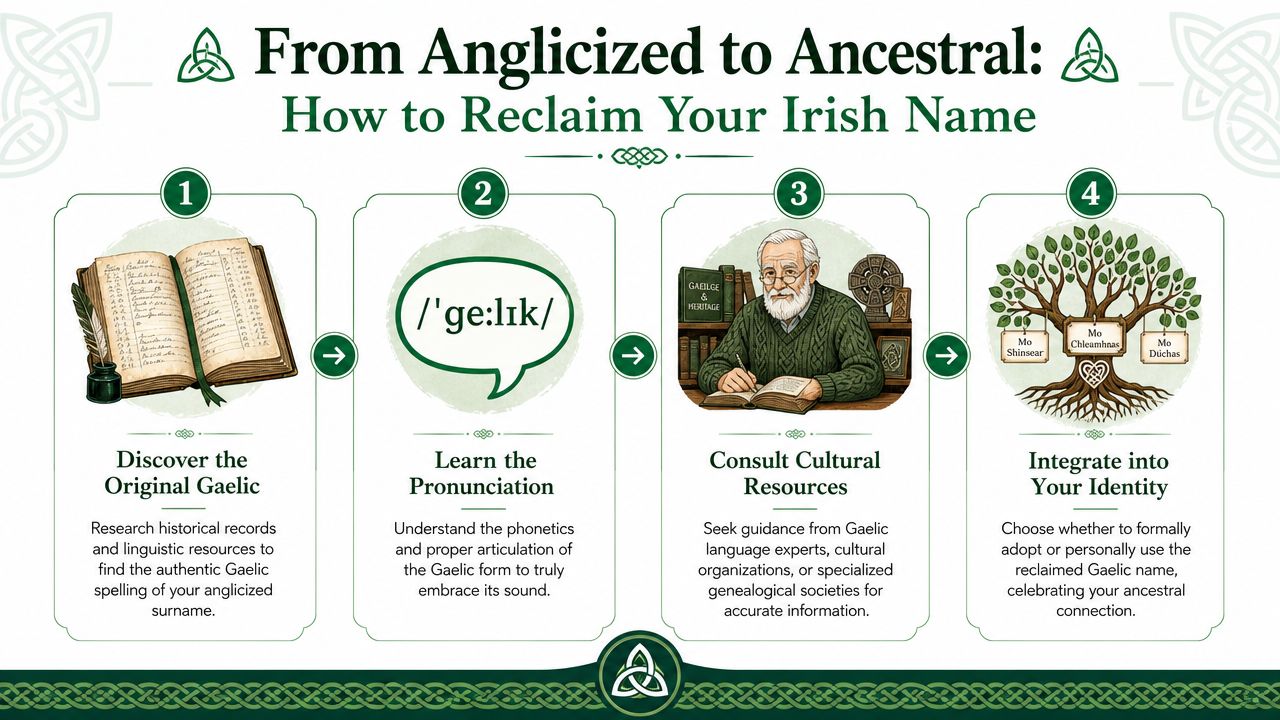
Learning about Gaelic last names isn’t just an exercise in etymology — it’s an act of cultural preservation. Every time a family traces its roots, revives its original spelling, or learns to pronounce its Gaelic form correctly, it contributes to keeping the language alive.

If you’d like to explore how Gaelic words, phrases, and sounds interconnect, you might enjoy our Irish Gaelic Terms of Endearment Guide.


Final Thoughts

Gaelic last names are more than linguistic curiosities — they’re threads that bind people to centuries of history, storytelling, and pride. Each name carries echoes of an ancestor’s courage, trade, or homeland.

By exploring these names, we not only uncover personal heritage but also gain a deeper appreciation for the Gaelic language, one of the oldest living tongues in Europe.

Whether your name begins with Mac, Mc, or O’, its story connects you to a shared cultural memory — one that continues to inspire curiosity and pride across generations.

If you’re ready to explore your Gaelic heritage further or learn how names connect to the language itself, join the global community of learners at learn.gaeilgeoir.ai.

Go n-éirí an bóthar leat — may your journey be a successful one.

Mo Ghile Mear: Meaning, Lyrics, and Legacy in Irish Song

When you hear the haunting melody of “Mo Ghile Mear,” it’s hard not to be moved. Often performed by choirs, Celtic singers, and even orchestras, this Irish song carries with it a deep sense of pride, sorrow, and longing. But Mo Ghile Mear is more than just a beautiful tune — it’s a window into Ireland’s history, poetry, and language.

In this guide, we’ll explore the meaning, translation, and origins of Mo Ghile Mear, and how it remains a cherished symbol of Ireland’s cultural resilience. Whether you’re learning Irish through Gaeilgeoir AI or simply discovering the beauty of Irish music, this song offers a perfect blend of emotion and language.


What Does “Mo Ghile Mear” Mean?

In Irish, “Mo Ghile Mear” (pronounced muh YIL-eh mar) translates roughly to “My gallant darling” or “My brave hero.”

Let’s break it down:

  • Mo = My
  • Ghile = Gallant, bright, or noble youth
  • Mear = Lively, spirited, or valiant

So, when someone sings Mo Ghile Mear, they’re expressing admiration and affection — not romantic love, but rather devotion to a beloved leader or hero.

The phrase appears in traditional Irish poetry and has become one of the most recognizable titles in Irish-language music.


The Origins of “Mo Ghile Mear”

A Song of Lament and Hope

Mo Ghile Mear was written in the 18th century by the poet Seán Clárach Mac Domhnaill (1691–1754), one of the great voices of the Jacobite era.

At that time, many Irish people supported Prince Charles Edward Stuart, better known as “Bonnie Prince Charlie,” in his failed attempt to reclaim the British throne during the Jacobite Rising of 1745.

When the rebellion failed, Ireland’s hopes for independence and the restoration of the old Gaelic order faded — and Mo Ghile Mear became a lament for a lost leader and lost freedom.

In the poem, Ireland herself (personified as a woman) mourns her hero — her “gallant darling” — who has gone into exile. The song’s emotional depth reflects both personal and national grief, blending love, loss, and patriotism in a single, unforgettable refrain.


Lyrics and Translation of “Mo Ghile Mear”

Below is the most well-known version of the song, with a rough English translation.

Irish Lyrics (Excerpt):

Sé mo laoch, mo ghile mear,
Sé mo Chaesar, ghile mear,
Suan ná séan ní bhfuaireas féin
Ó chuaigh i gcéin mo ghile mear.

English Translation:

He is my hero, my gallant darling,
He is my Caesar, my gallant darling,
Joy and rest I never knew
Since my gallant darling went away.

The song alternates between verses of sorrow and admiration, invoking mythic imagery and a sense of timeless loyalty. Its Irish phrasing gives it a musical rhythm that English can only partially capture.


Cultural Significance of “Mo Ghile Mear”

1. A Symbol of Irish Identity

Over the centuries, Mo Ghile Mear has transcended its Jacobite origins to become a symbol of Ireland itself. The “hero” can represent Ireland’s spirit, freedom, or even the Irish language — something cherished but once nearly lost.

Like many Irish laments (caoineadh), the song reflects the endurance of a people whose cultural identity survived colonization, suppression, and exile.

2. A Modern Revival

In the 1970s, composer Seán Ó Riada and poet Dónal Ó Liatháin revived Mo Ghile Mear as a choral song, arranged by Seán Ó Sé and performed by The Choral Scholars of University College Dublin and The Clancy Brothers, among others.

This version became immensely popular and remains a staple of Irish music worldwide. It’s often performed at cultural festivals, concerts, and national events, bridging traditional and contemporary Ireland.

3. Language Preservation

Songs like Mo Ghile Mear play a vital role in preserving the Irish language (Gaeilge). Even for learners, singing or listening to Irish songs helps improve pronunciation, rhythm, and vocabulary — turning music into a natural language-learning tool.

To practice Irish pronunciation and expression, check out our Irish Pronunciation Guide.


How to Pronounce “Mo Ghile Mear”

Irish pronunciation follows different phonetic rules than English.

Here’s a phonetic breakdown:

Mo Ghile Mearmuh YIL-eh mar

  • “Mo” sounds like “muh” (my)
  • “Ghile” softens the “g” to a “y” sound (like “yeh-leh”)
  • “Mear” rhymes roughly with “car” (rolled “r” sound)

If you’re learning Irish, mastering these sounds will help you pronounce similar words correctly — especially those starting with “gh” or “mh”, which represent soft, aspirated consonants.


The Poetic Power of “Mo Ghile Mear”

1. Personification of Ireland

Irish poets often personified Ireland as a woman — sometimes a mother, sometimes a queen, sometimes a grieving figure.
In Mo Ghile Mear, she mourns her absent son or leader. This poetic tradition can be traced back to earlier works like Caoineadh Airt Uí Laoghaire and Róisín Dubh, where love and patriotism intertwine.

2. Dual Meaning: Love and Loyalty

Mo Ghile Mear can be read both literally and symbolically:

  • Literally: a woman mourning her exiled lover or hero.
  • Symbolically: Ireland lamenting the loss of sovereignty, identity, and unity.

This dual meaning gives the song timeless appeal — whether sung as a love ballad, a nationalist anthem, or a poetic elegy.


Musical Legacy: From Gaelic to Global

Notable Recordings

Over the past decades, Mo Ghile Mear has been recorded by numerous artists, including:

  • Mary Black
  • Celtic Woman
  • The Chieftains & Sting
  • Choral Scholars of University College Dublin
  • Clannad

Each rendition brings new life to the song — from orchestral grandeur to intimate acoustic versions.

The melody’s mix of minor-key melancholy and hopeful refrains resonates with audiences across languages and cultures.

Why It’s Perfect for Learners

Irish music naturally reinforces:

  • Pronunciation (through melody and repetition)
  • Listening comprehension
  • Cultural vocabulary (through poetic metaphors)

If you’re starting your Irish journey, listening to songs like Mo Ghile Mear can help you absorb sound patterns effortlessly. You can pair this practice with our Irish Language Lessons for Beginners to accelerate learning.


Breaking Down Key Words in “Mo Ghile Mear”

Irish WordEnglish TranslationNotes
MoMyPossessive pronoun
GhileBright, gallantFrom geal (bright)
MearLively, braveOften used for heroes
Sé mo laochHe is my hero“Laoch” = hero
Mo chaesarMy CaesarClassical reference
Suan ná séanRest or peaceCommon poetic phrase

Learning these terms gives insight into Irish poetic structure and historical influences — where Gaelic and classical imagery beautifully intertwine.


Cultural Context: Irish Music as Language Learning

In Irish tradition, music and language are inseparable. Many learners find songs like Mo Ghile Mear easier to memorize than grammar tables because rhythm and melody reinforce memory.

Gaeilgeoir AI’s platform uses AI-powered listening tools to help you:

  • Recognize patterns in Irish pronunciation
  • Practice listening comprehension with authentic songs
  • Understand context and translation together

This approach turns passive listening into active learning — so you can appreciate songs not just for their beauty, but for their linguistic richness.


External Insight: Music and Memory in Language Learning

According to a study by the BBC and University of Edinburgh’s School of Philosophy, Psychology and Language Sciences, learners who sing new words or phrases in a foreign language tend to retain them significantly longer.

This makes Irish songs like Mo Ghile Mear powerful tools for memory and pronunciation — blending emotion with linguistic practice.


How Gaeilgeoir AI Brings Irish Songs to Life

At Gaeilgeoir AI, our goal is to make Irish learning accessible, cultural, and fun.

Our tools use speech recognition, translation assistance, and listening exercises to help learners:

  • Master Irish pronunciation
  • Understand the meaning behind lyrics
  • Learn vocabulary in real-life context
  • Track progress with personalized feedback

Whether you’re exploring Mo Ghile Mear or other classic Irish songs, Gaeilgeoir AI transforms listening into learning.

Start free today and experience the beauty of Irish through AI-powered lessons:
👉 Sign up now at Gaeilgeoir AI


Conclusion: “Mo Ghile Mear” — Ireland’s Heart in Song

Mo Ghile Mear isn’t just a song — it’s a living connection to Ireland’s soul. Its verses carry centuries of history, emotion, and identity.

For learners, it offers a poetic path into the Irish language — showing how music can make words come alive. By understanding its lyrics, pronunciation, and cultural roots, you gain more than vocabulary; you gain a piece of Ireland’s spirit.

So the next time you hear Mo Ghile Mear, listen closely. Behind every note is a story — of love, loss, hope, and the enduring beauty of the Irish language.


Ready to Start Your Irish Language Journey?

Experience the culture behind songs like Mo Ghile Mear.
👉 Join Gaeilgeoir AI for free today and start speaking, singing, and connecting with Ireland’s living language.

Good Health in Gaelic: Understanding Sláinte Mhaith

From the heart of Irish language culture comes the simple yet powerful phrase that signifies “good health in Gaelic” — sláinte mhaith. When you utter this toast, you’re not just saying “cheers”; you’re expressing goodwill, connection, and a uniquely Irish wish for someone’s wellbeing. Learning how to say good health in Gaelic is a meaningful step for anyone studying Gaeilge, especially if you’re using platforms like Gaeilgeoir AI’s interactive tools at learn.gaeilgeoir.ai.

In this article, we’ll explore everything you need to know about saying “good health in Gaelic” — from pronunciation and meaning, to usage in everyday Irish conversation, to how this phrase ties into wider learning of the Irish language. The phrase good health in Gaelic appears naturally throughout, helping you become comfortable both with the term and with the cultural context behind it.


What Sláinte Mhaith Literally Means

  • The word sláinte means “health” in Irish. Wikipedia+1
  • The phrase mhaith is the lenited form of maith (“good”), so sláinte mhaith literally = “good health”. Wikipedia+1
  • When you say sláinte mhaith, you are wishing someone “good health in Gaelic” — not only in the language, but in spirit.

It’s one of those phrases that feels warm and inclusive, perfect for learners of Irish who are exploring cultural phrases alongside grammar and vocabulary. As you dive deeper into your Irish-language journey, this toast is a small but significant way to embrace the language.

Pronunciation Guide: How to Say Sláinte Mhaith

Here’s a quick breakdown:

  • Sláinte → Pronounced roughly slawn-cha (the “á” is long)
  • Mhaith → Pronounced roughly vah or wah depending on dialect
  • Combined → slawn-cha vah (or slawn-cha wah)

Since you’re learning Irish, you’ll find that hearing and repeating such phrases strengthens your pronunciation confidence. Go ahead and practise saying “good health in Gaelic” out loud: Sláinte Mhaith!


When to Use the Phrase “Good Health in Gaelic”

Here are typical situations where you might use sláinte mhaith:

  • Raising a toast at a gathering, meal or celebration.
  • Wishing someone well when parting company, especially after sharing a drink or meal.
  • Celebrating success or unity, for example: “Here’s to good health in Gaelic and new friends!”
  • Cultural immersion: When you travel in Ireland, visit a Gaeltacht region or join an Irish-language group, it shows respect and enthusiasm to use authentic greetings like this.

In your Irish-learning efforts, combining the phrase with broader conversation is helpful. For example:

“Sláinte mhaith! Tá súil agam go mbeidh tú i ndea-shláinte.”
“Good health in Gaelic! I hope that you will be in good health.”

It not only helps you practise the phrase, but also reinforces the theme of wellbeing in everyday Irish speech.


Why “Good Health” Matters in Irish Language Context

1. It’s culturally rich

Language isn’t just grammar and vocabulary—it’s culture and identity. Saying “good health in Gaelic” links you to centuries of Irish social rituals and friendly speech.

2. It builds confidence

Using a real-life phrase like sláinte mhaith gives you a moment of mastery. It’s easy to remember, fun to say, and rewarding when used authentically.
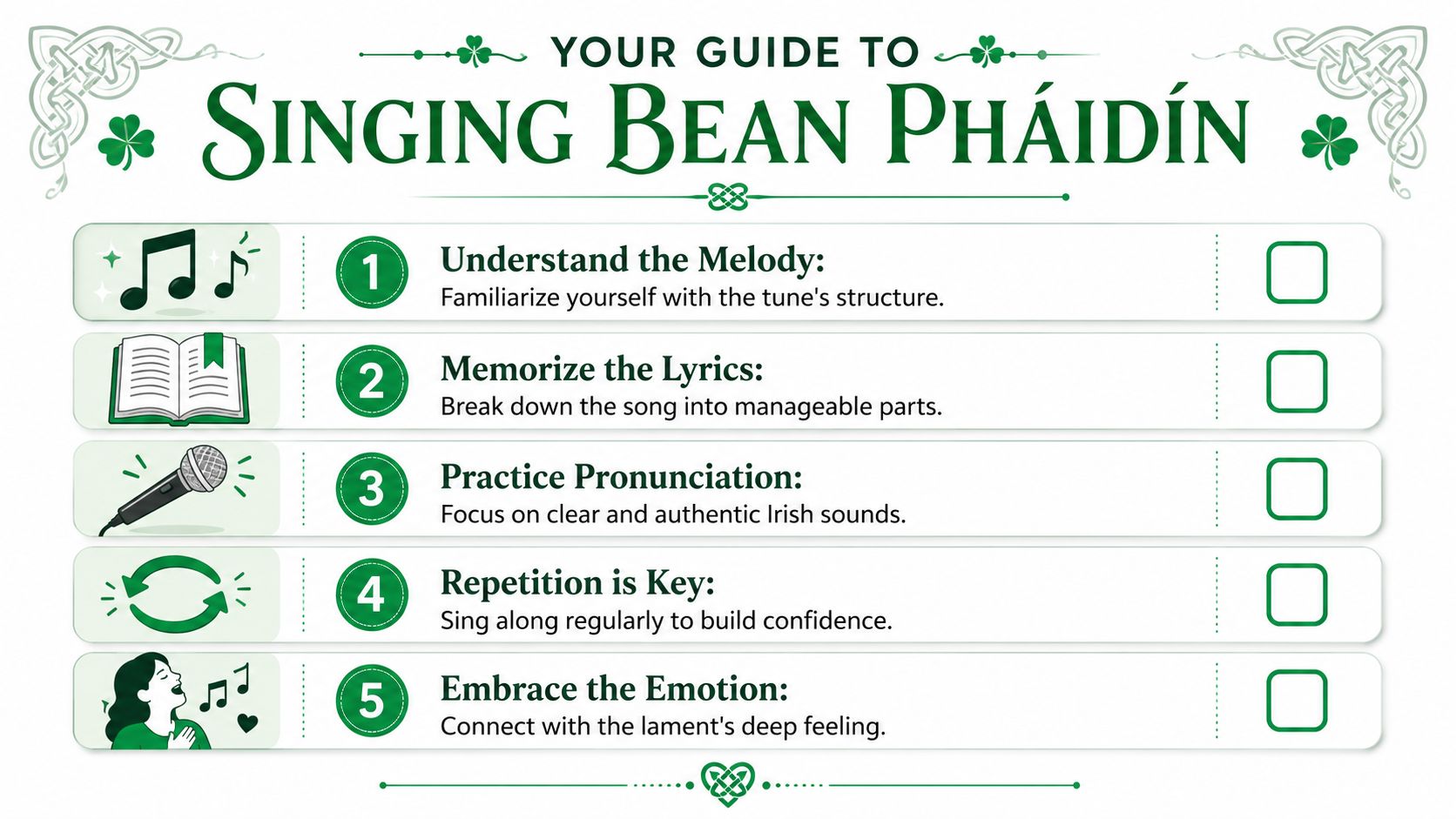

3. It opens conversation

If you use good health in Gaelic in a setting where others speak Irish, it often invites response and interaction. You might hear: “Sláinte agatsa!” (“Good health to you too!”)

By integrating such phrases, you make your learning practical and social—not just theoretical.


Expand Your Learning: Beyond “Good Health in Gaelic”

To deepen your knowledge of Irish and embrace more phrases, try exploring these areas:

  • Irish greetings and phrases: Our Irish-language greetings & phrases guide offers a rich list of expressions to practise.
  • Grammar and usage: Understanding how lenition (like mhaith vs maith) works helps you make sense of many Irish phrases.
  • Pronouns and structures: Want to say “I wish you good health in Gaelic”? Check out our Irish-pronouns guide for help.
  • Conversational practice: Use your new phrase in dialogues: “Sláinte mhaith! Mar atá tú?” (“Good health! How are you?”)

Combining the phrase “good health in Gaelic” with structured lessons helps you internalise both language and culture.


Practical Exercises for Using Sláinte Mhaith

Here are some simple yet effective exercises:

  1. Repeat aloud: Say sláinte mhaith five times, focusing on pronunciation.
  2. Use in context: Practice in a sentence: “Go raibh maith agat agus sláinte mhaith!” (“Thank you and good health!”)
  3. Write a short note: Draft a friendly message in Irish: “A [Name], sláinte mhaith agus breithfidh tú arís go luath.”
    (“Dear …, good health and I will see you again soon.”)
  4. Role-play toast: With a friend, pretend you’re at a gathering in Ireland—say the phrase, respond, and continue the conversation in Irish.
  5. Record yourself: Use your phone or app to record yourself saying sláinte mhaith, and compare with native speaker audio (you’ll find many free resources online).

These simple practices help anchor “good health in Gaelic” into your repertoire and make it part of your growing Irish-language fluency.


FAQs About the Phrase

Q: Can I just say sláinte and drop mhaith?
A: Yes—sláinte alone means “health” or “cheers” and is widely used. Sláinte mhaith adds the “good” qualifier, so both forms are correct. Wikipedia+1

Q: How do I respond if someone says sláinte mhaith to me?
A: You can respond with sláinte agat (to your health) or simply repeat sláinte mhaith. focloir.ie

Q: Is it strictly Irish Gaelic or Scots Gaelic?
A: The phrase exists in both, but in Irish it’s written sláinte mhaith, and in Scots Gaelic “slàinte mhath”. The Scotch Whisky Experience


Bringing It All Together

Learning to say “good health in Gaelic” is more than memorising a toast—it’s about connecting with Irish culture, language and community. When you use sláinte mhaith, you embrace a moment of language-based goodwill, stepping into meaningful conversation.

Whether you’re greeting new Irish-speakers, enjoying a virtual lesson, or simply practising for fun, remember: each phrase brings you closer to fluency. As you continue your Irish-language journey, phrases like sláinte mhaith serve as friendly stepping-stones on your path.
Don’t forget you can explore more lessons and resources at learn.gaeilgeoir.ai to solidify your Gaelic journey—one phrase, one day at a time.


Ready to make Irish language part of your daily life? Sign up for a free trial at learn.gaeilgeoir.ai and start practising phrases like sláinte mhaith today. Embrace the greeting, enjoy the culture, and wish someone good health in Gaelic with confidence.

Sláinte mhaith! May you enjoy good health in Gaelic—and beyond.

Start Speaking Irish Today — 25% Off
Use code START25

Learn real Irish for real life with guided practice, pronunciation support, and everyday conversations.

Get 25% off any plan with code START25

Start Speaking Irish Today — 25% Off