You might be staring at a baby name list, sketching tattoo ideas, or trying to reconnect with family roots and realizing that most name roundups feel flat. They give you a translation, maybe a myth reference, and then move on. That's frustrating if what you want is a name with real depth, something that sounds powerful and also teaches you something about Ireland.
Male Irish warrior names do more than signal strength. They open a door into story, sound, and language. A name like Cú Chulainn carries a whole heroic world. A name like Cathal points straight back to an old Irish word for battle. Even names that look familiar in English often hide older Gaelic structures that become easier to recognize once you learn a few roots.
This guide keeps the focus practical. You'll get seven major names from Irish legend and tradition, along with simple pronunciation help, story context, and language notes you can use. If you're exploring heritage, naming a child, choosing a character name, or brainstorming a design with generate Irish tattoo ideas, these names give you more than surface-level meaning. They give you a way into Gaeilge itself.
Table of Contents
- 1. Cú Chulainn (Cúchulainn)
- 2. Fionn mac Cumhaill
- 3. Balor of Tory Island
- 4. Oisín (Ossian)
- 5. Lugh of the Tuatha Dé Danann
- 6. Niall of the Nine Hostages
- 7. Maol Dúin (Mael Duin)
- 7 Irish Male Warrior Names Compared
- Start Your Own Language Adventure
1. Cú Chulainn (Cúchulainn)
Pronounce it roughly as koo KHUL-in, though Irish sound varies by dialect and spelling tradition. Among irish warrior names male readers search for, this is often the first name that feels instantly legendary.
Why his name matters
Cú Chulainn means “the Hound of Culann.” The first element, cú, means hound, and Culann is the name of the smith whose guard dog the young hero killed before offering himself as a replacement. That act of loyalty and responsibility is why the name still carries force. It isn't just fierce. It's bound to duty.
In the Ulster Cycle, Cú Chulainn becomes the defender of Ulster and stands almost alone against the forces of Queen Medb in the Táin Bó Cúailnge. If you want a name tied to courage under pressure, few are stronger in Irish tradition. His stories also introduce terms that appear again and again in old narrative culture, including geis, a binding obligation, and riastrad, the terrifying battle distortion linked to his combat frenzy.
For a quick visual retelling, this video gives a useful entry point before reading the older tales.
A language learner's doorway into the Ulster Cycle
Cú Chulainn is one of the best mythic names for learners because his stories are so central. Once you know his name, you start recognizing connected words in summaries, children's retellings, museum materials, and classroom texts. A good next step is this guide to the Ulster Cycle and Irish myths, which gives the wider world around him.
Practical rule: Learn the name as a phrase, not as a label. Cú means hound. Once you know that, other Irish names and words become easier to remember.
A useful real-world approach is to read a simplified retelling of the Táin, then note recurring words linked to honor, kinship, and battle. If you're building pronunciation confidence, say the name aloud in two beats first, “Cú” and “Chulainn,” before trying the full form naturally. That small habit makes old Irish names feel much less intimidating.
2. Fionn mac Cumhaill
Say it roughly as fyun mak KOO-il or fin mak COOL, depending on the tradition you encounter. In modern English contexts you'll also see Finn MacCool, but the Irish form gives you more of the linguistic texture.
The name behind the legend
Fionn means fair or white, often understood as referring to bright appearance or fair hair. Mac Cumhaill means son of Cumhall. Unlike the concentrated, tragic brilliance of Cú Chulainn, Fionn's legend stretches across a lifetime of hunting, leadership, wisdom, and supernatural adventure.
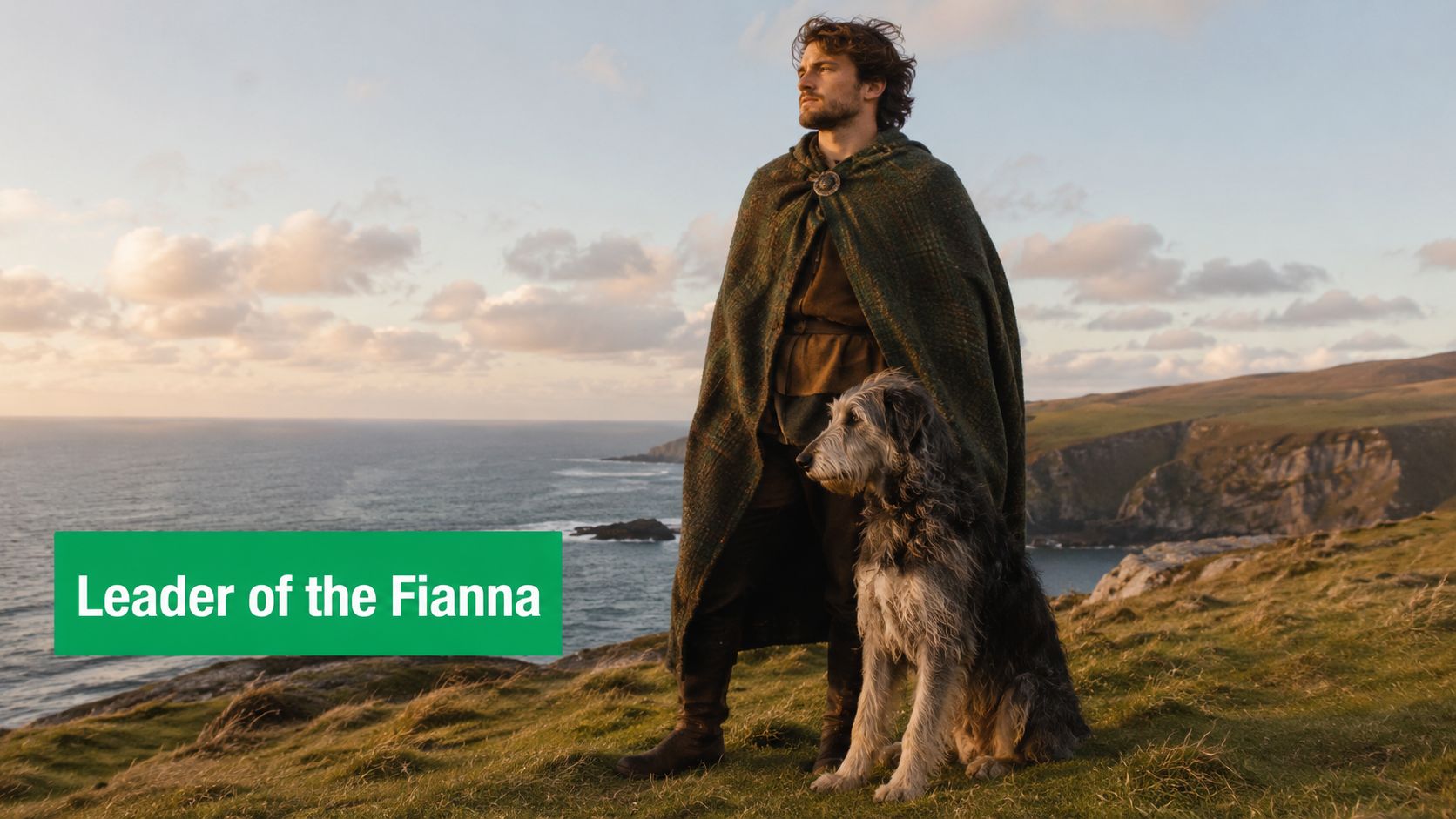
He leads the Fianna, the wandering warrior bands of Ireland. That makes his name useful in a different way. Instead of one great defensive war, you get a wide array of stories: forest training, tests of wisdom, strange encounters, and tales passed down in many forms. For someone learning Irish culture step by step, that range is helpful.
This image captures the mood often associated with Fionn's world. A warrior, a hound, and the sea at the edge of the land.
Why Fionn works well for learners
Fionn appears in stories connected to Oisín, the Fianna, and the wider Fenian tradition. Those episodes are often easier to approach in small pieces than the more intense heroic material around Cú Chulainn. If you want an Irish warrior name that feels noble but not severe, Fionn is a strong candidate.
Try learning his name alongside a few related words:
- Fianna Strongly linked with warrior bands and roaming heroic company.
- Eolas A useful Irish word for knowledge, which suits Fionn's reputation for insight.
- Glic A word for clever or wise, fitting a hero valued for judgment as much as force.
Fionn is a good reminder that Irish warrior culture admired intelligence, memory, and decision-making, not only battlefield strength.
A practical reading path is to start with tales of Oisín and the Fianna in modern retellings, then move toward older-style language. That lets you enjoy the legend while training your ear for names, patronymics, and repeated vocabulary.
3. Balor of Tory Island
Balor is not the hero of his story. That's exactly why he belongs on this list. If you want to understand Irish warrior naming in full, you need the names of the forces heroes had to face.
A warrior name from the dark side of myth
Balor is the fearsome Fomorian king with the destructive eye, a giant whose gaze could devastate armies. He belongs to the mythological world of conflict between the Tuatha Dé Danann and older chaotic powers. In story terms, he represents danger that can't be met casually. It has to be answered with skill, timing, and destiny.
The name is often explained as carrying a sense of might or strength. Even where the exact etymology is debated, the narrative effect is clear. Balor sounds heavy, old, and threatening. That matters for learners because Irish tradition often gives names dramatic weight before you even know the full tale.
Vocabulary hidden inside Balor's world
Balor's stories help you notice words tied to conflict and fate. One especially important root in Irish warrior naming is cath, meaning battle. It is described as the clearest linguistic marker of warrior names in Irish culture, appearing in names such as Cathal, while related warrior forms like Fergus, Cathaoir, Conall Cearnach, and Fergal carry direct associations with strength, combat, victory, and valor in saga tradition (old Irish warrior name meanings and roots).
That makes Balor useful even though his own name isn't built on cath. His world teaches the vocabulary around him.
- Cath Battle. A key root to watch for in names and old titles.
- Fomoróg A form learners may meet when discussing Fomorian beings or giant-like figures.
- Cinniúint Destiny or fate, a modern Irish word that helps frame prophecy themes in retellings.
If you're reading beginner materials, Balor often appears in shortened versions of Cath Maige Tuired. Read those slowly and listen for repeated place names and kinship terms. Villain names are often easier to remember than abstract vocabulary, so Balor can become an anchor point for a whole myth cluster.
4. Oisín (Ossian)
Pronounce Oisín roughly as uh-SHEEN or oh-SHEEN, depending on regional speech and teaching style. It's one of the most musical names in Irish tradition, and that sound is part of its appeal.
The poet-warrior name
Oisín is the son of Fionn mac Cumhaill, but he isn't remembered only as a fighter. He's the poet-warrior, the figure who stands between martial culture and literary memory. That double identity makes him especially valuable if you want a name that feels heroic without sounding blunt.
You'll often meet him through the tale of Oisín in Tír na nÓg, where he journeys with Niamh to the Land of Youth and later returns to an Ireland transformed by time. Even in translation, the story carries themes that are unmistakably Irish: longing, beauty, loss, and the impossibility of returning unchanged.
A gentle entry into Irish literary themes
Oisín works beautifully for learners because his stories invite softer vocabulary. Instead of only swords and battle cries, you get words for poem, music, youth, and memory. That gives balance to any search for irish warrior names male readers may be making. Not every warrior name has to feel hard-edged.
A useful mini vocabulary set around Oisín includes:
- Dán Poem.
- File Poet.
- Ceol Music.
Oisín shows that in Irish tradition, eloquence could stand beside courage. A hero could be remembered for words as well as weapons.
In real-world learning, Oisín is a great name to practice because it introduces a common Irish feature. The accented vowel, the síneadh fada, changes how the word sounds and should never be ignored. If you're reading children's editions or school retellings, Oisín is often one of the first names that teaches you that spelling in Irish is highly meaningful, not decorative.
5. Lugh of the Tuatha Dé Danann
Lugh is short, striking, and powerful. It's often pronounced loo, though learners should expect some variation in explanation depending on context and dialect.
The skilled warrior
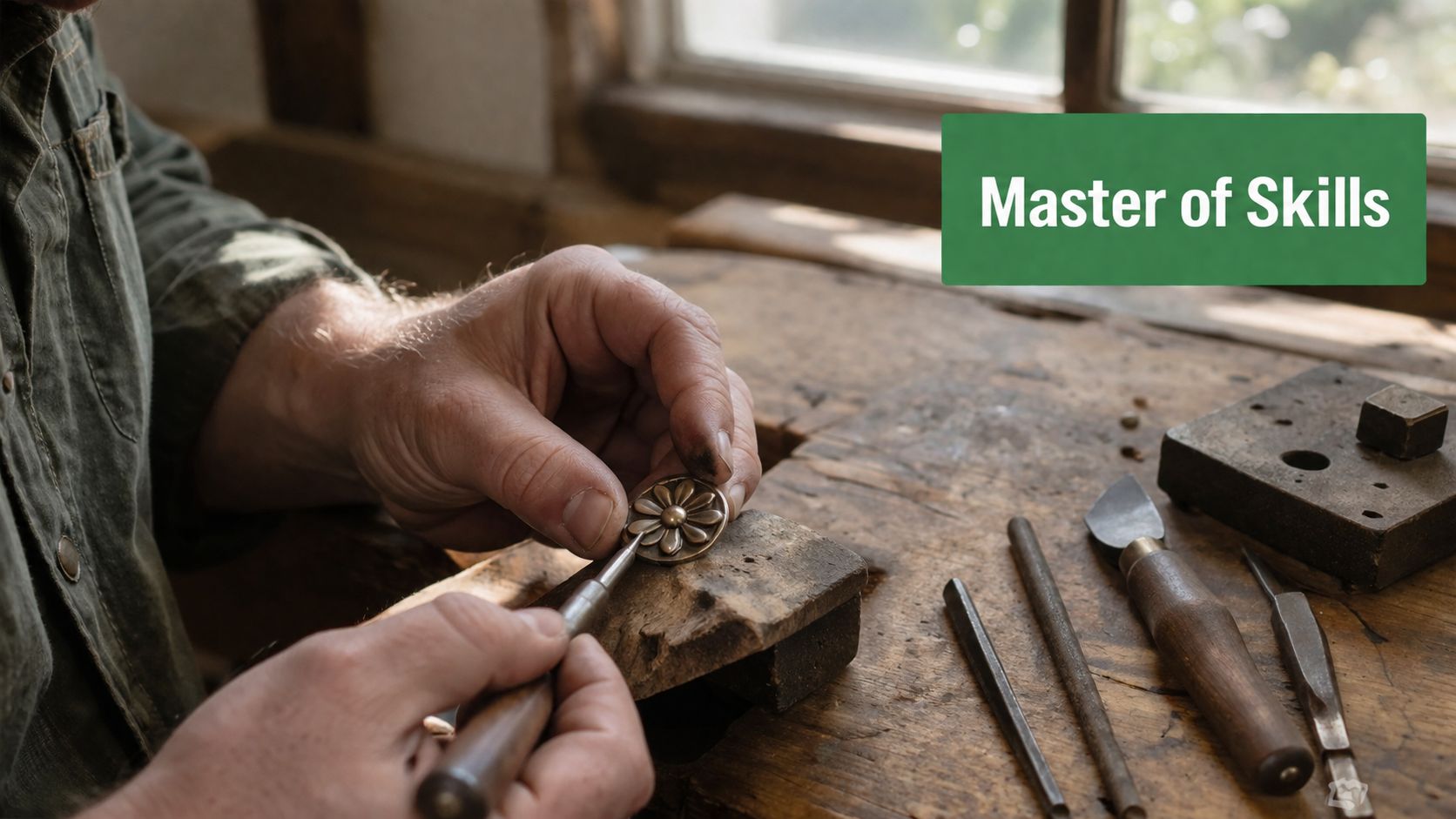
Lugh is not just a warrior. He is the many-skilled figure often associated with mastery across arts and crafts as well as battle. In myth, his most famous act is killing Balor, the giant whose fate was tied to prophecy. That victory is one of the defining moments in Irish mythic conflict.
What sets Lugh apart is his range. He doesn't symbolize brute force alone. He represents precision, intelligence, and excellence. That makes him one of the richest names in Irish tradition for people who want a heroic name with mental sharpness built into it.
This image suits that side of Lugh's identity. He belongs as much to making and skill as to war.
Lugh as a language key
Lugh helps learners connect warrior tradition to craft vocabulary. One of the most useful Irish words associated with him is ildánach, meaning many-gifted or skilled in many arts. Even if you don't use that word every day, it reveals a lot about how Irish heroic culture valued capability.
Try pairing Lugh with a few practical terms:
- Ceárta Forge or workshop-related language, useful when thinking about making and craft.
- Straitéis Strategy, a modern term that matches his tactical image in retelling.
- Dia God, helpful for understanding the divine status of mythological figures.
Lugh also lives on in the festival name Lughnasadh, which ties him to season, harvest, and the rhythm of the year. That connection matters. Irish names often carry social and seasonal memory, not just personal identity. If you like names that are short but layered, Lugh is one of the strongest choices in the whole tradition.
6. Niall of the Nine Hostages
Niall feels more historical than some of the figures above, even though legend surrounds him. That mix is part of the name's power. It stands with one foot in story and one in remembered kingship.
A name between legend and history
Niall of the Nine Hostages, or Niall Noígíallach, is presented as a High King whose authority reached across rival territories. His byname suggests dominance, tribute, and political control. This is not the solitary hero type. It's the ruler type.
In modern naming, Niall is easier to carry than some longer mythic forms. It travels well into English while still feeling unmistakably Irish. That's one reason it has stayed visible for so long in Irish cultural memory.
There's also a demographic reason to notice names like Niall in the wider history of Irish naming. In the 1911 Census of Ireland naming record, John was held by 13.9% of all males, Patrick by over 10%, and the top ten male names together made up 60% of all male names recorded. That concentration shows how strongly traditional naming patterns shaped Irish society. Legendary and dynastic names sat beside firmly rooted Christian choices in a culture that valued continuity.
What Niall teaches about Irish naming
Niall is useful because it teaches you that warrior names in Ireland are not always transparent compounds like Cathal or Murchadh. Some become powerful through the people and dynasties attached to them.
Names in Irish tradition often gather force through story. A short name can carry centuries of political memory.
If you're learning Irish, Niall also gets you used to slender consonants and double letters without overwhelming spelling. It's a practical bridge name. You can read it in legends, hear it in modern life, and connect it to older ideas of rulership, trial, and legitimacy.
7. Maol Dúin (Mael Duin)
Maol Dúin doesn't usually appear at the top of popular warrior-name lists. That's a shame, because he offers something most famous heroic names don't. He shows that Irish warrior tradition also values endurance, reflection, and moral testing.
A different kind of warrior
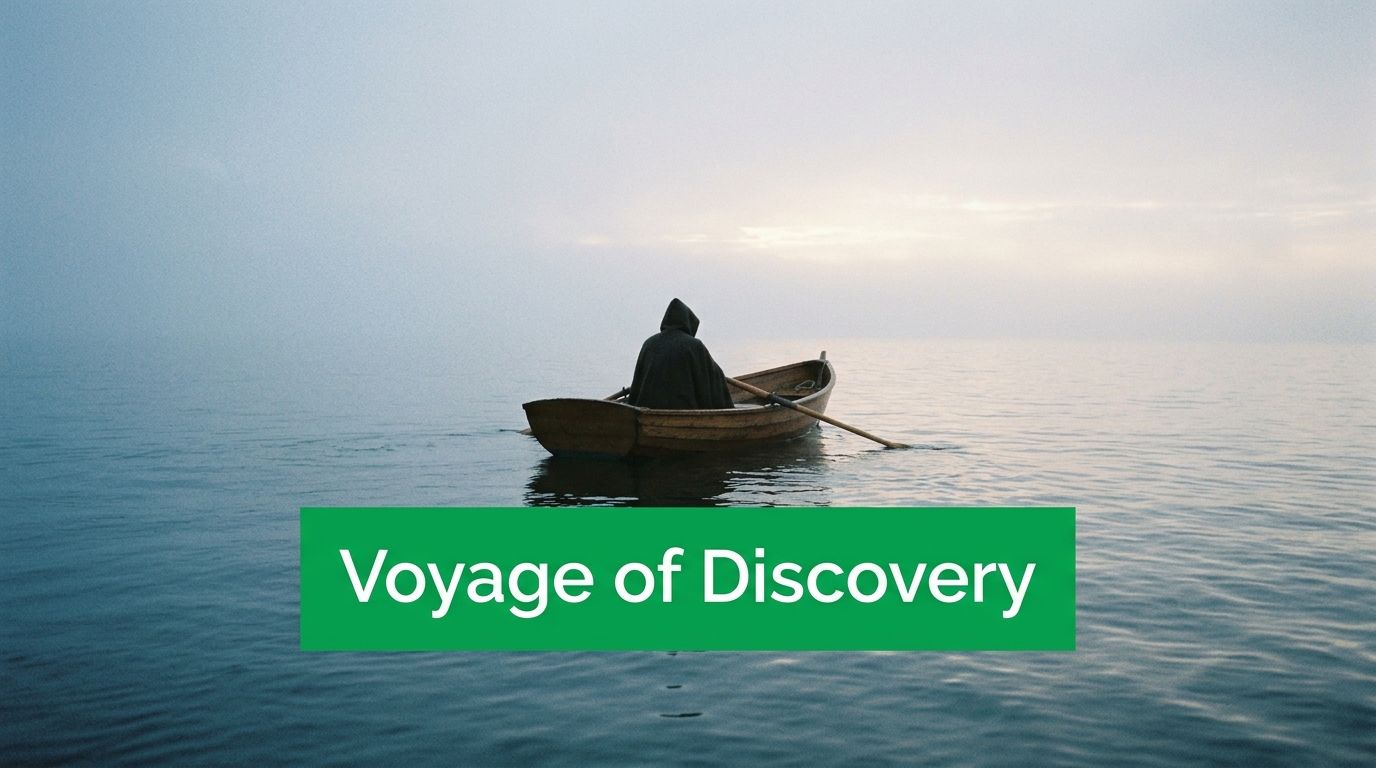
Maol Dúin is the hero of a voyage tale rather than a straightforward battle epic. He sets out in search of his father's killer and travels through a chain of strange islands, each with its own rule, wonder, or danger. The story is adventurous, but the drama often comes from restraint, curiosity, and transformation rather than direct combat.
That makes Maol Dúin a strong choice for anyone drawn to contemplative heroism. He is not weak. He is tested in a different register. The name itself carries an old, distinctive texture that feels firmly rooted in Gaelic tradition.
This image captures the atmosphere around him better than any battlefield scene could.
Why voyage tales help language learners
The voyage structure makes Maol Dúin especially useful for learners. Repeated landings, repeated encounters, repeated reactions. That pattern helps with vocabulary retention in a way many dense heroic texts don't.
You can use his story to build themed word groups:
- Farraige Sea.
- Oileán Island.
- Draíocht Magic.
A more specialized naming note belongs here too. The old Irish warrior name Murchadh comes from a form meaning “sea-warrior,” historically linked to dynasties such as the O'Briens and O'Flahertys, and it is often anglicized as Morgan in modern use (old Irish Gaelic boy names and their meanings). That maritime warrior idea sits neatly beside Maol Dúin's seafaring world.
For learners, this is the practical payoff. Voyage tales train you to notice repeated sentence structures, motion verbs, and nature vocabulary. If Cú Chulainn teaches intensity, Maol Dúin teaches patience.
7 Irish Male Warrior Names Compared
| Figure | Complexity 🔄 | Resource needs ⚡ | Expected outcomes ⭐📊 | Ideal use cases 💡 | Key advantages |
|---|---|---|---|---|---|
| Cú Chulainn (Cúchulainn) | High 🔄, dense Ulster Cycle, archaic language/pronunciation | High ⚡, many primary texts, scholarly glosses, adaptations | ⭐⭐⭐⭐⭐ 📊, deep cultural literacy; core heroic vocabulary and literary forms | Advanced learners of Old Irish, literary analysis, cultural context | Iconic name; extensive narratives; teaches core heroic values and etymology |
| Fionn mac Cumhaill | Medium 🔄, episodic Fenian Cycle, variable versions | Moderate ⚡, abundant tales, accessible retellings | ⭐⭐⭐⭐ 📊, leadership, wisdom, wide lexical range across genres | Intermediate learners practicing storytelling and episodic reading | Diverse stories; balances strategy and heroism; good for varied practice |
| Balor of Tory Island | Low–Medium 🔄, focused antagonist narratives | Low–Moderate ⚡, shorter texts, common in introductions | ⭐⭐⭐ 📊, clear myth vocabulary (fate, danger) and memorable imagery | Beginners studying myth basics, phonetics, and conflict vocabulary | Distinctive, memorable figure; concise narratives suitable for early study |
| Oisín (Ossian) | Medium–High 🔄, poetic themes, time/otherworld complexity | Moderate ⚡, widely translated tales (Tír na nÓg), poetic texts | ⭐⭐⭐⭐ 📊, poetic/lyrical vocabulary; themes of time and otherworldliness | Intermediate learners of poetry, literary translation, cultural motifs | Bridges warrior and poet traditions; rich poetic examples for language study |
| Lugh of the Tuatha Dé Danann | Medium 🔄, divine/abstract role, thematic complexity | Moderate ⚡, myth cycles + festival (Lughnasadh) connections | ⭐⭐⭐⭐ 📊, crafts, strategy, ritual vocabulary; cultural-calendar links | Learners interested in mythology, craft vocabulary, festival culture | Embodies skill/strategy; links to Lughnasadh and place-name vocabulary |
| Niall of the Nine Hostages | Medium 🔄, historical legend with fragmentary sources | Moderate–High ⚡, chronicles, genealogies, historical commentary | ⭐⭐⭐ 📊, governance, social hierarchy, historical context vocabulary | Students of early Irish history, kingship, and socio-political language | Bridges myth and history; dynasty relevance enhances cultural context |
| Maol Dúin (Mael Duin) | Low–Medium 🔄, voyage/episodic structure; repetitive patterns | Moderate ⚡, preserved immram texts; suitable retellings | ⭐⭐⭐⭐ 📊, travel, nature, and supernatural vocabulary; strong repetition for retention | Beginner–intermediate learners focusing on vocabulary acquisition via narrative | Voyage structure offers repetition; diverse vocabulary domains and moral lessons |
Start Your Own Language Adventure
These names aren't just relics from old manuscripts. They still work as living entry points into Irish sound, story, and identity. If you've spent time looking up irish warrior names male lists, you've probably noticed that many articles stop at quick translations. But the full significance becomes apparent when you slow down and ask what the parts of the name mean, what story made it memorable, and what words around it keep appearing in Gaeilge.
Cú Chulainn gives you loyalty, oath, and heroic duty. Fionn opens the world of the Fianna and wisdom-led leadership. Balor teaches you the language of conflict by showing the darkness heroes must overcome. Oisín brings poetry into the warrior tradition. Lugh joins skill to courage. Niall brings political memory and dynastic weight. Maol Dúin reminds you that Irish heroism also includes wonder, travel, and inner change.
Some names carry very direct warrior markers. One of the clearest is Cathaoir, meaning “battle man,” a name historically given to warriors noted for combat skill and bravery (Cathaoir as an Irish warrior name). Once you learn to spot pieces like cath, you stop seeing Irish names as mysterious blocks of letters and start seeing them as meaningful constructions.
That's where language learning becomes exciting. A name turns into a root. A root turns into a family of words. A family of words turns into confidence. You begin to hear patterns. You notice how patronymics work, how spelling signals pronunciation, and how myth preserves old vocabulary that still gives modern Irish its texture.
You also don't need to learn everything at once. Pick one name that grabs you. Say it aloud. Learn the core story. Write down three related Irish words. Listen for those words again in songs, lessons, story retellings, or conversation practice. That's a much better way to build real connection than memorizing isolated name meanings.
If this world pulls you in, follow that instinct. Gaeilge becomes easier when it's attached to things you already care about, and legendary names are excellent anchors. They're memorable, emotionally charged, and tied to stories people return to again and again. Modern tools can make that journey much more manageable. With the right support, you can practice pronunciation, build everyday vocabulary, and connect the old names you love to the living language people still learn and speak today.
If you want to move from reading legendary names to speaking Gaeilge, try Gaeilgeoir AI. It's built to help beginners and returning learners start using Irish from day one through guided conversation, pronunciation support, adaptive practice, and practical scenarios that make the language feel alive instead of distant.