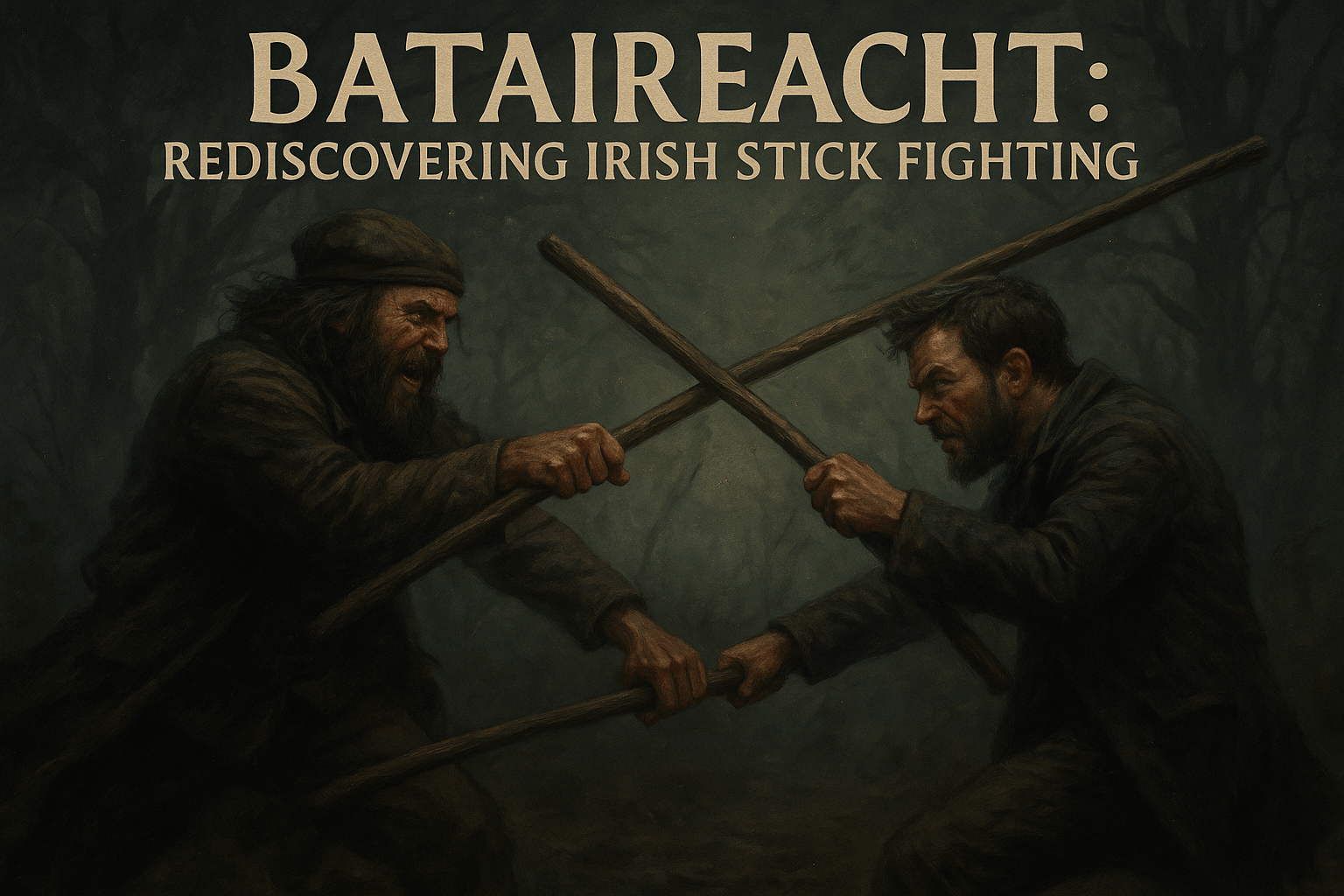
Bataireacht: Rediscovering Irish Stick Fighting

Bataireacht, also known as Irish stick fighting, is a traditional martial art rooted in Irish heritage and culture. Once practiced widely across the island, Bataireacht uses a distinctive weapon known as the shillelagh. Often misunderstood or romanticized, this combat discipline is much more than pub brawling or folklore; it is a sophisticated martial tradition with deep historical significance. In this article, we will explore the origins of Bataireacht, delve into its techniques, examine the iconic shillelagh, highlight notable practitioners, and celebrate its modern revival.


1. Origins of Bataireacht

Bataireacht has ancient roots in Irish culture, thought to predate even the medieval clans. This fighting style became particularly prominent during the 18th and 19th centuries, when Irish families—especially in rural areas—used sticks not only for self-defense but as symbols of pride, honor, and identity.

One of the most influential lineages associated with Irish stick fighting is the Doyle clan. Doyle Irish stick fighting was passed down through generations, helping codify and preserve techniques that might otherwise have been lost. Clan rivalries often erupted in stick duels during fairs or political gatherings, embedding Bataireacht into local culture and social interaction.

2. Techniques and Training in Bataireacht

Bataireacht emphasizes fluid, circular movements combined with rapid footwork. Practitioners are trained to maintain balance, react quickly, and use both offensive and defensive maneuvers. Key components of training include:

  • Stance and posture: A stable stance is crucial for defense and striking power.
  • Timing and distance: Judging your opponent’s reach and your optimal striking range.
  • Blocking and parrying: Using the stick to intercept attacks without absorbing their full force.

Training in Irish stick fighting traditionally occurred within families or tight-knit communities. Today, modern clubs offer structured programs that include sparring, drills, and historical education.

3. Weapons Used in Bataireacht

The shillelagh is the iconic weapon of Bataireacht. Traditionally crafted from blackthorn wood, it combines durability with a natural knotted handle for grip. Some sticks were weighted with lead in the knob to increase striking power, though these versions were often ceremonial.

Other weapons occasionally appeared in Irish stick fighting contexts, such as:

  • Cudgels: Heavier, shorter sticks used for blunt-force trauma.
  • Quarterstaffs: Longer poles sometimes adapted for group combat or duels.

The shillelagh remains the centerpiece of Bataireacht practice due to its cultural symbolism and effectiveness.

4. Famous Practitioners of Bataireacht

While many practitioners remained anonymous in oral traditions, a few names have become emblematic of Irish stick fighting skill. Members of the Doyle family, for example, are often cited in traditional accounts of expert fighters. In modern times, instructors like Glen Doyle have brought Bataireacht to global audiences through demonstrations and workshops.

These figures have ensured the art form’s survival and inspired new generations to study and teach Bataireacht as both a martial art and a cultural practice.

5. Modern Revival and Practice of Bataireacht

In recent years, Bataireacht has experienced a resurgence. Martial arts schools in Ireland, North America, and Europe have begun incorporating traditional Irish stick fighting into their curriculum. Organizations like the Doyle Irish Stick Fighting Association (DISFA) have formalized training methods and promoted international competitions.

Popular clubs now offer:

  • Weekly classes focused on fundamentals and sparring.
  • Historical seminars and cultural events.
  • Certifications for instructors and students.

Thanks to these efforts, Bataireacht is no longer a lost art but a growing martial tradition.

6. Cultural Significance of Bataireacht

Beyond physical technique, Bataireacht is a living piece of Ireland’s cultural mosaic. It appears in traditional storytelling, poetry, and even in depictions of Irish heroes and revolutionaries. The shillelagh is often portrayed as both a weapon and a symbol of Irish resistance and resilience.

Bataireacht also reinforces the Irish language and storytelling tradition, often linking fight styles with historical narratives and clan identities. Its continued practice helps preserve and celebrate these deeper cultural layers.

7. Comparison with Other Martial Arts Styles

While Bataireacht shares similarities with other martial arts that use sticks—such as Eskrima from the Philippines or Kendo from Japan—it stands apart in its philosophy and execution.

  • Eskrima emphasizes multiple weapon types and fluid disarming.
  • Kendo uses a formalized system with protective armor.
  • Bataireacht focuses on practical street-level defense with a uniquely Irish weapon.

These distinctions make Bataireacht a fascinating study for martial arts enthusiasts seeking a culturally rich and historically grounded discipline.


Conclusion

Bataireacht, or Irish stick fighting, is more than just a martial art—it’s a gateway into the heart of Irish heritage. With deep historical roots, a rich body of techniques, and a powerful cultural legacy, Bataireacht deserves its place alongside more widely known martial arts.

If you’re inspired to explore this dynamic tradition further, consider deepening your understanding of Irish culture and language through learning tools like Gaeilgeoir AI’s creative learning resources or our comprehensive Irish Pronunciation Guide.

And if you’re ready to start your own journey into Irish martial arts and language, sign up for a free trial of Gaeilgeoir AI and join a global community passionate about reviving Ireland’s vibrant traditions.

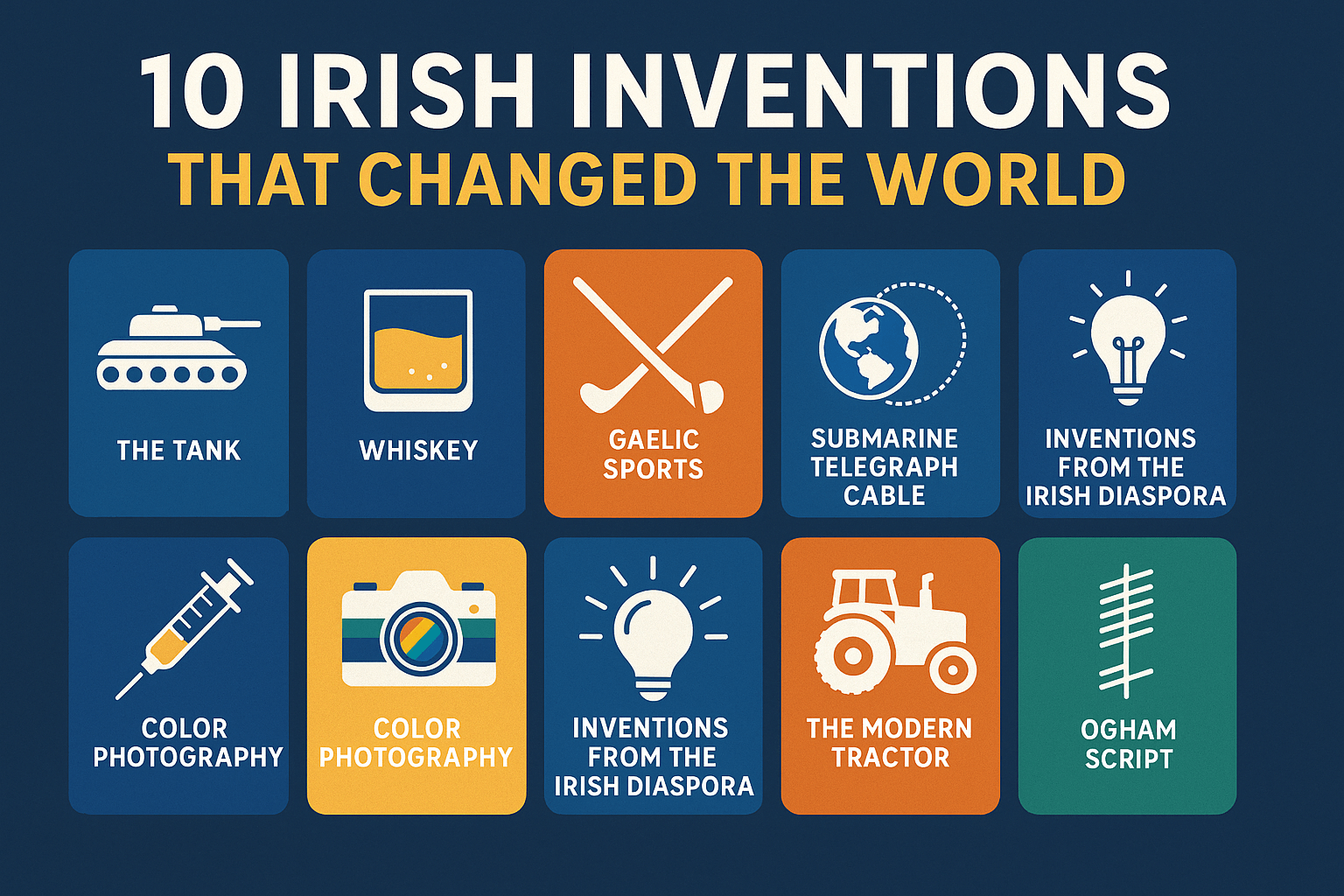
10 Surprising Irish Inventions That Changed the World

Ireland has a rich history of creativity and ingenuity, giving rise to numerous innovations that have had a lasting impact around the globe. In this article, we explore ten fascinating Irish inventions that may surprise you. From essential medical tools to ancient writing systems and global communication breakthroughs, these contributions highlight the brilliance and resilience of Irish inventors throughout history.


Ireland’s Longstanding Tradition of Innovation

Irish inventiveness didn’t emerge in a vacuum—it’s deeply rooted in the island’s cultural, historical, and linguistic heritage. From early tribal communities to modern urban hubs, Irish people have responded to adversity and opportunity alike with brilliant solutions. Even during periods of hardship, such as the Great Famine, Irish ingenuity found ways to thrive. Irish immigrants also carried their knowledge abroad, shaping industries and ideas around the world. Innovation has always been a part of Ireland’s legacy, often born from the need to adapt, survive, and thrive.


1. The Tank: Irish Influence on Armored Warfare

While the modern tank was a product of World War I, Irish engineer Walter Gordon Wilson played a pivotal role in developing the first practical designs for these armored vehicles. Working alongside William Tritton, Wilson contributed to the design of the British Mark I tank, which would become the blueprint for mechanized warfare. His background in mechanical engineering and creative thinking helped solve many early design challenges, ultimately leading to innovations that continue to shape military vehicles today.

2. Whiskey: Ireland’s Golden Spiri

Whiskey has long been associated with Irish tradition. In fact, Ireland is widely credited with pioneering the distillation process for what would become one of the world’s most beloved spirits. The word “whiskey” itself comes from the Irish phrase “uisce beatha,” meaning “water of life.” Distinct from its Scottish counterpart, Irish whiskey typically undergoes triple distillation, lending it a smoother flavor. Today, it is celebrated globally not just for its taste, but as a symbol of Irish heritage.

3. Gaelic Sports: Homegrown Games with Global Appeal

Ireland is the birthplace of some of the world’s most distinctive sports. Gaelic football, hurling, and camogie aren’t just games—they’re expressions of Irish identity. Overseen by the Gaelic Athletic Association (GAA), these sports have become central to Irish life and culture. They are taught in schools, celebrated in local festivals, and passionately followed by fans worldwide. Their influence can be felt across the Irish diaspora, where clubs have been established from New York to Sydney.

4. The Submarine Telegraph Cable: Connecting Continents

The laying of the first successful transatlantic telegraph cable in the 19th century was a groundbreaking achievement, and Ireland played a central role. Valentia Island in County Kerry was one of the key landing sites for this cable, enabling near-instant communication between Europe and North America. This leap in global connectivity transformed diplomacy, journalism, and commerce. Irish involvement in this project highlights how the country has historically contributed to some of the most significant technological milestones.

5. The Hypodermic Syringe: A Medical Breakthrough

An essential tool in modern medicine, the hypodermic syringe was developed in part by Irish doctor Francis Rynd. In 1844, Rynd used a hollow needle to inject morphine into a patient suffering from neuralgia, marking the first recorded subcutaneous injection. His innovative approach paved the way for countless medical advancements and made it possible to administer drugs with precision and minimal discomfort—a practice still crucial to healthcare today.

6. Color Photography: An Irish Eye for Innovation

Irish photographers and scientists contributed significantly to the development of early color photography. While the Autochrome Lumière process is most often associated with France, Irish innovators helped refine photographic techniques and promote the wider use of color in media and art. Their contributions supported the transition from black-and-white to vibrant, full-color imagery—an evolution that transformed journalism, visual storytelling, and even scientific documentation.

7. Inventions from the Irish Diaspora

During and after the Great Potato Famine, many Irish immigrants made significant contributions to innovation in their new homelands. These inventors brought a deep sense of resilience and resourcefulness. For example, John Philip Holland, originally from County Clare, designed one of the first submarines commissioned by the U.S. Navy. Irish-American innovators also helped develop improvements in fields ranging from engineering to agriculture, expanding the global influence of Irish ingenuity.

8. The Modern Tractor: Harry Ferguson’s Farming Revolution

Harry Ferguson, a County Down native, transformed global agriculture with his design of the modern tractor and three-point linkage system. His 1930s innovations allowed for better weight distribution and control, improving safety and efficiency on farms. Ferguson’s ideas became standard practice in farming worldwide and are still in use today, making him a key figure in the mechanization of agriculture.

9. The Irish Influence on Modern Slang

Believe it or not, Irish has left its mark on English-language slang. Phrases and expressions with Gaelic roots have worked their way into everyday speech. Words like “galore” (go leor) and “smithereens” reflect this playful and poetic influence. This linguistic creativity highlights how the Irish have long used language as both a cultural anchor and a tool for innovation.

10. Ogham Script: Ireland’s Ancient Alphabet

Ogham is the earliest known written form of the Irish language, used from the 4th to 9th centuries AD. Composed of a series of notches and strokes carved into stone, it’s a lasting symbol of Ireland’s linguistic heritage and inventive spirit. Many Ogham stones still stand across Ireland, serving as reminders of a time when writing and symbolism were intricately tied to land and lineage.


Why Irish Inventions Matter Today

These ten Irish innovations highlight how a small island with a big heart has helped shape the world. Whether through agriculture, medicine, sports, or language, Ireland’s contributions continue to influence our lives. They show us that great ideas can come from anywhere—and that cultural pride often fuels global progress.

If you’re curious about the culture that produced such creativity, learning the Irish language can offer a deeper connection. Gaeilgeoir AI provides tools like our Creative Ways to Learn Gaeilge and Irish Pronunciation Guide to help you start your journey.


Start Your Exploration of Irish Culture Today

Understanding Irish inventions is one way to appreciate the island’s lasting influence on the world. Another is to explore the Irish language itself. Sign up for a free trial of Gaeilgeoir AI and discover the tools that make learning Irish enjoyable and effective—from AI-powered lessons to cultural insights rooted in Ireland’s remarkable past.

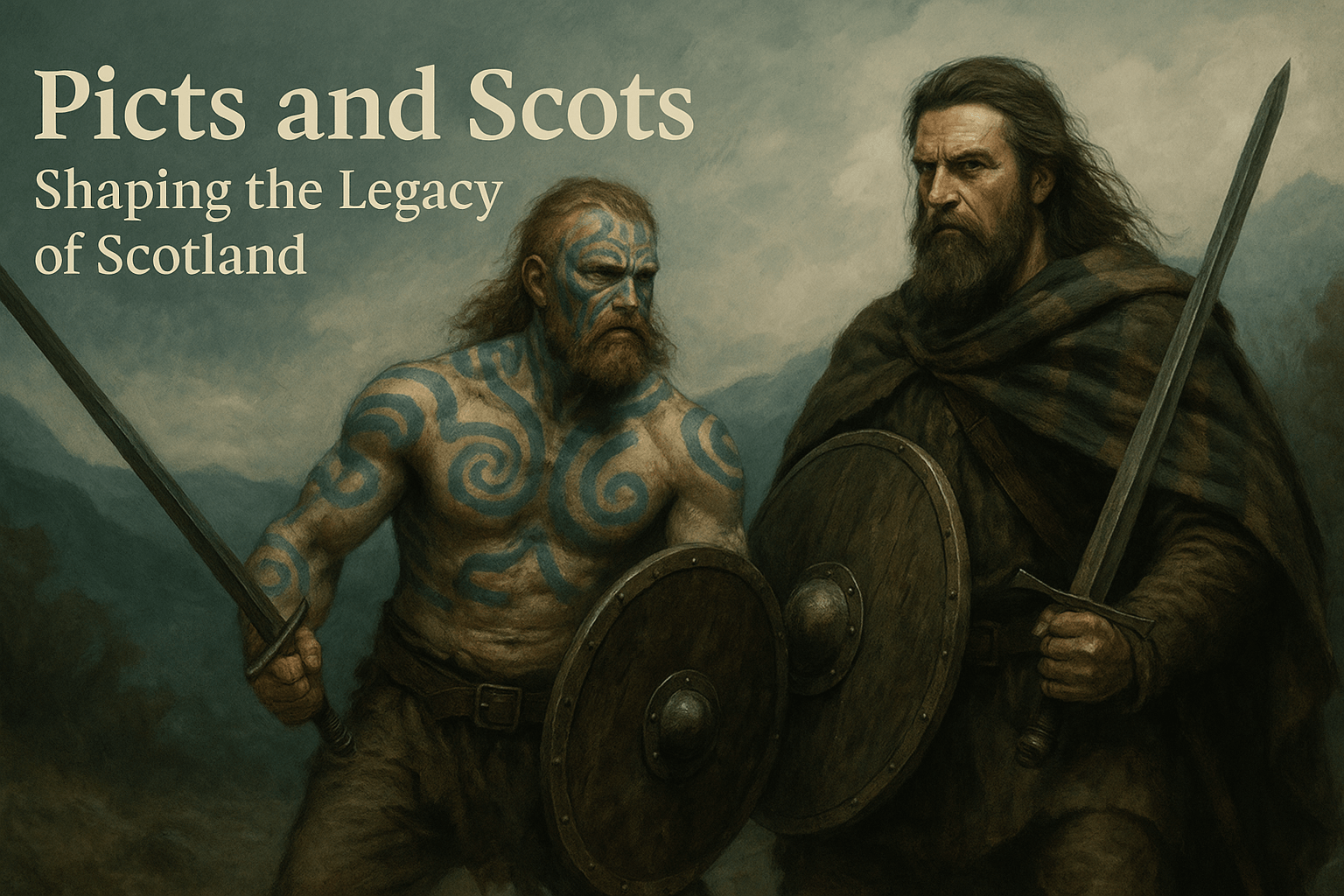
Picts and Scots: Shaping the Legacy of Scotland

The story of the Picts and Scots is one of warfare, cultural fusion, and the forging of a national identity. These two groups, often romanticized and misunderstood, were key players in shaping the early history of what we now know as Scotland. But what does the building of Hadrian’s Wall say about the Picts and Scots? How did their interactions with each other and neighboring tribes such as the Britons and Angles shape their destiny? This article takes you on a journey through the historical terrain of these tribes, their conflicts, and their enduring legacy.


The Picts: Origins and Culture

The Picts were a confederation of tribal peoples who lived in eastern and northern Scotland during the Late Iron Age and Early Medieval periods. Known for their distinctive stone carvings and painted bodies, the Picts were a warrior society with a complex clan structure.

Their origins remain a subject of scholarly debate. Some theories suggest they were indigenous to Scotland, while others propose a migration from continental Europe. What is clear is that they left behind a wealth of artistic and linguistic clues.

  • The Pictish symbol stones feature mysterious carvings that likely represent lineage, battles, or deities.
  • Their society appeared matrilineal, with succession possibly passing through the female line.
  • Though their language is lost, there is evidence of influence from both Brythonic and Gaelic languages over time.

The Gaelic tribes, particularly from the kingdom of Dál Riata, began to influence Pictish culture during the early Middle Ages. This would later be crucial in shaping a unified Scottish identity.


The Scots: Rise to Prominence

The Scots were originally a Gaelic-speaking people who migrated from northern Ireland to western Scotland, particularly to Argyll and surrounding areas. Their kingdom, Dál Riata, eventually expanded its influence across the region.

The Scots were not isolated. They interacted and clashed with neighboring tribes like the Britons (to the south) and the Angles (to the east), as well as the Picts.

  • The Scots shared linguistic roots with the Irish Gaels, strengthening the cultural ties between Ireland and Scotland.
  • Their military tactics and alliances helped them rise as a formidable force in northern Britain.

Over time, the Scots established themselves as a dominant power, particularly under the leadership of figures like Kenneth MacAlpin, who is traditionally credited with uniting the Picts and Scots into a single kingdom.


Wars Between the Picts and Scots: A Historical Overview

The relationship between the Picts and Scots was not always harmonious. Historical records indicate periods of both alliance and animosity. These groups often found themselves in strategic battles, either against each other or united against external threats like Viking invasions or Roman incursions.

Key conflicts and moments include:

  • Early raids and skirmishes: Scots from Dál Riata often conducted raids into Pictish territory.
  • Kenneth MacAlpin’s unification (c. 843 AD): Though partially mythologized, this event marks the merging of the two peoples under one crown.
  • Resistance against common enemies: At times, the Picts and Scots allied against external pressures, including the Romans and Norse invaders.

This blend of warfare and diplomacy laid the groundwork for a shared cultural and political future.


Hadrian’s Wall: A Defensive Fortification with Deeper Meaning

Built in the 2nd century AD by the Romans, Hadrian’s Wall stretched across northern Britain and symbolized the limits of Roman authority. While it primarily aimed to defend against northern tribes, it inadvertently highlighted the volatile relationships between groups like the Picts and Scots.

  • The wall served as a physical and cultural divide, separating Romanized Britons from the ‘barbarian’ north.
  • It emphasized the threat posed by the Picts, who were known for fierce resistance against Roman control.
  • The wall’s construction underscores the strategic importance of these tribes and their territories.

Hadrian’s Wall stands today not just as a Roman relic, but as a testament to the enduring resilience of northern tribes.


Enduring Legacy: How the Picts and Scots Shaped Scotland’s Identity

Though the Picts eventually disappeared from written history, their legacy survives in Scotland’s place names, artwork, and myths. The Scots, on the other hand, emerged with a stronger political identity, which eventually formed the foundation of the Kingdom of Scotland.

Key aspects of their legacy include:

  • Place names: Many Scottish locations retain Pictish or Gaelic origins.
  • Art and symbolism: Pictish stones and Celtic crosses are still celebrated symbols of Scottish heritage.
  • Language: Scottish Gaelic retains traces of these early influences, offering insights into ancient tribal cultures.

Modern Scottish identity is, in many ways, a fusion of Pictish and Scottish traditions, embodying the resilience, creativity, and unity of both peoples.


Conclusion

The tale of the Picts and Scots is more than a story of ancient conflict; it is a narrative of cultural convergence, survival, and legacy. From the mystery of Pictish carvings to the political rise of the Scots, their shared history shaped the foundation of Scotland. Hadrian’s Wall may have been built to divide, but the enduring memory of these peoples continues to unite Scotland’s past with its present.

To delve deeper into how history and language intertwine, explore our Guide to Learning Gaelic and uncover the linguistic heritage that binds Ireland and Scotland.

Ready to connect with Celtic history and language? Join the Gaeilgeoir AI community and take your first step toward mastering the Irish language while discovering the stories of those who came before us.

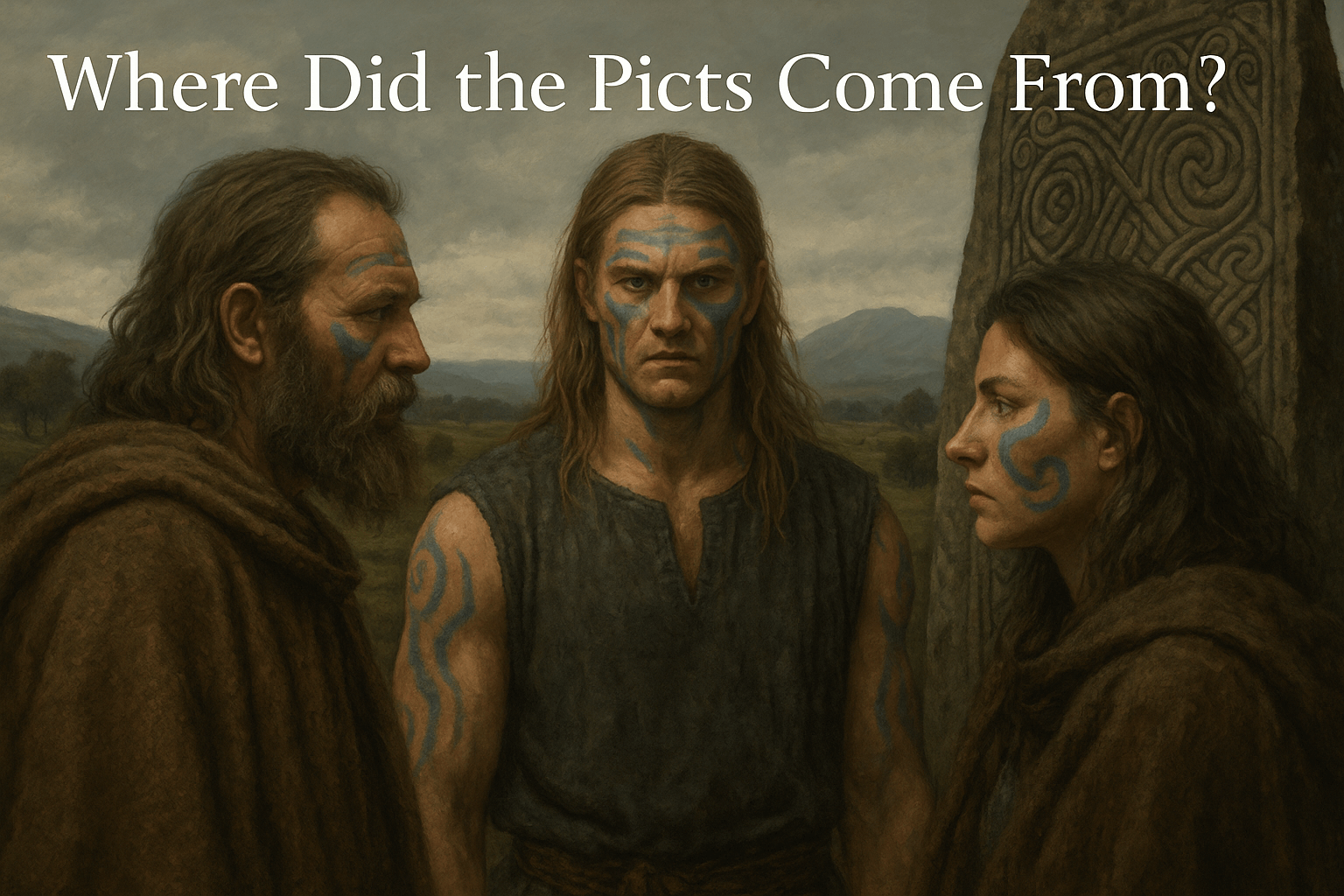
Where Did the Picts Come From? Unraveling Ancient Mysteries

The Picts have long fascinated historians, linguists, and archaeologists alike. Known for their enigmatic symbols carved into standing stones and their mysterious disappearance from the historical record, the question still remains: Where did the Picts come from? Understanding their origins offers deeper insight into early medieval Scotland, Celtic history, and the broader development of European culture.

This article explores the identity, culture, and lasting legacy of the Pictish people while evaluating current research and theories on their origin. By uncovering clues from archaeology, language studies, and ancient writings, we aim to shed light on this ancient civilization.


Who Were the Picts?

The Picts were a group of Celtic-speaking tribes who lived in what is now eastern and northern Scotland during the Late Iron Age and Early Medieval periods. The term “Picti,” meaning “painted people,” was likely given to them by the Romans, referencing their tradition of body art or tattoos.

Culture and Identity

Pictish society was tribal and likely consisted of multiple kingdoms. Their language, often assumed to be a form of P-Celtic or Brittonic, remains largely undeciphered, especially due to the lack of written records. What survives are their elaborate stone carvings—symbol stones, standing stones, and cross-slabs—that give us glimpses into their spirituality and societal structures.

Distinctiveness

Unlike neighboring tribes, the Picts were unique in their art style, matrilineal succession (passing royal lineage through women), and resistance to Roman occupation. These characteristics continue to spark questions about who the Picts were—and where the Picts came from originally.


Theories on the Origins of the Picts

Scholars have proposed several theories to answer the question: Where did the Picts come from?

1. Indigenous Origin Theory

One widely accepted theory is that the Picts were native to Scotland, descended from the Iron Age Celtic populations that predated Roman times. Archaeological continuity in settlement patterns and material culture supports this.

2. Continental Origin Theory

Some scholars propose that the Picts may have migrated from continental Europe, possibly from regions like Gaul (modern-day France) or even further afield. Proponents of this theory point to similarities in art and burial practices.

3. Linguistic Clues

Linguistic analysis has offered mixed evidence. Some believe the Pictish language was related to Brythonic (like Welsh), while others suggest a non-Indo-European substrate, possibly from pre-Celtic inhabitants.

4. Myth and Misunderstanding

Much of what we “know” about the Picts is filtered through Roman and medieval sources, many of which carry political or cultural biases. Separating myth from fact remains a core challenge.


Migration Patterns and Settlements

Understanding where the Picts came from also involves looking at where they lived and how they moved.

Key Settlement Areas

  • Fife and Angus: Central regions known for concentrations of Pictish stones.
  • Orkney and Shetland: Evidence suggests Pictish presence before Viking settlement.
  • Aberdeenshire: Home to some of the most intricate Pictish carvings.

Geographical Influence

Scotland’s rugged terrain—mountains, moorlands, and rivers—shaped how the Picts built their communities. Fortified hilltops and easily defensible areas were common, reflecting both their strategic thinking and need for protection.

Migration Hypotheses

While there’s little evidence for large-scale migration, shifts in settlement patterns suggest localized movement, possibly in response to conflict or climate changes. Any migration would have been within Scotland rather than transcontinental.


Interactions with Other Cultures

The Picts were not isolated. Their development was influenced by interactions with neighboring tribes and foreign powers.

Relations with the Romans

Despite attempts, the Romans never conquered northern Scotland. The Picts remained a constant threat to Roman Britain, often raiding southern territories. Their resistance influenced Roman military policy, including the construction of Hadrian’s Wall.

Cultural Exchanges

  • With the Scots (Gaels): The Gaelic-speaking Scots from Ireland eventually merged with Pictish society, forming the Kingdom of Alba.
  • With the Anglo-Saxons: Periods of conflict and trade created a dynamic border culture.
  • With the Norse: Viking invasions and settlements in the north led to eventual absorption of Pictish communities.

These exchanges likely influenced Pictish art, governance, and possibly language, further complicating the answer to where the Picts came from.


The Enduring Legacy of the Picts

Even though the Picts as a distinct group disappeared from the historical record by the 10th century, their legacy lives on.

Cultural Influence

Many of Scotland’s place names, artistic traditions, and even political boundaries trace back to the Picts. Their symbolic stones are national treasures.

Linguistic Legacy

While the Pictish language is extinct, its influence may remain in regional dialects. To explore more about ancient scripts and languages, check out our Ogham Script Alphabet Guide.

Historical Importance

The study of Pictish origins provides valuable insight into early medieval life in Scotland and the complexity of Celtic societies. Continued archaeological digs and linguistic research may one day fully uncover where the Picts came from.


Conclusion

So, where did the Picts come from? The answer remains elusive, with evidence supporting both indigenous and external origin theories. What’s clear, however, is that the Picts were a vibrant and influential people whose culture helped shape early Scotland.

By exploring their origins, we gain a richer understanding of ancient history, language evolution, and cultural resilience.

Want to learn more about early Irish and Celtic connections? Sign up for a free trial of Gaeilgeoir AI and discover how AI-powered tools can bring history, language, and tradition to life.

Irish National Anthem Lyrics Phonetically: A Learner’s Guide

Learning the Irish language can be a joyful and deeply cultural experience, and one of the most accessible ways to begin is through music. One of the most iconic songs in Ireland is the national anthem, “Amhrán na bhFiann” (The Soldier’s Song). For learners new to the Irish language, understanding and singing the anthem may feel intimidating due to unfamiliar pronunciations. That’s why learning the Irish national anthem lyrics phonetically is a helpful tool.

In this guide, we’ll break down the Irish national anthem using phonetic spelling to help beginners pronounce the words correctly. You’ll also learn about the history of the anthem, how phonetics support language learning, and how to use this approach to enhance your Irish fluency.


The Story Behind “Amhrán na bhFiann”

Originally written in English in 1907 by Peadar Kearney and Patrick Heeney, “The Soldier’s Song” was later translated into Irish by Liam Ó Rinn. It was adopted as the national anthem in 1926. Although the full song contains several verses, only the chorus is used as the official anthem.

The Irish version of the anthem is a symbol of pride and identity, and singing it in Irish is seen as a tribute to the nation’s heritage and language.


Why Learn the Anthem Phonetically?

If you’re new to Irish, reading “Amhrán na bhFiann” can feel daunting due to unfamiliar sounds and spelling rules. Learning the Irish national anthem lyrics phonetically provides several benefits:

  • Improved pronunciation of Irish words and syllables
  • Boosted confidence in public singing or group settings
  • Deeper connection with Irish culture
  • Natural exposure to grammar, vocabulary, and structure in Irish

It’s also a perfect example of how language and national identity intersect.


Full Lyrics of Amhrán na bhFiann (With Phonetics)

Verse 1 (Irish)

Seo dhíbh, a chairde, duan Ógláigh
Caithréimeach bríomhar ceolmhar
Ár dtinte cnámh go buacach táid
‘S an spéir go mín réaltógach
Is fonnmhar faobhrach sinn chun gleo
‘S go tiúnmhar glé roimh thíocht don ló
Fé chiúnas chaomh na hoíche ar seol
Seo libh, canaídh Amhrán na bhFiann.

Verse 1 (Phonetic)

Shuh yeev, uh khar-deh, doo-uhn oh-gley
Kah-hrey-vyakh bree-u-wur kyohl-wur
Awr din-cheh krahv guh boo-uh-kukh tawd
‘S un spare guh meen rayl-toe-gukh
Iss fun-war fwee-vrukh shin khun glyo
‘S guh chune-war glay riv hyukht dun loh
Fay hyoon-us kheev nuh hee-ha air shol
Shuh liv, kah-neeh Av-rawn nuh vee-un.

Chorus (Irish)

Cois bánta réidhe, ar ardaibh sléibhe
Ba bhuadhach ár sinsir romhainn
Ag lámhach go tréan fén sárbhrat séin
‘Tá thuas sa ghaoth go seolta
Ba dhúchas riamh dár gcine cháidh
Gan iompáil siar ó imirt áir
‘S ag siúl mar iad i gcoinne námhad
Seo libh, canaídh Amhrán na bhFiann.

Chorus (Phonetic)

Kush bawn-ta ray, air ar-div shlay-vuh
Bah voo-akh awr shin-shir row-in
Egg law-vukh guh trayn fayn sawr-vraht shayn
‘Taw hoo-as suh gwee guh shol-ta
Bah ghoo-khuss ree-uv dawr gin-eh khaw
Gahn im-paw-il sheer oh im-irt awr
‘S egg shool mar eed ee gun-ye naw-wad
Shuh liv, kah-neeh Av-rawn nuh vee-un.

Verse 2 (Irish)

A bhuíon nach fann d’fhuil Ghaeil is Gall
Sin breacadh lae na saoirse
Tá sceimhle ‘s scanradh i gcroíthe námhad
Roimh ranna laochra ár dtíre
Ár dtinte is tréith gan spréach anois
Sin luisne ghlé sa spéir anoir
‘S an bíobha i raon na bpiléar agaibh
Seo libh, canaídh Amhrán na bhFiann.

Verse 2 (Phonetic)

Uh vee-un nahk fawn dwil gayl iss gahl
Shin brak-uh lay nuh seer-shuh
Taw shkayv-leh ‘s skon-rah ee gree-huh naw-wad
Riv rah-nuh lay-khra awr jee-rah
Awr din-cheh iss tray gan spraykh un-ish
Shin lish-neh glay suh spare uh-nur
‘S un bee-vuh ee rayn nuh bill-air uh-giv
Shuh liv, kah-neeh Av-rawn nuh vee-un.


How Phonetic Learning Aids Irish Language Study

Phonetics help bridge the gap between written and spoken Irish, especially for learners whose native languages use different pronunciation rules. At Gaeilgeoir AI, our AI-powered tools use a similar phonetic approach for vocabulary and phrase learning.

Benefits of phonetic learning include:

  • Faster word recognition
  • More accurate pronunciation
  • Reduced fear of speaking aloud
  • Improved memory through auditory reinforcement

Using the Anthem in Your Irish Language Journey

Singing is a powerful learning method. Here’s how to incorporate the anthem into your study routine:

  1. Listen and repeat – Use audio recordings from trusted sources.
  2. Sing along with the phonetic lyrics until you’re comfortable.
  3. Practice line by line, breaking down complex sounds.
  4. Compare phonetic spelling with actual Irish text to recognize spelling patterns.
  5. Use Gaeilgeoir AI tools to reinforce pronunciation and vocabulary.

If you want more practice, try our Irish Pronunciation Guide to fine-tune your understanding.


Connecting Anthem Learning to Broader Cultural Understanding

By learning the anthem, you’re also gaining insight into Ireland’s struggle for independence, cultural pride, and the resilience of its people. It’s more than just a song; it’s a statement of identity and national unity.

Integrating music into your Irish studies can also make the process more enjoyable and meaningful. Try combining this with other traditional songs and phrases, using resources like Creative Ways to Learn Gaeilge to broaden your approach.


Conclusion

Learning the Irish national anthem lyrics phonetically is more than a fun exercise; it’s a cultural journey that deepens your connection to Ireland and its language. Whether you’re singing solo or with a group, this approach will help you feel more confident and connected.

Ready to sing in Irish with confidence? Sign up for a free trial of Gaeilgeoir AI and explore tools designed to support your language learning journey through songs, phrases, and cultural insights.

Irish Civil War 1922: 10 Surprising Facts Revealed

The Irish Civil War of 1922 was a pivotal moment in Ireland’s journey to independence, but many people are unaware of the deeper complexities that shaped it. Far beyond political lines, the conflict influenced national identity, language, culture, and modern Irish politics. In this guide, you’ll uncover 10 lesser-known but fascinating facts about the Irish Civil War 1922 that help paint a fuller picture of Ireland’s path to sovereignty.


Background of the Irish Civil War

The roots of the Irish Civil War lie in the controversial Anglo-Irish Treaty of 1921, which ended the War of Independence and established the Irish Free State. While it granted limited autonomy, it also required an oath of allegiance to the British Crown. This caused a split in the Irish Republican Army (IRA), dividing it into pro-Treaty and anti-Treaty factions. Pro-Treaty forces supported the Free State, while anti-Treaty forces rejected the compromise, believing it betrayed full Irish independence.


1. The Conflict Was Short but Intense

Although the Irish Civil War in 1922 lasted less than a year—beginning in June 1922 and ending in May 1923—it was brutally intense. Thousands were killed or wounded, and towns across Ireland suffered widespread destruction. The short timeline was marked by key battles like the fighting in Dublin, the siege of Limerick, and the guerrilla war that followed.

2. Language Played a Role in National Identity

Amid the conflict, the revival of the Irish language gained momentum as part of the broader cultural identity Ireland was trying to reclaim. Nationalists viewed Gaeilge (Irish) as a symbol of resistance to British rule. Today, platforms like Gaeilgeoir AI provide modern tools to help learners engage with this vital part of Irish heritage.

3. Women’s Contributions Were Pivotal Yet Underrecognized

Women played essential roles during the civil war, though their contributions were often overlooked. Organizations like Cumann na mBan supported the anti-Treaty side through roles such as:

  • Acting as couriers for sensitive communications
  • Providing medical care for wounded fighters
  • Gathering intelligence for military operations

These actions laid early groundwork for the women’s rights movement in Ireland.

4. The Use of Guerrilla Warfare Techniques

The Irish Civil War saw the return of guerrilla tactics, previously used during the War of Independence. Ambushes, sabotage, and hit-and-run attacks became common, especially by anti-Treaty forces after the fall of major cities. These tactics influenced future resistance movements globally and are still studied in military strategy today.

5. Cultural Impact Beyond Politics

The war’s effects extended beyond politics. The Irish Civil War 1922 left a profound mark on literature, art, and oral storytelling. Writers like W.B. Yeats and Seán O’Casey explored themes of division and identity. Seanfhocail (Irish proverbs) often referenced hardships of the time, keeping cultural wisdom alive.

6. Lasting Effects on Modern Irish Politics

The split between pro- and anti-Treaty factions eventually led to the formation of Fianna Fáil and Fine Gael, two dominant political parties in Ireland to this day. Understanding the civil war provides context for Ireland’s modern political landscape and helps explain enduring ideological divides.

7. Role of Language Dialects During the Conflict

Communication among civil war factions was sometimes complicated by regional Irish dialects. Gaelic speakers in Connacht might use different phrases or pronunciation than those in Munster, which influenced how orders and intelligence were interpreted. Historians today use oral histories in various dialects to reconstruct local perspectives.

8. Influence On Education And Language Policy Post-War

After the war, the Free State government made Irish language education a central policy. Gaelscoileanna (Irish-language schools) became more prominent as part of a cultural revival effort. Today, online platforms like Gaeilgeoir AI make learning Gaeilge accessible to a global audience.

9. Secret Codes And Ogham Script Usage

The ancient Ogham script—an early Irish alphabet—was occasionally used by anti-Treaty rebels to send coded messages. This symbolic act tied the revolutionary struggle to Ireland’s mythic past and emphasized the importance of linguistic heritage in the fight for national identity.

10. How Learning This History Enhances Understanding of Ireland Today

By learning about the Irish Civil War 1922, you gain more than historical insight. Understanding the cultural, linguistic, and political impact of the conflict allows for a richer connection to Ireland today. Mastering Irish vocabulary and pronunciation with resources like Gaeilgeoir AI brings language learning to life through historical context.


Conclusion

The Irish Civil War 1922 was more than a political struggle; it was a turning point that influenced language, identity, and cultural pride. From guerrilla tactics and political legacies to the rebirth of Gaeilge and the preservation of Irish heritage, its effects continue to shape modern Ireland.

If you’re inspired to connect more deeply with Ireland’s past, start by learning its language. Sign up for a free trial of Gaeilgeoir AI and join a global community dedicated to honoring and preserving Irish heritage.

Celtic Weapons: A Journey Through History and Myth

Celtic weapons carry with them the legacy of ancient warriors, mythological heroes, and a culture steeped in symbolism and strength. These tools of battle were more than mere instruments of war; they were extensions of the Celtic spirit, deeply rooted in both historical reality and mythic tradition. From swords and spears to druidic ceremonial items, the diversity and symbolism of Celtic weapons offer a fascinating window into Celtic life. In this guide, we explore the origins, uses, evolution, and cultural significance of these weapons across Ireland, Scotland, and the wider Celtic world.


1. Ancient Celtic Weapons

Swords

Swords were status symbols among the Celts. Forged with iron and often adorned with intricate patterns, Celtic swords were designed for slashing rather than stabbing. The craftsmanship often included decorative hilts shaped like animals or gods, a testament to the spiritual and social significance of the blade.

Spears and Javelins

Spears were among the most common weapons used by Celtic warriors. Lightweight and easy to produce, they could be used in close combat or thrown from a distance. Javelins, in particular, were ideal for quick attacks and were often carried in multiples during battle.

Shields

Celtic shields were crafted from wood, often reinforced with iron or bronze. They were not just protective gear but also a canvas for clan symbols and religious imagery. Circular or oval in shape, these shields allowed for quick, agile defense.


2. Irish Celtic Weapons

Irish Celtic warriors wielded weapons that reflected the unique spirit and mythology of Ireland. Some of the most famous Irish heroes, such as Cúchulainn, are depicted in tales with magical and deadly weapons like the Gáe Bulg, a barbed spear with supernatural properties.

Unique Features

  • Use of bog iron for weapon-making
  • Decorated pommels and carved designs
  • Integration of ogham script into the blade or hilt for magical protection

Mythological References

Irish mythology is rich with stories of enchanted swords and spears passed down by gods or discovered in sacred lakes. These tales reinforced the belief that weapons were sacred and sometimes had minds of their own.


3. Scottish Celtic Weapons

Scottish Celtic warriors contributed their own distinctive weapons to the Celtic tradition. The claymore, a large two-handed sword, and the dirk, a long dagger, became iconic symbols of Scottish martial identity.

Notable Features

  • Claymores often featured a cross-hilt
  • The dirk was commonly worn with Highland dress
  • Targe (small round shield) was often used with the dirk in battle

These weapons were both functional and ceremonial, often passed down through generations as heirlooms of warrior families.


4. Druidic Weapons in Celtic Culture

Though druids were spiritual leaders rather than warriors, they are often associated with ceremonial weapons. These tools symbolized authority and connection to the divine, not necessarily combat.

Druidic Armaments

  • Ritual staffs adorned with carvings and sacred symbols
  • Ceremonial daggers used in rites and oaths
  • Stone tools associated with nature magic and healing

These items helped cement the druids’ role as keepers of wisdom and guides in both warfare and peace.


The Evolution and Preservation of Celtic Weaponry

Celtic weaponry evolved with the times, absorbing influences from Roman and Viking invaders. Over centuries, designs changed to incorporate new materials and tactics, yet retained distinct Celtic aesthetics.

Evolution Over Time

  • Bronze Age tools transformed into iron weapons
  • Transition from tribal to feudal warfare tactics
  • Influence of Christian symbolism in later weapons

Preservation Efforts

Today, many Celtic weapons are preserved in museums across Ireland and the UK. Archaeological efforts continue to unearth beautifully preserved pieces in bogs, burial sites, and ancient forts.

For those interested in preserving the language and stories tied to these ancient tools, learning the Irish language is a great place to start. Our Guide to Learning Gaelic can connect you to the world that forged these weapons.


Conclusion

The study of Celtic weapons is more than a journey through steel and wood—it is a way to understand the heart of Celtic culture. From the fierce Irish warriors to the wise druids and the mighty Scottish clans, each blade and spear carries a tale.

By exploring the historical, mythological, and spiritual dimensions of Celtic weaponry, we gain not only knowledge but a deeper appreciation for the legacy of the Celts. If you’re inspired to learn more about Ireland’s rich cultural heritage, including its language and storytelling traditions, consider signing up for a free trial of Gaeilgeoir AI. Our tools can guide you through the language that shaped these myths and preserved these powerful traditions.

External Resource: For more in-depth information on Celtic artifacts and weapons, visit The National Museum of Ireland.

Celtic God of Winter: Myth, Meaning & Modern Relevance

The Celtic God of Winter is a mysterious and powerful figure woven deeply into the mythological and spiritual fabric of ancient Ireland. Representing transformation, endings, and the natural cycle of death and rebirth, this deity was venerated through seasonal rituals and rich folklore. For centuries, the cold season was not just a time of hardship, but one of deep spiritual connection.

In this article, we’ll explore the origins of the Celtic God of Winter, the rituals and offerings made in his honor, his lasting influence on Irish culture and language, and his modern-day relevance in spiritual practices.


Origins of the Celtic God of Winter

In Celtic mythology, deities represented natural forces, and winter was no exception. While the pantheon varied across Celtic regions, one figure often associated with the winter season is Cailleach, the Hag of Winter. Although more commonly referred to as a goddess, Cailleach embodies many attributes traditionally ascribed to a winter deity: she controls the weather, brings snow, and governs the darker half of the year.

Key Traits of the Winter Deity:

  • Embodiment of cold, darkness, and wisdom
  • Governs death and renewal in the natural cycle
  • Sometimes depicted as an old, veiled woman with stormy powers

This deity’s origins date back to pre-Christian Ireland, when seasonal festivals were deeply tied to agricultural cycles and survival.


Celebrating the Celtic God of Winter

The worship of the Celtic God of Winter was primarily centered around seasonal festivals like Samhain (pronounced sow-in), which marked the transition from the harvest season into winter. These gatherings honored the thinning veil between the worlds and paid respect to the deities governing the colder months.

Common Rituals and Practices:

  1. Bonfires to honor deities and ward off harmful spirits
  2. Offerings of food, drink, and herbs left at sacred sites or burial mounds
  3. Storytelling and oral tradition to pass down myths of winter gods
  4. Animal symbolism, such as the stag or raven, often used in ceremonial dress or folklore

These festivals were not only spiritual but also communal, reinforcing bonds and resilience during the most challenging time of year.


Connection to Irish Culture and Language

The influence of the Celtic God of Winter runs deep in Irish mythology. Tales of Cailleach appear in ancient manuscripts and oral traditions passed down for generations. These stories often involve themes of seasonal change, wisdom, and the raw power of nature.

Linguistic Connections:

  • The word “cailleach” in modern Irish still means “hag” or “old woman,” a nod to the mythological figure.
  • Traditional seanfhocail (Irish proverbs) often reference winter and its metaphoric meanings.

By learning the Irish language, one gains deeper access to the poetic and symbolic world that shaped these myths. If you’re curious about this connection, check out our Irish Language Flashcards to start your journey into this ancient tongue.


Comparing Winter Deities Across Different Cultures

Winter gods and goddesses are not unique to Ireland. Many cultures across the world have their own representations of winter’s power, providing fascinating comparisons to the Celtic God of Winter.

Notable Comparisons:

  • Norse Mythology: The jotunn (giants) like Skadi, associated with winter and hunting.
  • Greek Mythology: Boreas, god of the north wind and bringer of cold air.
  • Slavic Folklore: Morozko or Father Frost, a winter spirit with dual roles of protector and punisher.
  • Native American Traditions: Various tribes feature winter deities or spirits that represent rest, darkness, and storytelling.

These similarities highlight the universal respect and awe that human cultures have shown toward nature’s harshest season.


Modern Interpretations and Adaptations

In recent decades, the Celtic God of Winter has experienced a revival. Pagan and druidic communities have reintegrated traditional winter deities into modern spiritual practices. These interpretations often combine historical elements with personal spiritual exploration.

Contemporary Practices Include:

  • Winter Solstice gatherings that honor ancestral deities
  • Personal altars decorated with winter symbols (snow, pine, antlers)
  • Meditations and guided rituals inspired by ancient seasonal rites

Thanks to platforms like Gaeilgeoir AI, learners can dive into ancient traditions while gaining linguistic and cultural fluency. This helps deepen both spiritual and educational understanding.


Cultural Significance and Lasting Legacy

The legacy of the Celtic God of Winter persists not only in spiritual circles but also in literature, music, and art. He (or she, as with Cailleach) remains a symbol of nature’s raw cycles and humanity’s relationship with the changing seasons.

Why This Legacy Matters:

  • Encourages ecological awareness through seasonal living
  • Promotes cultural preservation by keeping ancient stories alive
  • Inspires language learning by connecting myth with vocabulary and phraseology

If you’re interested in further exploring the Irish language alongside cultural stories, we recommend our Creative Ways to Learn Gaeilge guide.


Conclusion

The Celtic God of Winter offers a powerful lens through which we can understand our ancestors’ view of the natural world. His mythological presence reminds us of the importance of respecting the cycles of life, embracing change, and staying grounded in cultural identity.

Whether you’re lighting a candle for the winter solstice or learning a new Irish phrase, connecting with this ancient figure can bring a sense of peace and purpose in the colder months.

Ready to bring ancient knowledge into your modern life? Sign up for a free trial of Gaeilgeoir AI and explore how Irish language and mythology can enrich your journey.

Irish Bagpipes: A Melodic Icon of Gaelic Culture

Irish bagpipes, or uilleann pipes, are a captivating part of Ireland’s rich musical tapestry. Unlike the Scottish Great Highland bagpipes, the Irish bagpipes are known for their sweeter, more melodic tone, often featured in folk tunes and traditional performances. As people often ask, “Are bagpipes Irish or Scottish?”—the answer is both. Each culture has its distinct style, history, and sound. In Ireland, the pipes have played a vital role in cultural expression, story preservation, and even language learning.


History and Origin of Irish Bagpipes

The history of Irish music instruments dates back thousands of years, and the uilleann pipes emerged around the early 18th century. Derived from older reed instruments, these bagpipes became central to traditional Irish music. Unlike their Scottish counterparts, Irish bagpipes are played sitting down and use a bellows to fill the bag rather than mouth-blown air.

The irish language history is interwoven with the music. Many early songs and melodies were composed in Irish, using bagpipes to accompany lyrics that spoke of love, rebellion, and mythology. The uilleann pipes became both an artistic and political instrument, used to preserve Irish identity under colonial rule.


Distinguishing Irish Bagpipes from Scottish Bagpipes

Despite their similarities, there are key differences between Irish and Scottish bagpipes:

Physical and Acoustic Differences:

  • Irish Bagpipes (Uilleann Pipes): Bellows-blown, quiet, sweet-toned, chromatic (more melodic range).
  • Scottish Bagpipes (Great Highland): Mouth-blown, loud, bold, limited to one key.

Cultural Influences:

Just as the differences between Irish and Scottish Gaelic languages reflect unique linguistic heritages, so too do the instruments. In Ireland, pipes are often played solo or in small ensembles with storytelling in mind, while Scottish bagpipes are more martial, used in parades and regiments.

Understanding these distinctions enhances appreciation for both traditions and helps clarify the often-asked question: Are bagpipes Irish or Scottish? The answer lies in the heart of Gaelic culture—both traditions have grown in parallel with their respective languages and stories.


The Role of Irish Bagpipes in Traditional Music and Songs

In traditional Irish music, the uilleann pipes add a haunting, lyrical depth. They’re central in many iconic Irish bagpipes songs like:

  • “The Foggy Dew”
  • “She Moved Through the Fair”
  • “The Minstrel Boy”

These songs often intertwine with the Irish language, featuring poetic lyrics passed down orally. For those interested in irish language lessons for beginners, learning the lyrics of these songs can serve as an engaging entry point.

Explore our online Irish language courses to begin pairing vocabulary with melody and deepen your cultural immersion.


Learning to Play the Irish Bagpipes: Resources and Tips

Interested in learning to play? It can be a rewarding and enriching path.

Beginner Tips:

  1. Start with a practice set (cheaper and quieter).
  2. Join a local piping society or online forum.
  3. Use apps that simulate finger placement and scale.

Learning Resources:

  • YouTube tutorials by pipers like Davy Spillane.
  • Free sheet music archives.
  • Personalized guidance through finding an Irish tutor for enhanced learning.

Also, learning Irish independently alongside piping can enhance appreciation of lyrics and historical context.


Cultural Significance of Bagpipes within Irish Heritage

The Irish bagpipes are more than just instruments—they are symbols of identity and resistance. Their role during cultural events and Gaeltacht festivals connects music with history, language, and pride.

These traditions also highlight the differences between Irish, Gaelic, and Celtic languages. While related, each language represents a unique branch of the Celtic tree—just as Irish bagpipes reflect a unique voice in the broader Celtic soundscape.

Proverbs, or seanfhocail, often appear in lyrics and stories passed down through piping traditions. These sayings encapsulate Irish philosophy and are beautifully complemented by the melancholy tones of the uilleann pipes.


Incorporating Language Learning into Appreciating Irish Bagpipe Music

To truly enjoy Irish bagpipes, consider learning to interpret the songs they accompany.

Language Tips for Music Lovers:

  • Use an Irish pronunciation guide to sing along accurately.
  • Study common adjectives in Irish to describe emotions in songs.
  • Listen to podcasts that combine music and language learning, like “Bitesize Irish” or “Motherfoclóir.”

Internal resources like the Irish language flashcards make it easy to match vocabulary with melodies. When you master the adjectives in Irish, you start to hear meaning woven into every note.


Conclusion

The Irish bagpipes are a true cultural icon—melodic, emotional, and rich in history. They tell stories, preserve heritage, and invite us into the heart of Irish identity.

Whether you’re learning to play, studying lyrics, or simply enjoying a traditional tune, this journey is a bridge between language and culture.

Start your own journey today by joining our community of learners. Sign up for a free trial at Gaeilgeoir AI and explore the full rhythm and resonance of the Irish language—and its music.

The Irish Citizen Army: Heroes of the Revolution

The Irish Citizen Army holds a unique and powerful place in Irish history. Formed during a time of social unrest and national awakening, this remarkable organization was one of the few revolutionary movements grounded in working-class solidarity and socialist ideals. This guide will explore the origins, beliefs, and contributions of the Irish Citizen Army, as well as its enduring impact on Ireland’s path to independence.

Whether you’re passionate about Irish history or seeking inspiration from Ireland’s revolutionary past, this is your ultimate overview of the Irish Citizen Army.


Origins and Formation of the Irish Citizen Army

A Response to Injustice

In 1913, during the height of the Dublin Lockout, Irish workers stood up against low wages and poor working conditions. In response to brutal treatment by police, the Irish Citizen Army was formed as a protective force for striking workers. Its primary goal was to defend laborers and uphold the right to organize.

James Connolly: Visionary Leader

At the heart of the organization was James Connolly, a Marxist theorist and trade unionist. He envisioned the army as more than a defense unit; it would become a revolutionary force prepared to fight for both workers’ rights and Irish independence. Connolly’s vision led to the Irish Citizen Army’s transformation into one of the most principled militias in Irish history.

The Labor Movement’s Militia

Unlike other nationalist groups of the time, the Irish Citizen Army was tightly connected to the labor movement. It accepted men and women equally—a radical decision for the time—and focused on preparing ordinary citizens for both self-defense and national liberation.


Ideals, Beliefs, and Principles of the Irish Citizen Army

Socialist Foundations

The Irish Citizen Army was founded on firm socialist principles. Its leaders believed in a republic not just free from British rule, but free from class oppression. Their vision was a society where all people—regardless of wealth or background—would be equal.

Equality and Unity

One of the most groundbreaking aspects of the Irish Citizen Army was its commitment to equality. Women like Constance Markievicz played active roles in the organization, challenging societal norms and laying groundwork for gender equality in Irish politics.

Representing the Working Class

This army wasn’t formed by elites or political parties—it was built by and for the working class. Its identity was inseparable from the struggles of everyday people, making it a truly democratic force within the larger nationalist movement.


The Irish Citizen Army’s Participation in Key Historical Events

The Dublin Lockout (1913)

The Dublin Lockout, one of the largest industrial disputes in Irish history, was the catalyst for the army’s formation. The Irish Citizen Army patrolled picket lines, shielded strikers from police, and gave working-class Dubliners a new sense of pride and power.

The Easter Rising (1916)

In 1916, the Irish Citizen Army joined forces with the Irish Volunteers to stage the Easter Rising—a pivotal rebellion against British rule. Though outnumbered and outgunned, the Citizen Army fought bravely at key locations like the General Post Office in Dublin. Their involvement gave the rebellion a unique character, rooted in both nationalism and socialism.

Battle of Mount Street Bridge

While often overshadowed by other events of the Rising, the Battle of Mount Street Bridge demonstrated the Irish Citizen Army’s strategic brilliance. A handful of fighters managed to hold back a much larger British force, showcasing the group’s courage and tactical skill.


Legacy and Impact of the Irish Citizen Army on Ireland’s Independence Movement

A Revolutionary Blueprint

The revolutionary tactics developed and used by the Irish Citizen Army influenced many other freedom movements, both in Ireland and abroad. Their integration of armed resistance with social justice activism was groundbreaking.

Lasting Influence

Though the Irish Citizen Army formally disbanded after the Rising, its ideals lived on. Its members inspired generations of political activists, union leaders, and social reformers in Ireland’s later struggles for equality.

A Republic for All

Their message was clear: Ireland’s freedom should benefit all its people, not just the privileged few. This message remains relevant as Ireland continues to address inequality and uphold civil rights.


Commemoration and Remembering Our Heroes

Honoring Their Contributions

The story of the Irish Citizen Army is remembered through public memorials, books, and educational programs. Statues of Connolly, plaques at former battlegrounds, and museum exhibits help keep their legacy alive.

Educational Initiatives

To understand their values, more schools are incorporating the history of the Irish Citizen Army into history curricula. Students not only learn about events—they gain insight into why ideals like equality and justice matter today.


The Continuing Relevance of the Irish Citizen Army’s Values in Today’s Society

Social Justice Movements

Modern social justice movements—from housing rights to workers’ unions—echo the Irish Citizen Army’s commitment to fairness and dignity. Their legacy inspires grassroots activists advocating for change today.

Political Activism

In an era where inequality still exists, the values upheld by the Irish Citizen Army remind us of the importance of collective action. Their story urges citizens to stay engaged, challenge injustice, and fight for inclusive democracy.


Continue the Journey: Learn, Reflect, and Act

Understanding the story of the Irish Citizen Army not only enriches your grasp of Irish history but also connects you to a powerful tradition of resistance and solidarity. If you’re looking to explore more about Irish culture, history, and language, try our Learn the Irish Language resource.

Or, better yet, join a growing community of learners by signing up for a free trial of Gaeilgeoir AI. Discover how AI can enhance your knowledge of Irish—and help you connect more deeply with your heritage.

25% off any subscription

Enjoy 25% off your subscription. Just use promo code START25 at checkout!

25% off with Promo code: START25