How to Say Happy Birthday in Irish: Pronunciation Guide

You've got a birthday card open, a text half written, or maybe a social post ready to go, and you want to add something more personal than plain English. You know there's an Irish phrase for “happy birthday,” but you're hesitating before you send it. Is it spelled right? Will you pronounce it oddly? Are you about to sound like you copied the first thing you found online?

That worry is normal. A short phrase can feel high stakes when it matters to the person receiving it, especially if you're reconnecting with Irish heritage or dusting off school Irish after years away.

A birthday message is a lovely place to start because it's warm, practical, and easy to use straight away. If you're also putting together a present and want ideas that feel thoughtful rather than generic, Govava's gift suggestions for teens are a handy companion resource for the occasion.

A Starbucks birthday card featuring an iced drink, with elegant white text on a green background.

This guide won't just hand you the words and leave you there. It'll help you say happy birthday in irish with more confidence, understand why the phrase works, and avoid the beginner mistakes that make people freeze up.

Table of Contents

A Birthday Wish to Remember

A birthday greeting in Irish often starts as a small idea. You want to add one line to a card for your dad, text your friend something a bit more meaningful, or post a message that feels connected to family history instead of copied from everyone else.

Then the doubt creeps in. Many beginners can recognise Irish when they see it, but speaking it aloud feels much harder. That's why birthday phrases are such a good entry point. They're short, affectionate, and useful in real life.

A simple greeting can do two jobs at once. It marks the occasion, and it gives you a natural way back into the language.

Irish also rewards understanding. When you learn how one birthday phrase is built, you're not just memorising a line for one day of the year. You're picking up word meanings, sentence structure, and a feel for how Irish addresses one person differently from a group.

That's where people usually gain confidence. Not from trying to sound perfect, but from knowing what they're saying and why they're saying it that way.

The Main Irish Birthday Greeting

The standard way to say happy birthday in irish is Lá breithe sona duit when you're speaking to one person. If you're addressing more than one person, the form is Lá breithe sona daoibh. That standard usage is explained in Bitesize Irish's breakdown of the birthday phrase.

Singular and plural matter

This is the first place beginners often get caught. English uses “happy birthday to you” whether you're talking to one person or several people. Irish doesn't.

Use these like this:

  • For one person. Lá breithe sona duit
  • For more than one person. Lá breithe sona daoibh

If you're writing to one friend, stay with duit. If you're speaking to siblings together, a whole family, or a group at a party, use daoibh.

Breaking down the phrase

The phrase becomes much easier when you stop seeing it as one long chunk.

Irish Word Meaning
day
breithe birth
sona happy
duit / daoibh to you

So the greeting is a direct grammatical construction, not a borrowed English-style phrase. That's useful because you can see the pieces working together.

A lot of learners remember it better when they think of it in parts:

  1. . Start with the noun “day.”
  2. breithe. Add “birth.”
  3. sona. Add “happy.”
  4. duit or daoibh. Finish with “to you,” depending on whether you mean one person or more than one.

Practical rule: If your message is for one birthday person, choose duit. If you're greeting several people together, choose daoibh.

That one distinction gives you more than a birthday greeting. It gives you your first glimpse of how Irish grammar works in everyday speech.

How to Pronounce It Confidently

You are at a birthday table, the candles are lit, and someone turns to you for the Irish version. That is the moment pronunciation matters. Not because you need to sound perfect, but because a calm, clear version will carry the meaning and your goodwill with it.

For the singular form, many beginner guides give a rough English-style prompt such as “Law breh-ha sun-ah ditch.” Use that as a starting point only. It helps you get the rhythm into your mouth, but it is not a letter-for-letter map, and Irish sounds do not always line up neatly with English spelling habits.
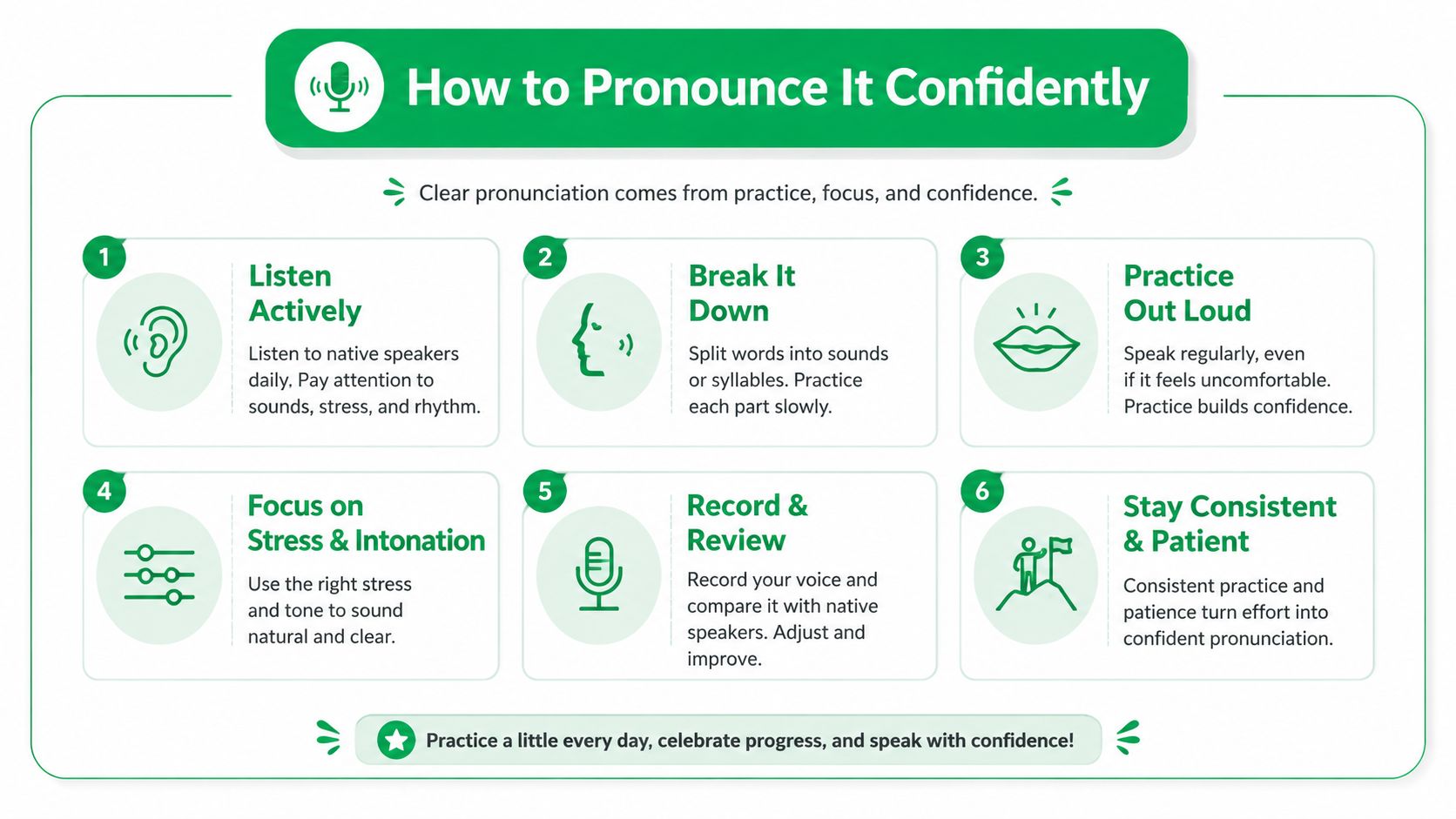
An infographic titled How to Pronounce It Confidently offering six steps to improve pronunciation skills.

Start with the rhythm, then refine the sounds

A good first goal is rhythm. Irish often becomes easier once you stop treating the whole sentence like one long word.

Say it in three parts:

  • Lá breithe
  • sona
  • duit

That works like learning a tune by phrase instead of trying to sing the whole song at once. Once the rhythm feels steady, the pronunciation gets much less intimidating.

Here is a simple way to practise:

  1. Say by itself and keep it open and clear.
  2. Add breithe slowly. This is the part many beginners rush.
  3. Say sona duit as one unit.
  4. Join the two chunks and keep an even pace.

If you want more help matching Irish spelling to sound, this Irish pronunciation guide for beginners gives a wider explanation of the patterns behind words like these.

The spots that usually trip beginners up

Breithe is often the hardest part. English speakers tend to over-pronounce every letter they see, but Irish does not reward that approach. It is better to aim for a smooth approximation than to force each consonant.

Duit can also feel surprising. On the page, beginners often expect a hard, obvious ending. In speech, the sound is softer and quicker than many learners expect.

That is why confidence grows faster when you practise the phrase as spoken music, not as spelling recitation.

Why you may hear different versions

Irish has real regional variation, so you may hear small differences from one speaker to another. The Irish Language Forum discusses this in a thread on Irish birthday pronunciation, including forms learners notice such as sounds closer to “dhuit” in some speech and “shona dhuit” in others.

That can unsettle beginners at first. It should reassure you instead.

The standard written phrase still gives you a strong, polite greeting. If your version is careful and clear, people will understand you. A slower, steady Lá breithe sona duit sounds far better than a fast version said with panic.

Aim for warmth, clarity, and a little practice. That is what makes it sound confident.

More Irish Birthday Wishes and Phrases

Once you've got the main greeting, you can make your message feel warmer with a few extra Irish expressions. You don't need a long, poetic paragraph. Even adding one short phrase can change the tone from “I found a translation” to “I meant this.”
A grid displaying six icons representing Irish themes: a shamrock, harp, cupcake, goblet, cauldron, and beer.

Phrases that add warmth

Here are a few expressions people often like alongside a birthday greeting:

  • Go mbeire muid beo ar an am seo arís
    A traditional sentiment meaning “May we be alive at this time next year.”

  • Comhghairdeas
    “Congratulations.” Useful when the birthday message also marks a milestone.

  • Sláinte
    “Health” or “cheers.” Good for a toast, a dinner, or a celebratory card.

If you want to build a wider bank of everyday expressions around birthdays, cards, and social messages, this collection of Irish greetings and phrases gives you more options without overwhelming you.

How people actually use them

A natural birthday card doesn't need to sound formal. It can be simple and affectionate.

For example:

Lá breithe sona duit. Sláinte agus sonas duit.

Or, for a toast at a table:

Lá breithe sona duit, agus go mbeire muid beo ar an am seo arís.

That second line has a lovely old-fashioned warmth to it. You don't have to use it every time, but it's memorable when you want the message to feel a little more rooted in tradition.

The key is restraint. One main birthday greeting plus one extra phrase usually sounds better than stuffing a message with expressions you don't fully understand.

Writing Your Birthday Message in Irish

You have the greeting in your head. Now you need to put it on a card, in a text, or under a photo without second-guessing every word. That part often feels harder than learning the phrase itself, but it gets much simpler once you make one choice first.

Are you writing to one person or more than one?

That single decision controls the form you use. Duit means “to you” for one person. Daoibh means “to you” for more than one. English hides that difference, so beginners often miss it. Irish does not. It works a bit like choosing between “you” and “you all,” except Irish builds that distinction right into the word.

Short templates you can copy

Use these as clear, natural starting points.

For a birthday card to one person

  • A chara [Name],
    Lá breithe sona duit.
    Le grá,
    [Your Name]

For a text message

  • Lá breithe sona duit, [Name]!

For a social media caption

  • Lá breithe sona duit, [Name]. Sláinte agus sonas duit.

For a group message to more than one person

  • Lá breithe sona daoibh!

If you are unsure which version fits, read the message as if you were handing it directly to the person. One friend. Use duit. Several people. Use daoibh. That quick check prevents a lot of beginner mistakes.

Typing Irish accents correctly

The fada matters. You can see it in words like and grá, and it is not decoration. It changes the written form of the word, so a birthday message looks much more confident when you include it properly.

If typing the fada slows you down, this guide to keyboard shortcuts for Irish accents can help.

One last tip. Keep the message short enough that you can understand every word you write. A simple Irish birthday message feels warmer than a longer one copied without confidence.

Practice Speaking with Gaeilgeoir AI

Reading a phrase in one's head and saying it to a real person are two different skills. Most learners know more Irish than they can comfortably speak because they haven't rehearsed the moment itself.

Why practice changes everything

A birthday greeting is short, but it carries pressure. You want to get the pronunciation close enough that you don't freeze, laugh nervously, or switch back to English halfway through.

That kind of confidence usually comes from repetition in context:

  • Say it aloud when you're alone first.
  • Record yourself and listen back.
  • Use it in a full sentence rather than as an isolated phrase.
  • Repeat it on different days so it feels familiar, not rehearsed.

A low-pressure way to rehearse

One option for that kind of practice is Gaeilgeoir AI. The platform is built around guided Irish conversations, pronunciation support, adaptive quizzes, and scenario-based speaking practice for everyday situations. That makes it a practical place to rehearse a birthday greeting before you use it with a friend, family member, or classmate.

If you prefer a self-study route, you can also practise by reading your card message out loud three or four times before writing it neatly. The method matters less than the repetition.

Confidence in spoken Irish usually starts this way. Not with a perfect performance, but with one phrase you've said enough times that it finally feels like yours.

Frequently Asked Birthday Questions

Is there an Irish happy birthday song

Yes. In everyday use, people usually sing the familiar English birthday tune and swap in the Irish words. That helps because you only have one new thing to manage at a time: the phrase itself, not a brand-new melody.

The version you will hear most often is:

  • Lá breithe sona duit
  • Lá breithe sona duit
  • Lá breithe sona duit, a [Name]
  • Lá breithe sona duit

If you add a name, pause very slightly before a [Name]. That little pause makes the line easier to say and easier to hear. For a beginner, that matters more than trying to sound fancy.

How do you say happy belated birthday in Irish

A simple way to say it is:

Lá breithe sona duit, cé go bhfuil sé déanach

This gives the sense of “happy birthday, though it is late.” If that feels long to say, write the Irish greeting first, then add one warm sentence in English. That still reads as thoughtful, especially if your goal is to use Irish with care rather than guess at wording you cannot pronounce confidently.

For example:

Lá breithe sona duit, cé go bhfuil sé déanach. Hope you had a lovely day.

That kind of mixed message is common among learners because it keeps the Irish accurate and the tone natural.

Is there a more formal version

For cards, texts, school settings, and messages to older relatives, the standard greeting is usually enough. Irish does not require a special “formal happy birthday” phrase in the way beginners sometimes expect.

The tone comes from the extra words around it. A respectful opening, neat spelling, and a short sincere line will do more than searching for a rare formal alternative. If you are unsure, simple is the safer choice.

Should I worry about dialect if I'm a beginner

No. Clear Irish in one form is better than hesitant Irish copied from three different dialects at once.

Pronunciation does vary across Connacht, Munster, and Ulster. You may hear small differences in rhythm or vowel quality. For a birthday greeting, though, the primary beginner trap is not dialect. It is losing confidence because you think there is only one perfect regional version. If your words are clear and your duit or daoibh matches the person you are addressing, you are doing the important part well.

What's the biggest mistake to avoid

The most common mistake is using the wrong ending for the listener, then rushing the whole phrase.

Use duit for one person. Use daoibh for two or more people. If you are saying it aloud, slow down on the last word, because that is where learners often blur the sound. A good rhythm is to treat the phrase like four small steps: Lá / breithe / sona / duit. Once each step is clear, the full greeting feels much easier to say with confidence.

If you want to move from recognising Irish phrases to saying them out loud, Gaeilgeoir AI gives you a practical way to practise through guided conversations, pronunciation support, and real-life speaking scenarios.
Go Raibh Mile Maith Agat in English: Go Raibh Míle Maith

“Go raibh míle maith agat” in English is usually “thanks a million” or “thank you very much.” Its literal sense is even lovelier: “may you have a thousand good things.”

If you're here, you've probably seen the phrase in a text, heard it in a song, spotted it on a card, or wanted a fuller answer than a quick dictionary gloss. That's a good instinct, because this is one of those Irish expressions that becomes more interesting the closer you look at it.

A lot of learners start with translation alone. They want the neat English equivalent and then move on. But with Irish, gratitude often carries a warmer, more generous feeling than a simple one-to-one swap of words. When you understand that, go raibh mile maith agat in english stops being just a phrase to memorize and starts feeling like a small doorway into how Irish expresses care, kindness, and goodwill.

Table of Contents

More Than Just Thank You The Heart of Irish Gratitude

You know that moment when plain “thanks” feels too small. Someone helps you find your way. A relative gives you something thoughtful. A friend goes out of their way for you. You want your gratitude to sound fuller, warmer, and more human.

That's where go raibh míle maith agat shines.

For many learners, the first surprise is that Irish often feels less transactional than English in these moments. The phrase doesn't just hand over a tidy verbal token of thanks. It carries the feeling of wishing something good back to the other person. That's part of why it sticks in memory so easily.

Irish gratitude often feels like a blessing turned outward, not just a social formula.

Language learning isn't only about swapping labels. It's also about noticing how a culture organizes feeling into words. That's the same reason translators often talk about choosing between translation and localization. A phrase can be translated correctly and still miss the atmosphere around it if you don't understand how people use it.

Why learners connect with this phrase

Some Irish expressions become popular because they're charming. Others last because they're useful. This one is both. It works in everyday life, but it also carries a poetic texture that many beginners don't expect.

If you've already come across expressions of Irish welcome, you may have noticed a similar warmth in phrases like céad míle fáilte. Irish often reaches for abundance when it wants to express hospitality or appreciation. That pattern makes the language feel generous, and that's part of its appeal.

What makes it memorable

A few things help this phrase stay with learners:

  • It sounds musical: Even before you master pronunciation, the rhythm is memorable.
  • It feels bigger than basic thanks: You can hear the emphasis in it.
  • It teaches culture as well as vocabulary: You aren't only learning what to say. You're learning how Irish frames gratitude.

That combination is why people come looking for the English meaning and end up wanting much more than a translation.

What Go Raibh Míle Maith Agat Actually Means

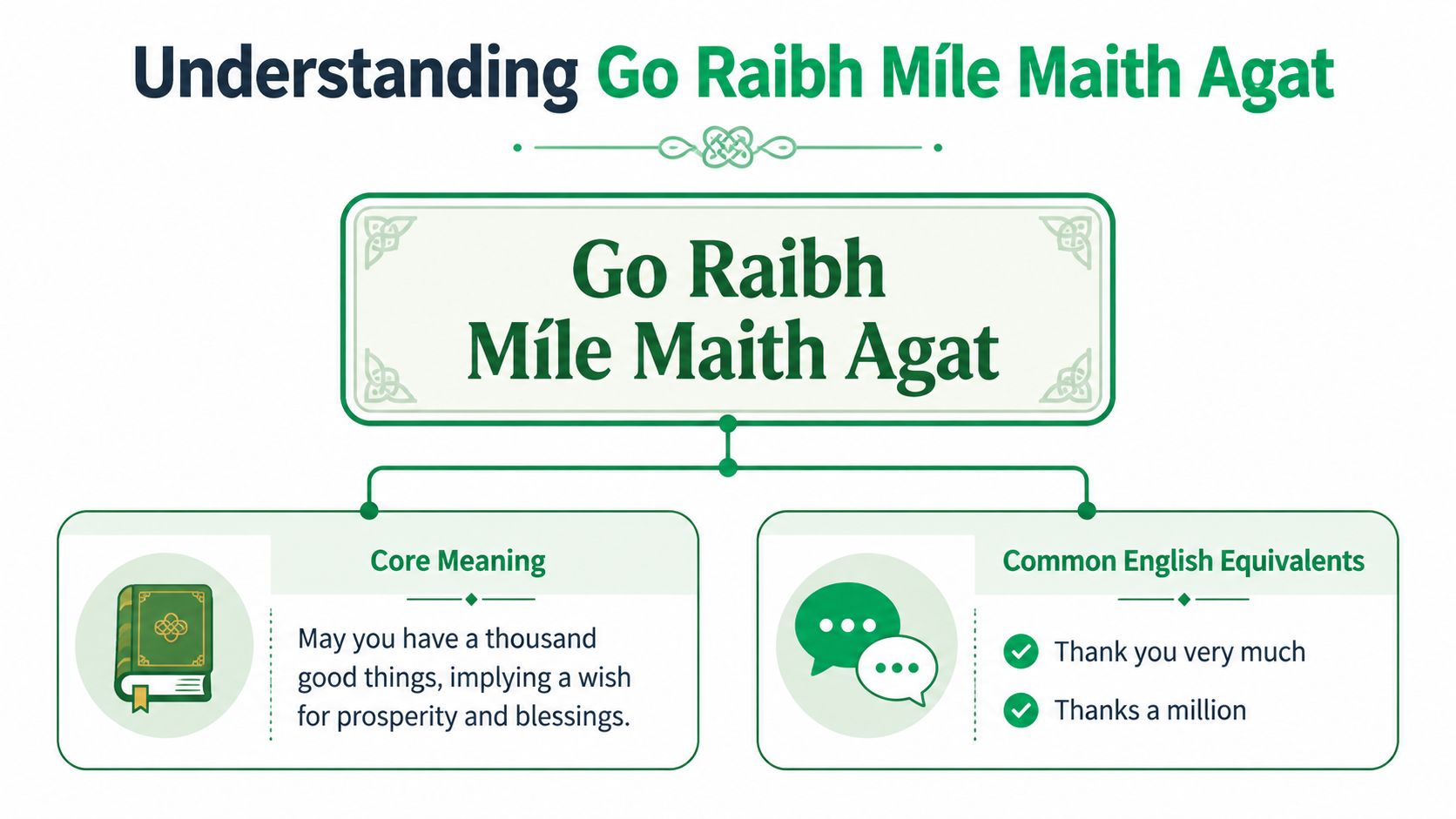
The most natural English translations are “thank you very much” and “thanks a million.” Historically, the phrase is a stronger, more emphatic version of everyday thanks, and the shorter go raibh maith agat is the standard everyday “thank you” to one person, as explained in Patrick Comerford's discussion of the phrase and its literal sense.

An infographic explaining the meaning and common translations of the Irish phrase Go Raibh Mile Maith Agat.

The everyday translation

If you need a quick answer for conversation, cards, captions, or a classroom exercise, use one of these:

  • Thanks a million
  • Thank you very much

Those are the closest natural English matches. They capture the tone better than a stiff word-for-word rendering would.

The deeper literal meaning

The literal gloss often given is this:

“May you have a thousand good things.”

That's the part learners tend to love. Instead of gratitude sounding like a simple exchange, the phrase turns outward as a wish for the other person's well-being. It has the shape of thanks, but also the spirit of goodwill.

For that reason, go raibh mile maith agat in english can't be fully captured by a single flat translation. The practical meaning is easy enough, but the emotional meaning is richer.

A simple word-by-word feel

You don't need a heavy grammar lesson to appreciate the structure. A learner-friendly way to feel the phrase is this:

Part Simple sense
go raibh may there be / may you have
míle thousand
maith good / goodness
agat at you / with you

This kind of breakdown is useful as a memory aid, not as something you need to recite every time. Think of it as the hidden framework beneath the phrase.

Main takeaway: the English translation gives you the social meaning, but the literal meaning gives you the cultural heart of the phrase.

Once you see that, the expression becomes much easier to remember. It isn't random. It's gratitude shaped like a generous wish.

A Simple Guide to Pronouncing Go Raibh Míle Maith Agat

Many beginners can understand this phrase long before they feel brave enough to say it out loud. That's normal. Irish spelling takes a little getting used to, but this phrase becomes manageable when you break it into small pieces.

A good first goal isn't perfect accent. It's confidence and clarity.

Pronunciation Breakdown

Irish Word Phonetic Spelling Sounds Like (English approximation)
Go guh like “guh” in a soft, quick way
Raibh rev close to “rev”
Míle MEE-leh “me” + “leh”
Maith mah like “ma” in “mama,” cut short
Agat AH-gut “ah” + “gut”

Put together, many learners use something close to: guh rev MEE-leh mah AH-gut.

That won't capture every regional nuance, but it gives you a solid starting point.

Where English speakers usually get stuck

Most hesitation happens in two places.

First, raibh doesn't look like “rev” to an English-speaking eye. Irish spelling and sound relationships follow different patterns, so this word often surprises people.

Second, maith can tempt learners into over-pronouncing the final letters. In normal learner-friendly speech, keep it short and clean rather than heavy.

Don't wait for perfect pronunciation before you use the phrase. A respectful attempt is how fluency begins.

A practice method that works

Try this in three passes:

  1. Chunk it in two parts: say go raibh and then míle maith agat.
  2. Slow it down: speak each word clearly once or twice.
  3. Smooth the rhythm: say the full phrase at natural speed without forcing it.

If pronunciation is your main hurdle, a dedicated Irish pronunciation guide for beginners can help you hear recurring sound patterns that show up far beyond this one phrase.

A gentle confidence rule

Irish learners often think they need to sound polished before they can use real phrases. You don't. If you can say it clearly enough to be recognized, you're already doing real language work.

The phrase is beautiful, yes. But it's also practical. Say it kindly, say it steadily, and let your pronunciation improve through repetition.

Essential Grammar Thanking One Person vs Many

This is one of the first grammar points that makes your Irish sound more natural right away. The ending changes depending on who you're thanking.

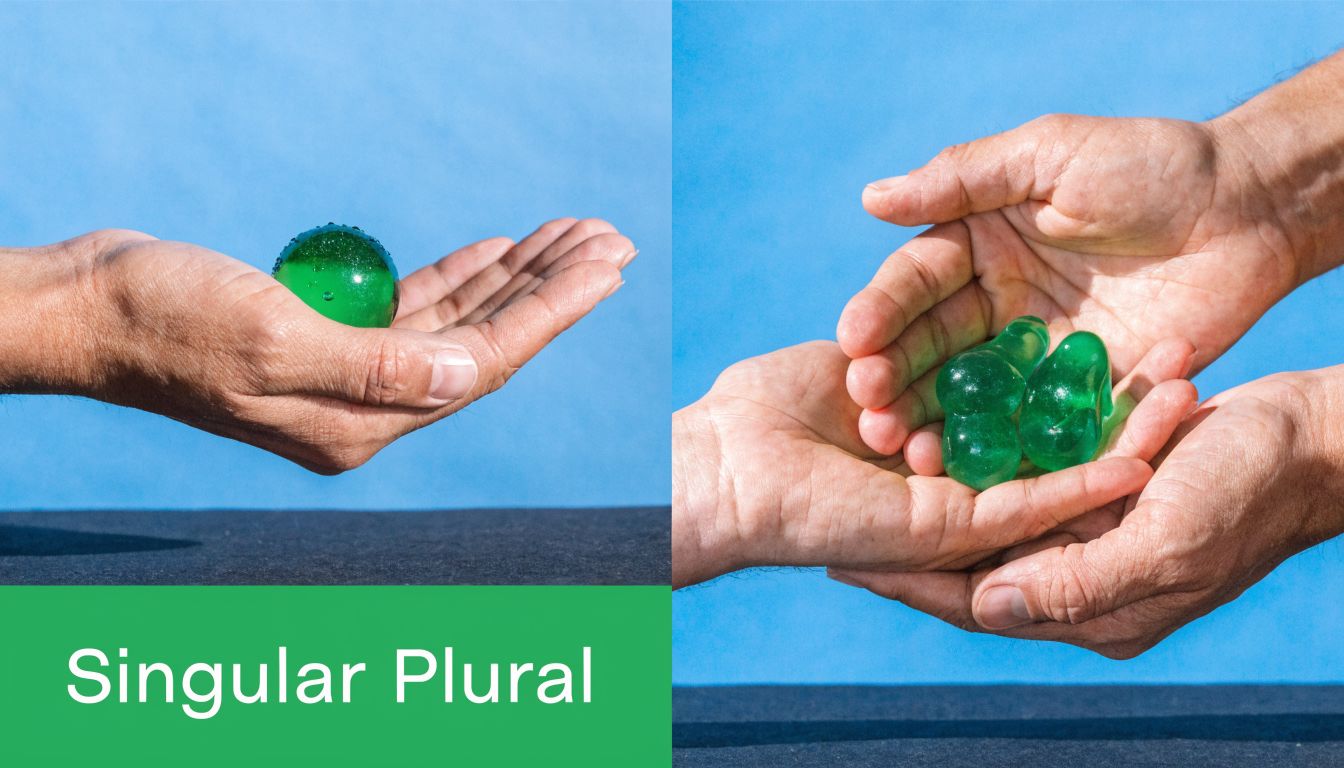
A conceptual image showing a single green marble in one hand and multiple marbles in both hands.

According to Bitesize Irish on polite phrases and common usage, go raibh maith agat is used to thank one person, while go raibh maith agaibh is used for more than one person and also as a respectful form. The same source also notes the widely used abbreviation GRMA in online Irish-language spaces.

The key contrast

Here's the simplest way to hold it in your mind:

  • go raibh maith agat for one person
  • go raibh maith agaibh for more than one person, or when you want a respectful tone

Irish pays close attention to who is being addressed. If you've studied other languages with singular and plural “you,” this may feel familiar.

A grammar-minded reader might enjoy seeing how small changes in wording shift effect and meaning. That same close reading skill shows up in literary study too, which is why resources that evaluate literary techniques with MasteryMind can sharpen your attention to form. In Irish, that attention pays off quickly.

Why agat and agaibh confuse beginners

English doesn't force this distinction in the same way, so learners often memorize one version and use it everywhere. That's understandable. But this is exactly the kind of small adjustment that makes your Irish sound much more aware and accurate.

If prepositional pronouns are new territory, this guide to mastering Irish prepositional pronouns helps explain why endings like these change.

Here's a quick listening aid before you practise the pair aloud:

The digital shorthand you'll see online

GRMA stands for go raibh maith agat. You'll spot it in messages, comments, and informal digital conversation.

Practical rule: learn the full phrase first, then recognize GRMA as a common shortcut rather than a replacement for proper speech.

That little detail reminds learners that Irish isn't frozen in old books. People text in it, shorten it, and use it in everyday online life.

When to Use Go Raibh Míle Maith Agat and How to Respond

The easiest way to choose this phrase is by feeling the weight of the moment. If ordinary thanks feels a bit small, go raibh míle maith agat is often the right fit. It's widely taught as the intensified Irish equivalent of English “thanks a million,” and IrishCentral also notes related forms such as buíochas, míle buíochas, and go raibh maith agaibh within the wider gratitude system in Irish, as described in their overview of thank you in Irish.

A close-up shot of two people shaking hands, wearing casual clothing, outdoors on a sunny day.

Natural situations for using it

Think about the emotional size of the interaction.

If someone passes you the salt, ordinary thanks will do. If someone helps you after you've been stuck, gives you a meaningful gift, or makes a special effort, the stronger phrase fits beautifully.

Here are a few natural examples:

  • After receiving help: You dropped your bag, someone helped gather everything, and you want to sound sincerely grateful.
  • After a thoughtful gift: A family member gives you something personal, not just polite.
  • After real kindness: A stranger explains directions carefully when you're lost.

Mini dialogues you can borrow

These are simple on purpose. Beginners learn fastest with short, reusable exchanges.

Gift situation

  • Person A: “I got this for you.”
  • You: “Go raibh míle maith agat.”

Help from one person

  • Person A: “No problem. I'm glad I could help.”
  • You: “Go raibh maith agat.”

Thanking a group

  • You: “Go raibh maith agaibh.”

How to respond when someone thanks you

Many learners stop short at this point. They learn how to say thanks, but not how to answer it. Keep your response simple at first.

A common response is:

“Tá fáilte romhat.”

That's the phrase many learners first meet for “you're welcome.” You don't need a long reply. In real conversation, a short, warm answer often sounds most natural.

Useful alternatives to know

It helps to recognize a few nearby expressions without trying to master everything at once.

  • Buíochas means thanks
  • Míle buíochas means many thanks
  • Go raibh maith agaibh is for thanking more than one person

If you want to move from phrase recognition into actual speaking practice, Gaeilgeoir AI offers guided Irish conversations, pronunciation support, and scenario-based exercises built around everyday situations like greeting people, asking for help, and using practical social phrases. That kind of practice helps expressions like this become active language instead of passive knowledge.

The true skill isn't just knowing what go raibh mile maith agat in english means. It's sensing when it fits, saying it naturally, and understanding the warmth it carries.

Start Your Irish Language Journey Today

Learning one phrase well can teach you more than a long vocabulary list half remembered. With go raibh míle maith agat, you've picked up an English translation, a literal meaning, a pronunciation pattern, and a small but meaningful glimpse of how Irish expresses gratitude.

That's what makes Irish so rewarding for beginners. Even a short expression can carry culture, relationship, and feeling. You aren't only learning what to say. You're learning how Irish speakers shape kindness into language.

What to hold onto

A few core ideas matter most:

  • Use the natural English sense: “thanks a million” or “thank you very much.”
  • Remember the deeper image: “may you have a thousand good things.”
  • Watch the audience: one person and more than one person don't take the same ending.
  • Stay practical: learn the phrase, say it aloud, and use it in real moments.

A phrase becomes yours when you understand both its meaning and its mood.

If you're returning to Irish after school, reconnecting with family roots, or starting from zero, this is exactly the kind of phrase that builds momentum. It's useful, memorable, and rich enough to remind you that Irish isn't distant or inaccessible. It's a living language full of texture.

The next step is simple. Keep going while your curiosity is awake.


If you'd like to turn phrases like this into real conversation, try Gaeilgeoir AI. It helps beginners and returning learners practise Irish through guided, real-world speaking scenarios, pronunciation support, and adaptive review so you can move from recognizing expressions to using them with confidence.

Please in Gaelic: How to Say It in Irish (& When)

Le do thoil is the most common way to say please in Irish when you're speaking to one person, and le bhur dtoil is used when you're speaking to more than one person. But if you're learning please in gaelic, the appropriate answer depends on context, politeness level, and who you're speaking to.

Maybe you're about to order a coffee in Ireland, prepping for an oral exam, or reconnecting with family roots and want to sound respectful from the start. In English, “please” feels simple. In Irish, it’s simple at first, then quickly becomes more interesting.

That’s good news for learners. It means you don't need a huge vocabulary to sound thoughtful. You need the right phrase, used in the right moment.

Irish politeness often works through tone, relationship, and phrasing, not just through dropping in one magic word. So yes, you can memorize le do thoil today. But if you also understand why Irish speakers sometimes choose a more formal option, or why the same phrase sounds different in Galway and Donegal, you'll feel much more confident using it in real life.

Table of Contents

Your Guide to Saying Please in Irish

A lot of learners start in the same place. They search for “please in gaelic,” find le do thoil, write it down, and assume they’re done. Then they hear another version, or notice that a textbook example doesn’t quite match a real conversation, and the doubt starts creeping in.

That confusion makes sense. Irish is not just English with different words swapped in. The phrase you choose can reflect whether you’re speaking to one person or several people, whether the setting is casual or formal, and how much deference you want to show.

Why the simple answer isn't the whole answer

At beginner level, le do thoil is the right place to start. It’s useful, common, and safe in everyday situations. If you use it while ordering food, asking for help, or making a basic request, you’ll be understood.

But Irish politeness has layers. A shop interaction, a classroom exchange, and a formal oral exam don’t all feel the same. That’s why learners benefit from knowing not only the phrase itself, but the social meaning behind it.

Practical rule: Start with le do thoil for everyday requests. Learn the more formal option later, once your basic speech feels comfortable.

A heritage learner often wants more than a phrasebook answer. They want to know what sounds natural. A student preparing for the Leaving Cert wants language that fits the occasion. A traveler wants to avoid sounding abrupt without overdoing it. The same small phrase serves all three goals, but only if you use it with awareness.

What confidence sounds like

Confident Irish doesn’t mean perfect Irish. It means choosing language that fits the moment.

That’s why this guide focuses on real usage. You’ll see the common forms first, then the formal one, then the pronunciation differences that catch many beginners off guard. By the end, “please in gaelic” won’t feel like a single translation problem. It’ll feel like a skill you can use.

The Most Common Ways to Say Please

If you only remember two phrases from this article, make them these: le do thoil and le bhur dtoil.

A person wearing a green sweater and jewelry with the text Irish Please displayed below them.

They both mean “please,” but they aren’t interchangeable. The difference depends on who you’re speaking to.

Le do thoil for one person

Le do thoil is the everyday form when speaking to one person.

A helpful way to remember it is that do means “your” in the singular sense. So the phrase conveys the idea of “with your will.” You don’t need to translate it word for word when speaking, but knowing that background helps it feel less random.

Pronunciation guides in the available material give it as /leh duh huh-el/. Many learners simplify that to something like “leh duh hull” when starting out. That’s close enough to begin with, as long as you stay open to regional variations later.

You might hear it in short requests such as:

  • Caife, le do thoil.
    Coffee, please.

  • Cabhair, le do thoil.
    Help, please.

  • An bille, le do thoil.
    The bill, please.

Le bhur dtoil for more than one person

When you’re speaking to two or more people, use le bhur dtoil.

Here, bhur is the plural “your.” That’s the key shift. English doesn’t always mark this distinction clearly, but Irish does, and using the plural form is one of those small details that makes your speech sound more natural.

The pronunciation guide in the verified material gives /leh woor duh-el/. For an English-speaking beginner, “leh woor dull” is a workable memory aid, even if your sound gets refined with practice.

Use it in situations like these:

  • addressing a group at a table
  • speaking to staff as a group
  • asking several classmates to listen
  • making a polite request to more than one person

A quick memory trick

Here’s the easiest way to keep them straight:

Phrase Use it with Simple memory cue
le do thoil one person do = one person’s “your”
le bhur dtoil more than one person bhur = plural “your”

Don’t overthink the grammar while speaking. Just connect do with one person and bhur with a group.

Why beginners sometimes hesitate

Many learners freeze because they want perfect pronunciation before they try the phrase aloud. Don’t wait for that. Irish pronunciation takes time, and politeness counts even when your accent is still developing.

A more useful goal is this:

  1. Choose the right form for one person or a group.
  2. Say it clearly and calmly.
  3. Listen for local pronunciation and adjust over time.

That order matters. Correct social use comes first. Fine pronunciation tuning comes after repeated listening and practice.

Choosing Between Formal and Informal Please

Once le do thoil feels comfortable, the next step is learning when Irish uses a more formal kind of politeness. That phrase is Más é do thoil é.

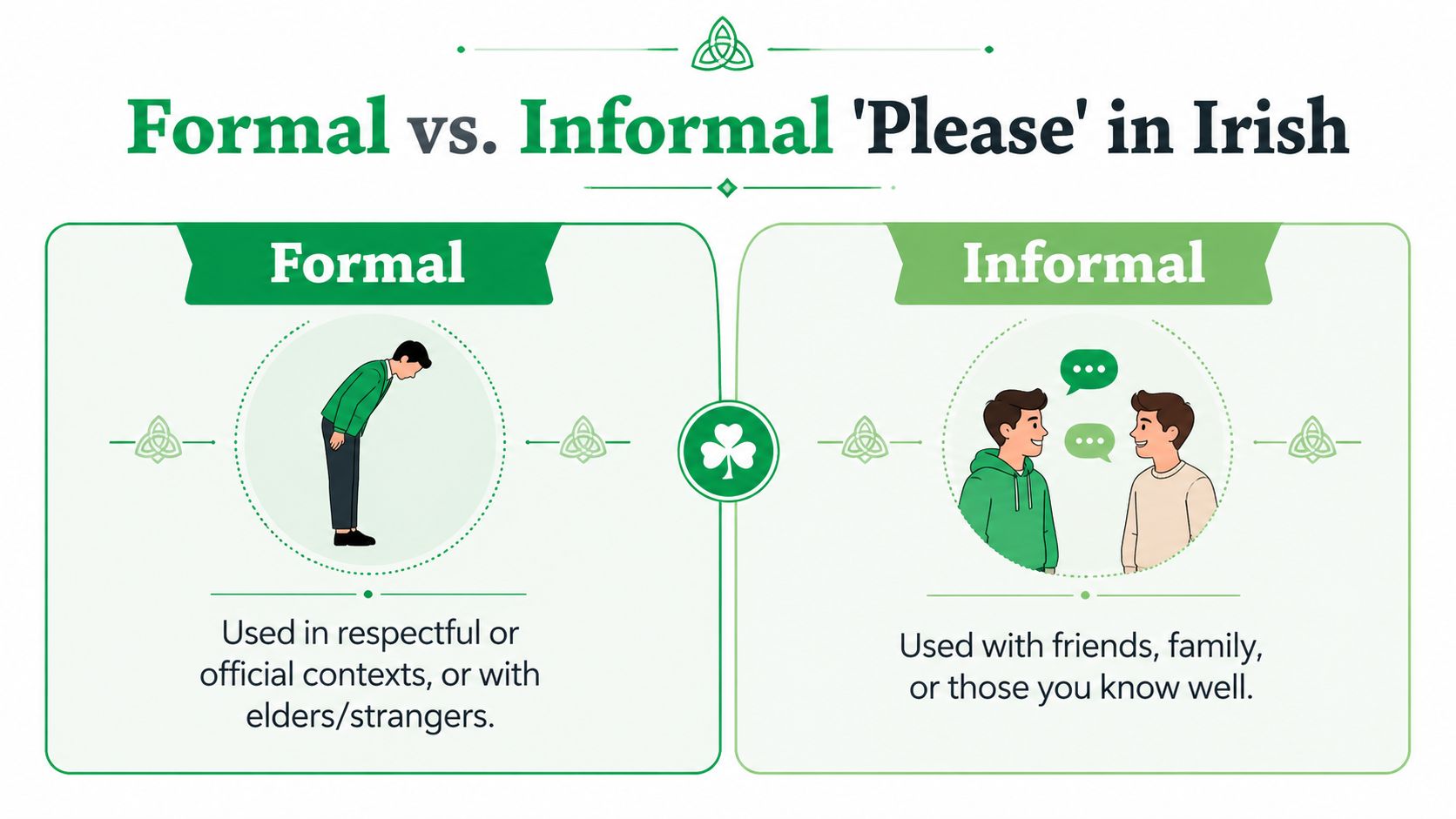
An infographic showing the difference between formal and informal ways to say please in Irish.

It’s often translated as “if it is your will.” That sounds more elaborate than English “please,” and that’s exactly the point. This version carries extra respect and restraint.

When le do thoil is enough

In most everyday situations, le do thoil does the job well.

Use it when you’re:

  • ordering something casually
  • asking for directions
  • speaking with a teacher in a normal classroom exchange
  • making a simple request in conversation

It’s polite without sounding stiff. For beginners, that balance matters. You want language that feels natural, not memorized from a ceremonial script.

When Más é do thoil é fits better

Más é do thoil é belongs in more formal or deferential moments. Think of it as a step up in politeness, not a replacement for the everyday phrase.

It works especially well in contexts like:

  • formal speaking tasks
  • service interactions where you want extra courtesy
  • requests to elders or strangers when you want a more respectful tone
  • exam settings where control and register matter

One verified example is: “Más é do thoil é, an bhfuil an bus ag stopadh anseo?”
“Please, does the bus stop here?”

That sounds measured and respectful. It’s not something you need in every conversation, but it’s useful to recognize and practice.

Why this matters in exams and advanced speech

This isn’t just a style preference. The verified data notes that candidates using formal variants scored 12% higher on average in the “social interaction” portion of TEG assessments in relation to advanced politeness use, according to Bitesize Irish on polite Irish phrases.

For a learner, the deeper lesson is simple. Register matters. Examiners and listeners notice when your language fits the social setting.

The strongest learners don’t just know vocabulary. They choose the right level of politeness for the moment.

A side by side comparison

Situation Better choice Why
Ordering a tea in a casual café le do thoil simple, natural, everyday
Asking a formal question in an oral exam Más é do thoil é shows control and courtesy
Speaking to a friend le do thoil formal phrasing may sound too heavy
Making a respectful public-facing request Más é do thoil é adds deference

Beginners sometimes worry that the formal phrase will make them sound more fluent all the time. It won’t. If you use it everywhere, it can sound mismatched.

The key skill is judgment. Casual request. Use the everyday phrase. High-politeness situation. Reach for the formal one.

Quick Reference Table for Irish Polite Phrases

A quick-reference chart helps when your brain goes blank mid-conversation. That’s common with polite language because you often need it fast, in the middle of ordering, asking, thanking, or apologizing.

If you want a broader starter set beyond this page, this collection of essential Gaelic phrases for everyday use pairs well with the phrases below.

Irish politeness quick reference

Irish Phrase Pronunciation Guide English Meaning When to Use It
le do thoil leh duh hull please Use with one person in everyday requests
le bhur dtoil leh woor dull please Use with more than one person
Más é do thoil é maws ay duh huh-el ay please, if you would be so kind Use in formal or highly respectful situations
Go raibh maith agat guh rev mah ah-gut thank you Use when thanking one person
Gabh mo leithscéal gov muh lehsh-kale excuse me / pardon me Use to get attention, apologize lightly, or move past someone
Tá fáilte romhat taw fall-cha row-ut you’re welcome Use after someone thanks you

How to use the table well

Don’t try to memorize all six phrases at once. Start with a pair that naturally belongs together.

For example:

  • Request pair: le do thoil and Gabh mo leithscéal
  • Response pair: Go raibh maith agat and Tá fáilte romhat
  • Formal pair: Más é do thoil é and Gabh mo leithscéal

That approach works better than isolated word lists because politeness usually comes in sequences. You ask, someone answers, you thank them, and the conversation keeps moving.

Understanding Regional Pronunciation Differences

One reason learners get confused about please in gaelic is that the phrase they learned from one recording may sound different when spoken by someone from another part of Ireland. That doesn’t mean you learned it wrong. It means Irish has strong regional pronunciation patterns.

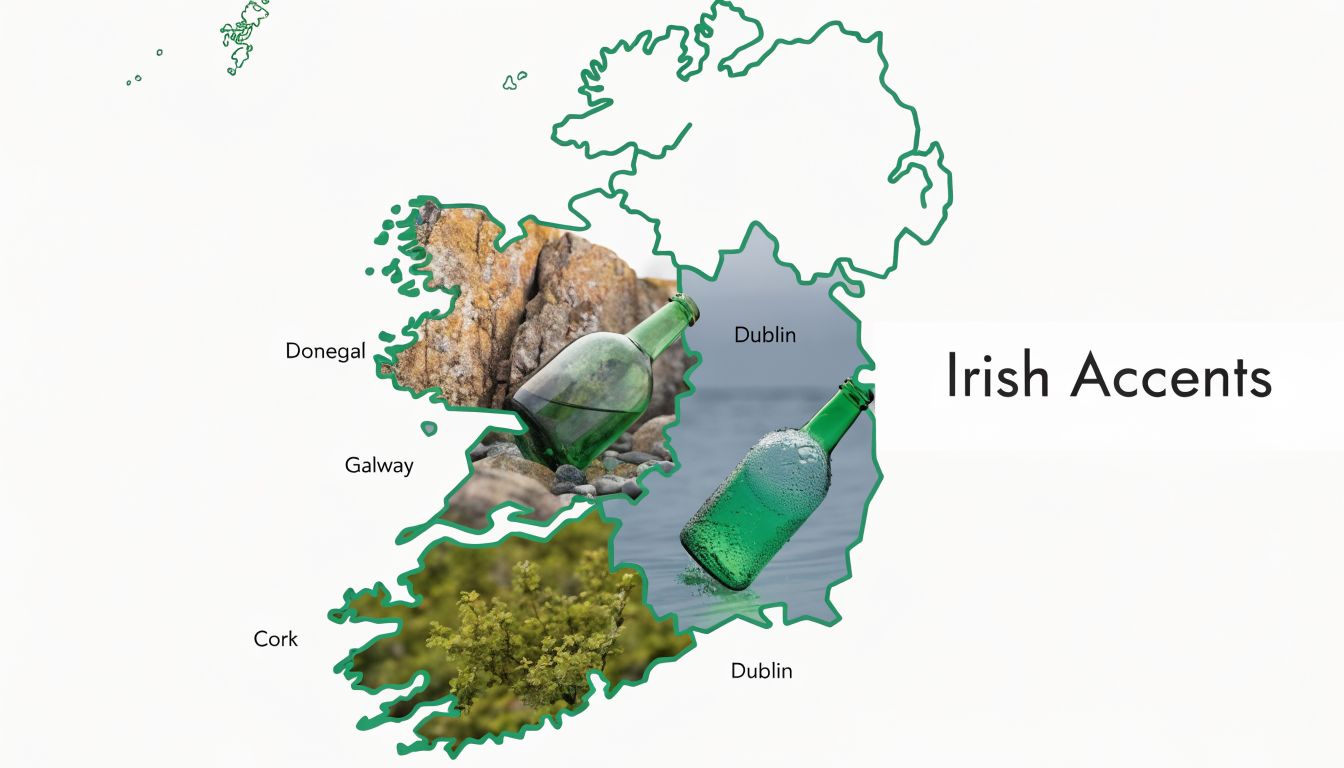
A map of Ireland showing different regional accents with bottles of water illustrating Irish speech patterns.

The standard learner form often points toward Connacht-style pronunciation, but native speech is broader than any single teaching model.

What changes across regions

The verified data notes that a Foras na Gaeilge-related discussion on regional politeness usage and pronunciation differences reported 70% of Gaeltacht speakers use dialect-specific politeness markers. It also highlights a common learner problem: online resources rarely explain how a phrase like le do thoil shifts in sound from one region to another.

A few examples from the verified material:

  • Conamara tends to soften the sound, giving learners a lighter “h” feel.
  • Ulster keeps a sharper quality in the vowels and consonants.
  • Dingle or Kerry speech may have a different rhythm again.

These aren’t separate phrases. They’re regional realizations of the same polite expression.

Why this matters for listening

A beginner often assumes pronunciation variation means there must be a different word involved. Usually there isn’t. The issue is listening range.

That’s why it helps to train your ear with more than one model. A pronunciation guide that includes regional comparison can prevent the “I know this phrase on paper, but I missed it in speech” problem. If you want to build that listening flexibility, this Irish pronunciation guide for learners is a useful companion.

A phrase can be correct in every region and still sound different in each one.

A simple way to respond as a learner

You don’t need to master all dialects at once. Do this instead:

  1. Pick one pronunciation model first. Connacht-based learner audio is a practical starting point.
  2. Expect variation when listening. Native speakers may shape the same phrase differently.
  3. Copy before analyzing. Repeat what you hear, then compare it with your base form later.

Here’s the reassuring part. Irish speakers are used to accent variation. What matters most at beginner level is respectful usage and steady listening practice, not reproducing every local feature perfectly on day one.

Common Mistakes to Avoid When Saying Please

Most learner mistakes with Irish politeness aren’t rude. They’re just direct transfers from English. Once you spot them, they’re easy to clean up.

Mixing up singular and plural

This is the most common slip. A learner memorizes le do thoil and then uses it for everyone, including groups.

If you’re speaking to several people, switch to le bhur dtoil. That small change shows you’re paying attention to the structure of Irish, not just reciting a single fixed phrase.

A good habit is to pause and ask yourself one quick question before speaking: one person or more than one?

Treating please as a decoration

In English, “please” often gets dropped into commands to soften them. Beginners sometimes try to do the same thing mechanically in Irish.

Irish often sounds more natural when the whole request is phrased gently, rather than when a blunt command gets a polite word attached to the end. Tone matters. Sentence shape matters too.

If the request sounds pushy in English without “please,” it may still sound pushy in Irish with the phrase added.

That’s why short request patterns are so useful. “The bill, please” or “Coffee, please” often works better than building a direct imperative too early in your learning.

Overusing the formal phrase

After learning Más é do thoil é, some students want to use it everywhere because it sounds impressive. The problem is fit.

With friends or in relaxed conversation, it can sound heavier than the situation needs. Irish politeness is not about sounding maximally formal at all times. It’s about matching the social setting.

Mishearing the sounds

Certain sounds trip learners repeatedly:

  • The “th” area in thoil can sound lighter than expected.
  • The “bh” in bhur doesn’t behave like an English “b.”
  • Vowel quality can shift depending on region.

A simple fix is to repeat full chunks, not isolated letters. Learn le do thoil as one unit. Learn le bhur dtoil as another. Chunking helps your mouth remember what your grammar is still catching up to.

Practice Saying Please with Gaeilgeoir AI

Knowing the phrase is one thing. Saying it comfortably, at the right speed, in a real exchange, is another.

A person using a smartphone to practice speaking Gaelic with an interactive AI language learning application.

That’s where guided practice helps. Instead of memorizing isolated phrases, you can rehearse them in the kinds of situations where politeness matters, such as ordering food, asking for directions, or speaking carefully in an oral exam setting.

Turn polite phrases into automatic speech

A useful practice cycle looks like this:

  • Start with recognition by hearing the phrase in context.
  • Move to controlled repetition so your pronunciation settles.
  • Use contrast drills for pairs like le do thoil and le bhur dtoil.
  • Finish with live-style prompts where you have to choose the right form yourself.

That kind of progression is one reason language learners often benefit from spaced review tools. If you’re interested in how repetition and retrieval can support memory, Maeve’s piece on learning with AI using flashcards gives a helpful overview of the method, even though it focuses on another language.

Another strong approach is scenario practice. A phrase becomes usable faster when you meet it inside a realistic exchange instead of on a bare vocabulary list.

Practice in context, not in isolation

This is the kind of listening and speaking input that helps polite language stick:

You’ll improve faster if you rotate through different tasks:

  1. Order something politely using the everyday form.
  2. Address a group and switch to the plural correctly.
  3. Rehearse a formal request using Más é do thoil é.
  4. Listen to accent variation so you don’t panic when the phrase sounds different.

For structured speaking practice, the AI Irish learning platform for guided conversation practice gives learners a way to repeat these patterns in context instead of guessing whether they sounded right.

What to focus on first

Don’t try to perfect every nuance at once. Build the skill in layers.

First, choose the right phrase. Then work on clarity. Then improve pronunciation and register. That order mirrors how real confidence develops. You become polite first, precise second, polished third.

Building Your Foundation of Irish Politeness

Once you can use “please” naturally, your Irish starts sounding warmer very quickly. That’s because politeness in conversation is a system, not a single word.

A request often leads to thanks. A question may begin with getting someone’s attention. A helpful answer usually ends with a courteous response. When you learn these phrases together, your Irish stops sounding like a list and starts sounding like interaction.

The core phrases that belong together

Three expressions fit naturally beside le do thoil:

  • Go raibh maith agat for “thank you”
  • Gabh mo leithscéal for “excuse me” or “pardon me”
  • Tá fáilte romhat for “you’re welcome”

Used together, they create the rhythm of polite speech. You ask respectfully. You acknowledge help. You respond graciously.

That matters more than many beginners realize. Fluency isn’t only about saying longer sentences. It’s also about handling small social moments smoothly.

Why this approach works

When learners focus only on translation, they tend to collect isolated equivalents. When they focus on exchanges, they build usable language.

A good comparison comes from conversational AI design. When people train a chatbot, they don’t just feed it single words. They build patterns, responses, and context so the interaction feels natural. Human language learning works in a similar way. The phrase “please” becomes much easier to remember when your brain stores it beside thanking, apologizing, and responding.

Politeness is one of the fastest ways to make beginner Irish sound human.

Keep your goals modest and practical. Learn the one-person and group forms. Recognize the formal version. Add thank you and excuse me. Practice short exchanges until they feel easy.

That foundation goes a long way. It helps travelers sound courteous, heritage learners reconnect through respectful speech, and students show maturity in spoken Irish.


If you want to turn these phrases into real speaking habits, Gaeilgeoir AI gives you guided Irish conversation practice, pronunciation support, and everyday scenarios so you can start using polite Irish with confidence from day one.

Master Congratulations in Irish: Pronunciation & More

Your cousin has just announced an engagement. A friend passed a tough exam. A teammate won a final. You want to say more than a plain “congratulations,” and if Irish matters to you, even a little, using the language can make that moment feel warmer and more personal.

That’s why congratulations in irish is such a useful phrase to learn. It gives you something practical you can say right away, but it also opens a door into how Irish expresses celebration. The words carry a sense of shared happiness, not just polite praise.

Table of Contents

Why Saying Congratulations in Irish Matters

A lot of learners start with greetings. That makes sense. But congratulations is different. You usually say it at a real emotional moment, when someone has done something difficult, joyful, or life-changing.

If you tell a friend Comhghairdeas leat, you’re not just swapping English for Irish. You’re joining their happiness in a way that fits the spirit of the language. Irish tends to hold onto community, family, local pride, and shared milestones, so this phrase feels especially natural at engagements, exam results, sports wins, and family celebrations.

A phrase that feels personal

Think about the difference between sending a quick “Congrats!” and taking a moment to write a thoughtful message. Irish can have that second effect. Even if your sentence is short, it sounds intentional.

That matters for:

  • Family news: engagements, weddings, new babies, anniversaries
  • Student life: exam results, oral practice, school achievements
  • Community moments: local matches, music performances, club events
  • Heritage connection: reconnecting with Irish roots through everyday phrases

Saying it in Irish can turn a simple message into a shared cultural gesture.

For many people, that’s the appeal. You don’t need advanced grammar to make someone smile. You just need one phrase you can say with sincerity.

The Essential Phrase Comhghairdeas Explained

The core phrase you need is Comhghairdeas. This is the standard Irish word for “congratulations,” and it’s the one you’ll see most often in learning materials, spoken use, and celebratory messages.

A rustic, antique book with intricate Celtic patterns resting open on a polished wooden desk surface.

What the word really means

This word is special because it isn’t just a flat translation. Comhghairdeas comes from comh- meaning “together” and gairdeas meaning “joy.” In other words, it carries the sense of shared joy or joint rejoicing.

That’s one reason the phrase feels so alive. You’re not standing outside someone’s success and commenting on it. You’re stepping into the moment with them.

Why that meaning matters

English speakers often treat “congratulations” as a standard response. Irish gives the phrase more emotional shape. The meaning suggests celebration as something communal.

Historically, the phrase’s standardized use was strongly promoted during the Gaelic Revival from circa 1893 to 1922, and the Gaelic League was founded on July 31, 1893, helping promote Irish as a living language in public life and celebration, as noted in this explanation of Comhghairdeas and the Gaelic Revival.

Your first useful forms

Once you know the base word, you can build the two forms you’ll use most often:

  • Comhghairdeas leat
    congratulations to you, singular

  • Comhghairdeas libh
    congratulations to you, plural

Practical rule: Learn Comhghairdeas first as a whole phrase, not as a grammar puzzle. Meaning comes before analysis.

If you remember only one thing from this section, remember this. Comhghairdeas doesn’t just praise achievement. It expresses shared happiness, and that’s why it feels so culturally rich.

Your Guide to Perfect Pronunciation

Most learners hesitate here. The spelling looks unfamiliar, and that’s normal. Irish spelling often maps sounds differently from English, so the trick is to aim for clear, confident pronunciation rather than perfection on day one.

A helpful English-style approximation for Comhghairdeas is “ko-raid-as” or “koh-ghawr-jess.” Those aren’t exact, but they’ll get you close enough to start speaking.

Start with the shape of the word

Try saying it in three beats:

  1. Comh
    Start with a “koh” sound.

  2. ghair
    This middle part is softer than many learners expect. Don’t force a hard “g.”

  3. deas
    Keep the ending crisp and light.

Say it slowly first, then smooth it out: koh-ghair-deas.

Why dialects sound different

Irish changes across dialects, and that’s one reason you may hear more than one version. The common form comhghairdeas is often pronounced /koːɾʲdʲas/, while in Ulster Irish it may extend to comhghairdeachas /koːɣaɾdʲaxəs/. This reflects dialectal sound patterns where Ulster preserves distinct velar fricatives /ɣ/ and /x/, a feature highlighted in this note on pronunciation and dialect variation.

A learner-friendly approach

If you’re a beginner, use this approach:

  • Pick one version first: Start with Comhghairdeas before worrying about regional variation.
  • Listen more than you analyze: Your ear will improve faster than you think.
  • Copy rhythm, not just sounds: Irish has a musical flow that matters as much as individual letters.

For extra listening practice, this Irish pronunciation guide can help you hear recurring sound patterns beyond this one phrase.

Clear pronunciation beats overthinking. If your listener understands your warmth and your meaning, you’re doing well.

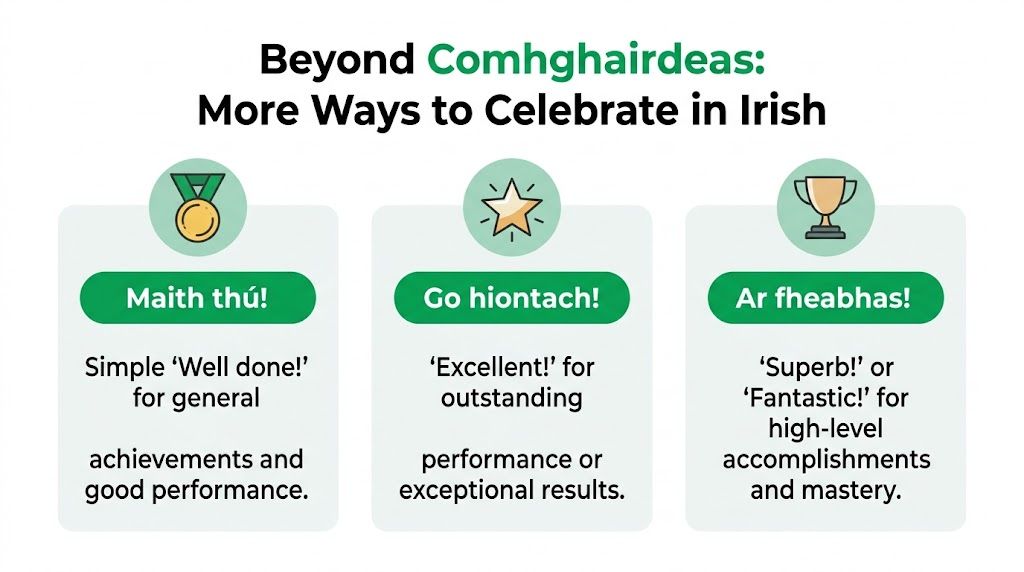
Beyond Comhghairdeas More Ways to Celebrate

Once you’ve got the main phrase, it helps to have a few more options. Some moments call for full congratulations. Others need something lighter, quicker, or more enthusiastic.

A graphic showing three Irish phrases for congratulations with icons for a medal, star, and trophy.

When to choose a different phrase

The longer form Comhghairdeachas can sound more heartfelt or emphatic. It’s associated with communal celebration, and it’s often heard in big public moments such as GAA culture. GAA All-Ireland Finals have been a cultural staple since 1887, and the 2023 hurling final reached 1.8 million viewers, helping spread these celebratory phrases widely through broadcasts and public language, as described in this discussion of Comhghairdeachas in Irish celebration.

For everyday praise, many speakers switch to shorter expressions.

Irish Phrases for Congratulations

Irish Phrase Pronunciation Meaning & Formality Best Used For
Comhghairdeas ko-raid-as Congratulations. Standard and versatile. Exams, engagements, job news, formal or warm messages
Comhghairdeachas koh-wir-jah-kus Heartfelt congratulations. More emphatic. Big public celebrations, speeches, extra warmth
Maith thú! mah hoo Well done. Informal and common. Schoolwork, sport, finishing a task
Go hiontach! guh hin-takh Excellent. Positive and lively. Strong performance, results, praise
Ar fheabhas! ar yab-has Superb or fantastic. Enthusiastic praise. Outstanding work, high achievement

How these feel in real use

  • Use Comhghairdeas when the event is significant and you want a complete “congratulations.”
  • Use Maith thú! when someone has done well and the mood is casual.
  • Use Ar fheabhas! when you want your praise to sound energetic and impressed.

If you’re writing a card for an engagement or wedding and want ideas for tone before you add the Irish phrase, these congratulations message engagement ideas are useful for shaping the message around the occasion.

You can also build out your celebration vocabulary with other Irish greetings and phrases, especially if you want your message to sound more natural from start to finish.

Using Irish Congratulations in Real Life

A phrase becomes memorable when you attach it to a real situation. That’s where most learners relax. Instead of asking “What does this word mean?” you start asking “When would I say this?”

A diverse group of friends smiling and laughing while making a cheers toast with beers at a table.

Ready-to-use examples

Here are some natural examples you can borrow, adapt, or send as they are.

  • Comhghairdeas leat as do phost nua!
    Congratulations on your new job!

  • Comhghairdeas libh ar bhur bpósadh!
    Congratulations on your wedding!

  • Comhghairdeas ó chroí leat, a chara!
    Heartfelt congratulations to you, my friend!

  • Maith thú féin!
    Well done yourself!

  • Comhghairdeas leis an bhfoireann!
    Congratulations to the team!

Matching the phrase to the moment

For a one-to-one message, Comhghairdeas leat works beautifully. It sounds warm without being too formal. If you’re speaking to a couple, a family, or a group, switch to Comhghairdeas libh.

That small change matters. It’s one of the easiest ways to sound more natural in Irish.

Sample situations

A few common situations come up again and again:

  • Exam results:
    Comhghairdeas leat as do thorthaí sna scrúduithe.
    Congratulations on your exam results.

  • Engagement:
    Comhghairdeas ar bhur ngealltanas.
    Congratulations on your engagement.

  • Wedding day:
    Comhghairdeas libh ar lá bhur bainise.
    Congratulations on your wedding day.

  • Victory in sport:
    Maith sibh. Comhghairdeas libh as an mbua.
    Well done. Congratulations on the win.

A short Irish phrase often lands better than a long sentence you’re unsure about.

A simple message formula

If you want a reliable pattern, use this:

Comhghairdeas + leat/libh + ar/as + the occasion

Examples:

  • Comhghairdeas leat as do bhua.
  • Comhghairdeas libh ar bhur bpósadh.
  • Comhghairdeas leat as an obair mhaith.

This is enough for texts, cards, speeches, and quick spoken moments. You don’t need fancy vocabulary to sound thoughtful. You need a phrase you can reach for naturally.

Understanding the Simple Grammar Rules

Irish congratulations become much easier once you notice one key feature. Irish often builds this idea around a noun, not a dedicated verb. Instead of a direct “to congratulate” verb doing all the work, Irish commonly uses structures around comhghairdeas itself.

That’s why forms like déanamh comhghairdeas mean “to make congratulations.” In formal settings such as exams and sports, this noun-based style appears in 85% of contexts compared with informal alternatives like Maith thú!, according to this grammar-focused explanation of congratulating someone in Irish.

Leat and libh

This is the grammar point you’ll use most:

  • Leat means “to you” when speaking to one person
  • Libh means “to you” when speaking to more than one person

So:

  • Comhghairdeas leat = congratulations to one person
  • Comhghairdeas libh = congratulations to multiple people

Why names and phrases shift

Irish learners often expect a one-word-for-one-word translation. Irish doesn’t always work that way. It links meaning through small particles and prepositions, so the phrase grows outward from comhghairdeas.

That’s also why you may see names or following words change shape slightly after prepositions. You don’t need to master every mutation right now. What matters first is recognizing the pattern and using it consistently.

Learn the frame first. Comhghairdeas leat and Comhghairdeas libh will carry you through most everyday situations.

If you keep those two forms ready, your Irish will already sound much more grounded.

How to Practice Irish with Gaeilgeoir AI

The fastest way to remember congratulations in irish is to use it in context. Say it out loud. Put it in a text message. Practice it after real events in your day, even if you’re only talking to yourself.

That kind of repetition works better when it feels active rather than mechanical. Short speaking drills, scenario practice, and feedback on pronunciation help far more than staring at one word on a flashcard.

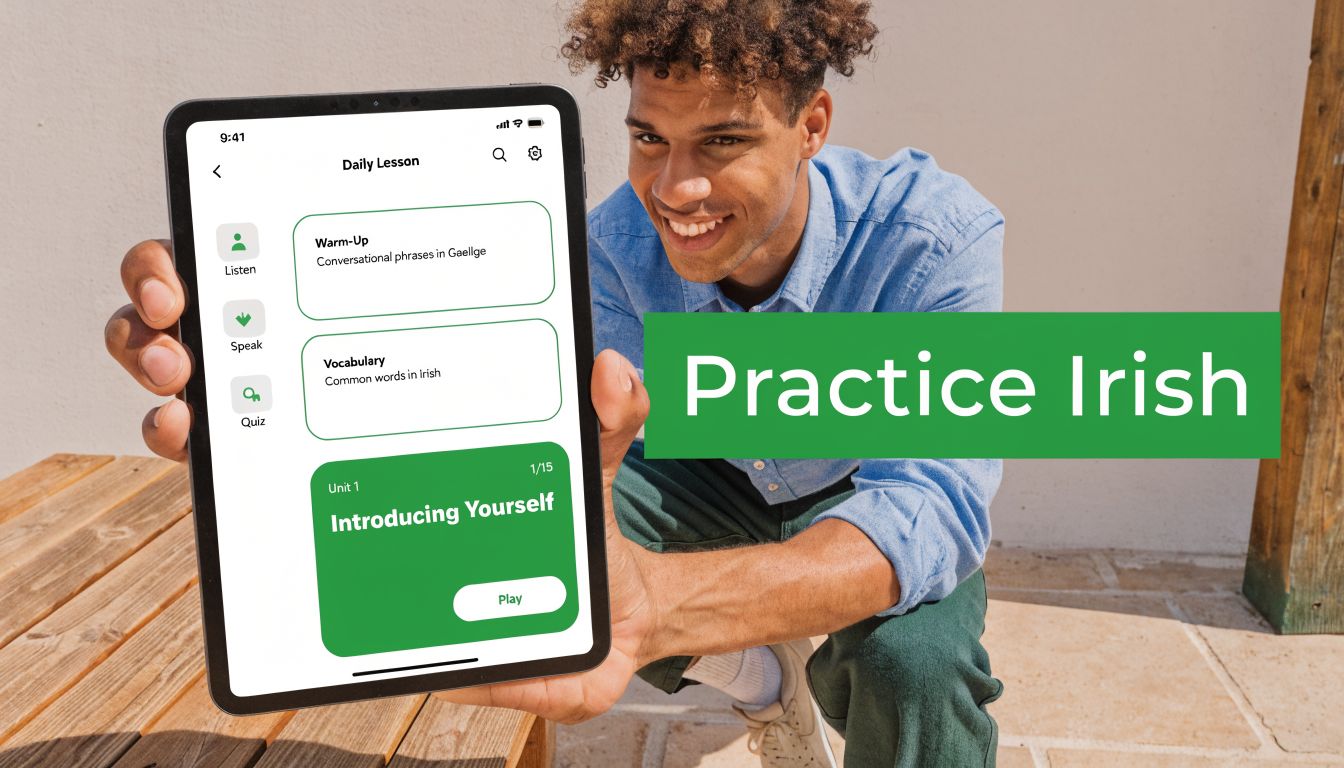
A young man holds a tablet displaying a language learning app for practicing the Irish language outdoors.

A practice routine that actually sticks

Try a simple weekly loop:

  • Listen: hear native or learner-friendly audio of key phrases
  • Repeat: say Comhghairdeas leat and Comhghairdeas libh aloud
  • Apply: send one message or write one short sentence
  • Recycle: reuse the phrase later in a different context

If you enjoy structured motivation, it also helps to understand how game elements affect study habits. This article on how to boost engagement with gamification gives a useful overview of why points, progress tracking, and small wins keep learners consistent.

One tool for guided speaking practice

If you want interactive practice, learn Gaelic language with AI offers a route into guided conversation work. Gaeilgeoir AI includes pronunciation support, adaptive quizzes with instant feedback, and scenario-based practice for everyday situations such as social interactions, travel, and Leaving Cert oral preparation.

That matters because congratulations phrases rarely live on their own. You say them in a full interaction. Someone shares news, you respond, you ask a follow-up question, and the conversation moves on. Practicing that flow makes the phrase usable, not just memorable.

The key is consistency. A short session done often will take you further than occasional cramming.


If you’re ready to turn a few Irish phrases into real speaking confidence, try Gaeilgeoir AI. It gives you guided, real-world conversation practice so phrases like Comhghairdeas leat don’t stay on the page. They become part of how you speak.

Start Speaking Irish Today — 25% Off
Use code START25

Learn real Irish for real life with guided practice, pronunciation support, and everyday conversations.

Get 25% off any plan with code START25

Start Speaking Irish Today — 25% Off