Have you ever wondered why learn Irish when English already gets you through airports, apps, and most classrooms? That question misses something important. Irish, or Gaeilge, isn't only about heritage or schoolwork, it's a living language with real speakers, active learners, public policy backing, and practical uses that reach into travel, work, identity, and community. Ireland's 2022 census found that 1,873,997 people aged three and over could speak Irish, and about 624,000 said they spoke it daily within and outside education, while 472,887 said they never spoke it, a gap that creates real room for learners to become useful speakers quickly when they focus on conversation. Duolingo data cited by Translated also showed 1.10 million active users worldwide learning Irish, with 23% in Ireland, 36% in the United States, and 11% in the United Kingdom Translated's overview of Irish learner growth.
For adults, students, and diaspora learners, the better question is not whether Irish matters, but where it can matter in your life first. If you want a language that connects culture and practicality, Irish has a rare mix of both.
Table of Contents
- 1. Connect with Irish Heritage and Cultural Identity
- 2. Enhance Career Opportunities and Professional Advancement
- 3. Prepare Successfully for the Leaving Certificate Irish Oral Exam
- 4. Build Genuine Conversational Fluency and Speaking Confidence
- 5. Explore Irish Literature, Music, and Arts at Their Source
- 6. Engage in Travel and Authentic Local Experiences in Ireland
- 7. Challenge Your Brain and Enjoy Cognitive Health Benefits
- 8. Join a Vibrant Global Community of Irish Language Learners
- Why Learn Irish: 8-Point Comparison
- Your Journey with the Irish Language Starts Now
1. Connect with Irish Heritage and Cultural Identity
Learning Irish gives family history a voice. For people with Irish roots, the language can turn names on a family tree into something more concrete, because it connects you to old stories, local place names, and the rhythms of speech that shaped your relatives' world. A lot of diaspora learners, especially Irish-American families, second-generation emigrants, and people in Australia or New Zealand with Irish ancestry, find that the first words they learn are the ones that make family stories feel less distant.
The cultural payoff is bigger than sentiment. Irish carries seanchas, the storytelling tradition that sits at the heart of Irish identity, and that tradition often loses texture when it is flattened into English alone. If your grandmother mentioned a townland, a village, or a surname, learning the Irish pronunciation can make that detail feel real instead of archival. For many learners, that's the moment the language stops being a school subject and becomes part of personal recovery.
An easy way in is to tie language study to your own family materials.
Practical rule: Start with the words that already belong to your family story, names, kinship terms, greetings, and the name of the place your family came from.
A few concrete steps help fast:
- Learn family vocabulary first: Words for mother, father, grandparents, cousins, and common greetings give you usable conversation from day one.
- Research the townland or county name: Look up its Irish form and practice the pronunciation out loud.
- Use scenario practice: The Eireannach identity guide can help you connect language with heritage-driven conversation.
- Pair study with storytelling: Ask relatives to share a memory, then try summarizing it in Irish, even if it's only a few lines.
That combination of speech, memory, and family context is what makes Irish emotionally sticky in the best possible way. It's not only about recalling the past. It's about being able to speak it.
2. Enhance Career Opportunities and Professional Advancement
Irish can also work as a professional signal. The language has state support, it carries official status, and employers in Ireland still value people who can use it confidently in public-facing settings. That matters in education, media, tourism, public service, and cultural organizations, where bilingual ability can distinguish a candidate who can do the job from one who can only describe it.
There's also a market-facing reason to learn. A survey reported that 73% of respondents assumed a company using Irish in its marketing was local or Irish-owned, 59% liked seeing Irish used in advertising, 41% were more likely to buy products or services that used Irish, and 26% said they would pay more for Irish-language branding, with willingness higher among younger adults, at 36% under 35 and 29% aged 35 to 44 Gaelchultur's marketing summary. That makes Irish relevant not just as culture, but as brand perception and trust.
Where Irish shows up at work
If you're choosing where to aim your effort, match your learning to the setting:
- Education: Teachers in Ireland often need Irish for formal qualification pathways.
- Broadcasting: Irish-language media, including TG4, depends on fluent speakers.
- Public service: Civil service roles can require Irish for government work.
- Tourism: Front-line hospitality staff can use Irish to create a warmer local experience.
- Tech and Dublin-based business: Irish can help candidates stand out in a crowded hiring market.
The broader economy also supports the case. Ireland's economy grew 1.2% in 2024 and the IMF projects 2.3% growth in 2025, while recent Irish-market summaries place market cap around €107.2 billion HKTDC's Ireland market overview. That doesn't mean Irish is required in every role, but it does mean the language can add local credibility in sectors that sell to Irish consumers or operate in Ireland.
If you're job hunting, make the language practical. Build industry vocabulary, practise workplace introductions, and put Irish on your CV or profile where it supports the role you want. Small signals can open doors.
3. Prepare Successfully for the Leaving Certificate Irish Oral Exam
For Irish students, the Leaving Certificate oral is not a side task. It can shape results, confidence, and university prospects, which is why targeted preparation matters so much. A lot of learners know grammar and vocabulary on paper, then freeze when they're asked simple questions aloud. The oral exam exposes that gap immediately.
The strongest preparation starts well before exam season. Students who wait until the last minute usually end up memorizing scripts, while students who practise speaking regularly get used to thinking on their feet. That matters because the exam usually revolves around familiar areas, family, school, hobbies, holidays, future plans, and daily routine, and you need enough fluency to answer naturally rather than recite.
A focused routine works better than cramming.
Practical rule: Speak from the first week, not after you “finish” the grammar.
Use a structure like this:
- Start 6 to 12 months early: That gives you time to build habit, not just recall.
- Practice common topics: Holidays, family, school, interests, future plans, daily routine.
- Record your voice weekly: Hearing your own pronunciation is uncomfortable at first, but useful.
- Take adaptive quizzes: They show where your weak points are before the exam does.
- Study 4 to 5 times each week: Consistency beats one long weekend session.
The Leaving Cert preparation module is built for exam-aligned practice, which helps because oral answers improve fastest when the practice resembles the test itself. Students often need confidence as much as knowledge, and confidence comes from repetition, correction, and hearing themselves improve.
If you're a parent or teacher, keep the target simple. The student doesn't need to sound perfect on day one. They need to sound less hesitant every week.
4. Build Genuine Conversational Fluency and Speaking Confidence
Many learners understand Irish when they read it, then go silent when someone speaks to them. That confidence gap is one of the most common reasons people quit too early. The fix is not more passive study, it's more speaking practice in situations that feel real enough to matter.
Conversation is where modern learning tools shine. A learner can practise ordering food, asking for directions, introducing themselves, or handling small talk without waiting for a weekly class to open up. That kind of repetition matters because language confidence grows when your mouth has already rehearsed the sentence before you need it in real life.
The right practice also lowers stress. If you know how to respond to a shop assistant, a travel host, or a new friend at a language meet-up, the interaction feels manageable instead of sudden. The point isn't to sound native in every moment. The point is to stop freezing.
Here's a simple habit that works.
Speak out loud every day, even if it's only a short run-through of the same scenario until it feels easy.
A practical routine can look like this:
- Choose your use case: Travel, social conversation, or work.
- Repeat the same scenario often: Familiarity builds speed.
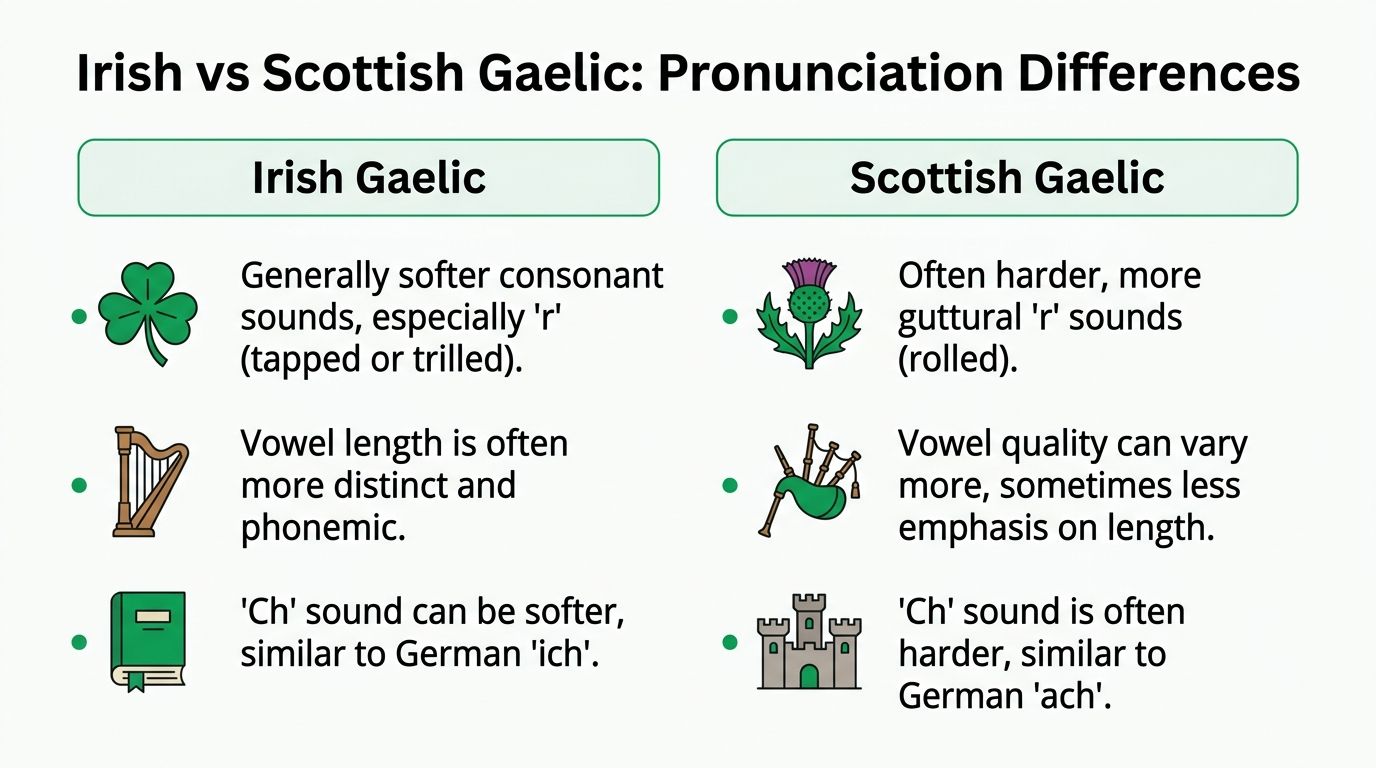
- Correct pronunciation immediately: Don't let mistakes fossilize.
- Move up gradually: Easy wins first, harder prompts later.
- Mix AI practice with human conversation: One supports the other.

The summer Gaeltacht immersion guide is useful if you want to understand how immersion habits reinforce speaking confidence, especially when you're not living in an Irish-speaking area. For a broader learning workflow, many schools also look at language school software when building structured practice systems.
Video practice can help learners hear pacing and rhythm in context.
If you're serious about speaking, make one rule essential. Don't let a day pass without saying something in Irish.
5. Explore Irish Literature, Music, and Arts at Their Source
Irish opens a door that translation can't fully reveal. Literature in the language carries its own wordplay, imagery, and cultural memory, and that's especially true if you care about poetry, song, or creative writing. Reading Irish at the source lets you hear the language as writers shaped it, not only as translators reconstructed it.
That matters for music too. Traditional Irish songs depend on sound, rhythm, and phrasing in ways that English versions often soften. If you've ever heard a song in a session and felt the melody before the meaning, learning the language lets you understand both. The same is true in contemporary arts, where Irish-language creators use the language to carry identity, humour, and modern social commentary.
The best entry point is not always the oldest text. Start with something current, then move backward.
- Read contemporary writers first: They're often more approachable than medieval material.
- Listen while you study: Pair vocabulary with traditional songs and modern performances.
- Use subtitles wisely: Film and TV can train your ear without overwhelming you.
- Follow living creators: Social media makes Irish-language arts much easier to access than before.
- Visit cultural spaces: Libraries, book clubs, and arts centres often have Irish-language resources.
For readers who want to root study in living culture, Irish becomes particularly rewarding. You're not only learning how to say things, you're learning how generations of speakers chose to make meaning. That's why many learners stick with the language longer once they connect it to music or poetry.
If you already love books or songs, let that interest drive your study schedule. Motivation lasts longer when the language feeds a real taste you already have.
6. Engage in Travel and Authentic Local Experiences in Ireland
Travel changes when you can use even a little Irish. English will still get you around most of the country, but Irish can add depth to the trip, especially in places where the language is visible in signs, place names, local events, and community life. You start noticing not just where you are, but why the place is named that way.
That matters because language often marks the difference between seeing Ireland as a destination and experiencing it as a living culture. A greeting in Irish, a phrase at a pub, or the ability to ask for directions in a respectful way can shift an interaction from transactional to memorable. It also shows locals that you've taken time to learn something of their world.
If you travel with purpose, use the language before you go.
Practical rule: Learn the phrases you'll actually need, then practise them until you can say them without pausing.
Focus on these situations:
- Restaurants and cafés: Ordering food, asking about dishes, thanking staff.
- Hotels and transport: Check-in, directions, buses, train stations.
- Local landmarks: Understanding Irish names and their history.
- Traditional pubs and sessions: Basic social language for conversation and listening.
- Gaeltacht visits: Deeper immersion if you want more Irish in daily use.
The Ireland cost breakdown for travellers can help with trip planning, but the language side is what turns a good visit into a meaningful one. For scenario practice before you go, use the food and travel practice module style built into beginner-friendly tools and rehearse the exact exchanges you expect to have.
Irish doesn't replace the rest of your travel preparation. It sharpens it. A few phrases, learned early, can make the whole trip feel more personal.
7. Challenge Your Brain and Enjoy Cognitive Health Benefits
Language learning is mental work, and Irish gives your brain a real workout. You're not just memorizing words, you're training memory, pattern recognition, attention, and the ability to switch between systems. For adults, that kind of effort can be rewarding precisely because it's demanding in a focused, structured way.
Irish is especially useful as brain training because it doesn't always follow the same habits English speakers expect. That keeps you attentive. When you work on pronunciation, grammar, or sentence order, you're forcing your mind to hold multiple tasks at once, which is part of why language study feels stimulating even on difficult days.
The benefit isn't limited to younger learners. Older adults often choose language study because it gives structure to the day and keeps learning active. Professionals use it as a kind of mental reset after work, and students sometimes find that the discipline carries over into other subjects.
A good routine keeps the challenge healthy, not overwhelming.
- Study regularly: Short, repeated sessions are better than rare marathons.
- Mix activities: Speaking, listening, and quizzes keep the brain engaged.
- Track visible progress: Seeing movement helps you stay with it.
- Pick a consistent time: Habit reduces friction.
- Use gamified tools: Points and streaks make repetition easier to sustain.
If you want the mental benefits, consistency matters more than intensity. A few focused sessions every week can keep you active without turning the language into a chore. That's one reason many learners prefer platforms that blend repetition with quick feedback, because the brain stays engaged when the process feels interactive instead of passive.
Irish won't solve every cognitive concern, and it shouldn't be treated like a miracle cure. But it can absolutely be part of a healthy, challenging learning routine that keeps your mind active.
8. Join a Vibrant Global Community of Irish Language Learners
Irish can connect you to people you've never met. That's one of the most overlooked reasons to learn it. There's a real community of heritage learners, cultural advocates, students, and adults who enjoy the language, and that community makes the process easier to sustain.
Community matters because language is social. A learner who practises alone can stall quickly, but a learner who shares progress, asks questions, and sees others doing the same has more reasons to keep going. Online spaces also make Irish more accessible for people outside Ireland, which is important for diaspora learners and busy adults who can't attend in-person classes regularly.
The web has changed this part of the language journey. Learners can now join conversation groups, listen to Irish media, and participate in digital immersion from almost anywhere. That means you don't need to live in a Gaeltacht to keep the language active in your week.
A healthy community habit is simple.
Find people who are a little ahead of you, and people you can help. Both relationships keep you moving.
Try these practical steps:
- Use leaderboards for motivation: Friendly competition helps many learners stay consistent.
- Join study groups: Small groups create accountability.
- Share milestones: Public progress makes the effort feel real.
- Support newer learners: Teaching reinforces what you know.
- Show up regularly: Community works best when you don't disappear after the first burst of enthusiasm.
If you care about belonging, Irish gives you more than a solo learning project. It gives you a shared path. That alone can be enough to keep momentum alive when motivation dips.
Why Learn Irish: 8-Point Comparison
| Title | 🔄 Implementation complexity | ⚡ Resource requirements | 📊 Expected outcomes | 💡 Ideal use cases | ⭐ Key advantages |
|---|---|---|---|---|---|
| Connect with Irish Heritage and Cultural Identity | Medium, vocabulary + cultural context | Moderate time; cultural resources & community access | Deepened cultural understanding; stronger family connection | Heritage reclaiming, diaspora, family reconnection | Strengthens identity; access to authentic folklore & place‑names |
| Enhance Career Opportunities and Professional Advancement | High, requires intermediate/advanced proficiency | Significant study time; certifications; industry vocabulary | Better job prospects; eligibility for bilingual roles; higher marketability | Job seekers in Ireland, public service, media, tech sectors | Competitive edge in Irish job market; qualifies for specialized roles |
| Prepare Successfully for the Leaving Certificate Irish Oral Exam | Medium–High, exam‑focused skills & pronunciation | Regular practice (6–12 months); exam modules & mock orals | Higher oral exam scores; increased exam confidence & fluency | Secondary students preparing for Leaving Cert oral | Targeted exam alignment; instant feedback & scenario practice |
| Build Genuine Conversational Fluency and Speaking Confidence | Medium, progressive speaking practice | Daily speaking practice; AI + occasional human partners | Improved spontaneous speaking; reduced anxiety in conversations | Travelers, meetup attendees, job interview prep | Accelerated speaking confidence; immediate pronunciation correction |
| Explore Irish Literature, Music, and Arts at Their Source | High, requires advanced comprehension | Time for deep reading/listening; access to texts and recordings | Access to original works; richer artistic and linguistic insight | Literature/music enthusiasts, researchers, arts students | Authentic artistic experience; uncovers nuances lost in translation |
| Engage in Travel and Authentic Local Experiences in Ireland | Low–Medium, basic phrases easy; immersion harder | Low: short practice sessions, phrase guides, offline resources | More authentic interactions; practical travel benefits & respect | Tourists, cultural travelers, Gaeltacht visitors | Enhances travel authenticity; practical safety and social benefits |
| Challenge Your Brain and Enjoy Cognitive Health Benefits | Low–Medium, simple start, sustained practice needed | Low: regular short sessions; gamified tools & quizzes | Cognitive gains (memory, attention); sustained mental stimulation | Older adults, lifelong learners, busy professionals | Proven brain‑health benefits; engaging, measurable progress |
| Join a Vibrant Global Community of Irish Language Learners | Low, participation focused | Low: platform engagement, time for interaction | Greater motivation, accountability, peer support | Social learners, those seeking community & accountability | Peer support, shared resources, global cultural connections |
Your Journey with the Irish Language Starts Now
Whether you're drawn to Irish because of family history, school goals, career plans, cultural curiosity, or the simple wish to speak a language with depth, the reasons to learn are stronger than many people realize. Irish is not only a symbol of heritage, it's a living language with measurable learner energy, public support, travel value, workplace relevance, and a community that continues to grow around it. The most encouraging part is that you don't need to wait for the perfect moment. You can begin with one phrase, one topic, or one daily practice session, and build from there.
If your reason is heritage, Irish can help you reconnect with names, stories, and places that were always part of your family's background. If your reason is school, it can make the Leaving Certificate oral less intimidating and more manageable. If your reason is work or travel, it can give you practical language for real conversations, not just textbook exercises. If your reason is personal growth, it offers a demanding but rewarding way to keep your mind active and your motivation fresh.
Modern tools make the first steps easier than they used to be. A learner can practise speaking from day one, get immediate feedback, and rehearse realistic situations without waiting for a weekly class. That matters because Irish becomes useful fastest when you start using it, not just studying it.
If you're ready to make Irish part of your life, visit Gaeilgeoir AI and start with guided conversation practice, pronunciation support, and scenario-based lessons that fit your pace. Build one small habit today, and let the language grow from there.