Irish Language Translator: A Guide to Getting It Right

You're probably here because you typed a phrase into an irish language translator, got something back, and still weren't sure if it was right. Maybe it looked formal when you wanted conversational. Maybe it looked word-for-word English dressed up as Irish. Or maybe you needed something simple like “Can I order a coffee?” and the result felt oddly stiff.

That confusion is normal. Irish isn't a language where you can always swap one English word for one Irish word and expect a natural sentence. Grammar shifts, dialect choices matter, and small spelling changes can carry real meaning. For beginners, that makes translation feel harder than it should be.

A good irish language translator can still be useful. The trick is knowing which kind of help you need. Sometimes a machine tool is enough. Sometimes you need a human translator. Sometimes what you really need isn't translation at all, but guided practice so you can say the phrase yourself with confidence.

Table of Contents

Why Using an Irish Language Translator Can Be Tricky

Irish sits in an unusual position. A lot of people in Ireland have some relationship with the language, but far fewer use it actively every day. According to Ireland's 2022 census data on Irish language use, 1,873,997 people aged three and over said they could speak Irish, while 71,968 reported speaking it daily. That gap explains why so many people reach for translation tools. They know some Irish, recognize some Irish, but need help turning that into natural wording.

That's where the trouble starts. Many tools are built for major world languages with huge amounts of training material. Irish has less of that material available, so machine output can sound shaky, too literal, or strangely formal. If you're a learner, you may not spot the mistake until a teacher, fluent speaker, or friend says, “That's not how we'd say it.”

There's another source of confusion. People often search for an irish language translator when they need different things. One person wants a sentence for a holiday. Another needs help with pronunciation. Another needs an official document translated properly. If you're still sorting out whether you need translation, dictation, or text conversion, this guide on choosing between transcription and translation services can help clarify the difference.

What people usually mean by translator

When learners say “translator,” they often mean one of three things:

  • A machine translator: A quick online tool for turning English into Irish, or Irish into English.
  • A human translator: A qualified person for official, professional, or sensitive content.
  • An interactive learning tool: Something that helps you build phrases, hear pronunciation, and understand why a sentence works.

Practical rule: If the sentence has to be legally correct, publicly published, or culturally polished, don't trust a first-pass machine output on its own.

Irish also changes by region in ways that can surprise beginners. A phrase that sounds natural in one dialect may feel unusual in another. If you've ever wondered why two Irish speakers give slightly different versions of the “same” sentence, this overview of dialectal differences in Irish is worth reading.

How Machine Translators Process the Irish Language

Machines don't “understand” Irish the way a teacher or native speaker does. They look for patterns. Some systems do that in an older, more piecemeal way. Newer ones handle larger chunks of language at once and usually sound smoother.

Abstract visualization of colorful flowing fiber structures with digital symbols floating in a dark background space.

Two different ways machines translate

A simple analogy helps here.

Statistical Machine Translation, often shortened to SMT, works a bit like a student who has memorized lots of bilingual phrase cards. It looks at many examples and guesses which words or short chunks usually match. This can produce usable results, but it often sounds patchy because the system is assembling a sentence from parts.

Neural Machine Translation, or NMT, is more like a student trying to understand the whole sentence before answering. According to research on Irish machine translation systems, Irish Neural Machine Translation systems use deep learning to process whole sentences, which usually gives more fluent output than older phrase-based SMT systems. That's why newer tools often sound less robotic.

Still, smoother isn't the same as correct. A sentence can sound elegant and still be wrong in grammar, register, or meaning.

Why Irish is harder for AI tools

Irish is often described as a low-resource language in language technology. That doesn't mean the language is weak or less expressive. It means AI systems have fewer high-quality bilingual examples to learn from than they do for languages like English, Spanish, or French.

That matters because Irish has features machines often mishandle:

  • Initial mutations: Small spelling shifts at the start of a word can change after certain grammar triggers.
  • Flexible phrasing: The most natural Irish version of an idea may not mirror English structure.
  • Dialect variation: Ulster, Connacht, and Munster Irish don't always line up neatly.
  • Register: Schoolbook Irish, official Irish, and spoken everyday Irish can feel quite different.

A machine translator is a shortcut for pattern matching, not a substitute for judgment.

If you want to see how AI can be more useful when it supports learning instead of pretending to replace it, this guide to learning Gaelic language with AI gives a practical view of where these tools fit.

Common Errors and What to Watch Out For

The most common Irish translation mistakes aren't random. They follow patterns. Once you know those patterns, you'll start spotting bad output much faster.

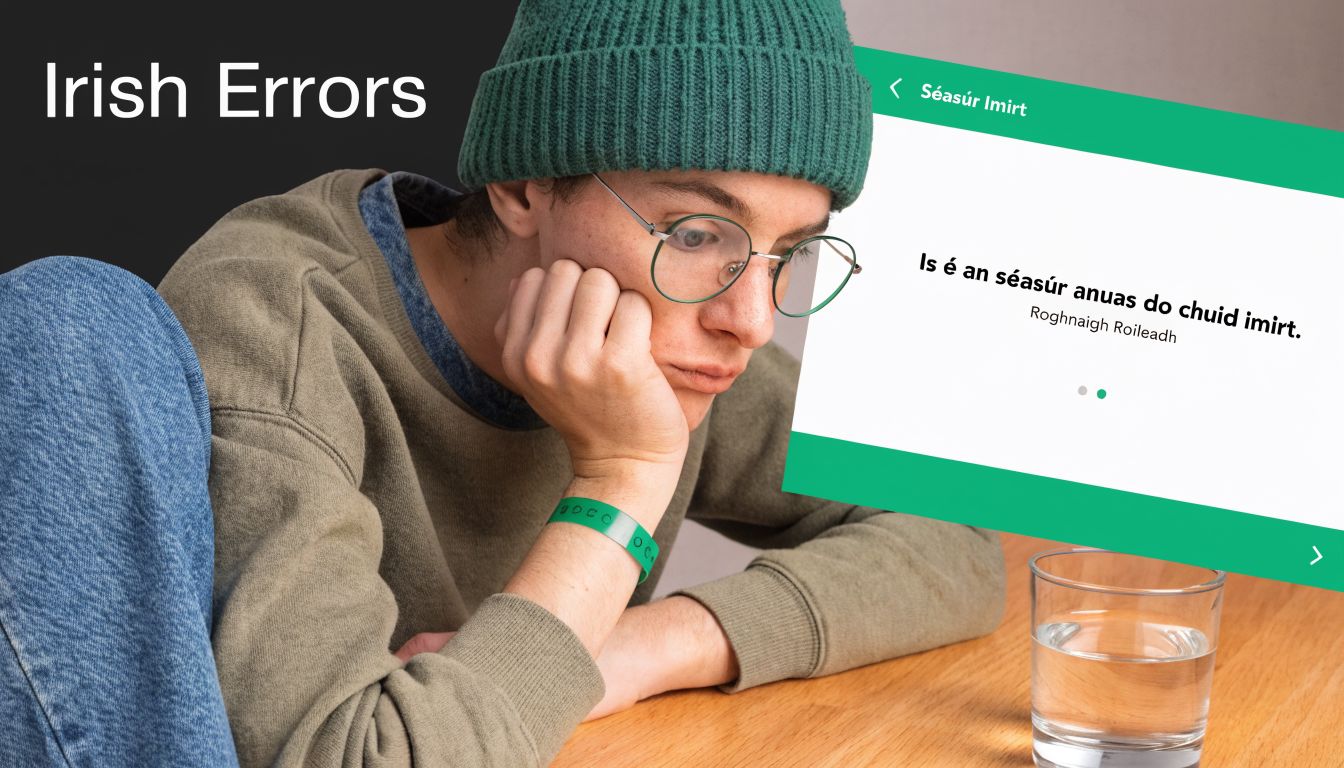
A person in a beanie and glasses looking thoughtfully at an Irish language learning app interface.

Literal translation traps

English idioms are a minefield. If you feed an idiom into a generic translator, it may produce a sentence that is technically word-shaped but culturally bizarre. That's because the system often chases the surface meaning rather than the underlying idea.

For example, learners often expect a translator to convert an English phrase piece by piece. Irish doesn't always work that way. A natural Irish sentence may completely reorganize the thought.

Watch out for these warning signs:

  • It sounds overly English: The sentence follows English word order too neatly.
  • It feels too formal for the situation: You wanted a casual phrase and got something stiff.
  • Each word seems translated separately: That usually means the tool didn't catch the idiom.
  • You can't explain why the grammar works: If the system can't show its reasoning, treat the output as a draft.

This problem shows up in other language workflows too. If you work with multilingual apps or websites, the discussion of fixing machine translation errors in Django is useful because it highlights how machine output often needs review before people rely on it.

Grammar and dialect problems

Irish grammar has little switches that machines often miss. A common one is the change at the beginning of a word after certain particles or possessives. Beginners know these as lenition and eclipsis, and they matter more than many translators admit.

A machine may also mix dialects in a single result. That can leave you with a sentence that isn't clearly wrong to a beginner, but doesn't sound fully natural to a speaker from any one region.

If a translation looks polished but you wouldn't know how to say it out loud, pause before using it.

For learners, guided correction proves beneficial. A page on common mistakes in Irish can train your eye to notice the kinds of errors machines slip into everyday phrases.

Here's a short explainer that shows why these small issues matter in practice:

A quick way to sanity-check a translation

When you get Irish output from a tool, ask yourself three simple questions:

  1. Would I hear this in conversation?
  2. Is this for understanding, or for sending to another person?
  3. Can I verify it with a teacher, dictionary, or learning context?

If the answer to the second question is “I'm sending it,” you need a higher standard than if you're just trying to understand a sign or headline.

A Practical Guide to Choosing Your Translator

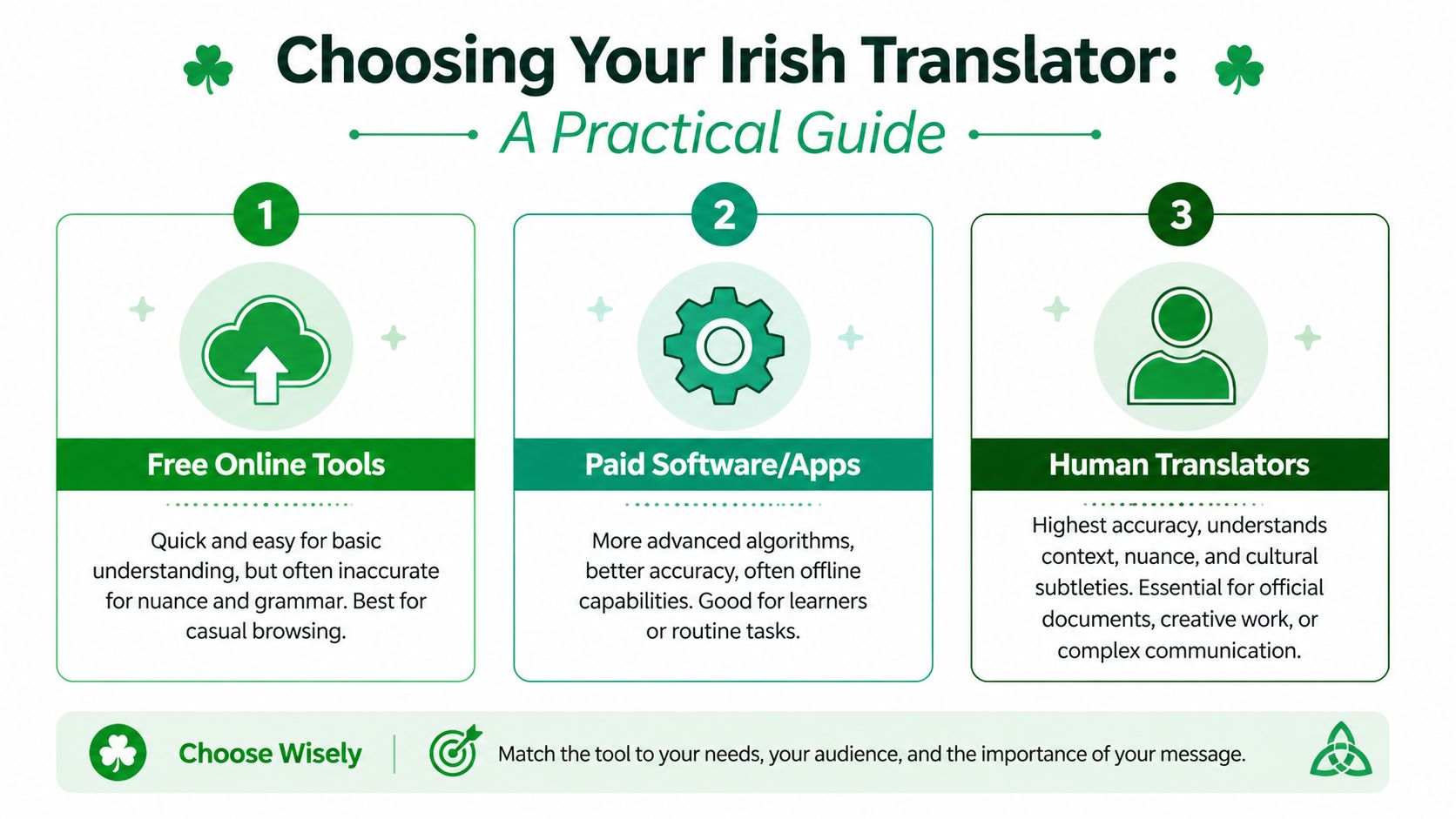
Choosing the right irish language translator is less about finding one perfect tool and more about matching the tool to the task. A rough draft, a study aid, and an official translation are three different jobs.

A guide illustrating the three types of Irish translators, comparing online tools, software, and professional human services.

When a free tool is enough

Free online tools are fine for low-risk tasks. Think reading a menu item, getting the gist of a sentence, or testing vocabulary. They're fast, and for casual browsing that speed matters more than polish.

Use them when:

  • You need rough meaning: Signs, short posts, basic phrases.
  • You're brainstorming: You want a starting point, not a final answer.
  • You're checking vocabulary: One word or a short phrase at a time.

Don't use them as your final step for anything formal, public, or emotionally important.

When you need a human translator

For official content, accuracy is a process, not a guess. According to guidance on Irish translation accreditation and workflow, professional translators in Ireland often hold accreditation such as Séala an Aistriúcháin from Foras na Gaeilge, and their workflow includes a primary translator and a secondary linguist reviewer. That's a very different standard from copying and pasting a machine result.

Choose a human translator for:

  • Official documents
  • Legal or medical material
  • Business content
  • Published writing
  • Anything where tone and nuance matter

If your project also includes media, subtitles, or visual storytelling, tools outside pure translation may come into the workflow. For example, a cinematic AI video generator can help create visuals around content, but it doesn't replace linguistic review. The language still needs a qualified human when accuracy matters.

When a learning tool makes more sense

A lot of people searching for an irish language translator are not trying to outsource the language. They're trying to use it. That's a different need.

Here's a quick comparison:

Option Best for Main strength Main risk
Free online tool Quick gist Speed Weak nuance
Learning app or guided AI tool Study and speaking practice Feedback and repetition Not for certified translation
Human translator Official or polished content Context and review Slower, more involved

One learning-focused option is Gaeilgeoir AI, which offers guided Irish conversation practice, pronunciation support, and instant phrase help for learners. That makes it more useful than a plain translator when your real goal is to speak, prepare for class, or build confidence in everyday situations.

Suggested Workflows for Common Scenarios

A tool becomes easier to choose when you attach it to a real situation. The need isn't for “translation” in the abstract. They need a phrase for travel, support for study, or a trustworthy version of a document.

A person using a smartphone and another person learning Irish on a tablet, showcasing modern language learning.

For a traveler

If you're visiting Ireland and want to interact respectfully with the language, keep your workflow light.

Start with a free translator for signs or simple lookups. Then practice a handful of spoken essentials like greetings, ordering food, or asking directions in a learning environment where you can hear and repeat the phrase. Don't rely on a copied machine sentence for a full conversation.

A small, usable phrase set beats a huge list you can't pronounce.

For a student preparing for oral Irish

Students often make the mistake of collecting model answers they don't fully understand. That usually backfires in conversation.

A better workflow looks like this:

  1. Draft the idea in simple English
  2. Build the Irish version in short chunks
  3. Check vocabulary and grammar
  4. Practice speaking it aloud
  5. Get feedback on pronunciation and phrasing

Learn sentences the way you'd learn music. Don't just read the notes. Say them, hear them, and repeat them until they feel natural.

For a heritage learner

Heritage learners often want more than correctness. They want connection. That means the “best” translation isn't always the most literal one. It's the one that sounds like something a real person would say.

Try this rhythm:

  • Collect family words and phrases: Even partial memories matter.
  • Check whether they're dialect-specific: Some family expressions may reflect a region.
  • Use translation as a clue, not a verdict: Let it point you toward meaning.
  • Practice in conversation: That's where the language becomes personal again.

For professional or official use

For professional work, start with the assumption that machine tools are only drafting aids. Public-facing or formal Irish needs review by someone qualified.

That matters even more now because the demand for strong Irish translation has grown in institutional settings. As reported by The Irish Times on the rise of Irish translators in EU institutions, Irish became a full official and working EU language in 2022, and the number of Irish-language translators across EU institutions rose from 58 to over 200, with translation volume reaching tens of thousands of pages annually. Irish isn't only symbolic. It's working language territory now.

That raises the bar. If your translation represents an organization, treat it that way.

Beyond Translation From Words to Conversation

Starting with translation often feels safe. You put words in, you get words out. That's helpful at the beginning, especially when Irish still feels unfamiliar.

But translation is only a bridge.

If your real goal is to travel, reconnect with family history, pass an oral exam, or speak even a little Irish with confidence, then word conversion won't get you all the way there. You need to know when a phrase sounds natural, when a sentence feels too English, and how to say the thing you mean without waiting for a machine to guess it for you.

That's why the most useful question isn't “What's the best irish language translator?” It's “What kind of support helps me communicate?” Sometimes that support is a professional human translator. Sometimes it's a quick machine tool for rough understanding. Often, for learners, it's guided practice that turns passive recognition into active use.

Irish rewards that shift. The language becomes much less intimidating when you stop treating it like a code to crack and start treating it like a conversation to join.


If you want to move beyond copying translations and start using Irish, try Gaeilgeoir AI. It's built for guided, real-world practice so you can work on everyday phrases, pronunciation, and speaking confidence at your own pace.

Learning Gaelic: A Guide to Irish Pronunciation and Grammar

You're probably here because you've seen Irish on a road sign, heard a phrase in a song, or felt that tug to reconnect with something older and more rooted. Then you try to learn a few words and hit a wall. One site gives you a translation, another gives you a different spelling, and suddenly a simple word like “beautiful” seems less simple than it should be.

That confusion is normal. Learning Gaelic, especially Irish Gaelic, gets much easier when you stop treating it like a word-for-word code and start hearing it as a living language with patterns, texture, and mood. Irish rewards curiosity. A small grammar rule can completely change how natural you sound, and a single adjective can tell you a lot about tone, context, and even culture.

Table of Contents

More Than a Word An Introduction to Beauty in Irish

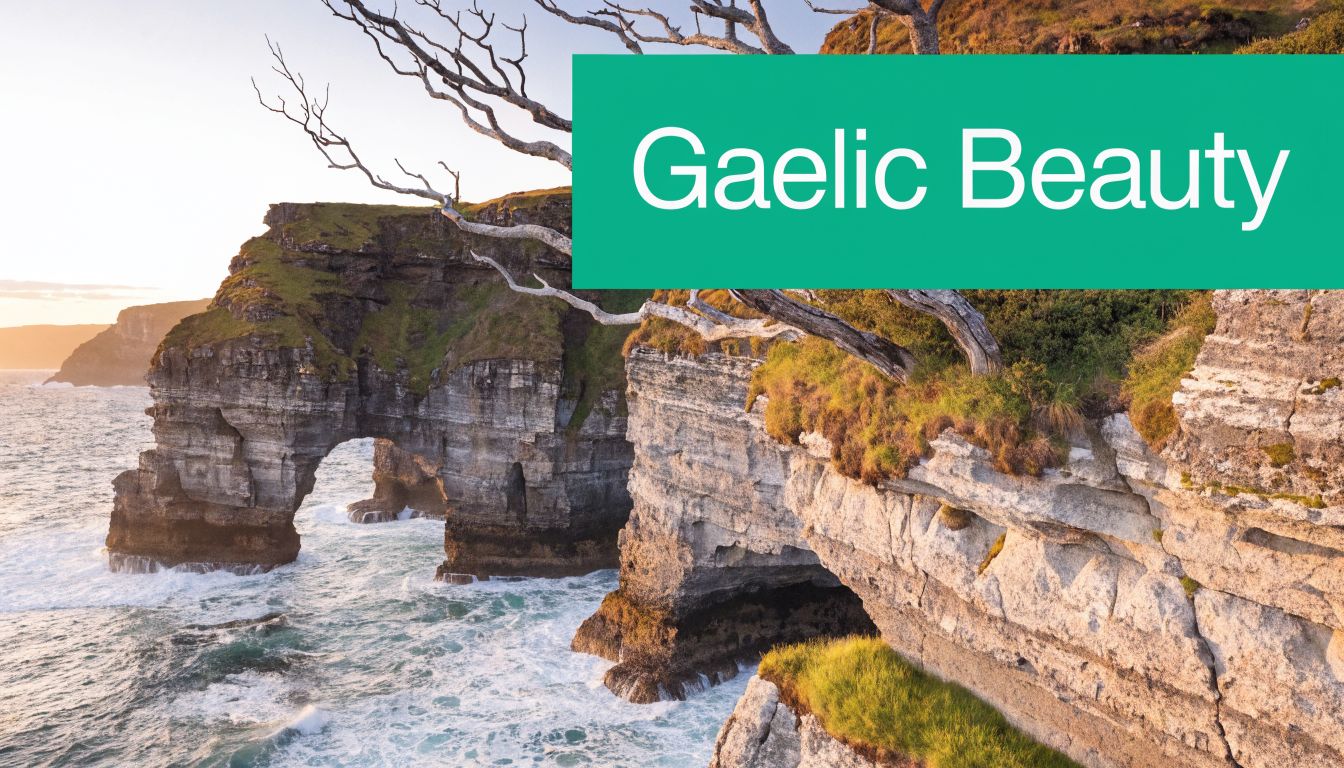
You stand on the west coast, the wind is loud, the sea is grey-blue, and the cliffs look almost unreal. In English, “beautiful” does the job. In Irish, you quickly notice that one English word opens into several choices, each with its own shade of meaning.

That's one of the joys of learning Gaelic. Irish often asks you to be a little more precise. Is something grand and striking? Soft and pleasant? Fine and elegant? The language nudges you to notice more.

A scenic view of a natural stone arch on a rugged coastline overlooking the ocean.

That sensitivity to detail is part of what makes Irish feel so expressive. It doesn't just label the world. It colours it. When learners first meet words like álainn, deas, or breá, they're not just memorising synonyms. They're learning how Irish speakers shape feeling and description.

Irish is also very much alive now, not locked away in old books. The language has seen a 71% increase in speakers in Ireland since 1991, and digital tools like Duolingo have over 1 million active learners at any given time, which helps explain why Irish is now one of the world's most actively studied minority languages, as noted in this overview of the growing Gaeilge opportunity.

If you're curious about why Irish sounds the way it does, this guide to what makes Irish sound unique is a helpful companion. Pronunciation and meaning are tightly linked in Irish, so the sound system matters from the start.

Irish often feels poetic because it asks you to choose words by situation, not just by dictionary match.

That can seem like extra work at first. It's a gift. Once you understand the pattern, the language starts to feel warmer, richer, and much more human.

The Main Word for Beautiful Álainn

If you learn only one word for “beautiful” today, make it álainn.

This is the broad, dependable word you can use in many situations. You can use it for a person, a place, a day, a song, a memory, or a piece of art. It carries the sense of real beauty, not just “nice enough.”

How to say álainn

A simple pronunciation clue is AWL-inn.

Say the first part gently, with an “awl” sound. Then finish with a short “inn.” Don't worry if it isn't perfect on day one. Irish pronunciation becomes clearer when you repeat whole phrases, not isolated syllables.

Try these:

  • bean álainn = a beautiful woman
  • áit álainn = a beautiful place
  • lá álainn = a beautiful day

Notice how useful this is already. With one adjective, you can start describing the world around you.

When álainn fits best

Think of álainn as your “full beauty” word. If deas is like “nice” or “pretty,” álainn is stronger and deeper. It suits moments when you want to say something moved you.

A few easy examples:

  1. Tá an áit seo álainn.
    This place is beautiful.

  2. Bhí lá álainn againn.
    We had a beautiful day.

  3. Is amhrán álainn é sin.
    That is a beautiful song.

The exact sentence structure can wait. What matters first is confidence. You want a word you can reach for quickly.

Practical rule: If you're unsure which Irish word for “beautiful” to use, start with álainn. It's the safest and most flexible choice.

A memory trick that helps

Link álainn to moments with emotional weight. A coastline. A singer's voice. A child asleep. A sky after rain. The word sticks better when it's tied to an image.

Many learners make the mistake of building long vocabulary lists too early. A better start is to take one strong word and use it in five or six real phrases. That's how language becomes available in conversation, not just visible on a flashcard.

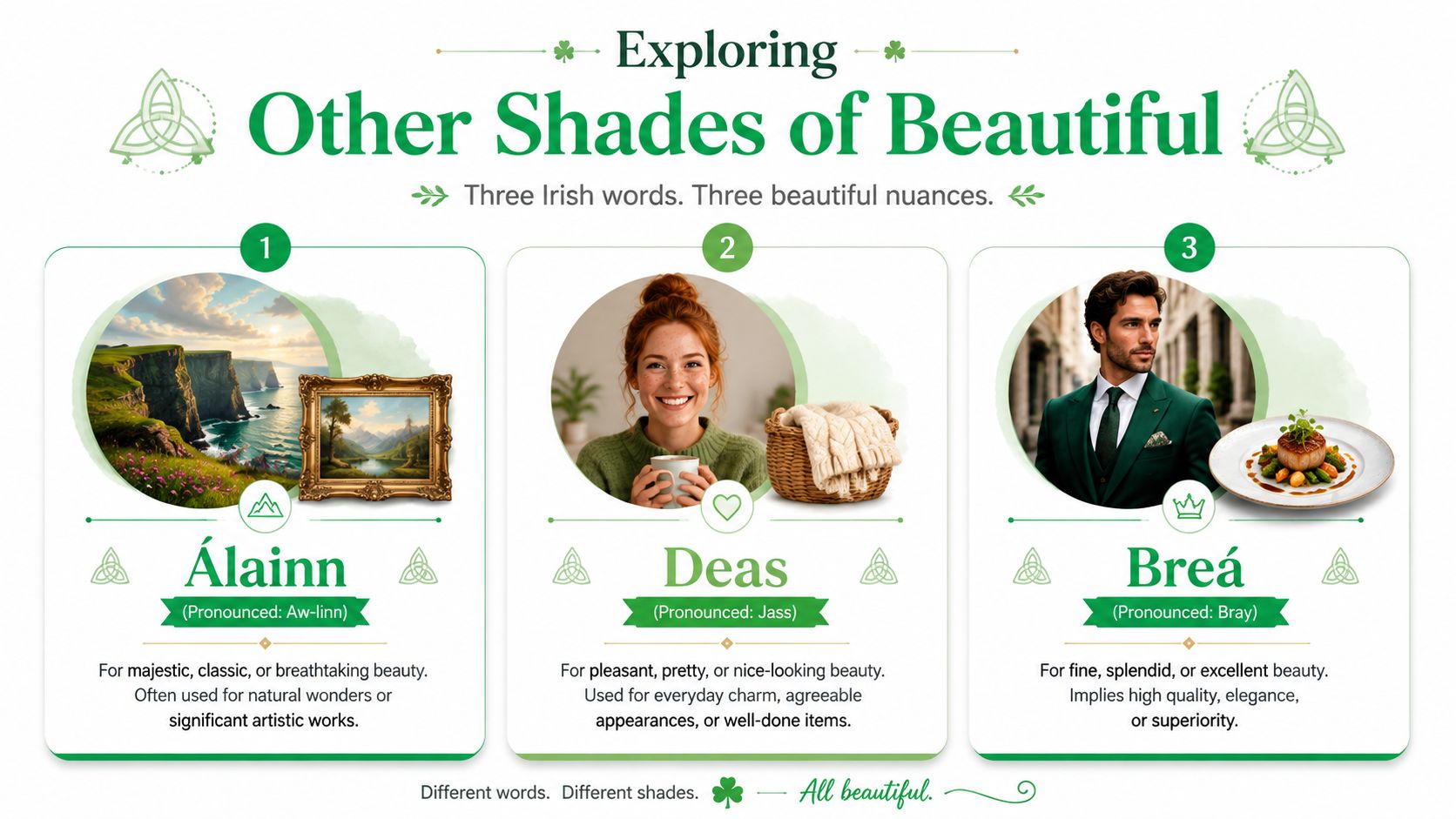
Exploring Other Shades of Beautiful

Once álainn feels comfortable, your Irish becomes more natural when you add a few nearby words. English leans heavily on “beautiful.” Irish spreads that meaning across different everyday choices.

The key is not to ask, “Which word is the direct translation?” Ask, “What kind of beauty do I mean?”

Three common choices

An infographic showing three Irish words for beautiful: Álainn, Deas, and Breá, with their pronunciation and descriptions.

Here's a practical way to separate them in your mind:

  • Álainn
    This is the strongest all-purpose choice for beauty. Use it when something feels striking, moving, or deeply lovely.

  • Deas
    This often means “nice,” “pleasant,” or “pretty.” It can describe a person, weather, clothing, or a friendly atmosphere. It's lighter than álainn.

  • Breá
    This can suggest “fine,” “splendid,” or “lovely.” It often has a polished feel, and you'll hear it in phrases about weather, appearance, and quality.

If you're building a study habit, the same approach used in daily English vocabulary routines works well here too. Don't collect ten near-synonyms at once. Learn three words, compare them, then use each in a sentence you'd genuinely say.

How the tone changes

Think of these words like paint shades.

Álainn is the deep, rich colour you use for something memorable.
Deas is the bright everyday shade that makes speech sound friendly and natural.
Breá has a neat, finished quality, like complimenting something for being both lovely and well put together.

Here are simple examples:

  • cailín deas = a nice or pretty girl
  • lá breá = a fine day
  • pictiúr álainn = a beautiful picture

You may also meet dathúil, often used for “handsome” or “good-looking,” especially for a person. It's more specific than álainn and less general than deas.

Context matters more than dictionaries

A bilingual dictionary can tell you what a word can mean. It usually can't tell you what feels natural in the moment.

That's why collections of cool Irish words to know can be useful when you're learning Gaelic. They expose you to mood and context, not just bare translations.

A learner who knows one word in ten real situations usually speaks better than a learner who knows ten words in no situation at all.

When you're choosing among álainn, deas, and breá, don't chase perfection. Pick the one that matches the feeling best. Native-like precision grows through exposure and repetition.

Making It Sound Right Grammar and Agreement

Irish gets its music from small changes. One of the biggest is that words often shift depending on what comes before them. At first this feels strange. After a while, it starts to feel elegant.

Two ideas matter early on. First, every noun in Irish is masculine or feminine. Second, the adjective that follows it may change sound or spelling. This is why Learning Gaelic is not just about storing vocabulary. It's about noticing relationships between words.

Why Irish changes words at the beginning

One of the most famous Irish grammar features is lenition, or séimhiú. In writing, this often means adding an h after the first consonant. In speech, it softens the beginning of the word.

You can think of lenition like a dimmer switch instead of an on-off switch. The word is still the same word, but the opening becomes gentler.

For example, with some feminine nouns, an adjective beginning with certain consonants lenites:

  • bean deas can become a form where the adjective softens after the noun
  • deas may appear as dheas in the right grammatical setting

Not every adjective changes in the same visible way, and not every learner needs every rule on the first day. What matters is hearing that Irish often prefers flow over rigidity.

Gaelic's grammatical structure, including lenition, is one reason regular study matters. According to this discussion of how hard Gaelic is to learn, daily sessions of at least 30 minutes strengthen long-term retention by 50-200% compared with infrequent longer sessions. That fits what most teachers see in practice. Irish settles into memory through contact, not cramming.

A small table that makes this easier

Here's a beginner-friendly snapshot. The examples focus on the pattern, not on memorising every exception at once.

Adjective Example Noun (Feminine) Resulting Phrase Pronunciation Clue
deas bean bean dheas the dh is softened, almost like a light glide
beag fuinneog fuinneog bheag bh is softened
mór oíche oíche mhór mh sounds softened at the front

The exact sound of lenited consonants varies, and dialect affects how strong that change is. But the main idea stays the same. Irish smooths transitions between words.

A simple way to think about agreement

Try this three-step check when making a phrase:

  1. Find the noun
    Is the thing you're describing a woman, place, day, song, or something else?

  2. Learn its gender
    You won't always guess correctly at first, and that's fine. Gender is part memory, part exposure.

  3. Notice whether the adjective changes
    Sometimes it won't. Sometimes the beginning softens.

If this feels technical, keep it grounded in sound. Language learners often freeze because they think grammar is a list of punishments. In Irish, grammar is often just a set of habits that make speech flow better.

For a fuller walkthrough of these patterns, mastering adjectives in Irish is worth reading alongside your phrase practice.

Don't try to master every mutation rule in one sitting. Learn one pattern, hear it in a phrase, then reuse it until it feels ordinary.

That's when grammar starts helping instead of intimidating.

From Beautiful to Most Beautiful

Once you can say something is beautiful, the next useful step is comparison. You want to say one place is more beautiful than another, or that a certain song is the most beautiful one you know.

Irish gives you a neat pattern for this.

The comparison pattern

For more beautiful, use níos plus the comparative form.

For most beautiful, use is plus the comparative form in the right structure.

With álainn, the form you'll often meet is áille.

So you get:

  • níos áille = more beautiful
  • is áille = most beautiful

That spelling shift can surprise beginners, but it's normal. English does this too in its own way. We say “good, better, best,” not “good, gooder, goodest.” Irish also changes form rather than adding one fixed ending every time.

What changes in álainn

The jump from álainn to áille is one of those forms you should learn as a chunk. Don't overanalyse it too early.

Use it in clear comparisons:

  • Tá an pictiúr seo níos áille.
    This picture is more beautiful.

  • Is í seo an áit is áille.
    This is the most beautiful place.

  • Tá an leagan sin níos deise.
    That version is nicer.

You can already hear how your Irish becomes more expressive here. You're no longer just naming qualities. You're weighing, comparing, and reacting.

A good habit is to compare things around you:

  • this room and that room
  • today and yesterday
  • one song and another song
  • two photos from a trip

That turns grammar into opinion, and opinion is where real conversation begins.

Once you can compare, you stop sounding like you're pointing at objects and start sounding like you have a voice.

If the forms feel slippery, repeat whole sentences instead of isolated adjective charts. Your ear will often learn the pattern before your conscious mind can explain it.

Putting It All Together Real Phrases and Examples

Vocabulary and grammar begin to function like a genuine language here. You are not simply memorizing terms for “beautiful.” You are discovering how Irish speakers use them in praise, description, and everyday reaction.

Useful phrases you can actually say

Try these out loud:

  • Tá an radharc álainn.
    The view is beautiful.

  • Lá breá deas atá ann.
    It's a lovely, nice day.

  • Tá gúna deas uirthi.
    She's wearing a nice dress.

  • Is amhrán álainn é.
    It is a beautiful song.

  • Is í an bhean is áille ar domhan í.
    She is the most beautiful woman in the world.

Notice the spread of tone. Álainn lifts the sentence. Deas keeps it conversational. Breá adds a smooth, pleasant note.

If you want to build fluency, don't memorise these in your head. Say them while looking at something real. A window view. A jacket. A painting. A person in a photograph. Irish sticks when the phrase has a target.

A quick note on dialects

Irish has regional varieties, and pronunciation can shift from one area to another. That means a word you learned from a teacher in Munster may sound a little different in Connacht or Ulster.

This isn't a problem. It's part of the life of the language.

A few things beginners notice:

  • Deas may sound sharper or softer depending on the speaker.
  • Vowel length can feel different across regions.
  • Some everyday phrasing choices vary by dialect, even when the grammar is still recognisably the same.

Treat dialect like accent, not like contradiction. English speakers don't panic when Dublin, Glasgow, and Toronto sound different. Irish works the same way.

A mini phrase bank for practice

Use these as short drills:

  1. Áit álainn
    a beautiful place

  2. Bean dheas
    a nice woman

  3. Lá breá
    a fine day

  4. Níos áille
    more beautiful

  5. Is áille
    most beautiful

Read the phrase, look away, then say it from memory. After that, swap in a new noun. Change áit to teach, or to maidin. That small act of substitution is where passive knowledge turns active.

Some of the best Irish practice is ordinary. Describe your tea, your street, your weather, your music, and your mood.

That may sound humble, but it's how people begin speaking.

Practice Speaking with Your AI Gaeilgeoir

Reading examples helps, but speaking is where most learners stall. You know the word on the page, then your mouth hesitates when it's time to use it. That's especially common with Irish because pronunciation, mutations, and sentence rhythm all meet at once.

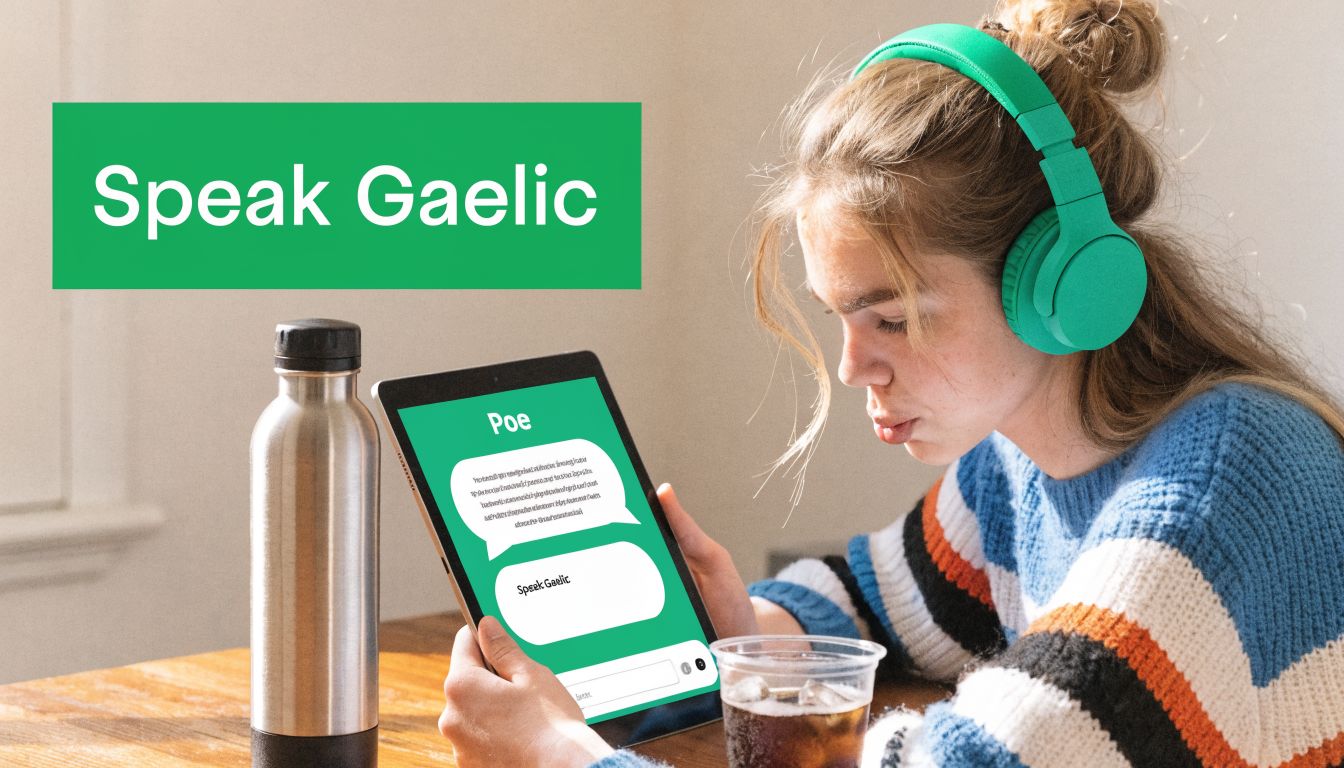
A young woman wearing headphones uses a tablet to learn Gaelic while sitting at a wooden table.

A useful first step is to give yourself tiny speaking tasks each day:

A simple practice routine

  • Describe one object with deas or álainn.
  • Compare two things using níos áille or níos deise.
  • Say one full sentence aloud about the weather, a place, or a photo.
  • Repeat after audio and notice where your pronunciation drifts.

That last part matters. A simple explanation of AI transcription engine basics can help you understand how speech tools detect what you said and where your pronunciation may differ from the target.

Traditional study often under-serves speaking. A 2025 study found that 62% of Gaelic learners abandon traditional methods within 3 months because they lack speaking practice, while gamified apps with AI feedback and scenario-based learning retain 35% more users, according to SpeakGaelic's referenced discussion of this learning gap.

That's why tools built around conversation can help busy adults more than static word lists. Gaeilgeoir AI is one example. It offers guided Irish conversations, pronunciation support, and scenario-based practice for situations like travel, social interaction, or asking for directions.

When you want a quick speaking model, this video is a useful addition to your practice session:

The actual goal isn't perfect performance. It's regular output. A few spoken lines every day will take you farther than long silent study sessions once a week.


If you want to turn these phrases into real conversation practice, try Gaeilgeoir AI. It gives you guided Irish speaking practice with pronunciation support and everyday scenarios, so words like álainn, deas, and breá move from recognition into active use.

Irish for Name: Your Guide to Ainm and Introductions

You're probably here because you want one simple thing: to say your name in Irish, or to understand what someone means when they ask for it. That small moment matters more than most beginners expect. In Irish, learning how to ask and answer “what's your name?” isn't just survival language. It opens the door to sound, grammar, family history, and a very Irish way of making connection.

If you've ever felt that Irish looks beautiful but slightly intimidating, this is a good place to start. One useful word, a few natural phrases, and a little cultural context can carry you surprisingly far.

Table of Contents

The Irish Word for Name Ainm

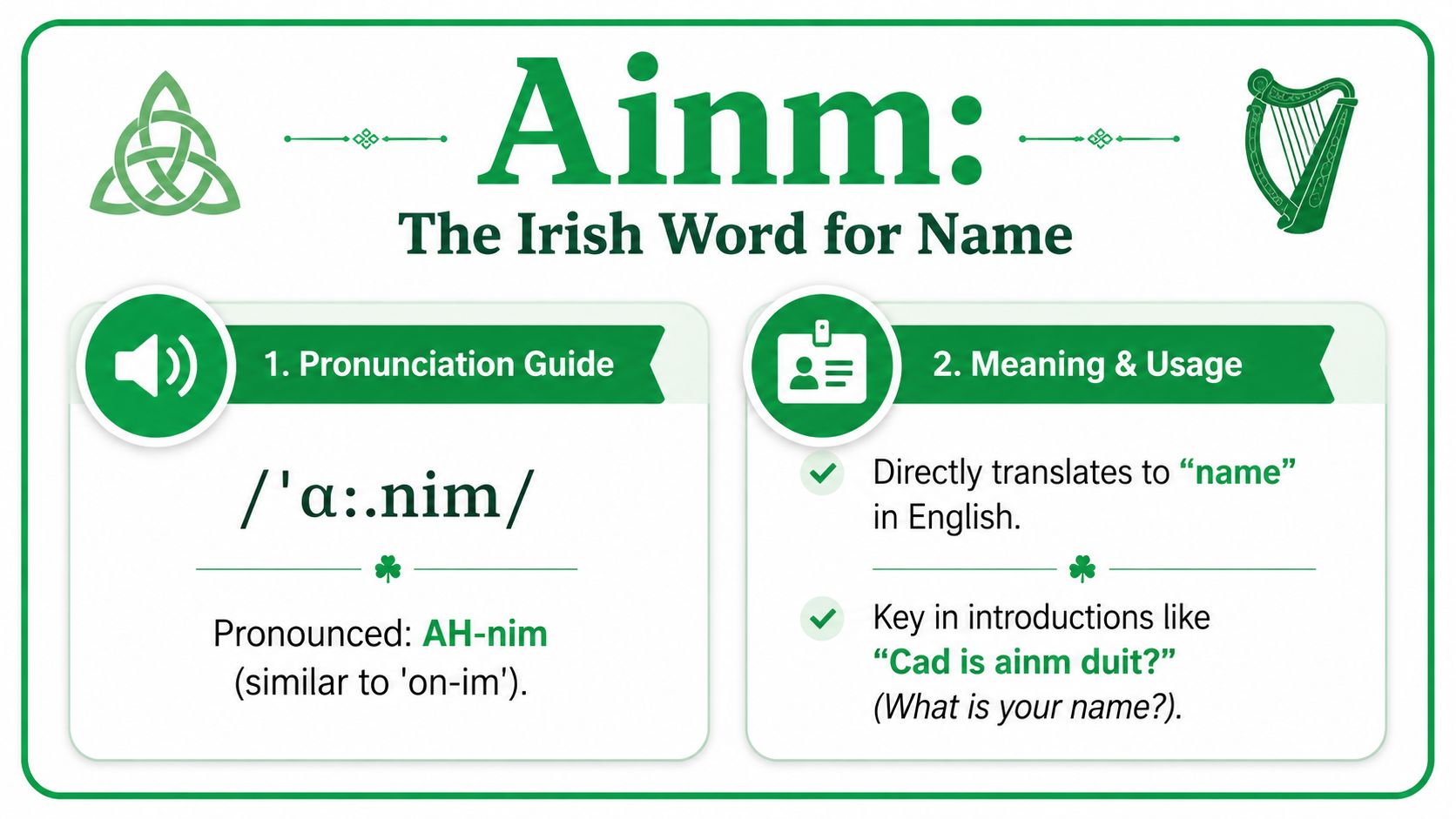
The Irish for name is ainm. If you're searching for irish for name, that's the core word you want to remember first.

A graphic explaining the Irish word Ainm, which means name, with pronunciation and usage examples.

How to say ainm

Many beginners freeze when they see Irish spelling. That's normal. Irish spelling is systematic, but it doesn't map neatly onto English sounds.

A handy beginner guide is to say ainm roughly like AH-nim. Don't worry about making it perfect on day one. What matters first is that you recognize it when you hear it and can say it clearly enough to be understood.

If pronunciation is the part that makes you hesitate, a focused Irish pronunciation guide can help you hear common sound patterns instead of trying to guess every word from the page.

Practical rule: Learn words with their sound, not just their spelling. Irish becomes much easier once your ear gets involved.

The most useful introduction phrases

Once you know ainm, you can build the most common question:

  • Cad is ainm duit?
    What is your name?

There are two very natural ways to answer:

  1. Is mise Seán.
    I am Seán.

  2. Seán is ainm dom.
    My name is Seán.

Both are correct. Both are common. If you're a beginner, start with the one that feels easier in your mouth.

Here are a few examples:

  • Cad is ainm duit? Is mise Aoife.
  • Cad is ainm duit? Liam is ainm dom.
  • Cad is ainm duit? Is mise Sara.

The second pattern can feel strange to English speakers because it doesn't follow English word order. That's one of the first lovely things about Irish. It reminds you that you're stepping into a different language world, not just swapping in translated words.

A quick way to remember it

Try this memory trick:

  • ainm = name
  • Cad is ainm duit? = What is your name?
  • Is mise… = I am…
  • … is ainm dom = My name is…

Say the full exchange aloud as one unit. It's easier to remember a tiny conversation than four separate fragments.

Understanding Key Grammar and Variations

Irish gets more flexible once you notice that small words carry a lot of meaning. The good news is that you don't need advanced grammar to sound polite and natural. You just need to recognize a few patterns.

Duit and daoibh

In Cad is ainm duit?, the word duit is used when speaking to one person.

You may also hear:

  • Cad is ainm daoibh?

That form is used when speaking to more than one person. In some contexts, it can also sound more formal or respectful.

Irish often marks the relationship between speakers more clearly than English does. English uses “you” for one person and many people. Irish doesn't always leave that vague.

A simple contrast helps:

Irish phrase Plain English use
Cad is ainm duit? asking one person
Cad is ainm daoibh? asking a group, or using a more formal plural form

If you only remember duit at first, that's fine. It will serve you well in everyday beginner conversation.

Why you may hear mainm

You might also come across a form like M'ainm is Pádraig. That means My name is Pádraig.

This can puzzle learners because it looks different from ainm. What's happening is that Irish changes words in certain grammatical settings. The little m’ shows possession, so m'ainm means my name.

Compare these:

  • Is mise Pádraig
  • Pádraig is ainm dom
  • M'ainm is Pádraig

All three introduce your name. They do it in different ways.

If grammar is something you want to understand rather than just memorize, a clear guide to the genitive case in Irish can help you notice why forms shift.

Surnames change in Irish too

Irish names don't stop at first names. Surnames also carry grammar and identity.

The Gaois Linguistic Database of Irish-language Surnames organizes 664 surname clusters and helps account for distinctions between male and female surname forms, including married and unmarried variations, features that anglicised forms often lost in English (research on the Gaois surname database).

That can surprise learners who only know surnames in fixed English forms. In Irish, names can reflect grammar, gender, and social context more visibly.

A name in Irish isn't always a frozen label. It can behave like part of the language around it.

That's one reason introductions in Irish feel richer than a simple exchange of labels. You're hearing language, family history, and grammar working together.

From English to Irish Common Gaelicised Names

A lot of learners don't stop at “what's your name?” They want to know, “What would my name be in Irish?” That question is especially meaningful for people reconnecting with family roots, but it's also just fun.

In Ireland today, naming remains lively and varied. The Central Statistics Office reported 10,336 distinct newborn names in 2025, with Irish-language names such as Rían, Dáire, Naoise, and Éabha prominent among the choices (CSO key findings on Irish babies' names in 2025).

Given names often have Irish forms

Some English names have direct Irish equivalents. Others have traditional Irish forms that aren't exact translations but are long-established matches.

A few examples many learners recognize quickly:

  • John becomes Seán
  • Mary becomes Máire
  • Patrick becomes Pádraig
  • Bridget becomes Bríd

Not every modern name has a neat traditional Irish counterpart. Sometimes the best approach is to keep your own name and learn how Irish speakers pronounce it naturally. That's a completely valid choice.

Common English Names and Their Irish Equivalents

English Name Irish (Gaeilge) Form Phonetic Pronunciation
John Seán shawn
Mary Máire MAW-ra
Patrick Pádraig PAW-drig
Bridget Bríd breed
Michael Mícheál mee-HAWL
Catherine Caitríona kat-TREE-na
James Séamus SHAY-mus
Sarah Sorcha SUR-kha
Joan Siobhán shi-VAWN
Owen Eoin OH-in

Use this table as a starting point, not a rulebook. Some families prefer one form, some another, and some use both depending on context.

What Ó and Mac tell you

Irish surnames carry especially deep history. Many are built from two ancestral markers: Ó and Mac.

  • Ó comes from an older form Ua
  • Mac means son

These forms later became the familiar English-looking O' and Mc/Mac. A large portion of common Irish surnames follow these recognizable patterns, which makes them useful for learners trying to decode family names (linguistic overview of Irish surname structure).

That's why surnames like Ó Briain and Mac Cárthaigh feel like more than labels. They point to descent, lineage, and older naming habits.

If your surname begins with O' or Mc, there's a good chance that learning its Irish form will teach you something about how Irish identity was carried through language, even when spelling shifted into English.

The Cultural Importance of Names in Ireland

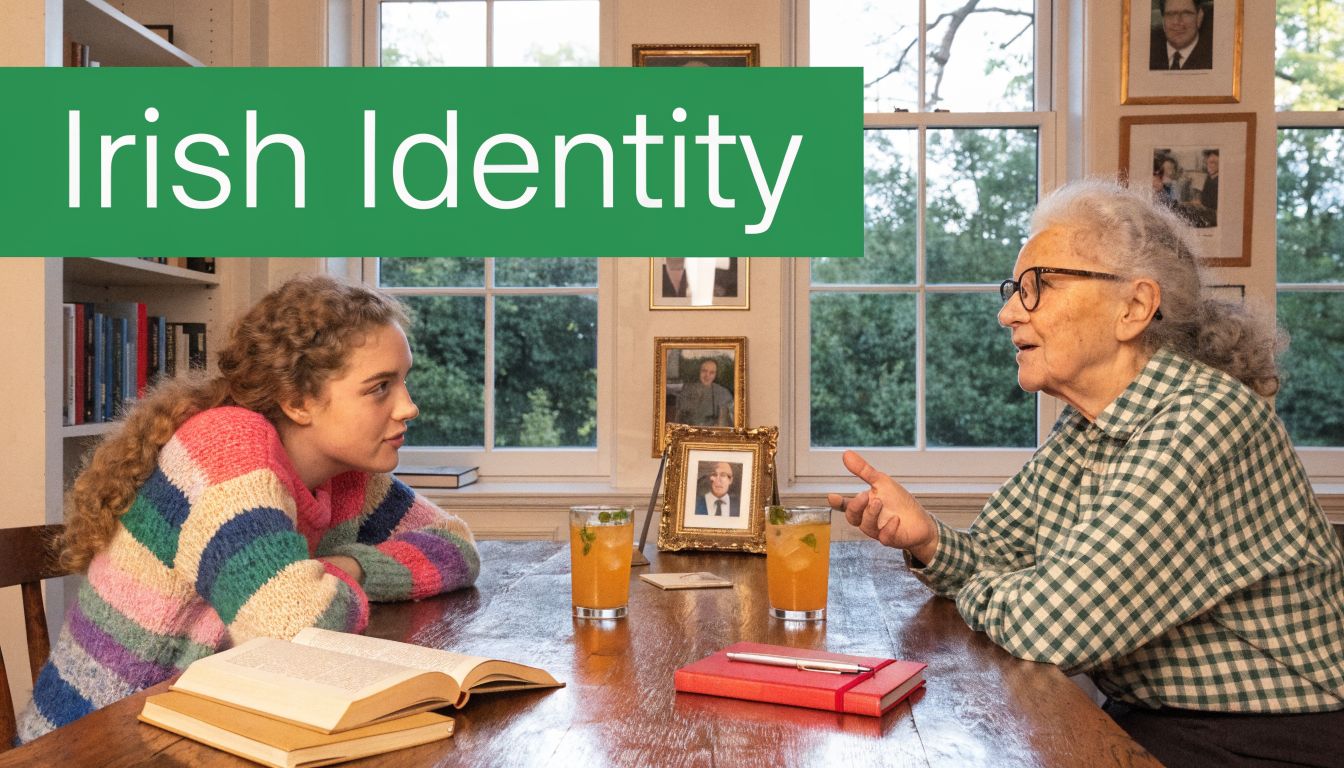
A young girl and an elderly woman talking over drinks and books in a bright room.

Names matter in every culture, but in Ireland they often carry a special charge. Ask someone their name, and very often the conversation doesn't stop there. It moves naturally toward family, place, and connection.

A name can place you

A surname in Ireland can hint at region and history. One of the clearest examples is Murphy, which has been the most popular Irish surname for over a century according to Ireland's Central Statistics Office, with roots linked to the Ó Murchadha sept in Leinster (Irish surname reporting based on CSO data).

That kind of continuity helps explain why Irish people often listen closely to names. A surname may suggest where a family came from, what part of the island shaped them, or which older Gaelic form lies underneath the English spelling.

Why introductions feel personal in Ireland

Think of a simple encounter. You introduce yourself. Someone hears your surname and asks where your people are from. They aren't necessarily being formal or nosy. Often, they're being friendly in a distinctively Irish way.

That social instinct is part of what makes learning introduction phrases worthwhile. You're not just practicing textbook conversation. You're learning how to step into a culture where names often act like doors.

In Ireland, asking your name can be the start of a real conversation, not the end of a polite exchange.

For heritage learners, that can be especially moving. Sometimes the first Irish phrase someone learns is the one that lets them say their own name in a language their ancestors may have spoken. That's a small thing on paper. It rarely feels small in practice.

Practice Your Irish Introductions with Gaeilgeoir AI

Knowing the words is one thing. Saying them smoothly, at a natural pace, is something else.

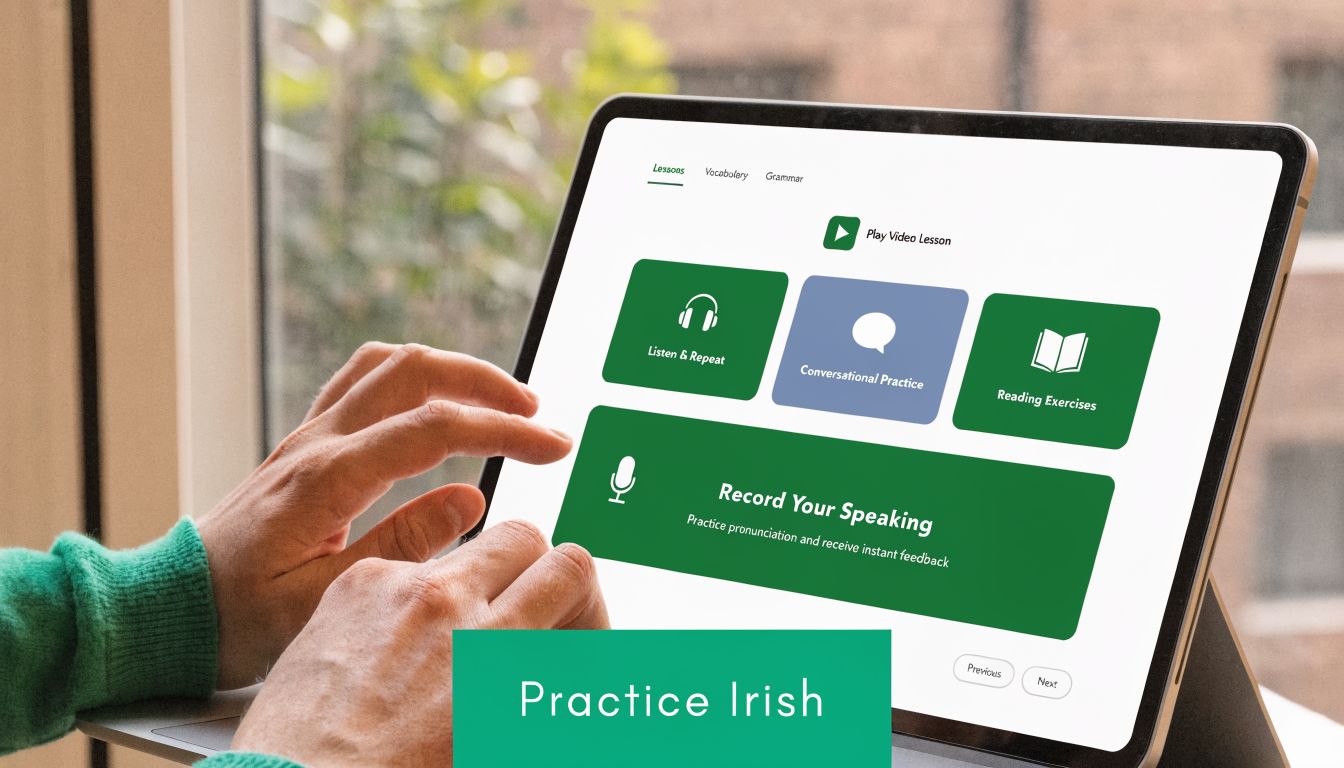
A person using a tablet to access an online Irish language learning platform with interactive lesson modules.

Why speaking practice matters early

A lot of learners stay stuck in recognition mode. They can read Cad is ainm duit? and understand it, but when a real person asks them a question, their mind goes blank for a second.

That's why active practice helps so much. Repeating short exchanges trains your mouth and ear together. It also removes the pressure of inventing long sentences before you're ready.

If you've used conversation tools for other languages, the same principle applies here. Many learners who want to boost your French confidence already understand that speaking improves fastest when practice feels low-pressure and regular. Irish works the same way.

A practical starting point for this is a basic Irish conversation guide that keeps you close to real social language rather than abstract vocabulary lists.

A simple practice routine

Try a short rotation rather than a long study session:

  1. Say the question aloud three times.
    Cad is ainm duit?

  2. Answer in two different ways.
    Is mise Anna.
    Anna is ainm dom.

  3. Swap in different names.
    Use your own name, your friends' names, and common Irish names.

  4. Practice listening as well as speaking.
    Hearing the rhythm matters as much as memorizing the wording.

  5. Add one follow-up question.
    Once your introduction feels easy, build outward.

Short, repeated speaking practice usually beats a long session of silent reading.

That's especially useful with names, because names are personal. If you practice with words that matter to you, they tend to stick better.

Start Your Irish Language Journey Today

Learning irish for name starts with ainm, but it doesn't end there. From one small word, you've already met everyday conversation, key grammar, Gaelic versions of names, and the cultural weight surnames can carry in Ireland.

That's a strong beginning. It's also a manageable one. You don't need to master the whole language before you can introduce yourself well.

If you want more real interaction, it can help to find language practice partners alongside your own study so you hear different accents and conversation styles. Even then, your first reliable skill should still be a confident introduction.

Keep it simple. Learn ainm. Practice Cad is ainm duit?. Answer without rushing. Then repeat until it feels like yours.


If you're ready to turn these phrases into real spoken Irish, Gaeilgeoir AI is a practical next step. It gives you guided, real-world Irish conversation practice from day one, so you can move from recognizing phrases like Cad is ainm duit? to using them with confidence. You can also start at learn.gaeilgeoir.ai if you want a focused place to begin.

10 Gender Neutral Irish Names: Meanings & Pronunciation

You might be staring at a shortlist right now. One name feels modern but a little too detached from Irish tradition. Another has deep roots, but you are not sure how to say it out loud without hesitating. That is a common place to start with gender neutral Irish names.

Part of the appeal is their range. Some come from surnames. Some connect to the natural world, old stories, or qualities admired in early Irish naming traditions. Many also fit comfortably into present-day life, which is why they appeal to parents, writers, and anyone reconnecting with family heritage.

Pronunciation is often the sticking point.

Irish names can look less familiar on the page than they sound in conversation, especially if you are new to Irish spelling patterns. A useful way to approach them is to treat each name like a small language lesson. Learn the rhythm first. Then the vowel sound. Then the cultural background that gives the name its shape and meaning. If you want extra support as you go, this guide pairs well with Gaeilgeoir AI's Irish first names meanings and pronunciation guide.

The names below are here to help you do more than choose a name. They help you say it clearly, understand where it comes from, and hear why it has lasted.

Table of Contents

1. Riley (RY-lee)

Riley is one of the easiest entry points into gender neutral irish names because it already sounds familiar to many English speakers. Its Irish roots are usually linked to the surname Ó Raghallaigh, so it carries that classic Irish pattern where a family name gradually becomes a first name.

It has a bright, approachable sound. That matters more than people sometimes think. A name can have deep history, but if it feels awkward to say, many learners lose confidence fast. Riley doesn't create that barrier.

Why Riley feels modern and rooted

Riley works well because it sits comfortably in two worlds. It feels contemporary in a classroom, workplace, or family setting, but it also belongs to a long Irish surname tradition. That surname-to-first-name pathway is a major part of how many Irish names became widely used as gender-neutral given names.

If you're curious about how Irish surnames and first names connect, this guide to Irish first names and meanings gives helpful background without making the subject feel heavy.

A simple way to practise Riley is to say it in two beats: “RYE” and “lee.” Stress the first part. Keep the second light.

Practical rule: When an Irish-rooted name has an anglicised spelling like Riley, start with the version people actually use around you. Then, if you want, learn the older Irish form afterward.

Real-world example. If you're introducing yourself in an Irish-learning setting, Riley is the kind of name a teacher or conversation partner will usually catch on the first try. That makes it a reassuring choice for beginners who want heritage without pronunciation anxiety.

2. Rowan (ROH-ən)

Rowan has a soft strength to it. It often gets linked to the Irish name Ruadhán, usually understood as “little redhead,” and it also carries a nature connection through the rowan tree, a tree long associated in Celtic tradition with protection and inspiration.

That blend of person-name and tree-name is part of Rowan's appeal. It sounds gentle, but it doesn't feel slight.

Sound and story

Pronounce Rowan as “ROH-ən.” The first syllable is clear and open. The second is relaxed, almost disappearing into a soft “uhn.” Don't over-pronounce the ending.

Many learners are surprised to find that Irish names often become easier once you stop trying to pronounce every letter with equal force. Irish and anglicised Irish names usually have a rhythm. Rowan is a good example of that.

A real-life scenario helps. Say you're reading attendance, introducing a workshop participant, or naming a character in a story. Rowan tends to travel well across accents. It sounds natural in Ireland, Britain, and North America, which is one reason names like this keep appearing in wider lists of unisex Irish choices.

  • Meaning cue: Think of warmth and colour through its “red” association.
  • Nature cue: The tree connection gives the name a grounded, folklore-rich feel.
  • Use cue: It suits someone who wants a name that sounds literary, outdoorsy, or subtly traditional.

Rowan is a good reminder that Irish naming history often overlaps with landscape, seasons, and old symbolic plants.

3. Finley (FIN-lee)

You spot Finley on a shortlist, say it out loud once, and it feels familiar. Then a second question usually follows. Is it just modern English, or does it have older Gaelic roots?

The answer is both, and that is part of the name's appeal. Finley is commonly treated as an anglicised form of Fionnlagh, a Gaelic name often explained through elements connected with fairness or brightness and with a warrior or hero. If that sounds technical, break it into pieces. Irish and Gaelic names often work like small compounds, with meaning built from older word parts rather than from one single modern translation.

That background gives Finley more depth than its easy English spelling first suggests.

How to hear the Gaelic layer

A helpful clue is the opening sound pattern, “fionn.” You will meet that element in other Irish and Gaelic names too, often in names linked with light colouring, fairness, or brightness. You do not need to memorise grammar tables to notice the pattern. You only need to start recognising that certain sound clusters carry meaning across more than one name.

Pronunciation is straightforward once you keep the rhythm tidy. Say “FIN” first, clearly and briefly. Then add “lee.” The stress sits at the front, so the name should move in two quick steps: “FIN-lee.”

A common mistake is stretching it into three beats, such as “Fin-uh-lee.” That adds an extra sound that the name does not need. Finley works best when it stays compact.

If you want to practise names like this aloud, the Gaelic names pronunciation guide at Gaeilgeoir AI is useful because it lets you compare patterns across names instead of guessing from spelling alone.

  • Meaning cue: Brightness, fairness, and strength sit behind the older Gaelic form.
  • Sound cue: Two beats only. “FIN-lee.”
  • Style cue: It suits someone who wants a name that feels current but still has a clear Gaelic inheritance.

4. Quinn (KWIN)

You are at a playground, a classroom door, or a graduation ceremony, and someone calls out “Quinn.” It carries clearly the first time. That is part of this name's appeal. It is brief, easy to catch, and still full of Irish history.

Quinn comes from the Irish surname Ó Cuinn, connected to the older personal name Conn. In Irish naming history, that line is often associated with ideas of leadership, sense, and authority. For a one-syllable name, it carries surprising weight.

Short names can feel harder than they look because there is no extra syllable to soften or correct the sound. Quinn avoids that problem because the shape is so tidy. You start with “kw,” then close quickly on “in.” Say it once as “KWIN.” Keep it crisp.

A useful way to practise is to treat it like a clean pencil mark. One stroke, no extra line added. The most common mistake is inserting another vowel and turning it into “kuh-WIN.” English speakers sometimes do that automatically when they see a consonant cluster at the start of a word. Here, shorter is better.

Quinn also helps learners notice an important cultural pattern. Many Irish first names in everyday use began as surnames and then shifted into given names over time. That gives the name a grounded, inherited feel, even though it sounds modern in daily life.

If you want to hear whether your “kw” sound is staying tight enough, say Quinn aloud and then test it in a simple Irish sentence such as “Tá Quinn anseo,” meaning “Quinn is here.” The name stays compact, so you can focus on the rhythm of the Irish around it. For extra speaking practice, Gaeilgeoir AI can help you compare your pronunciation with the target sound until it feels natural.

Name note: Quinn is a good choice for someone who wants a gender-neutral Irish name that is easy to say, easy to hear, and rooted in older Irish naming tradition.

5. Casey (KAY-see)

Casey has warmth built into the sound. It usually comes from the Irish surname Ó Cathasaigh, linked to Cathasach, a name often explained as watchful or vigilant. Even with that serious meaning, Casey comes across as open and cheerful in daily use.

That contrast is part of its charm. The history is sturdy. The sound is friendly.

A lot of Irish surname-based first names work this way. They began as family identifiers, then moved into everyday first-name use because the rhythm was easy and appealing.

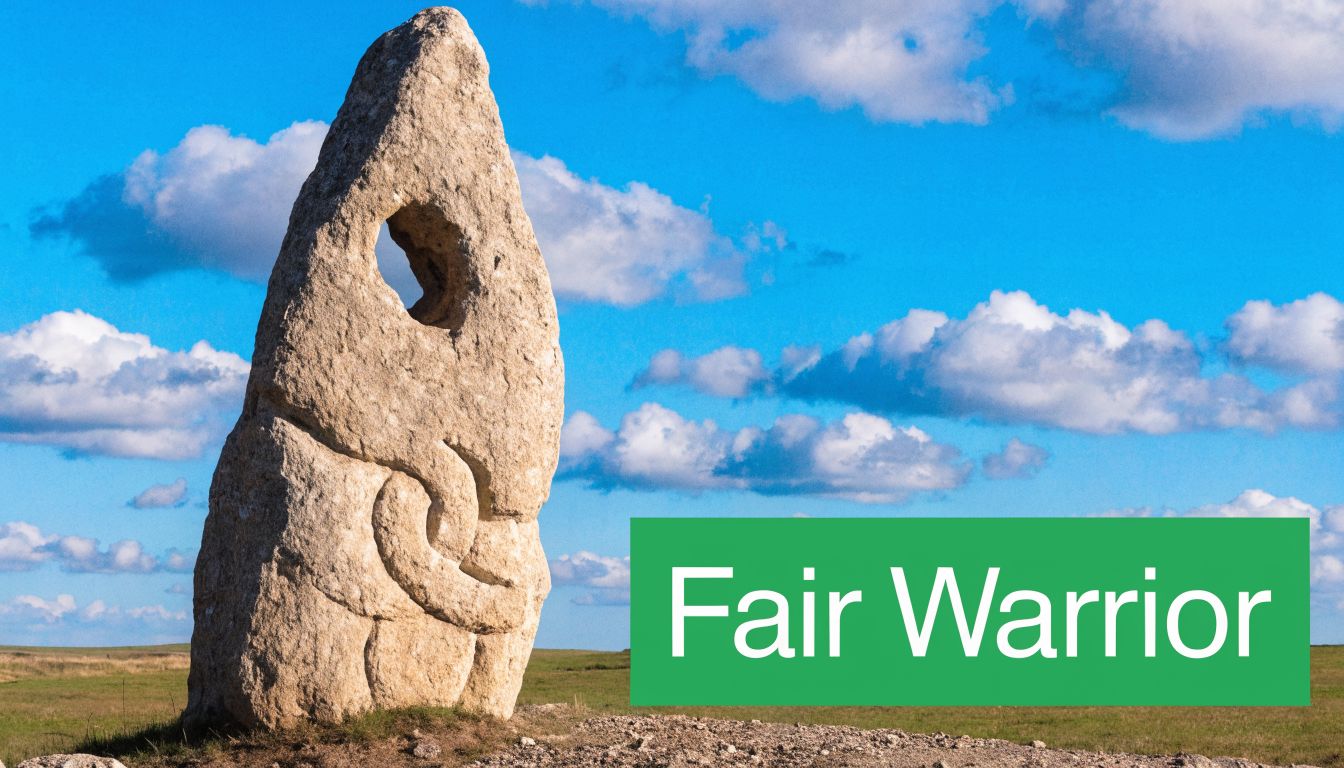
A carved ancient standing stone with a hole, situated in a grassy field under blue sky.

A friendly surname-name

Casey is pronounced “KAY-see.” This is straightforward for most English speakers, which makes it a practical choice if you want an Irish-rooted name that rarely needs correction.

It also works well in spoken situations where names are repeated often. Think of a teacher calling roll, a coach giving instructions, or a parent using a full name across a playground. Casey stays clear.

Three reasons Casey keeps lasting:

  • Sound: It's light and familiar without feeling flimsy.
  • Structure: Two simple syllables make it easy to say and remember.
  • Heritage: It belongs to the long Irish tradition of turning surnames into first names.

If you're learning Irish pronunciation more broadly, Casey can be a good confidence-builder. You get a real Irish connection, but you're not fighting an unfamiliar spelling at the same time.

6. Tiernan (TEER-nan)

Tiernan has a different texture from names like Riley or Casey. It feels a little more formal, a little more historical. It's usually taken from the Irish Tighearnán, a diminutive based on tighearna, meaning lord or master.

Historically, it was more masculine. Today, some people are drawn to it as a modern gender-neutral option because the sound is balanced and the ending is softer than many overtly masculine names.

How to handle the Irish form

The anglicised Tiernan is usually pronounced “TEER-nan.” Keep the first syllable like “tear” in “tear paper,” not like “tear from crying.” The second syllable is quick and light.

If you come across the older Irish spelling, don't panic. Irish spelling follows its own rules, and older forms often look more difficult than they sound. The best approach is to learn the spoken shape first, then connect it back to the written Irish version.

A useful learner strategy:

  • Say the common form first: Tiernan.
  • Notice the rhythm: strong first syllable, lighter second.
  • Treat the Irish spelling as a bonus layer: not a test you must pass immediately.

Real-world example. Tiernan suits someone who wants an Irish name that stands out a bit more in a room of familiar modern names. It has presence without being loud.

Older Irish spellings often carry the history. Anglicised forms often carry the everyday usability. You're allowed to appreciate both.

7. Shea (SHAY)

Shea is one of the sleekest names on this list. It comes from the surname Ó Séaghdha, and Séaghdha is often explained with meanings such as majestic, fortunate, or hawk-like. That's a lot of ancient character in one short, modern-feeling sound.

Because it's so brief, Shea often feels contemporary even though its roots are old.

Short name, old roots

Pronounce it as “SHAY,” one clean syllable. This is another name that rewards simplicity. Don't stretch it. Don't add a second beat.

Shea is especially appealing if you want an Irish-rooted name that doesn't immediately read as heavily traditional to people unfamiliar with Irish naming. It slips easily into modern life while still carrying cultural depth.

There's also something useful here for learners of Irish. Not every Irish-connected name has to look visibly “Irish” in English spelling to be meaningful. Some of the most effective heritage names are the ones that open a door rather than create a barrier.

Consider how Shea works in daily use:

  • Professional setting: It looks crisp on a name badge or email signature.
  • Family setting: It sounds warm and affectionate.
  • Learning setting: It's easy to practise in spoken Irish sentences because it's so short.

If you're reconnecting with Irish roots after years away from the language, Shea can feel like a gentle re-entry point. It gives you heritage, elegance, and very little pronunciation stress.

8. Rory (ROR-ee)

You can hear why Rory stays popular the moment someone says it out loud. It has a quick, rolling rhythm that feels lively in conversation, yet its Irish form, Ruaidhrí, carries older meaning often explained as “red king.” That mix is useful for many readers. The name sounds approachable in daily life, while still giving you a real link to Irish tradition.

A name that teaches rhythm

Say Rory as “ROR-ee.”

If the two r sounds feel awkward at first, that is normal. English speakers often rush this name and let the middle blur. A better method is to clap out two beats. “ROR.” “ee.” Once those two beats feel steady, join them without speeding up.

Irish names often become easier when you treat pronunciation like music rather than spelling. You are learning the rhythm first, then smoothing the sound. If you want extra practice hearing how Irish sound patterns work, this Irish pronunciation guide for beginners gives you a clear starting point.

Rory also has a broader modern, gender-neutral feel in English usage, which helps explain why it appears comfortably in many different settings. You might meet a Rory in a classroom, on a sports team, or in a family that wanted an Irish name people could learn quickly.

A good Gaeilge practice line is: “Is mise Rory.” It means “I am Rory.” Start slowly. Then repeat it at a natural pace. The sentence helps because the name stops feeling like a tongue twister and starts behaving like part of real speech.

Pronunciation shortcut: Repeating sounds are easier inside a full phrase. Your mouth finds the pattern faster when the name is part of a sentence.

9. Kerry (KEHR-ee)

Kerry comes straight from place. It's linked to County Kerry, one of Ireland's best-known regions, whose Irish name is Ciarraí, often understood as “people of Ciar.” Place names turned personal names have a special appeal because they connect identity with the natural environment.

Kerry feels open, breezy, and familiar. It carries coast, hills, and western weather even when used far from Ireland.

A scenic view of a calm, clear blue sea with rocky shores and a small boat drifting.

A place name that travels well

Pronounce Kerry as “KEHR-ee.” The first syllable sounds like “care” for many speakers, though accents vary. The second syllable stays light.

Place-derived names often feel instantly evocative, and Kerry is a strong example. If someone wants a name that sounds Irish without needing a long explanation, Kerry usually does that job well.

You might choose Kerry if you want:

  • A geographical connection: the name carries strong geographical identity.
  • An easy sound: it's familiar in many English-speaking places.
  • A softer feel: it doesn't sound severe or heavily formal.

In real life, Kerry works well for someone naming a child after family roots in the southwest, or for a learner who wants a heritage-inspired conversation name in class. It's direct, warm, and easy to revisit.

10. Dara (DA-ra)

You hear the name across a room, glance at the spelling, and wonder if you can trust your first instinct. With Dara, you usually can. That makes it a reassuring choice for anyone who wants an Irish name with real cultural depth but without a difficult first pronunciation.

Dara has long-standing Irish use and several related strands behind it. It is often connected with Mac Dara, usually understood as “son of the oak,” and also with dáire, a word linked in older usage with fertility, fruitfulness, and abundance. Those associations give the name a steady, grounded feel. The image is easy to hold onto too. Oak suggests strength, rootedness, and long memory.

One of the clearest unisex choices

Pronounce Dara as “DA-ra.” Stress the first syllable. The second stays light, almost like the ending of “sofa.” If you are new to Irish-influenced names, this is a good one to practise because the spelling and sound stay close together.

Dara is also widely recognised as a name used for more than one gender in Irish naming practice, which helps explain why it appears so often on modern gender-neutral lists. As noted earlier in the article, current Irish naming patterns include names that cross neatly between boys and girls, and Dara fits that pattern well.

For learners, this name teaches a useful cultural lesson. Irish names often carry meaning from the natural world, family lines, or older social values. Dara is a compact example of that habit. A short, easy name can still hold history.

A simple way to remember it is to pair the sound with an oak tree in your mind. Say “DA-ra” once slowly, then once at normal speed. If you want to check your rhythm and hear whether your stress is landing correctly, Gaeilgeoir AI can help you practise it out loud until it feels natural.

10 Gender-Neutral Irish Names Compared

Name Pronunciation Complexity 🔄 Learning Effort ⚡ Expected Outcomes 📊 Ideal Use Cases 💡 Key Advantages ⭐
Riley (RY-lee) Low, RY-lee (phonetic) Low, minimal practice Confident introductions; clear phonetics Beginner introductions; conversational practice Genuinely unisex; approachable
Rowan (ROH-ən) Low, ROH-ən (nature-linked) Low–Moderate, myth vocab Connects language with folklore and nature Lessons on trees, colors, and folklore Nature-rooted; protective symbolism
Finley (FIN-lee) Low, FIN-lee (compound) Low, learn root elements Understand name construction; myth ties Deconstruction exercises; mythology units Heroic connotations; anglicised familiarity
Quinn (KWIN) Low, single syllable (KWIN) Low, intonation practice Improved intonation; concise usage Intonation drills; crisp introductions Strong, concise, leadership connotation
Casey (KAY-see) Low, KAY-see (familiar) Low, common endings Practice present-tense verbs; 'ey' sound Verb practice; international use Upbeat, dependable, easy to spell
Tiernan (TEER-nan) Medium, TEER-nan (Tig sound) Moderate, Irish phonetics Grasp historical forms; noble register Social Q&A; historical name study Noble, historically rooted
Shea (SHAY) Low, SHAY (single syllable) Low, single-syllable ease Master 'sé' sound; smooth greetings Basic greetings; phonetic foundations Sleek, strong, ancient meaning
Rory (ROR-ee) Low–Medium, ROR-ee vs Ruaidhrí Moderate, compare anglicisation Learn anglicisation effects; possession use Comparative pronunciation; possession practice Regal, historic, widely recognized
Kerry (KEHR-ee) Low, KEHR-ee (toponymic) Low, geography vocabulary Place-name familiarity; cultural context Travel modules; county names Evokes landscape; place-based identity
Dara (DA-ra) Medium, DA-ra (flat 'a') Moderate, vowel drills Master flat 'a' sound; nature lexicon Phonetic drills; nature-themed lessons Traditional, nature-linked, historically unisex

Bring Your Name to Life with Confident Pronunciation

Choosing gender neutral irish names can feel personal. You may be honouring grandparents, reconnecting with ancestry, naming a child, or looking for something that feels truer to your values than a more rigidly gendered choice. Irish names offer a rich range of options for that. Some come from surnames. Some come from nature. Some carry echoes of old kingship, colour, or place.

But choosing the name is only half the experience. Saying it matters. Irish names live in the mouth as much as on the page. A name like Quinn lands in one beat. Rory needs rhythm. Dara opens easily once you stop overthinking it. Tiernan becomes less intimidating when you learn the stress pattern first and the older spelling second.

That's also why pronunciation practice shouldn't feel like an extra chore. It should be part of how you build connection. If you can hear a name, repeat it, and place it into a real sentence, it stops being an abstract cultural artifact and becomes something you can use. That's especially helpful if you're learning Irish as an adult and want progress that feels practical from day one.

A useful approach is to practise names in context instead of as isolated word lists. Say them in introductions. Use them in simple role-play. Put them into everyday phrases. If you're also working on speech tools for work or study, this guide on how to reduce voice-to-text errors for project codenames is a smart reminder that pronunciation and recognisable spoken forms matter in modern digital life too.

If you want to go further, work in small steps:

  • Start with the names you already love: Motivation matters more than forcing yourself through a random list.
  • Learn stress before spelling rules: A name often becomes manageable once the rhythm is clear.
  • Pair names with meaning: Oak, red, leader, warrior, place. Meaning helps memory.
  • Use names in full sentences: “Is mise Dara” will teach you more than repeating “Dara” ten times.
  • Return to the sound often: Short, repeated practice beats one long study session.

Irish naming culture has always balanced history and reinvention. That's one reason these names keep resonating. They can carry ancestry without trapping someone inside old expectations. They can sound traditional and contemporary at once. When you learn to pronounce them confidently, you're not just picking a name well. You're meeting the culture on speaking terms.


If you want real practice instead of guesswork, Gaeilgeoir AI is a smart next step. It helps you hear, repeat, and use Irish in guided conversations, so names like Riley, Rory, Dara, and Quinn stop feeling like tricky spellings and start feeling natural in your own voice.

10 Gender Neutral Irish Names (And How to Say Them)

You spot a name on a class list, a birth announcement, or an old family tree. You know you like it. Then you pause, because Irish spelling and Irish sound do not always line up the way English-trained eyes expect. That pause is normal, and it is often the first step toward understanding the name rather than just borrowing its look.

Gender neutral Irish names attract many families for the same reason. They carry history, but they also feel flexible and current. In Irish naming tradition, a name can move between surname and first name, between literature and daily life, and between older gender patterns and newer ones. The result is a group of names that feels rooted without feeling rigid.

Pronunciation is the key.

A written Irish name works a bit like sheet music. The letters matter, but the sound is what makes it live. If you only read the spelling, names such as Aoife or Saoirse can seem harder than they are. Once you hear the vowel patterns and stress clearly, they become much easier to remember and say with confidence. If you want guided practice before you choose a favorite, this Irish first names guide with meanings and pronunciation support gives you a direct way to hear the names, repeat them, and connect them to the living language.

The names in this article are not all identical in origin or usage, and that matters too. Some are strongly Irish in language. Some are used in Ireland but shaped by a wider Celtic or surname tradition. As you read, pay attention to three things: what the name meant first, how Irish speakers say it, and how it has traveled into modern use. That approach gives you more than a list. It helps you choose a name you can pronounce well, explain clearly, and appreciate in context.

Table of Contents

1. Aoife

Aoife is often one of the first Irish names people fall in love with, and one of the first that teaches you not to trust English spelling habits. It's elegant, compact, and Irish in both sound and history.

A person posing in a gender neutral outfit standing beside a large mossy stone in Ireland.

The name is usually understood to mean beauty or radiance. In Irish tradition, Aoife appears in legend and saga, including warrior figures, which gives the name a mix of grace and strength that many people find appealing in gender neutral Irish names, even though in modern everyday use it's more often read as feminine.

How to say Aoife

Say it as EE-fa. Put the stress on the first syllable.

If you're new to Irish spelling, the jump from “Aoife” to “EE-fa” can feel surprising. That's normal. Irish uses letter combinations differently from English, and once you learn a few patterns, names like this become much easier to decode.

A good first step is to pair the name with audio and meaning. The Irish first names meanings guide on Gaeilgeoir AI is useful for that kind of repeated practice.

Practical rule: Don't memorize Irish names by spelling alone. Hear them, repeat them, then connect them to meaning.

Aoife also works well in conversation practice because it has a clear rhythm. You can try simple lines like “Dia dhuit, Aoife is ainm dom” if you're learning introductions in Irish. The more often you say the name in a sentence, the less foreign it feels.

Later, it helps to hear it spoken naturally.

2. Saoirse

Saoirse is one of the most meaningful names in modern Irish usage because the word itself means freedom. Even people with very little Irish often recognize it because of actor Saoirse Ronan, whose public interviews have helped many English speakers hear the name correctly for the first time.

This is the kind of name that carries language with it. When you choose Saoirse, you're not only choosing a sound you like. You're choosing a living Irish word with emotional and historical weight.

Why the meaning matters

The most common pronunciation is SEER-sha, though local and family variations exist. If you're learning Irish, this is a great reminder that names often preserve old sound patterns better than classroom vocabulary lists do.

Practicing Saoirse out loud can also teach you confidence. At first glance, many learners freeze because the spelling looks dense. After a few repetitions, it becomes one of those names that suddenly feels natural.

Use the Irish pronunciation guide from Gaeilgeoir AI to break it into sound chunks rather than trying to force an English reading onto it.

  • Start with the first sound: Think “seer,” not “say.”
  • Keep the ending light: The final part is usually “sha.”
  • Use it in a sentence: Introductions help your mouth remember the rhythm.

Saoirse is a good example of why pronunciation matters in Irish. The spelling isn't there to trick you. It follows a different sound system.

As a cultural choice, Saoirse feels both grounded and current. It suits families who want a name that sounds unmistakably Irish while still feeling open, modern, and strong.

3. Cian

Cian is short, old, and easy to carry. It comes from Irish tradition and is usually glossed as ancient or enduring, which gives it a calm sense of depth. It doesn't sound heavy, though. That's part of its appeal.

You'll also hear it in contemporary life through public figures like Cian Lynch and Cian Ducrot. That combination of mythic age and present-day familiarity makes it especially approachable for learners.

A weathered ancient stone block featuring carved diagonal lines, set against a solid green background.

An old sound that still feels current

Say Cian as KEE-un. Keep it soft and flowing rather than clipped.

For English speakers, the temptation is to overcomplicate it. Don't. This name works best when you say it smoothly in two beats. If you're reconnecting with Irish heritage, Cian is a nice example of a name that sounds traditional without feeling difficult to use day to day.

The Gaelic names guide on Gaeilgeoir AI can help you compare names like Cian with other short Irish forms and hear how vowel groups shift across names.

A few ways to practice it:

  • Say it with another name: “Cian and Rowan” helps you feel the opening sound.
  • Link it to meaning: Enduring is a useful memory cue.
  • Use it aloud, not in your head: Irish names settle faster when spoken.

Cian can read as sleek and modern in English-speaking settings while still staying visibly connected to Irish language roots. That balance is one reason names like this continue to attract people looking for gender neutral Irish names with real cultural texture.

4. Rowan

Rowan is one of the easiest entries on this list for English speakers, but it still has Celtic and Irish associations worth understanding. In Irish contexts, it's often linked with Ruadhán, a name connected to the idea of red or reddish coloring. It also calls up the rowan tree, which gives it a strong nature-based feel.

That blend of tree, color, and old language roots makes Rowan feel gentle without being slight. It works well for people who want something flexible and familiar.

A close up of a vibrant cluster of red mountain ash berries hanging from a branch.

A name tied to color and nature

Many pronounce it as RO-un. Some accents make the middle sound slightly fuller, but the overall shape stays simple.

Nameberry notes that Rowan is one of the unisex Irish names with broad modern appeal, alongside names such as Quinn, Ryan, and Finley, and that list shows how many Irish-derived names now travel easily across genders and across countries in Nameberry's unisex Irish names roundup.

If you appreciate names rooted in the natural world, Rowan is particularly charming. It offers more than a simple title; you can explore Irish geographical vocabulary, tree lore, and color-related terms.

Learn names in clusters. Rowan becomes easier to remember when you link it to red, trees, and Irish nature words.

A practical advantage is that Rowan usually doesn't need much correction in international settings. You get an Irish-linked name with a low barrier to daily use.

5. Casey

Casey is a strong example of how Irish surnames moved into first-name use. It comes from Ó Cathasaigh, and that shift from family name to given name is one of the big stories behind many modern gender neutral Irish names.

Because Casey already feels natural in everyday English, people sometimes miss its Irish depth. But that surname origin matters. It tells you the name didn't appear out of nowhere. It traveled through naming traditions, changed context, and stayed useful.

From family name to first name

Say it as KAY-see. It's straightforward, but the background gives it more personality than many people realize.

If you're learning Irish cultural patterns, Casey opens a helpful door. Irish naming isn't only about ancient mythological first names. It also includes surnames that became first names over time, especially as families looked for names that felt modern while keeping a visible link to heritage.

That pattern appears in many popular choices. Nameberry highlights surname-derived neutrals such as Riley, Quinn, Brody, and Connor as part of this broader Irish naming stream, which helps explain why Casey feels so established in unisex use today, as noted earlier in that Nameberry discussion.

Try practicing Casey in short social phrases. It works well in role-play because the sound is crisp and easy to repeat. You can use introductions, attendance lists, or family-tree exercises to make the name stick.

  • Use the surname memory trick: Think Ó Cathasaigh behind Casey.
  • Notice the transition: Family name first, given name later.
  • Practice in context: “Casey is anseo” is simple and memorable.

6. Morgan

Morgan often gets grouped into a broad Celtic naming world, and that's useful as long as you keep the cultural context clear. It's widely used across Celtic traditions and has long carried associations with the sea, strength, and movement.

That maritime feel gives Morgan a different energy from many softer-sounding names. It has breadth to it. You can imagine it suiting someone quiet, someone bold, or someone who wants a name that doesn't feel pinned down.

A sea-linked Celtic name

Morgan is commonly pronounced as MOR-gun. The first syllable carries the emphasis, while the second remains unstressed.

The meaning is often given in sea-linked terms such as sea warrior or sea circle. Even if meanings vary across traditions, the ocean association is part of why the name feels expansive. That can be useful if you like names with a sense of motion and history rather than a purely decorative feel.

In language learning, Morgan is easy to practice because the spelling and pronunciation are close for many English speakers. That frees you to focus on cultural context. Think of coastlines, travel, and older Celtic storytelling.

For a broader naming contrast, some readers also explore non-Irish naming resources while deciding what style they like, including options such as American-made custom stickers, though Morgan itself stands strongest when you keep the focus on its Celtic sea-linked character.

A name doesn't have to be difficult to be culturally rich. Morgan is a good example of easy pronunciation with deep regional associations.

7. Rory

Rory is one of the clearest examples of a name with old prestige and modern flexibility. It comes from Ruaidhrí, commonly understood as red king or red-haired king, and it has a long association with leadership and high status in Irish history.

Today, it's also one of the best-known Irish names internationally. You'll hear it in sports through Rory McIlroy, and in historical discussions through figures like Ruaidhrí Ó Conchobair.

A classic that crossed categories

Say it as ROR-ee. The repeated r sound gives it bounce, so it's worth slowing down at first if your accent tends to swallow one syllable.

Name use has shifted in ways that make Rory especially interesting in conversations about gender neutral Irish names. Verified IrishCentral background included a 2023 CSO benchmark describing unisex Irish names as 8.2% of total births, with Rory listed at number 45 overall and showing a 55% male and 45% female split in the IrishCentral discussion of gender-neutral Irish baby names.

That doesn't mean Rory has lost its history. It means the name has widened in use while keeping its older associations. That's often how Irish names evolve. They don't erase the past. They carry it differently.

For practice, Rory is excellent for oral work because of the rolling r sounds. If you're preparing for spoken Irish, repeat it slowly, then in short phrases, then in natural-speed introductions.

8. Finlay

Finlay has a soft landing and a strong core. It comes from Fionnlagh and is often explained through meanings such as fair-haired or white warrior. That combination is very Irish in spirit. A name can sound light while carrying an image of toughness.

It's also a good reminder that names don't stay fixed in one lane forever. Finlay and related forms have moved across regions and into unisex use in different English-speaking contexts.

Soft sound, strong roots

Say it as FIN-lee. Keep the first syllable clear and the second quick.

Nameberry notes that Finley has been used for both sexes in the US since the early 2000s, which helps explain why Irish-derived forms in this family now feel widely accessible outside Ireland as well, especially in naming cultures that like surname-style or warrior-rooted names.

If you like names that sound modern but have old roots, Finlay is a smart choice. It feels polished without being flashy. It also sits comfortably beside other Irish favorites, so it won't sound out of place in a family with mixed traditional and contemporary naming tastes.

  • Hear the old form behind it: Fionnlagh gives the modern form more depth.
  • Keep the ending light: Don't overstress “lay.”
  • Use image memory: Fair-haired warrior is easy to hold onto.

Finlay is also one of those names that works well across ages. It sounds believable on a child, a teenager, and an adult.

9. Darcy

Darcy has an understated elegance that makes it popular with people who want something flexible and stylish without sounding trendy in a fleeting way. In Irish discussion, it's often connected to surname roots such as Ó Darchaigh, which places it in the same broad surname-to-first-name tradition as several other modern unisex picks.

Because many people know Darcy through literature, the name already carries a polished social image. But the Irish surname angle gives it extra weight and makes it more than a borrowed character reference.

A surname style with Irish texture

Say it as DAR-see. It's clean and easy to repeat, which is one reason it has traveled so well.

Darcy is useful for learners because it shows how Irish influence can remain visible even when a name sounds fully at home in modern English. You don't need a dramatically unfamiliar spelling for a name to carry heritage. Sometimes the history sits in the family-name layer underneath.

If you're comparing styles, Darcy tends to appeal to people who like:

  • Surname-based names: It has that custom, modern feel.
  • Simple pronunciation: Very little correction needed.
  • Quiet cultural depth: The Irish root is there without dominating the surface.

The name works especially well in spoken settings because there's little risk of hesitation. You can focus on the person and the conversation rather than the mechanics of saying it.

10. Riley

Riley is one of the clearest examples of an Irish surname-origin name that now feels fully unisex in everyday life. It's commonly linked to Ó Raghaillaigh or Raghaileach, and for many families it offers the ideal balance of Irish connection and modern ease.

If you're choosing among gender neutral Irish names, Riley is often a practical favorite because nearly everyone can say it, spell it, and recognize it. That matters more than people sometimes admit.

One of the clearest modern unisex choices

Say it as RY-lee. The sound is familiar, but the Irish lineage gives it a deeper backstory than it first appears to have.

Nameberry includes Riley among surname-derived unisex Irish names that have become highly visible choices in the US, alongside names like Quinn and Brody. That wider pattern helps explain why Riley feels contemporary without feeling disconnected from heritage, as noted earlier.

Riley is also a helpful teaching name if you're trying to understand how naming changes over time. A surname becomes a first name. A first name becomes widely shared across genders. The cultural thread remains, but the social use broadens.

Some of the most successful gender neutral Irish names aren't the most difficult or the rarest. They're the ones people can live with easily while still feeling a real link to Irish naming traditions.

Use Riley in speaking practice, family tree notes, or heritage journaling. It's simple enough for beginners and meaningful enough to stay interesting.

Comparison of 10 Gender-Neutral Irish Names

Name Pronunciation complexity 🔄 Ease of adoption ⚡ Cultural impact 📊 Suitability ⭐ Tips 💡
Aoife Medium (may need guidance) Moderate High (ancient mythology, literary presence) ⭐⭐⭐⭐ Practice "EE-fa"; learn meaning "beauty"
Saoirse High (non‑intuitive for many) Low High (modern Irish identity, symbolic) ⭐⭐⭐ Use pronunciation tools; learn "freedom"
Cian Low (straightforward) High High (ancient roots, historical texts) ⭐⭐⭐⭐ Use "KEE-un" guide; connect to myths
Rowan Low (familiar English form) High Moderate‑High (nature symbolism, growing use) ⭐⭐⭐⭐ Link to rowan tree vocabulary; practice aloud
Casey Low (very accessible) High Moderate (surname→given name trend) ⭐⭐⭐⭐ Note origin "Ó Cathasaigh"; use in introductions
Morgan Low (widely known) High High (Celtic maritime & myth connections) ⭐⭐⭐⭐ Emphasize sea/warrior meaning in lessons
Rory Low (clear pronunciation) High High (royal/warrior heritage) ⭐⭐⭐ Teach "red king" origin; discuss historical figures
Finlay Low (phonetic) High Moderate (warrior heritage, evolving use) ⭐⭐⭐ Practice audio pronunciation; study meaning
Darcy Low (simple English form) High Moderate (literary popularization, surname roots) ⭐⭐⭐⭐ Mention "Ó Darchaigh" origin; reference literary use
Riley Low (common, phonetic) High Moderate‑High (modern popularity, surname evolution) ⭐⭐⭐⭐ Learn surname origin; use in conversational practice

Final Thoughts

A name often looks simple on the page until you try to say it out loud in front of another person. That is usually the moment Irish names stop feeling like a list and start feeling like part of a living language.

The ten names in this guide show how flexible that tradition can be. Some carry very old roots, like Cian and Rory. Some travel easily across Irish and English usage, like Rowan, Casey, and Riley. Some, especially Saoirse, keep the sound patterns of Irish right at the surface, which is why pronunciation matters so much to understanding the name itself.

Recent coverage of naming in Ireland, as noted earlier, also points to a wider pattern. Names can shift in gender use over time, and families often choose them for sound, heritage, meaning, or personal connection rather than for a fixed category alone. That makes Irish naming feel less like a shelf of preserved artifacts and more like a spoken tradition that keeps adapting.

Pronunciation is the bridge between recognition and real connection. Reading Aoife or Saoirse is a bit like reading music without hearing it. You can understand something on the page, but the shape of it only fully makes sense when the sound arrives.

That is why practice should be active. Say the name. Hear it again. Repeat it in a full sentence, not in isolation. Try, “Seo Aoife,” or “Is é Rory an t-ainm atá air,” even if you are only beginning. The name settles faster when your mouth, ear, and memory all work together.

If you want guided help with that process, try Gaeilgeoir AI. It gives you a direct way to hear Irish sounds, repeat names in conversation-style practice, save the ones you want to return to, and build confidence step by step. For a topic like gender neutral Irish names, that matters because the difference between knowing a spelling and speaking a name well is often where confidence is won or lost.

Choose the name whose sound, history, and feeling stay with you. Then learn to say it clearly. That is where the culture becomes audible.

And if your interest in names opens the door to other themed naming traditions, you might also enjoy browsing a lighter seasonal contrast like this UK guide to Halloween names.

Colleen in Irish: The Real Word is Cailín (Guide)

If you're searching for colleen in irish, you're probably trying to answer a simple question that turns out not to be simple at all. You may have heard the name Colleen, assumed it was a standard Irish word, and wondered whether people in Ireland still use it in everyday speech.

That confusion makes perfect sense. The catch is that Colleen is not the everyday Irish word. The word you're really looking for is cailín, an Irish noun meaning girl or young woman. Once you separate those two, a lot of other things become easier: pronunciation, grammar, and understanding why something can sound Irish abroad but slightly off in Ireland itself.

This matters for heritage learners, travelers, and students returning to Irish after years away. If you want to sound natural, it's helpful to know when you're dealing with an English given name and when you're dealing with an actual Irish vocabulary word.

Table of Contents

Introduction Why 'Colleen' Is Not the Word You Hear in Ireland

You search for “colleen in Irish,” then land in Ireland, hear people speaking, and notice something odd. The word Colleen is not what you usually hear for “girl.” In everyday Irish, the word is cailín.

That confusion is very common, especially for learners from Irish American or Irish diaspora backgrounds. Colleen looks Irish, and it has Irish roots, but in modern use it usually functions as an English given name. Cailín, by contrast, is the ordinary Irish noun for “girl.” If you are also exploring Irish names for girls, this distinction will save you from mixing up a name with a common vocabulary word.

A helpful way to sort this out is to treat the two words as living in related but different worlds. Colleen belongs mostly to English naming tradition. Cailín belongs to Irish speech.

Why learners get tripped up

English often absorbs words from other languages and reshapes them over time. Once that happens, the borrowed form can start behaving differently from the original. That is what causes the confusion here.

So when someone asks about colleen in irish, they are often asking one of two different questions:

  • What is the Irish word for “girl”? The answer is cailín.
  • Is Colleen a traditional Irish word people in Ireland use in daily speech? Usually, no.

That difference matters in practice. If you say cailín, you are using Irish vocabulary. If you say Colleen, you are usually referring to an English personal name.

One small spelling difference can carry a big cultural difference. That is part of what makes Irish so interesting to learn.

The True Origin From Cailín to Colleen

Cailín came first. Colleen came later.

In Irish, cailín is a common noun. It means girl or young woman. It wasn't originally a personal name in the same way English speakers now use Colleen. The name developed after the Irish word moved into English-speaking settings and was reshaped to suit English spelling and sound patterns.

An infographic titled From Cailín to Colleen detailing the etymological origin and evolution of the name.

How Anglicization changed the word

A simple way to think about Anglicization is this: a word crosses into English, and English speakers reshape it so it feels easier to spell, say, or recognize.

That happened with cailín. The Irish spelling includes a fada over the final í, and the sound system of Irish doesn't line up neatly with English. As the word moved through the Irish diaspora, especially in English-speaking communities, it became Colleen.

It's a bit like a food name being adapted in another country. The dish may come from one language and culture, but once it settles somewhere else, the spelling and pronunciation often shift. The result still points back to the original, but it isn't the original form anymore.

What the original word means

The meaning stayed simple at the root. Cailín meant girl or young woman. That's important because learners sometimes assume Colleen must have started as an old Irish first name. It didn't. It started as an everyday word.

A helpful next step is to compare it with other traditional girls' names in Irish. This list of Irish names for girls helps show the difference between an actual Irish given name and a common noun that later became a name elsewhere.

When a word becomes familiar abroad, people often forget what it was doing at home. In Ireland, cailín stayed a word. Abroad, Colleen became a name.

Why this matters

If you treat Colleen as though it's the standard Irish word used in Ireland today, your Irish can start to sound imported rather than natural. If you learn cailín instead, you're working with the living language.

That shift in perspective is the essential takeaway. Colleen is related to Irish. Cailín is Irish.

How to Pronounce Cailín Like a Native Speaker

You hear someone in Ireland say cailín, and your ear tells you it sounds a bit like Colleen. That is where many learners get tripped up. The two are related, but if you want your Irish to sound natural, it helps to learn the Irish word on its own terms.

A close-up view of a person speaking with a green rectangular sign overlay that says Speak Irish.

A good learner-friendly version is kah-LEEN. You may also see kal-yeen as a rough guide. Those spellings are only approximations. They point you toward the sound, but they do not capture every detail of Irish pronunciation.

A simple pronunciation breakdown

Split cailín into two parts and say it slowly.

  1. Cai begins with a broad k sound, followed by a vowel sound that can feel shorter or more open than English speakers expect
  2. lín sounds close to leen, with the stress on this second syllable

So the rhythm is kah-LEEN.

That stress matters. English speakers often give both syllables equal weight, or they say it exactly like the name Colleen. Native Irish speech usually gives the second syllable more lift, and the l can sound lighter or slimmer than an English l.

The part learners often miss

The slender l in cailín is one of those small Irish details that makes a big difference. It is formed with the tongue placed a little higher and further forward than in many English accents. Language teachers and pronunciation commentators often note that getting sounds like this under control can make a learner sound much more fluent in conversation and oral work.

If that feels abstract, use a simple comparison. English has one general l sound in many learners' minds. Irish treats l more like a sound with different versions depending on the vowels around it. In cailín, the í helps give that l a slender quality.

If you'd like extra help hearing those patterns, this Irish pronunciation guide with clear sound explanations is a useful companion.

Regional variation matters

You will not hear cailín pronounced in exactly the same way in every part of Ireland. Some speakers use a more open first syllable, closer to kah. In parts of Ulster, you may hear a rounder sound that comes closer to coll-een. That helps explain why learners sometimes connect it so quickly with the English name Colleen, and it also fits the wider dialect picture discussed in this discussion of regional pronunciation variation for cailín.

So if you hear more than one version, that is normal. Dialects shape pronunciation, just as regional accents do in English.

Aim for a clear, consistent version first. Your ear for dialect differences will grow with listening.

A listening model helps here:

Where English speakers usually stumble

Three mistakes come up again and again.

  • Saying it exactly like the name Colleen. The connection is historical, but the Irish word has its own sound.
  • Flattening the stress. The second syllable should stand out more clearly.
  • Using a heavy English l. A lighter, slender l will bring you closer to Irish pronunciation.

Practice it in short phrases instead of repeating the word alone. Try an cailín or an cailín óg. That works like learning a tune by singing the whole line rather than one isolated note.

Using Cailín in a Sentence Grammar and Forms

Knowing the word on its own is useful. Using it naturally in a sentence is better.

Cailín is a feminine noun, and like other Irish nouns, it changes form depending on what you're saying. Learners often meet the basic singular first, then get confused when they see cailíní or an chailín. That's normal. The forms are manageable once you see them side by side.

Grammatical forms of cailín

Form Irish Example English Translation
cailín Tá cailín anseo. There is a girl here.
an cailín Tá an cailín sásta. The girl is happy.
cailíní Tá na cailíní ag imirt. The girls are playing.
na cailíní Chonaic mé na cailíní inné. I saw the girls yesterday.
an chailín Seo hata an chailín. This is the girl's hat.

What changes and why

A few things are happening in that table.

  • Singular basic form: cailín means girl
  • With the article: an cailín means the girl
  • Plural: cailíní means girls
  • Genitive singular: an chailín appears after another noun to show possession, as in hata an chailín or the girl's hat

That little h in an chailín can surprise learners. It's part of a common Irish pattern called lenition. You don't need to master the grammar label on day one. You just need to notice that Irish changes the beginning of words in certain sentence patterns.

Useful starter sentences

Try reading these aloud:

  • Is cailín í. She is a girl.
  • Tá an cailín sa seomra. The girl is in the room.
  • Tá na cailíní anseo. The girls are here.
  • Is hata an chailín é. It is the girl's hat.

Use short noun phrases first. an cailín, na cailíní, hata an chailín. Small chunks are easier to remember than isolated rules.

A common beginner mistake

Many learners know a word's meaning but not its grammar behavior. They memorize cailín = girl, then freeze when the word changes shape in a real sentence.

The fix is simple. Learn vocabulary as a mini-family, not as a single dictionary entry. For this one word, that family is:

  • cailín
  • an cailín
  • cailíní
  • an chailín

If you can recognize those four, you'll understand much more Irish than you might expect.

A Tale of Two Worlds The Cultural Context

A learner in Boston might hear Colleen at home and assume it is the everyday Irish word. Then they arrive in Ireland, listen to real conversation, and hear cailín instead. That moment of confusion makes sense, because these forms belong to related but different cultural worlds.

In Ireland, cailín remained an ordinary Irish noun used in daily speech. Outside Ireland, especially in diaspora communities, Colleen developed a separate life as an English given name linked with Irish identity. The two are connected by history, but they do not do the same job.

A split-screen image comparing a rainy Irish street scene with a stylish woman drinking iced coffee.

What changed outside Ireland

As noted earlier, Colleen became much more visible abroad as a personal name than it did in Ireland itself. That pattern is common in heritage communities. A word leaves its original setting, keeps its emotional value, and slowly shifts category. In this case, a common noun in Irish fed into a name in English.

That shift matters because learners often expect a straight line from Irish word to modern Irish usage. Language history is rarely that tidy. A family may pass down a name for generations and still not be passing down the current Irish vocabulary item.

Why learners mix them up

The confusion is understandable. If your experience of Irish culture comes through family stories, parish records, or Irish American naming traditions, Colleen can feel deeply Irish. Culturally, it often is. Linguistically, though, it belongs to English naming practice more than to present-day Irish speech.

A useful comparison is this. Cailín works like a normal everyday word such as girl in English. Colleen works like a name such as Mary or Bridget. They share ancestry, but you would not swap one for the other in a sentence.

What this says about Ireland and the diaspora

Ireland and the diaspora preserved different parts of the same inheritance. In Ireland, the word stayed practical and grammatical, part of the living language. In diaspora settings, the form Colleen often carried memory, affection, and ethnic identity.

That difference becomes clearer if you read about the history of Irish language decline and revival. When a language is under pressure, some words survive abroad in altered forms while everyday usage at home continues along its own path.

This is also why keeping good notes helps. If you are sorting out heritage forms, modern vocabulary, and pronunciation, the best ways to track language progress can help you separate "family name knowledge" from "usable Irish."

A heritage name can be meaningful and authentic to a family. It still may not be the word an Irish speaker would use in ordinary conversation.

So the practical takeaway is simple. Use Colleen as a name in English if that is the family or cultural form you know. Use cailín when you want to say girl in Irish. That small distinction clears up a very common misconception.

Practice Your Irish and Avoid Common Mistakes

Once you know the difference, the next step is using it without second-guessing yourself.

The biggest mistake is simple. A learner hears that Colleen comes from Irish, then uses Colleen as if it were the current Irish word for girl. In actual Irish, that sounds off. You want cailín.

Mistakes worth catching early

  • Using Colleen as a common noun: Say cailín when you mean girl in Irish.
  • Saying the word too much like English: Irish pronunciation needs attention, especially around the l sound.
  • Learning it only as an isolated word: Practice it inside phrases and short sentences.

One useful reason to focus on that middle sound is that, for learners, mastering the palatalization of the “l” in cailín can increase perceived fluency by over 28% in oral exams, according to this language learning analysis on cailín pronunciation.

Short drills you can use today

Say each one aloud slowly, then at normal speed:

  1. Tá cailín anseo.
  2. Is cailín cliste í.
  3. Chonaic mé an cailín.
  4. Tá na cailíní sa pháirc.
  5. Seo leabhar an chailín.

If speaking feels hard, write them first, then read them. If writing feels hard, copy them by hand once and underline the changing forms.

A simple way to measure progress

A lot of learners improve faster when they track the same tiny skill over time. One day you focus on hearing cailín correctly. Another day you focus on producing an chailín without hesitation. If you want a practical system for logging those small wins, this guide on the best ways to track language progress gives clear note-taking ideas that work well for vocabulary and pronunciation review.

Say the word in a phrase, not in isolation. Real fluency grows from chunks you can reuse.

A quick self-check

Ask yourself these three questions:

  • Do I know when to use cailín instead of Colleen?
  • Can I say cailín clearly, without forcing it into English pronunciation?
  • Can I recognize an chailín and cailíní when I read them?

If the answer is “mostly,” you're in a good place. That's real progress.

Start Speaking Irish with Confidence Today

The key point is straightforward. Colleen and cailín are related, but they are not the same thing. Colleen is an English given name that grew in popularity mainly outside Ireland. Cailín is the actual Irish word learners need when they mean girl or young woman.

That distinction helps you sound more natural. It also helps you approach Irish with more cultural sensitivity. When you use the right form, you're not just being accurate. You're hearing the language on its own terms.

If you've ever felt unsure about Irish words that seem familiar in English, that's normal. This is one of many places where a small correction gives you a much stronger foundation. Learn the actual word, say it clearly, and use it in short everyday phrases. That's how confidence builds.


If you're ready to turn small distinctions like cailín into real speaking ability, Gaeilgeoir AI is a practical next step. You can continue from this exact point, build confidence with everyday Irish, and practice the kind of vocabulary that shows up in conversation.

10 Modern irish boy names You Should Know

You're probably in one of two places right now. You either love the sound of Irish names but aren't sure which ones feel current, usable, and easy to live with, or you're learning Irish and want names that help you hear the language more clearly. Both are good reasons to look closely at modern irish boy names.

What makes these names interesting is that they often do two jobs at once. They sound contemporary in everyday life, but they also carry older Irish spelling patterns, mythology, and word roots. That means a name like Oisín or Tadhg isn't just a label. It can also be a small lesson in Irish pronunciation, history, and meaning.

Ireland's naming patterns show a strong attachment to familiar classics. Jack held the top spot for boys since 2007 with one exception in 2016, stayed in the top 5 since 1998, and remained the most popular boys' name in 2024, with Noah in second place for the fourth year in a row, according to the CSO main results for Irish Babies' Names 2024. At the same time, newer-looking Irish choices keep attracting attention at home and abroad.

Table of Contents

1. Cillian

A young boy wearing a beanie and casual clothes stands by a stone wall in an Irish landscape.

Cillian is one of the best examples of a name that feels current without losing its Irish identity. Many people first hear it through actor Cillian Murphy, which helps the name travel well outside Ireland, but its appeal runs deeper than celebrity recognition.

It looks distinctive on the page, sounds calm and confident, and still carries a clear Irish character. That balance is why it keeps showing up in conversations about modern irish boy names. It doesn't feel old-fashioned, yet it doesn't feel invented either.

Why Cillian feels modern

For language learners, Cillian is useful because it pushes you to notice how Irish names don't always follow English sound expectations. That's part of the value. A name can train your ear.

If you're practicing pronunciation, the Irish pronunciation guide from Gaeilgeoir AI is a strong place to hear how Irish spelling patterns work in real words, not just isolated rules. Once you can say a name like Cillian comfortably, names with similar structure stop looking intimidating.

Practical rule: Pick one name you like and use it in full sentences. “Is mise Cillian.” “Tá Cillian anseo.” That's often more effective than memorizing a bare pronunciation list.

Cillian also makes a good bridge name. It's recognizably Irish, but many people outside Ireland can say it after hearing it once or twice. If you want a name with cultural depth that still works in school rolls, sports teams, and travel, Cillian is a smart choice.

2. Saoirse

You are filling out a school form, and one name keeps pulling your attention because it sounds unmistakably Irish. Then you notice the article is about boy names, and Saoirse creates a problem. In current use, Saoirse is widely understood as a girl's name, so it does not fit this list well.

A better choice here is Rían, a clearly masculine Irish name that feels modern without sounding newly invented. It is short, easy to pair with surnames, and familiar enough to work outside Ireland while still keeping a strong Irish identity.

Why Rían works better here

Rían solves a practical problem that many lists ignore. Parents often want a name that is recognizably Irish but does not require a long explanation every time it appears on a class register, sports roster, or email signature. Rían sits in that useful middle ground.

It also helps to separate three different questions that often get blurred together. Is the name traditionally masculine? Does it feel current? Can people learn to say and spell it without much friction? Rían scores well on all three.

If you want to compare spellings, meanings, and related Irish given names, this guide to Irish first names and meanings is a helpful reference point.

What makes Rían feel modern

Some Irish boy names carry a heavy legendary feel. Others become so international that their Irish character fades into the background. Rían avoids both extremes.

Its appeal comes from balance. The name is compact, distinct on the page, and contemporary in tone. It also gives learners a useful lesson in accent marks. The fada is not decoration. It changes how the word is read, much like a road sign that redirects traffic before you take the wrong turn.

For practice, keep the work concrete:

  • Start with the full form: Write and say Rían, not a stripped-down version.
  • Pair it with real contexts: Try it in introductions, attendance lists, or family sentences.
  • Notice the fada: It is part of the name, not an optional extra.

Rían is a stronger fit for a list of modern Irish boy names because it keeps the promise of the article clear. Readers looking for boys' names get a name they can practically use, and learners still get something valuable to study.

3. Fionn

A tall stone cairn stack standing on a grassy hill overlooking a blue ocean landscape in Ireland.

Fionn is short, strong, and full of cultural memory. It's tied to Fionn mac Cumhaill, one of the best-known figures in Irish mythology, but the name still feels easy to wear now. That's rare. Some mythological names sound too grand for daily life. Fionn doesn't.

The name's clean shape is part of its modern appeal. It's compact, memorable, and visually distinctive. If you're scanning lists of modern irish boy names, Fionn often stands out because it feels ancient and simple at the same time.

Mythology without heaviness

For learners, Fionn is a good example of how Irish mythology can support language study instead of distracting from it. When you know the story behind a name, you remember the word more easily. Narrative helps memory.

If you want to connect names to legends, the Irish mythology names resource from Gaeilgeoir AI can help you place Fionn in a wider cultural setting. That gives the name more texture than a one-line meaning ever could.

Fionn works well if you want a name that opens the door to folklore, storytelling, and spoken Irish without feeling formal.

You can also use Fionn in creative practice. Write a few simple lines about a hero, a journey, or a scene. Even beginner Irish becomes more memorable when it attaches to a figure you can picture.

4. Liam

Liam may be the most internationally accessible name on this list. It's short, familiar, and unmistakably modern in everyday use. Yet it still comes from the Irish form Uilliam, so it carries a real linguistic link rather than just sounding Celtic from a distance.

Its reach outside Ireland is hard to ignore. According to Nameberry's list of Irish baby names for boys, Liam has held the number one position in the United States for the past eight years. That kind of staying power helps explain why so many people think of Liam first when they think about modern irish boy names.

The easiest entry point

For a beginner, Liam is reassuring because nothing about it feels hard to say. That matters. Starting with a familiar Irish name can build confidence before you move into names with fadas or less obvious spelling patterns.

The Irish first names and meanings guide from Gaeilgeoir AI is useful if you want to connect names you already know to their Irish forms and roots. Liam is exactly the kind of name that makes this process feel manageable.

Actor Liam Neeson gives the name a clear Irish association in global culture. But even without famous examples, Liam would still work because it travels smoothly across accents and countries.

  • For beginners: Use Liam when practicing introductions and everyday dialogues.
  • For heritage learners: Notice how a globally familiar name still carries Irish structure underneath.
  • For parents: It's one of the safest choices if you want Irish roots with almost no practical friction.

5. Oisín

Oisín is one of the richest names on this list for anyone who cares about sound, story, and spelling. It means “little deer” and is linked with the legendary poet-warrior Oisín, son of Fionn. That gives it a softer image than names built around battle or kingship, but not a weaker one.

What makes Oisín feel modern is the combination of brevity and distinctiveness. The fada gives it visual character. The ending sound makes it memorable. And once you hear it said properly, it tends to stick.

A name that teaches sound patterns

Oisín is also one of the best examples of how modern Irish names can support language learning. The gap in many naming guides is that they treat names as decorative choices rather than vocabulary anchors. But names like Rowan, Cillian, and Aodán show learners real Irish patterns, roots, and diminutive forms, as discussed in Made for Mums' guide to Irish boy names.

That same logic applies to Oisín. It isn't just a beautiful name. It's a way into Irish sound systems.

Before the video, try saying the name slowly a few times and listen for the long vowel quality.

If you're studying for the Leaving Cert oral or returning to Irish as an adult, Oisín is the sort of name that helps you see how culture and pronunciation reinforce each other. A name becomes easier when you understand why it looks the way it does.

6. Tadhg

Tadhg is a classic choice for people who want something unmistakably Irish. It doesn't soften itself for English spelling habits, and that's part of its appeal. The name carries a literary sense because it's associated with “poet” or “bard,” so it has cultural weight without sounding heavy.

This is one of those names that many people outside Ireland hesitate over at first. Then they hear it spoken and realize it's concise, warm, and practical. That contrast gives Tadhg a very modern kind of confidence.

A strong name with a literary edge

A fountain pen rests on a notebook beside a cozy knitted sweater on a wooden table.

If you're learning Irish, Tadhg rewards patience. You can't rely on English instincts. You have to listen, repeat, and absorb the pattern. That's exactly why names like this are useful in language study.

Use Tadhg in anything related to literature, school, or the arts. It fits naturally into those settings, and the meaning gives you an easy mental hook.

“If a name looks difficult, treat it like a mini pronunciation lesson, not a problem.”

Tadhg also works well for parents who want a name that feels rooted rather than fashionable. It doesn't depend on current trends to sound distinctive. It already is.

7. Seán

A parent writes the name on a school form. Without the accent, it reads as Sean. With the fada, it becomes Seán. That tiny mark changes how the name looks and how Irish readers understand it.

Seán is useful for a modern list because it shows that Irish identity in naming is not only about rare spellings or unfamiliar sounds. Sometimes the clearest lesson comes from a name people already know. Seán keeps the name accessible while still teaching one of the first rules of Irish spelling.

Learning the fada through Seán

The fada works like a signpost over the vowel. It tells you the vowel is pronounced differently, so it is part of the name, not an optional extra. That makes Seán a practical example for anyone trying to understand why Irish names should be written carefully.

This also helps explain why Seán and Sean are not visually interchangeable. In casual English writing, people often drop accent marks. In Irish, that changes the form of the name itself. For parents, teachers, and learners, Seán is a good reminder to copy the spelling exactly.

For everyday use, Seán is easy to place in realistic examples that many articles skip. A teacher calling attendance. A passport application. A text introducing a friend. A child learning to write his own name. Those small situations are where the fada stops feeling academic and starts feeling real.

  • Watch the vowel: The fada changes the written form in a meaningful way.
  • Write it in full: Seán is the correct Irish spelling, not a decorative version of Sean.
  • Practice in context: Use it in names lists, forms, and short dialogue so the spelling becomes automatic.

8. Conor

Conor has a steady, athletic feel to it. It's one of the names on this list that many people can say immediately, but it still keeps enough Irish character to avoid feeling generic. That makes it a practical middle ground between highly traditional spellings and fully internationalized forms.

In public life, the name is visible through figures like Conor McGregor, which gives it broad recognition. But even apart from celebrity, Conor works because it sounds direct and grounded.

Why Conor still works

Conor suits modern life because it doesn't ask much from the outside world. Teachers, classmates, employers, and friends are unlikely to stumble over it for long. At the same time, it still connects to older Irish naming history rather than sounding imported.

For language learners, that makes Conor useful in speaking drills. You can focus on sentence structure and pronunciation flow without getting stuck on the name itself.

A good way to use Conor is in everyday action scenes. Ordering food. meeting a friend. asking directions. introducing a teammate. The name blends into real conversation, which is exactly what many learners need.

Conor is a strong choice when you want an Irish name that feels natural in fast, ordinary speech.

9. Niamh

A parent scans a list of Irish boy names, gets to Niamh, and stops. The confusion makes sense. Niamh is a well-known Irish girl's name, so it does not belong in this spot.

A stronger choice here is Darragh.

Darragh is clearly used as a boy's name in Ireland, and it solves a practical problem many lists skip. It feels distinctly Irish without being as intimidating to non-Irish readers as some older spellings. That makes it useful for families who want cultural substance and a name their child will not have to explain in every introduction.

Why Darragh fits a modern list

The name comes from the Irish word connected with oak. That gives it a steady, grounded feel. If Conor feels sporty and direct, Darragh feels calmer and more thoughtful.
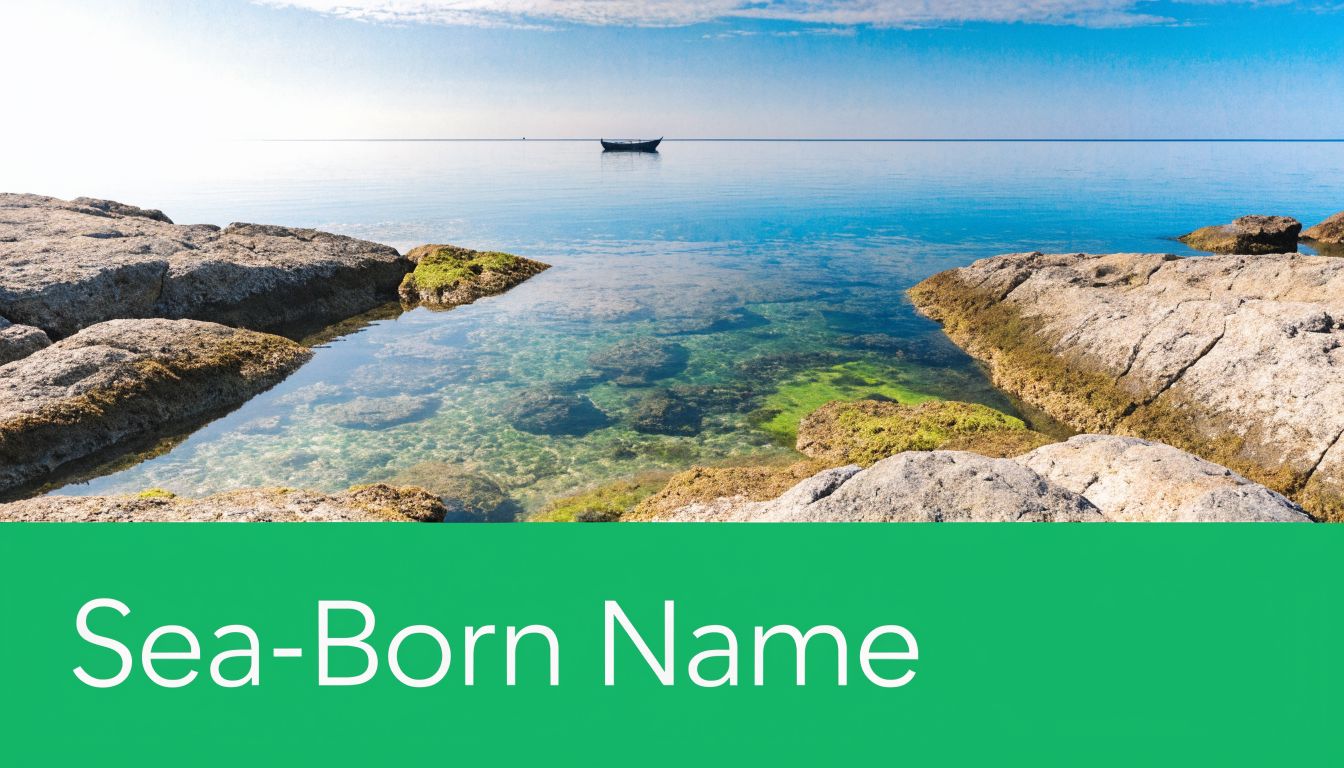
Pronunciation is often the first question, so it helps to deal with that early. In everyday use, many people say it close to "DA-ra" or "DA-rah," though local accents can shift the sound. The spelling takes a moment to learn, but once you hear it, the pattern becomes much easier to remember.

Darragh has an advantage over some other Irish names. It teaches one useful Irish spelling feature without piling on several at once. For readers who want a boy's name that is recognizably Irish yet still manageable outside Ireland, that balance matters.

Try it in ordinary settings: Darragh is absent today. Darragh plays midfield. I met Darragh after class. Those examples show how the name sits in real speech. It sounds natural in school, work, and sport, which is often the true test of whether a name feels modern.

Darragh also has range. It suits a young child, but it does not sound childish on an adult. That kind of flexibility is hard to find, and it is one reason the name earns its place on a current list of Irish boy names.

10. Rory

Rory is one of the most straightforward names on this list, and that's a strength. It comes from Ruaidhrí and carries the meaning “red king,” but in daily use it feels casual, friendly, and easy to place. That combination keeps it relevant.

You'll hear Rory in sports, media, and ordinary conversation, which is part of why it holds up so well. It doesn't need much explanation. It arrives already usable.

Short, clear, and culturally grounded

Rory is also worth noting because names beginning with R are getting more attention in current naming conversations. The discussion of rising R names such as Rowan, Rory, Rafferty, and Redmond appears in the earlier naming gap noted from Made for Mums, and Rory fits that broader sound pattern without feeling experimental.

For learners, Rory is a strong intermediate choice because it lets you compare anglicized and Irish-rooted forms. You can start with the easier everyday version, then trace it back into deeper Irish spelling and history.

Golfer Rory McIlroy has helped make the name globally familiar, but its appeal would still be there without that visibility. It's brief, warm, and culturally grounded.

  • Easy to say: Good for learners who want an Irish name they can use immediately.
  • Rich in background: The older form adds historical depth when you want it.
  • Modern in tone: It sounds current without feeling trendy.

Top 10 Modern Irish Boy Names Comparison

Choosing from Irish names often comes down to one practical question. Which names will feel easy to use every day, and which ones ask for more explanation before they settle in?

A comparison table helps when you read it like a map, not a scoreboard. A name with lower pronunciation difficulty is not "better." It asks less from teachers, relatives, and strangers on the first try. A name with a stronger cultural connection may ask for more patience, but it often gives more back in identity and meaning.

Name Pronunciation Difficulty Familiarity Outside Ireland Cultural Connection Key Strength Best For…
Cillian Low to moderate Moderate Strong Distinctive sound with broad modern appeal Families who want an Irish name that feels current without being too hard to explain
Cian Low Moderate Strong Short, neat, and clearly Irish Parents who want a brief name that travels well
Fionn Moderate Moderate Very strong Mythological depth in a compact form People who want a name with story and heritage behind it
Liam Very low Very high Moderate to strong Familiar almost everywhere Families who want the easiest crossover option
Oisín Moderate to high Lower Very strong Literary and legendary richness Parents happy to teach pronunciation for a name with real character
Tadhg High Low Very strong Deeply Irish and memorable Families who want a name that keeps its Irish identity intact
Seán Low High Strong Classic Irish form with lasting recognition Parents who want tradition, clarity, and a direct link to Irish spelling
Conor Very low High Strong Easy to say and easy to place Families looking for a dependable, widely usable choice
Darragh Moderate Moderate Strong Soft sound with a modern feel Parents who want something recognizably Irish but less overused
Rory Very low High Moderate to strong Friendly, simple, and versatile Families who want an Irish name that works quickly in daily life

One useful way to read the chart is by grouping the names into three tiers of day-to-day ease.

Liam, Conor, Rory, and Seán are the quickest to use in school lists, introductions, and paperwork. Cillian, Cian, Fionn, and Darragh sit in the middle. They are manageable, but some people may pause at the spelling. Oisín and Tadhg need the most guidance, especially outside Ireland, yet they often appeal to parents who want a name that keeps a strong link to Irish language and tradition.

That trade-off matters. A name can be easy, culturally rich, or both, but each one balances those qualities differently. This table works best as a practical shortcut before you return to the individual name sections and ask a more personal question: do you want instant familiarity, stronger heritage signals, or a middle ground that gives you some of each?

Final Thoughts

Modern irish boy names work best when you look beyond the surface. A good name isn't only about popularity or sound. It's also about what the spelling teaches, what the meaning carries, and how naturally the name fits into real life.

Some names on this list are easy entries. Liam, Conor, and Rory travel well and don't ask much from unfamiliar ears. Others, like Oisín, Tadhg, and Seán, ask for a little more attention but give more back in return. They teach you something about Irish itself. That's part of their value.

There's also room for a broader modern conversation. Names like Saoirse and Niamh show that naming isn't always as rigid as standard boy-name lists suggest. For families thinking about inclusivity, heritage, or linguistic identity, that flexibility matters.

If you're choosing a name for a child, the practical test is simple. Say it aloud in ordinary situations. Write it by hand. Imagine hearing it at school, on a team sheet, or across a kitchen table. The best names usually survive that test easily.

If you're learning Irish, use these names as study tools. They're small but powerful pieces of the language. A fada in Seán, the vowel pattern in Oisín, the compact strength of Fionn, the literary weight of Tadhg. Each one can sharpen your ear and deepen your connection to the language.

Modern Irish naming keeps balancing continuity and change. Traditional favorites have had remarkable staying power, but newer preferences and stronger visibility for Irish orthography show that naming trends are evolving. That's good news for learners and families alike. You don't have to choose between living language and cultural roots. The best Irish names give you both.


If you want to move from recognizing Irish names to using Irish with confidence, Gaeilgeoir AI is a practical next step. It helps beginners and returning learners practice real conversations, improve pronunciation, and build vocabulary through everyday scenarios. You can also start learning now through Gaeilgeoir AI's learning platform.

Mother in Irish Gaelic: A Learner’s Guide

You're probably here because a plain translation doesn't feel like enough.

Maybe you want to write a card for your mum. Maybe you're reconnecting with Irish family roots and want the right word, not just any word. Maybe you learned a bit of Irish in school, forgot most of it, and now you'd like to say “mother” in a way that sounds natural and respectful.

In Irish, that little word carries more than dictionary meaning. It sits inside family life, memory, tone, and grammar. If you've searched for mother in irish gaelic, you've already noticed the confusing part. You'll find máthair, but you'll also see mamaí, mam, and forms that seem to change once you put them into a sentence.

That's normal. Irish does that. The good news is that the patterns are learnable, and once you see them clearly, they start to feel satisfying rather than intimidating.

Table of Contents

Connecting with Your Roots Through Language

You are writing a card for Mother's Day, ordering a piece of jewellery, or trying to say one Irish phrase out loud at a family gathering. Then a simple question appears: what is the right word for “mother,” and which form would an Irish speaker use?

That question matters because Irish family words carry both feeling and grammar. A learner often starts with emotion first. You want something that sounds like home, something that connects you to parents, grandparents, and place. Then the grammar appears a moment later, usually when you try to say “my mother” or call directly to your mum.

That is why this topic is more than a straight translation exercise. Irish gives you a formal word, máthair, and an everyday family word, mamaí. Both are useful, but they do different jobs. Learning that difference early saves a lot of hesitation later.

If your interest in Irish comes from family history, a quick look at the origins of the Irish language helps explain why even one household word can feel so loaded with memory. For many learners, this is not only about vocabulary. It is about hearing a thread of identity again.

There is cultural weight here too. In Irish life, words for close family are rarely cold labels. They sit inside stories, habits, and relationships. “Mother” can sound formal, affectionate, respectful, or very personal depending on the word you choose and the grammar around it.

A useful way to approach this is to treat the vocabulary and the grammar as a pair. The word is only the starting point. Irish then asks a few follow-up questions. Are you naming your mother in a sentence? Are you saying “my mother”? Are you calling out “Mam!” to get her attention? Those small shifts change the form, and they are exactly the kind of details that help your Irish sound natural rather than translated.

You do not need perfect Irish to begin well.

You need the right base word, a feel for when formal or informal speech fits, and a little guidance on the grammar patterns that appear in real conversation. That is how a single family word starts to feel living and usable, not just memorised.

Understanding the Core Term Máthair

Máthair is the standard Irish word for mother. If you see the word in a dictionary, a school text, or a formal sentence, this is usually the form you will meet.

A close-up profile view of a mother with bright green dreadlocks holding her young child.

How to pronounce máthair

A useful beginner guide is MAW-hir. That spelling is only an approximation, but it gives you a workable starting point while your ear adjusts to Irish sounds.

Irish pronunciation often feels unfamiliar at first because the spelling and the sound do not always line up the way they do in English. For that reason, it helps to listen as well as read. This Irish pronunciation guide is a good support if you want to hear how broad and slender sounds shape words like máthair.

The word itself is old. It comes from Old Irish máthair, and it belongs to the same wider language family as English mother and Latin mater. If you have ever noticed that these words feel faintly related, you are hearing a real historical connection.

What máthair does in a sentence

The easiest way to learn máthair is to treat it as your base form. It works like the dictionary version of the word. You use it when you are naming the role itself, not necessarily speaking to your own mum in a warm, everyday way.

For example:

  • Is máthair í. = She is a mother.
  • Tá an mháthair sa teach. = The mother is in the house.
  • Is í mo mháthair í. = She is my mother.

That last example matters. Learners often know the word máthair, but hesitate once grammar starts changing the shape around it. Irish does that often with family terms. The core word stays important because other common forms grow from it.

When máthair sounds natural

Use máthair when the tone is neutral, descriptive, or formal.

That includes contexts such as:

  • dictionary learning and vocabulary study
  • schoolwork and careful writing
  • describing someone as a mother
  • phrases where grammar builds on the base noun

If you are reconnecting with family heritage through Irish, this distinction helps a lot. Máthair gives you the formal root of the idea. It is the word you build from. Later, when you say “my mother” or call out directly to your mum, Irish changes form and tone. Those changes are where learners start to sound natural instead of translated.

So keep máthair in your mind as the anchor word. It is the steady, formal form. Once that feels familiar, the grammar around it becomes much easier to follow.

How to Say Mom Informally in Irish

You are writing a card to your mum, or maybe rehearsing what you would say if you greeted her in Irish. In that moment, máthair can feel a little distant. The warmer everyday choice is often mamaí.

A happy mother with braided hair and her young daughter embracing outdoors in a park.

The everyday word many learners need

Omniglot's Irish kinship terms list mamaí as a common informal family term. That matches what learners quickly notice. The dictionary word is useful, but the home word is often different.

A simple way to hear the contrast is this:

  • máthair = mother
  • mamaí = mum, mammy, or mommy, depending on family tone and local habit

The English match is never perfect. Family words carry feeling as much as meaning, and that feeling changes from house to house.

You may also hear mam and sometimes mom in Ireland, especially in English speech. Regional habits shape those choices. For learning Irish, though, mamaí is a safe and familiar informal form to recognize.

Choosing the right tone

Learners often ask which word is "correct." Both are correct. The fundamental question is which one fits the relationship and the setting.

Use mamaí if you are speaking with affection, talking at home, or practicing the kind of Irish you would use with family. Use máthair if you are writing formally, studying vocabulary, or describing someone in a neutral way.

That difference is a bit like clothing. Máthair works like the formal outfit you wear when you need to be careful and precise. Mamaí is the comfortable everyday version that belongs in ordinary conversation.

For related affectionate family vocabulary, this guide to Irish Gaelic terms of endearment helps show how tone shifts across close relationships.

If you want your Irish to sound loving and natural at home, mamaí is often the better choice.

One detail catches many learners by surprise. The word can still change when you speak directly to your mum. Casual language in Irish still follows grammar, and that matters a lot with family words.

Mastering the Grammar of Máthair

Knowing the word isn't enough. To use mother in irish gaelic confidently, you need a few grammar patterns that show up right away in real speech.

The two that matter most are possession and direct address. In plain English, that means learning how to say things like your mother and O mother or Mam!

An infographic explaining the Irish Gaelic grammar rules for the word Máthair, meaning mother.

The forms learners meet first

One of the most helpful beginner explanations comes from Bitesize Irish on “the mother”, which notes forms such as do mháthair for your mother, and the vocative forms a Mháthair and a Mhamaí for direct address.

Here are the first forms worth learning:

  • máthair = mother
  • an mháthair = the mother
  • do mháthair = your mother
  • a Mháthair = O mother, used when addressing directly
  • a Mhamaí = Mam, used when addressing directly in a casual way

The little h that appears after the first consonant is part of a common Irish change called lenition. You don't need to master every grammar rule at once. You just need to notice that certain words trigger a spelling and sound change.

Formal vs informal forms for mother

Situation Formal (Máthair) Informal (Mamaí)
Naming the word máthair mamaí
Talking about “the mother” an mháthair usually less common in this formal structure
Saying “your mother” do mháthair your casual phrase will depend on household usage
Calling out directly a Mháthair a Mhamaí
School or formal writing preferred usually not preferred
Home or affectionate speech can sound formal preferred

A few things confuse learners again and again:

  1. Why does the word change after “do”?
    Irish possessives often trigger lenition. So máthair becomes mháthair.

  2. Why does the word change when I call someone directly?
    Irish uses the vocative case for direct address. That's why you get a Mháthair or a Mhamaí.

  3. Can I just avoid the changes?
    You can, but your Irish will sound unfinished. These are not fancy extras. They're everyday forms.

Speak to your mother directly, and Irish usually marks that relationship in the word itself.

If you want one memory trick, use this: the base word is what you learn first, but the changed forms are what make you sound like you're using Irish rather than reciting it.

Using Mother in Irish Phrases and Sayings

You are writing a Mother's Day card, telling a story about your family, or calling into the next room. That is where these forms stop being vocabulary items and start doing real work.

A small set of phrases will carry you a long way. The goal here is not to collect dozens of examples. It is to get comfortable with forms you could genuinely use.

Simple phrases you can start using

Start with these short, usable examples:

  • Is í mo mháthair í.
    She is my mother.

  • Tá mo mháthair sa bhaile.
    My mother is at home.

  • Do mháthair
    Your mother.

  • An mháthair
    The mother.

  • A Mhamaí!
    Mam!

Read them as a set, not as isolated lines. You are seeing the word in different jobs. Sometimes it names a person, sometimes it shows possession, and sometimes it is used to call directly to someone. That is how Irish family vocabulary works in real life.

A helpful exercise is to practice close comparisons, because small changes in Irish often carry a big difference in meaning or tone:

  • mo mháthair
  • do mháthair
  • a Mháthair
  • a Mhamaí

Those four forms are like four doors into the same room. The core idea stays the same, but the relationship changes. One means my mother, one means your mother, and two are forms of direct address, with a more formal or more affectionate feel.

Learn phrases you could say at home, in a message, or in conversation. They stay in your memory better than word lists.

The cultural weight of the Irish mammy

These words also carry a lot of feeling in Irish culture. The language of mothers reaches beyond the family home, from Mother Ireland in political and literary imagery to the familiar figure of the Irish mammy, described in this overview of the Irish mammy as a touchstone for the worldwide Irish diaspora, often estimated at over 70 million people.

That cultural weight matters because it helps explain why learners often feel unusually connected to this vocabulary. Máthair can sound formal, respectful, even ceremonial. Mamaí often feels closer, warmer, and more immediate. The choice is not only about translation. It is also about tone, relationship, and context.

That is why phrases matter so much here. If you only memorize the dictionary form, you know the label. If you practice short expressions such as mo mháthair or A Mhamaí!, you start to hear how Irish carries affection, respect, and family closeness inside the grammar itself.

For many heritage learners, this is one of the first places where Irish feels personal. You are no longer learning an abstract word for mother. You are speaking about your own family, your own memories, and the women who shaped your life.

Practice Makes Perfect Your Next Steps

If you remember three things, you're in a strong place.

First, máthair is the formal Irish Gaelic word for mother. Second, mamaí is often the warmer, everyday choice in family speech. Third, the grammar matters. Forms like do mháthair, a Mháthair, and a Mhamaí are the difference between recognizing a word and properly using it.

That's where learners usually make the leap. Not when they memorize more lists, but when they practice the same small set of words in realistic situations until the forms start to feel natural.

Keep your next step simple:

  • Say the forms aloud so your mouth gets used to them
  • Write one short sentence using máthair
  • Write one affectionate direct address using a Mhamaí
  • Notice the tone difference between formal and informal Irish

If you can do that comfortably, you're no longer just looking up mother in irish gaelic. You're beginning to use Irish as a living language.


If you want guided practice with real conversation prompts, pronunciation help, and beginner-friendly Irish from day one, try Gaeilgeoir AI. You can start learning and practicing at Gaeilgeoir AI.

How to Speak in Irish: A Guide for Total Beginners

You open your mouth to say a simple sentence in Irish. You know the word you want. You may even remember seeing it in school or hearing it at home. Then everything stalls the second you try to say it out loud.

That moment frustrates a lot of learners, and it does not mean you are bad at languages. It usually means your knowledge is sitting in one place and your speaking practice is sitting in another. Irish often lives in people's memories as something they studied, recognised, or read, but not something they used in everyday conversation.

That gap is common in Ireland too. As noted earlier, many people report that they can speak Irish, while far fewer use it daily outside education. So if your Irish feels stuck in your head instead of coming out of your mouth, you are far from alone.

The encouraging part is simple. Spoken Irish can begin with very small wins.

A short phrase about your morning. A greeting you can say without translating. One sentence you repeat until it feels natural in your mouth. That is how active speaking starts. It works a bit like learning to play a tune. Reading the notes helps, but your hands only learn it by playing.

This article focuses on getting you from passive knowledge to real speech from day one. That means starting with sounds you can copy, sentence patterns you can reuse, and topics from your actual life. It also means using tools that give you a chance to respond, hear yourself, and get feedback. Modern support, including tools like Gaeilgeoir AI, can help you practise conversation earlier and more often, especially when you do not have a speaking partner beside you.

You do not need perfect grammar before you begin. You need a starting point that gets your voice involved early, so Irish becomes a language you use, not just one you recognise.

Table of Contents

Start with speaking, not studying

You meet an Irish speaker at a café, hear a friendly Dia duit, and suddenly your brain goes blank. You know more than you can say. That gap between recognising Irish and putting it into use is where many beginners get stuck.

The fix is simple. Put speaking at the centre from day one.

If you want to learn how to speak in Irish, treat speech as practice, not as a test you earn after enough reading. A language is a bit like music in that way. You do not master the theory first and then touch the instrument. You play early, badly, and often. Irish works the same way. Reading, grammar, and listening all support you, but your speaking only grows when you open your mouth and use what you have.

As noted earlier, many people have some Irish but do not use it regularly. As a teacher, I see that pattern all the time. Knowledge sitting in your head is passive. The moment you say even one short sentence, it starts becoming active.

Practical rule: Speak Irish with the words you already know. Start small and start now.

A strong day-one goal is to build one tiny conversation you can use:

  • Introduce yourself: Is mise Aoife.
  • Ask a simple question: Conas atá tú?
  • Give a simple answer: Tá mé go maith.
  • Say one preference: Is maith liom caife.
  • Say one fact about your day: Tá mé tuirseach.

This may seem small. It is still real speaking.

That matters because beginners often study Irish as if they are filling a bookshelf. Useful speaking works more like building a footpath. One solid phrase leads to the next. You do not need a huge vocabulary to begin. You need a few phrases you can reach for quickly, without freezing.

If speaking to another person feels like too much on day one, use a tool that lets you rehearse safely. Gaeilgeoir AI can help you practise short exchanges, repeat common responses, and turn passive knowledge into spoken habits before you try them in real conversation. That kind of practice is helpful because it closes the gap between “I know this” and “I can say this.”

Aim for use, not perfection. If you can greet someone, answer a basic question, and say one true thing about your life, you are already speaking Irish.

Learn the sound before the rule

Irish spelling can look intimidating at first. The solution isn't to stare at the page longer. The solution is to connect sound, spelling, and meaning at the same time.

Build your ear first

A useful approach is to hear a short line slowly, repeat it, then hear it at normal speed and repeat again. The teaching method described in the Tús Maith methodology video on progressive auditory imitation lays out a four-step pattern: slow playback with support, normal-speed repetition, memorisation through adapted scripts, and then freer off-script speaking.

That order matters because beginners often try to jump straight into free conversation. Their brain hasn't had enough sound input yet, so the language feels slippery.

Use this sequence with one short phrase:

  1. Listen slowly
    Hear: Conas atá tú?

  2. Repeat slowly
    Say it with care, not speed.

  3. Repeat at normal pace
    Let the rhythm become more natural.

  4. Use it in a tiny exchange
    Conas atá tú?
    Tá mé go maith.

Slow, clear repetition helps you notice patterns that disappear when you rush.

Copy whole phrases, not isolated words

Irish becomes easier when you learn it in chunks. Instead of collecting random nouns, collect whole lines you can say today.

A few strong beginner chunks:

Situation Irish phrase Plain meaning
Greeting Dia duit Hello
Asking after someone Conas atá tú? How are you?
Fine response Tá mé go maith I am well
Saying your name Is mise Seán I am Seán
Wanting something Ba mhaith liom tae I would like tea

Chunk learning solves a common beginner problem. If you learn the word for tea, the word for like, and the word for I, you still might not say anything. If you learn Ba mhaith liom tae, you can use it at once.

Use simple Irish sentence patterns

Irish feels different from English because the structure often changes. That can be frustrating until you stop trying to force English patterns into Irish.

Irish often starts with the verb

One of the biggest shifts is that Irish commonly uses verb-subject-object order. The Preply guide to learning Irish points to this as an important pattern for learners to practise actively rather than leaving it as a grammar note.

In plain English, that means the action often comes first.

Look at the difference:

English idea Irish pattern
I eat bread Ithim arán
I am eating an apple Tá mé ag ithe úll

If you keep trying to build every sentence in English order first, your speech will stall. So don't begin with abstract grammar terms. Begin with frames you can reuse.

Sentence frames to use every day

These are strong early patterns because they cover a lot of real conversation:

  • Tá mé…
    Use it for states and feelings.
    Tá mé tuirseach.
    Tá mé sásta.

  • Is maith liom…
    Use it for likes.
    Is maith liom ceol.
    Is maith liom tae.

  • Ba mhaith liom…
    Use it for wants and polite requests.
    Ba mhaith liom caife.
    Ba mhaith liom cabhair.

  • Tá mé ag…
    Use it for actions happening now.
    Tá mé ag léamh.
    Tá mé ag obair.

  • An bhfuil…?
    Use it for yes-no questions.
    An bhfuil tú anseo?
    An bhfuil sé fuar?

A good rule is to stay with a sentence frame until it feels automatic. Don't race to cover everything. Depth beats breadth in speaking.

If a phrase helps you describe your actual day, it belongs in your first week of Irish.

Say useful things about your real life

You meet an Irish speaker at a café. You do not need a speech about literature or a perfect grammar chart. You need a few honest lines about your day.

That is why real-life sentences matter so much at the start. If your first Irish helps you talk about your name, your mood, your work, your home, or what you want to eat, you can start speaking from day one. The goal is not to collect interesting sentences. The goal is to say things you might use before lunch.

A good shortcut is to build your early Irish around small personal topics. These topics come up again and again in normal conversation, so every sentence pulls double duty. You are learning vocabulary, and you are also rehearsing real interaction.

Start with tiny personal topics

Choose three areas from your own life and write five short sentences for each. Keep them simple enough that you could say them without stopping to translate.

About yourself

  • Is mise Niamh.
  • Tá mé i mBaile Átha Cliath.
  • Tá mé ag foghlaim Gaeilge.
  • Is maith liom leabhair.
  • Tá mé ag obair inniu.

About home

  • Tá mé sa bhaile.
  • Tá tae sa chistin.
  • Tá sé ciúin anseo.
  • Tá fuinneog mhór ann.
  • Is maith liom an seomra seo.

About today

  • Tá sé fuar.
  • Tá ocras orm.
  • Tá mé ag dul amach.
  • Ba mhaith liom lón.
  • Tá mé tuirseach anois.

This kind of practice closes the gap between recognising Irish and using it. Many learners already know more words than they can say out loud. Personal sentences fix that because they give those words a job to do.

It also makes practice easier to repeat. You already know your own routines, preferences, and plans. You are not inventing content from scratch. You are just learning how to say your life in Irish.

Turn passive vocabulary into active speech

Use a simple four-step drill:

  1. Pick five words you already know.
  2. Put each one into a full sentence about your real life.
  3. Say each sentence aloud three times.
  4. Change one detail in each sentence.

Here is what that looks like with caife:

  • Is maith liom caife.
  • Ba mhaith liom caife.
  • Tá an caife te.
  • Tá mé ag ól caife.
  • An bhfuil caife anseo?

Now caife is not just a word on a list. It works in likes, wants, descriptions, actions, and questions. That is how speaking starts to feel quicker.

If you want extra help turning your own daily life into spoken practice, tools like Gaeilgeoir AI can help you generate simple personalised prompts, check phrasing, and rehearse short exchanges. Used well, that kind of support can speed up the jump from passive knowledge to active conversation.

Keep the bar low at first. A short true sentence is better than a clever sentence you will never say again.

Expect dialect differences early

Some learners get discouraged when they hear one phrase in a course and a different phrase in a real conversation. That's not failure. That's Irish being a living language.

Why greetings can sound different

Irish has regional variation, and beginners often meet it immediately in greetings and short social phrases. The video discussing Irish dialect differences in greetings highlights forms such as Conas atá tú?, Cad mar atá tú?, and other regional variants.

This can feel unsettling if you expected one fixed form for everything. It helps to think of dialects the same way you'd think about accents and regional wording in English. Different does not mean wrong.

A few things may change:

  • The greeting itself
  • The pronunciation
  • The natural response
  • The form you hear in a specific region

How to avoid dialect overload

You don't need to master every dialect as a beginner. You do need a clear starting point.

Use this approach:

Situation What to do
You want one steady beginner path Learn one common form and stick with it for now
You have family ties to a region Prioritise that dialect when possible
You're studying for school exams Stay close to the expected school forms
You hear a different version Notice it, don't panic, and save it for later

Pick one greeting and one response first. Use them until they feel natural. You can add variants gradually.

A beginner doesn't need every version of a phrase. A beginner needs one version they can say comfortably.

Practice out loud every day

You don't need marathon study sessions. You need repetition that your mouth, ear, and memory can handle.

A short daily routine that works

Here's a simple routine you can keep:

  1. Warm up with two greetings
    Say them aloud without reading if you can.

  2. Review three sentence frames
    For example: Tá mé…, Is maith liom…, Ba mhaith liom…

  3. Describe your day for one minute
    Use tiny facts. Weather, food, mood, plans.

  4. Repeat one short dialogue
    Keep it short enough that you can memorise it.

  5. Finish with self-talk
    Narrate what you're doing.
    Tá mé ag siúl.
    Tá mé ag déanamh tae.

This kind of active use is far more valuable than passive review alone. It also fits the reality of adult learners, who usually need short, flexible practice rather than long classroom blocks.

What to do when you get stuck

Everyone freezes. The trick is to have rescue moves ready.

Use these when speaking breaks down:

  • Go back to a frame: If you can't build a sentence, start with Tá mé… or Is maith liom…
  • Shrink the idea: Don't say everything. Say one fact.
  • Repeat a known phrase: Familiar language restarts your rhythm.
  • Swap the word: If you don't know the exact noun, choose a simpler one you do know.
  • Write down the missing piece: Keep a note on your phone and return to it later.

A stuck moment doesn't mean your Irish is bad. It usually means your sentence was too ambitious for that moment.

Find ways to speak with feedback

You say a sentence out loud, and it feels fine in your head. Then a listener replies, or your app catches a sound you missed, and you notice the gap. That moment is useful. Feedback turns private practice into real speaking.

Solo work still has a clear job. It helps you build the physical side of Irish: the mouth movements, the rhythm, and the habit of answering without freezing. It also gives you a safe place to test what you know before another person joins in.

Use solo practice for:

  • Training pronunciation
  • Speeding up recall
  • Getting comfortable with your own Irish voice
  • Turning words on a page into spoken language
  • Trying out sentence patterns before conversation

A mirror helps. Voice notes help. Reading a short exchange, then closing the page and saying it from memory helps too. This kind of practice is like doing scales before playing music with others. It does not replace conversation, but it makes conversation much easier to enter.

Then add feedback as early as you can.

Choose feedback that matches your level

You do not need a perfect conversation partner from day one. You need a response that shows you what to keep, what to fix, and what to say again.

A few good options:

  • Pronunciation and dictionary tools
    Use TEanglann to hear words and check forms when a sound or spelling confuses you.

  • Language exchange apps
    Tandem or HelloTalk can help you find short, low-pressure exchanges with other learners or speakers.

  • AI speaking practice
    Gaeilgeoir AI offers guided conversations based on real situations, along with pronunciation support and adaptive practice. That is helpful for learners who know some Irish passively but need a bridge into active speaking.

  • Oral-topic practice for school
    Leaving Cert students usually improve faster by answering common speaking topics out loud than by trying to revise everything at once.

The best feedback is the kind you will use three or four times a week. Consistency matters more than finding one perfect method.

If live conversation feels intimidating, start with a simple loop: say one sentence, get a correction, repeat it correctly, then use it again in a new sentence. That loop is small, but it teaches your brain how spoken Irish grows. You stop collecting phrases and start using them.

Keep going even when your Irish feels messy

You are in the middle of a sentence, you know the word you want in English, and your Irish comes out in bits and pieces. That is not failure. That is speaking.

Spoken Irish usually grows the same way a tune grows under your fingers. At first, it feels slow and uneven. Then a few phrases start to come more quickly. After that, you stop building every sentence word by word and begin to answer more naturally. The jump from passive knowledge to active speech rarely feels tidy while it is happening.

That matters because many learners already know more Irish than they can say out loud. They recognise school phrases, understand bits of conversation, or remember grammar they cannot use quickly enough in real life. The goal is not to wait until everything feels polished. The goal is to keep turning recognition into response.

Give yourself small speaking wins.

Say hello.
Say your name.
Say what you like.
Say how you feel.
Say one true thing about your day.

Then change one part and say it again.

That simple habit trains your brain to build with the Irish you already have, instead of freezing while you search for perfect Irish. Messy speech is often the working stage between “I know that” and “I can say that.”

Irish also lives through ordinary use. Every time a learner moves from understanding to speaking, even for one short sentence, the language becomes a little more present in daily life. That is part of what makes speaking practice feel personal and cultural at the same time.

If you need extra support, Gaeilgeoir AI can give you another place to practise turning passive Irish into active conversation, one short exchange at a time.

8 Gaelic Names for Dogs: Meanings & Pronunciation

You’ve probably done this already. You call your new dog three or four trial names across the kitchen, wait for one to feel right, then wonder if there’s a name that sounds distinctive without feeling forced. That’s where Gaelic names for dogs can be such a satisfying choice. They’re musical, compact, and full of story.

A Gaelic name also gives you more than a label. It gives you a small, practical way to begin learning Irish. You say the name every day. You hear its sounds over and over. You start noticing spelling patterns, long vowels, and old mythological references without needing to sit down for a formal lesson first. A dog’s name can become your first real Irish word.

That matters because interest in Irish-inspired dog names has grown sharply. In 2025, Irish dog names ranked among the top 10 most popular dog-naming categories in the United States, according to Rover’s Irish dog names list. Many owners are clearly looking for names with heritage, meaning, and personality.

If your dog is an Irish breed, that connection can feel even more fitting. You can also discover the Irish Setter breed if you want a deeper sense of the Irish canine tradition behind the naming inspiration.

Table of Contents

1. Bran Masculine – Raven – Pronunciation /brɑːn/

A majestic black raven perched on a textured rock against a vibrant green chroma key background.

Bran is one of the strongest picks if you want a name that feels ancient without being difficult. It means “raven,” and it appears in Irish myth as the name of one of Fionn MacCumhaill’s famous hounds. That alone makes it one of the most natural Gaelic names for dogs, because it already belongs to the old storytelling world of hunters, loyalty, and wilderness.

It also works beautifully in daily life. Bran is short, clear, and easy to call across a field or a sitting room. If you’ve got a black dog, a watchful dog, or a dog with a calm, intelligent presence, the fit can feel immediate.

Why Bran stands out

Irish mythology often feels intimidating to beginners because the names can look unfamiliar on the page. Bran is different. You can say it almost exactly as it looks, which gives new learners an early win. That matters if you’re trying to build confidence with spoken Irish.

For a quick cultural rabbit hole, the Gaeilgeoir guide to Gaelic names is a helpful next step after choosing a name like Bran.

Practical rule: If a name feels easy to say every day, you’re more likely to keep using it correctly and remember the word behind it.

A good real-life use case is a family that wants a meaningful name without constant pronunciation corrections. Bran works for children, heritage learners, and adults returning to Irish after school. It’s also a smart choice for someone preparing for the Leaving Cert oral, because mythological names help you remember cultural references in a natural way.

Try practicing it in tiny phrases rather than isolation:

  • Call practice: “Bran, anseo.” Use it as a calm recall phrase.
  • Sound practice: Repeat the opening br blend slowly, then at normal pace.
  • Memory practice: Link Bran with raven, hound, and myth in your notes.

2. Setanta Masculine – Legendary Warrior The Strong One – Pronunciation /ʃɛˈtɑːntə/

Setanta has force in it. Even before you know the story, it sounds active and bold. In Irish tradition, Setanta is the boyhood name of Cú Chulainn, one of the central heroic figures in the Ulster Cycle. If your dog charges into rooms like he’s already on a quest, this name can feel wonderfully apt.

This is the kind of name people choose when they want a dog name with narrative behind it, not just a pleasant sound. It suits athletic dogs, confident dogs, and dogs that carry themselves with a bit of drama.

How to say Setanta comfortably

The first sound is the part most English speakers need to practice. It begins with a “sh” sound, not a hard “s.” Breaking it into chunks helps: Se-tan-ta. Once you hear the rhythm, it settles quickly.

Some names teach you more because they resist you a little at first. Setanta is one of those names. It helps train your ear for Irish sound patterns, and that makes it useful if you’re trying to move beyond memorizing isolated words.

Some of the most searched Irish dog-name content now centers on pronunciation, not just meanings, according to the underserved-angle research summarized in this discussion of Gaelic dog names and pronunciation demand.

That makes sense. A learner might love the story of Cú Chulainn but still hesitate to say Setanta aloud. The fix is repetition in context. Say it while clipping on a lead. Say it when praising your dog. Say it at normal volume, not performance volume.

A few ways to make it stick:

  • Syllable drill: Say Se, then tanta, then join them.
  • Story anchor: Remember that Setanta later becomes Cú Chulainn.
  • Speaking habit: Use the name in one short sentence each day, such as “Setanta, suí.”

This is a great choice for literature students, mythology lovers, and anyone who wants their dog’s name to open a bigger cultural door.

3. Fionn Masculine – Fair White-haired – Pronunciation /fiːn/

Your dog is at the park, someone asks his name, and you get to answer with one short Irish word that is easy to say but rich in story. That is part of Fionn’s charm. It means “fair” or “white-haired,” and it carries the memory of Fionn Mac Cumhaill, one of the great figures of Irish tradition.

For beginners, Fionn is a very useful first step into Irish because it teaches an important lesson quickly. Irish spelling does not always follow English sound rules, and this name lets you feel that difference without giving you a hard word to manage. You write more letters than you pronounce. The result is still clean and memorable.

A small name that teaches a lot

Say it like “feen,” with a long ee sound: /fiːn/.

That surprises many English speakers at first. The spelling may tempt you toward “Finn,” especially if you already know the Anglicised form. Both are connected, but Fionn gives you the Irish spelling, and that spelling opens a cultural door. A dog name becomes a mini-lesson in sound, history, and identity.

This also makes Fionn practical. It is short enough for daily use, clear enough for recall, and distinctive enough to start conversations. If you want a name that works in ordinary life while still pointing back to Irish legend, Fionn does that job very well.

A simple way to learn it is to pair each part of the name with one fact:

  • Sound: Fionn is pronounced /fiːn/
  • Meaning: fair or white-haired
  • Story: linked to Fionn Mac Cumhaill and the Fenian cycle

That three-part method works like a memory peg. Each time you say the name, you are reviewing pronunciation, vocabulary, and mythology at once.

If you want to build that habit, Gaeilgeoir AI can help in a very practical way. Save Fionn as a study word, listen to pronunciation, and practice saying it in short commands you would use with your dog. Readers who want more legendary naming ideas can browse this guide to Irish mythology names and compare how mythic figures appear in modern naming.

Use Fionn in real sentences rather than in isolation. “Fionn, anseo.” “Fionn, suí.” “Good boy, Fionn.” Repetition in context helps your ear faster than repeating the name like a spelling exercise.

Fionn suits owners who want a name with depth but not fuss. It is friendly on the tongue, strong in tradition, and a very good example of how choosing a dog’s name can become your first enjoyable lesson in Irish.

4. Lugh Masculine – Light Bright or Warrior God – Pronunciation /luː/

Lugh is compact, clean, and full of myth. It’s associated with the Irish god Lugh, a figure linked with brilliance, skill, and light. For dog owners who want a name that feels ancient but remains easy to call, Lugh is one of the best choices in the entire field of Gaelic names for dogs.

Short names can be deceptively rich. Lugh is only one syllable, but it carries a whole world of Irish cultural memory with it. It feels especially fitting for alert, quick, clever dogs.

A short name with deep roots

The pronunciation is simple once you hear it. Think “loo,” with a long vowel. The spelling may tempt English speakers to pronounce the final consonants, but in practice the spoken form is much smoother and lighter.

This is also a good name if you’re curious about how mythology and seasonal tradition connect. Lugh is linked to Lughnasadh, the early harvest festival. That gives the name extra context beyond a dictionary meaning.

For readers who want more naming ideas tied to story and legend, the Gaeilgeoir Irish mythology names guide fits naturally with a choice like Lugh.

A dog named Lugh could easily belong to a beginner learner who wants one strong Irish word to start with. It also suits someone studying cultural themes for school, because it opens a path into discussions of gods, festivals, and oral tradition.

Use it in short practice bursts:

  • Call-and-response: “Lugh.” Pause. “Maith thú, Lugh.”
  • Association practice: Pair the name with ideas like light, craft, and skill.
  • Listening practice: Focus on the long oo vowel and keep it clean.

This one is excellent for owners who like concise names with intellectual depth.

5. Saoirse Feminine – Freedom – Pronunciation /ˈsɪərʃə/ or /ˈseːrʃə/

A tan Saluki dog with long, wind-blown ears sits against a stark black background studio portrait.

You call your dog across the park, and a stranger asks how to say her name. Saoirse turns that small moment into a mini Irish lesson. You are not only choosing a beautiful name. You are choosing a word that introduces sound, history, and meaning all at once.

Saoirse means “freedom,” and the feeling of the word matters as much as the translation. It suits a quick, independent dog, but it also suits a learner who wants a first Irish word with real emotional weight. In that sense, it works like a doorway into the language. One name can teach you how Irish spelling and Irish sound do not always line up neatly with English expectations.

That is why beginners often find Saoirse both appealing and intimidating. The spelling invites guesses, yet Irish asks for listening first. Two common pronunciations are given here, one closer to “SEER-sha” and another closer to “SAIR-sha” depending on dialect. If you want to hear those patterns clearly, the Irish pronunciation guide with audio support helps you connect the written form to real spoken Irish.

Saoirse is also practical in daily use once you break it into parts. Hear the ending first. “Sha.” Then add the opening slowly. Repetition helps more than trying to force the whole word perfectly on the first attempt.

Try using it as a tiny study routine with your dog:

  • Sound practice: Say “Saoirse” three times slowly before walks.
  • Meaning practice: Pair the name with the idea of freedom, speed, and open space.
  • Command practice: Use short phrases like “Saoirse, tar anseo.”
  • Gaeilgeoir AI practice: Record yourself saying the name, compare it with audio, and repeat until the rhythm feels natural.

A name like Saoirse gives you more than a label on a collar. It gives you a memorable first step into Irish, one that teaches pronunciation, opens cultural conversation, and gets easier every time you say it.

6. Banríon Feminine – Queen – Pronunciation /bænˈriːən/

Banríon is a wonderful choice if your dog already behaves as if the house belongs to her. It means “queen,” and it has exactly the regal energy you’d expect. For a poised sighthound, an imperious terrier, or a tiny dog with outsized confidence, Banríon can be both elegant and funny in the best way.

It’s also one of the most educational names on this list because it shows how Irish words are built. You aren’t only learning a name. You’re seeing structure.

What Banríon teaches you about Irish

Compound words help learners notice patterns. In Banríon, you can see how Irish combines elements to form a title with clear social meaning. That kind of word is useful because it trains your eye, not just your ear.

This name is better for learners who enjoy language as a system. If Bran feels instinctive and Fionn feels familiar, Banríon feels more like a satisfying puzzle.

The pronunciation becomes easier when you split it into parts: Ban-rí-on. Long vowels matter here, especially in the middle. If you enjoy pronunciation drills, this is a strong practice word. The Gaeilgeoir pronunciation guide is a natural companion if you want support with sound patterns like this.

Good situations for Banríon include owners who like formal names, students interested in grammar, and anyone who wants a female dog name that avoids the usual English clichés.

Try using it with related word study:

  • Word pattern: Notice the visual chunking of Ban and ríon.
  • Daily command: “Banríon, fan.”
  • Character match: Best for dogs with dignified posture or commanding presence.

This one rewards patience. The more you say it, the more natural it becomes.

7. Cú Masculine – Hound Dog – Pronunciation /kuː/

Sometimes the best answer is the simplest one. Cú means “hound” or “dog,” which makes it wonderfully direct. If you want Gaelic names for dogs that are authentic, concise, and easy to remember, Cú is hard to beat.

It also carries heroic associations because of Cú Chulainn, whose name includes the same word. So while it’s simple on the surface, it still has myth behind it.

Simple, literal, memorable

One-syllable names are practical. They’re easy to call, easy for children to learn, and easy to repeat often. Cú is especially charming for bilingual households because it turns ordinary dog talk into a little language lesson.

There’s a nice teaching moment here too. Instead of memorizing a decorative name detached from meaning, you’re learning a useful core noun. That’s valuable for beginners because vocabulary that shows up in real life sticks more easily.

A common household example is a family with young children who want to use a bit of Irish naturally. A dog named Cú makes that easier. You can build small phrases around the name and related pet vocabulary without much friction.

Helpful ways to use it:

  • Vocabulary bridge: Pair Cú with other animal words as you learn.
  • Short recall: “Cú, anseo.”
  • Story link: Connect it to Cú Chulainn when you want the cultural layer.

Sniffspot’s 2025 naming database also reflects the wide circulation of Irish-inspired dog naming in major English-speaking markets, as described in Sniffspot’s Irish dog name page. Cú sits comfortably in that tradition while remaining one of the most literal options available.

For complete beginners, this may be the most usable name on the list.

8. Rían Masculine – King – Pronunciation /ˈriːən/

A large standing stone with a natural hole in a green field under a cloudy blue sky.

A dog waits by the door, alert but unhurried, with the air of a pet who assumes the house belongs to him. Rían suits that kind of presence. On this list, it carries the meaning “king,” so it feels dignified without sounding stiff.

For beginners, Rían is a useful example of what makes Irish names enjoyable to learn. It looks slightly different from its English-language cousins, but it is not hard to say once you know where the stress goes. That makes it a good first step into Irish pronunciation. You get a strong dog name and a small language lesson at the same time.

Clear sound, strong identity

The heart of the name is the long ee sound: REE-an. If you rush it, the name can blur. If you hold that first vowel for a moment, the shape becomes much clearer. Irish pronunciation often works like that. One sound acts as the anchor, and the rest settles around it.

That is part of Rían’s appeal. It feels current to many English speakers, yet it still points back to Irish naming tradition. For dog owners who want a name that friends can learn quickly, while still opening a conversation about Irish language and culture, Rían does that job well.

It also works nicely as a practice name. Say it on its own first. Then pair it with a short command such as “Rían, suí.” If you use Gaeilgeoir AI, you can listen to pronunciation, repeat it, and compare your stress and vowel length. A name like Rían becomes a mini-pronunciation drill you can use every day.

A few simple ways to practice it:

  • Sound focus: Keep the opening ree clean and long.
  • Daily use: Try short calls such as “Rían, anseo.”
  • Culture link: Group it with Irish words tied to leadership, rank, or family names.

Rían is a fitting final choice because it shows how an Irish dog name can be practical, memorable, and connected to a wider world of language. One name can teach sound, meaning, and cultural context all at once.

8 Gaelic Dog Names: Meaning, Gender & Pronunciation

Name Implementation complexity 🔄 Resource requirements 💡 Expected outcomes 📊 Ideal use cases ⚡ Key advantages ⭐
Bran Low 🔄 Minimal – basic pronunciation audio Foundational cultural vocabulary Beginners, heritage learners Strong cultural authenticity; easy to learn
Setanta High 🔄🔄🔄 High – phonetic drills + myth reading Advanced phonetics & literary immersion Advanced students, mythology exams Rich narrative depth; phonetic challenge
Fionn Low 🔄 Minimal – listening/practice Confidence-building foundational vocab Beginners, children Approachable; modern and traditional mix
Lugh Low 🔄 Moderate – mythology/contextual study Cultural depth; festival-related vocabulary Beginners interested in mythology Simple form with deep mythological meaning
Saoirse High 🔄🔄 High – pronunciation practice + cultural context Advanced phonetic skill and semantic nuance Intermediate/advanced learners, discussions on values Powerful meaning; conversation starter
Banríon Moderate 🔄🔄 Moderate – morphology & pronunciation work Insight into compound formation and gendered terms Intermediate learners studying linguistics Teaches word-formation; feminist vocabulary
Very low 🔄 Minimal – quick practice Immediate practical vocabulary for everyday use Complete beginners, young learners, pet naming Extremely accessible; directly relevant to dogs
Rían Low–Moderate 🔄🔄 Moderate – phonetics + historical context Intermediate vocabulary with historical nuance Intermediate learners, history-focused study Dignified, clear vowel sounds for practice

Start Your Irish Language Journey Today

Choosing a Gaelic name for your dog can be a small decision with surprising depth. You’re not only picking a sound that suits your dog. You’re choosing a word that carries history, the land, mythology, and everyday speech with it. That’s why these names stay with people. They feel personal, but they also connect you to something older and larger.

They’re also useful. A dog’s name is one of the few words you’ll say dozens of times a day without effort. That repetition matters if you’re learning Irish. It gives you a built-in pronunciation habit. It helps you remember vowel sounds and spelling patterns. It creates an emotional connection to the language, which often works better than memorizing random vocabulary lists.

You don’t need to become an expert before choosing well. Start with a name you can say confidently. Learn its meaning. Learn one phrase that goes with it. If your dog is called Bran, Fionn, or Saoirse, you’ve already got the beginning of a tiny Irish-language routine in your home.

That’s part of what makes this approach so effective for beginners. It removes pressure. You’re not “studying” in the abstract. You’re naming, calling, praising, and repeating. Those are real acts of language. They count.

If you want to build on that first word, Gaeilgeoir AI is one relevant option for continuing. It’s designed around guided, real-world Irish practice, with pronunciation support, adaptive quizzes, and scenario-based learning that can help you move from single words into everyday conversation. That makes it a natural next step if your dog’s name has sparked a broader interest in Irish.

Start small. Say the name well. Learn the story behind it. Then add one more word, and one more after that. Before long, your dog’s name stops being the end of the naming process and becomes the beginning of your Irish language journey.

Ready to go beyond the name and start speaking more Irish every day? You can start learning with Gaeilgeoir AI at learn Gaeilgeoir AI.


If you’d like to turn your dog’s name into your first real Irish lesson, try Gaeilgeoir AI. It helps beginners start speaking from day one with pronunciation support, guided conversations, and practical vocabulary you can use.

Start Speaking Irish Today — 25% Off
Use code START25

Learn real Irish for real life with guided practice, pronunciation support, and everyday conversations.

Get 25% off any plan with code START25

Start Speaking Irish Today — 25% Off